
Marine Environmental Geology Division MEG u Objectives Research
Marine & Environmental Geology Division (MEG) u Objectives – Research Overview – Challenges & opportunities across the research spectrum – Looking to the future
Research Overview I u Hydrology/ El-Kadi – Intentional tracer release (Helium); Contaminant assessment & remediation; Modeling and parameter estimation: groundwater flow, flooding & landslides. u Coastal Geology/ Fletcher – Carbonate geology and paleoclimate (sea level history, reef paleoecology); Research issues applied to coastal management (eg. land use, sand management, coastal hazards); Modeling coastal change. u Planetary & Evolutionary Biology/ Gaidos – Astrobiology/Habitable Planets; Microbiology of Coral Reefs & Sub-glacial lakes; Deep roots of animal evolution (placozoa)
Research Overview II u Nutrient cycling past & present/ Glenn – Submarine groundwater/nutrient discharge; geologic record of coastal upwelling; mineral authigenesis/phosphorites. u Stable isotope biogeochemsitry/ Popp – Paleoproxy development (C 02, temperatue & salinty); Stable isotope ecology (pelagic & reef fish; invertebrates & aquaculture); Nutrient cycles (N-fixation; denitrification and nitrification). u Marine sediment geochemistry/ Ravizza – Osmium isotope & platinum group elements; Extreme climate events in Earth history; Chemostratigraphy u Paleontology/ Stanley & Engels – Earth History; Evolution & extinction; Biomineralization and seawater chemistry; Paleo-ecology.
Broad Extra-MEG Collaboration - some examples VGP/G&T - analytical, modeling collaborations. u HIGP - remote sensing/planetary. u HIMB - physiology & ecosystem studies. u Oceanography biogeochemistry/microbiology u Water Resources Research Center contaminant transport and remediation. u Extra-division collaboration easily surpasses intra-division collaboration, reflecting the great breadth of work done within MEG.
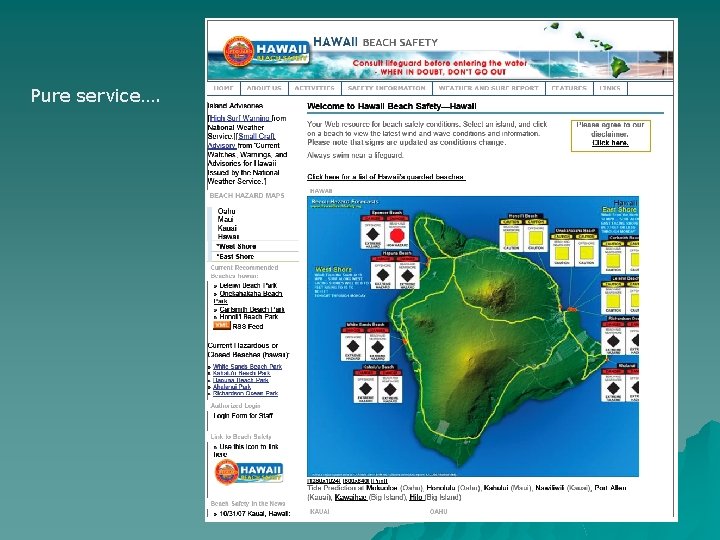
Pure service….
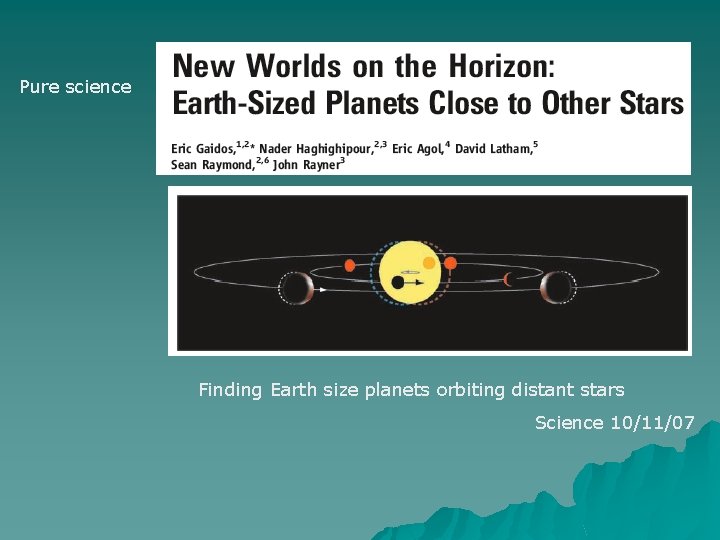
Pure science Finding Earth size planets orbiting distant stars Science 10/11/07
Summary • We are a group of remarkable breadth tied together by research interests in modern and ancient surficial processes. • We collaborate broadly across SOEST and UH. • We provide essential advice to the state on local policy matters. • We are nationally and internationally recognized for research excellence. • We teach a lot too…
How might we build upon our successes? u Better integration across the “research spectrum”. – Hires in key areas: Hydrogeology (Ali presentation), Watershed processes; Biogeochemical cycles; a MEG YIP – An integrated funding approach u Seek state support for graduate students in Coastal/Climate/Environmental research NOT tied to specific projects. u Piggyback pure scholarship on “state needs” project infrastructure. u Flexible funding & seed money is always essential -.
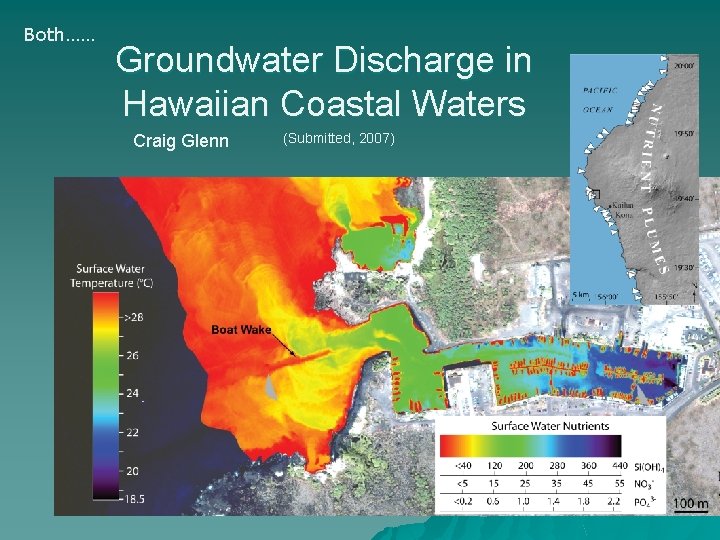
Both…… Groundwater Discharge in Hawaiian Coastal Waters Craig Glenn (Submitted, 2007)
Research spectrum Hawaii centric programs - meeting state needs; accounts for majority of graduate student population; expanding need locally and globally. u Curiosity driven research - motivated by intellectually significant questions but often without immediate application; these types of projects tend to garner the most scholarly attention nationally & internationally; highly competitive/tight funding. u Most projects fall somewhere in between the above “end members”. u
A way forward u Q: How might we build upon our successes?
- Slides: 11