
Marine Ecosystems SALT WATER Life in the Oceans


- Slides: 26
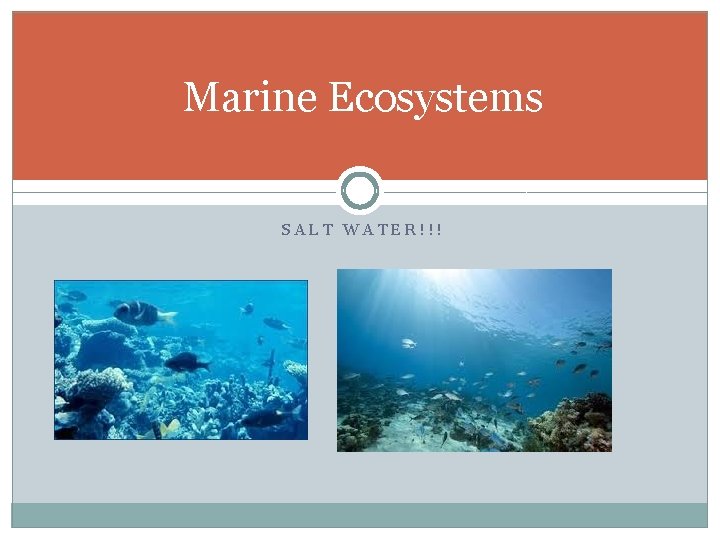
Marine Ecosystems SALT WATER!!!
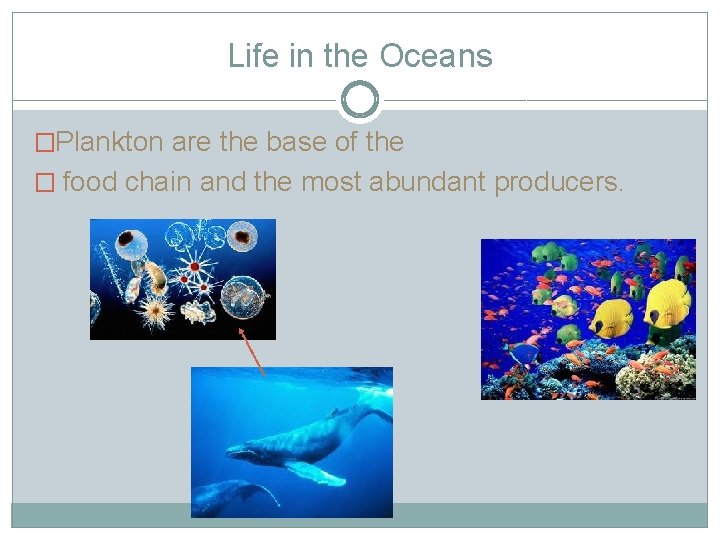
Life in the Oceans �Plankton are the base of the � food chain and the most abundant producers.
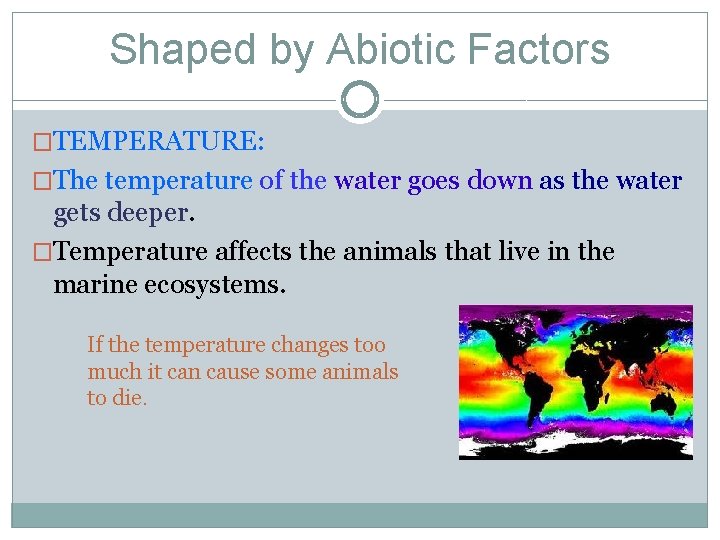
Shaped by Abiotic Factors �TEMPERATURE: �The temperature of the water goes down as the water gets deeper. �Temperature affects the animals that live in the marine ecosystems. If the temperature changes too much it can cause some animals to die.
Other Important Abiotic Factors �Sunlight �Depth of the water �Amount of salt
Ocean Zones HOW: Zones are created by differences in light, temperature and depth. �Intertidal �Neritic �Oceanic �Benthic
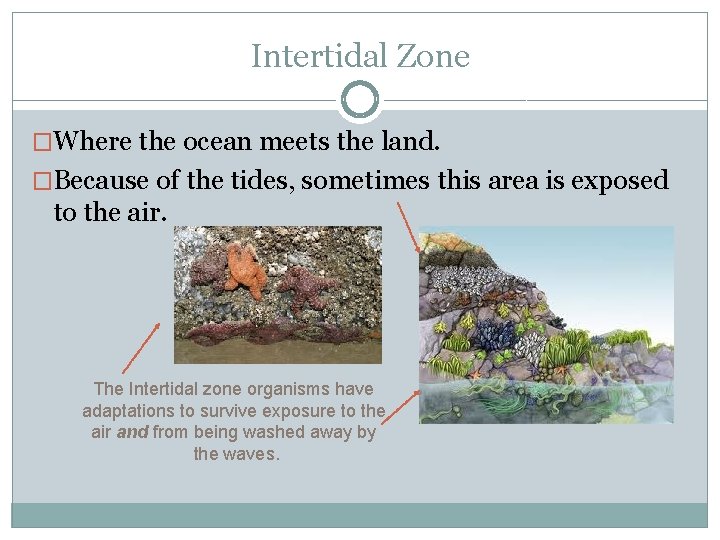
Intertidal Zone �Where the ocean meets the land. �Because of the tides, sometimes this area is exposed to the air. The Intertidal zone organisms have adaptations to survive exposure to the air and from being washed away by the waves.
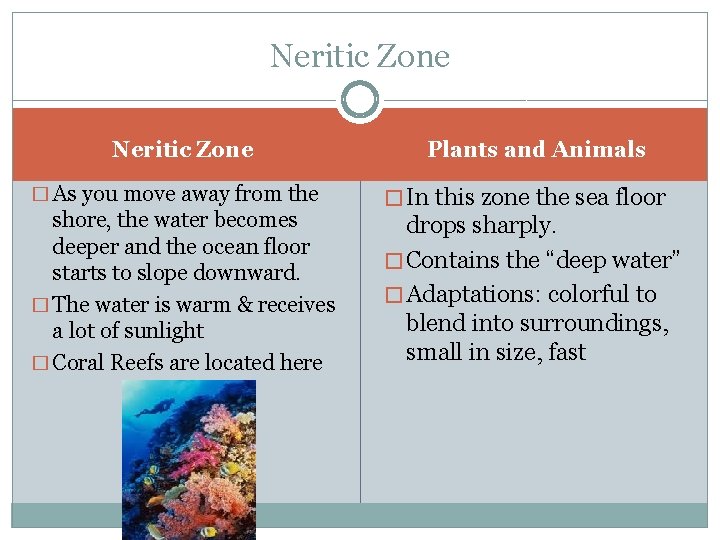
Neritic Zone � As you move away from the shore, the water becomes deeper and the ocean floor starts to slope downward. � The water is warm & receives a lot of sunlight � Coral Reefs are located here Plants and Animals � In this zone the sea floor drops sharply. � Contains the “deep water” � Adaptations: colorful to blend into surroundings, small in size, fast
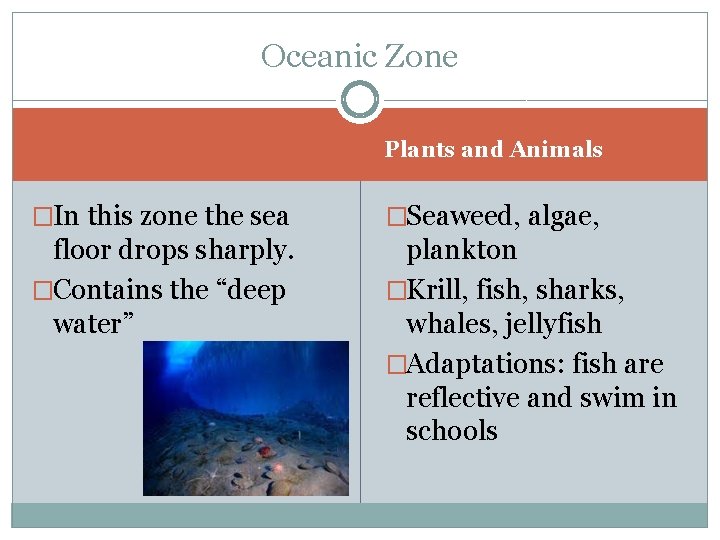
Oceanic Zone Plants and Animals �In this zone the sea �Seaweed, algae, floor drops sharply. �Contains the “deep water” plankton �Krill, fish, sharks, whales, jellyfish �Adaptations: fish are reflective and swim in schools
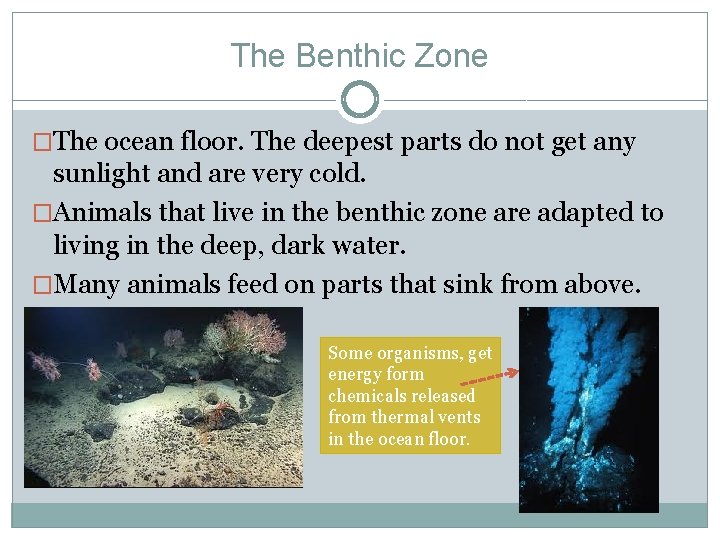
The Benthic Zone �The ocean floor. The deepest parts do not get any sunlight and are very cold. �Animals that live in the benthic zone are adapted to living in the deep, dark water. �Many animals feed on parts that sink from above. Some organisms, get energy form chemicals released from thermal vents in the ocean floor.
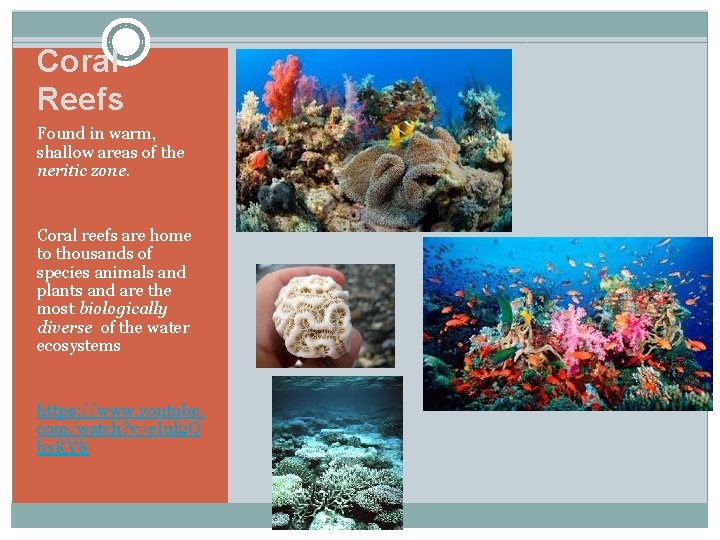
Coral Reefs Found in warm, shallow areas of the neritic zone. Coral reefs are home to thousands of species animals and plants and are the most biologically diverse of the water ecosystems https: //www. youtube. com/watch? v=e. Iul 2 O bv. KV 8
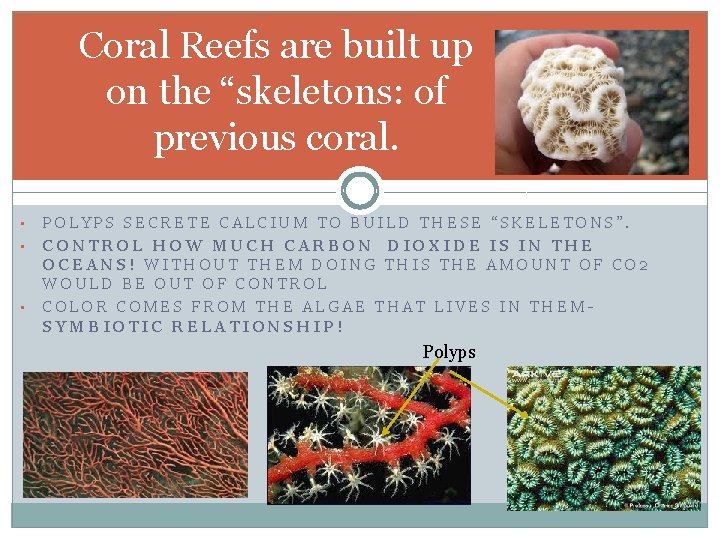
Coral Reefs are built up on the “skeletons: of previous coral. • • • POLYPS SECRETE CALCIUM TO BUILD THESE “SKELETONS”. CONTROL HOW MUCH CARBON DIOXIDE IS IN THE OCEANS! WITHOUT THEM DOING THIS THE AMOUNT OF CO 2 WOULD BE OUT OF CONTROL COLOR COMES FROM THE ALGAE THAT LIVES IN THEMSYMBIOTIC RELATIONSHIP! Polyps
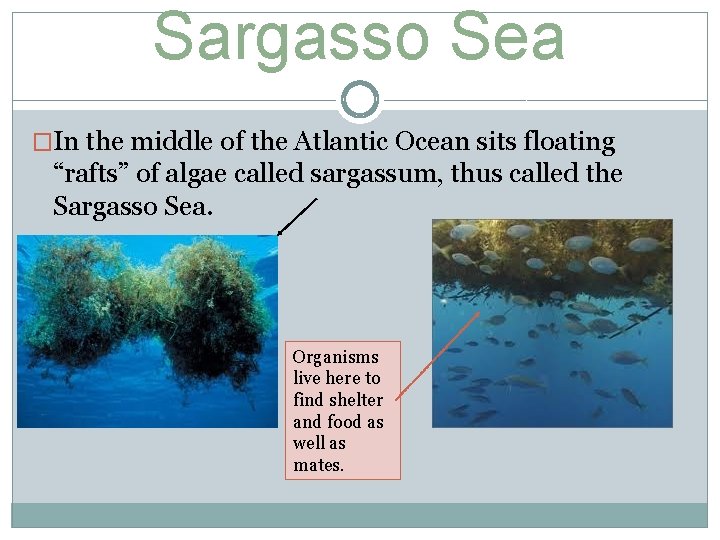
Sargasso Sea �In the middle of the Atlantic Ocean sits floating “rafts” of algae called sargassum, thus called the Sargasso Sea. Organisms live here to find shelter and food as well as mates.
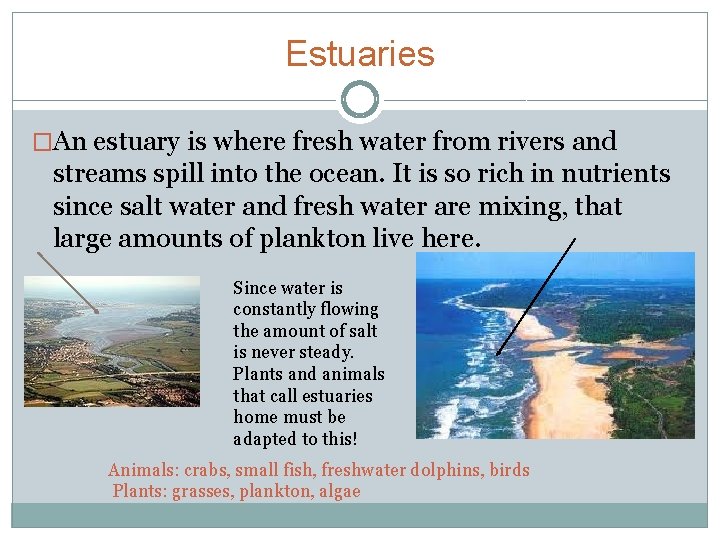
Estuaries �An estuary is where fresh water from rivers and streams spill into the ocean. It is so rich in nutrients since salt water and fresh water are mixing, that large amounts of plankton live here. Since water is constantly flowing the amount of salt is never steady. Plants and animals that call estuaries home must be adapted to this! Animals: crabs, small fish, freshwater dolphins, birds Plants: grasses, plankton, algae
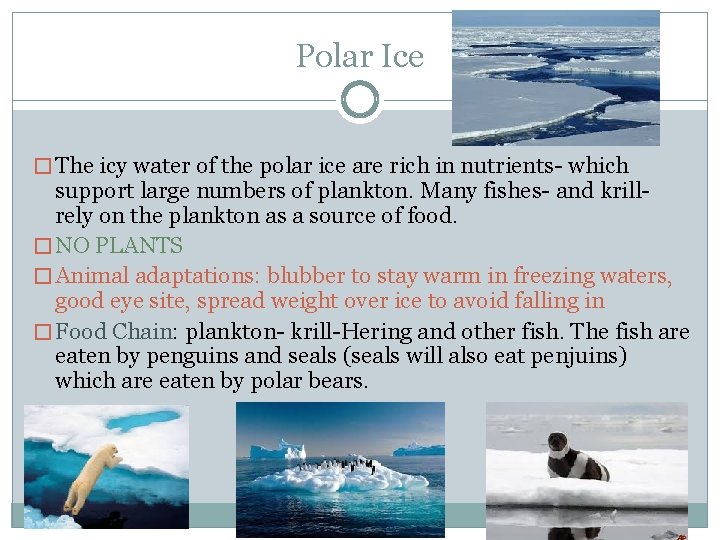
Polar Ice � The icy water of the polar ice are rich in nutrients- which support large numbers of plankton. Many fishes- and krillrely on the plankton as a source of food. � NO PLANTS � Animal adaptations: blubber to stay warm in freezing waters, good eye site, spread weight over ice to avoid falling in � Food Chain: plankton- krill-Hering and other fish. The fish are eaten by penguins and seals (seals will also eat penjuins) which are eaten by polar bears.
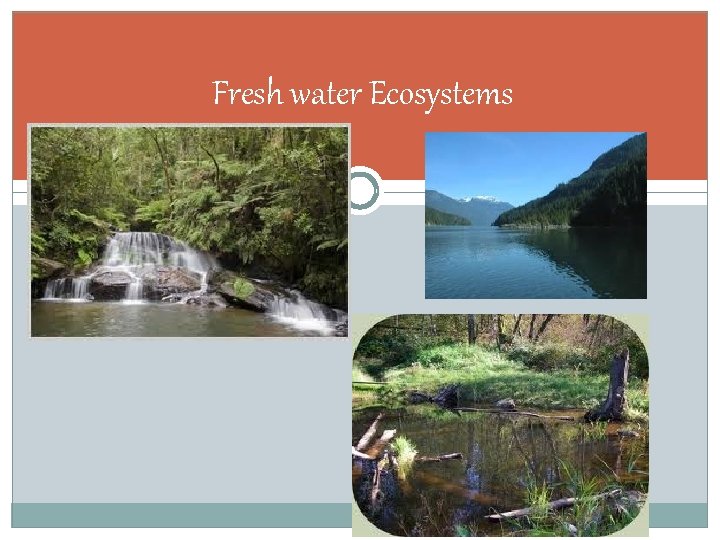
Fresh water Ecosystems
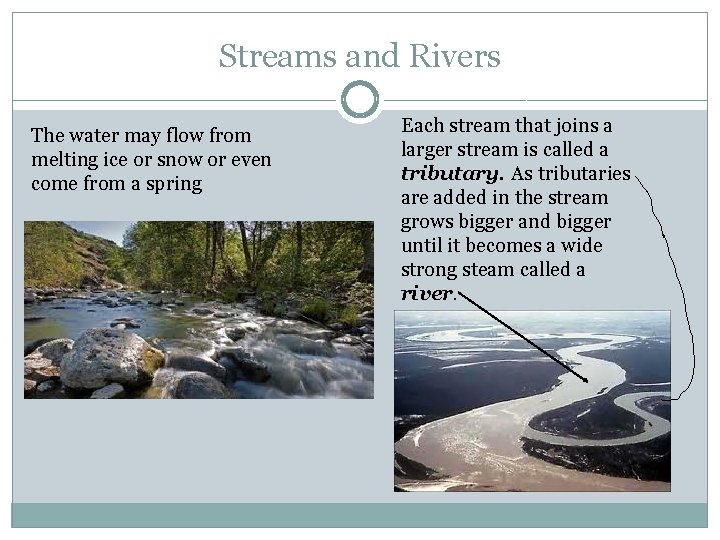
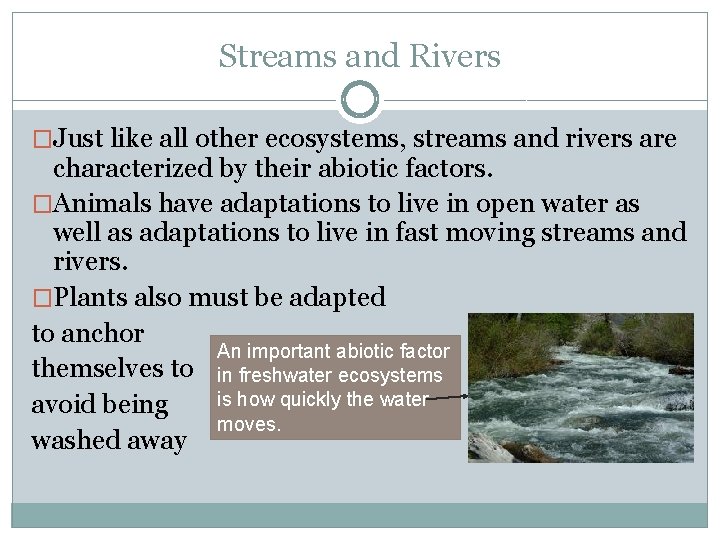
Streams and Rivers The water may flow from melting ice or snow or even come from a spring Each stream that joins a larger stream is called a tributary. As tributaries are added in the stream grows bigger and bigger until it becomes a wide strong steam called a river.
Streams and Rivers �Just like all other ecosystems, streams and rivers are characterized by their abiotic factors. �Animals have adaptations to live in open water as well as adaptations to live in fast moving streams and rivers. �Plants also must be adapted to anchor An important abiotic factor themselves to in freshwater ecosystems is how quickly the water avoid being moves. washed away
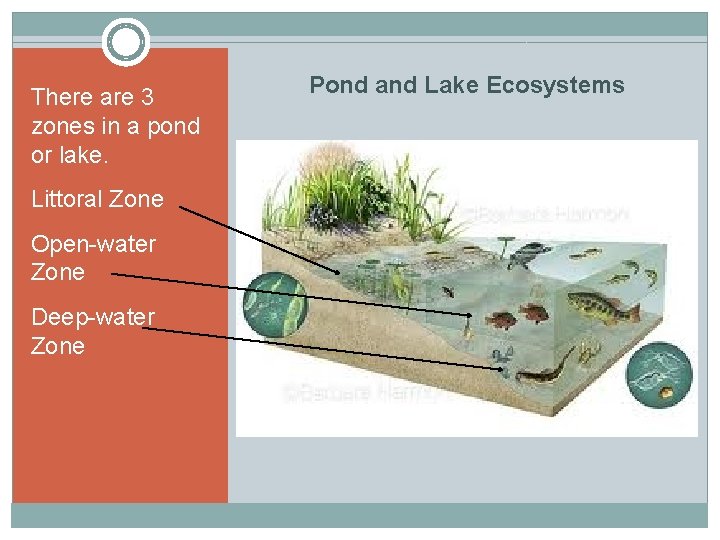
There are 3 zones in a pond or lake. Littoral Zone Open-water Zone Deep-water Zone Pond and Lake Ecosystems
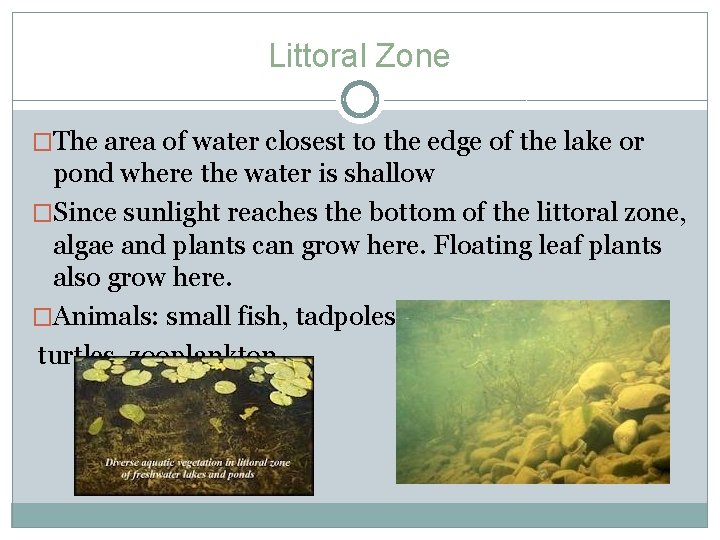
Littoral Zone �The area of water closest to the edge of the lake or pond where the water is shallow �Since sunlight reaches the bottom of the littoral zone, algae and plants can grow here. Floating leaf plants also grow here. �Animals: small fish, tadpoles turtles, zooplankton
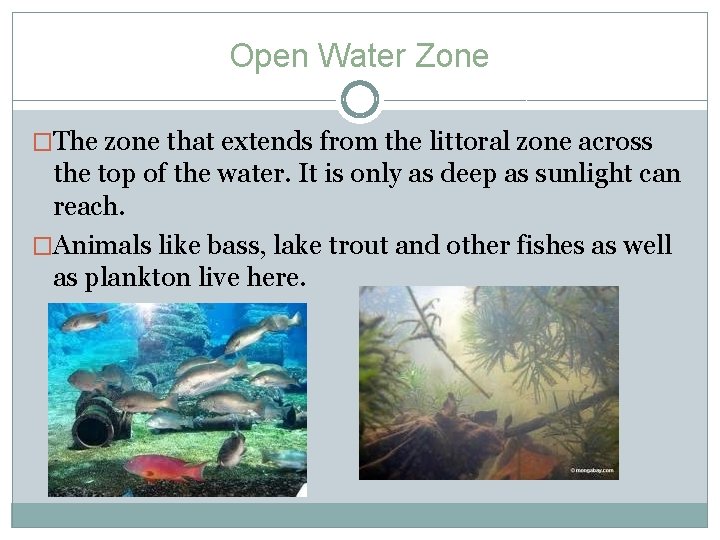
Open Water Zone �The zone that extends from the littoral zone across the top of the water. It is only as deep as sunlight can reach. �Animals like bass, lake trout and other fishes as well as plankton live here.
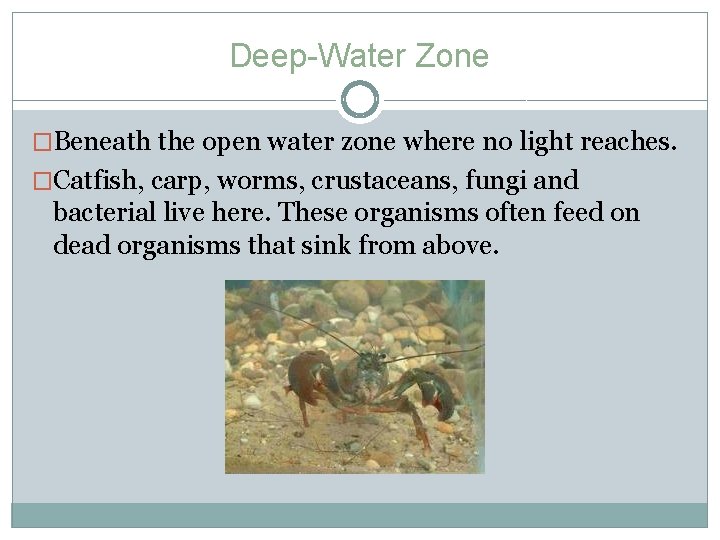
Deep-Water Zone �Beneath the open water zone where no light reaches. �Catfish, carp, worms, crustaceans, fungi and bacterial live here. These organisms often feed on dead organisms that sink from above.
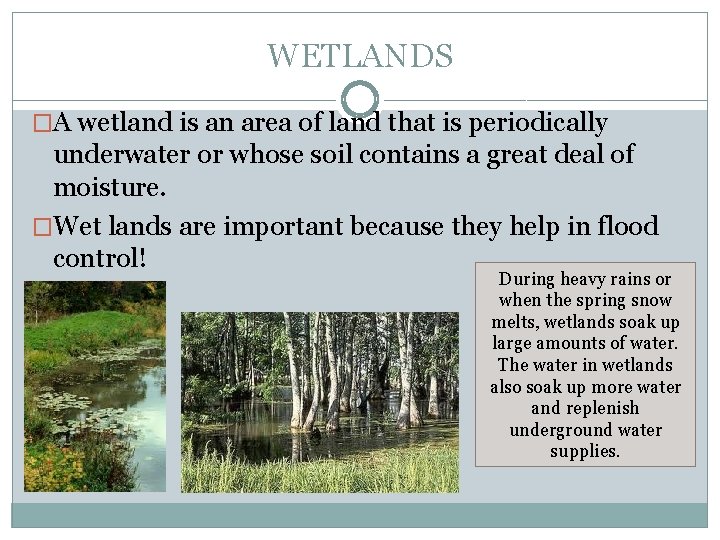
WETLANDS �A wetland is an area of land that is periodically underwater or whose soil contains a great deal of moisture. �Wet lands are important because they help in flood control! During heavy rains or when the spring snow melts, wetlands soak up large amounts of water. The water in wetlands also soak up more water and replenish underground water supplies.
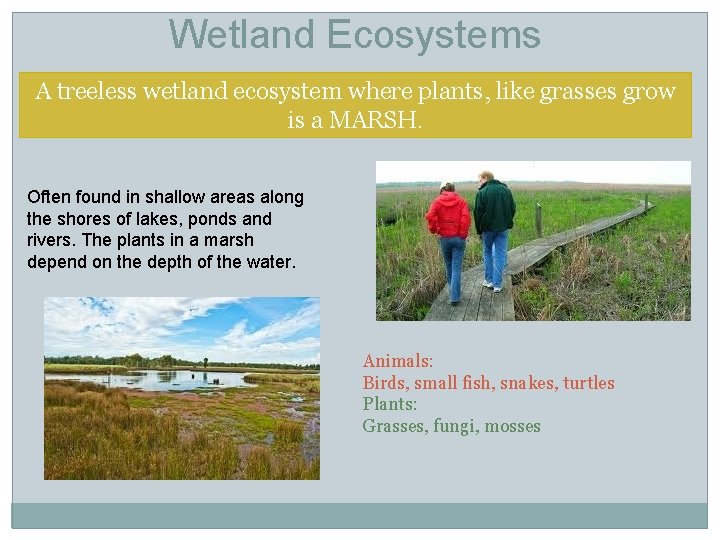
Wetland Ecosystems A treeless wetland ecosystem where plants, like grasses grow is a MARSH. Often found in shallow areas along the shores of lakes, ponds and rivers. The plants in a marsh depend on the depth of the water. Animals: Birds, small fish, snakes, turtles Plants: Grasses, fungi, mosses
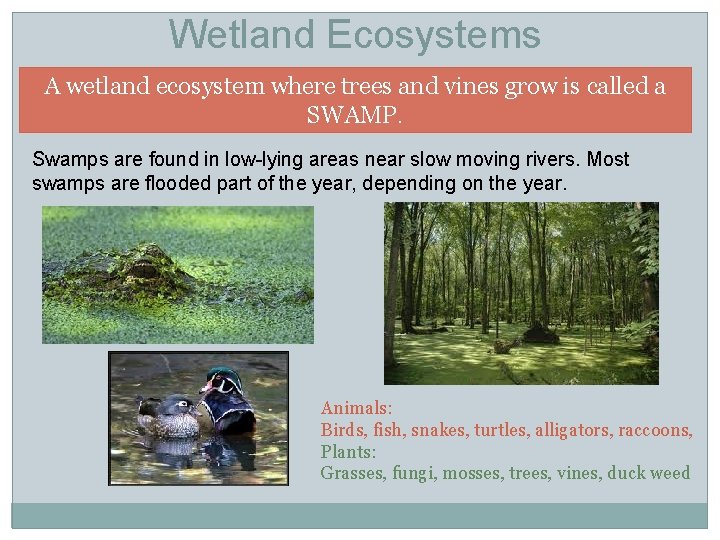
Wetland Ecosystems A wetland ecosystem where trees and vines grow is called a SWAMP. Swamps are found in low-lying areas near slow moving rivers. Most swamps are flooded part of the year, depending on the year. Animals: Birds, fish, snakes, turtles, alligators, raccoons, Plants: Grasses, fungi, mosses, trees, vines, duck weed