
Marine Ecosystems Chapter 7 Section 2 Environmental Science
- Slides: 17
Marine Ecosystems Chapter 7 Section 2 Environmental Science Ms. Mandel
Learning Targets �I can define a marine ecosystem. �I can differentiate between the different types of marine ecosystems. �Estuaries �Salt marshes �Mangrove swamps �Rocky and sandy shores �Coral reefs �Oceans �Arctic �Antarctica
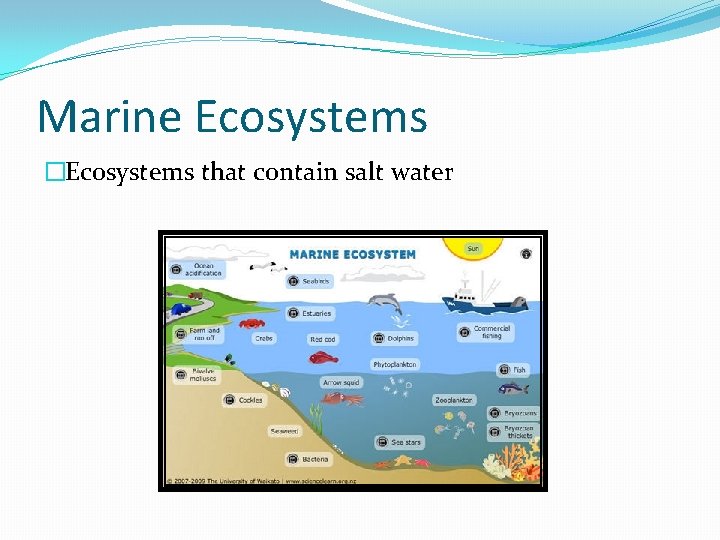
Marine Ecosystems �Ecosystems that contain salt water
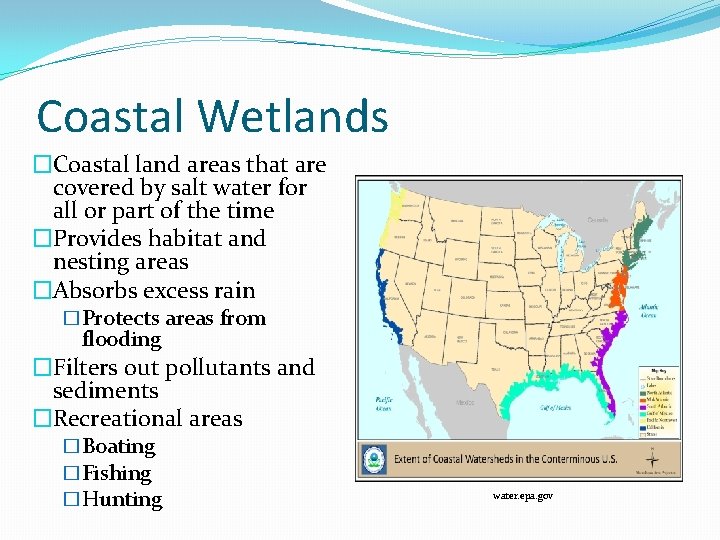
Coastal Wetlands �Coastal land areas that are covered by salt water for all or part of the time �Provides habitat and nesting areas �Absorbs excess rain �Protects areas from flooding �Filters out pollutants and sediments �Recreational areas �Boating �Fishing �Hunting water. epa. gov
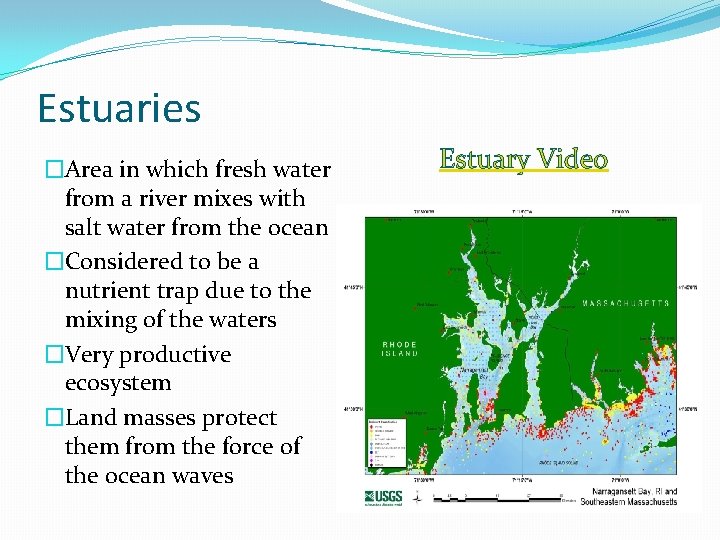
Estuaries �Area in which fresh water from a river mixes with salt water from the ocean �Considered to be a nutrient trap due to the mixing of the waters �Very productive ecosystem �Land masses protect them from the force of the ocean waves Estuary Video
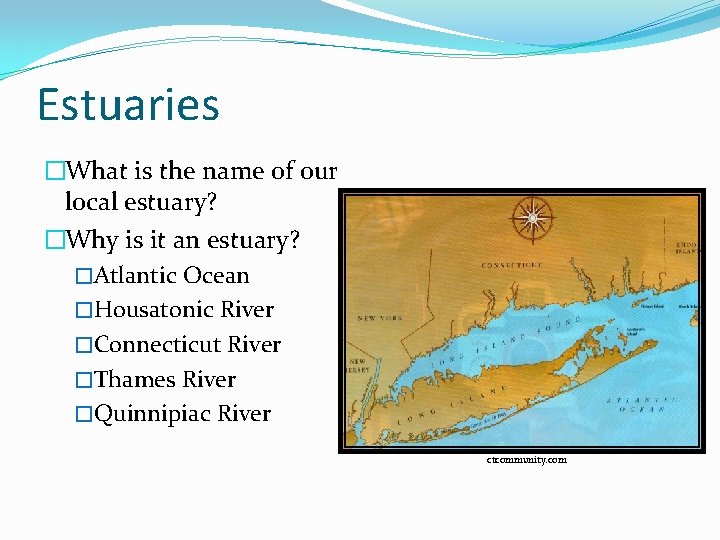
Estuaries �What is the name of our local estuary? �Why is it an estuary? �Atlantic Ocean �Housatonic River �Connecticut River �Thames River �Quinnipiac River ctcommunity. com
Estuaries �Support many marine organisms �Plenty of nutrients �Phytoplankton �Birds �Clams �Crabs �Plants �Fish Threats �Sewage �Industrial waste �Agricultural runoff �Human population growth
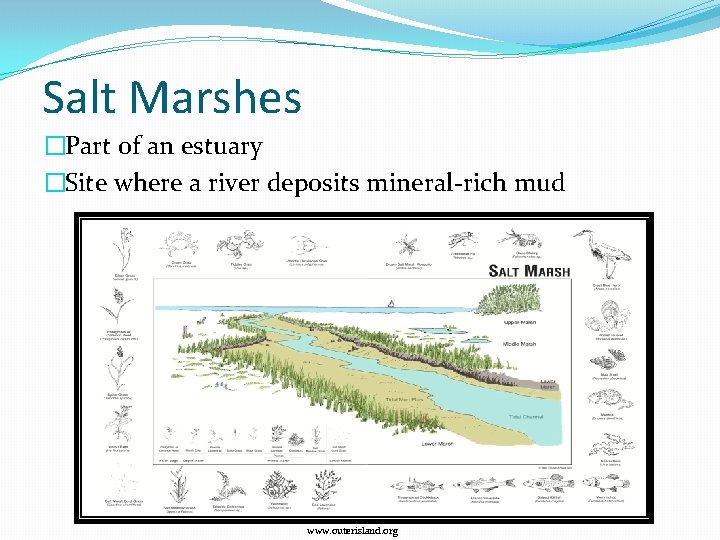
Salt Marshes �Part of an estuary �Site where a river deposits mineral-rich mud www. outerisland. org
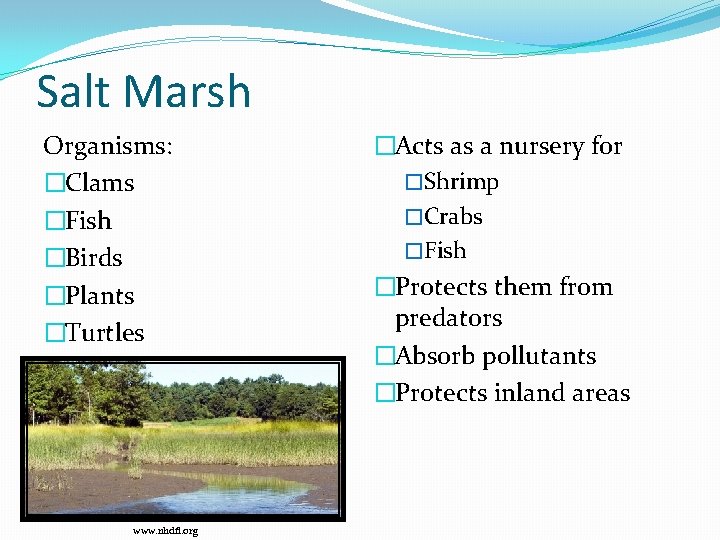
Salt Marsh Organisms: �Clams �Fish �Birds �Plants �Turtles www. nhdfl. org �Acts as a nursery for �Shrimp �Crabs �Fish �Protects them from predators �Absorb pollutants �Protects inland areas
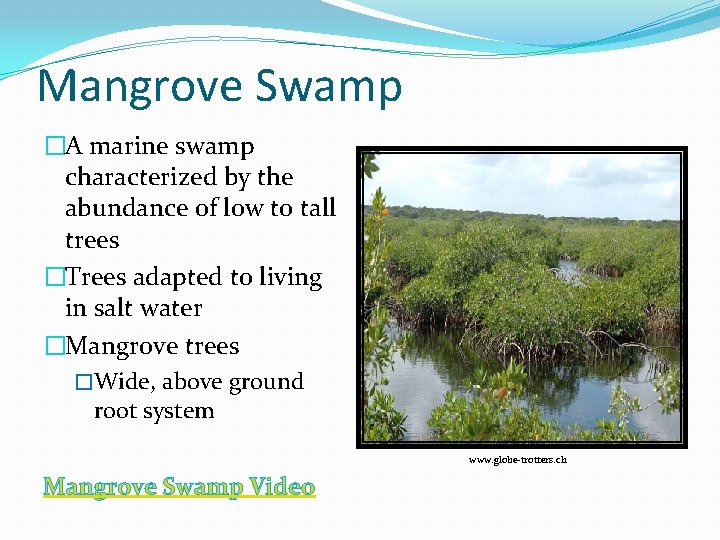
Mangrove Swamp �A marine swamp characterized by the abundance of low to tall trees �Trees adapted to living in salt water �Mangrove trees �Wide, above ground root system www. globe-trotters. ch Mangrove Swamp Video
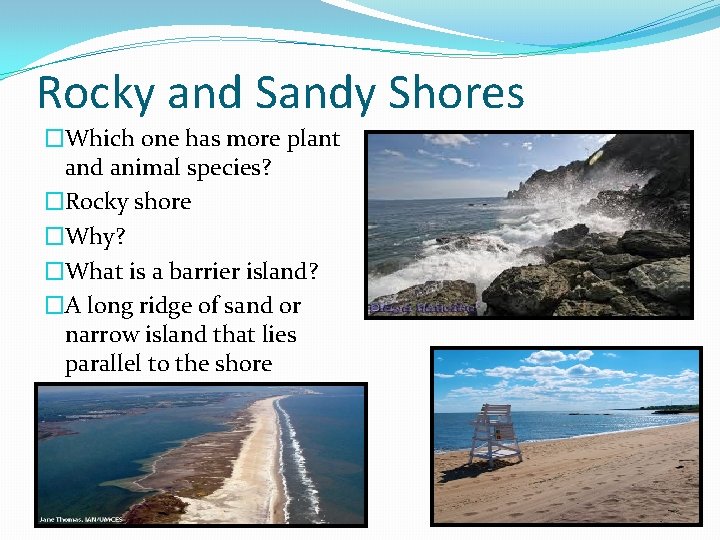
Rocky and Sandy Shores �Which one has more plant and animal species? �Rocky shore �Why? �What is a barrier island? �A long ridge of sand or narrow island that lies parallel to the shore
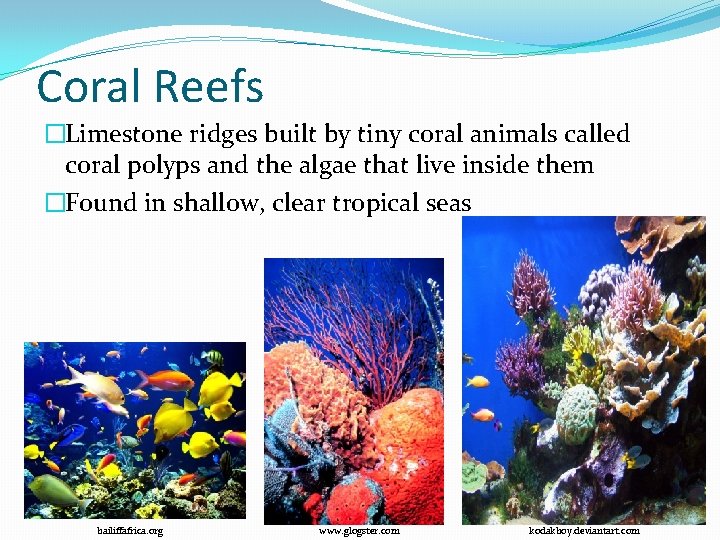
Coral Reefs �Limestone ridges built by tiny coral animals called coral polyps and the algae that live inside them �Found in shallow, clear tropical seas bailiffafrica. org www. glogster. com kodakboy. deviantart. com
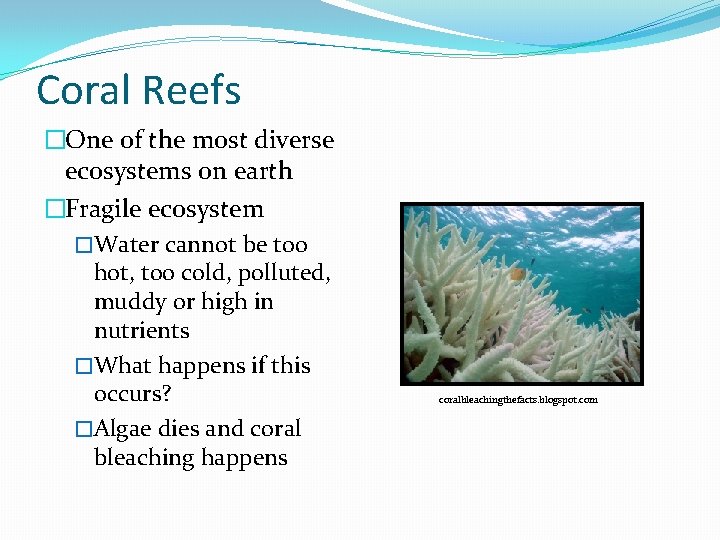
Coral Reefs �One of the most diverse ecosystems on earth �Fragile ecosystem �Water cannot be too hot, too cold, polluted, muddy or high in nutrients �What happens if this occurs? �Algae dies and coral bleaching happens coralbleachingthefacts. blogspot. com
Coral Reefs in Danger �Why are coral reefs in danger? �Human activities �Global warming �Oil spills �Pollution �Overfishing �Why is it important to not stress out or destroy a coral reef? �They grow back slowly and may not be able to repair itself
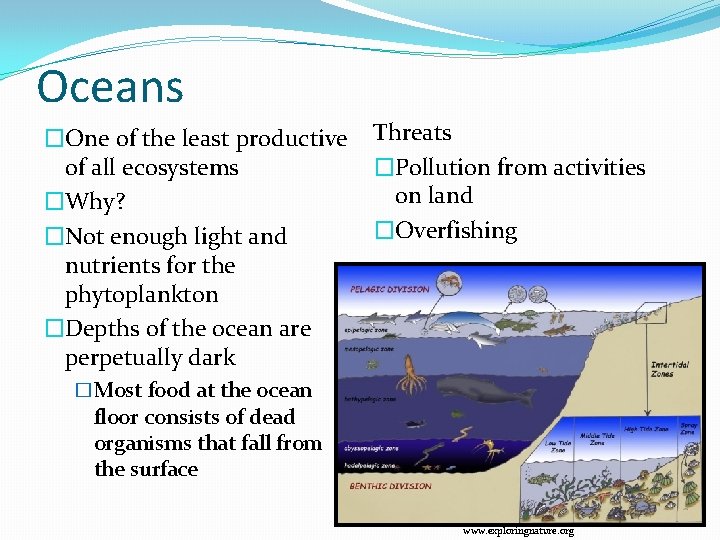
Oceans �One of the least productive of all ecosystems �Why? �Not enough light and nutrients for the phytoplankton �Depths of the ocean are perpetually dark Threats �Pollution from activities on land �Overfishing �Most food at the ocean floor consists of dead organisms that fall from the surface www. exploringnature. org
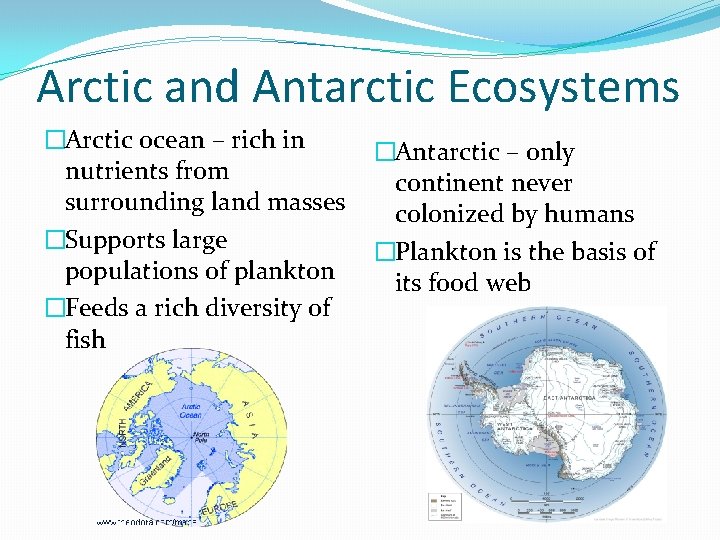
Arctic and Antarctic Ecosystems �Arctic ocean – rich in nutrients from surrounding land masses �Supports large populations of plankton �Feeds a rich diversity of fish �Antarctic – only continent never colonized by humans �Plankton is the basis of its food web
Learning Target Checkpoints �What is a marine ecosystem? �How do you differentiate between the different marine ecosystems? �Estuaries �Salt marshes �Mangrove swamps �Rocky and sandy shores �Coral reefs �Oceans �Arctic �Antarctica