
Marine Ecosystems Chapter 7 2 Natural Capital 2004
- Slides: 46
Marine Ecosystems Chapter 7. 2
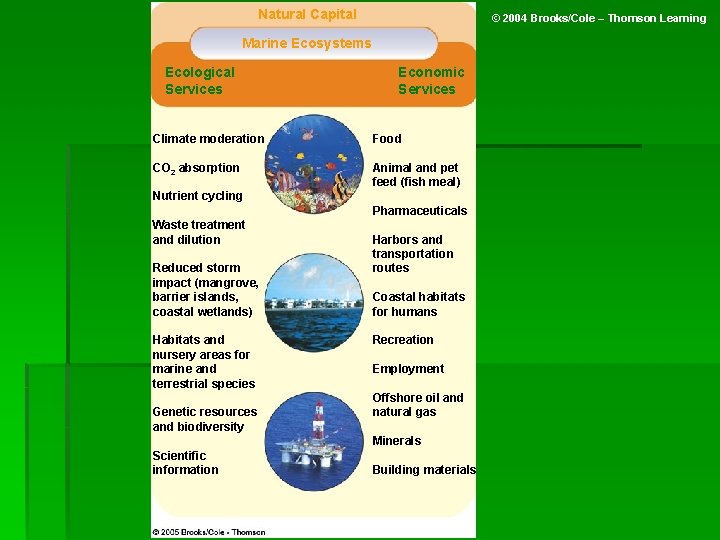
Natural Capital © 2004 Brooks/Cole – Thomson Learning Marine Ecosystems Ecological Services Economic Services Climate moderation Food CO 2 absorption Animal and pet feed (fish meal) Nutrient cycling Pharmaceuticals Waste treatment and dilution Reduced storm impact (mangrove, barrier islands, coastal wetlands) Habitats and nursery areas for marine and terrestrial species Genetic resources and biodiversity Harbors and transportation routes Coastal habitats for humans Recreation Employment Offshore oil and natural gas Minerals Scientific information Building materials
Categories of marine ecosystems 1. Coastal ecosystems – includes: estuaries, salt marshes, mangrove swamps, rocky and sandy shores 2. Coral reefs 3. Oceans
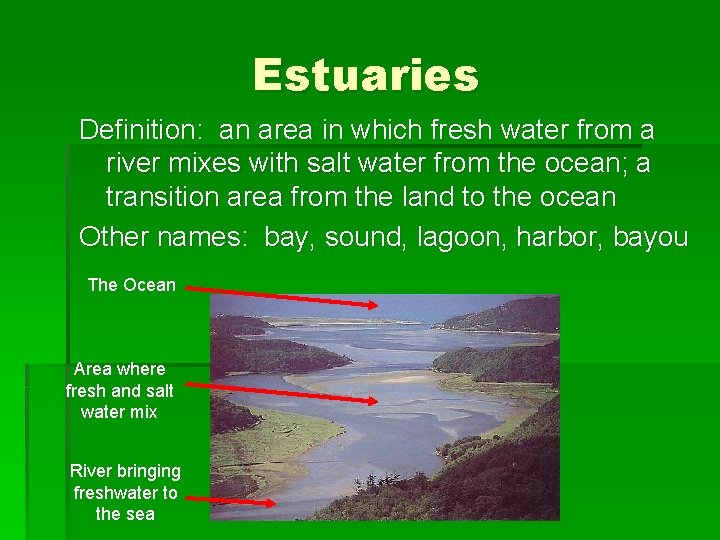
Estuaries Definition: an area in which fresh water from a river mixes with salt water from the ocean; a transition area from the land to the ocean Other names: bay, sound, lagoon, harbor, bayou The Ocean Area where fresh and salt water mix River bringing freshwater to the sea
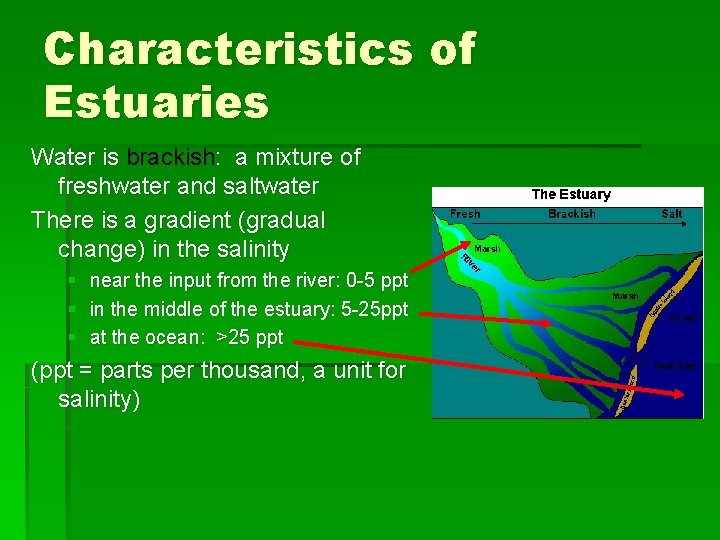
Characteristics of Estuaries Water is brackish: a mixture of freshwater and saltwater There is a gradient (gradual change) in the salinity § § § near the input from the river: 0 -5 ppt in the middle of the estuary: 5 -25 ppt at the ocean: >25 ppt (ppt = parts per thousand, a unit for salinity)
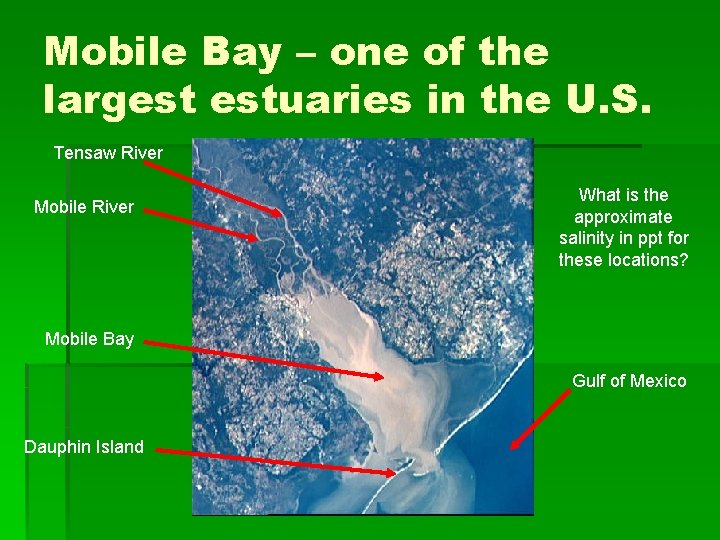
Mobile Bay – one of the largest estuaries in the U. S. Tensaw River Mobile River What is the approximate salinity in ppt for these locations? Mobile Bay Gulf of Mexico Dauphin Island
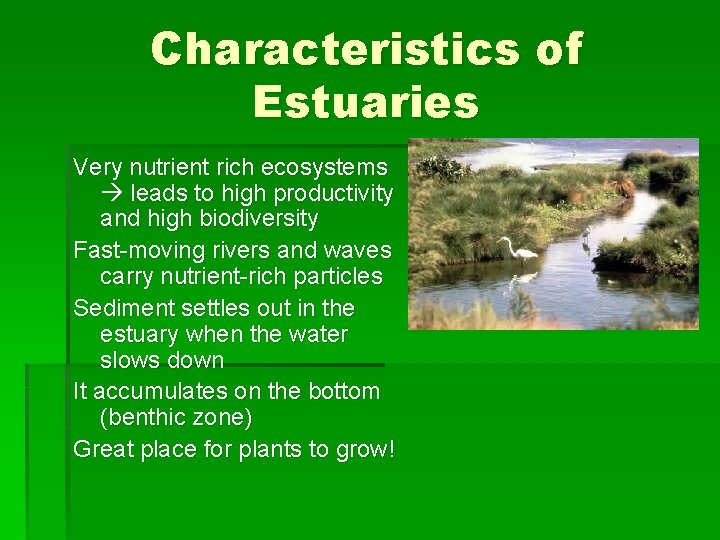
Characteristics of Estuaries Very nutrient rich ecosystems leads to high productivity and high biodiversity Fast-moving rivers and waves carry nutrient-rich particles Sediment settles out in the estuary when the water slows down It accumulates on the bottom (benthic zone) Great place for plants to grow!
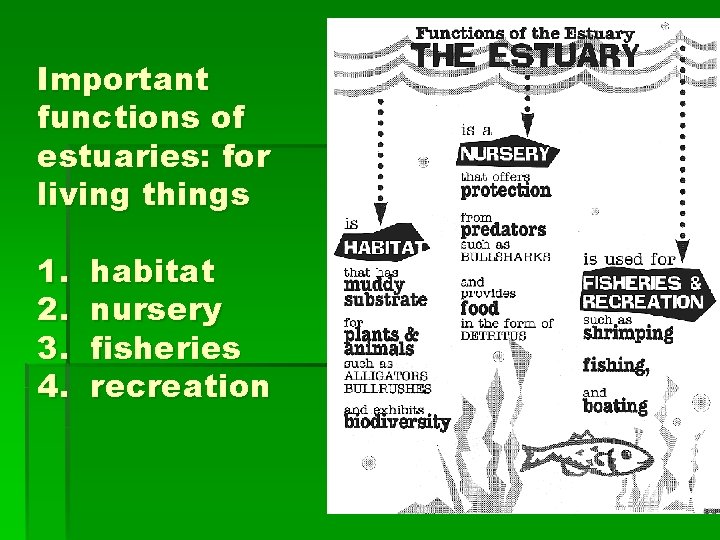
Important functions of estuaries: for living things 1. 2. 3. 4. habitat nursery fisheries recreation
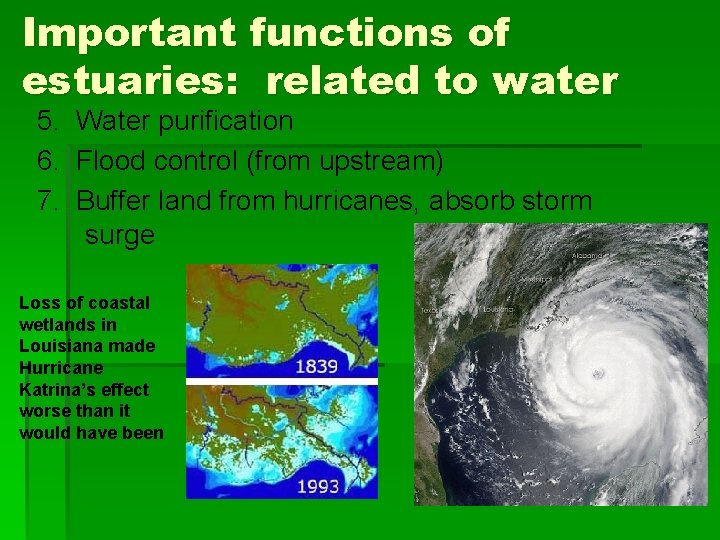
Important functions of estuaries: related to water 5. Water purification 6. Flood control (from upstream) 7. Buffer land from hurricanes, absorb storm surge Loss of coastal wetlands in Louisiana made Hurricane Katrina’s effect worse than it would have been
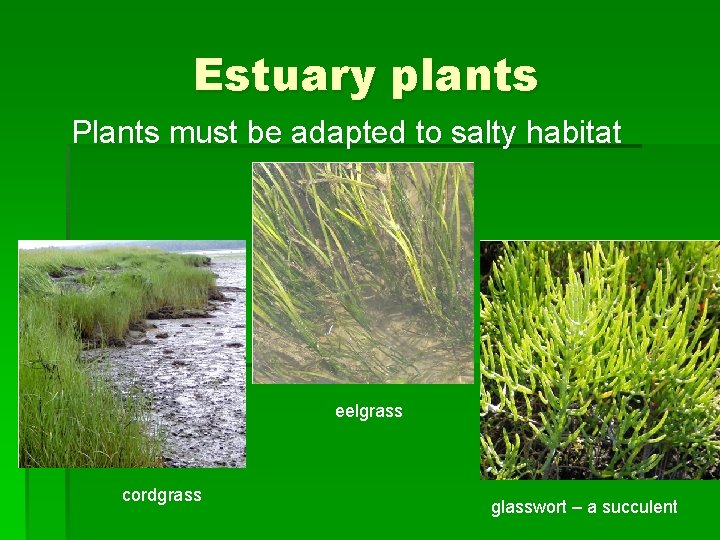
Estuary plants Plants must be adapted to salty habitat eelgrass cordgrass glasswort – a succulent
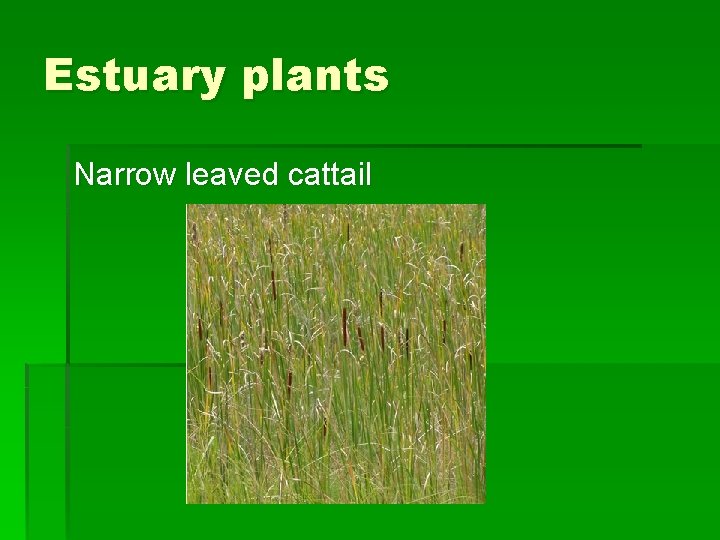
Estuary plants Narrow leaved cattail
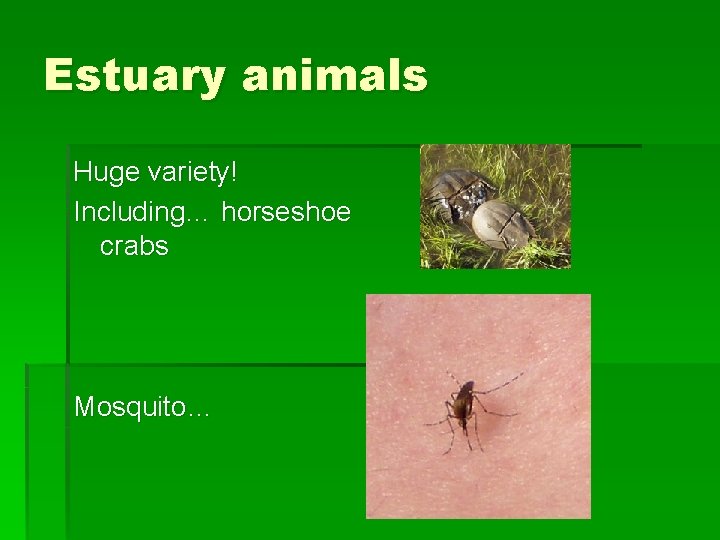
Estuary animals Huge variety! Including… horseshoe crabs Mosquito…
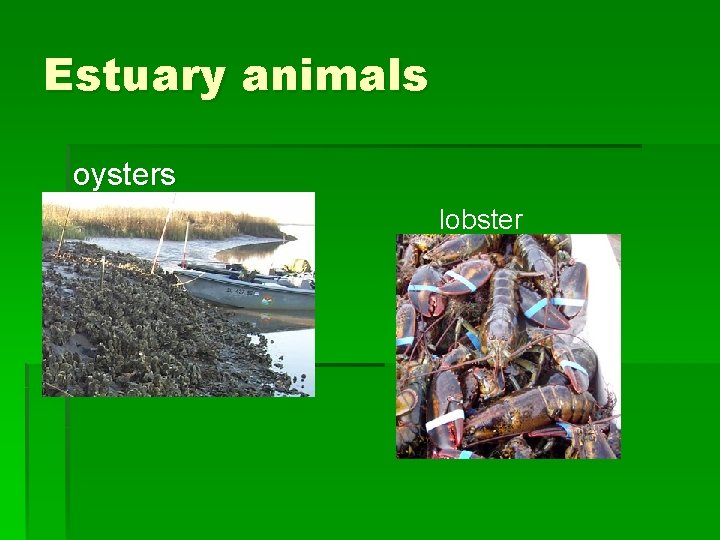
Estuary animals oysters lobster
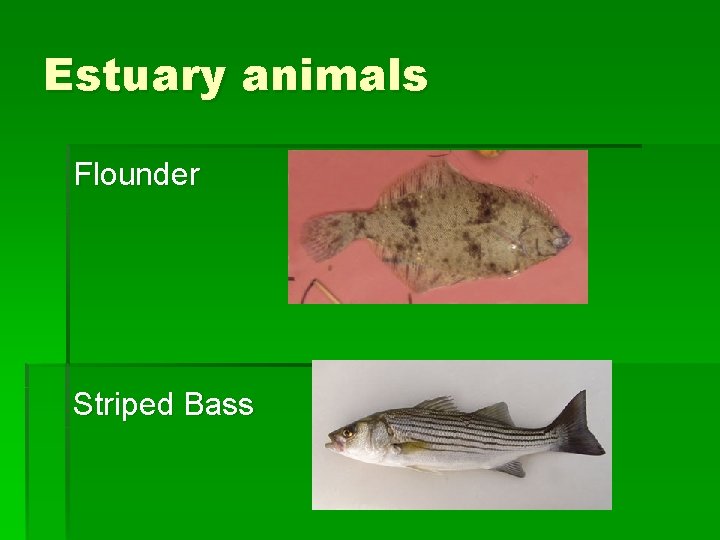
Estuary animals Flounder Striped Bass
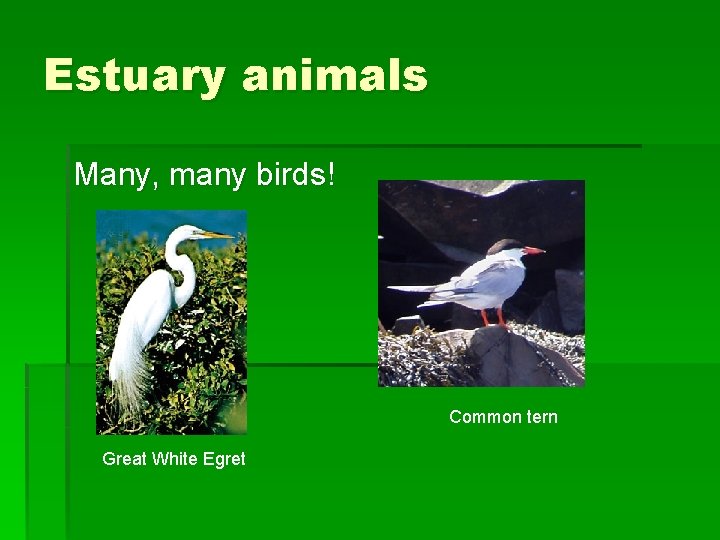
Estuary animals Many, many birds! Common tern Great White Egret
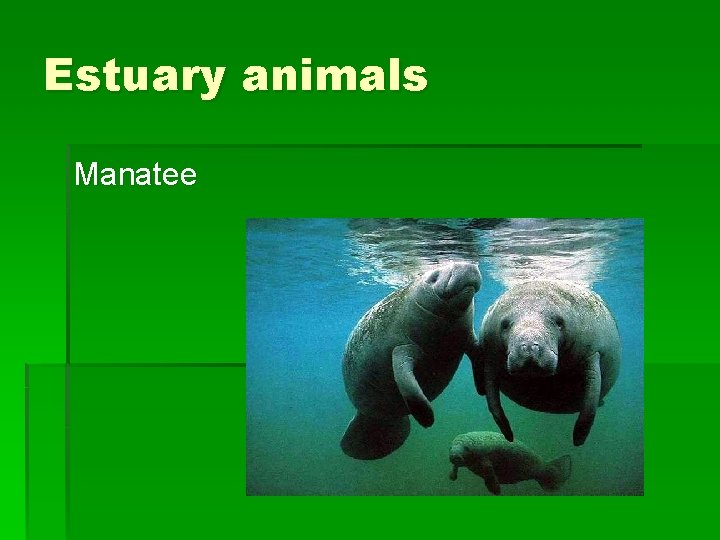
Estuary animals Manatee
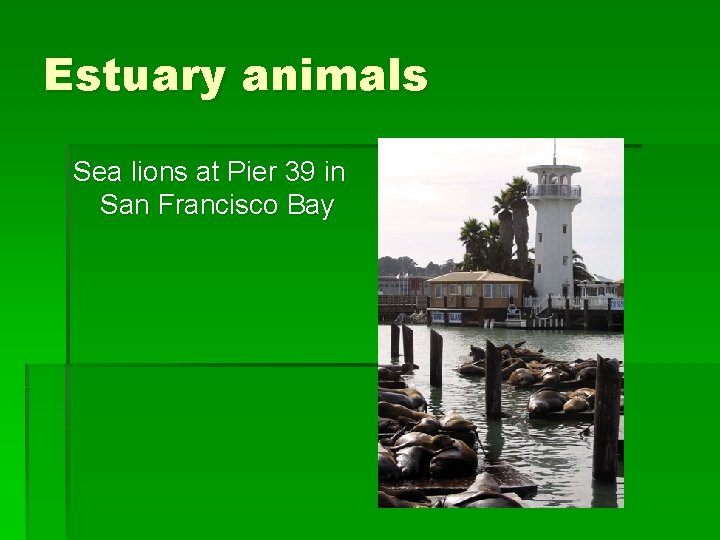
Estuary animals Sea lions at Pier 39 in San Francisco Bay
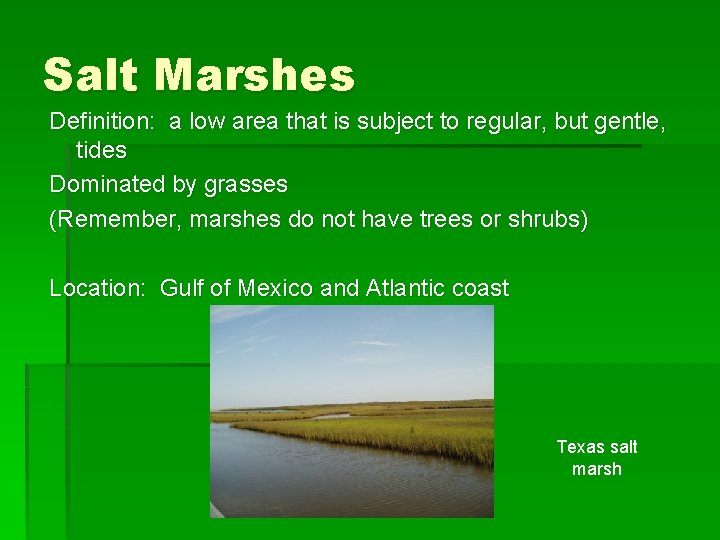
Salt Marshes Definition: a low area that is subject to regular, but gentle, tides Dominated by grasses (Remember, marshes do not have trees or shrubs) Location: Gulf of Mexico and Atlantic coast Texas salt marsh
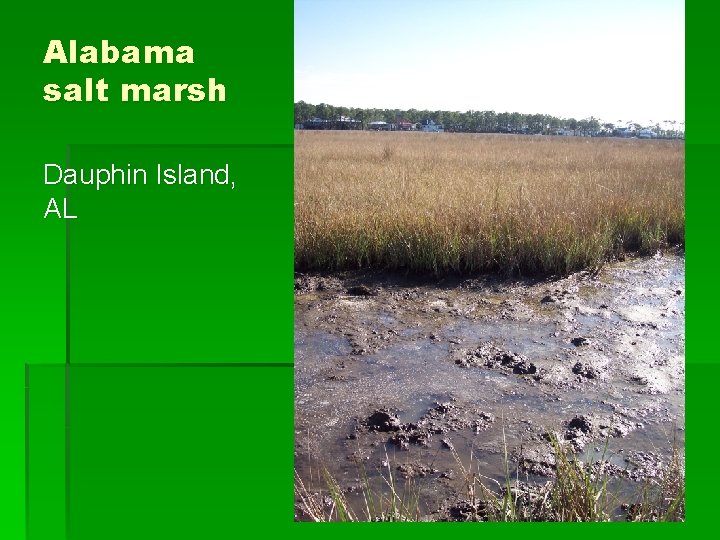
Alabama salt marsh Dauphin Island, AL
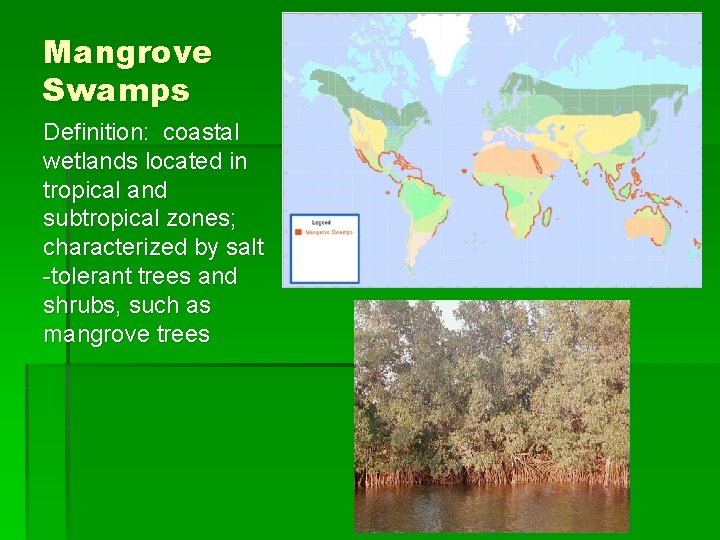
Mangrove Swamps Definition: coastal wetlands located in tropical and subtropical zones; characterized by salt -tolerant trees and shrubs, such as mangrove trees
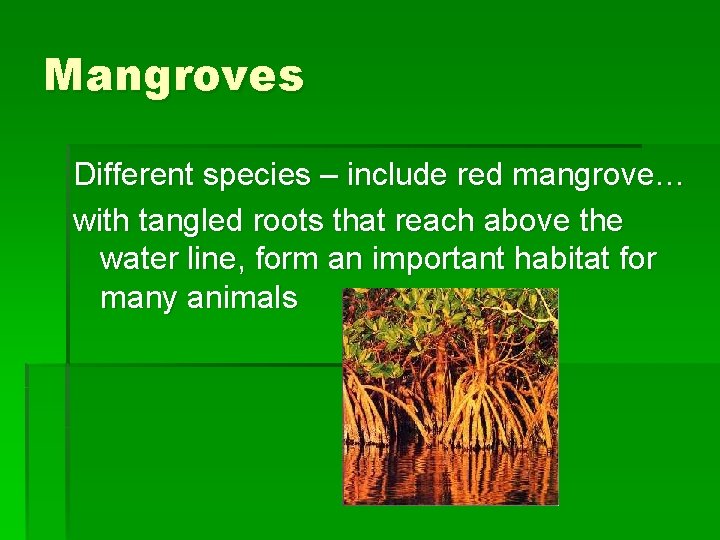
Mangroves Different species – include red mangrove… with tangled roots that reach above the water line, form an important habitat for many animals
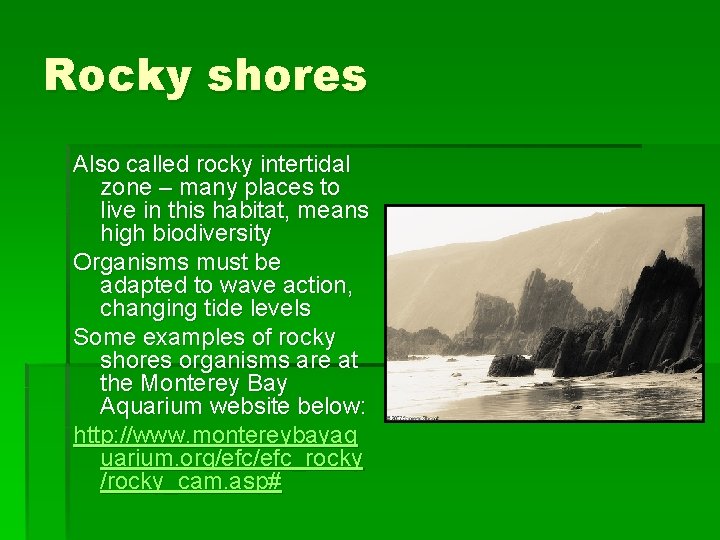
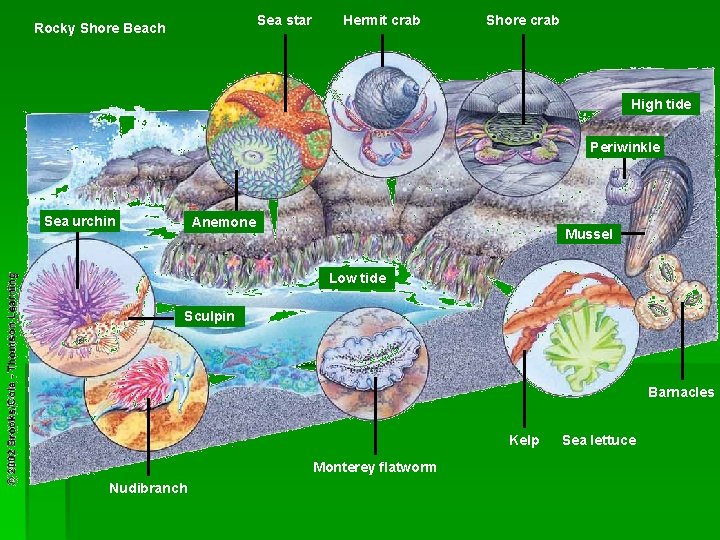
Rocky shores Also called rocky intertidal zone – many places to live in this habitat, means high biodiversity Organisms must be adapted to wave action, changing tide levels Some examples of rocky shores organisms are at the Monterey Bay Aquarium website below: http: //www. montereybayaq uarium. org/efc_rocky /rocky_cam. asp#
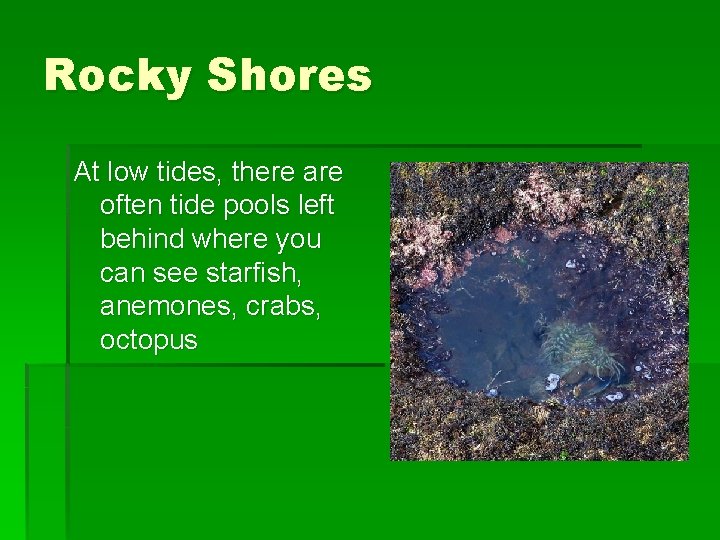
Rocky Shores At low tides, there are often tide pools left behind where you can see starfish, anemones, crabs, octopus
Sea star Rocky Shore Beach Hermit crab Shore crab High tide Periwinkle Sea urchin Anemone Mussel Low tide Sculpin Barnacles Kelp Monterey flatworm Nudibranch Sea lettuce
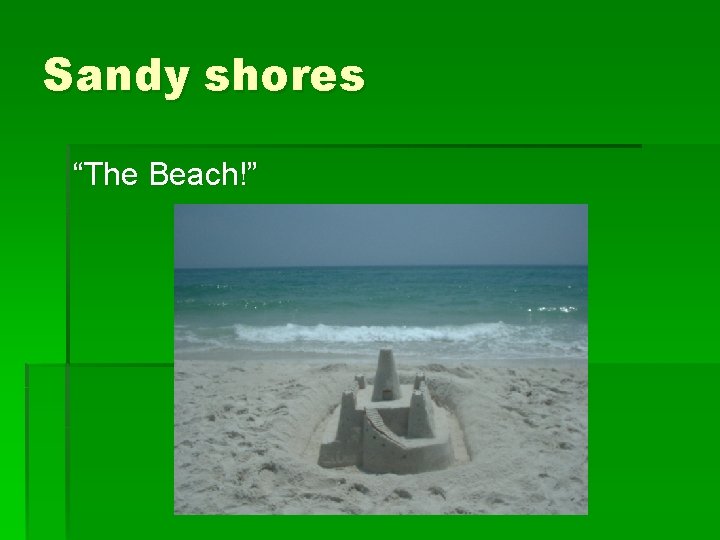
Sandy shores “The Beach!”
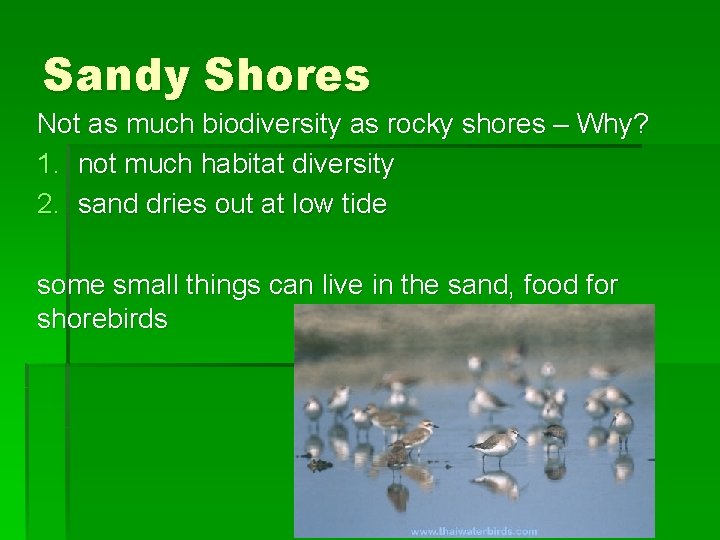
Sandy Shores Not as much biodiversity as rocky shores – Why? 1. not much habitat diversity 2. sand dries out at low tide some small things can live in the sand, food for shorebirds
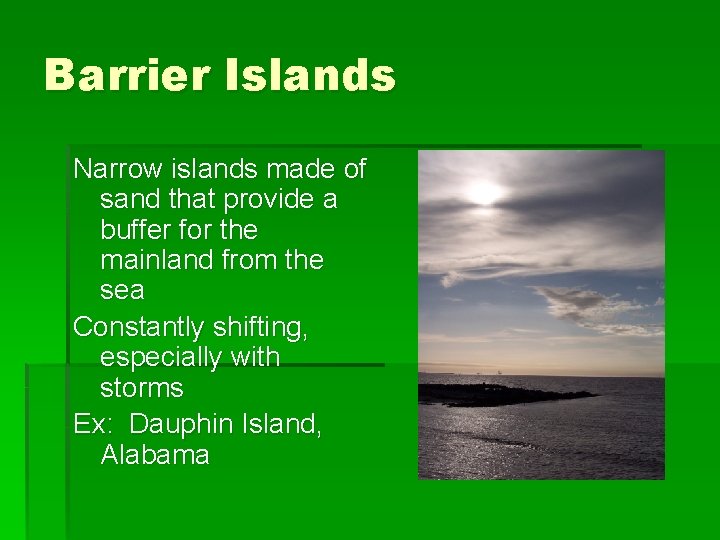
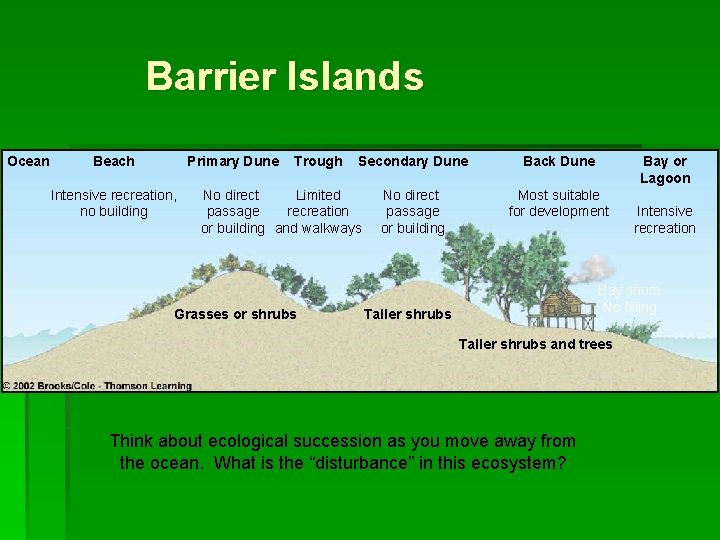
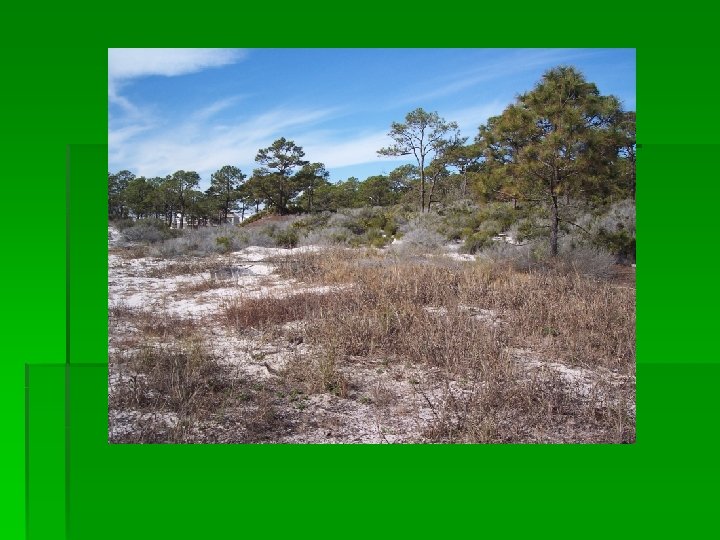
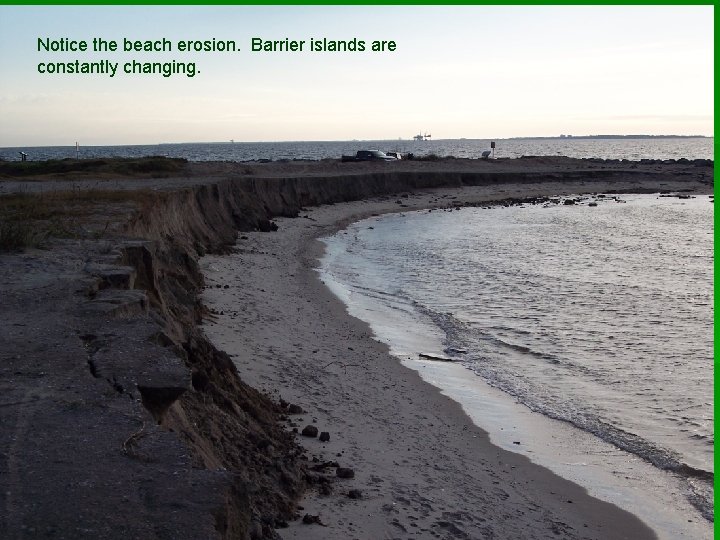
Barrier Islands Narrow islands made of sand that provide a buffer for the mainland from the sea Constantly shifting, especially with storms Ex: Dauphin Island, Alabama
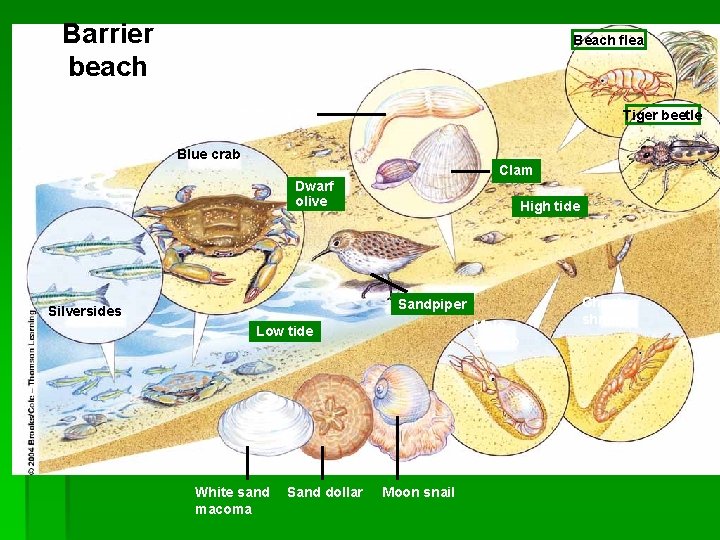
Barrier beach Beach flea Peanut worm Tiger beetle Blue crab Clam Dwarf olive High tide Sandpiper Silversides Mole shrimp Low tide White sand macoma Sand dollar Moon snail Ghost shrimp
Barrier Islands Ocean Beach Primary Dune Intensive recreation, no building Trough Secondary Dune No direct Limited passage recreation or building and walkways Grasses or shrubs No direct passage or building Back Dune Bay or Lagoon Most suitable for development Intensive recreation Bay shore No filling Taller shrubs and trees Think about ecological succession as you move away from the ocean. What is the “disturbance” in this ecosystem?
Notice the beach erosion. Barrier islands are constantly changing.
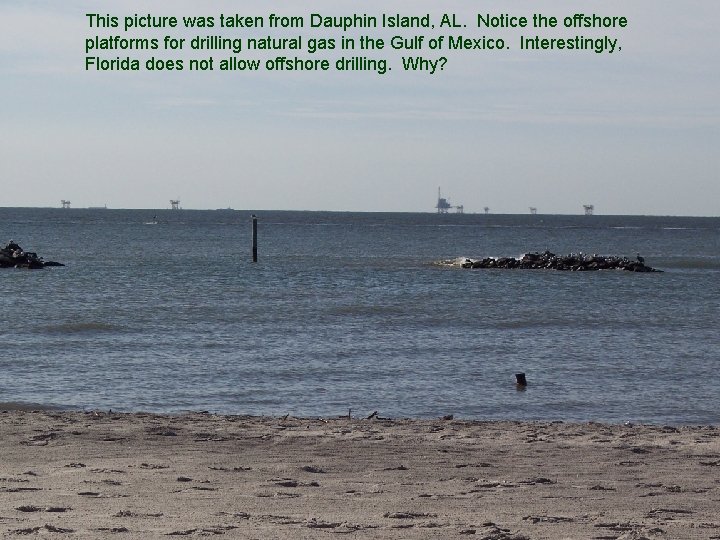
This picture was taken from Dauphin Island, AL. Notice the offshore platforms for drilling natural gas in the Gulf of Mexico. Interestingly, Florida does not allow offshore drilling. Why?
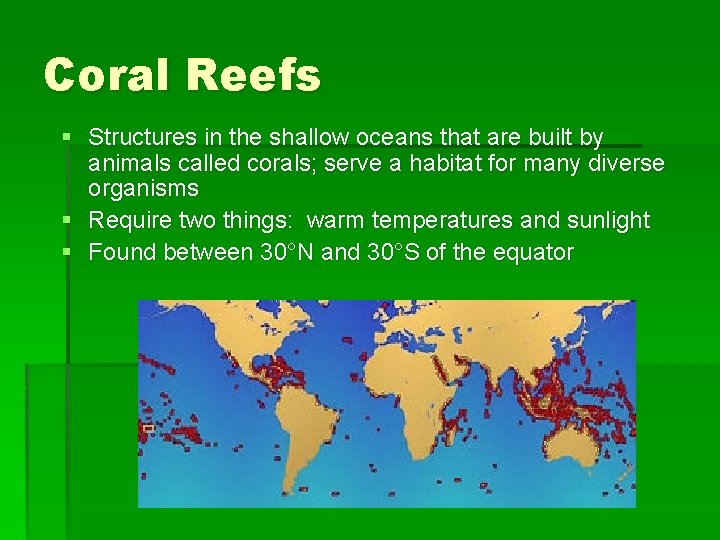
Coral Reefs § Structures in the shallow oceans that are built by animals called corals; serve a habitat for many diverse organisms § Require two things: warm temperatures and sunlight § Found between 30°N and 30°S of the equator
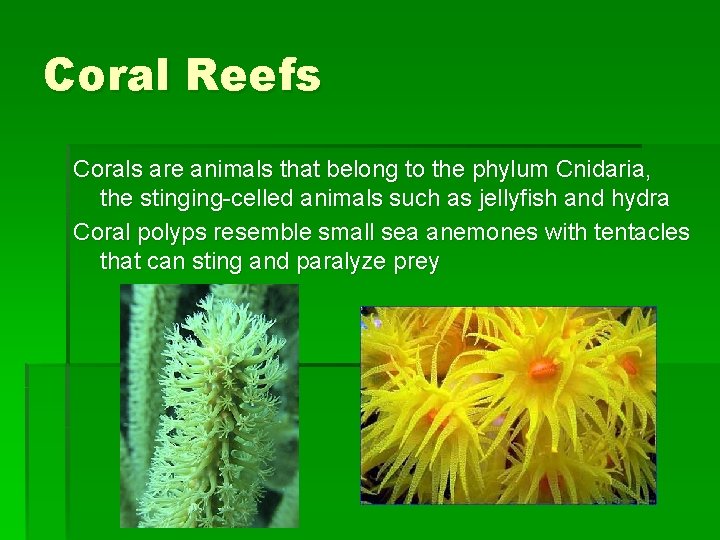
Coral Reefs Corals are animals that belong to the phylum Cnidaria, the stinging-celled animals such as jellyfish and hydra Coral polyps resemble small sea anemones with tentacles that can sting and paralyze prey
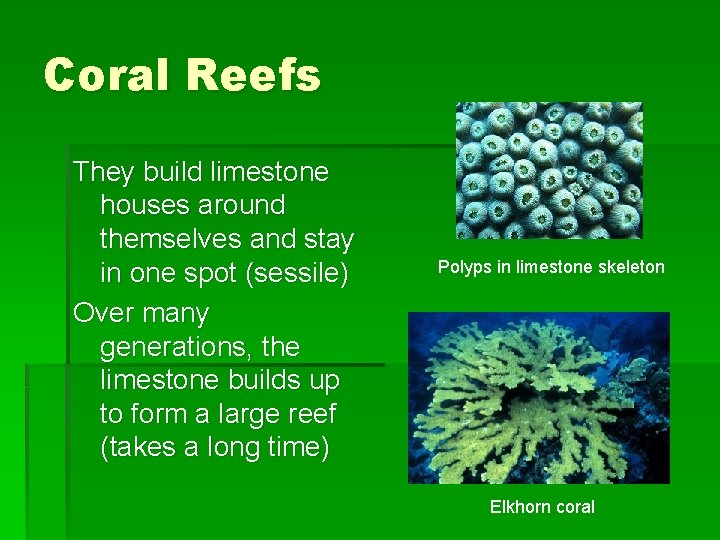
Coral Reefs They build limestone houses around themselves and stay in one spot (sessile) Over many generations, the limestone builds up to form a large reef (takes a long time) Polyps in limestone skeleton Elkhorn coral
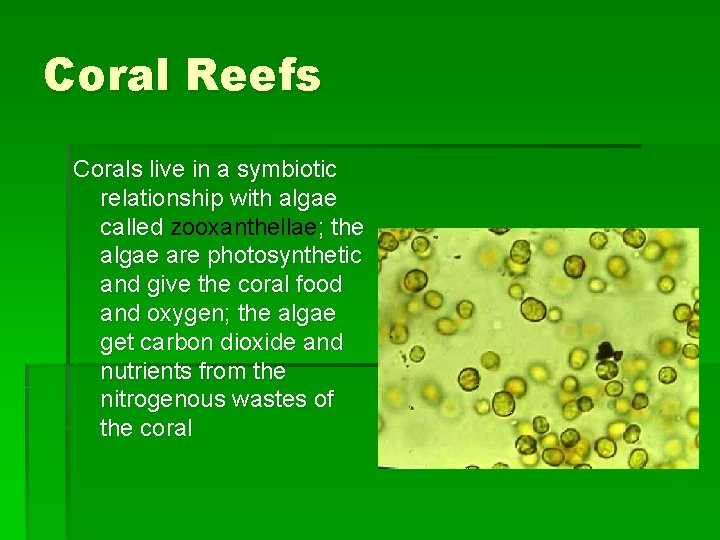
Coral Reefs Corals live in a symbiotic relationship with algae called zooxanthellae; the algae are photosynthetic and give the coral food and oxygen; the algae get carbon dioxide and nutrients from the nitrogenous wastes of the coral
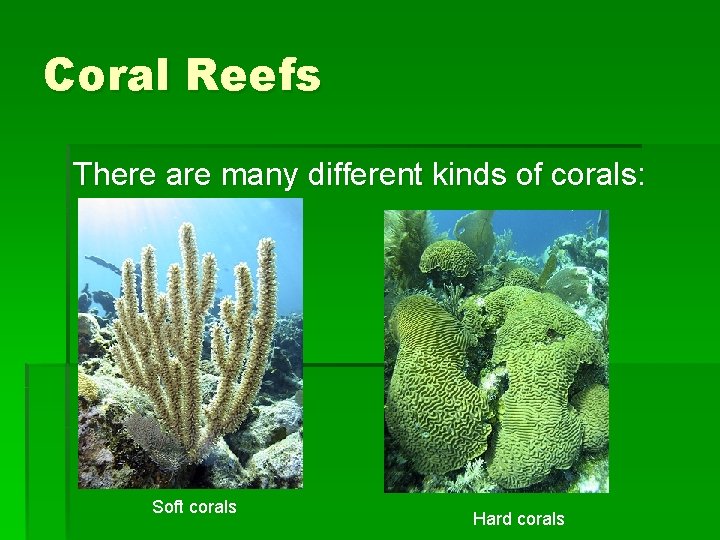
Coral Reefs There are many different kinds of corals: Soft corals Hard corals
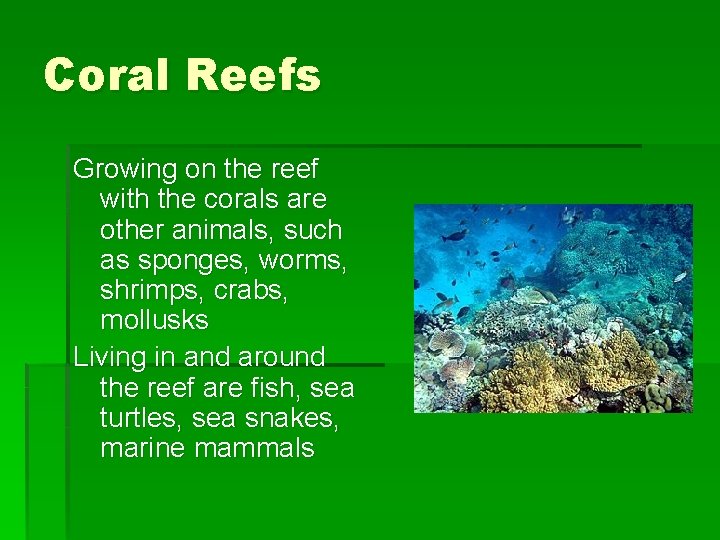
Coral Reefs Growing on the reef with the corals are other animals, such as sponges, worms, shrimps, crabs, mollusks Living in and around the reef are fish, sea turtles, sea snakes, marine mammals
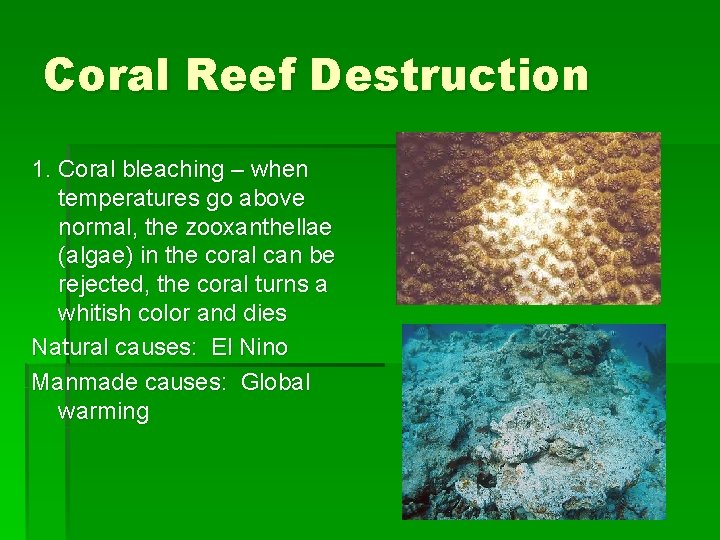
Coral Reef Destruction 1. Coral bleaching – when temperatures go above normal, the zooxanthellae (algae) in the coral can be rejected, the coral turns a whitish color and dies Natural causes: El Nino Manmade causes: Global warming
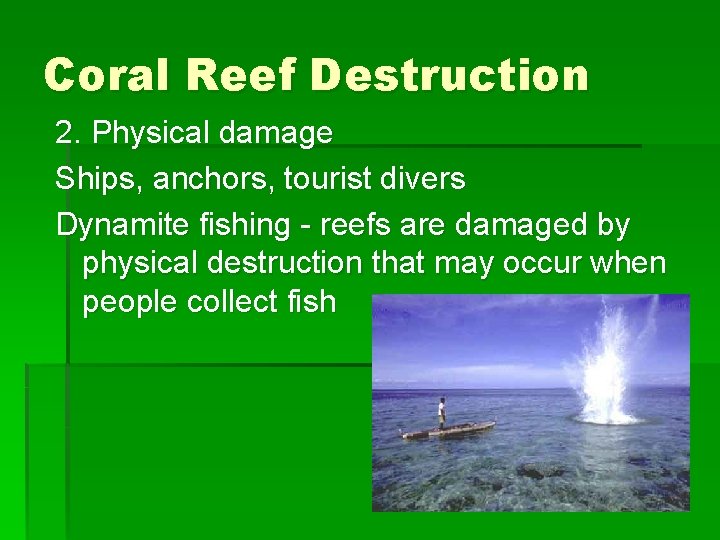
Coral Reef Destruction 2. Physical damage Ships, anchors, tourist divers Dynamite fishing - reefs are damaged by physical destruction that may occur when people collect fish
Coral Reef Destruction 3. Land development and pollution – loss of mangrove forests means more nutrients and sediments flow out to the sea; coral may die from sediment or algal blooms 4. Fish and coral trade 5. Increased exposure to UV due to ozone depletion
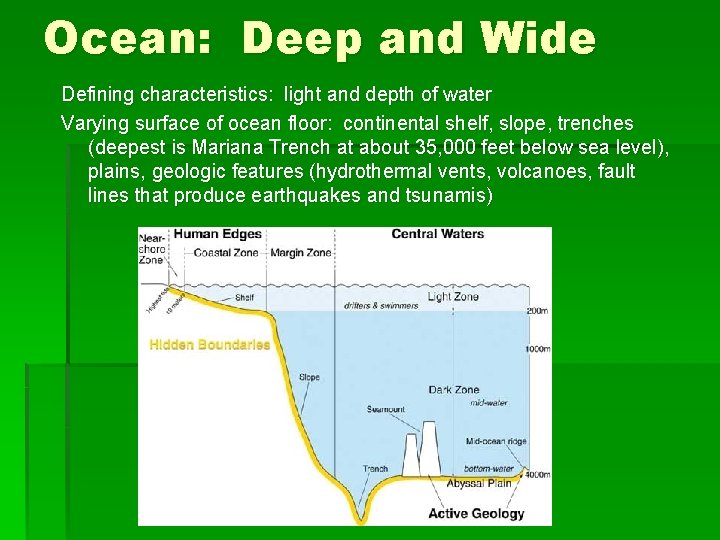
Ocean: Deep and Wide Defining characteristics: light and depth of water Varying surface of ocean floor: continental shelf, slope, trenches (deepest is Mariana Trench at about 35, 000 feet below sea level), plains, geologic features (hydrothermal vents, volcanoes, fault lines that produce earthquakes and tsunamis)
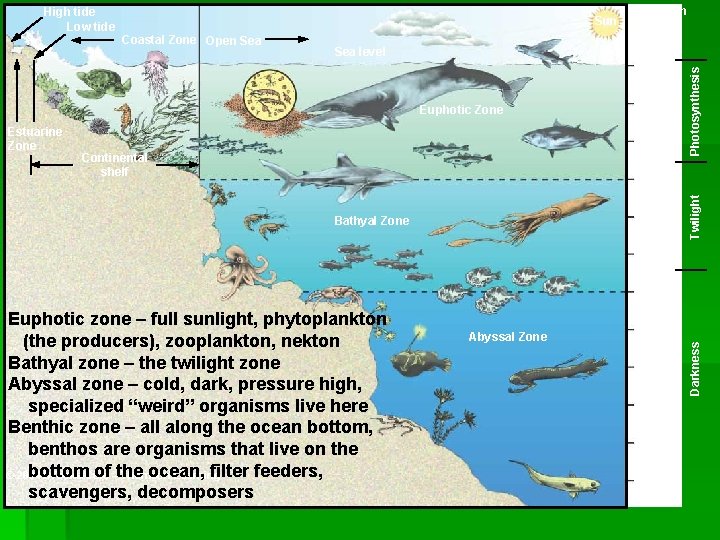
Coastal Zone Open Sea level Depth in meters 0 50 Euphotic Zone Estuarine Zone 100 Continental shelf Photosynthesis Sun 200 500 Bathyal Zone 1, 000 Twilight High tide Low tide 1, 500 Euphotic zone – full sunlight, phytoplankton (the producers), zooplankton, nekton Bathyal zone – the twilight zone Abyssal zone – cold, dark, pressure high, specialized “weird” organisms live here Benthic zone – all along the ocean bottom, benthos are organisms that live on the bottom of –the ocean, filter feeders, © 2004 Brooks/Cole Thomson Learning scavengers, decomposers Abyssal Zone 3, 000 4, 000 5, 000 10, 000 Darkness 2, 000
Deep ocean Characteristics: dark, cold, high pressure How can anything live there? What is the base of the food chain? Two ways: 1. marine snow – organic particles that settle down from above 2. hydrothermal vents - cracks in the earth that allow hot gases to escape, certain bacteria can make food in these conditions (chemosynthesis) Will see both of these in the Planet Earth video….
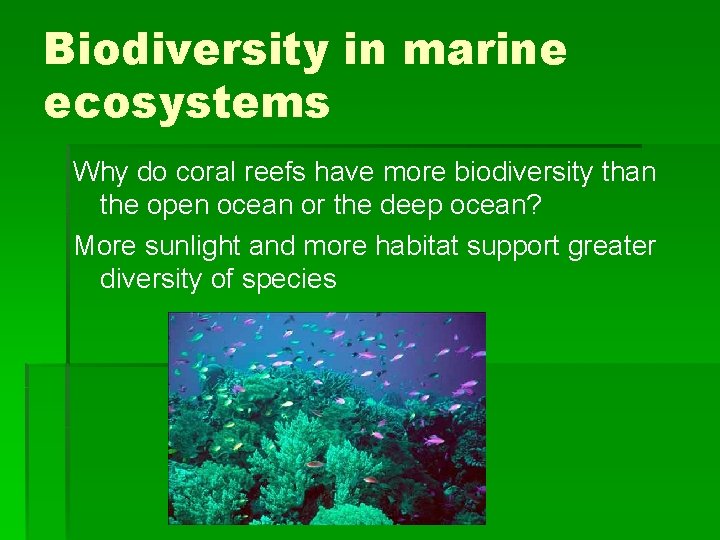
Biodiversity in marine ecosystems Why do coral reefs have more biodiversity than the open ocean or the deep ocean? More sunlight and more habitat support greater diversity of species
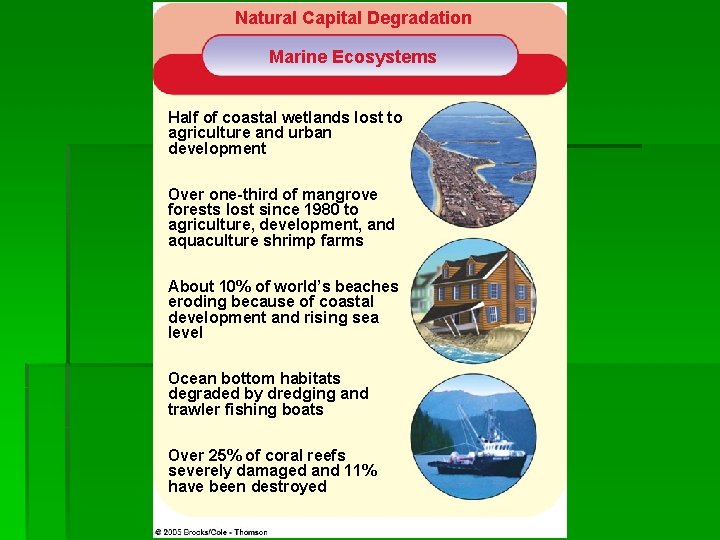
Natural Capital Degradation Marine Ecosystems Half of coastal wetlands lost to agriculture and urban development Over one-third of mangrove forests lost since 1980 to agriculture, development, and aquaculture shrimp farms About 10% of world’s beaches eroding because of coastal development and rising sea level Ocean bottom habitats degraded by dredging and trawler fishing boats Over 25% of coral reefs severely damaged and 11% have been destroyed