
Marine Ecosystems and Biodiversity Section 2 Large Marine
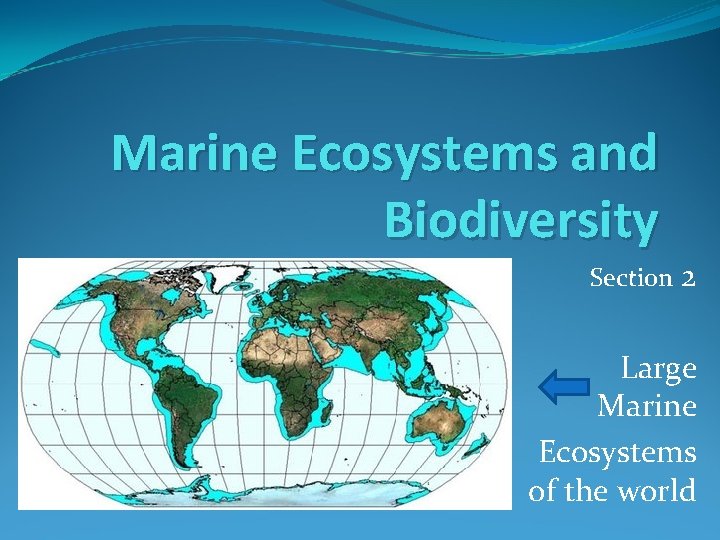
Marine Ecosystems and Biodiversity Section 2 Large Marine Ecosystems of the world
Objectives To understand relationships between organisms within ecosystems To identify the connection between environment, biodiversity and ecological niches
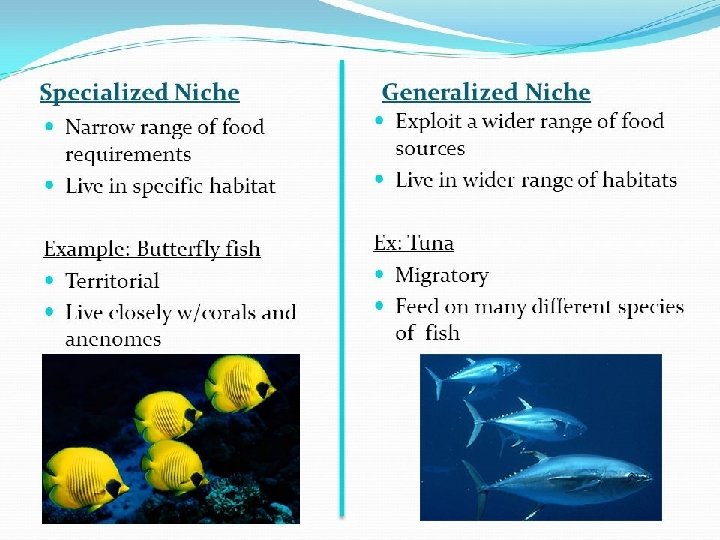
Learning Outcomes – Section 2 (a) explain the meaning of the terms ecosystem, habitat, population, community, species, biodiversity, ecological niche (b) (c) (d) (e) (f) (g) (h) (i) (j) describe each of the following types of interrelationship within a marine ecosystem: • mutualism, with examples including coral and zooxanthellae, cleaner fish and grouper, chemosynthetic bacteria and tube worms • parasitism, with examples including tuna and nematodes explain the meanings of the terms producer, consumer, predator, prey and trophic level in the context of food chains and food webs explain how populations of predator and prey may be interrelated describe shoaling and explain why shoaling may be a successful strategy for feeding, reproduction and predator avoidance, with reference to tuna and sardines explain the meaning of the term succession and describe examples, including the tube worms Tevnia and Riftia understand why extreme and unstable environments tend to have relatively low biodiversity, giving examples including coral reefs (stable and not extreme), sand on a reef slope (unstable) and hydrothermal vents (extreme) give examples of organisms that occupy specialised and general ecological niches, including coral-eating butterfly fish and tuna explain why habitats with high biodiversity tend to contain narrow ecological niches use the knowledge and understanding gained in this section in new situations, or to solve related problems.
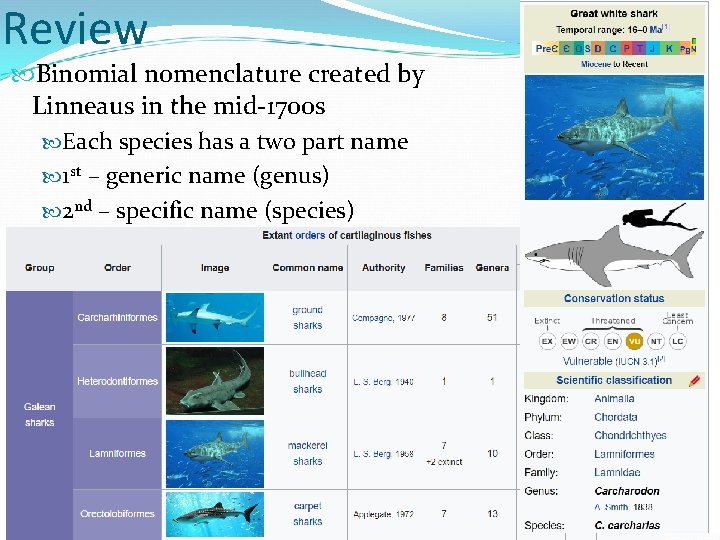
Review Binomial nomenclature created by Linneaus in the mid-1700 s Each species has a two part name 1 st – generic name (genus) 2 nd – specific name (species)
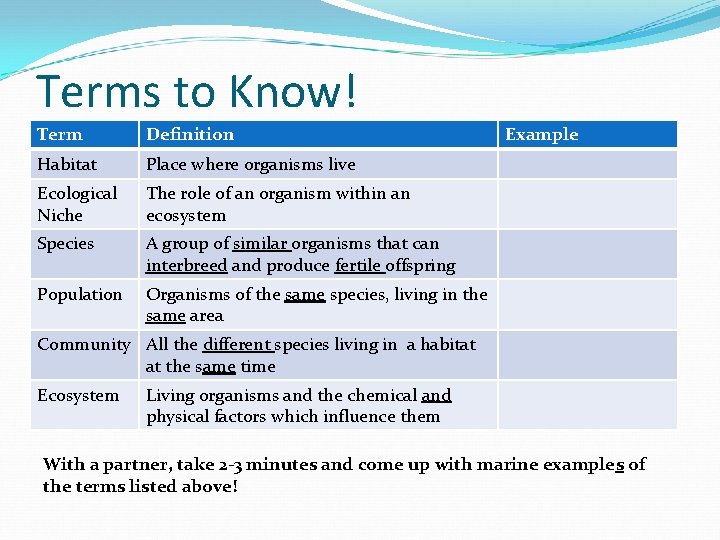
Terms to Know! Term Definition Habitat Place where organisms live Ecological Niche The role of an organism within an ecosystem Species A group of similar organisms that can interbreed and produce fertile offspring Population Organisms of the same species, living in the same area Example Community All the different species living in a habitat at the same time Ecosystem Living organisms and the chemical and physical factors which influence them With a partner, take 2 -3 minutes and come up with marine examples of the terms listed above!
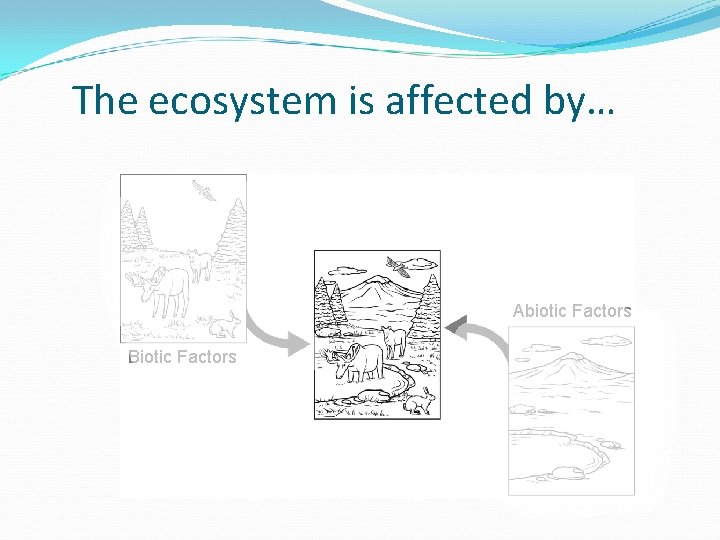
The ecosystem is affected by… Abiotic Factors Biotic Factors ECOSYSTEM
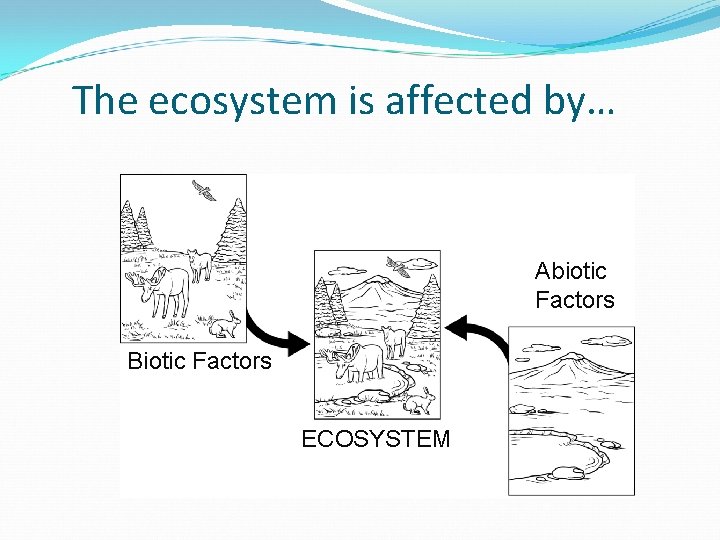
The ecosystem is affected by… Abiotic Factors Biotic Factors ECOSYSTEM
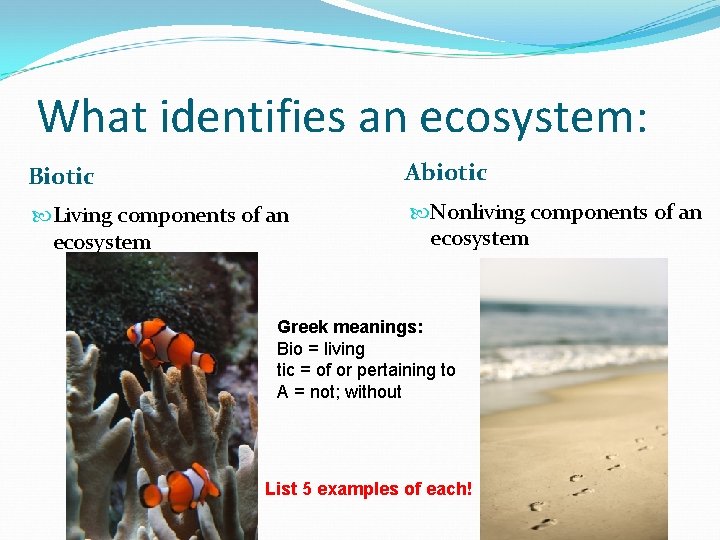
What identifies an ecosystem: Biotic Abiotic Living components of an ecosystem Nonliving components of an ecosystem Greek meanings: Bio = living tic = of or pertaining to A = not; without List 5 examples of each!

Marine ecosystem examples In your group, 5 minutes to do some quick research and report back general information
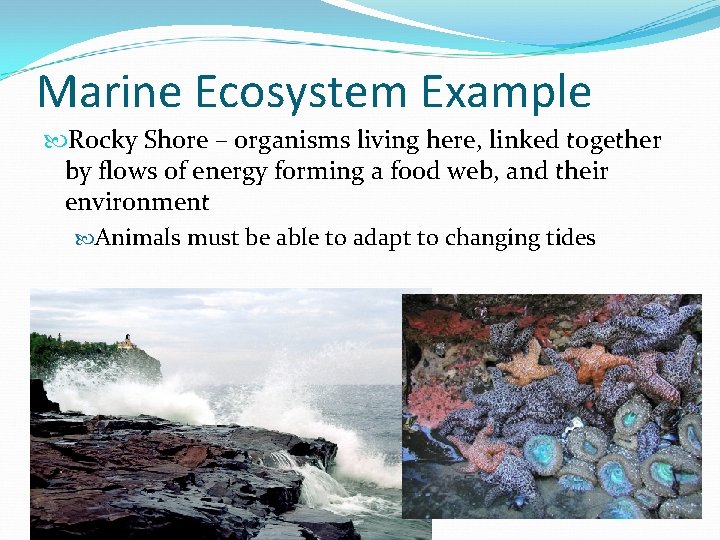
Marine Ecosystem Example Rocky Shore – organisms living here, linked together by flows of energy forming a food web, and their environment Animals must be able to adapt to changing tides
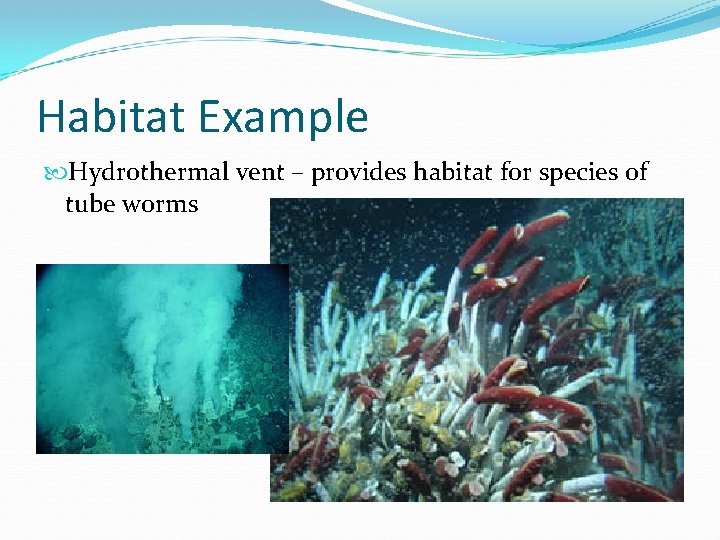
Habitat Example Hydrothermal vent – provides habitat for species of tube worms
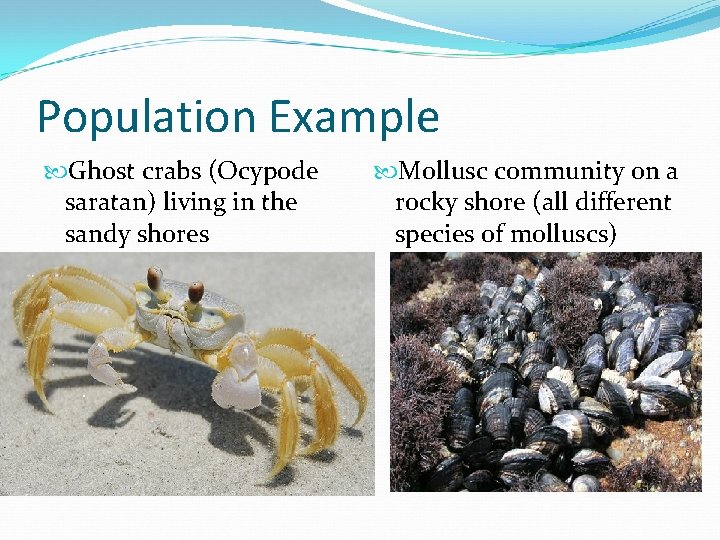
Population Example Ghost crabs (Ocypode saratan) living in the sandy shores Mollusc community on a rocky shore (all different species of molluscs)
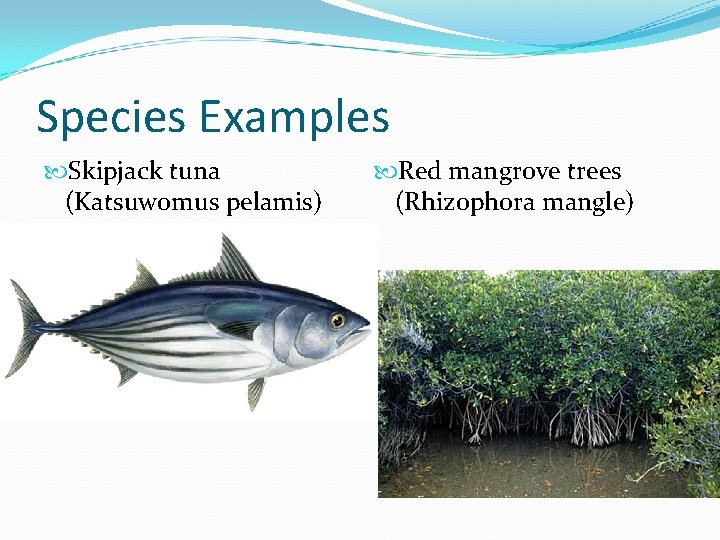
Species Examples Skipjack tuna (Katsuwomus pelamis) Red mangrove trees (Rhizophora mangle)
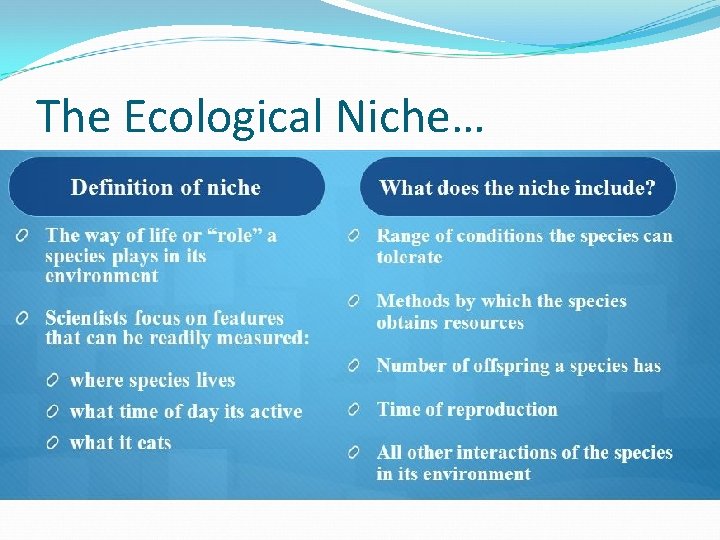
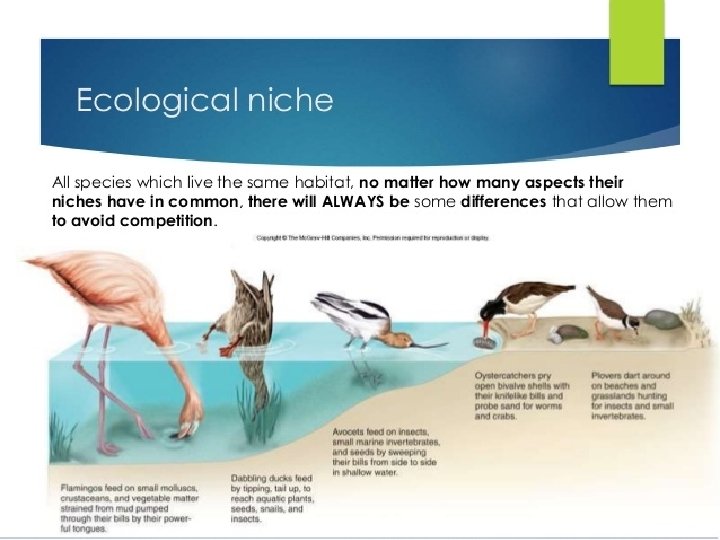
The Ecological Niche…
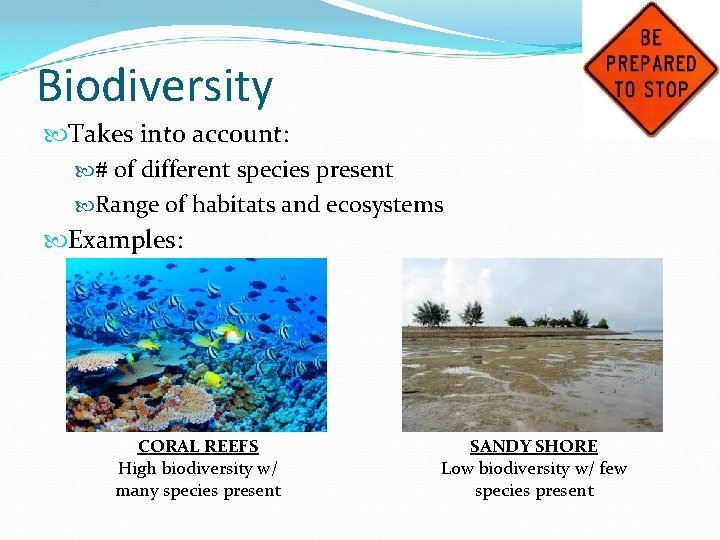
Biodiversity Takes into account: # of different species present Range of habitats and ecosystems Examples: CORAL REEFS High biodiversity w/ many species present SANDY SHORE Low biodiversity w/ few species present
Homework Research a marine species and produce a factsheet including its scientific name, habitat, niche, ecosystem. Include three interesting things about your organism. Be prepared to share at the beginning of your next AICE class period.
- Slides: 18