
Marine Ecology Notes Importance of the Ocean Environment

- Slides: 67
Marine Ecology Notes Importance of the Ocean Environment
Area n Saltwater covers about 71% of the earth’s surface
Life n There are 250, 000 known species of marine plants and animals, many are food for other organisms, like us.
Temperature n Solar heat is distributed by ocean currents & as ocean water evaporates. n The oceans are major players in the earth’s climate & are a gigantic reservoir for carbon dioxide; therefore they help regulate the temp. of the troposphere.
Zones of the Marine Environment Two major zones that break up into smaller zones – coastal and the open sea
Coastal Zone Varies greatly during high and low tide
Intertidal or Beach Zone Broken up into five areas
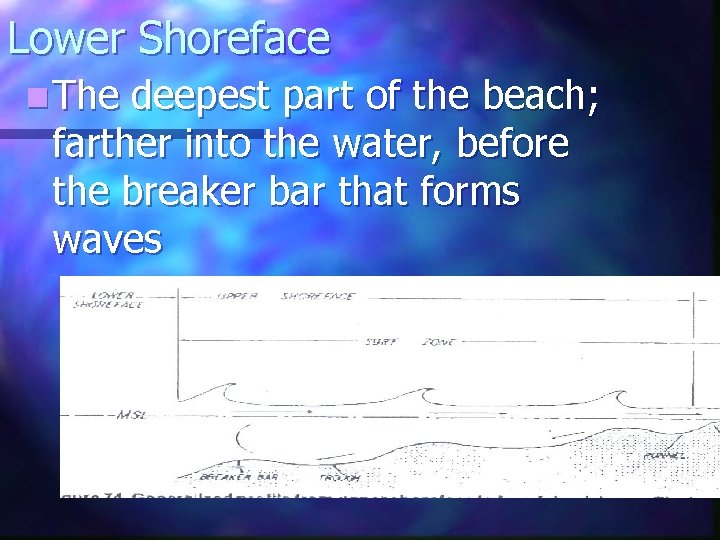
Lower Shoreface n The deepest part of the beach; farther into the water, before the breaker bar that forms waves
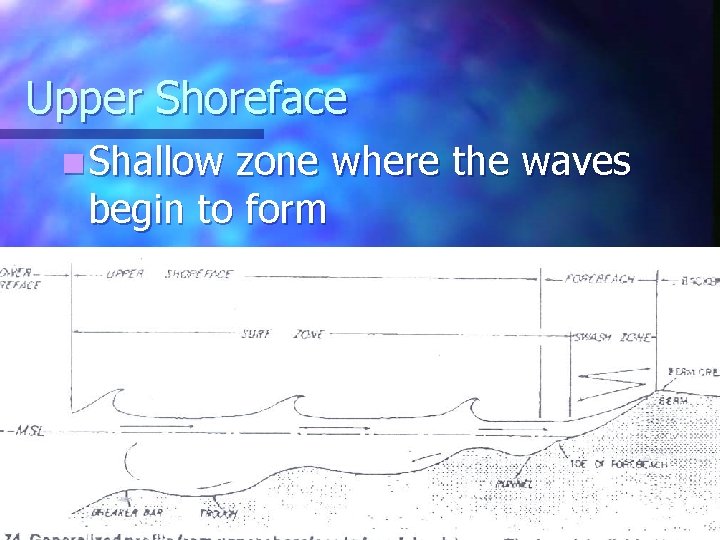
Upper Shoreface n Shallow zone where the waves begin to form
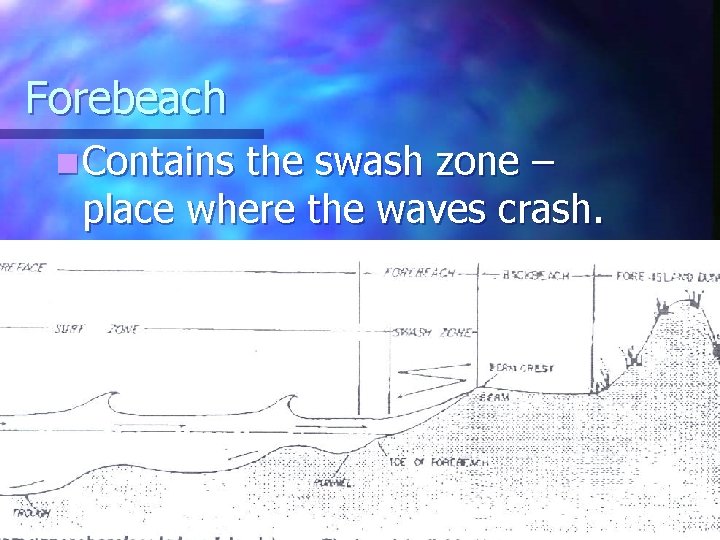
Forebeach n Contains the swash zone – place where the waves crash.
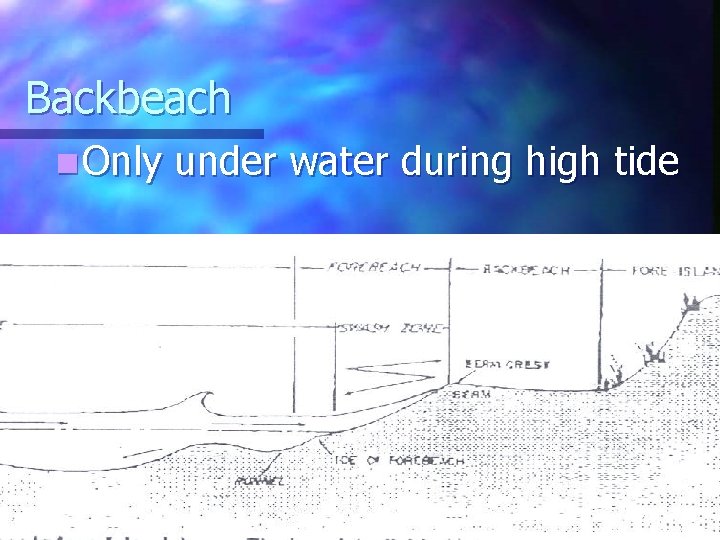
Backbeach n Only under water during high tide
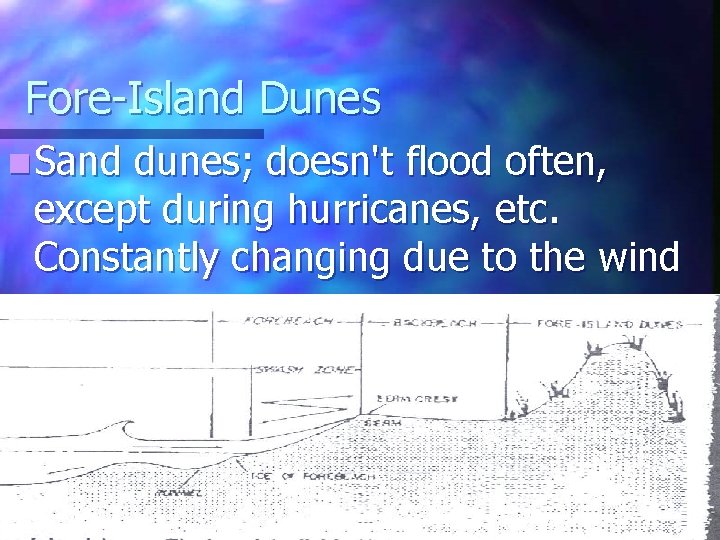
Fore-Island Dunes n Sand dunes; doesn't flood often, except during hurricanes, etc. Constantly changing due to the wind
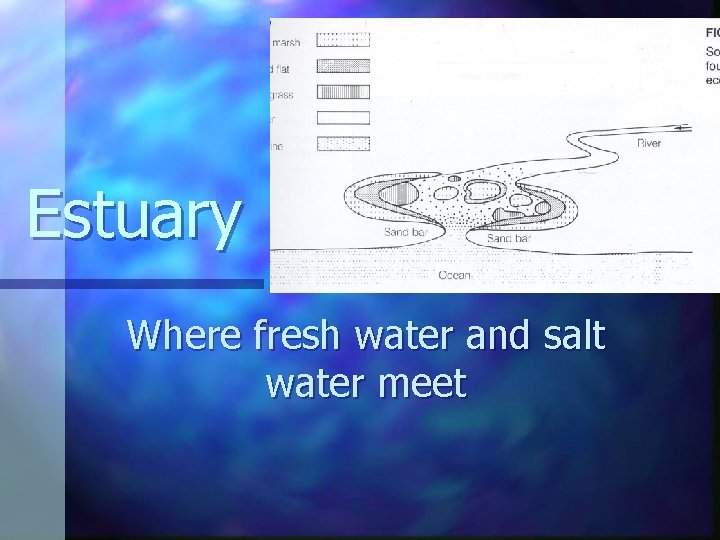
Estuary Where fresh water and salt water meet
Definition n An estuary is a coastal body of water, partly surrounded by land, with access to the open ocean and a large supply of fresh water from a river
Characteristics
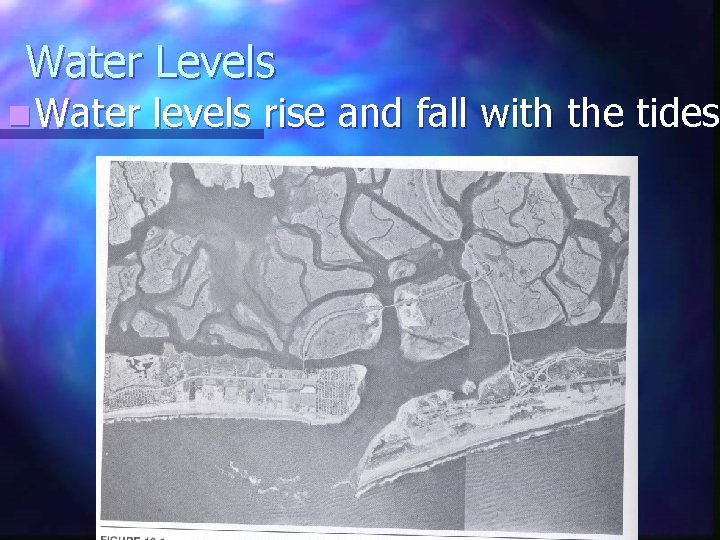
Water Levels n Water levels rise and fall with the tides
Salinity n Salinity fluctuates with tidal cycles, the time of year, & precipitation. The organisms that live here must be able to tolerate these conditions
Fertility of Estuaries n Estuaries are the most fertile ecosystems in the world n Greater productivity than either the adjacent ocean or the fresh water upriver
Reasons for High Fertility n Nutrients are transported from the land into rivers that flow into the estuary n Tidal action circulates nutrients and helps remove wastes n A high level of light due to shallow water n Many plants provide an extensive photosynthetic carpet
The Shoreline Between High and Low Tides
Characteristics n Abundant levels of light, nutrients, and oxygen
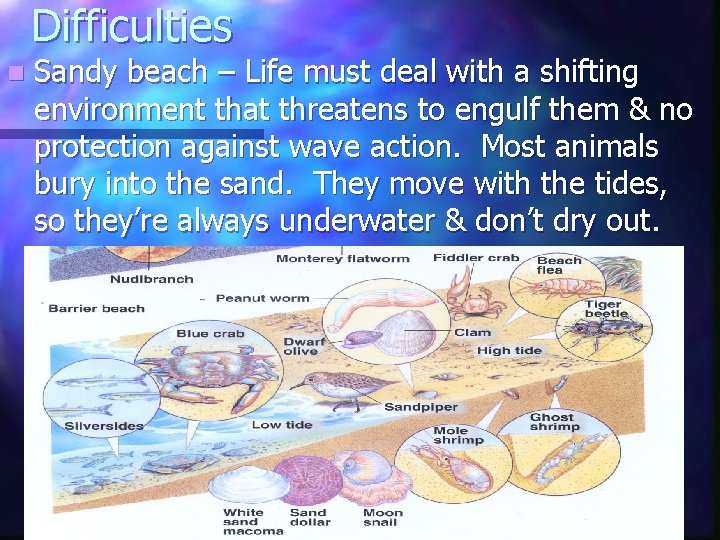
Difficulties n Sandy beach – Life must deal with a shifting environment that threatens to engulf them & no protection against wave action. Most animals bury into the sand. They move with the tides, so they’re always underwater & don’t dry out.
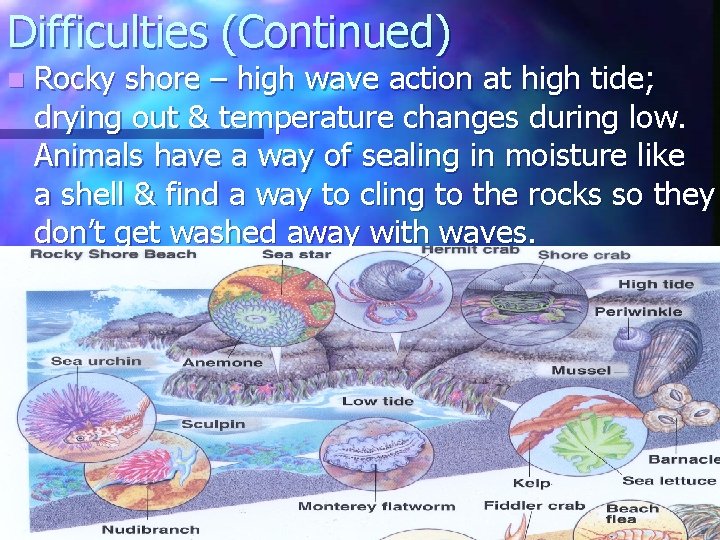
Difficulties (Continued) shore – high wave action at high tide; drying out & temperature changes during low. Animals have a way of sealing in moisture like a shell & find a way to cling to the rocks so they don’t get washed away with waves. n Rocky
The Open Ocean
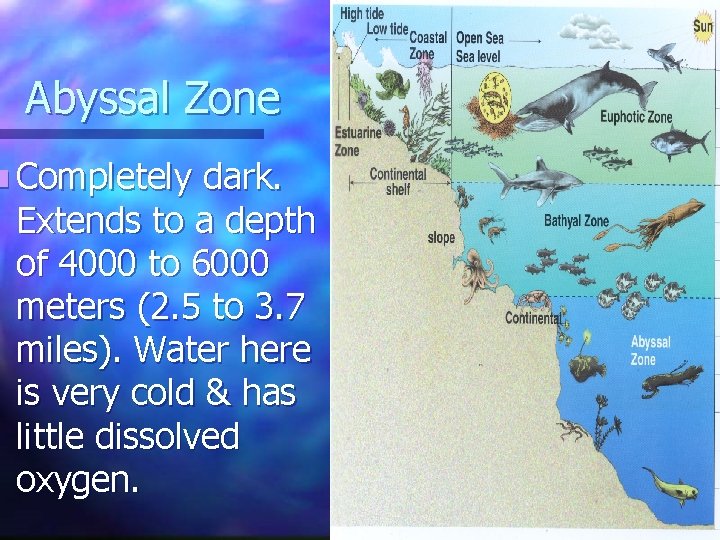
Pelagic n The open ocean environment; divided into neritic (open ocean from the shoreline to a depth of 200 m) and oceanic provinces (depths > 200 m).
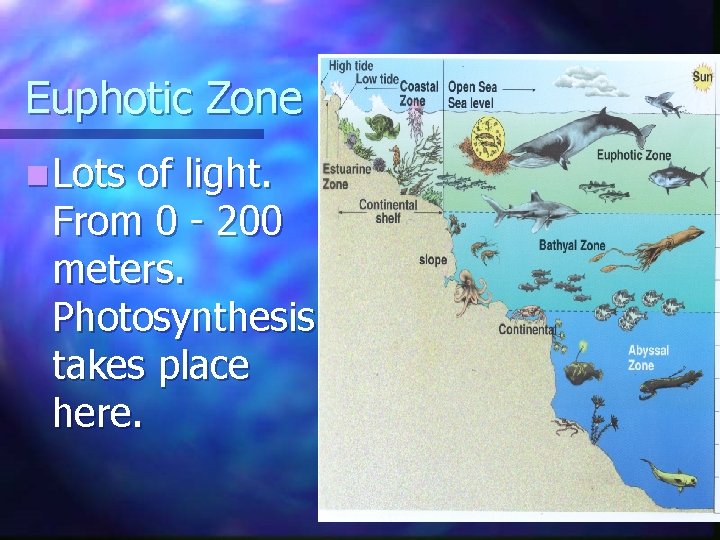
Euphotic Zone n Lots of light. From 0 - 200 meters. Photosynthesis takes place here.
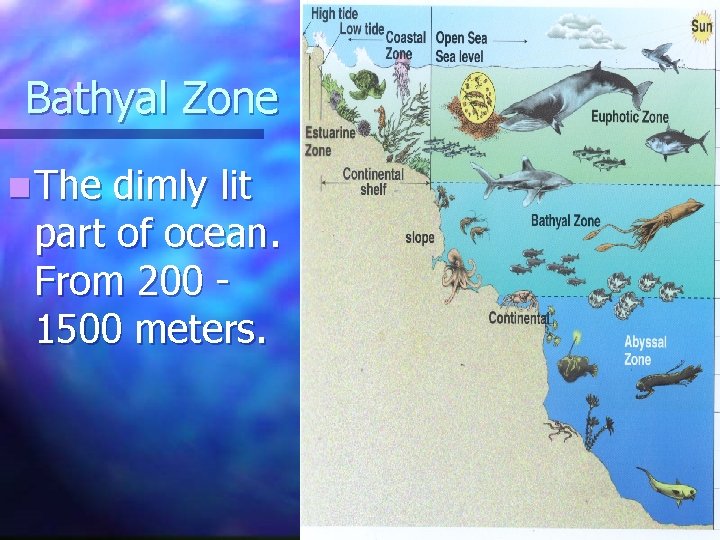
Bathyal Zone n The dimly lit part of ocean. From 200 1500 meters.
Benthic The ocean floor or bottom
Benthic Characteristics n The ocean floor consists of sediments (mostly sand mud) n Many marine animals, like worms and clams, burrow n Bacteria are common & can go down 500 meters below ocean floor. The Benthic environment extends from the shore to the deep.
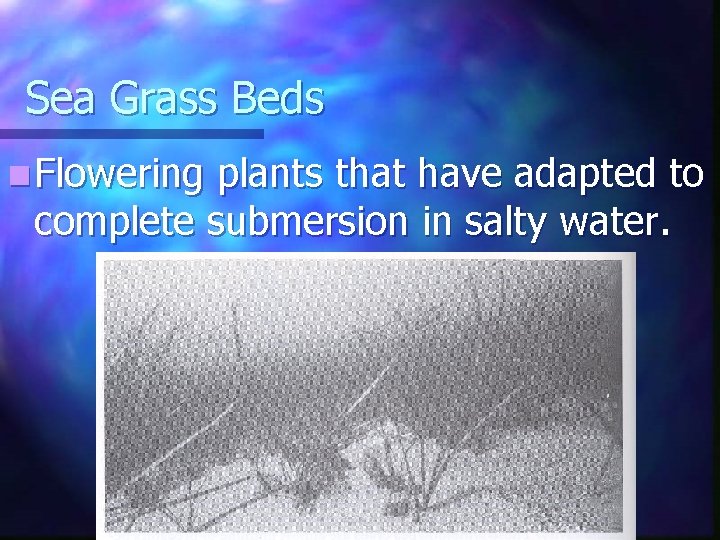
Sea Grass Beds n Flowering plants that have adapted to complete submersion in salty water.
Location of sea grass n Found in shallow water to depths of 10 meters where they can photosynthesize. Sea grasses are found in quiet, temperate, tropical, and subtropical waters; not in polar waters. Examples Eel, turtle, and manatee grass.
Ecological Importance n Reduce surface erosion, provide food, & provide habitats for many marine organisms. n Animals that eat sea grass are manatees, green turtles, parrotfish, sturgeon fish, and sea urchins.
Abyssal Zone n Completely dark. Extends to a depth of 4000 to 6000 meters (2. 5 to 3. 7 miles). Water here is very cold & has little dissolved oxygen.
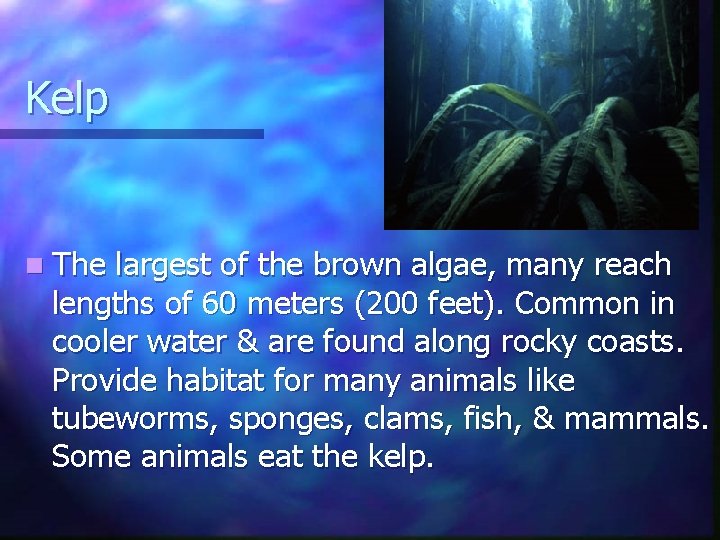
Kelp n The largest of the brown algae, many reach lengths of 60 meters (200 feet). Common in cooler water & are found along rocky coasts. Provide habitat for many animals like tubeworms, sponges, clams, fish, & mammals. Some animals eat the kelp.
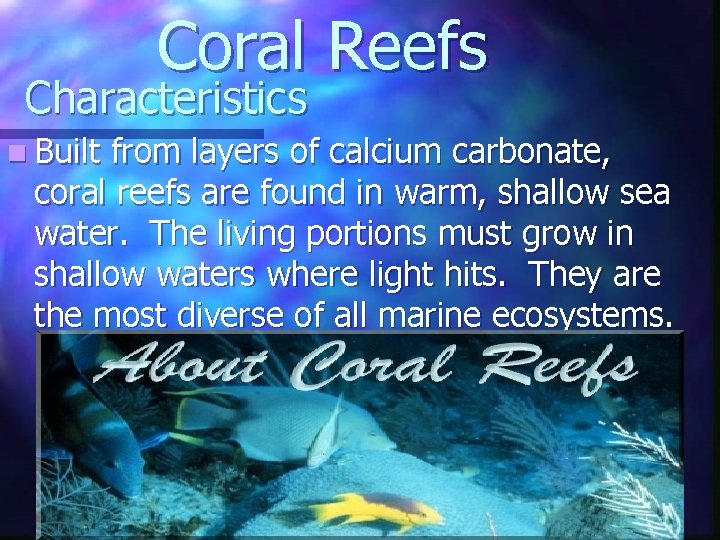
Coral Reefs Characteristics n Built from layers of calcium carbonate, coral reefs are found in warm, shallow sea water. The living portions must grow in shallow waters where light hits. They are the most diverse of all marine ecosystems.
Examples n Many coral reefs are made of red coralline algae that photosynthesize. n Others have zooxanthellae (symbiotic algae) that live and photosynthesize in their tissues. n Not all corals have zooxanthellae, but only those with it build reefs. n Coral animals also capture food at night with stinging tentacles that paralyze zooplankton and small animals that drift nearby.
Coral Reef Waters n The waters where coral reefs are found are often poor in nutrients. Yet, other factors are favorable such as temperature, sunlight year round, and zooxanthellae.
Growth n Coral reefs grow slowly; as one dies, another organism grows on it.
Types of Coral Reefs
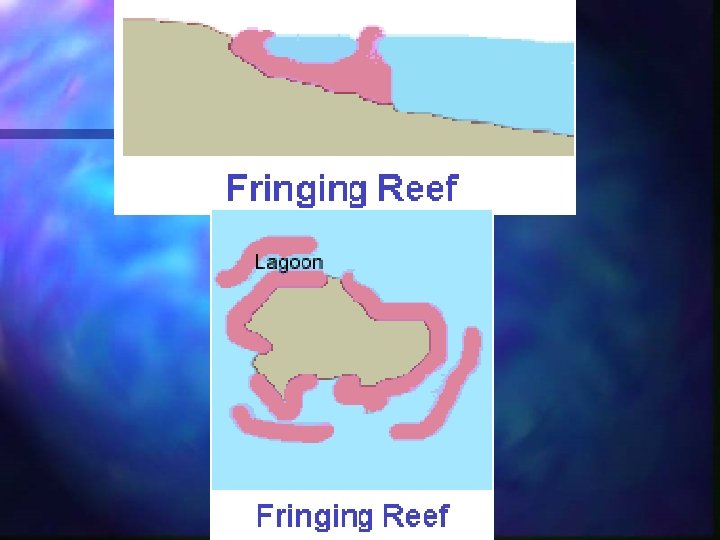
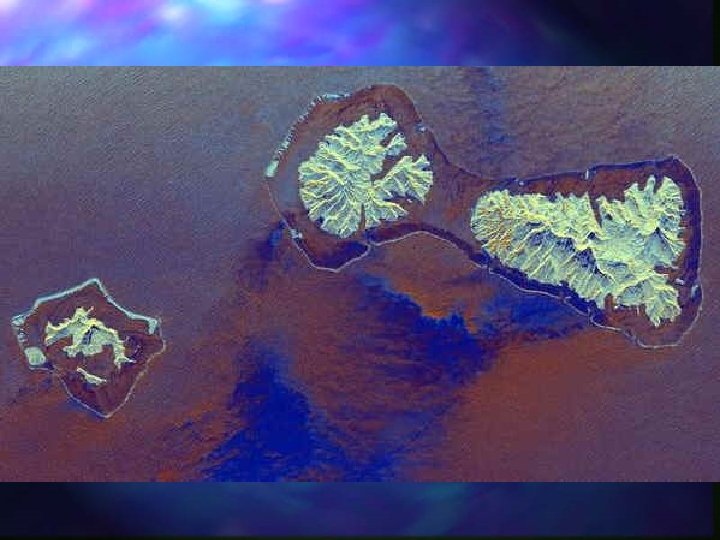
Fringing Reef n The most common type of coral reef. It is directly attached to the shore of a volcanic island or continent.
Fringing Reef Bora NASA JPL Satellite: Space Shuttle Sensor: SIR-C/X-SAR
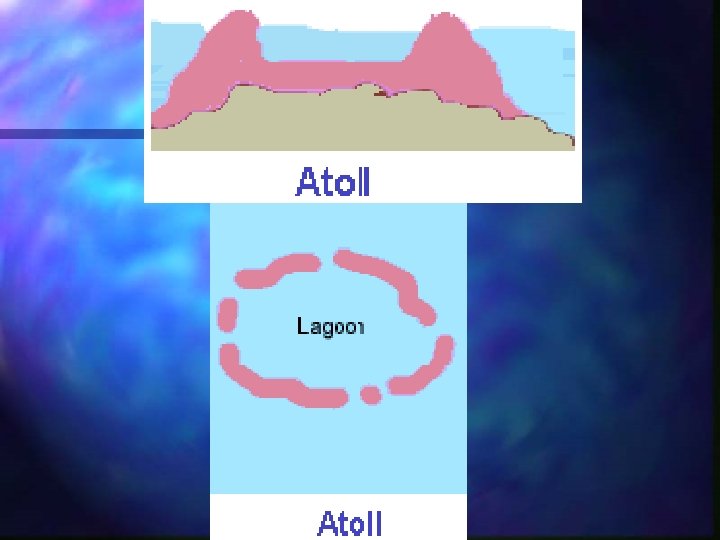
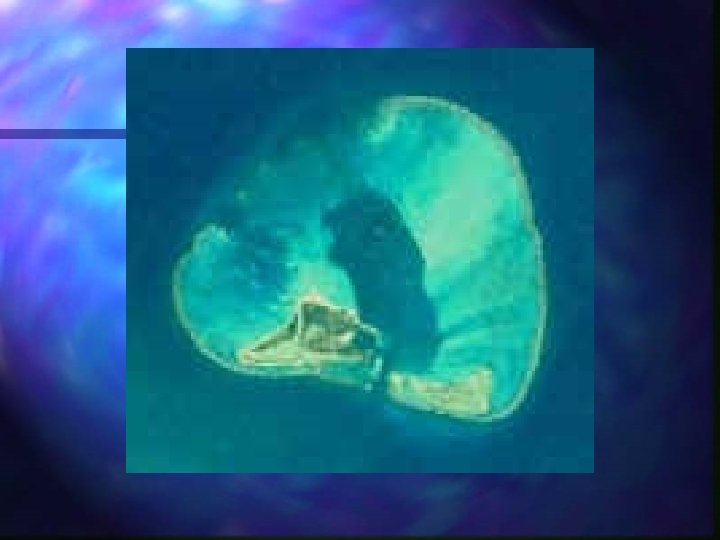
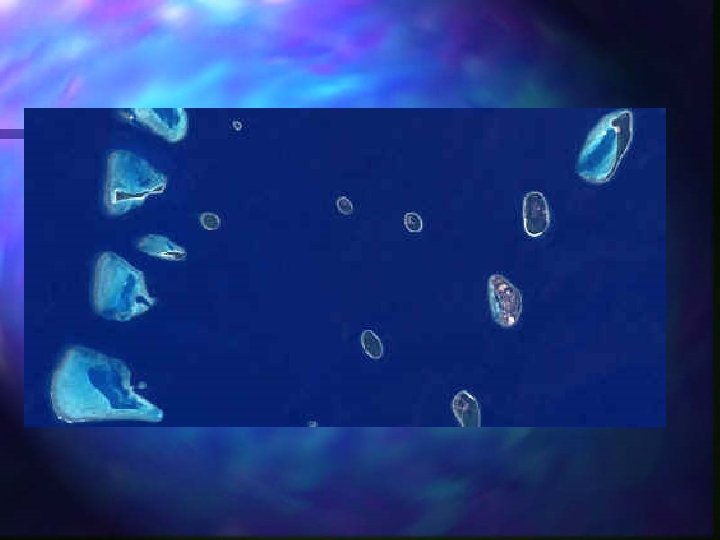
Atoll n. A circular reef that surrounds a central lagoon of quiet water. n An atoll forms on top of the cone of a submerged volcanic island. n More than 300 atolls are found in the Pacific and Indian Oceans.
View of Midway Atoll from Space Shuttle
Atolls in The Maldives Landsat 7
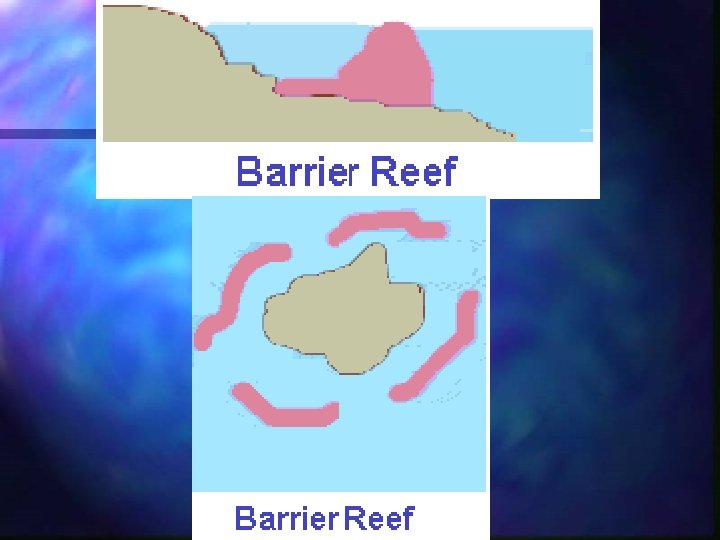
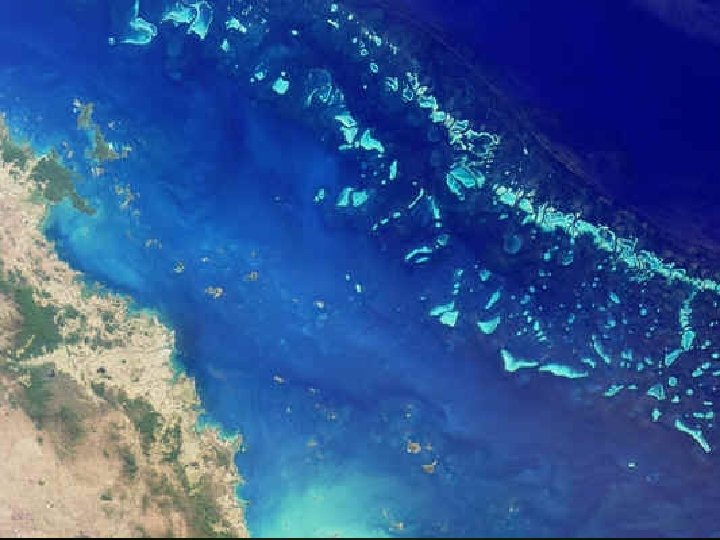
Barrier Reef n. A lagoon of open water separates the land from the barrier reef. n The largest barrier reef is the Great Barrier Reef off the coast of Australia. n The second largest is off the coast of Belize.
Ecological Importance of Coral Reefs Provides a Habitat n Provides a habitat for a wide variety of marine organisms.
Coastline Protection n Protects erosion. coasts from shoreline
Benefits for Humans n Provides humans with seafood, pharmaceuticals, and recreational/tourism dollars
Coral Reef Risks n Of the 109 countries with large reefs, 90 are damaging them, and 27% of the coral reefs are at high risk, especially off the coast of Southeastern Asia. n In the western Atlantic, 30 -50% of all coral species are either rare or endangered.
Coral Reef Risks Con’t n Silt washing from downstream has smothered the reefs n High salinity from fresh water diversion, over-fishing, boat groundings, fishing with dynamite or cyanide, hurricane damage, disease, coral bleaching, land reclamation, tourism, and the mining of coral for building materials.
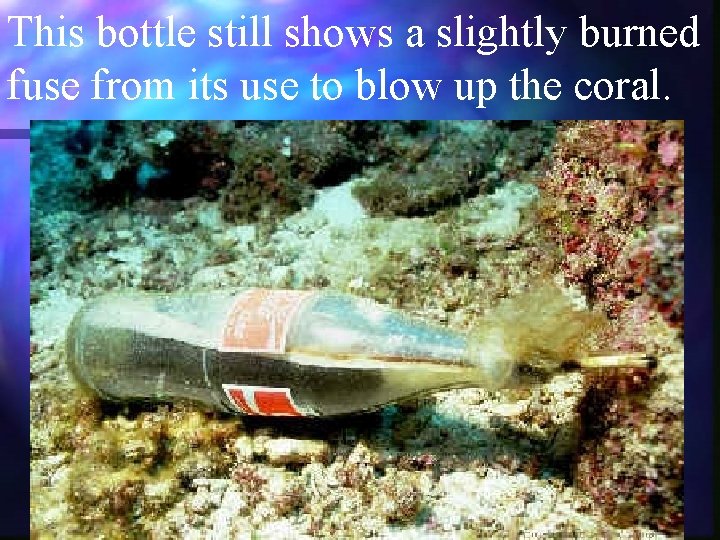
This bottle still shows a slightly burned fuse from its use to blow up the coral. © 1997 -2001 Jeffrey N. Jeffords
Protection of n 300 coral reefs in 65 countries are protected as reserves or parks, and another 600 have been recommended for protection. n The good news is coral reefs can often recover from damage.
Pollution and Human Impact
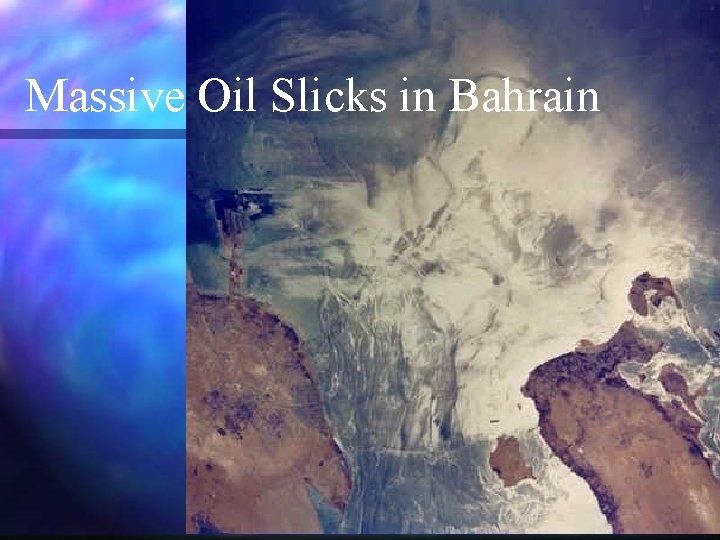
Massive Oil Slicks in Bahrain
African Proverb n “Water may flow in a thousand channels, but it all returns to the sea. ” n The oceans are the ultimate sink for much of the waste matter we produce.
Differences of Opinion n Oceans dilute, disperse, and degrade large amounts of raw sewage, sewage sludge, oil, and some types of industrial waste, especially in deep-water areas. n Marine life has proved to be more resilient than some scientists expected, some suggest it is safer to dump sludge & other hazardous wastes into the deep ocean than to bury them on land or burn them.
Differences of Opinion Other scientists disagree, pointing out that we know less about the deep ocean than we do about space. They say that dumping waste in the ocean would delay urgently needed pollution prevention and promote further degradation of this vital part of the earth’s life-support system.
Oil Spills n When a tanker accident happens, it gets lots of publicity. n But, more oil is released by normal operation of offshore wells, washing tankers & from pipeline or storage tank leaks. n One estimate says that oil companies spill, leak, or waste per year an amount of oil equal to that shipped by 1000 huge Exxon Valdez tankers.
Floating Oil n Oil coats the feathers of birds (especially diving birds) and the fur of marine animals, destroying the animals’ natural insulation and buoyancy n Many drown or die of exposure from loss of body heat.
Other Information n Oil is broken down by bacteria over time; slower in cold waters. n Heavy oil components can smother bottomdwelling organisms such as crabs, oysters, mussels, and clams, or make them unfit to eat. n Oil spills have killed coral reefs. A recent study showed that diesel oil becomes more toxic to marine life with the passage of time.
Clean Up
Mechanical Methods n Floating booms contain the oil spill or keep it from reaching sensitive areas n Skimmer boats are used to vacuum up some of the oil into collection barges n Absorbent pads or large feather-filled pillows are used to soak up oil on beaches or in waters that are too shallow for skimmer boats
Chemical Methods n Coagulating agents cause floating oil to clump together for easier pickup or sink to the bottom, where it usually does less harm. n Dispersing agents break up oil slicks. However, these can also damage some types of organisms. n Fire can also burn off floating oil, but crude oil is hard to ignite.