
Marine Corps Leadership Development MCLD Future Time Management

- Slides: 27
Marine Corps Leadership Development (MCLD) Future Time Management and Goal Setting
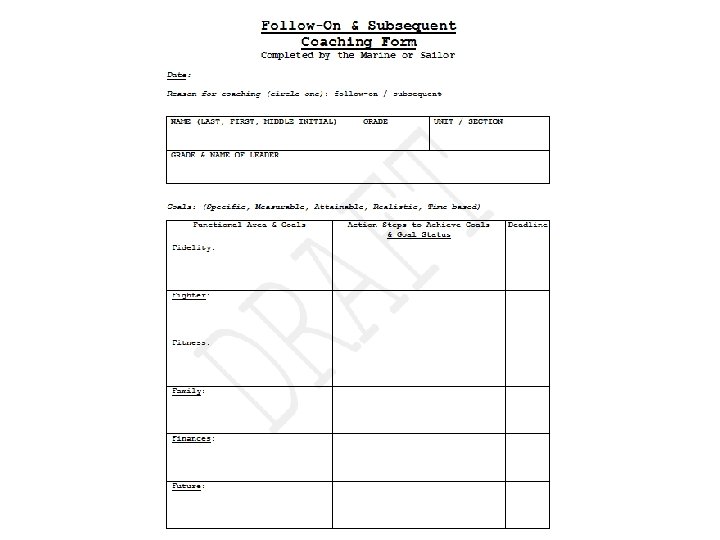
Functional Areas of Leadership Development • Continual Assessment of: • • • Fidelity: Fighter: Fitness: Family: Finances: Future: Goal Setting and Time Management
Why concern ourselves with Goal Setting and Time Management? • Interact on a personal level with Marines. • Systematically identify principles and translate them into a plan of action. • To better organize our own lives, use time at work and at home more wisely, and assist our Marines to do the same thing. • Discuss and practice some of the popular techniques of leadership, goal setting and time management
Principles Count • Big Advantage: Exploit it • Core Values – The best way to confront current and future challenges is to reinforce the basics of Marine Corps Values and leadership principles. – Our core values are where we start any mission, and any guidance on leading Marines. – Brilliance in the Basics: Leaders Role to reinforce. – Do we need to reinforce the basics? ?
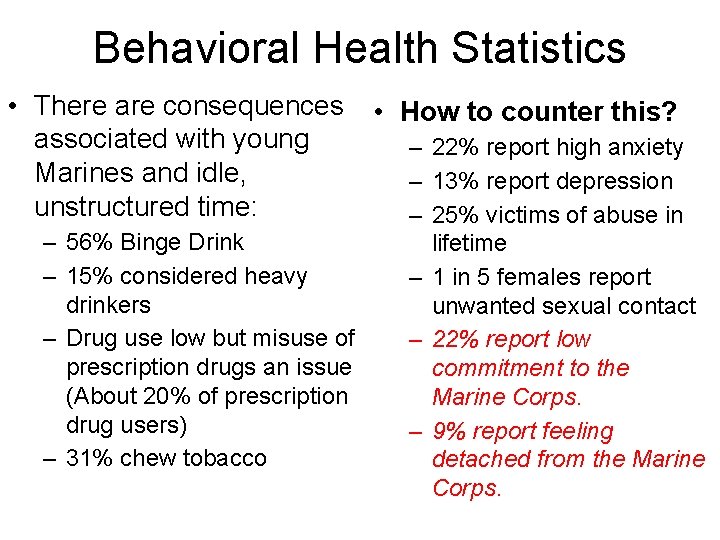
Behavioral Health Statistics • There are consequences associated with young Marines and idle, unstructured time: – 56% Binge Drink – 15% considered heavy drinkers – Drug use low but misuse of prescription drugs an issue (About 20% of prescription drug users) – 31% chew tobacco • How to counter this? – 22% report high anxiety – 13% report depression – 25% victims of abuse in lifetime – 1 in 5 females report unwanted sexual contact – 22% report low commitment to the Marine Corps. – 9% report feeling detached from the Marine Corps.
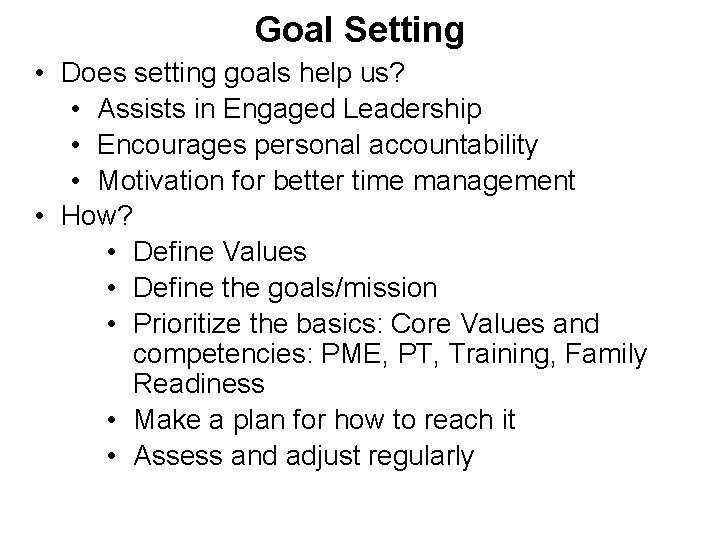
Goal Setting • Does setting goals help us? • Assists in Engaged Leadership • Encourages personal accountability • Motivation for better time management • How? • Define Values • Define the goals/mission • Prioritize the basics: Core Values and competencies: PME, PT, Training, Family Readiness • Make a plan for how to reach it • Assess and adjust regularly
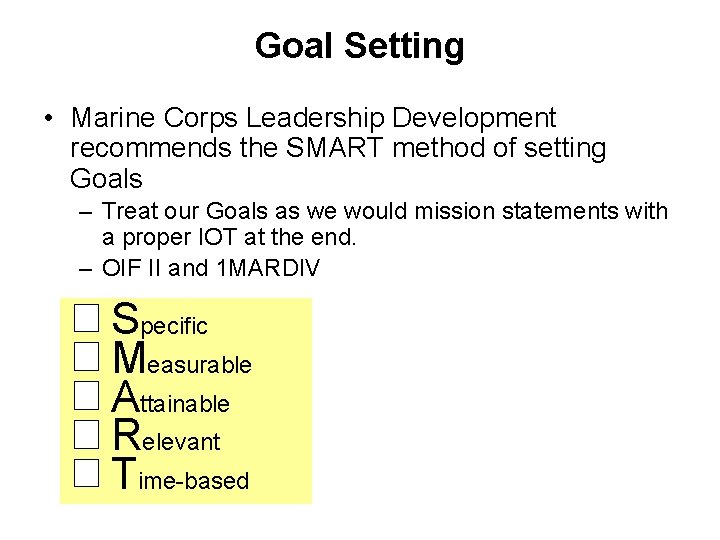
Goal Setting • Marine Corps Leadership Development recommends the SMART method of setting Goals – Treat our Goals as we would mission statements with a proper IOT at the end. – OIF II and 1 MARDIV Specific Measurable Attainable Relevant Time-based
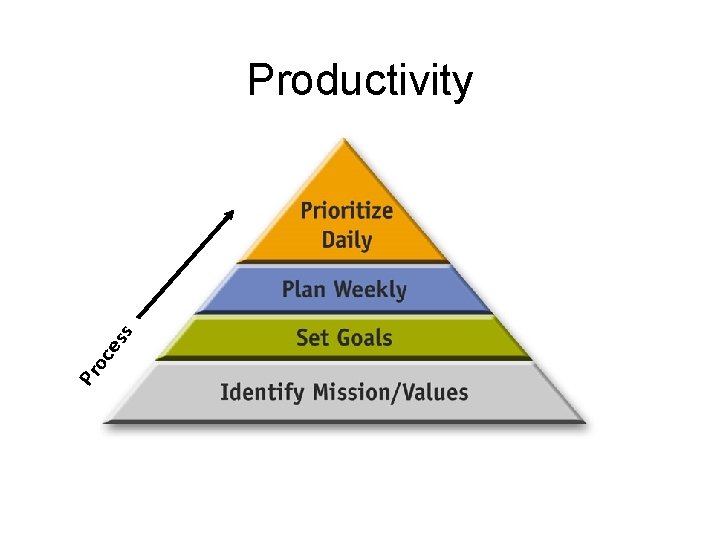
Pr oc es s Productivity
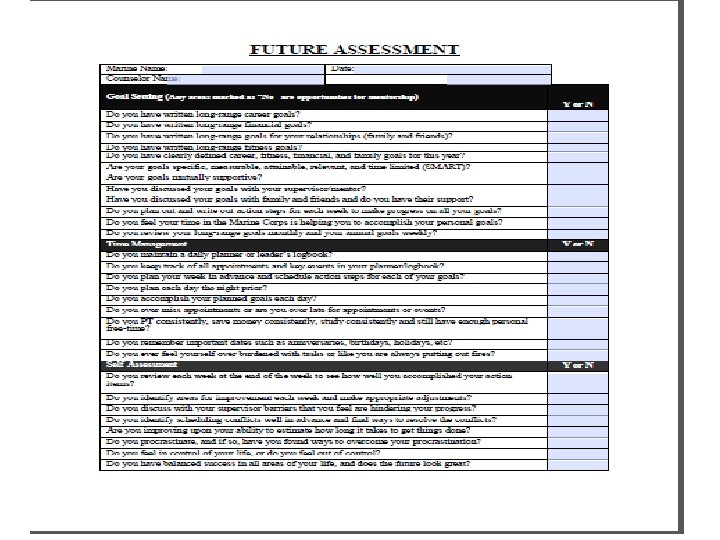
Assessing Progress • Regular coaching/counseling sessions – Once Marines create SMART goals, engaged leadership becomes easier and more focused. • Are the goals balanced and centered • Marines have control: Leaders facilitate and assist. • Adjust, reinforce, and/or continue with existing goals. • Requires leaders to get familiar with all the existing programs of the USMC. Marine Corps Leadership Development assists with this. • Developing Subordinates • Future assessment worksheet
Why Manage Your Time? “Determine never to be idle. No person will have occasion to complain of the want of time who never loses any. It is wonderful how much can be done if we are always doing. ” Thomas Jefferson “The cumulative value of investing small moments over long periods is considerable. ” Col Erdelatz “It is amazing what a person can accomplish if they are not overly busy watching television. ”
Now that we have SMART Goals, now what? • We create goals, but execution is the hard part: • Time Management – Many methods used to assist in Time Management: – Popular techniques to identify priorities and manage time wisely.
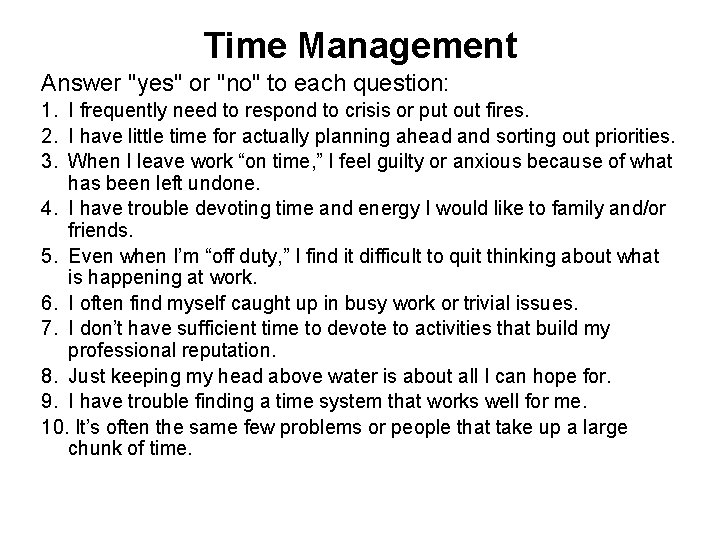
Time Management Answer "yes" or "no" to each question: 1. I frequently need to respond to crisis or put out fires. 2. I have little time for actually planning ahead and sorting out priorities. 3. When I leave work “on time, ” I feel guilty or anxious because of what has been left undone. 4. I have trouble devoting time and energy I would like to family and/or friends. 5. Even when I’m “off duty, ” I find it difficult to quit thinking about what is happening at work. 6. I often find myself caught up in busy work or trivial issues. 7. I don’t have sufficient time to devote to activities that build my professional reputation. 8. Just keeping my head above water is about all I can hope for. 9. I have trouble finding a time system that works well for me. 10. It’s often the same few problems or people that take up a large chunk of time.
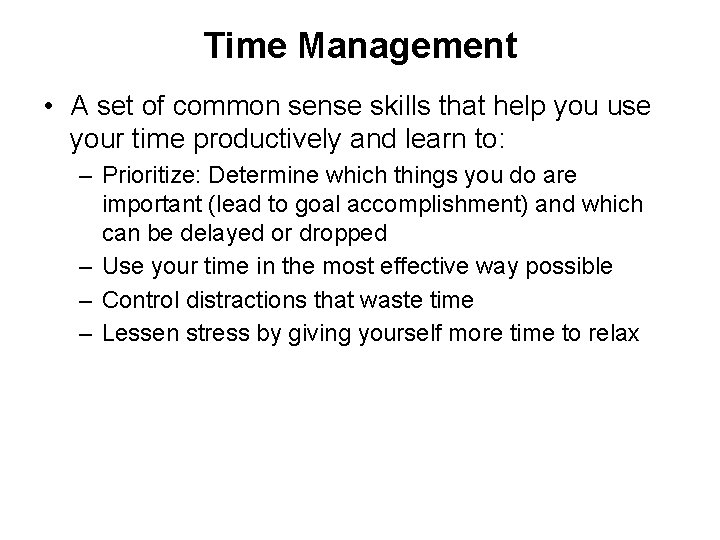
Time Management • A set of common sense skills that help you use your time productively and learn to: – Prioritize: Determine which things you do are important (lead to goal accomplishment) and which can be delayed or dropped – Use your time in the most effective way possible – Control distractions that waste time – Lessen stress by giving yourself more time to relax
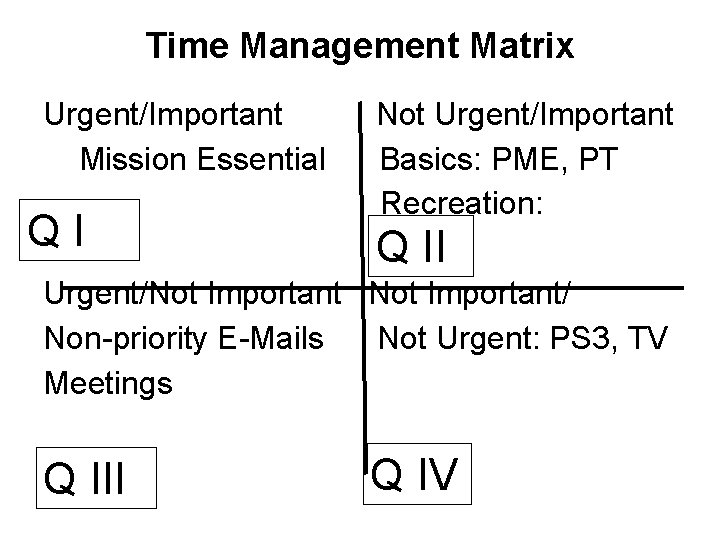
Time Management Matrix Urgent/Important Mission Essential QI Not Urgent/Important Basics: PME, PT Recreation: Q II Urgent/Not Important/ Non-priority E-Mails Not Urgent: PS 3, TV Meetings Q III Q IV
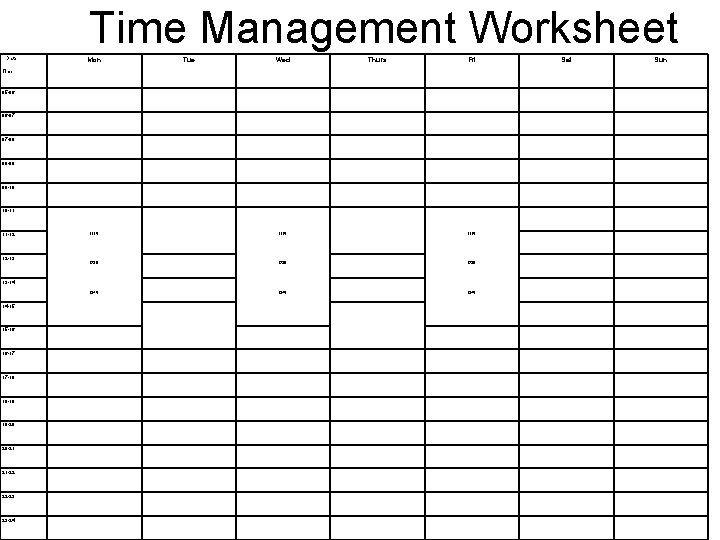
Avoid Procrastination is putting things off until they are unavoidable • Common pitfalls into procrastination: • • • Over Planning – Implementation is delayed Perfectionism – Usually not required or cost effective Boredom – Self-discipline is needed Hostility – to task or person giving the task "The Deadline High" – meeting a tight deadline and the adrenaline rush can be addictive • Quadrant III and IV • Time Management Worksheet
Future and Time Management • Two Years of Research Simply Put: Organize Priorities and manage time accordingly. • Work smarter, not harder • Think Foundational Goals in the six functional areas of Leadership Development. • Prioritize in each area. • Make a weekly plan: Make a daily plan. • Plan According to foundational goals and Principles, not putting out fires. Quadrant II vs III
Time Management Worksheet Date Mon Tue Wed Thurs Fri Time 05 -06 06 -07 07 -08 08 -09 09 -10 10 -11 11 -12 12 -13 -----1115 ------ -----1230 ------ -----1345 ------ 13 -14 14 -15 15 -16 16 -17 17 -18 18 -19 19 -20 20 -21 21 -22 22 -23 23 -24 Sat Sun
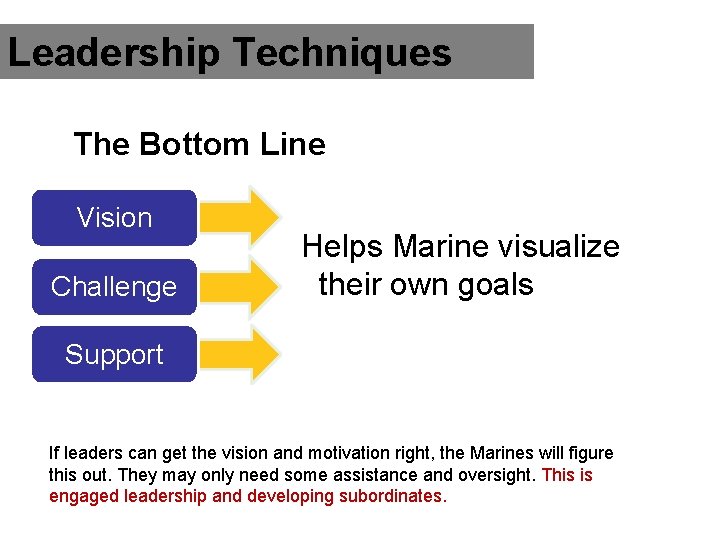
Leadership Techniques The Bottom Line Vision Challenge Helps Marine visualize their own goals Support If leaders can get the vision and motivation right, the Marines will figure this out. They may only need some assistance and oversight. This is engaged leadership and developing subordinates.
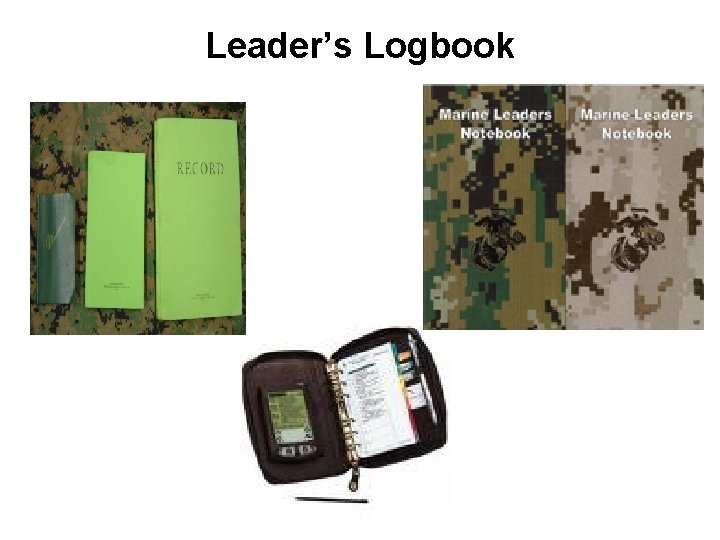
Leader’s Logbook
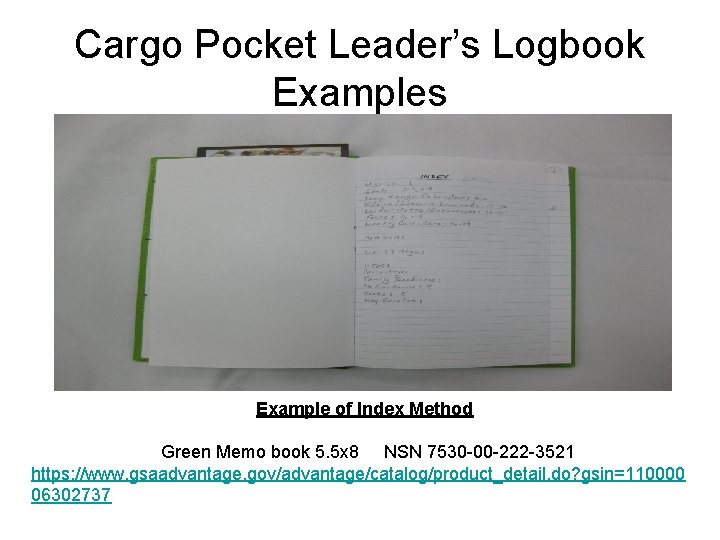
Cargo Pocket Leader’s Logbook Examples Example of Index Method Green Memo book 5. 5 x 8 NSN 7530 -00 -222 -3521 https: //www. gsaadvantage. gov/advantage/catalog/product_detail. do? gsin=110000 06302737
Sample Leader’s Logbook • • Index – for future reference Mission Tasks assigned to you and assigned to others Goals Long term, short term, action steps Calendars: Hourly, Daily, Weekly, Monthly, Annual Planning Calendar Points of contact Notes from Meetings, phone calls Ideas and lessons learned
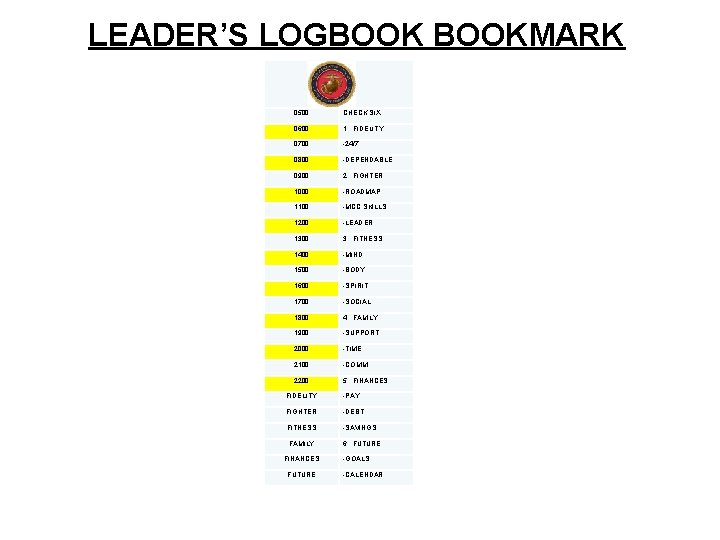
LEADER’S LOGBOOKMARK 0500 CHECK SIX 0600 1: FIDELITY 0700 -24/7 0800 -DEPENDABLE 0900 2: FIGHTER 1000 -ROADMAP 1100 -MCC SKILLS 1200 -LEADER 1300 3: FITNESS 1400 -MIND 1500 -BODY 1600 -SPIRIT 1700 -SOCIAL 1800 4: FAMILY 1900 -SUPPORT 2000 -TIME 2100 -COMM 2200 5: FINANCES FIDELITY -PAY FIGHTER -DEBT FITNESS -SAVINGS FAMILY 6: FUTURE FINANCES FUTURE -GOALS -CALENDAR
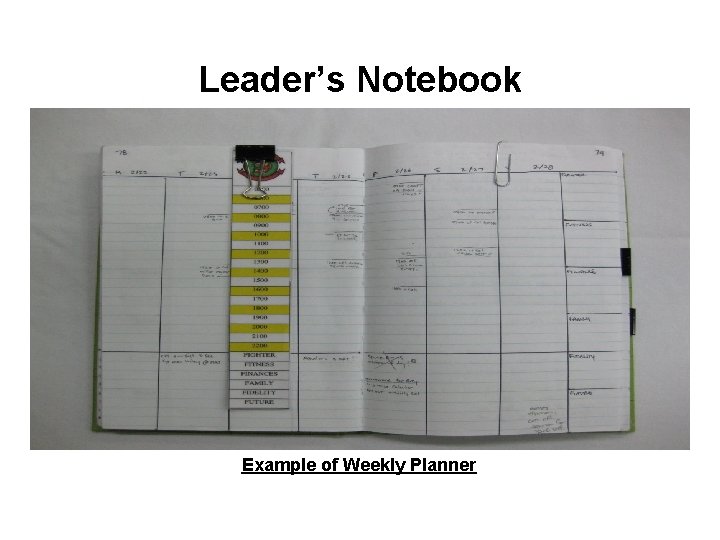
Leader’s Notebook Example of Weekly Planner
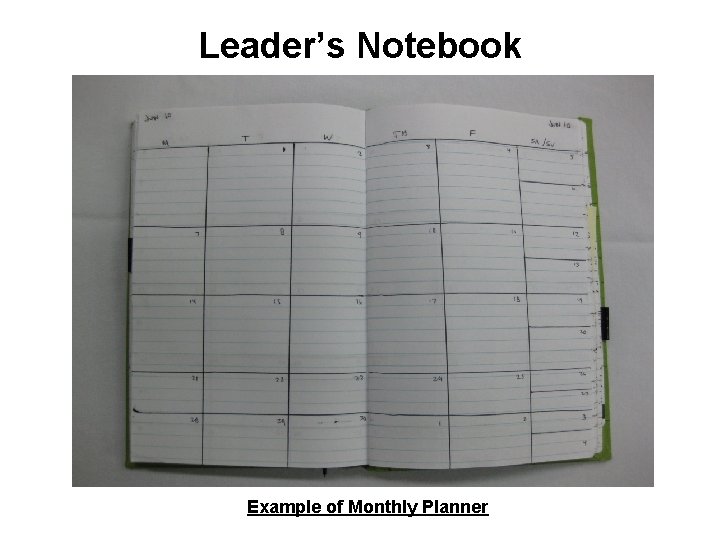
Leader’s Notebook Example of Monthly Planner
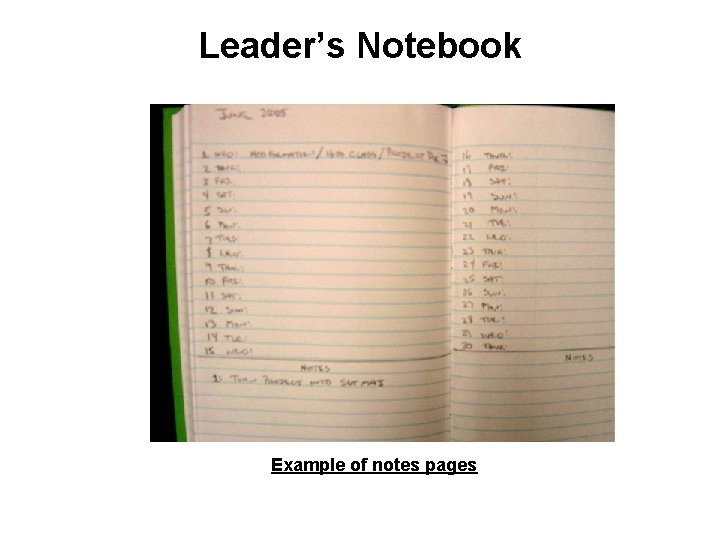
Leader’s Notebook Example of notes pages