
Marine Biology The Science and History of Marine
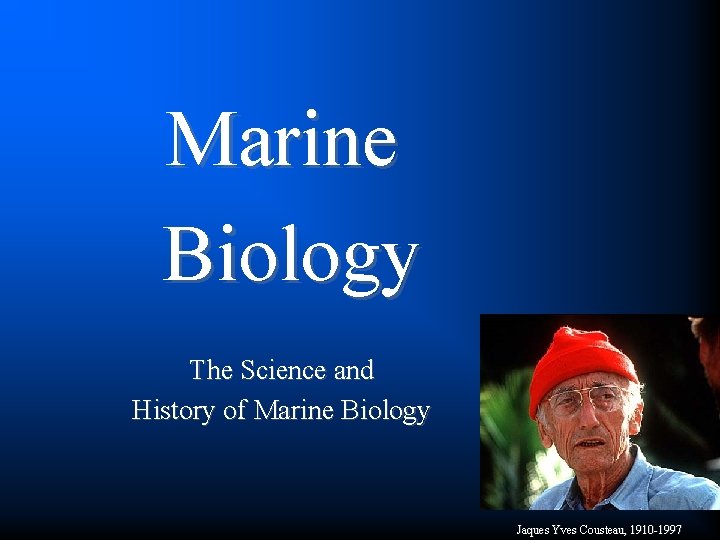
Marine Biology The Science and History of Marine Biology Jaques Yves Cousteau, 1910 -1997
Essential Question: § How have human advances led to an understanding of the oceans?
Objectives: § Explain how the contributions of major explorations and marine interactions led to a better understanding of the oceans. § Describe technologies that allow scientists to study the marine environment.
Think… § How are you connected to the sea? § How have you interacted with the marine environment? § Why is it important to study Marine Science?
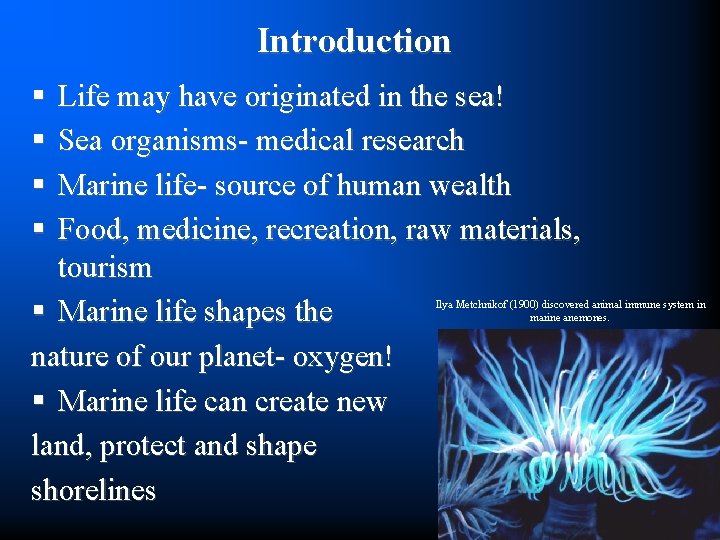
Introduction § § Life may have originated in the sea! Sea organisms- medical research Marine life- source of human wealth Food, medicine, recreation, raw materials, tourism § Marine life shapes the nature of our planet- oxygen! § Marine life can create new land, protect and shape shorelines Ilya Metchnikof (1900) discovered animal immune system in marine anemones.
§ § § § § Nearly ALL disciplines are represented in Marine Science (Biology) Archeaology § Medicine Biology § Welding Botany § Diving Chemistry § Research Geology § Education Ichthyology § Recreation Oceanography Physiology The list goes on and on… Physics Seismology
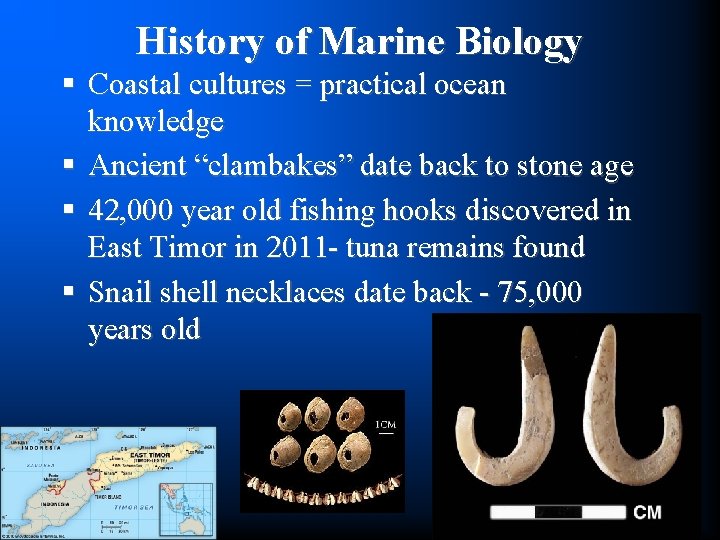
History of Marine Biology § Coastal cultures = practical ocean knowledge § Ancient “clambakes” date back to stone age § 42, 000 year old fishing hooks discovered in East Timor in 2011 - tuna remains found § Snail shell necklaces date back - 75, 000 years old
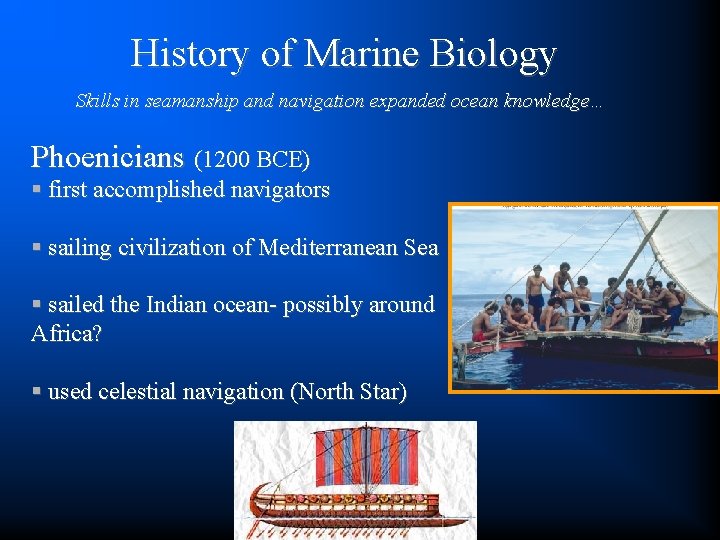
History of Marine Biology Skills in seamanship and navigation expanded ocean knowledge… Phoenicians (1200 BCE) § first accomplished navigators § sailing civilization of Mediterranean Sea § sailed the Indian ocean- possibly around Africa? § used celestial navigation (North Star)
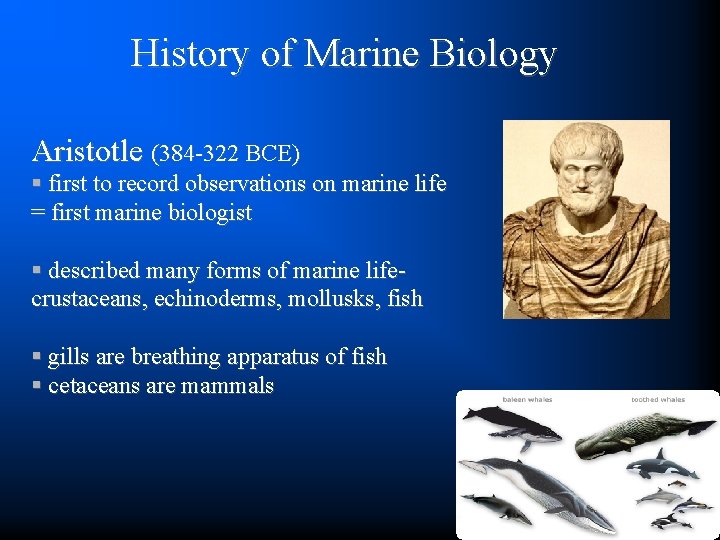
History of Marine Biology Aristotle (384 -322 BCE) § first to record observations on marine life = first marine biologist § described many forms of marine lifecrustaceans, echinoderms, mollusks, fish § gills are breathing apparatus of fish § cetaceans are mammals
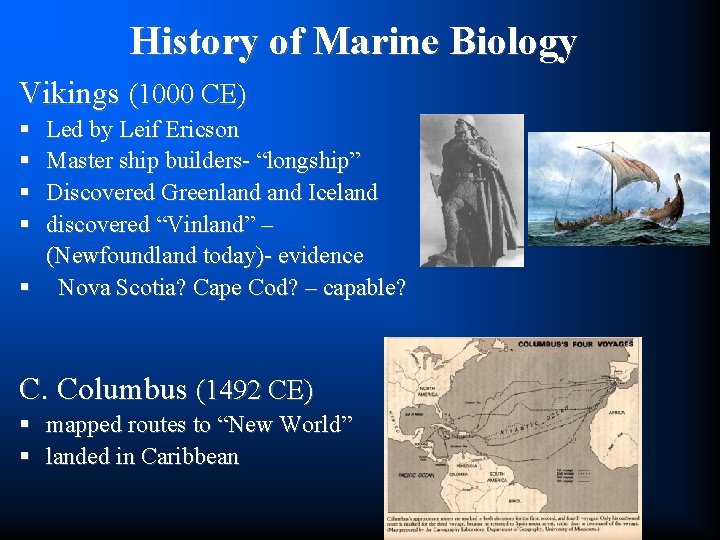
History of Marine Biology Vikings (1000 CE) § § Led by Leif Ericson Master ship builders- “longship” Discovered Greenland Iceland discovered “Vinland” – (Newfoundland today)- evidence § Nova Scotia? Cape Cod? – capable? C. Columbus (1492 CE) § mapped routes to “New World” § landed in Caribbean
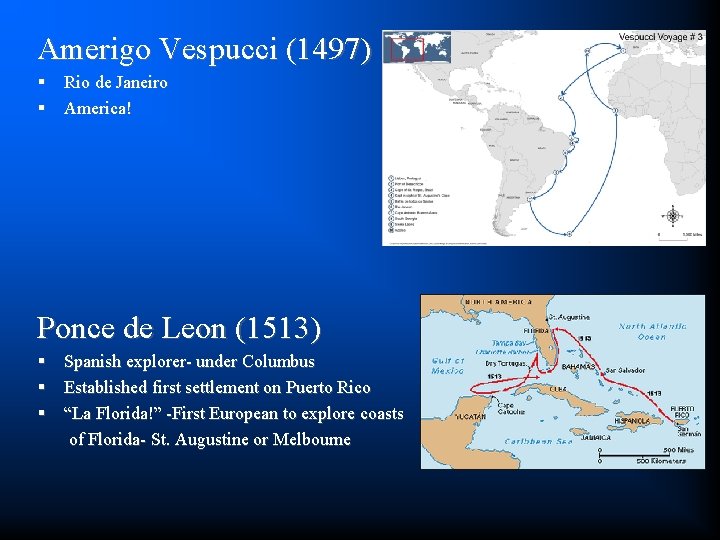
Amerigo Vespucci (1497) § Rio de Janeiro § America! Ponce de Leon (1513) § Spanish explorer- under Columbus § Established first settlement on Puerto Rico § “La Florida!” -First European to explore coasts of Florida- St. Augustine or Melbourne
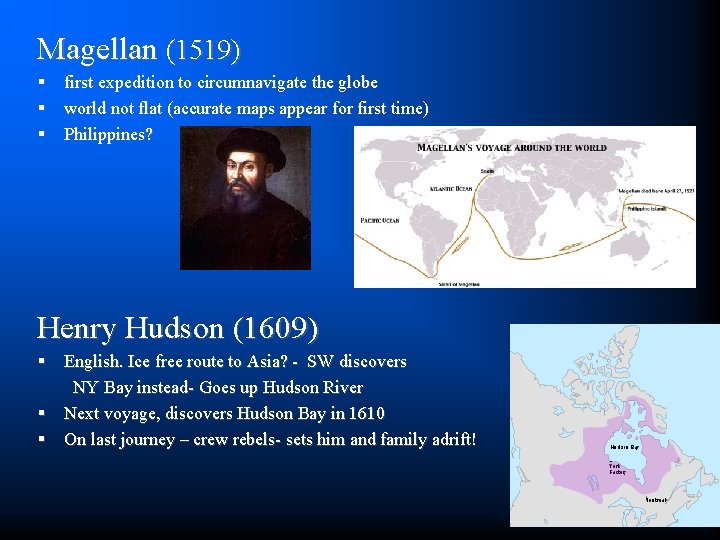
Magellan (1519) § first expedition to circumnavigate the globe § world not flat (accurate maps appear for first time) § Philippines? Henry Hudson (1609) § English. Ice free route to Asia? - SW discovers NY Bay instead- Goes up Hudson River § Next voyage, discovers Hudson Bay in 1610 § On last journey – crew rebels- sets him and family adrift!
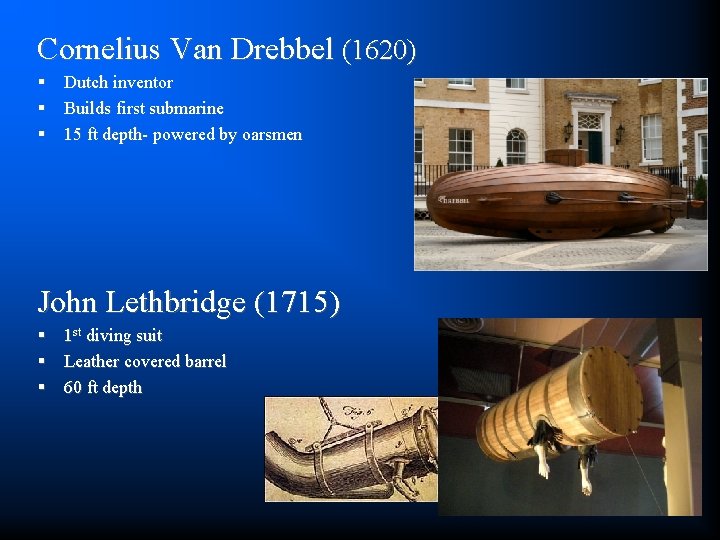
Cornelius Van Drebbel (1620) § Dutch inventor § Builds first submarine § 15 ft depth- powered by oarsmen John Lethbridge (1715) § 1 st diving suit § Leather covered barrel § 60 ft depth
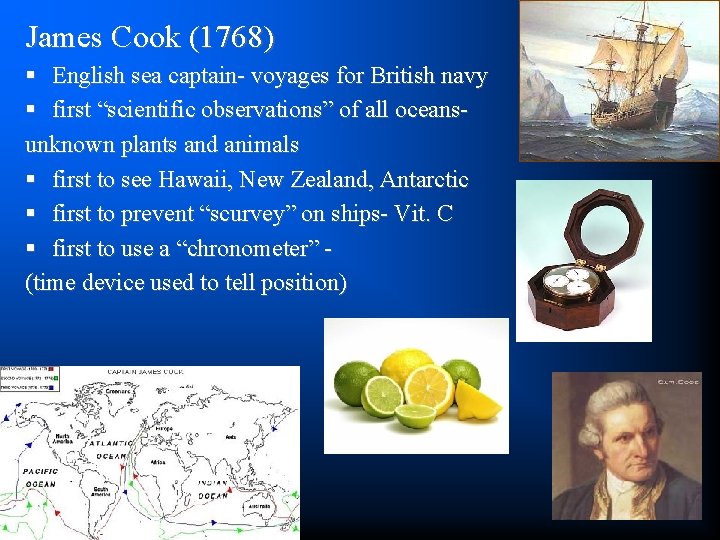
James Cook (1768) § English sea captain- voyages for British navy § first “scientific observations” of all oceansunknown plants and animals § first to see Hawaii, New Zealand, Antarctic § first to prevent “scurvey” on ships- Vit. C § first to use a “chronometer” (time device used to tell position)
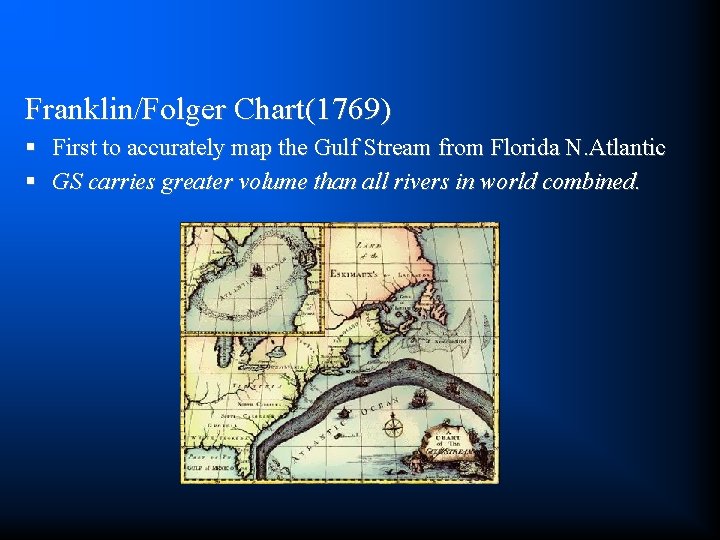
Franklin/Folger Chart(1769) § First to accurately map the Gulf Stream from Florida N. Atlantic § GS carries greater volume than all rivers in world combined.
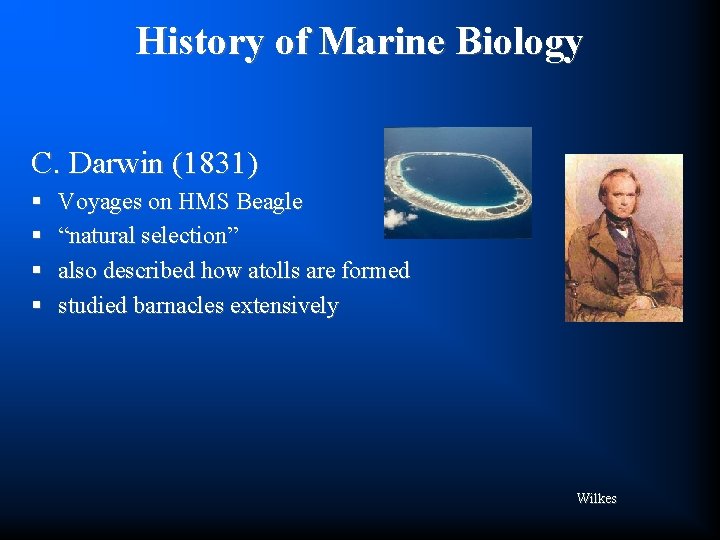
History of Marine Biology C. Darwin (1831) § § Voyages on HMS Beagle “natural selection” also described how atolls are formed studied barnacles extensively Wilkes
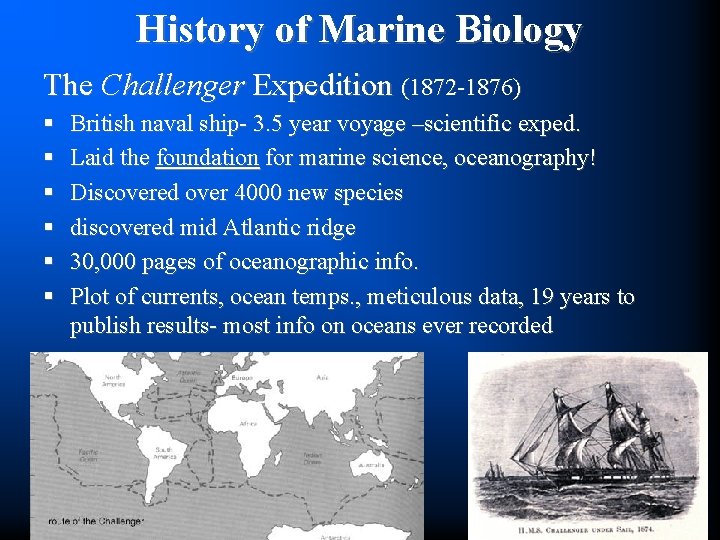
History of Marine Biology The Challenger Expedition (1872 -1876) § § § British naval ship- 3. 5 year voyage –scientific exped. Laid the foundation for marine science, oceanography! Discovered over 4000 new species discovered mid Atlantic ridge 30, 000 pages of oceanographic info. Plot of currents, ocean temps. , meticulous data, 19 years to publish results- most info on oceans ever recorded
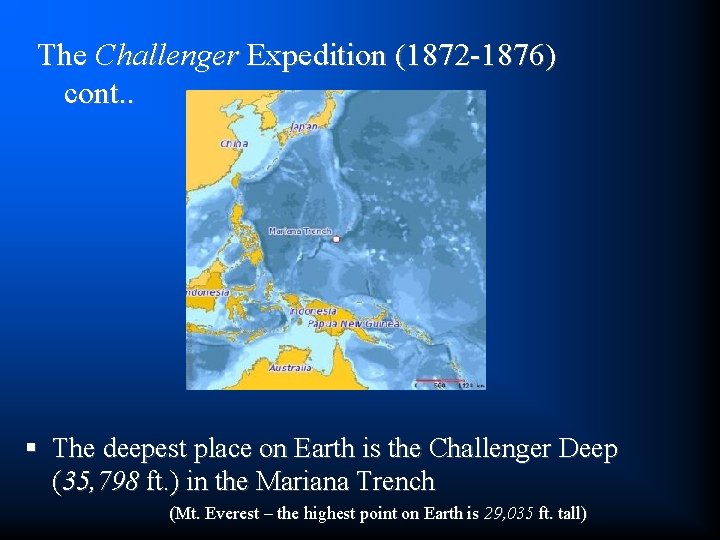
The Challenger Expedition (1872 -1876) cont. . § The deepest place on Earth is the Challenger Deep (35, 798 ft. ) in the Mariana Trench (Mt. Everest – the highest point on Earth is 29, 035 ft. tall)
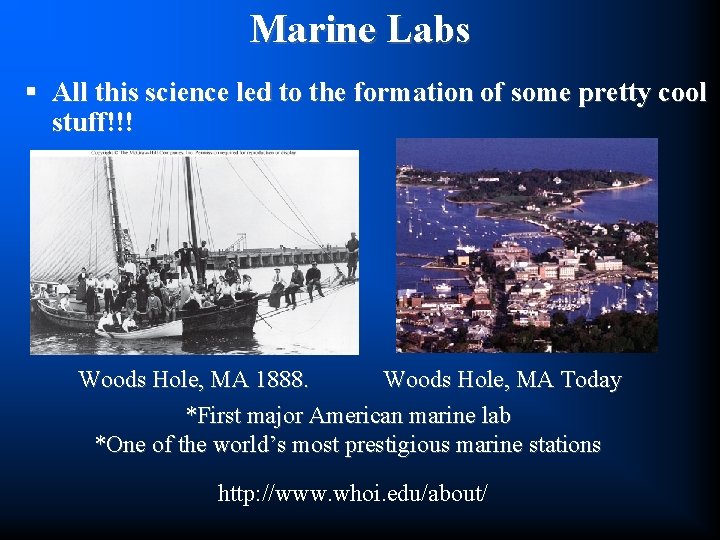
Marine Labs § All this science led to the formation of some pretty cool stuff!!! Woods Hole, MA 1888. Woods Hole, MA Today *First major American marine lab *One of the world’s most prestigious marine stations http: //www. whoi. edu/about/
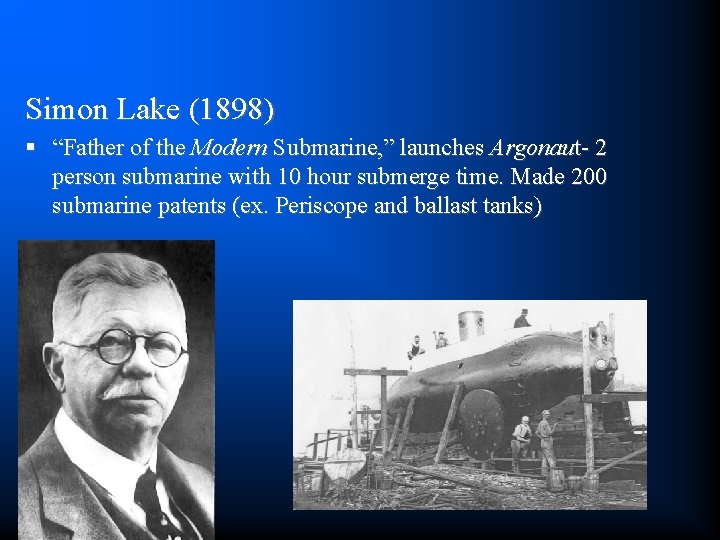
Simon Lake (1898) § “Father of the Modern Submarine, ” launches Argonaut- 2 person submarine with 10 hour submerge time. Made 200 submarine patents (ex. Periscope and ballast tanks)
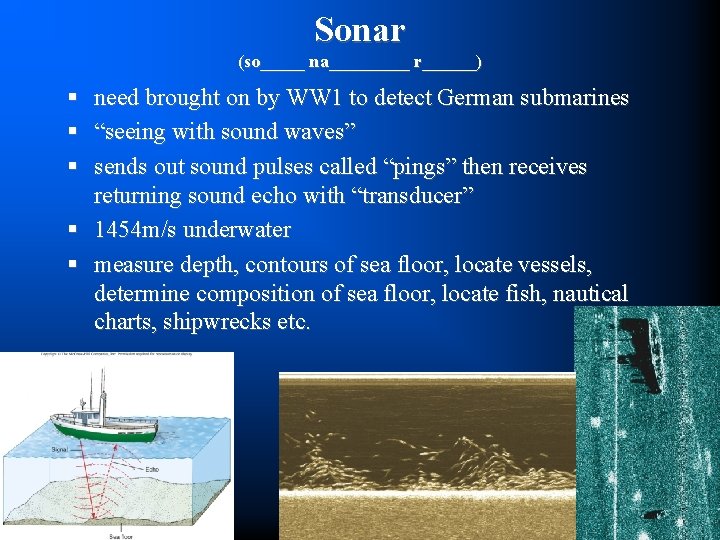
Sonar (so_____ na_____ r______) § § § need brought on by WW 1 to detect German submarines “seeing with sound waves” sends out sound pulses called “pings” then receives returning sound echo with “transducer” § 1454 m/s underwater § measure depth, contours of sea floor, locate vessels, determine composition of sea floor, locate fish, nautical charts, shipwrecks etc.
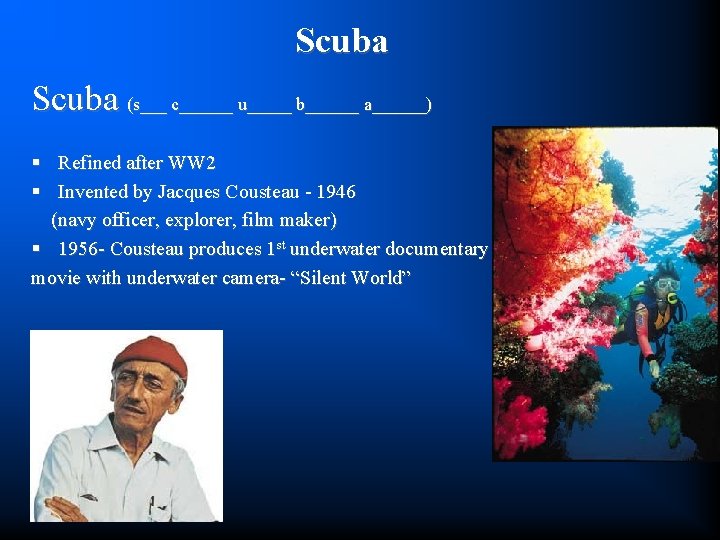
Scuba (s___ c______ u_____ b______ a______) § Refined after WW 2 § Invented by Jacques Cousteau - 1946 (navy officer, explorer, film maker) § 1956 - Cousteau produces 1 st underwater documentary movie with underwater camera- “Silent World”
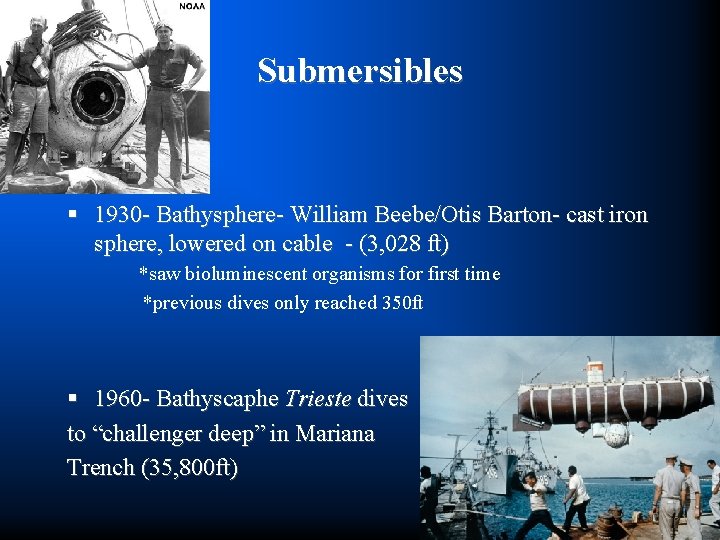
Submersibles § 1930 - Bathysphere- William Beebe/Otis Barton- cast iron sphere, lowered on cable - (3, 028 ft) *saw bioluminescent organisms for first time *previous dives only reached 350 ft § 1960 - Bathyscaphe Trieste dives to “challenger deep” in Mariana Trench (35, 800 ft)
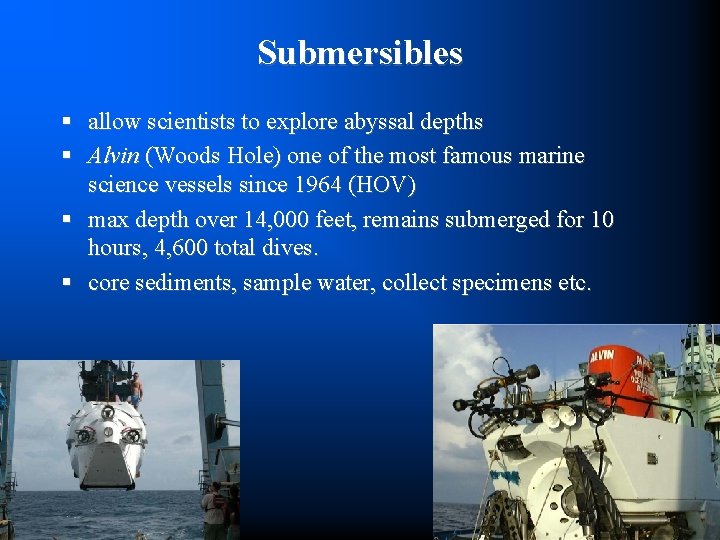
Submersibles § allow scientists to explore abyssal depths § Alvin (Woods Hole) one of the most famous marine science vessels since 1964 (HOV) § max depth over 14, 000 feet, remains submerged for 10 hours, 4, 600 total dives. § core sediments, sample water, collect specimens etc.
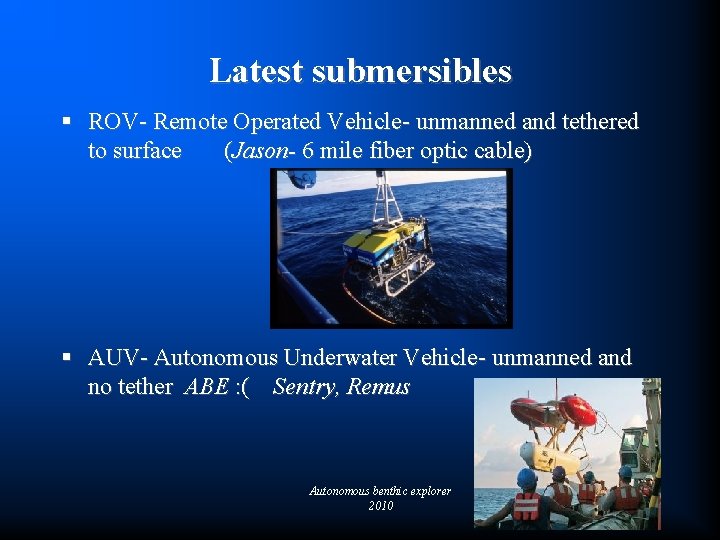
Latest submersibles § ROV- Remote Operated Vehicle- unmanned and tethered to surface (Jason- 6 mile fiber optic cable) § AUV- Autonomous Underwater Vehicle- unmanned and no tether ABE : ( Sentry, Remus Autonomous benthic explorer 2010
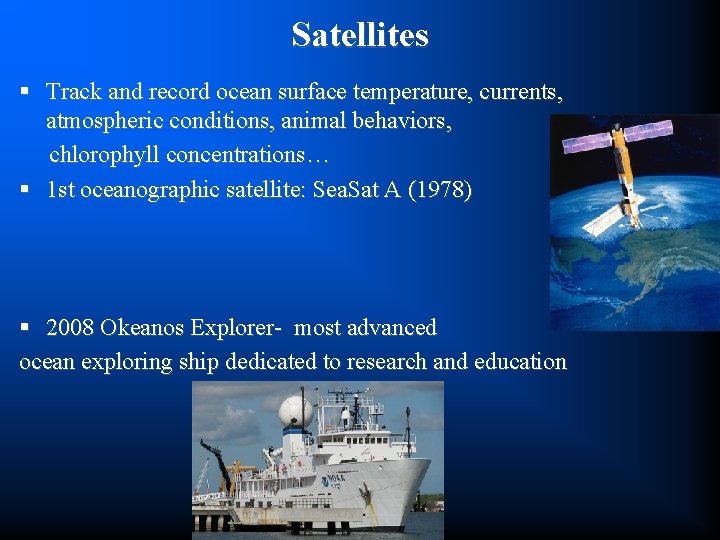
Satellites § Track and record ocean surface temperature, currents, atmospheric conditions, animal behaviors, chlorophyll concentrations… § 1 st oceanographic satellite: Sea. Sat A (1978) § 2008 Okeanos Explorer- most advanced ocean exploring ship dedicated to research and education
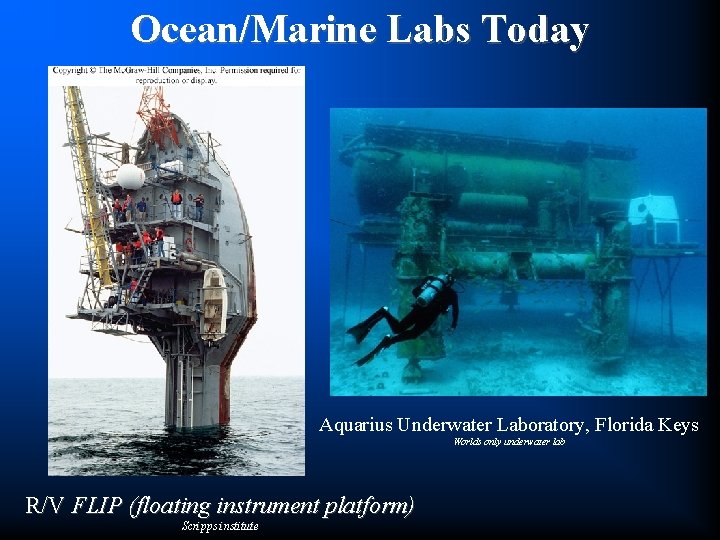
Ocean/Marine Labs Today Aquarius Underwater Laboratory, Florida Keys Worlds only underwater lab R/V FLIP (floating instrument platform) Scripps institute
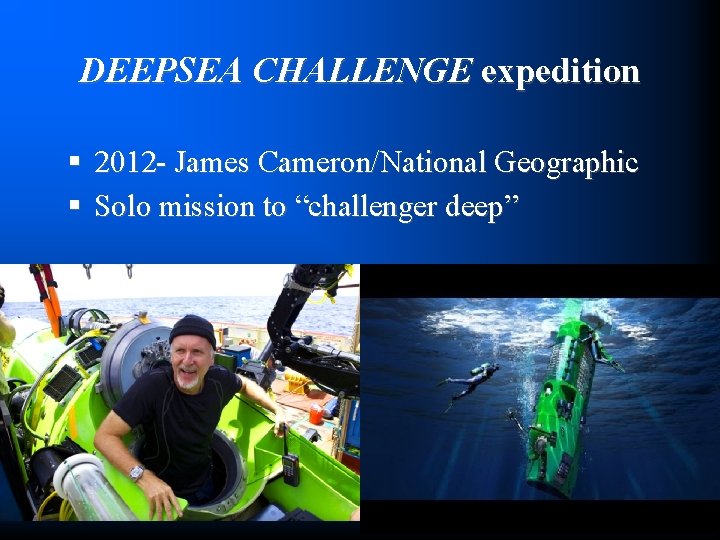
DEEPSEA CHALLENGE expedition § 2012 - James Cameron/National Geographic § Solo mission to “challenger deep”
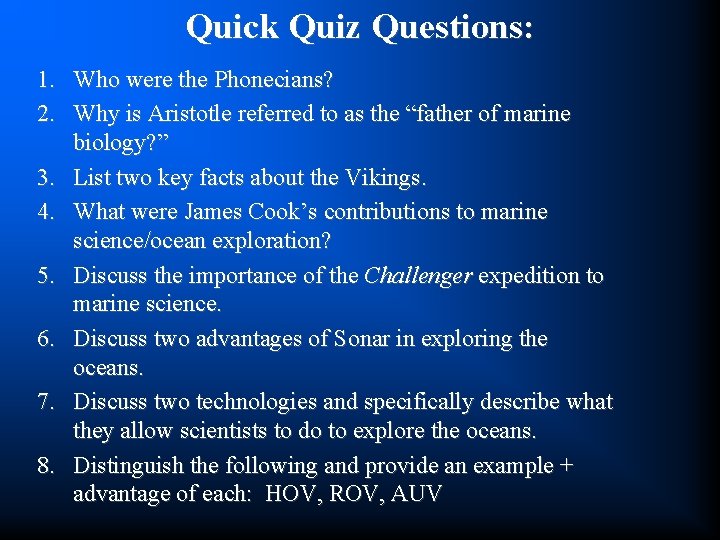
Quick Quiz Questions: 1. Who were the Phonecians? 2. Why is Aristotle referred to as the “father of marine biology? ” 3. List two key facts about the Vikings. 4. What were James Cook’s contributions to marine science/ocean exploration? 5. Discuss the importance of the Challenger expedition to marine science. 6. Discuss two advantages of Sonar in exploring the oceans. 7. Discuss two technologies and specifically describe what they allow scientists to do to explore the oceans. 8. Distinguish the following and provide an example + advantage of each: HOV, ROV, AUV
- Slides: 29