
MARINE BIODIVERSITY EVIDENCE A DEA RESEARCH PRIORITY MPA
MARINE BIODIVERSITY EVIDENCE – A DEA RESEARCH PRIORITY MPA FORUM - 25 OCTOBER 2016 ALAN BOYD – DEA BRANCH OCEANS AND COASTS Oceans and Coasts
Introduction and presentation outline • DEA is implementing a programme that stresses the importance of an evidencebased approach to policy development and management. • Oceans and Coasts have the responsibilities for implementing different aspects of NEMA: the coastal specific ICM Act, plus marine and coastal aspects of the Protected Areas and Biodiversity Act, as well as our own new policy, the Oceans Bill which is now the Marine Spatial Planning Bill. • As a branch, we both collect and collate evidence, to meet the obligations of overall environmental monitoring and management, plus the more specific examples of MPAs, Protected Species and Ecotourism, and evidence relevant to the marine components of EIAs. • The use of evidence can be from generic-international perspective, or may need to be country- situation- specific, but often it is a combination. • Sometimes the evidence for what needs to be done is good, but evidence regarding “side effects” is not.
Main research areas of O&C Research, are not only biodiversity related • Oceans Research – Operational Oceanography – measurements & models – Ecosystem Functioning – including plankton and ocean chemistry • Biodiversity Research – Marine biodiversity, including species, EBSAs and MPAs – Marine top predators, ecosystem health, marine ecotourism • Cross cutting – Coastal Research, including water quality, coastal vulnerability assessment, estuaries – Antarctic Research
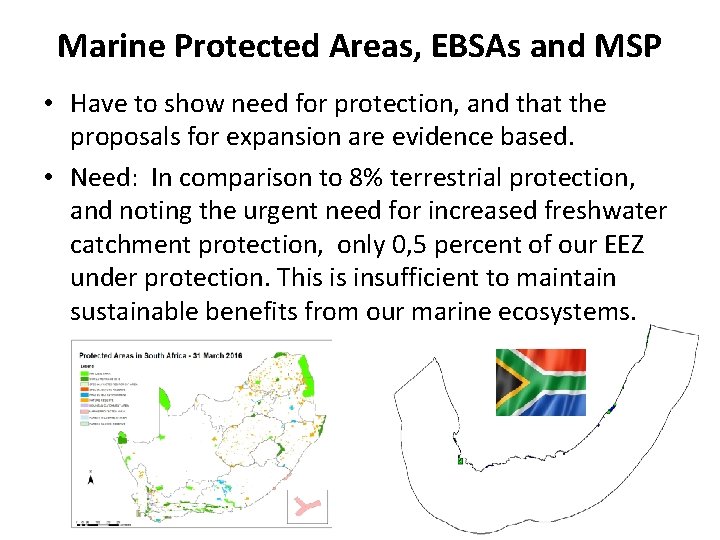
Marine Protected Areas, EBSAs and MSP • Have to show need for protection, and that the proposals for expansion are evidence based. • Need: In comparison to 8% terrestrial protection, and noting the urgent need for increased freshwater catchment protection, only 0, 5 percent of our EEZ under protection. This is insufficient to maintain sustainable benefits from our marine ecosystems.

Objectives of the Phakisa Proposed MPA Representative Network which comprises 22 MPA proposals • Include all habitat types • Protect last remnants of threatened ecosystems in good ecological condition • Protect sensitive ecosystems • Protect key ecological areas: aggregation, nursery, spawning & feeding areas • Support fisheries management • Spatially efficient with consideration of socio-economic data
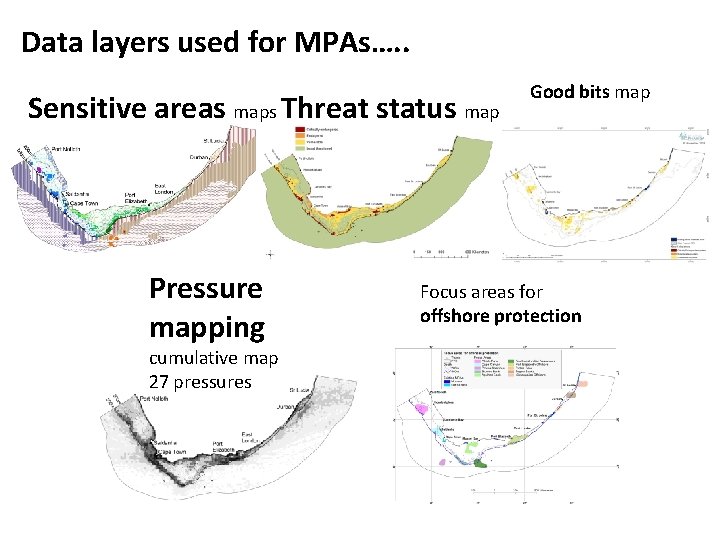
Data layers used for MPAs…. . Sensitive areas maps Threat status map Pressure mapping cumulative map 27 pressures Good bits map Focus areas for offshore protection
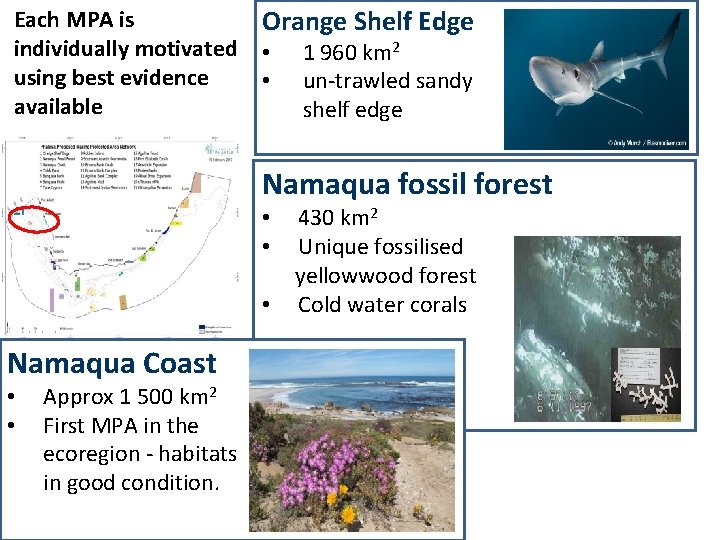
Each MPA is individually motivated using best evidence available Orange Shelf Edge • • 1 960 km 2 un-trawled sandy shelf edge Namaqua fossil forest 430 km 2 Unique fossilised yellowwood forest • Cold water corals • • Namaqua Coast • • Approx 1 500 km 2 First MPA in the ecoregion - habitats in good condition.
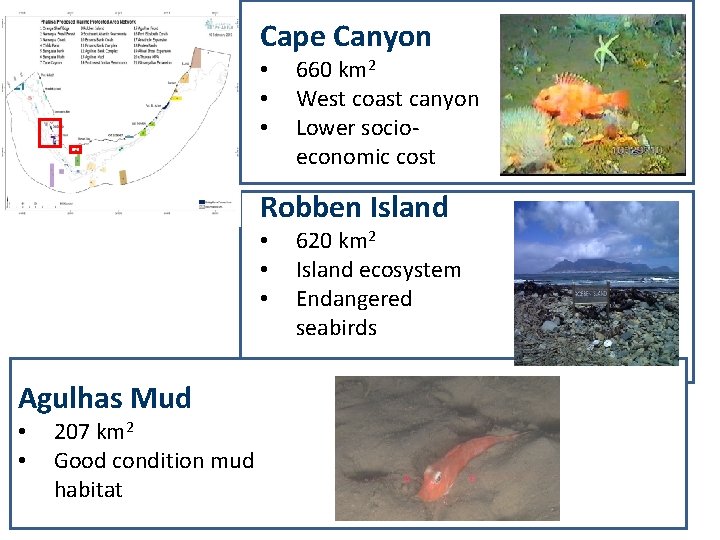
Cape Canyon • • • 660 km 2 West coast canyon Lower socioeconomic cost Robben Island • • • Agulhas Mud • • 207 km 2 Good condition mud habitat 620 km 2 Island ecosystem Endangered seabirds
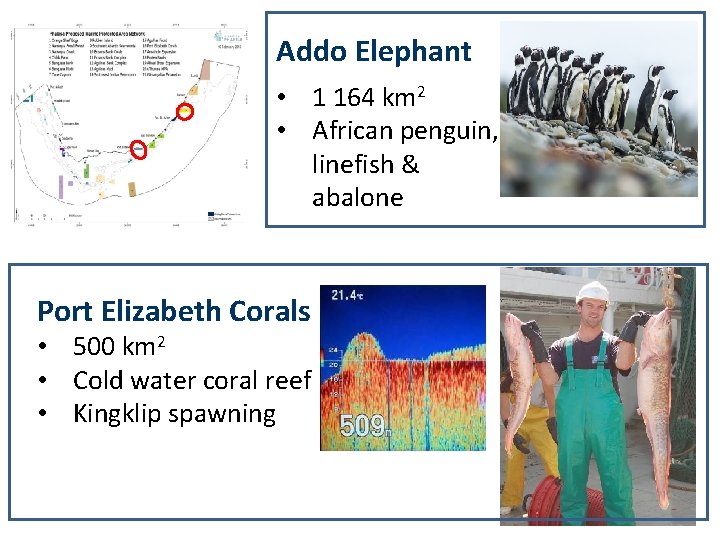
Addo Elephant • 1 164 km 2 • African penguin, linefish & abalone Port Elizabeth Corals • 500 km 2 • Cold water coral reef • Kingklip spawning
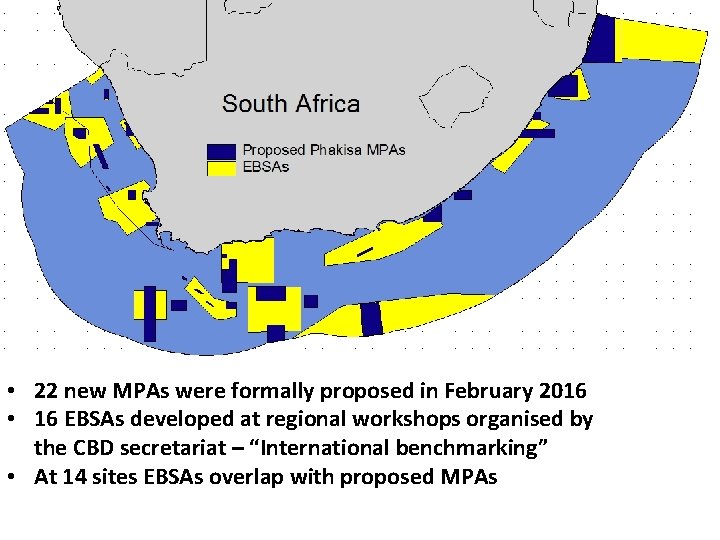
• 22 new MPAs were formally proposed in February 2016 • 16 EBSAs developed at regional workshops organised by the CBD secretariat – “International benchmarking” • At 14 sites EBSAs overlap with proposed MPAs
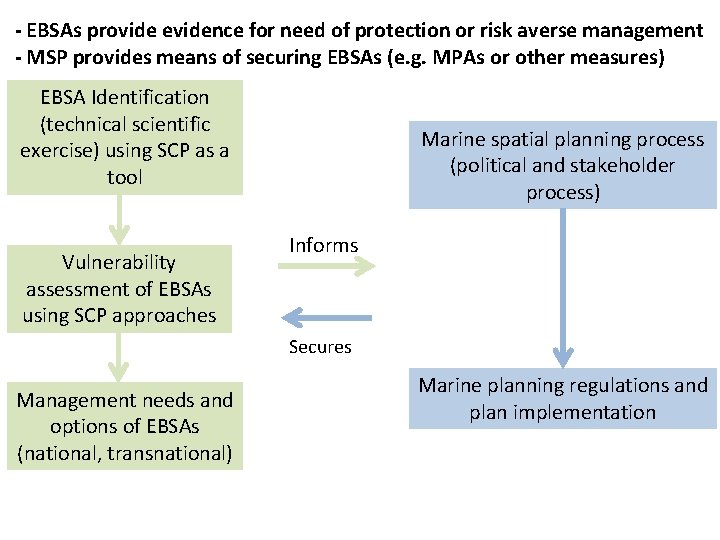
- EBSAs provide evidence for need of protection or risk averse management - MSP provides means of securing EBSAs (e. g. MPAs or other measures) EBSA Identification (technical scientific exercise) using SCP as a tool Vulnerability assessment of EBSAs using SCP approaches Marine spatial planning process (political and stakeholder process) Informs Secures Management needs and options of EBSAs (national, transnational) Marine planning regulations and plan implementation
Marine Protected Species: Key ecotourism research considerations • Areas and species suitable for ecotourism • Animal behaviour protective measures, permit conditions • Monitoring of current activities • Research into new activities Noting that: • MPAs are often suitable for ecotourism • Some activities can occur nationally (BBWW) • Others have specific focus areas (sharks, turtles, seabirds)
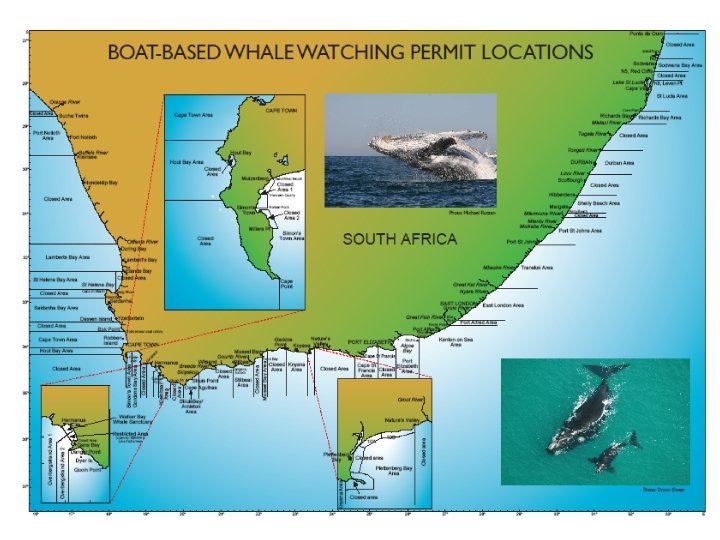
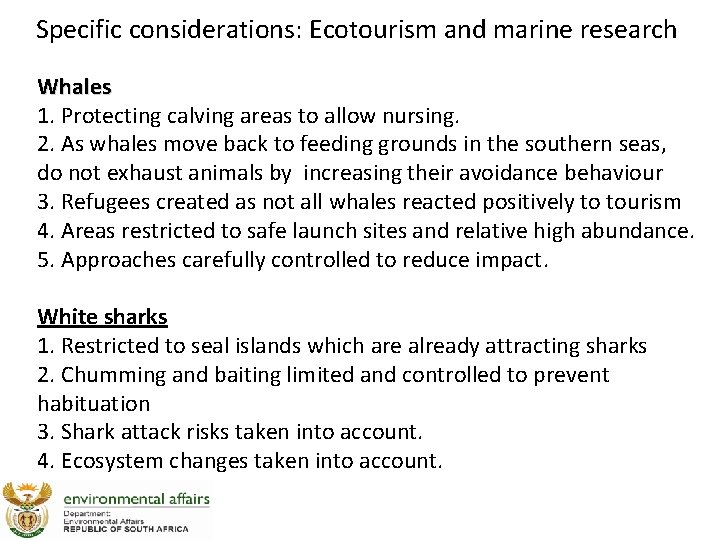
Specific considerations: Ecotourism and marine research Whales 1. Protecting calving areas to allow nursing. 2. As whales move back to feeding grounds in the southern seas, do not exhaust animals by increasing their avoidance behaviour 3. Refugees created as not all whales reacted positively to tourism 4. Areas restricted to safe launch sites and relative high abundance. 5. Approaches carefully controlled to reduce impact. White sharks 1. Restricted to seal islands which are already attracting sharks 2. Chumming and baiting limited and controlled to prevent habituation 3. Shark attack risks taken into account. 4. Ecosystem changes taken into account.
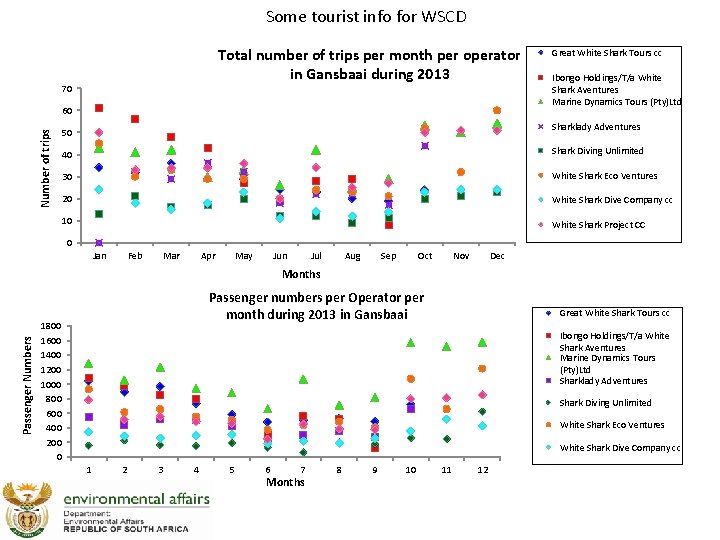
Some tourist info for WSCD Total number of trips per month per operator in Gansbaai during 2013 70 Number of trips 60 Great White Shark Tours cc Ibongo Holdings/T/a White Shark Aventures Marine Dynamics Tours (Pty)Ltd Sharklady Adventures 50 40 Shark Diving Unlimited 30 White Shark Eco Ventures 20 White Shark Dive Company cc 10 White Shark Project CC 0 Jan Feb Mar Apr May Jun Jul Aug Sep Oct Nov Dec Passenger Numbers Months Passenger numbers per Operator per month during 2013 in Gansbaai 1800 1600 1400 1200 1000 800 600 400 200 0 Great White Shark Tours cc Ibongo Holdings/T/a White Shark Aventures Marine Dynamics Tours (Pty)Ltd Sharklady Adventures Shark Diving Unlimited White Shark Eco Ventures White Shark Dive Company cc 1 2 3 4 5 6 7 Months 8 9 10 11 12
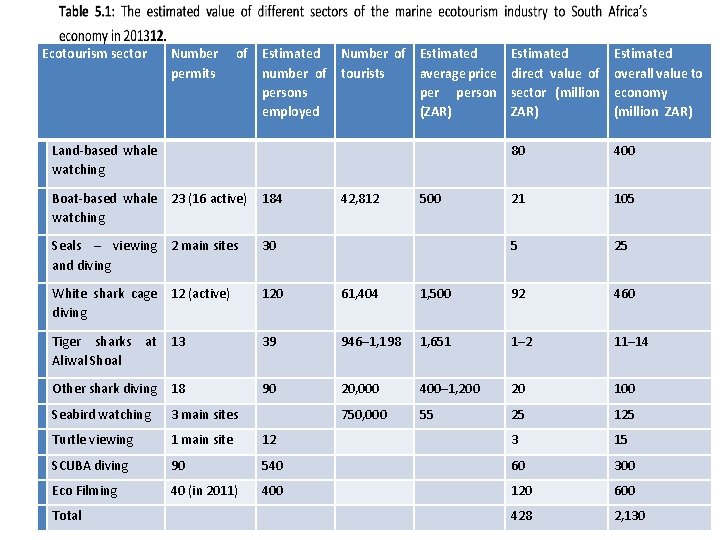
Ecotourism sector Number permits of Estimated Number of Estimated number of tourists average price persons person employed (ZAR) Land-based whale watching Boat-based whale 23 (16 active) watching 184 Seals – viewing and diving 30 2 main sites 42, 812 500 Estimated direct value of sector (million ZAR) Estimated overall value to economy (million ZAR) 80 400 21 105 5 25 White shark cage 12 (active) diving 120 61, 404 1, 500 92 460 Tiger sharks Aliwal Shoal 39 946– 1, 198 1, 651 1– 2 11– 14 90 20, 000 400– 1, 200 20 100 750, 000 55 25 125 at 13 Other shark diving 18 Seabird watching 3 main sites Turtle viewing 1 main site 12 3 15 SCUBA diving 90 540 60 300 Eco Filming 40 (in 2011) 400 120 600 428 2, 130 Total
Important but not presented here • Evidence needed for rezonation of MPAs (biodiversity, species research, likely impacts of exploitation) • Information on vulnerability of species (eg for CITES) • Alien invasive species – information occurrence and introduction vectors
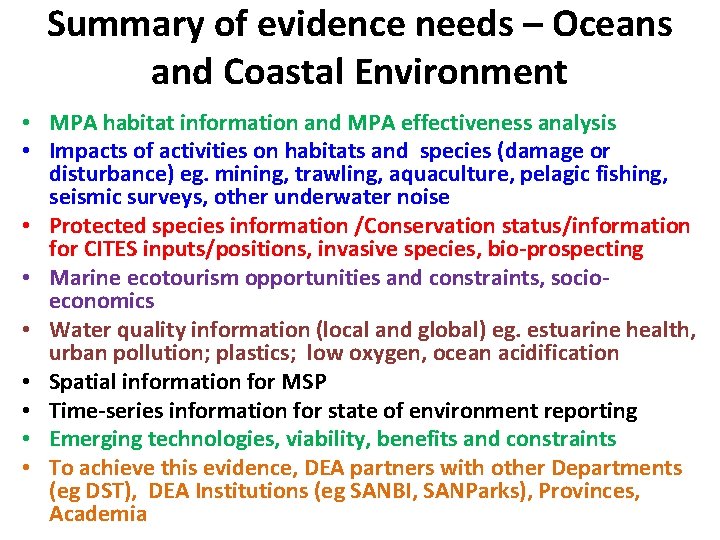
Summary of evidence needs – Oceans and Coastal Environment • MPA habitat information and MPA effectiveness analysis • Impacts of activities on habitats and species (damage or disturbance) eg. mining, trawling, aquaculture, pelagic fishing, seismic surveys, other underwater noise • Protected species information /Conservation status/information for CITES inputs/positions, invasive species, bio-prospecting • Marine ecotourism opportunities and constraints, socioeconomics • Water quality information (local and global) eg. estuarine health, urban pollution; plastics; low oxygen, ocean acidification • Spatial information for MSP • Time-series information for state of environment reporting • Emerging technologies, viability, benefits and constraints • To achieve this evidence, DEA partners with other Departments (eg DST), DEA Institutions (eg SANBI, SANParks), Provinces, Academia

- Slides: 19