
Marijuana MJ Medicinal or Malevolent Christian J Teter
- Slides: 25
Marijuana (MJ): Medicinal or Malevolent? Christian J. Teter, Pharm. D, BCPP Associate Professor, Psychopharmacology University of New England (UNE) College of Pharmacy & Center for Excellence in the Neurosciences Portland, ME cteter@une. edu
Disclosure Statement 2 Dr. Teter reports no real or perceived financial relationships or other conflicts of interest Dr. Teter will be discussing ‘unapproved’ uses for cannabinoids (including cannabis, marijuana, etc. ) PLEASE NOTE: the intended purpose of this lecture is to provide a brief overview of topics related to cannabinoids: � References available upon request (cteter@une. edu) � NIDA/SAMHSA materials are in the public domain
3 Marijuana: Medicinal or Malevolent? Learning Objectives: 1. Describe the pharmacology and pharmacokinetics of cannabinoids 2. Explore the currently known adverse effects and efficacy of cannabinoids
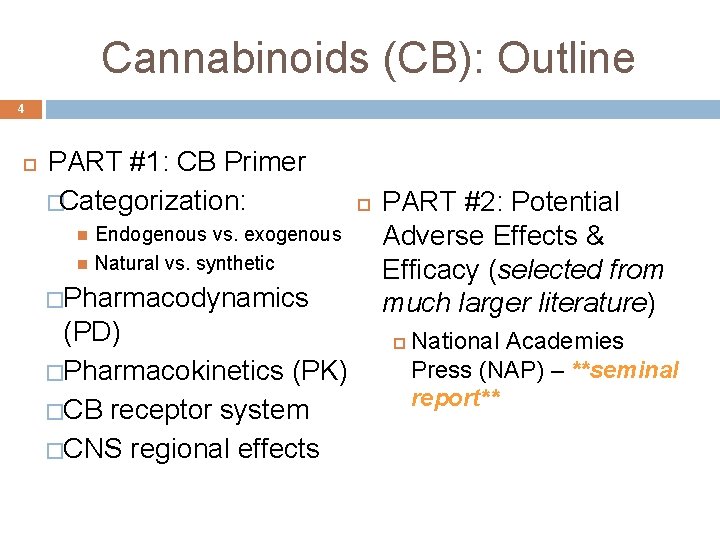
Cannabinoids (CB): Outline 4 PART #1: CB Primer �Categorization: Endogenous vs. exogenous Natural vs. synthetic �Pharmacodynamics (PD) �Pharmacokinetics (PK) �CB receptor system �CNS regional effects PART #2: Potential Adverse Effects & Efficacy (selected from much larger literature) National Academies Press (NAP) – **seminal report**
5 Part #1: Cannabinoid (CB) Primer
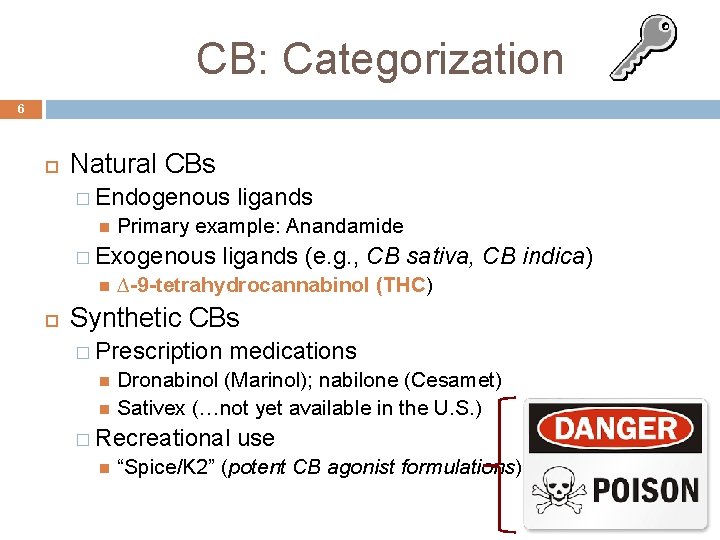
CB: Categorization 6 Natural CBs � Endogenous Primary example: Anandamide � Exogenous ligands (e. g. , CB sativa, CB indica) ∆-9 -tetrahydrocannabinol (THC) Synthetic CBs � Prescription medications Dronabinol (Marinol); nabilone (Cesamet) Sativex (…not yet available in the U. S. ) � Recreational use “Spice/K 2” (potent CB agonist formulations)
CB: Pharmacodynamics 7 MJ is a complex plant � Numerous compounds 60(+) CBs [note: not identical PD properties] � Various strains Differing CB concentrations Lack of correlation between drug concentrations and physiologic effect Highly variable drug administration � Concerns with self-titration and dosing Borgelt et al. Pharmacotherapy (2013)
CB: Pharmacokinetics 8 THC � Half-life = 30 hours (wide variability) � Smoked THC Absorption: rapid (within minutes) Bioavailability: wide range (10 -25%) � Oral THC NOTE: Delay has contributed to AEs Absorption: variable Peak concentrations: 1 -3 hours � Other formulations: vaporized Teter CJ: [Variability (PD) x Variability (PK)] = [Variability] � (i. e. lack PK/PD standardization) Borgelt et al. Pharmacotherapy (2013)
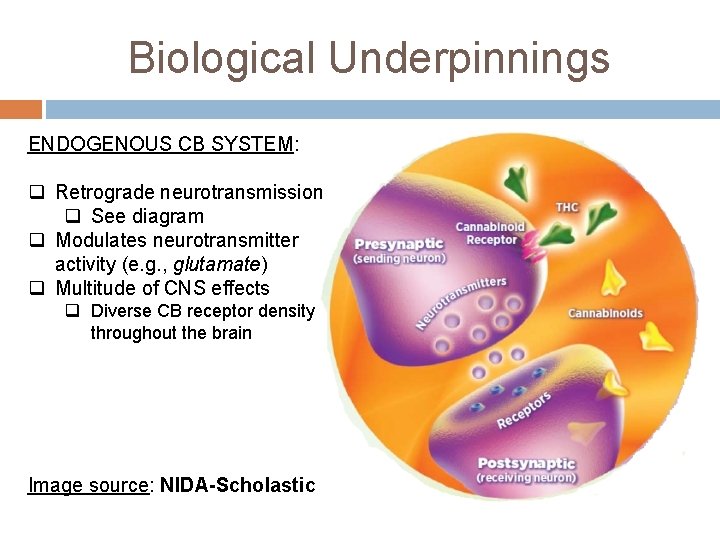
Biological Underpinnings ENDOGENOUS CB SYSTEM: q Retrograde neurotransmission q See diagram q Modulates neurotransmitter activity (e. g. , glutamate) q Multitude of CNS effects q Diverse CB receptor density throughout the brain Image source: NIDA-Scholastic
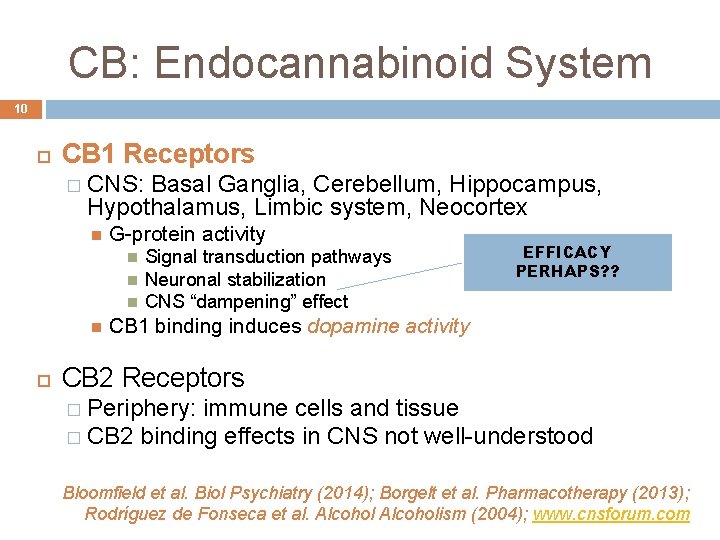
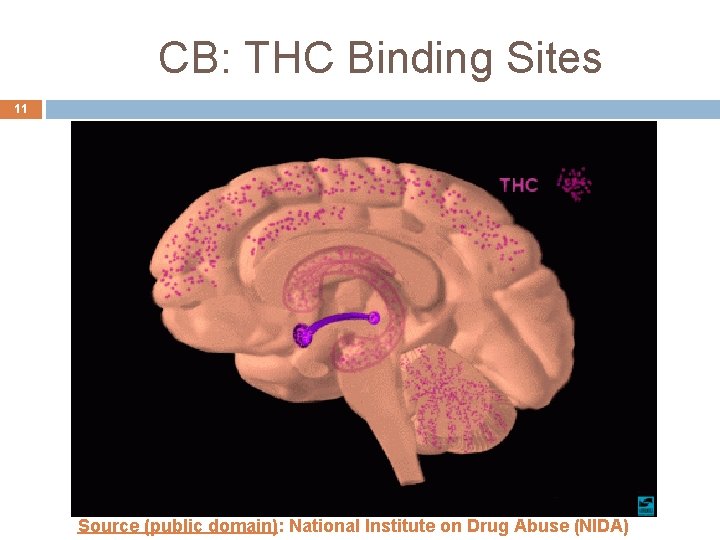
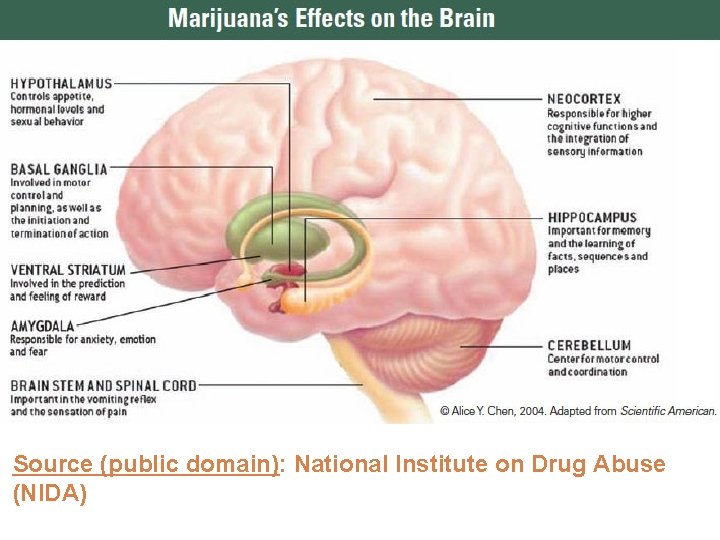
CB: Endocannabinoid System 10 CB 1 Receptors � CNS: Basal Ganglia, Cerebellum, Hippocampus, Hypothalamus, Limbic system, Neocortex G-protein activity Signal transduction pathways Neuronal stabilization CNS “dampening” effect EFFICACY PERHAPS? ? CB 1 binding induces dopamine activity CB 2 Receptors � Periphery: immune cells and tissue � CB 2 binding effects in CNS not well-understood Bloomfield et al. Biol Psychiatry (2014); Borgelt et al. Pharmacotherapy (2013); Rodríguez de Fonseca et al. Alcoholism (2004); www. cnsforum. com
CB: THC Binding Sites 11 Source (public domain): National Institute on Drug Abuse (NIDA)
12 Source (public domain): National Institute on Drug Abuse (NIDA)
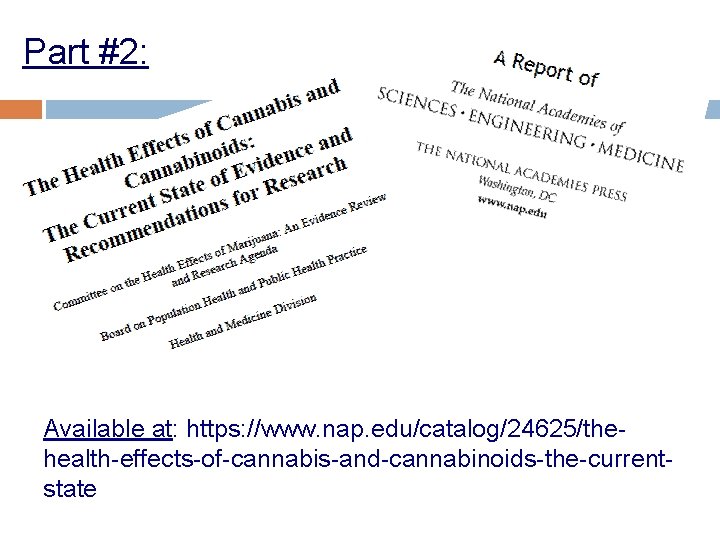
Part #2: Available at: https: //www. nap. edu/catalog/24625/thehealth-effects-of-cannabis-and-cannabinoids-the-currentstate
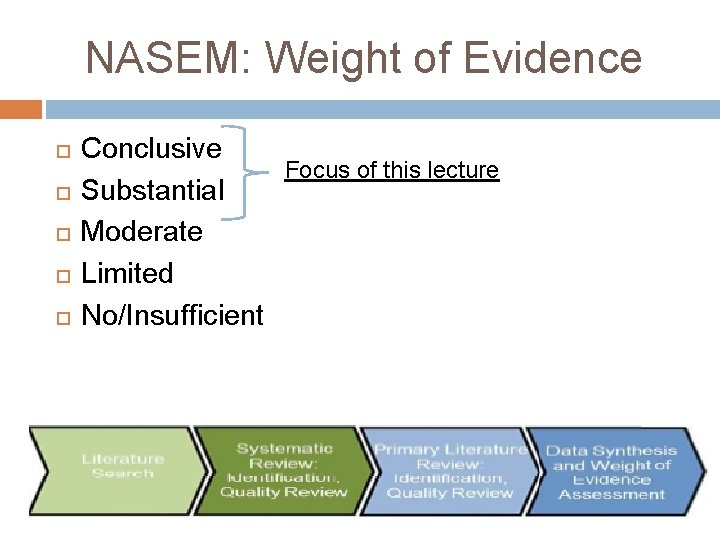
NASEM: Weight of Evidence Conclusive Focus of this lecture Substantial Moderate Limited No/Insufficient
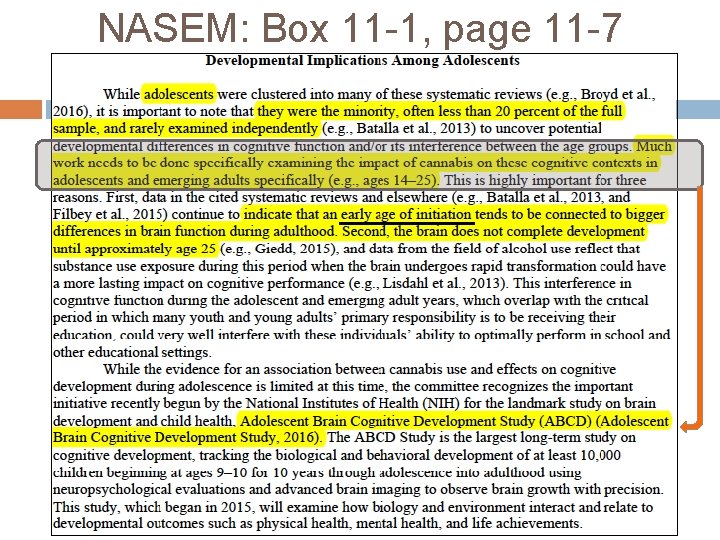
NASEM: Box 11 -1, page 11 -7
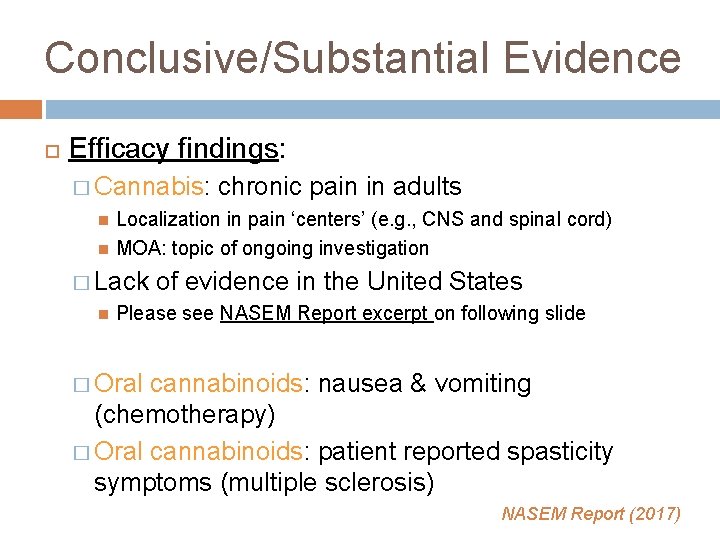
Conclusive/Substantial Evidence Efficacy findings: � Cannabis: Localization in pain ‘centers’ (e. g. , CNS and spinal cord) MOA: topic of ongoing investigation � Lack chronic pain in adults of evidence in the United States Please see NASEM Report excerpt on following slide � Oral cannabinoids: nausea & vomiting (chemotherapy) � Oral cannabinoids: patient reported spasticity symptoms (multiple sclerosis) NASEM Report (2017)
NASEM Report (excerpt) 17 “very little is known about the efficacy, dose, routes of administration, or side effects of commonly used and commercially available cannabis products in the United States. Given the ubiquitous availability of cannabis products in much of the nation, more research is needed on the various forms, routes of administration, and combination of cannabinoids. ” NASEM Report (2017)
Conclusive/Substantial Evidence Adverse health effects: � Smoking cannabis: bronchitis episodes � Maternal cannabis: lower birth weight in offspring � Cannabinoids: motor vehicle accidents How are we going to monitor this situation? ? Teter CJ. Drugged Driving. Journal Tribune 2016/2017 Pharmacokinetic/Pharmacodynamic issues QUESTION(S) FOR THE AUDIENCE: what concrete information does a given blood concentration of THC provide? For example, is driving with THC 5 ng/m. L in your bloodstream safe for you and other drivers? NASEM Report (2017)
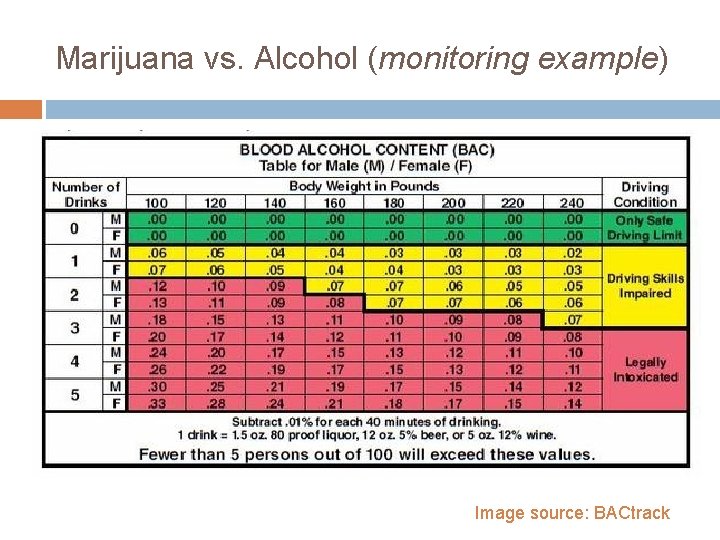
Marijuana vs. Alcohol (monitoring example) Image source: BACtrack
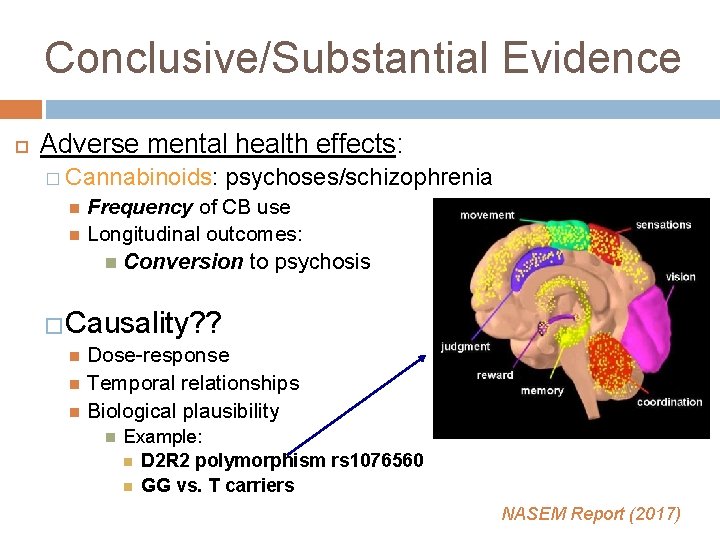
Conclusive/Substantial Evidence Adverse mental health effects: � Cannabinoids: psychoses/schizophrenia Frequency of CB use Longitudinal outcomes: Conversion to psychosis �Causality? ? Dose-response Temporal relationships Biological plausibility Example: D 2 R 2 polymorphism rs 1076560 GG vs. T carriers NASEM Report (2017)
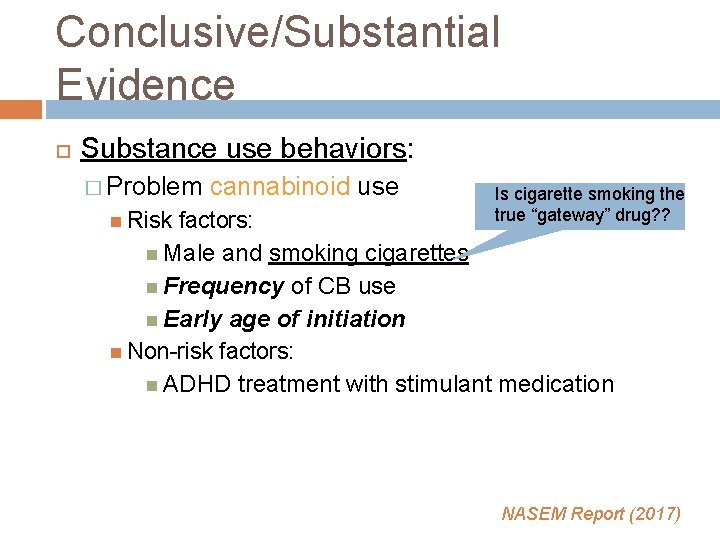
Conclusive/Substantial Evidence Substance use behaviors: � Problem Risk cannabinoid use Is cigarette smoking the true “gateway” drug? ? factors: Male and smoking cigarettes Frequency of CB use Early age of initiation Non-risk factors: ADHD treatment with stimulant medication NASEM Report (2017)
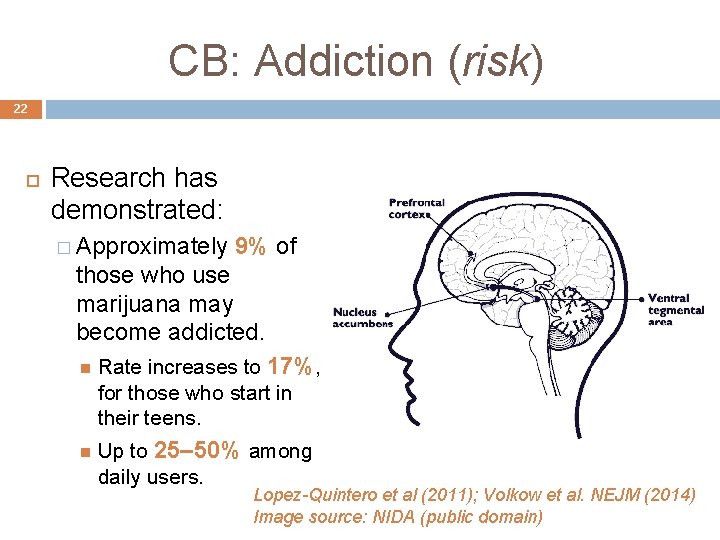
CB: Addiction (risk) 22 Research has demonstrated: � Approximately 9% of those who use marijuana may become addicted. Rate increases to 17%, for those who start in their teens. Up to 25– 50% among daily users. Lopez-Quintero et al (2011); Volkow et al. NEJM (2014) Image source: NIDA (public domain)
23 Next Steps/Future Directions
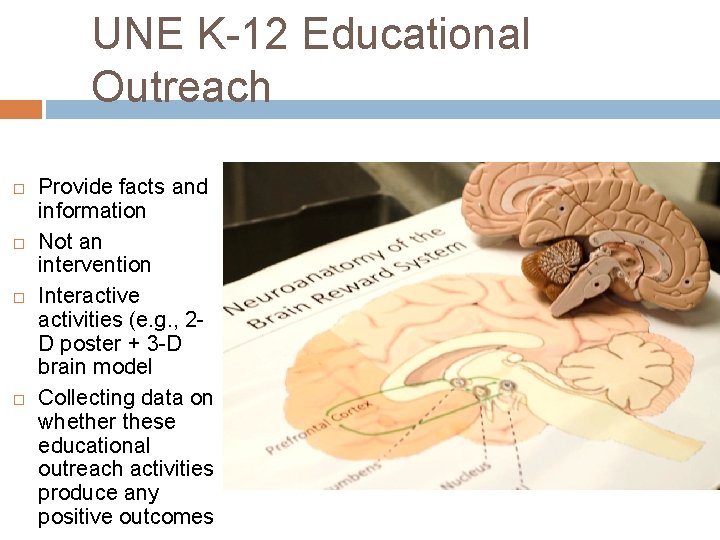
UNE K-12 Educational Outreach Provide facts and information Not an intervention Interactive activities (e. g. , 2 D poster + 3 -D brain model Collecting data on whether these educational outreach activities produce any positive outcomes
25 Question & Answer Session