
Marijuana Addiction and its effects among Teens What

- Slides: 20
Marijuana Addiction and its effects among Teens
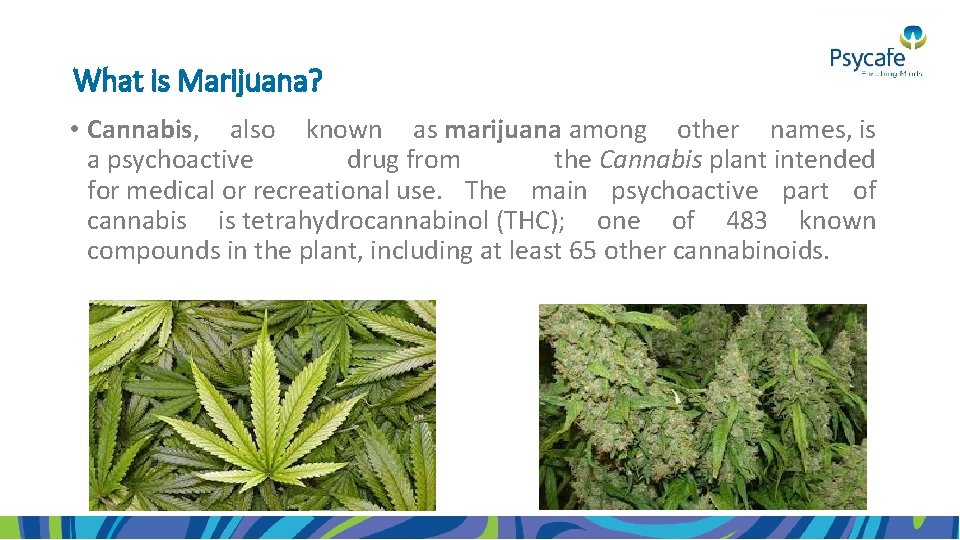
What is Marijuana? • Cannabis, also known as marijuana among other names, is a psychoactive drug from the Cannabis plant intended for medical or recreational use. The main psychoactive part of cannabis is tetrahydrocannabinol (THC); one of 483 known compounds in the plant, including at least 65 other cannabinoids.
Common Street Names of Marijuana • • • Pot. Weed. Grass. 420. Ganja. Dope. Herb. Joint. Blunt. Cannabis. Reefer. • • • Mary Jane. Buds. Stinkweed. Nuggets. Chronic. Tobacco. Hay. Rope. Gangster. Skunk. Boom. • • Blaze. Ashes. Block. Boo. Broccoli. Burrito. Burnie. Charge.
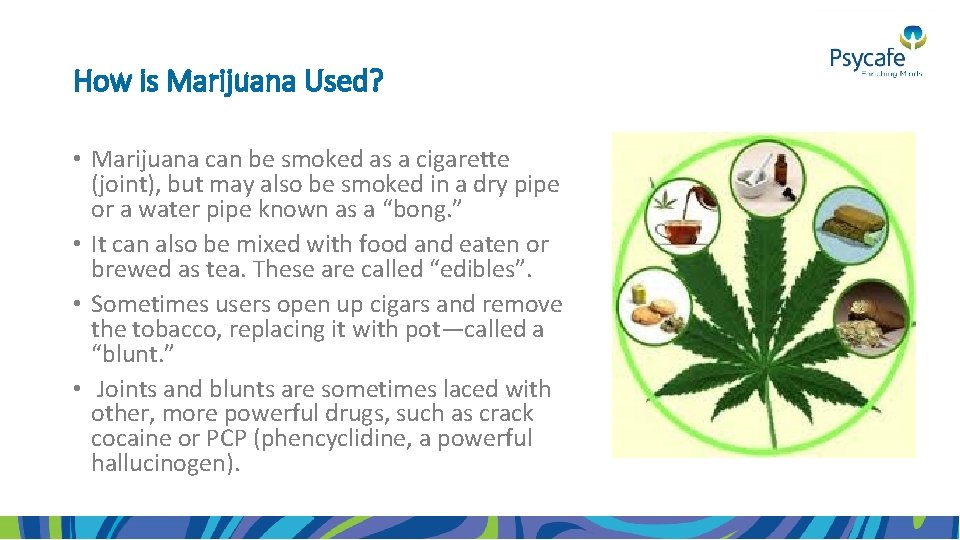
How is Marijuana Used? • Marijuana can be smoked as a cigarette (joint), but may also be smoked in a dry pipe or a water pipe known as a “bong. ” • It can also be mixed with food and eaten or brewed as tea. These are called “edibles”. • Sometimes users open up cigars and remove the tobacco, replacing it with pot—called a “blunt. ” • Joints and blunts are sometimes laced with other, more powerful drugs, such as crack cocaine or PCP (phencyclidine, a powerful hallucinogen).
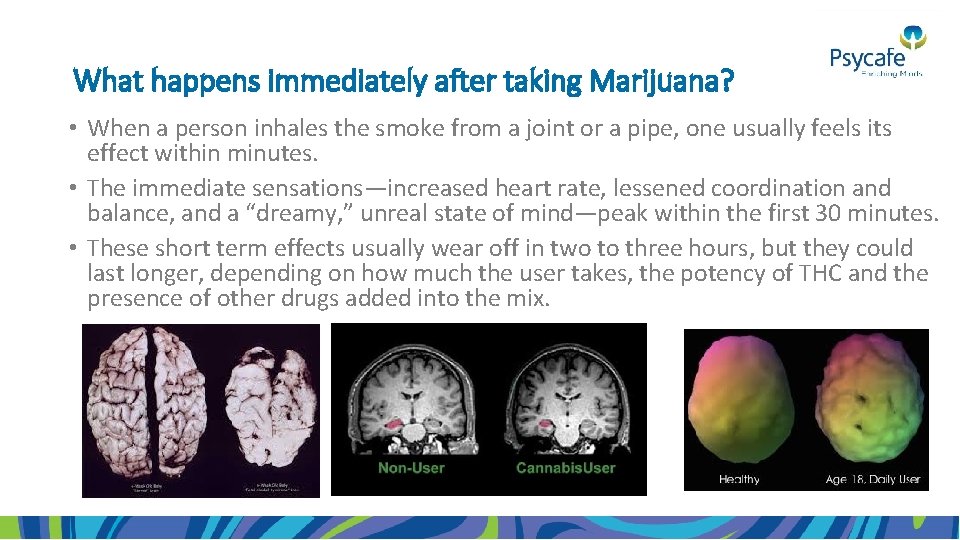
What happens immediately after taking Marijuana? • When a person inhales the smoke from a joint or a pipe, one usually feels its effect within minutes. • The immediate sensations—increased heart rate, lessened coordination and balance, and a “dreamy, ” unreal state of mind—peak within the first 30 minutes. • These short term effects usually wear off in two to three hours, but they could last longer, depending on how much the user takes, the potency of THC and the presence of other drugs added into the mix.
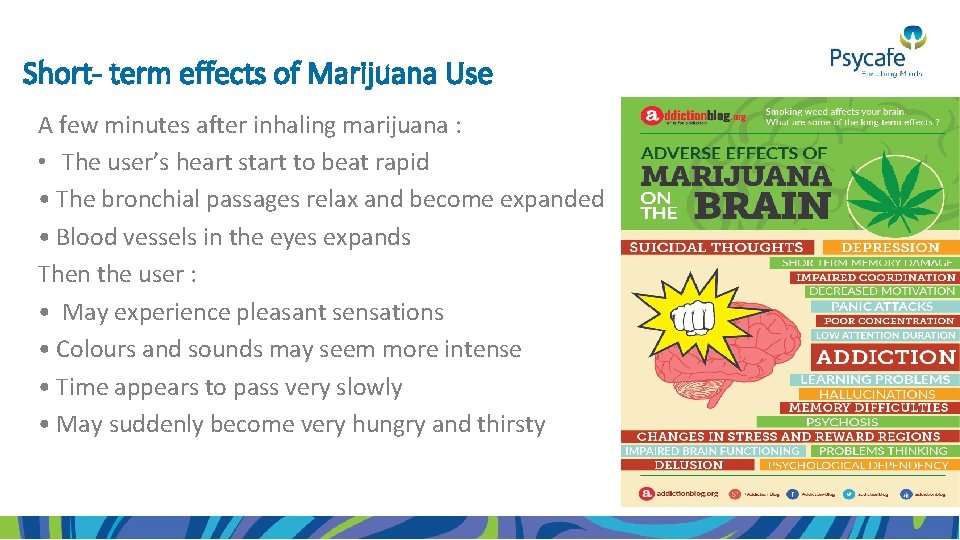
Short- term effects of Marijuana Use A few minutes after inhaling marijuana : • The user’s heart start to beat rapid • The bronchial passages relax and become expanded • Blood vessels in the eyes expands Then the user : • May experience pleasant sensations • Colours and sounds may seem more intense • Time appears to pass very slowly • May suddenly become very hungry and thirsty
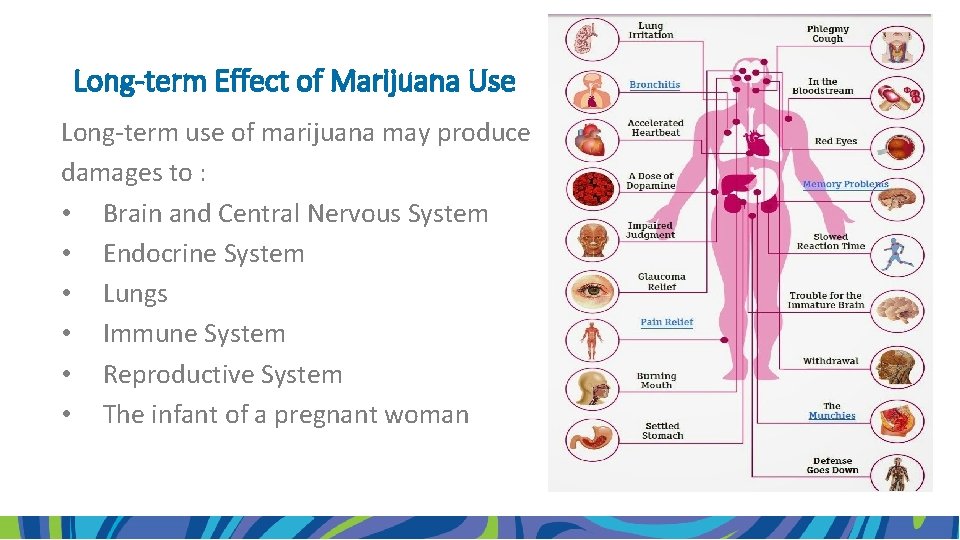
Long-term Effect of Marijuana Use Long-term use of marijuana may produce damages to : • Brain and Central Nervous System • Endocrine System • Lungs • Immune System • Reproductive System • The infant of a pregnant woman
Cannabis and Mental Health Problems ( especially psychosis) • Psychosis describes conditions that affect the mind. There is a loss of contact with reality and many of the following symptoms may occur: Delusions, Hallucinations, Feelings of paranoia and suspiciousness, Disorganized thinking, Disorganized speaking, etc. • Cannabis is a drug with pain-relieving, stimulating, euphorising and erotogenic effects. Taken in higher doses, it leads to impaired self-control and finally to psychosis or sedation, disorientation and loss of conscience. • There is now sufficient evidence to show that those who use cannabis particularly at a younger age, such as around the age of 15, have a higher than average risk of developing a psychotic illness, such as schizophrenia or bipolar disorder.
• Regular use of the drug has appeared to double the risk of developing a psychotic episode or long-term schizophrenia. • These studies also show that the risk might be dose-related. In other words, the more cannabis someone used, the more likely they were to develop a psychotic illness. • Furthermore, a study in Australia recently showed that those who used cannabis could develop the illness about 2. 70 years earlier than those who did not.
Why are teenagers particularly vulnerable to the use of cannabis? • It has got to do with brain development. The brain is still developing in the teenage years – up to the age of around 20, in fact. A massive process of ‘neural pruning’ is going on. • This is rather like streamlining a tangled jumble of circuits so they can work more effectively. Any experience, or substance, that affects this process has the potential to produce long-term psychological effects. • It is also known that not everyone who uses cannabis, even at a young age, develops a psychotic illness. The available research shows that those who have a family history of a psychotic illness, or those who have certain characteristics such as schizotypal personality, or possibly have certain types of genes, may increase the risk of developing a psychotic illness following the regular use of strong cannabis. • There is also growing evidence that people with serious mental illness, including depression and psychosis, are more likely to use cannabis or have used it for long periods of time in the past.
Case Example • Ms. J, a 19 -year-old college sophomore, was admitted to the Early Psychosis Unit at the Centre for Addiction and Mental Health (CAMH) displaying signs of agitation and acute psychosis. Her roommates had noted that her behavior had become increasingly bizarre, and she had isolated herself over the past month. She began smoking marijuana at the age of 17 and since starting college used it daily. • Ms. J exhibited signs of paranoia, believing other students in her dorm were stealing from her and trying to poison her. She remained adamant that all her problems were rooted in the competitive environment of the university and that smoking marijuana aided in keeping her sanity. In a sense, she was selfmedicating. Her clinical presentation was consistent with a diagnosis of CIP. • After the hospitalization, she received outpatient case management services in the Early Psychosis Program at CAMH, which included motivational interviewing to raise her awareness about the importance of abstaining from cannabis use. She has been abstinent from cannabis for more than a year with no evidence of psychosis; she recently returned to school to finish her degree.
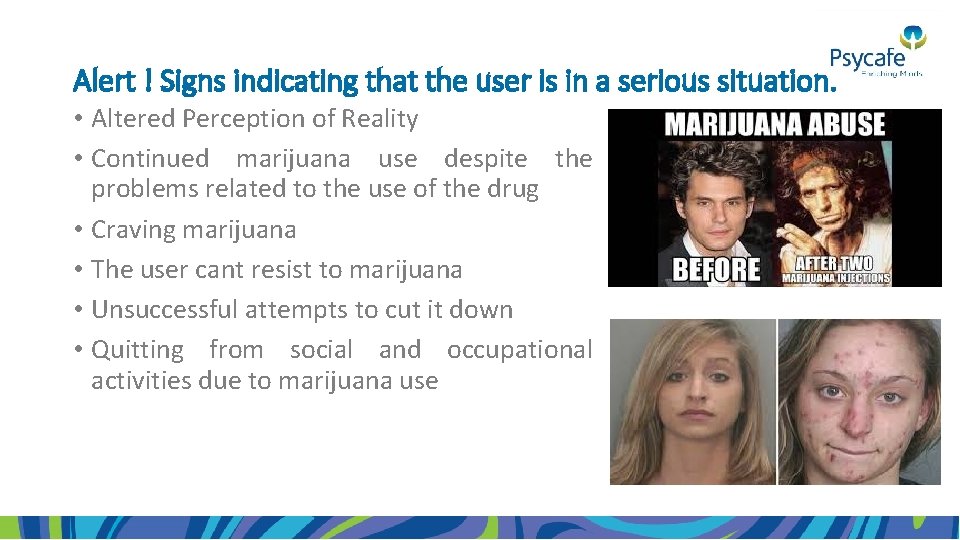
Alert ! Signs indicating that the user is in a serious situation. • Altered Perception of Reality • Continued marijuana use despite the problems related to the use of the drug • Craving marijuana • The user cant resist to marijuana • Unsuccessful attempts to cut it down • Quitting from social and occupational activities due to marijuana use
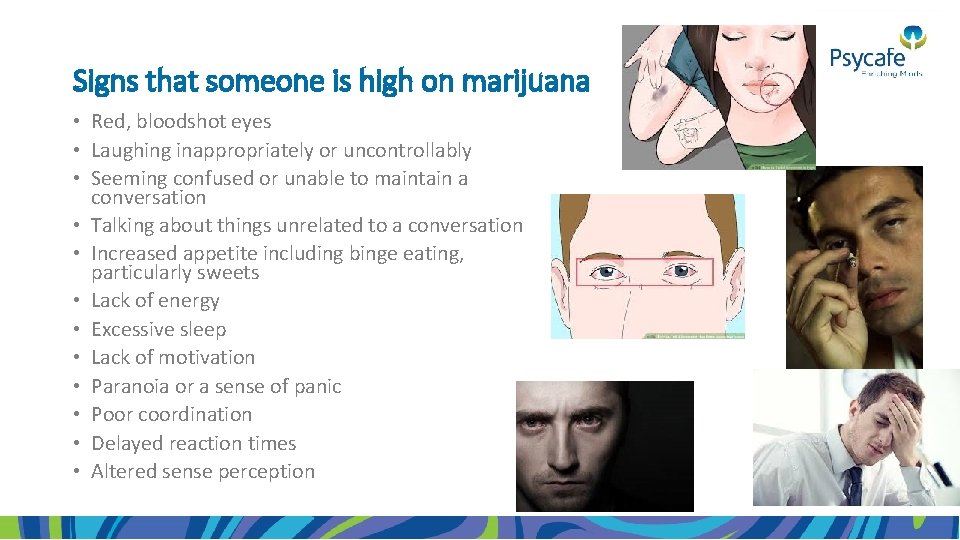
Signs that someone is high on marijuana • Red, bloodshot eyes • Laughing inappropriately or uncontrollably • Seeming confused or unable to maintain a conversation • Talking about things unrelated to a conversation • Increased appetite including binge eating, particularly sweets • Lack of energy • Excessive sleep • Lack of motivation • Paranoia or a sense of panic • Poor coordination • Delayed reaction times • Altered sense perception
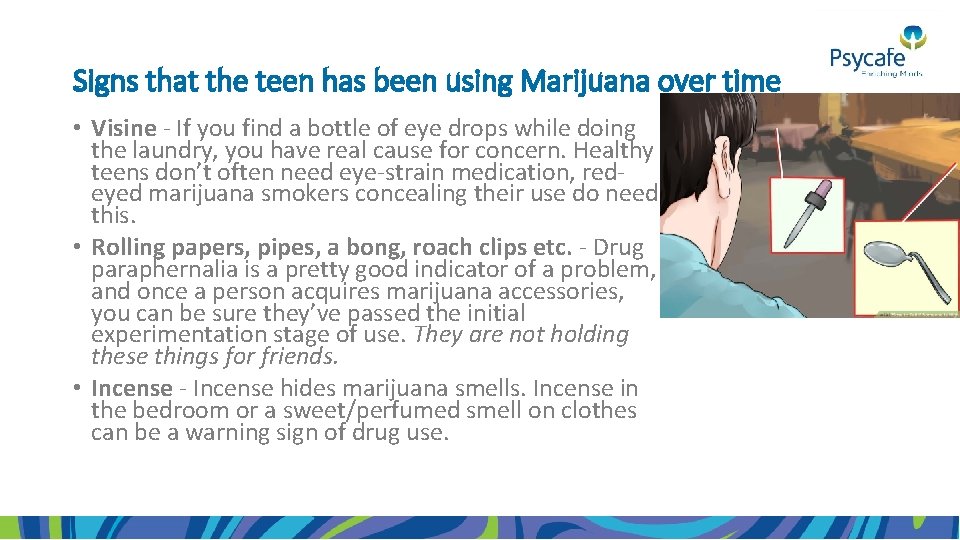
Signs that the teen has been using Marijuana over time • Visine - If you find a bottle of eye drops while doing the laundry, you have real cause for concern. Healthy teens don’t often need eye-strain medication, redeyed marijuana smokers concealing their use do need this. • Rolling papers, pipes, a bong, roach clips etc. - Drug paraphernalia is a pretty good indicator of a problem, and once a person acquires marijuana accessories, you can be sure they’ve passed the initial experimentation stage of use. They are not holding these things for friends. • Incense - Incense hides marijuana smells. Incense in the bedroom or a sweet/perfumed smell on clothes can be a warning sign of drug use.
• Small burns on the thumb and forefinger - A characteristic injury caused by smoking a joint down to the very end. Nothing else causes this type of burn. • Marijuana stickers or posters - A lot of teens identify with marijuana culture and advertise their association with stickers, pins on school bags and books, or through posters in the bedroom. A marijuana poster above the bed is a pretty good signs of an unhealthy interest in the drug! The code 420 refers to marijuana smoking, and you can often see 420 stickers on school bags. • Talking in code or in a secretive manner with friends while you are in earshot. • A sudden change in friends, especially if long-held good friends get discarded for a new group of seemingly less savory friends. • A sudden need for more money without much to show for it - A marijuana habit can get expensive.
• Mouth wash, air fresheners etc. - Like with incense, if your teen suddenly wants or buys scent masking agents this could indicate drug use. • A sudden drop in academic performance - When your previously A and B teen becomes a C and D teen, something is going on. • Your teen no longer participates in activities they used to find very enjoyable and rewarding - Suddenly abandoning sports, music or clubs without replacing these activities with anything other than "hanging out with friends" is not a good sign. • Appearing stoned - An obvious one, but it's easy to explain-away odd behaviors with wishful thinking. If your teen seems confused, slow and lethargic, they may be high. • A sudden willingness to take the dog for a late night walk may be an excuse to get out of the house to smoke a joint.
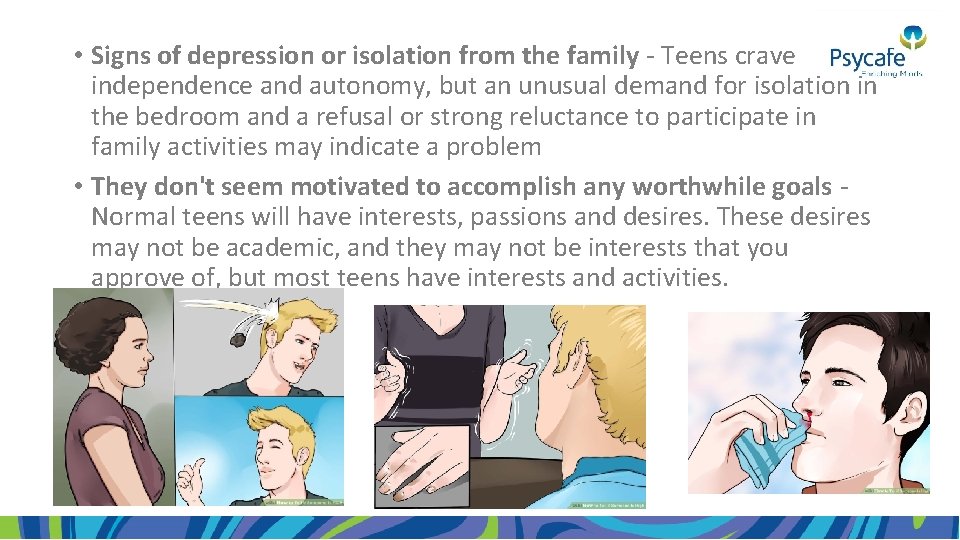
• Signs of depression or isolation from the family - Teens crave independence and autonomy, but an unusual demand for isolation in the bedroom and a refusal or strong reluctance to participate in family activities may indicate a problem • They don't seem motivated to accomplish any worthwhile goals Normal teens will have interests, passions and desires. These desires may not be academic, and they may not be interests that you approve of, but most teens have interests and activities.
Start with a Conversation Your child may believe that marijuana is pretty harmless. They might not know that marijuana affects the still-developing teen brain differently than adult brains, and as a consequence, early marijuana initiation is associated with: • Diminished thinking: diminished short term memory and impulse control, verbal and non-verbal short term memory, processing speed, attention and executive functions • Lowered lifetime I. Q. : In one study, teens who smoked heavily at a young age lost an average of 8 I. Q. points by age 38 when compared to teens who did not smoke heavily in young adolescence. • An increased risk of lifetime schizophrenia, anxiety and depression. Learn as much as you can yourself and then sit down for a calm - blame-free discussion on the pros and cons of using marijuana as a teen. At the end of the day, he or she does not have to agree with your decision to prohibit use, but it's helpful if she can at least see that your arguments make logical sense.
Take It Step by Step • Start within the family and work with your son or daughter to move forward away from marijuana. • If you find that despite your best efforts, your son or daughter continues to use marijuana (or other drugs or alcohol) then you should strongly consider enlisting professional help. • As a general rule, you want to start with the least intrusive intervention that gets results, so starting with counseling or family counseling would make sense in most cases. Once linked-in with a professional, you can ask this person for further advice on treatment needs and recommendations. • If low-intensity interventions do not create behavioral change, then you will generally need to consider higher-intensity interventions, like an outpatient program, an intensive outpatient program, day treatment or even residential treatment (in extreme cases).