
Marginal areas in rural Europe towards more appropriate
- Slides: 15
Marginal areas in rural Europe – towards more appropriate policy support Janet Dwyer, Professor of Rural Policy, CCRI University of Gloucestershire, UK
Characterising EU marginal areas Rural Europe is highly diverse – as we have already seen As much as one-third (by area) may be considered marginal, in economic terms: - recognised in the designation of Less Favoured Areas (EC Regulations 1975 - ) under the Common Agricultural Policy - targeted through territorial elements of EU structural policies, especially 1994 -9
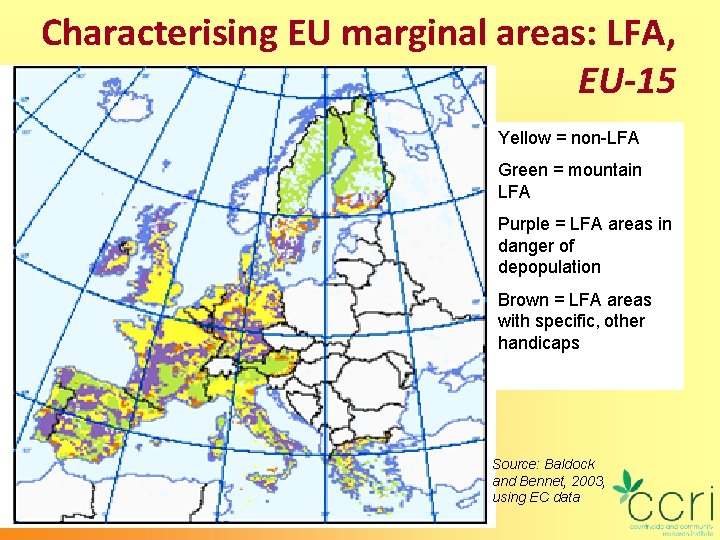
Characterising EU marginal areas: LFA, EU-15 Yellow = non-LFA Green = mountain LFA Purple = LFA areas in danger of depopulation Brown = LFA areas with specific, other handicaps Source: Baldock and Bennet, 2003, using EC data
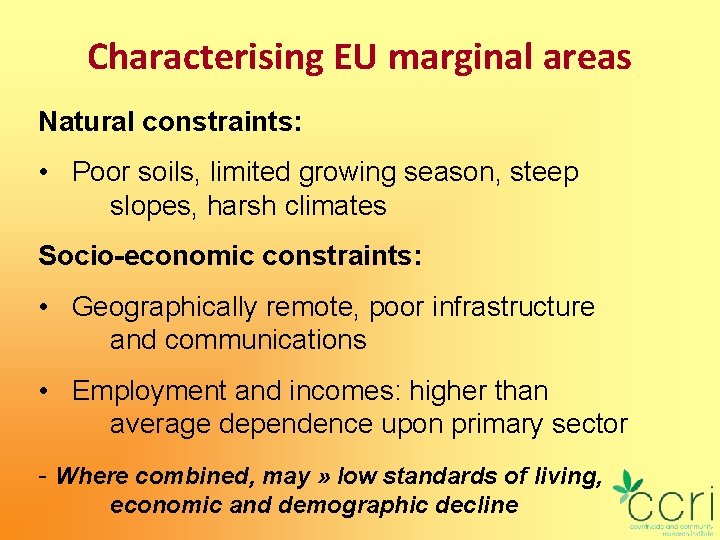
Characterising EU marginal areas Natural constraints: • Poor soils, limited growing season, steep slopes, harsh climates Socio-economic constraints: • Geographically remote, poor infrastructure and communications • Employment and incomes: higher than average dependence upon primary sector - Where combined, may » low standards of living, economic and demographic decline
Characterising EU marginal areas Natural and cultural assets: • Often rich in biodiversity, with dramatic & internationally-recognised cultural and historic landscapes – partly preserved because of economic marginality, but dependent upon continued ‘low-intensity’ management • Critical reserves for water (catchments, reservoirs), and carbon (deep peat soils, forests) • Potential value for wind and hydro- power generation (low density settlement, exposure)
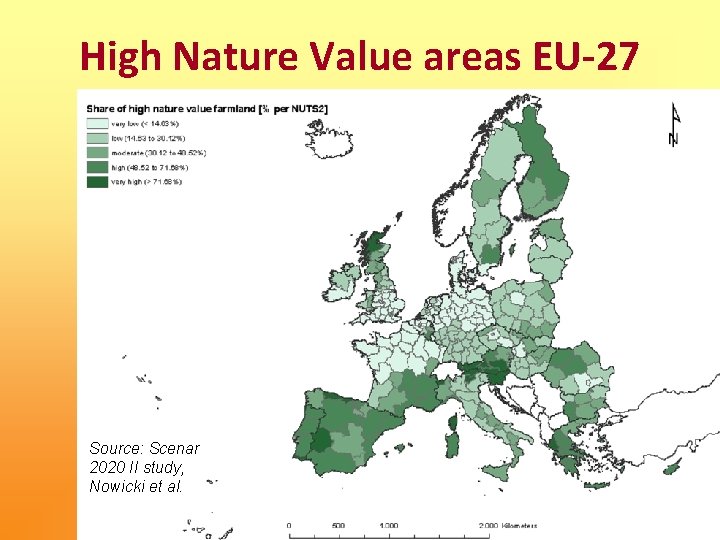
High Nature Value areas EU-27 Source: Scenar 2020 II study, Nowicki et al.
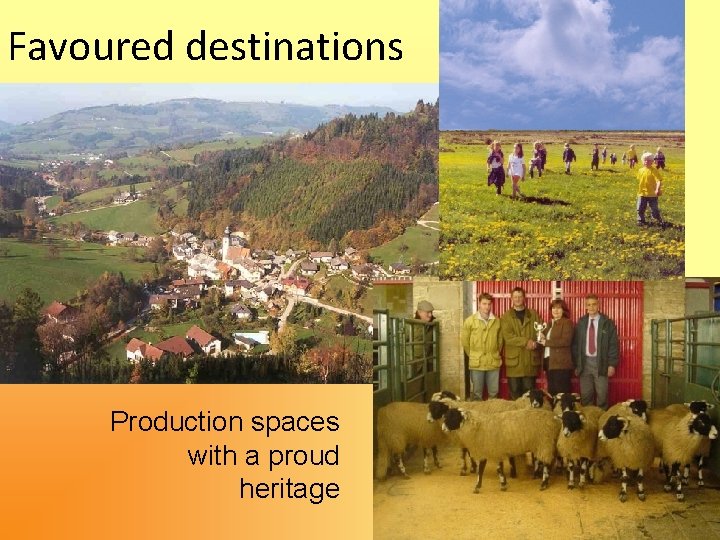
Favoured destinations Production spaces with a proud heritage
Marginal farming – policy context CAP Pillar 2 is an important source of revenue: – LFA / Natural Handicap payments to ‘compensate for competitive disadvantage and preserve active farming’ – Agri-environment support, to influence farming practices & maintain environmental value – In some regions, rural economic diversification and quality of life / LEADER have been targeted…. By contrast, these areas receive generally low shares / low intensities of Pillar 1 aid Overall, they receive lower CAP support than economically favoured agricultural areas, and this support may be declining due to modulation
Case study of policy impacts: the English Uplands Very heavy dependence upon public subsidy (CAP P 1 and P 2), persists and remains critical to farms’ viability – the balance has shifted more to Pillar 2, over time Policy emphasis upon (agri-)environment support, but business performance and adaptation are also a key influence upon environmental outcomes Current and past policies have contributed to farm structural change which is increasing a ‘disconnect’ between environment and business, farms and landscape / ecosystem services
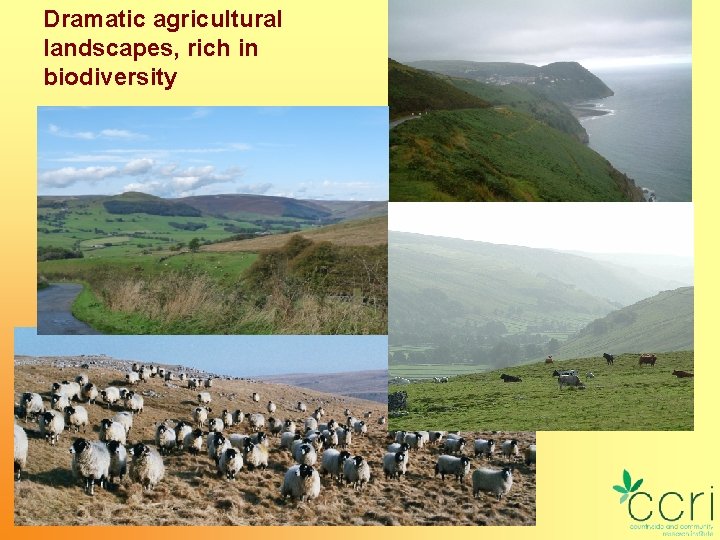
Dramatic agricultural landscapes, rich in biodiversity
Farm change since 2000 >75% of farmers interviewed had enlarged the area they farm, at least 25% have more than doubled farm size, while stock numbers have dropped for the areas as a whole > 50% farms have completely changed grazing of the moor, with at least 25% giving up hill sheep, using extensive hardy cattle or ponies only, others spreading sheep more thinly “Having a few stock on the moor, now, it just isn’t worth it – labour or stock-quality wise” Almost half subsidise the farm with non-farm or diversified income (tourism, contracting, most common) and all are in agri-environment schemes Very few have strong supply chain linkages – they are ‘price-takers’, even when stock are finished (traditional practice would be to sell as ‘stores’ to lowland farms), and very suspicious of direct sales or cooperation. Few have used Pillar 2 aid for competitiveness or diversification.
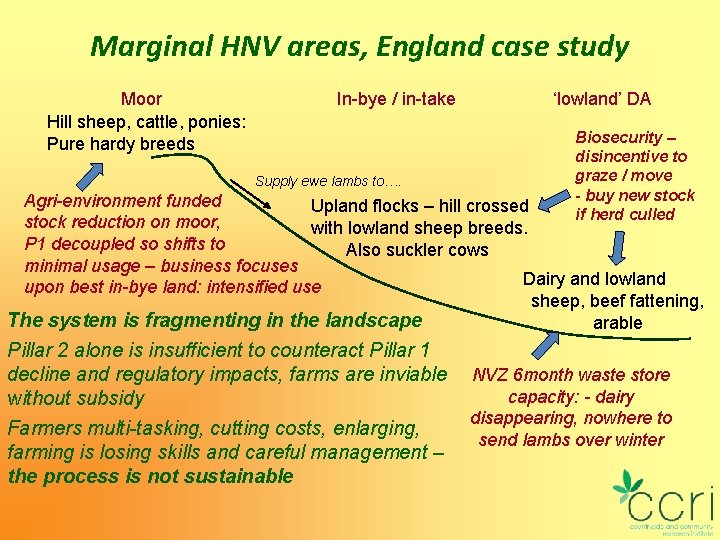
Marginal HNV areas, England case study Moor Hill sheep, cattle, ponies: Pure hardy breeds In-bye / in-take Supply ewe lambs to…. ‘lowland’ DA Biosecurity – disincentive to graze / move - buy new stock if herd culled Agri-environment funded Upland flocks – hill crossed stock reduction on moor, with lowland sheep breeds. P 1 decoupled so shifts to Also suckler cows minimal usage – business focuses Dairy and lowland upon best in-bye land: intensified use sheep, beef fattening, The system is fragmenting in the landscape arable Pillar 2 alone is insufficient to counteract Pillar 1 decline and regulatory impacts, farms are inviable without subsidy Farmers multi-tasking, cutting costs, enlarging, farming is losing skills and careful management – the process is not sustainable NVZ 6 month waste store capacity: - dairy disappearing, nowhere to send lambs over winter
Diagnosis • The main problem with the current policy mix is the separation of policies and farm business thinking • Environmental schemes are not delivering their goals because markets, regulations and CAP support trigger farm change in the opposite direction, as farmers seek to cope with major business challenges • An enhanced approach could add: – Help to develop sustainable business models - using measures for training, research, collaborative exchange, adding-value, diversification, but probably before that…. – Networking support to enable resilience planning – time and space for farming communities to discuss, recognise and plan to maintain what is important to them
Diagnosis A more territorial policy approach could also include: – enhanced financial underpinning - as CAP reform increases the competitive exposure of HNV marginal farms, their case for support to maintain viability, not just for additional environmental goods, increases. This could be: • from a new, stronger ‘Less Favoured Area’ (LFA) payment; OR • from new payments targeting the long-term provision of ‘Ecosystem Services’ – using a mechanism that is not the ‘income foregone’ model of agri-environment, maybe harnessing private sector finance (water companies, energy companies, carbon offsetting); AND / OR • from redistribution of CAP decoupled aid, to give a higher share to the most marginal land.
Conclusions, and learning from EU successes • These systems require a territorially-sensitive approach, to identify their potential markets and design a package of appropriate policy supports • We can learn from successful ‘marginal’ areas – analysing the ‘virtuous cycle’ cases • We need to foster ‘learning communities’, keen to identify, celebrate and maintain their distinctive assets through economic action, able to link actors and interests at local level