
Margaret Sanger 1879 1966 1916 First Birth Control
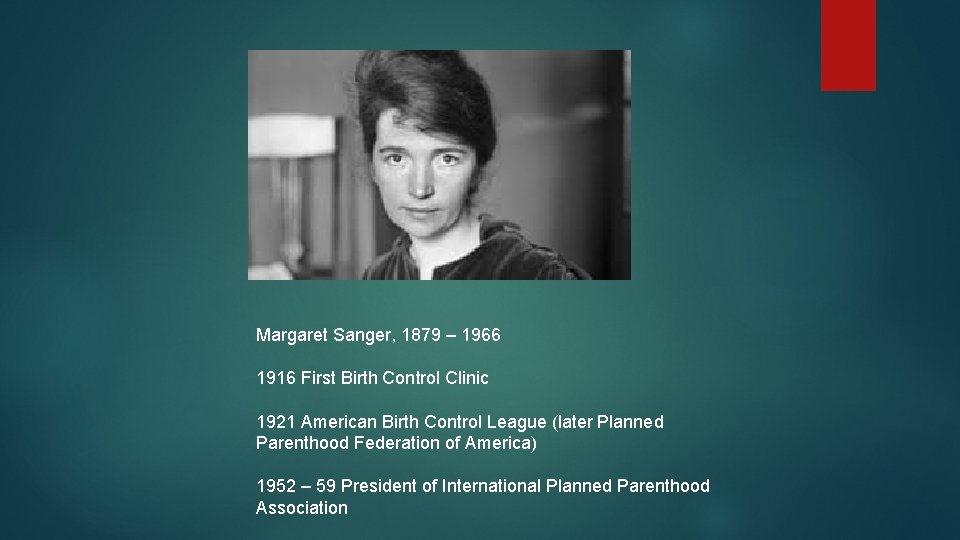
Margaret Sanger, 1879 – 1966 1916 First Birth Control Clinic 1921 American Birth Control League (later Planned Parenthood Federation of America) 1952 – 59 President of International Planned Parenthood Association
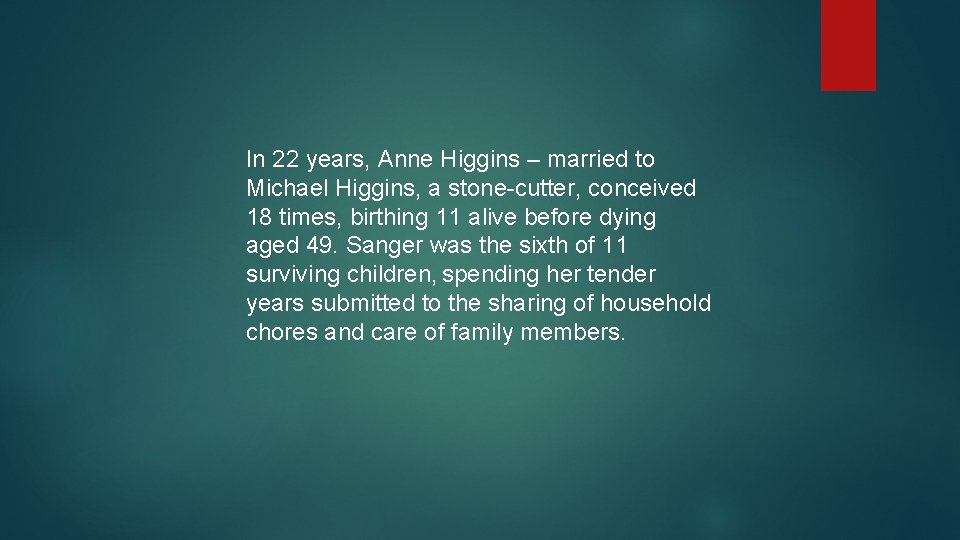
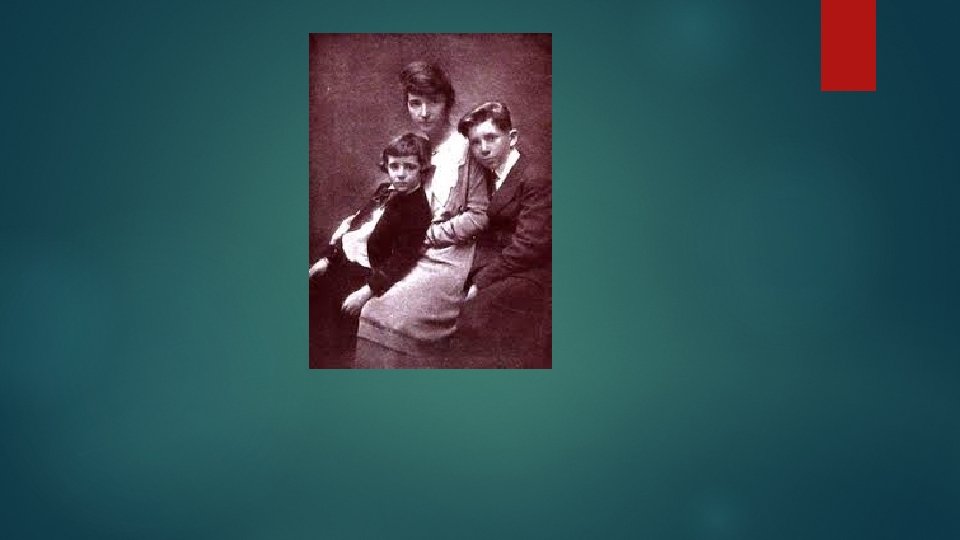
In 22 years, Anne Higgins – married to Michael Higgins, a stone-cutter, conceived 18 times, birthing 11 alive before dying aged 49. Sanger was the sixth of 11 surviving children, spending her tender years submitted to the sharing of household chores and care of family members.
"What Every Mother Should Know" (1911– 12) and "What Every Girl Should Know" (1912– 13)
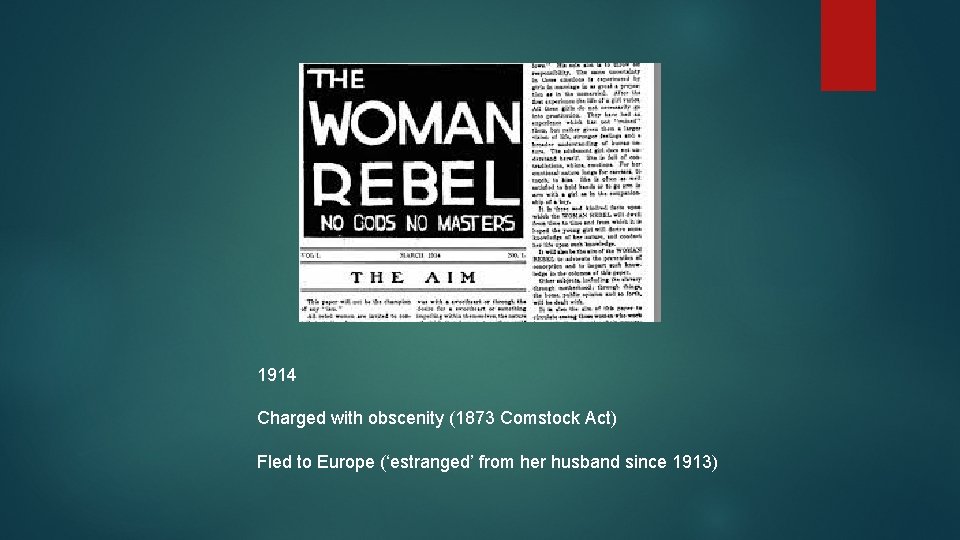
1914 Charged with obscenity (1873 Comstock Act) Fled to Europe (‘estranged’ from her husband since 1913)
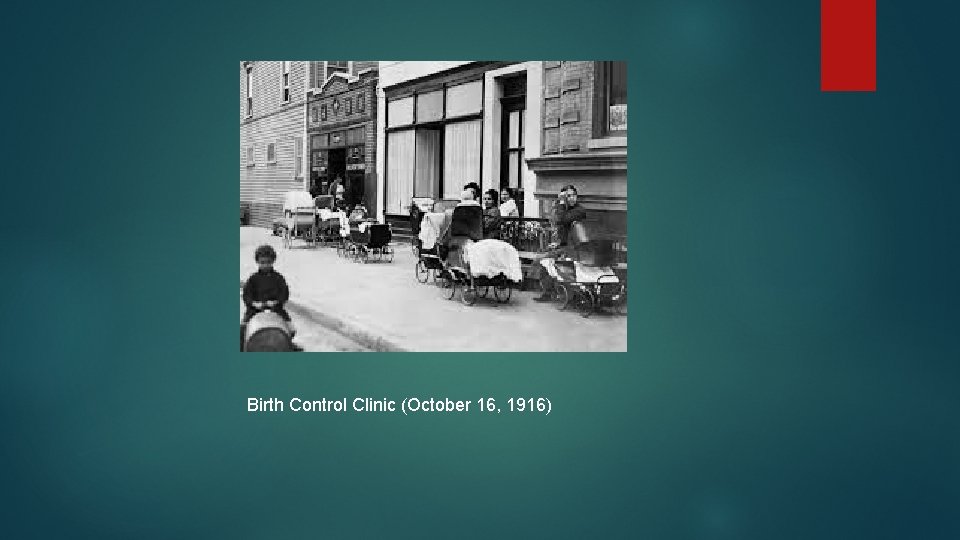
Birth Control Clinic (October 16, 1916)
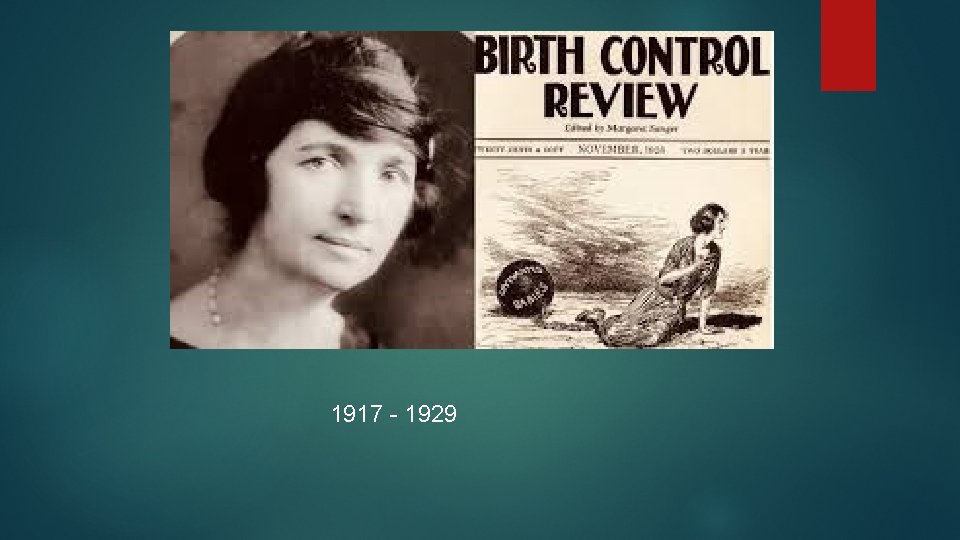
1917 - 1929
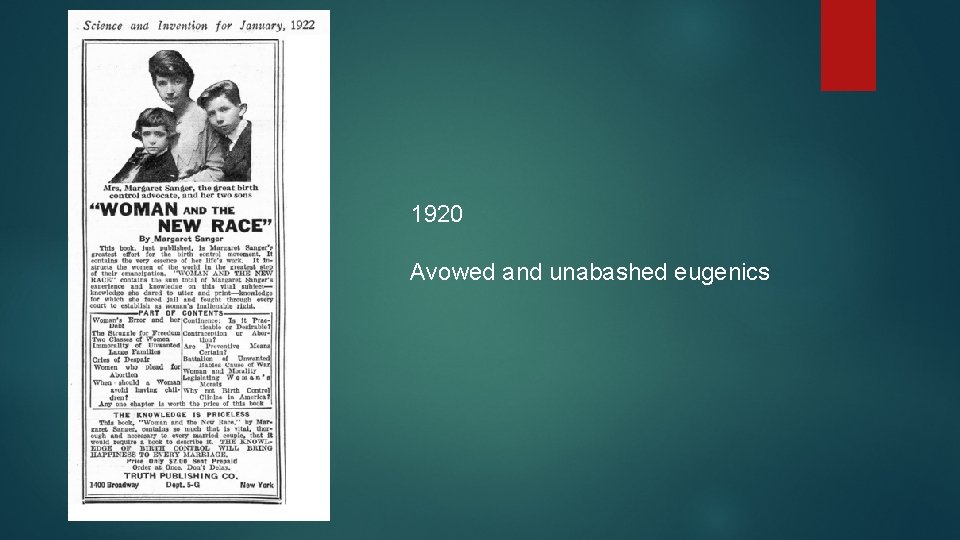
1920 Avowed and unabashed eugenics
![“[Our objective is] unlimited sexual gratification without the burden of unwanted children… [Women must](http://slidetodoc.com/presentation_image_h2/1baf282c8ff85ae0b2500927a8c0aed9/image-9.jpg "“[Our objective is] unlimited sexual gratification without the burden of unwanted children… [Women must")
“[Our objective is] unlimited sexual gratification without the burden of unwanted children… [Women must have the right] to live … to love… to be lazy … to be an unmarried mother … to create… to destroy… The marriage bed is the most degenerative influence in the social order… The most merciful thing that a family does to one of its infant members is to kill it. ” – Margaret Sanger (editor). The Woman Rebel, Volume I, Number 1. Reprinted in Woman and the New Race. New York: Brentanos Publishers, 1922 (emphasis mine).
“Today eugenics is suggested by the most diverse minds as the most adequate and thorough avenue to the solution of racial, political and social problems. I think you must agree… that the campaign for birth control is not merely of eugenic value, but is practically identical with the final aims of eugenics… Birth control propaganda is thus the entering wedge for the eugenic educator.
As an advocate of birth control I wish… to point out that the unbalance between the birth rate of the ‘unfit’ and the ‘fit, ’ admittedly the greatest present menace to civilization, can never be rectified by the inauguration of a cradle competition between these two classes. In this matter, the example of the inferior classes, the fertility of the feeble-minded, the mentally defective, the poverty-stricken classes, should not be held up for emulation. On the contrary, the most urgent problem today is how to limit and discourage the over-fertility of the mentally and physically defective. ”
Our failure to segregate morons who are increasing and multiplying… demonstrates our foolhardy and extravagant sentimentalism… [Philanthropists] encourage the healthier and more normal sections of the world to shoulder the burden of unthinking and indiscriminate fecundity of others; which brings with it, as I think the reader must agree, a dead weight of human waste.
Instead of decreasing and aiming to eliminate the stocks that are most detrimental to the future of the race and the world, it tends to render them to a menacing degree dominant… “We are paying for, and even submitting to, the dictates of an ever-increasing, unceasingly spawning class of human beings who never should have been born at all. ” – Margaret Sanger. The Pivot of Civilization, 1922, pages 116, 122, and 189. Swarthmore College Library edition (emphasis mine).
The government ought to “apply a stern and rigid policy of sterilization and segregation to that grade of population whose progeny is tainted, or whose inheritance is such that objectionable traits may be transmitted to offspring. And the government should “give certain dysgenic groups (those with ‘bad genes’) in our population their choice of segregation or sterilization. – Margaret Sanger, “A Plan for Peace. ” Birth Control Review, April 1932, pages 107 -108 (emphasis mine).
Birth Control is not merely an individual problem; it is not merely a national question, it concerns the whole wide world, the ultimate destiny of the human race. Hordes of people [are] born, who live, yet who have done absolutely nothing to advance the race one iota. Their lives are hopeless repetitions… Such human weeds clog up the path, drain up the energies and the resources of this little earth. We must clear the way for a better world; we must cultivate our garden. – Margaret Sanger. Birth Control: Facts and Responsibilities, 1925 (emphasis mine).
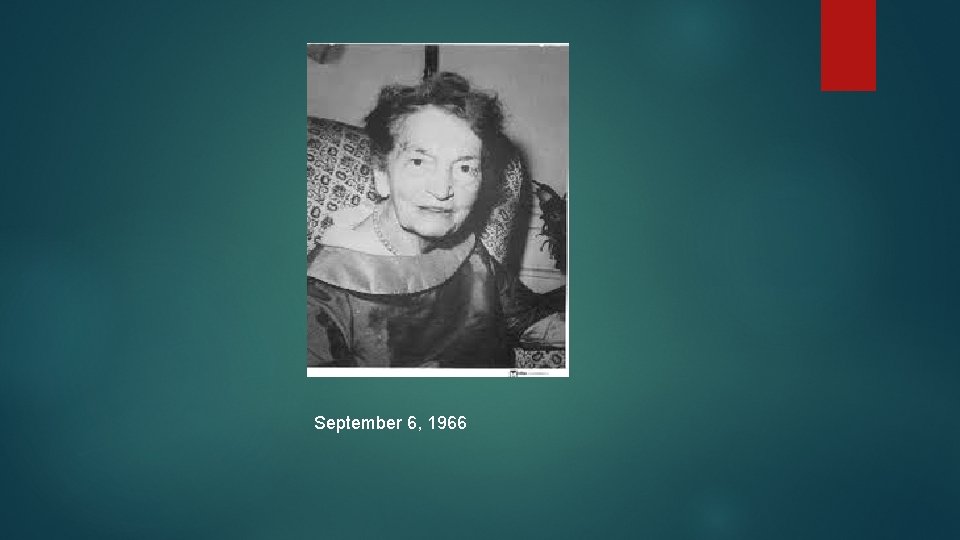
September 6, 1966
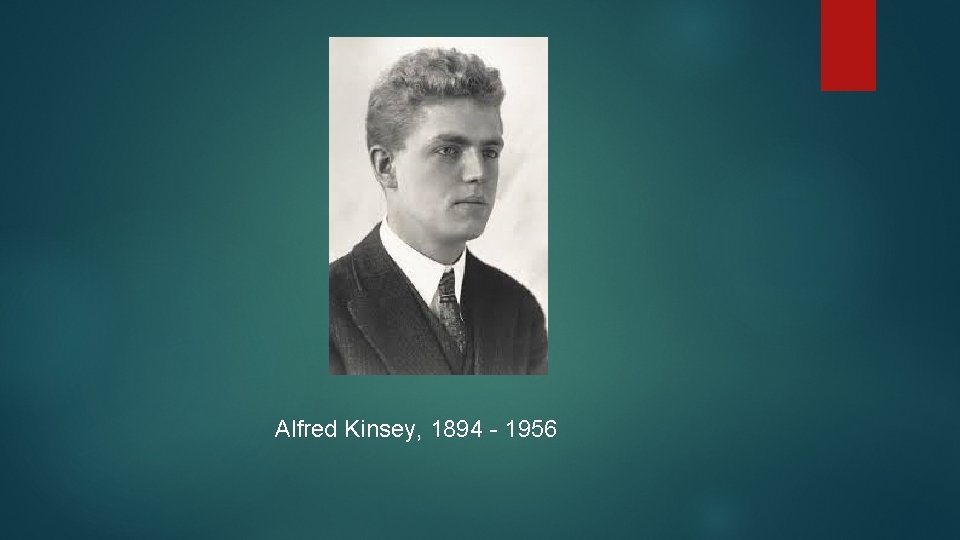
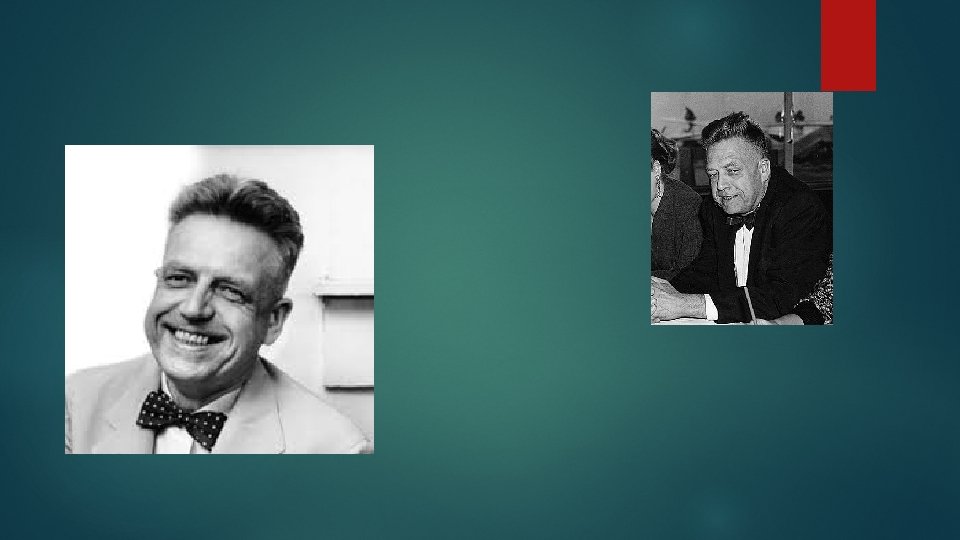
Alfred Kinsey, 1894 - 1956

Gall wasps
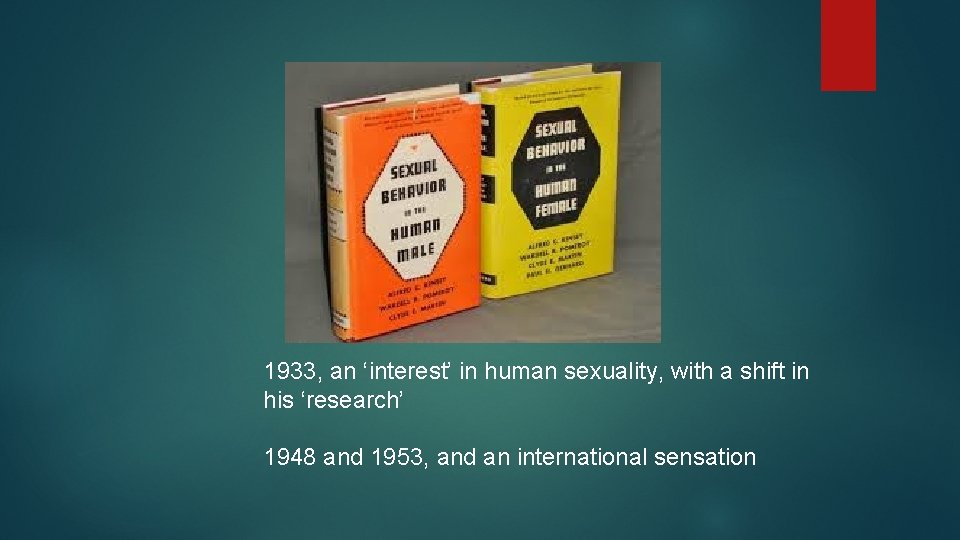
1933, an ‘interest’ in human sexuality, with a shift in his ‘research’ 1948 and 1953, and an international sensation

The ‘Kinsey Institute’, Bloomington, Indiana, 1947 (2016, merged with Indiana University
Exploring sexuality, relationships, and well-being For more than 70 years, the Kinsey Institute at Indiana University has been the trusted source for scientific knowledge and research on critical issues in sexuality, gender, and reproduction.
Kinsey Institute Releases Findings from 'Sex Tech' Study The study, involving more than 8, 000 American adults, finds the use of sex tech is on the rise, and users report feeling emotionally and sexually connected to virtual partners.

2004
Certainly moral theology and its teaching are meeting with particular difficulty today. Because the Church's morality necessarily involves a normative dimension, moral theology cannot be reduced to a body of knowledge worked out purely in the context of the so-called behavioural sciences. The latter are concerned with the phenomenon of morality as a historical and social fact; moral theology, however, while needing to make use of the behavioural and natural sciences, does not rely on the results of formal empirical observation or phenomenological understanding alone. Indeed, the relevance of the behavioural sciences for moral theology must always be measured against the primordial question: What is good or evil? What must be done to have eternal life?
The affirmation of moral principles is not within the competence of formal empirical methods. While not denying the validity of such methods, but at the same time not restricting its viewpoint to them, moral theology, faithful to the supernatural sense of the faith, takes into account first and foremost the spiritual dimension of the human heart and its vocation to divine love.
In fact, while the behavioural sciences, like all experimental sciences, develop an empirical and statistical concept of "normality", faith teaches that this normality itself bears the traces of a fall from man's original situation--in other words, it is affected by sin. Only Christian faith points out to man the way to return to "the beginning" (cf. Mt 19: 8), a way which is often quite different from that of empirical normality
Hence the behavioural sciences, despite the great value of the information which they provide, cannot be considered decisive indications of moral norms. It is the Gospel which reveals the full truth about man and his moral journey, and thus enlightens and admonishes sinners; it proclaims to them God's mercy, which is constantly at work to preserve them both from despair at their inability fully to know and keep God's law and from the presumption that they can be saved without merit. God also reminds sinners of the joy of forgiveness, which alone grants the strength to see in the moral law a liberating truth, a grace-filled source of hope, a path of life.
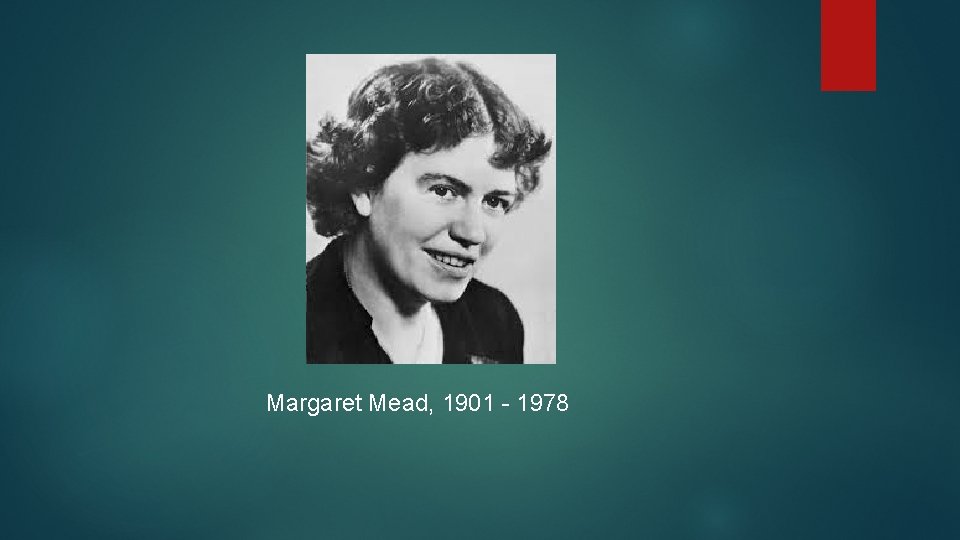
Margaret Mead, 1901 - 1978


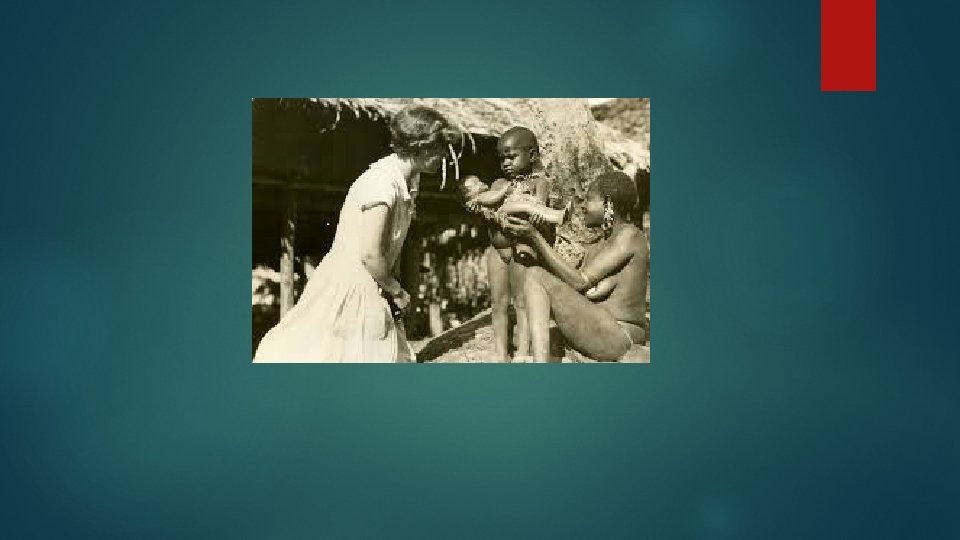


1928

1938
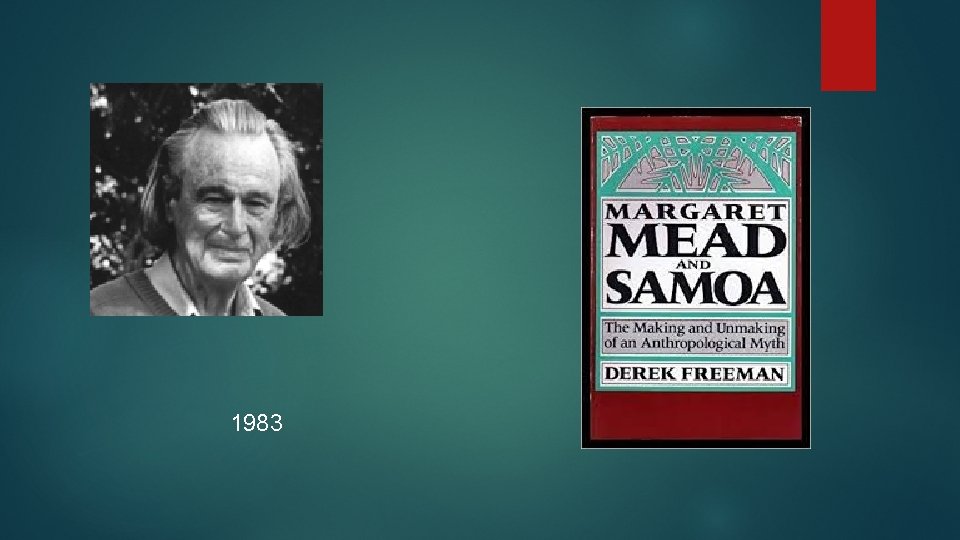
1983
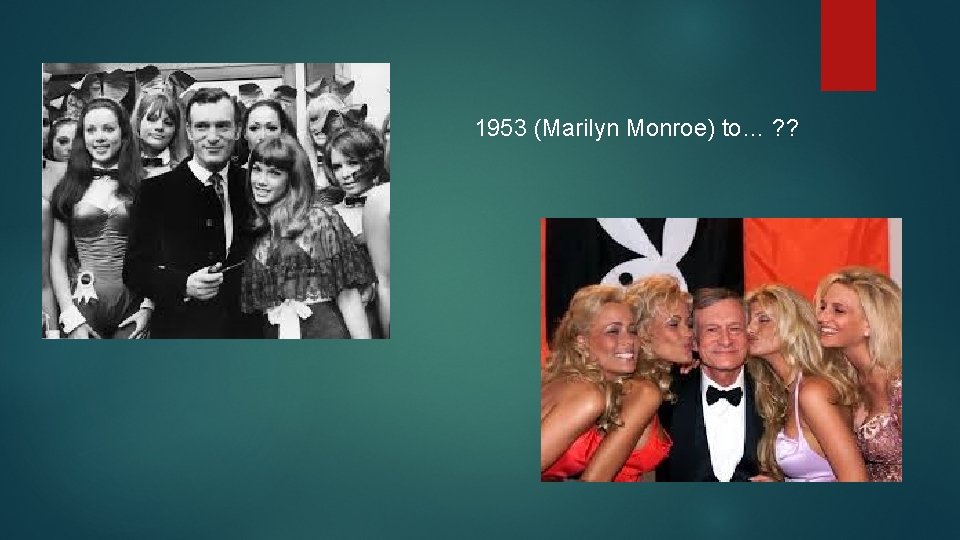
1953 (Marilyn Monroe) to… ? ?

Spending eternity next to Marilyn is an opportunity too sweet to pass up… (2009) Hmm.

400, 000 souls at Max Yasgur’s farm, August 15 -18 th, 1969

“Moon Landing” movie, July 16 – 24, 1969
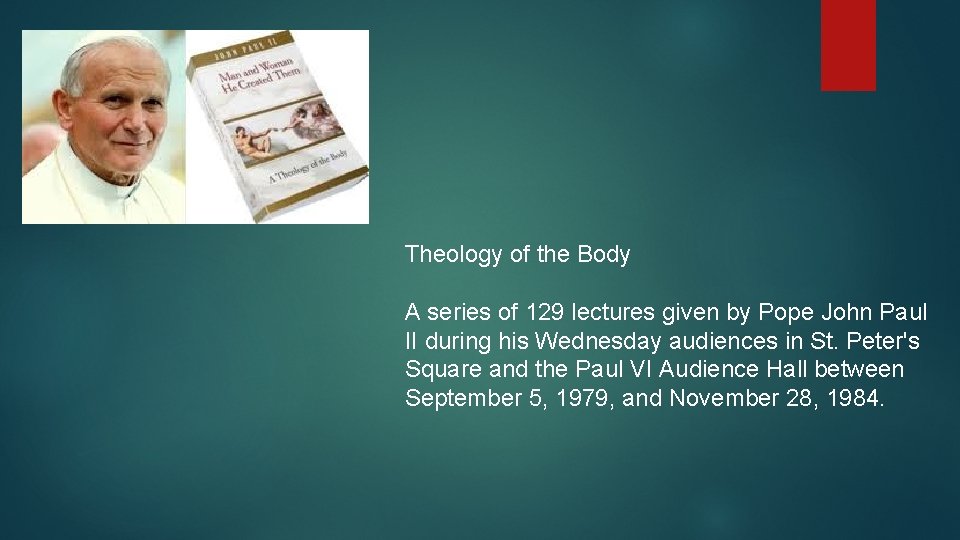
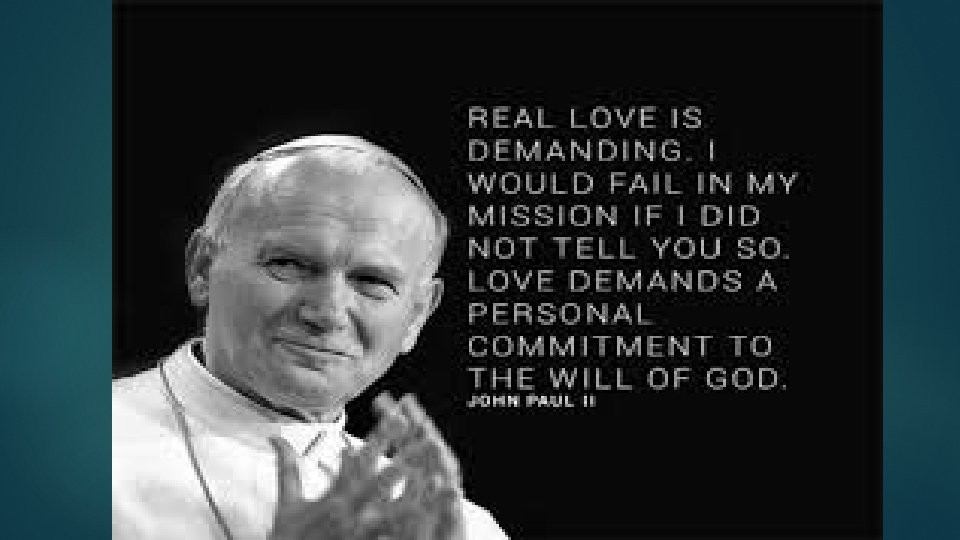
Theology of the Body A series of 129 lectures given by Pope John Paul II during his Wednesday audiences in St. Peter's Square and the Paul VI Audience Hall between September 5, 1979, and November 28, 1984.
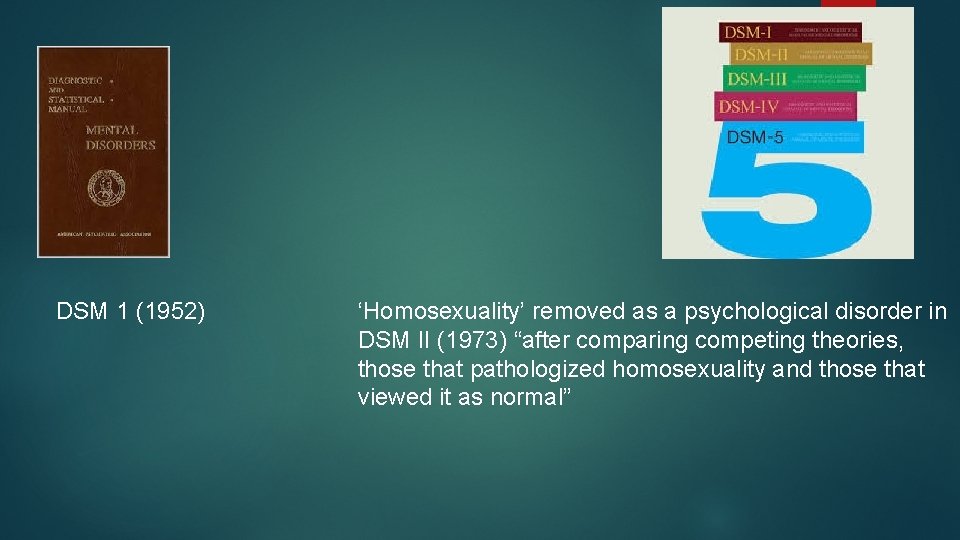
DSM 1 (1952) ‘Homosexuality’ removed as a psychological disorder in DSM II (1973) “after comparing competing theories, those that pathologized homosexuality and those that viewed it as normal”

Civil Marriage Act, July 20 th, 2005 Canada was the fourth country to permit same-sex marriages, after the Netherlands (2000), Belgium (2003) and Spain (2005).
In 2001, Statistics Canada began collecting information about same-sex partnerships. At that time, about 0. 5 per cent of all Canadian couples reported living in same-sex unions. After same-sex marriage became available on 20 July 2005, the 2006 census was the first to collect data on legally married samesex couples. It showed there were more than 45, 000 declared same-sex couples in the country, and that 16. 5 per cent of those were married.
By the time of the 2016 census, there were 72, 880 declared same-sex couples — 0. 9 per cent of the total number of couples — and 33. 4 per cent of those same-sex couples were married. That represents a tripling in the number of married, same-sex unions across the country between 2006 and 2016.
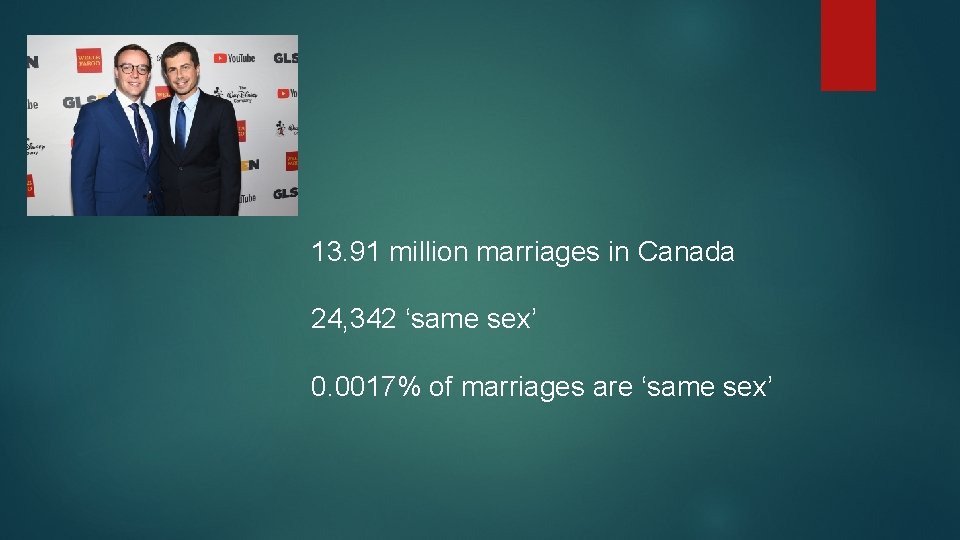
13. 91 million marriages in Canada 24, 342 ‘same sex’ 0. 0017% of marriages are ‘same sex’
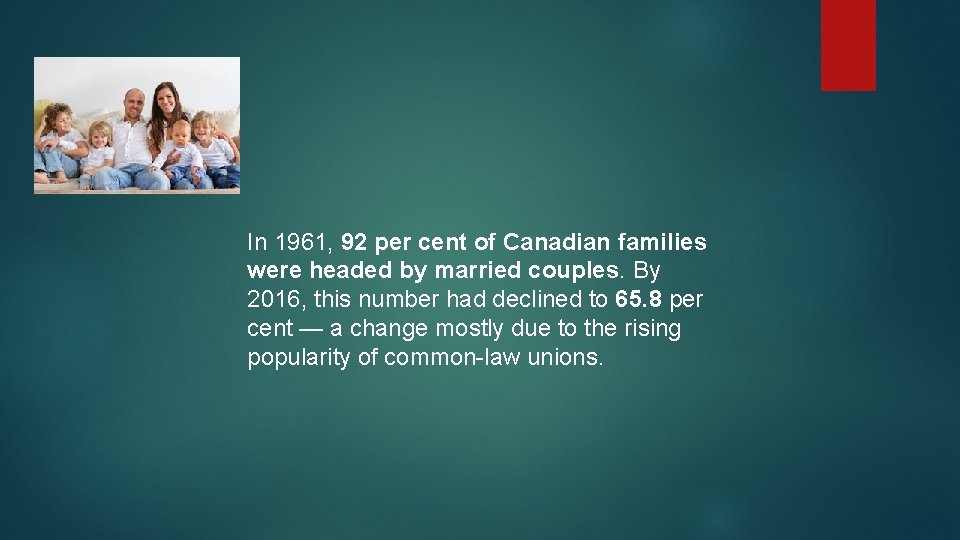
In 1961, 92 per cent of Canadian families were headed by married couples. By 2016, this number had declined to 65. 8 per cent — a change mostly due to the rising popularity of common-law unions.

Since the 80’s. The first one in Ontario in 2008

‘Conversion therapy’ illegal (18 states, two territories, 61 counties, 2 schoolboards)


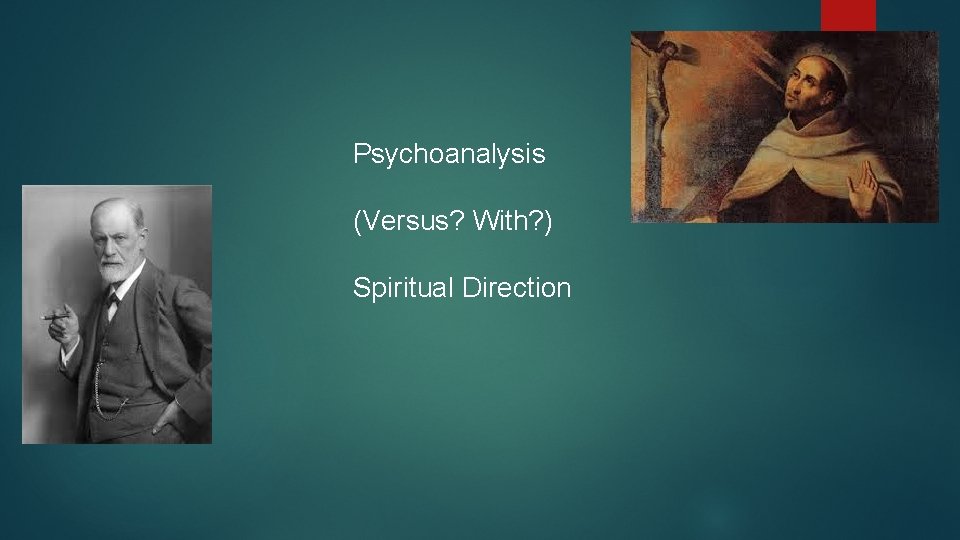
Psychoanalysis (Versus? With? ) Spiritual Direction

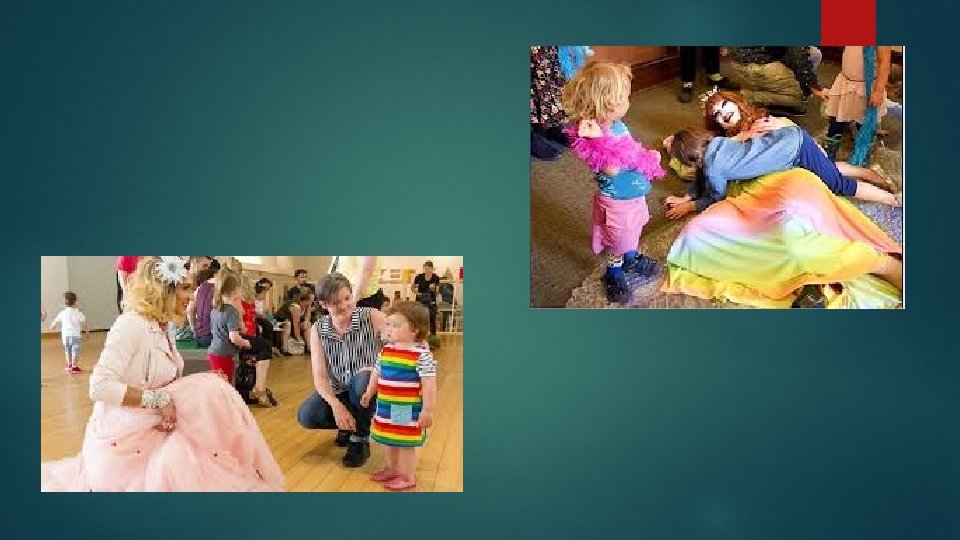
First in San Francisco (where else? ) 2015
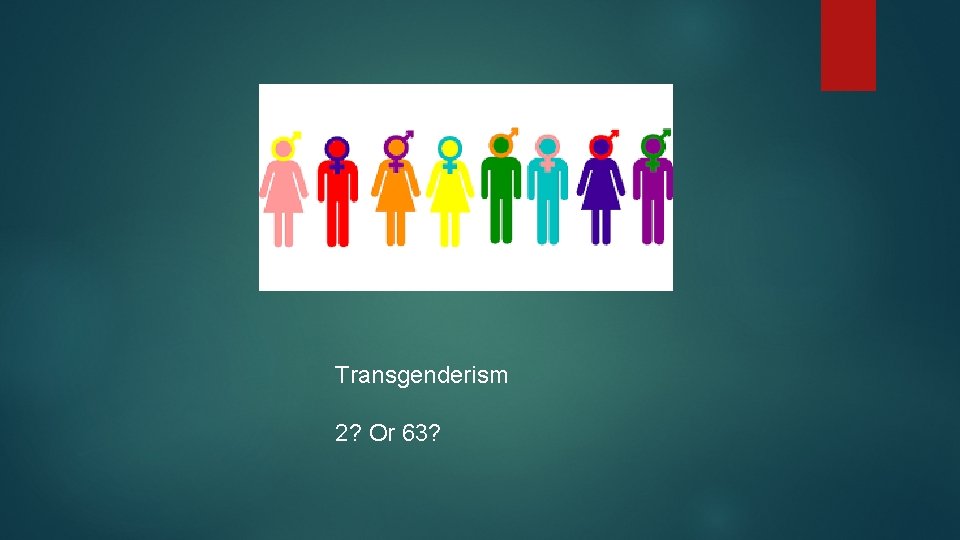
Transgenderism 2? Or 63?

Bruce ‘Call me Caitlin’ Jenner April, 2015

1976 Decathlon Gold Medal
“Male and Female He Created Them” (2019) The Christian vision of anthropology sees sexuality as a fundamental component of one’s personhood. It is one of its mode of being, of manifesting itself, communicating with others, and of feeling, expressing and living human love. Therefore, our sexuality plays an integral part in the development of our personality and in the process of its education: “In fact, it is from [their] sex that the human person receives the characteristics which, on the biological, psychological and spiritual levels, make that person a man or a woman, and thereby largely condition his or her progress towards maturity and insertion into society”.
Gender theory (especially in its most radical forms) speaks of a gradual process of denaturalisation, that is a move away from nature and towards an absolute option for the decision of the feelings of the human subject. In this understanding of things, the view of both sexuality identity and the family become subject to the same ‘liquidity’ and ‘fluidity’ that characterize other aspects of post-modern culture, often founded on nothing more than a confused concept of freedom in the realm of feelings and wants, or momentary desires provoked by emotional impulses and the will of the individual, as opposed to anything based on the truths of existence.
The underlying presuppositions of these theories can be traced back to a dualistic anthropology, separating body (reduced to the status of inert matter) from human will, which itself becomes an absolute that can manipulate the body as it pleases. This combination of physicalism and voluntarism gives rise to relativism, in which everything that exists is of equal value and at the same time undifferentiated, without any real order or purpose
- Slides: 64