
March 8 th n n n Attendance Return

- Slides: 20
March 8 th n n n Attendance Return Paper #1 Hand in grading rubric and make sure exam #1 is submitted to turnitim. com Lectures Four: Doing Difference Homework: q “Bluest Eye” Winter
Lecture Four Doing Difference: Race, Gender and Class
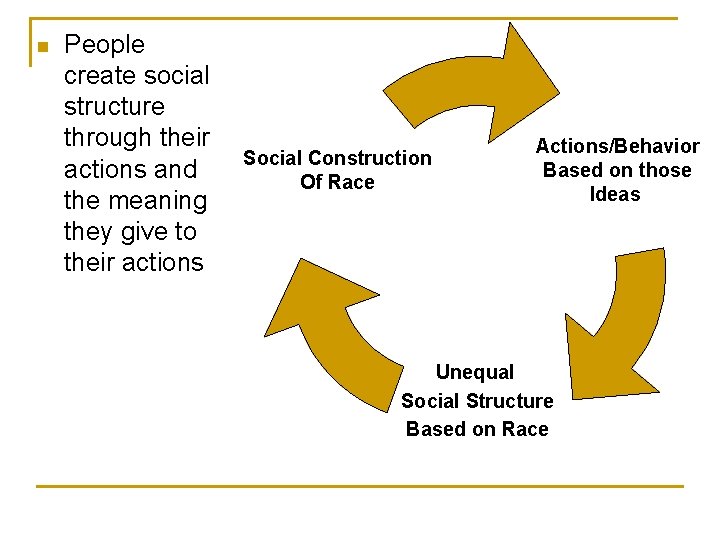
n People create social structure through their actions and the meaning they give to their actions Social Construction Of Race Actions/Behavior Based on those Ideas Unequal Social Structure Based on Race
Interpersonal Racism n Prejudice: negative beliefs, attitudes, and feelings toward members of another social group n Stereotyping: exaggerated and inaccurate generalizations about members of a group n Discrimination: unfavorable treatment of individuals because of their group membership
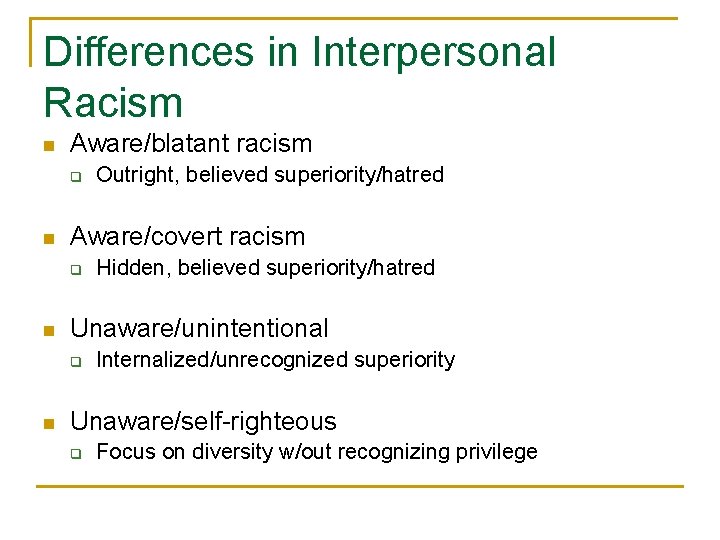
Differences in Interpersonal Racism n Aware/blatant racism q n Aware/covert racism q n Hidden, believed superiority/hatred Unaware/unintentional q n Outright, believed superiority/hatred Internalized/unrecognized superiority Unaware/self-righteous q Focus on diversity w/out recognizing privilege
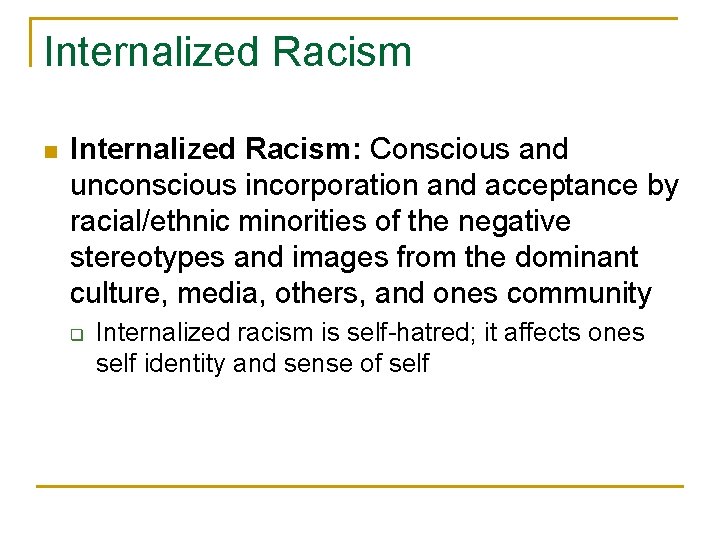
Internalized Racism n Internalized Racism: Conscious and unconscious incorporation and acceptance by racial/ethnic minorities of the negative stereotypes and images from the dominant culture, media, others, and ones community q Internalized racism is self-hatred; it affects ones self identity and sense of self
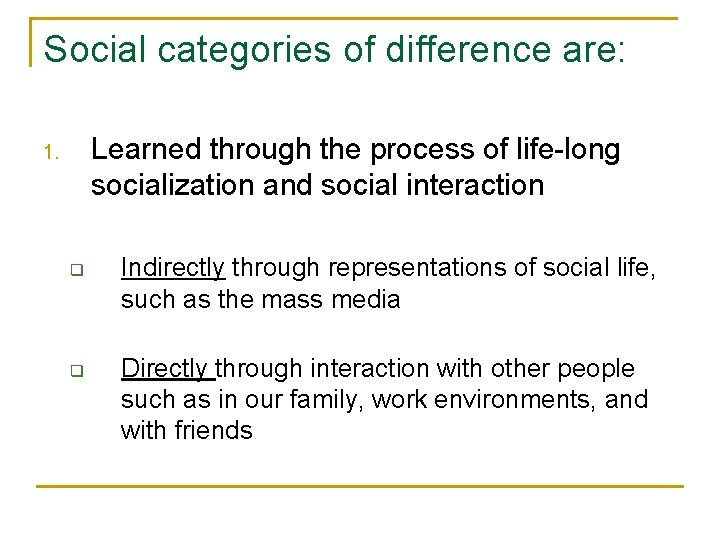
Social categories of difference are: Learned through the process of life-long socialization and social interaction 1. q q Indirectly through representations of social life, such as the mass media Directly through interaction with other people such as in our family, work environments, and with friends
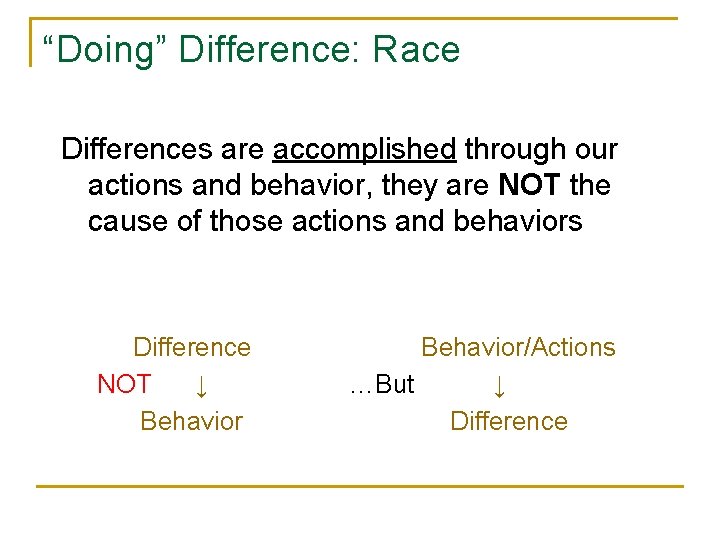
“Doing” Difference: Race Differences are accomplished through our actions and behavior, they are NOT the cause of those actions and behaviors Difference NOT ↓ Behavior/Actions …But ↓ Difference
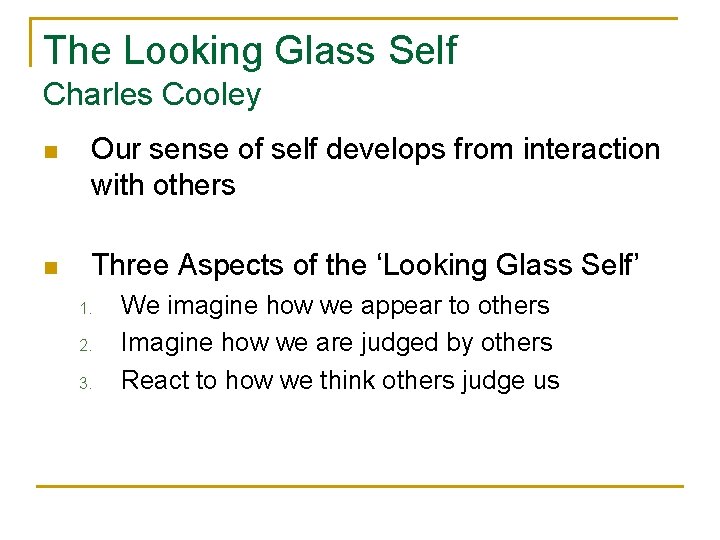
The Looking Glass Self Charles Cooley n Our sense of self develops from interaction with others n Three Aspects of the ‘Looking Glass Self’ 1. 2. 3. We imagine how we appear to others Imagine how we are judged by others React to how we think others judge us
“Doing” Difference n Difference “is a situated accomplishment of societal members, the local management of conduct in relation to normative conceptions of appropriate attitudes and activities for particular [socially constructed] categories. ” n Gender, race, and class are more than roles or individual attributes
Situated Accomplishment n Situated q q n Social setting Social institutions Accomplishment q holding our attitudes and actions accountable to certain notions of gender, race, class
Local Management of Conduct n We manage our actions within a social context and in relation to the specific context n Doing race is interactional and institutional in character n Actions and attitudes are only given meaning in a social setting
Normative Conceptions n Norms – right and wrong q q n Direct & indirect learning Appropriate attitudes and activities Accountability q q Hold our actions and ideas accountable to normative conceptions Produces action and gives recognition to that action
“Doing” Race in the Bluest Eye Pick an example from the Bluest Eye and explain the following: q How is the character(s) “doing race” ? q What is the social setting and who is in it? q q What normative conceptions are their actions responding to? How do the normative conceptions and social setting produce certain actions?
October 11 th n n Attendance Pop Quiz Lectures Four: Doing Difference Homework: q “Bluest Eye” Summer
“Doing” Difference n Difference “is a situated accomplishment of societal members, the local management of conduct in relation to normative conceptions of appropriate attitudes and activities for particular [socially constructed] categories. ”
Four Implications n Difference is accomplished through actions (“doings”) n Ongoing accomplishment of race, gender, class n Does not require categorical diversity n Same activity, different meanings
How do you “do” difference n Think of a time when you “did” difference – race, class, gender, or sexuality q q q What was the social setting and who is in it? What normative conceptions were your actions responding to? How did the normative conceptions and social setting produce certain actions?
Interpersonal Racism n Prejudice: negative beliefs, attitudes, and feelings toward members of another social group n Stereotyping: exaggerated and inaccurate generalizations about members of a group n Discrimination: unfavorable treatment of individuals because of their group membership
Differences in Interpersonal Racism n Aware/blatant racism q n Aware/covert racism q n Hidden, believed superiority/hatred Unaware/unintentional q n Outright, believed superiority/hatred Internalized/unrecognized superiority Unaware/self-righteous q Focus on diversity w/out recognizing privilege