
March 23 2021 Family Systems Theory Agile March
- Slides: 21
March 23, 2021 • Family Systems Theory & Agile March 23, 2021 • Tri. Agile Family Systems Theory & Agile Bill Scanlon, CSP-SM, CSPO First Citizens Bank Agile Coach Twitter: @bilscanlon Linked. In: Bill Scanlon Applying Family Systems Theory (Bowen Theory) to Agile frameworks to create healthy emotional systems at work Topic Outline Systems Thinking Bowen Theory Anxiety within Systems 3 Bowen Theory Concepts Nuclear Family Emotional Process Differentiation of Self Triangles
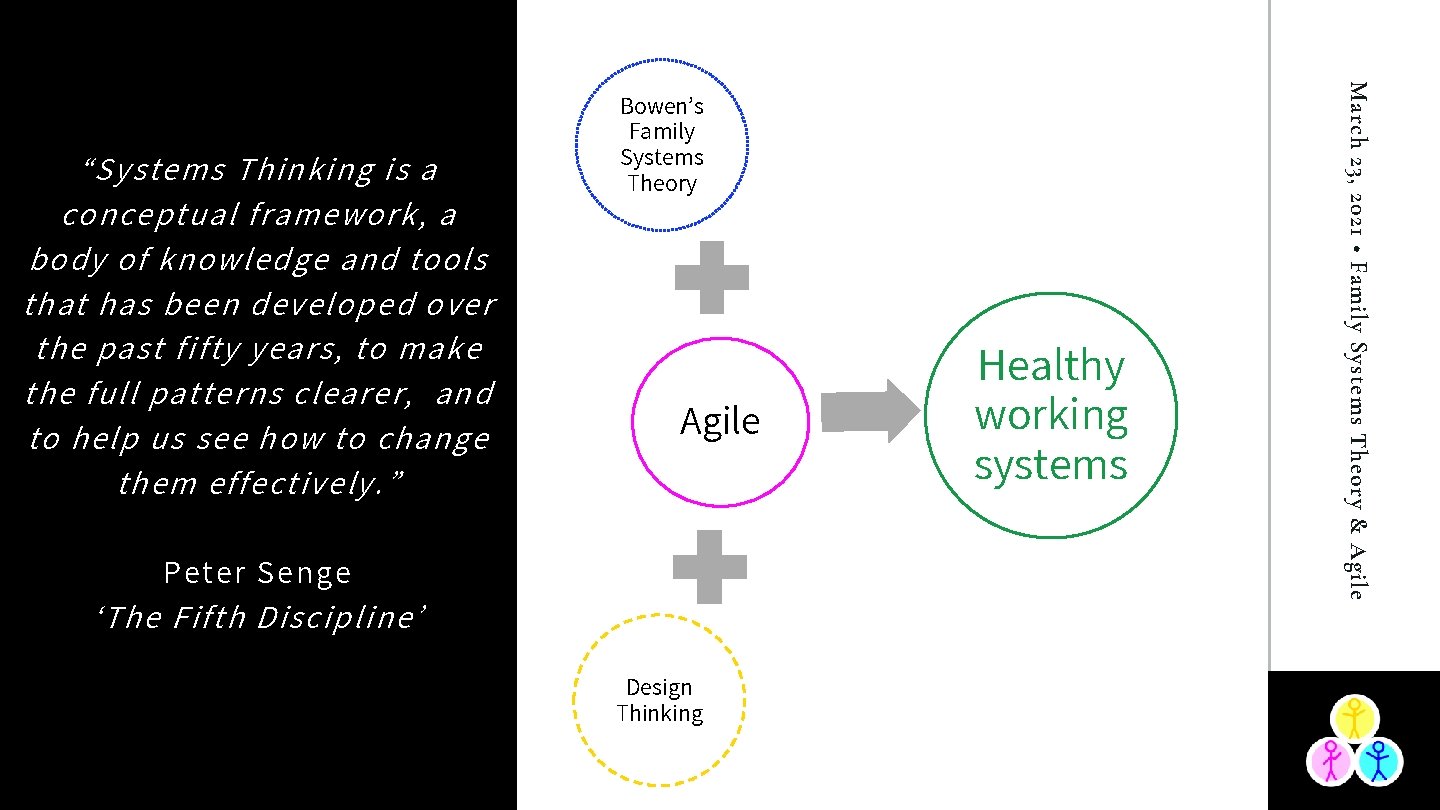
Agile Peter Senge ‘The Fifth Discipline’ Design Thinking Healthy working systems March 23, 2021 • Family Systems Theory & Agile “Systems Thinking is a conceptual framework, a body of knowledge and tools that has been developed over the past fifty years, to make the full patterns clearer, and to help us see how to change them effectively. ” Bowen’s Family Systems Theory
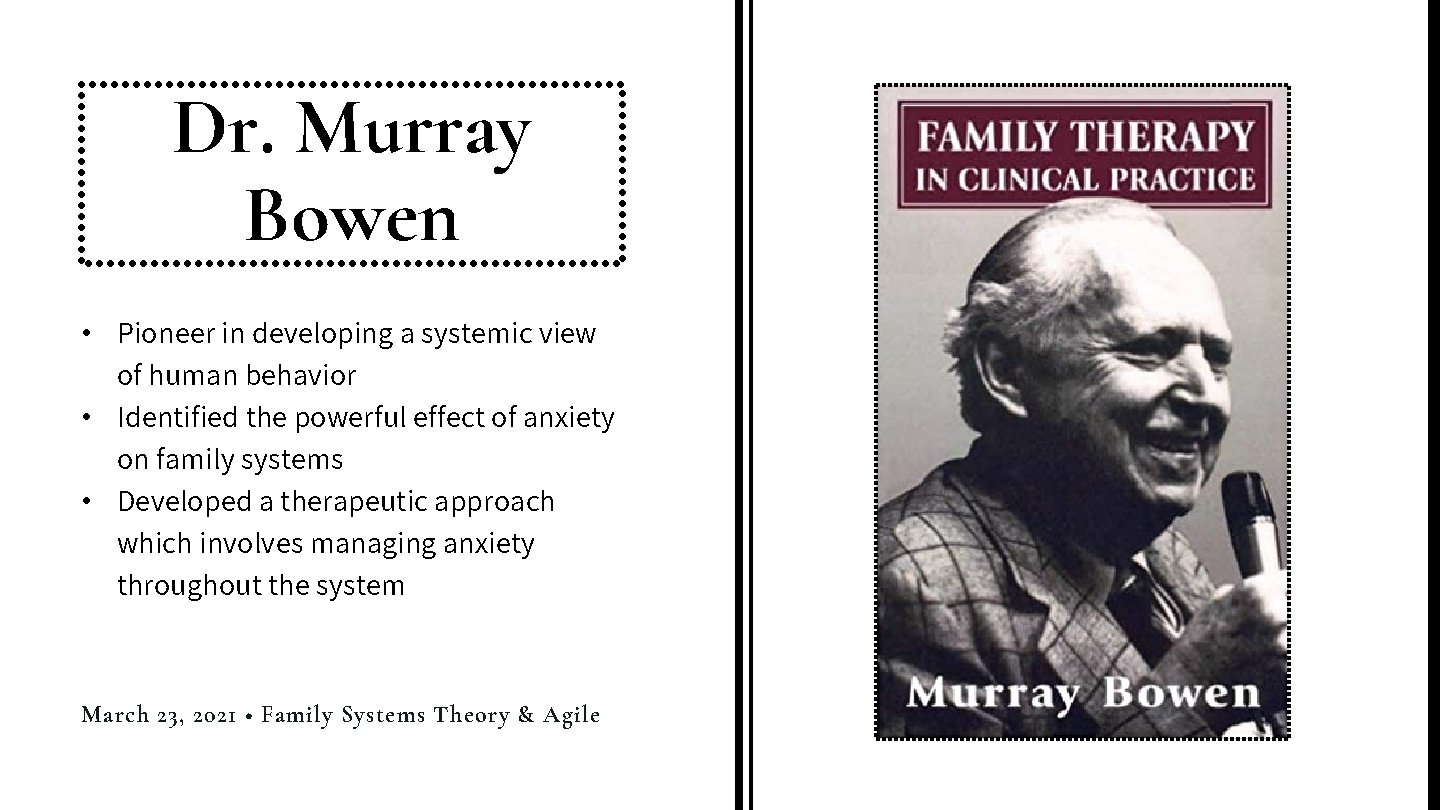
Dr. Murray Bowen • Pioneer in developing a systemic view of human behavior • Identified the powerful effect of anxiety on family systems • Developed a therapeutic approach which involves managing anxiety throughout the system March 23, 2021 • Family Systems Theory & Agile
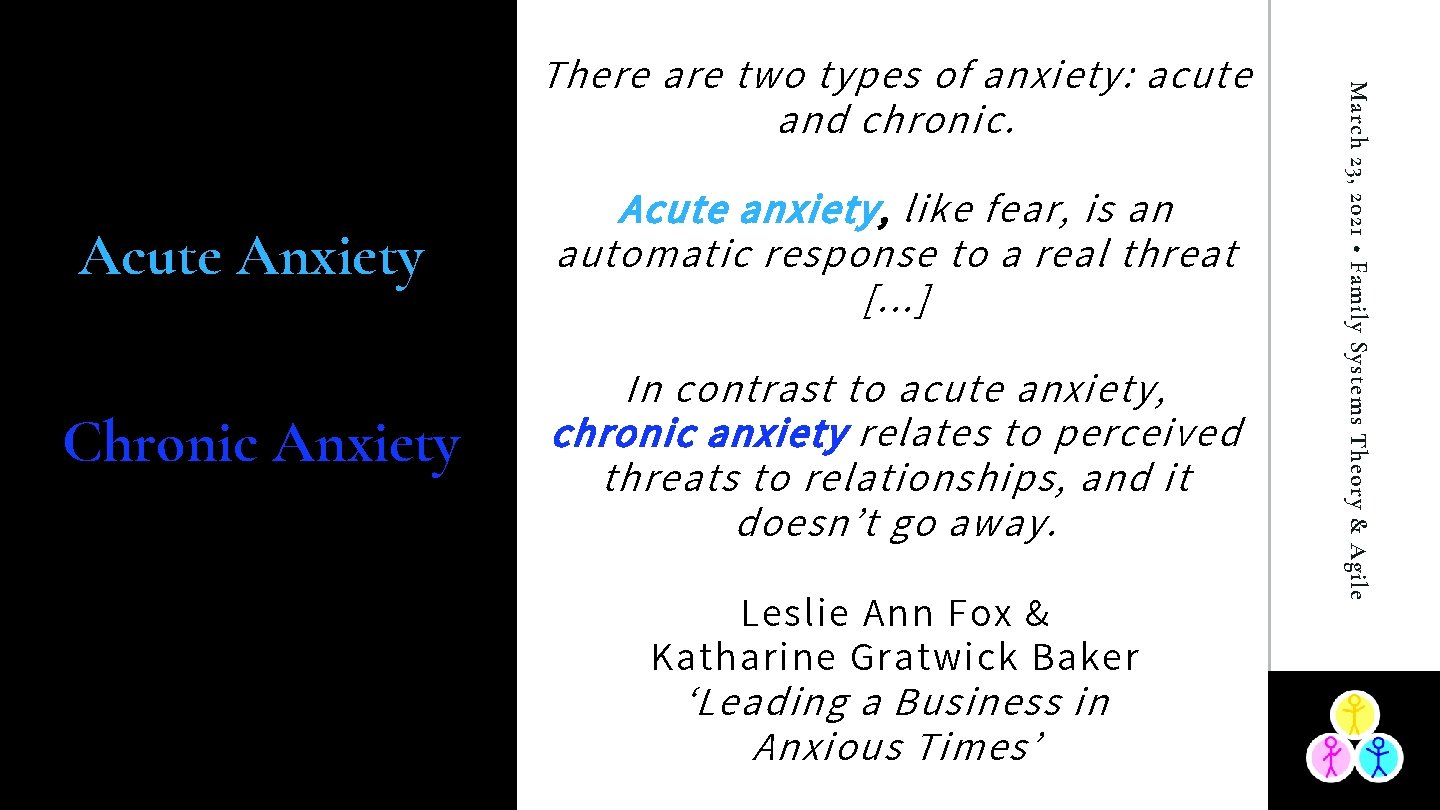
Acute Anxiety Acute anxiety, like fear, is an automatic response to a real threat [. . . ] Chronic Anxiety In contrast to acute anxiety, chronic anxiety relates to perceived threats to relationships, and it doesn’t go away. Leslie Ann Fox & Katharine Gratwick Baker ‘Leading a Business in Anxious Times’ March 23, 2021 • Family Systems Theory & Agile There are two types of anxiety: acute and chronic.
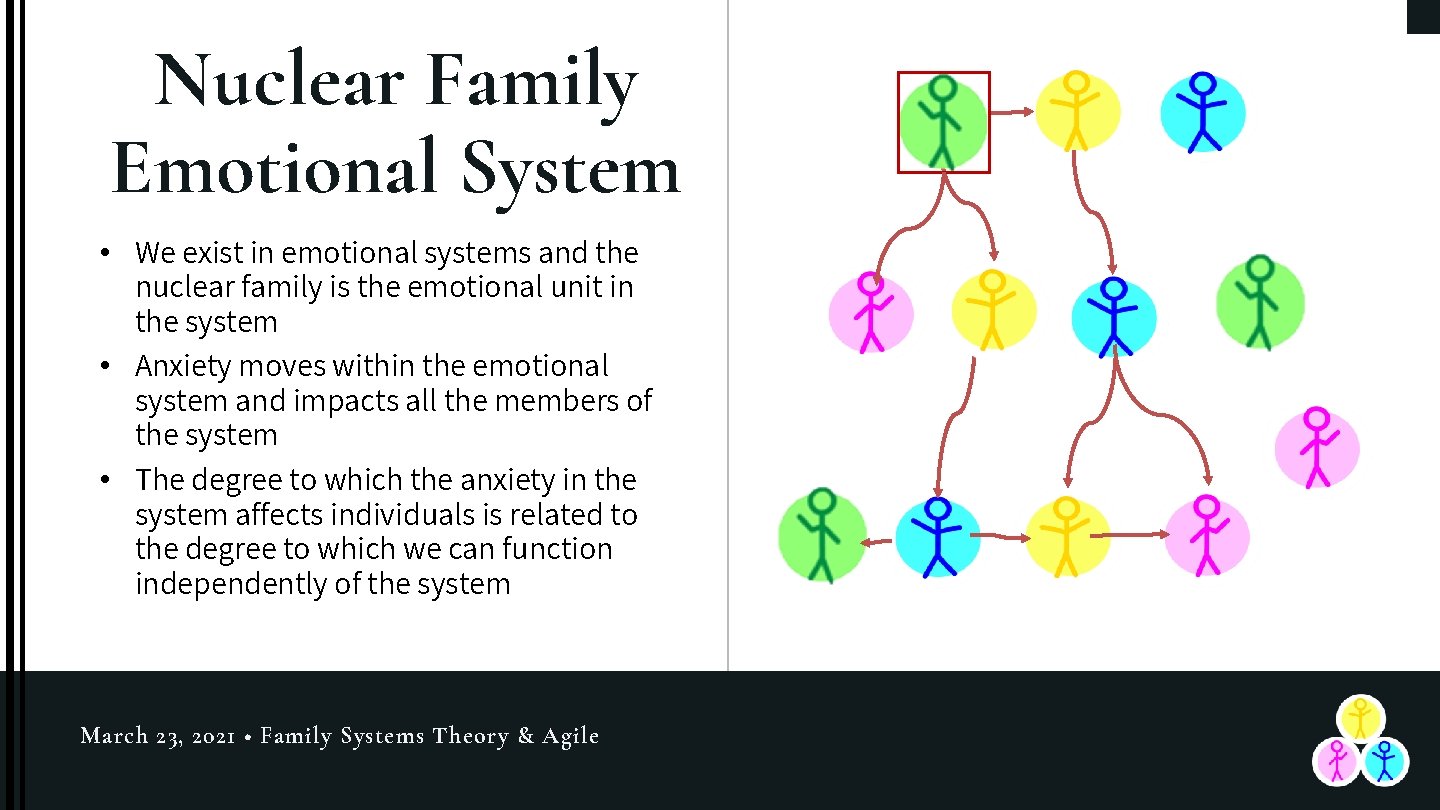
Nuclear Family Emotional System • We exist in emotional systems and the nuclear family is the emotional unit in the system • Anxiety moves within the emotional system and impacts all the members of the system • The degree to which the anxiety in the system affects individuals is related to the degree to which we can function independently of the system March 23, 2021 • Family Systems Theory & Agile
Bowen Theory Concepts 1. 2. 3. 4. 5. 6. 7. 8. Triangles Differentiation of Self Nuclear Family Emotional Process Family Projection Process Multigenerational Transmission Process Emotional Cutoff Sibling Position Societal Emotional Process March 23, 2021 • Family Systems Theory & Agile Nuclear Family Emotional System • We exist in emotional systems and the nuclear family is the emotional unit in the system • Anxiety moves within the emotional system and impacts all the members of the system • The degree to which the anxiety in the system affects individuals is related to the degree to which we can function independently of the system
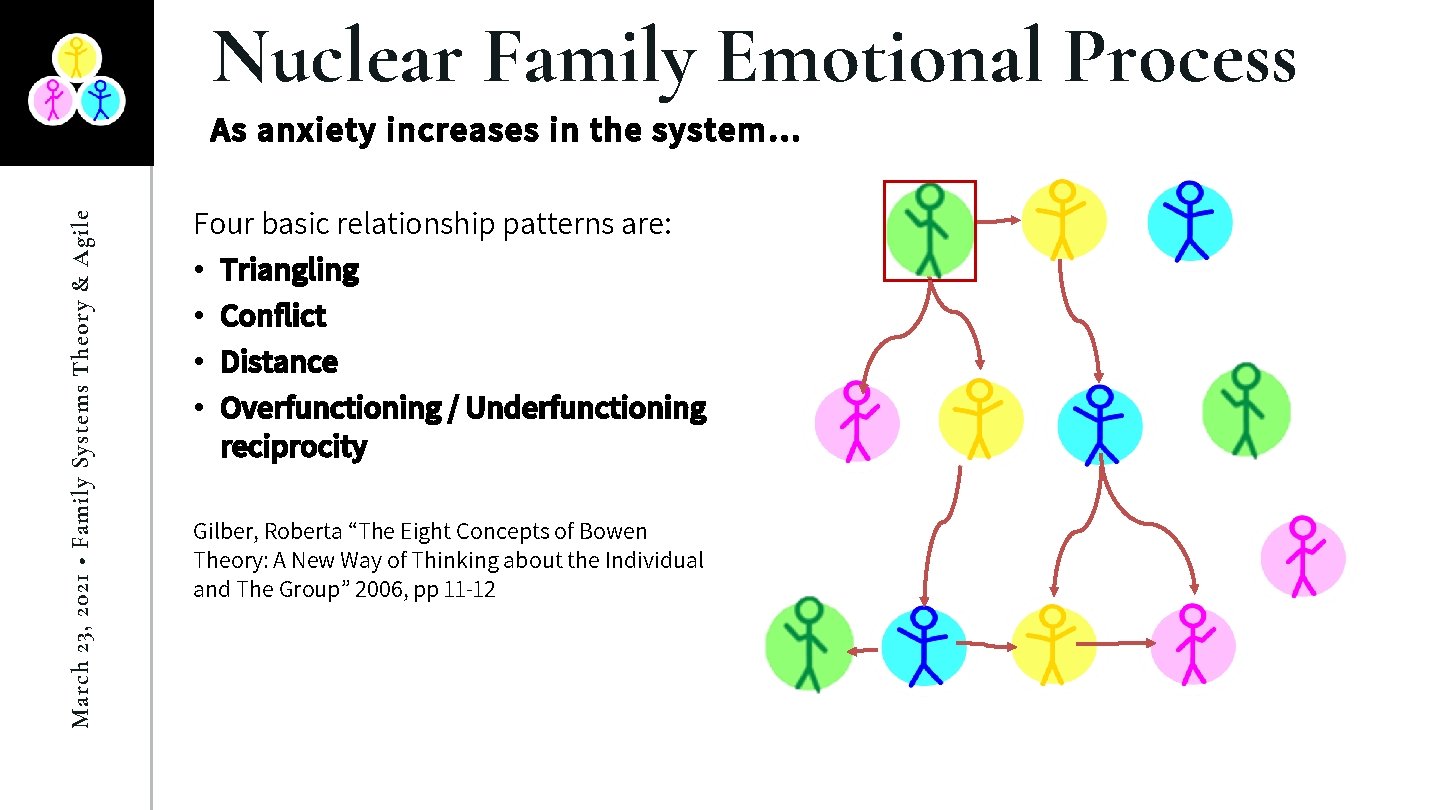
Nuclear Family Emotional Process March 23, 2021 • Family Systems Theory & Agile As anxiety increases in the system… Four basic relationship patterns are: • Triangling • Conflict • Distance • Overfunctioning / Underfunctioning reciprocity Gilber, Roberta “The Eight Concepts of Bowen Theory: A New Way of Thinking about the Individual and The Group” 2006, pp 11 -12
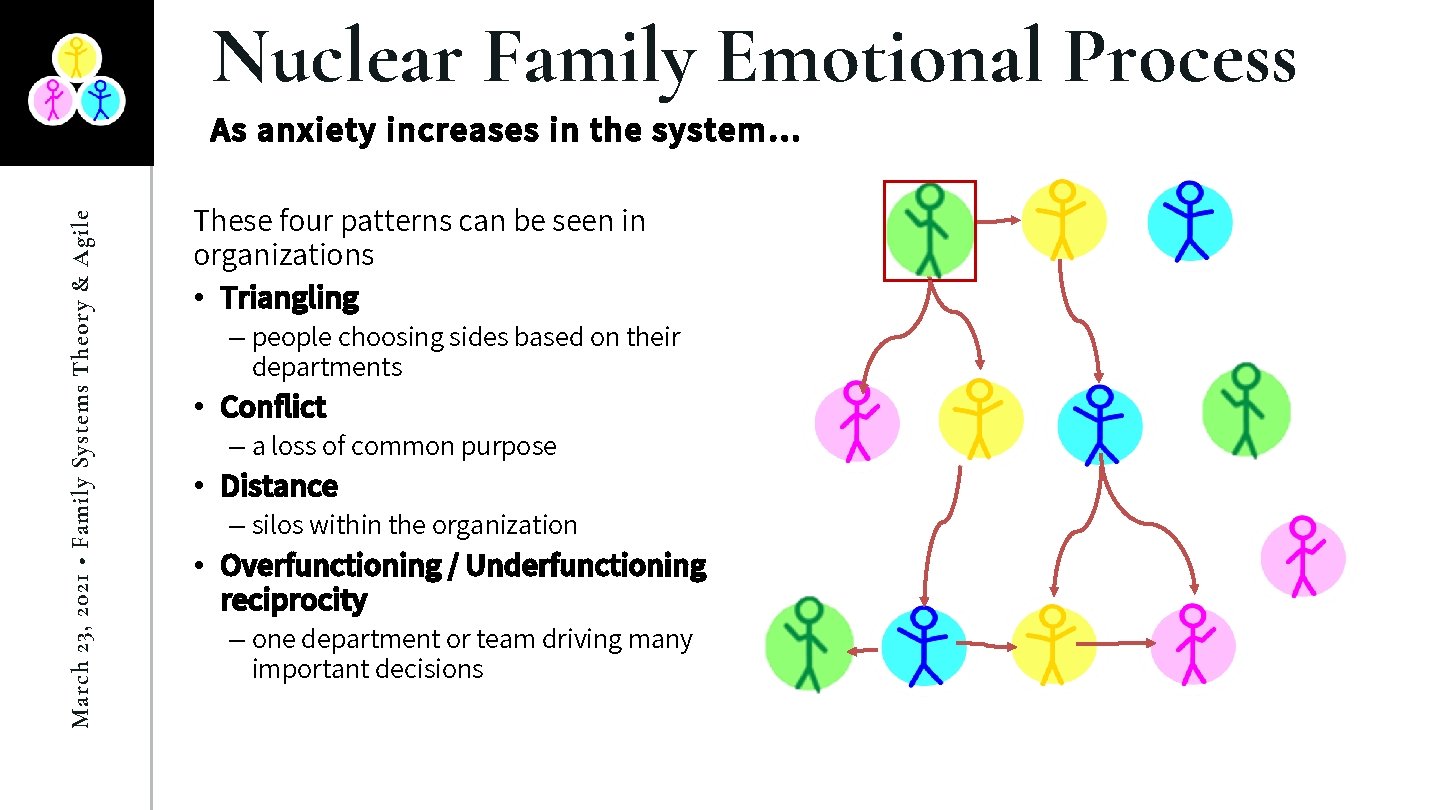
Nuclear Family Emotional Process March 23, 2021 • Family Systems Theory & Agile As anxiety increases in the system… These four patterns can be seen in organizations • Triangling – people choosing sides based on their departments • Conflict – a loss of common purpose • Distance – silos within the organization • Overfunctioning / Underfunctioning reciprocity – one department or team driving many important decisions
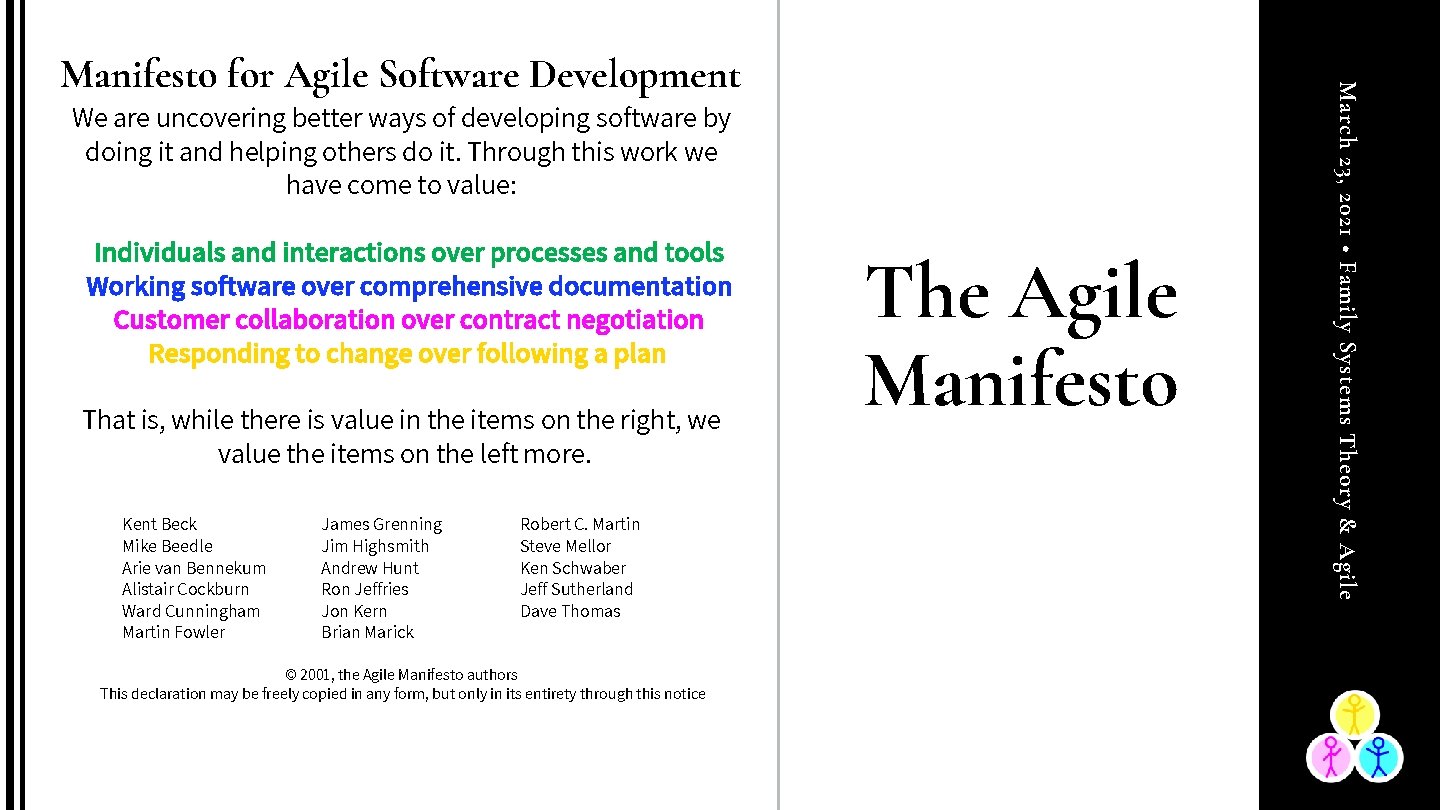
We are uncovering better ways of developing software by doing it and helping others do it. Through this work we have come to value: Individuals and interactions over processes and tools Working software over comprehensive documentation Customer collaboration over contract negotiation Responding to change over following a plan That is, while there is value in the items on the right, we value the items on the left more. Kent Beck Mike Beedle Arie van Bennekum Alistair Cockburn Ward Cunningham Martin Fowler James Grenning Jim Highsmith Andrew Hunt Ron Jeffries Jon Kern Brian Marick Robert C. Martin Steve Mellor Ken Schwaber Jeff Sutherland Dave Thomas © 2001, the Agile Manifesto authors This declaration may be freely copied in any form, but only in its entirety through this notice The Agile Manifesto March 23, 2021 • Family Systems Theory & Agile Manifesto for Agile Software Development
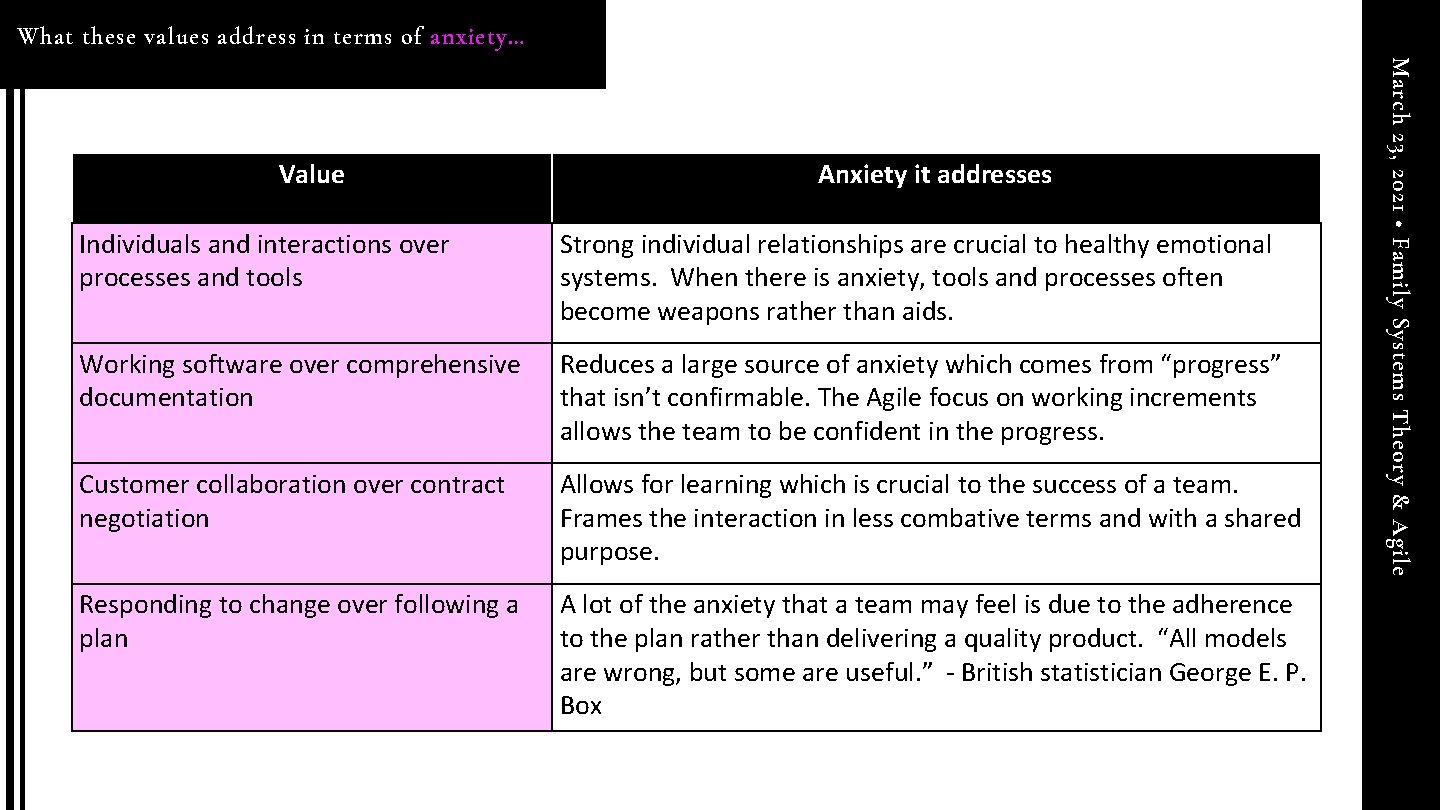
What these values address in terms of anxiety… Anxiety it addresses Individuals and interactions over processes and tools Strong individual relationships are crucial to healthy emotional systems. When there is anxiety, tools and processes often become weapons rather than aids. Working software over comprehensive documentation Reduces a large source of anxiety which comes from “progress” that isn’t confirmable. The Agile focus on working increments allows the team to be confident in the progress. Customer collaboration over contract negotiation Allows for learning which is crucial to the success of a team. Frames the interaction in less combative terms and with a shared purpose. Responding to change over following a plan A lot of the anxiety that a team may feel is due to the adherence to the plan rather than delivering a quality product. “All models are wrong, but some are useful. ” - British statistician George E. P. Box March 23, 2021 • Family Systems Theory & Agile Value
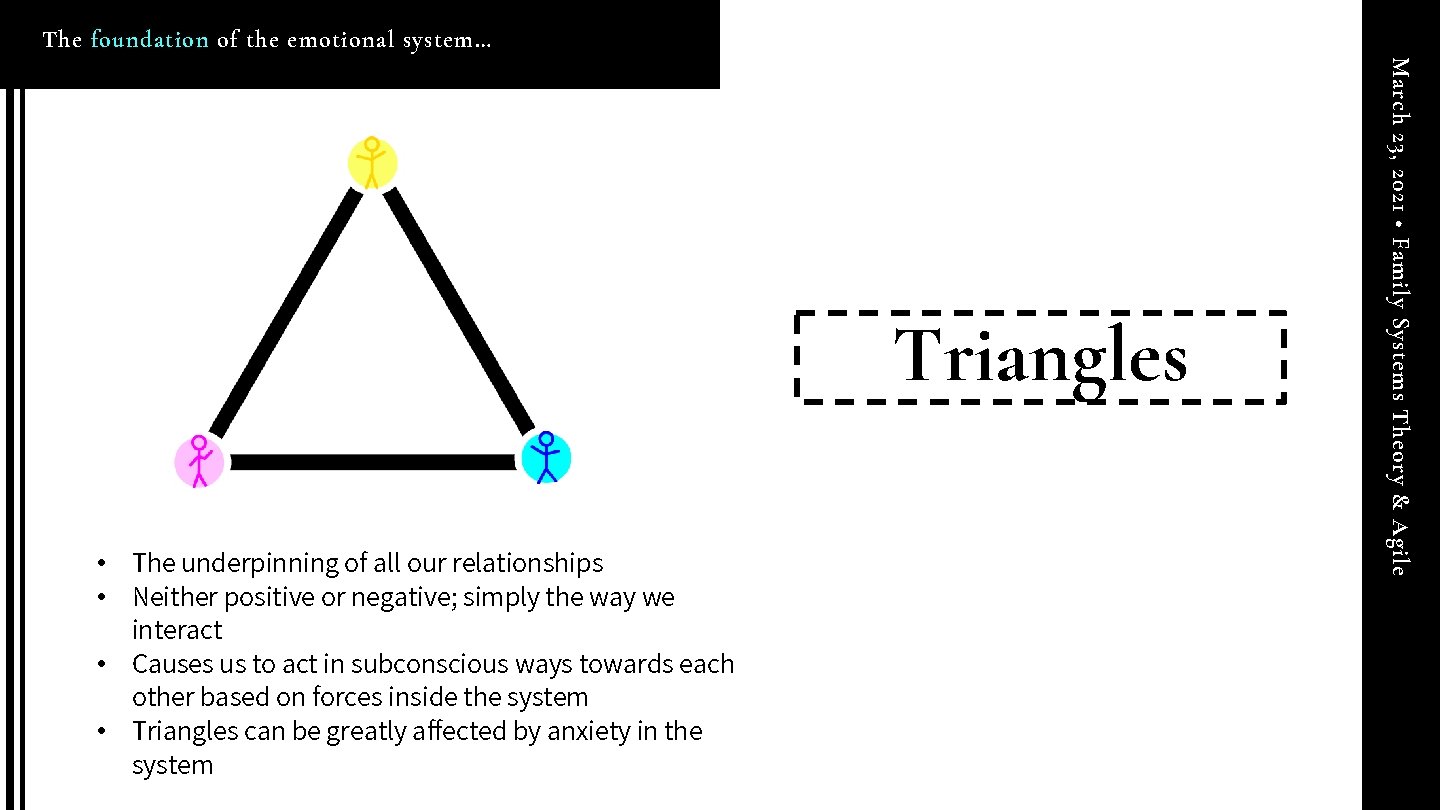
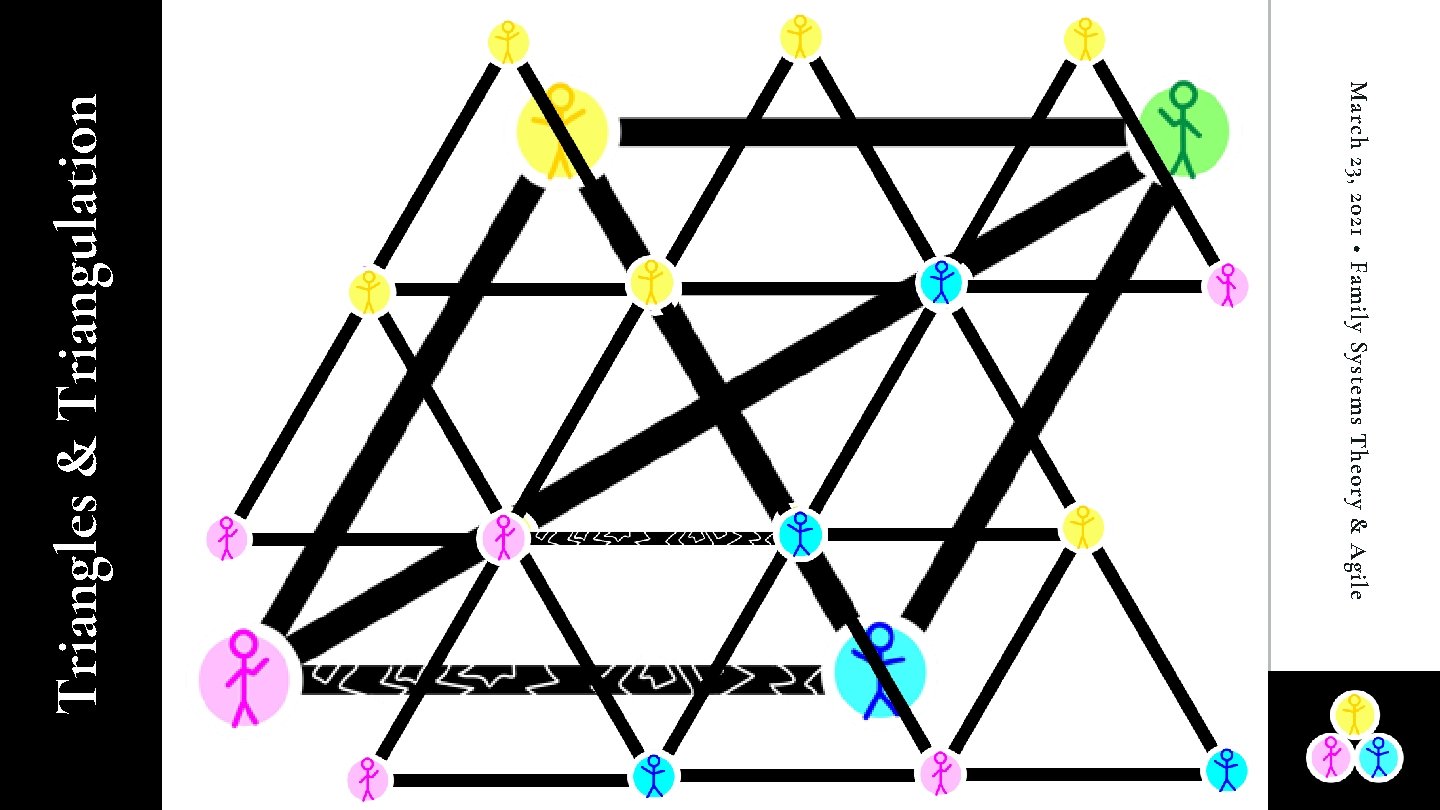
The foundation of the emotional system… • The underpinning of all our relationships • Neither positive or negative; simply the way we interact • Causes us to act in subconscious ways towards each other based on forces inside the system • Triangles can be greatly affected by anxiety in the system March 23, 2021 • Family Systems Theory & Agile Triangles
Triangles & Triangulation March 23, 2021 • Family Systems Theory & Agile
Triangles & Triangulation March 23, 2021 • Family Systems Theory & Agile
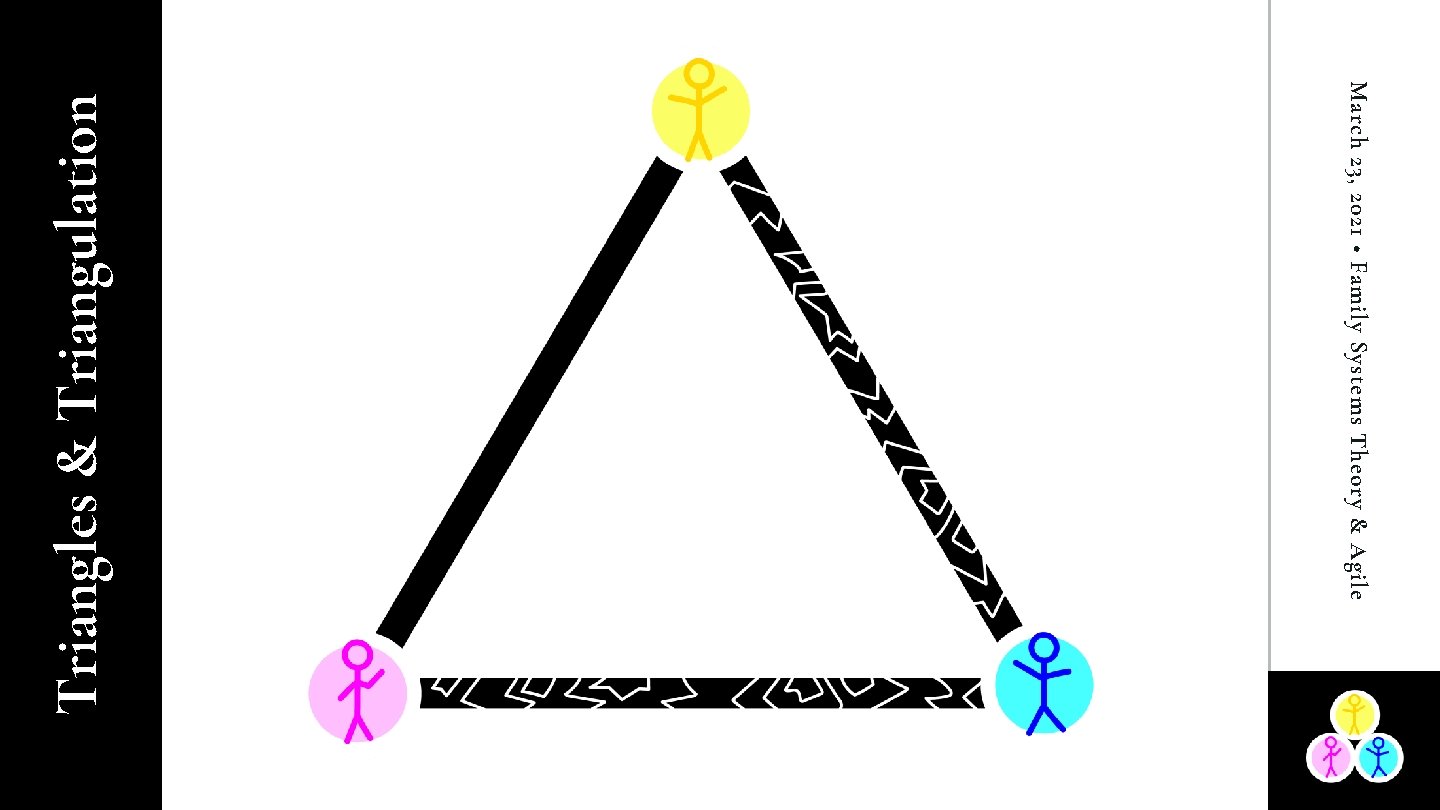
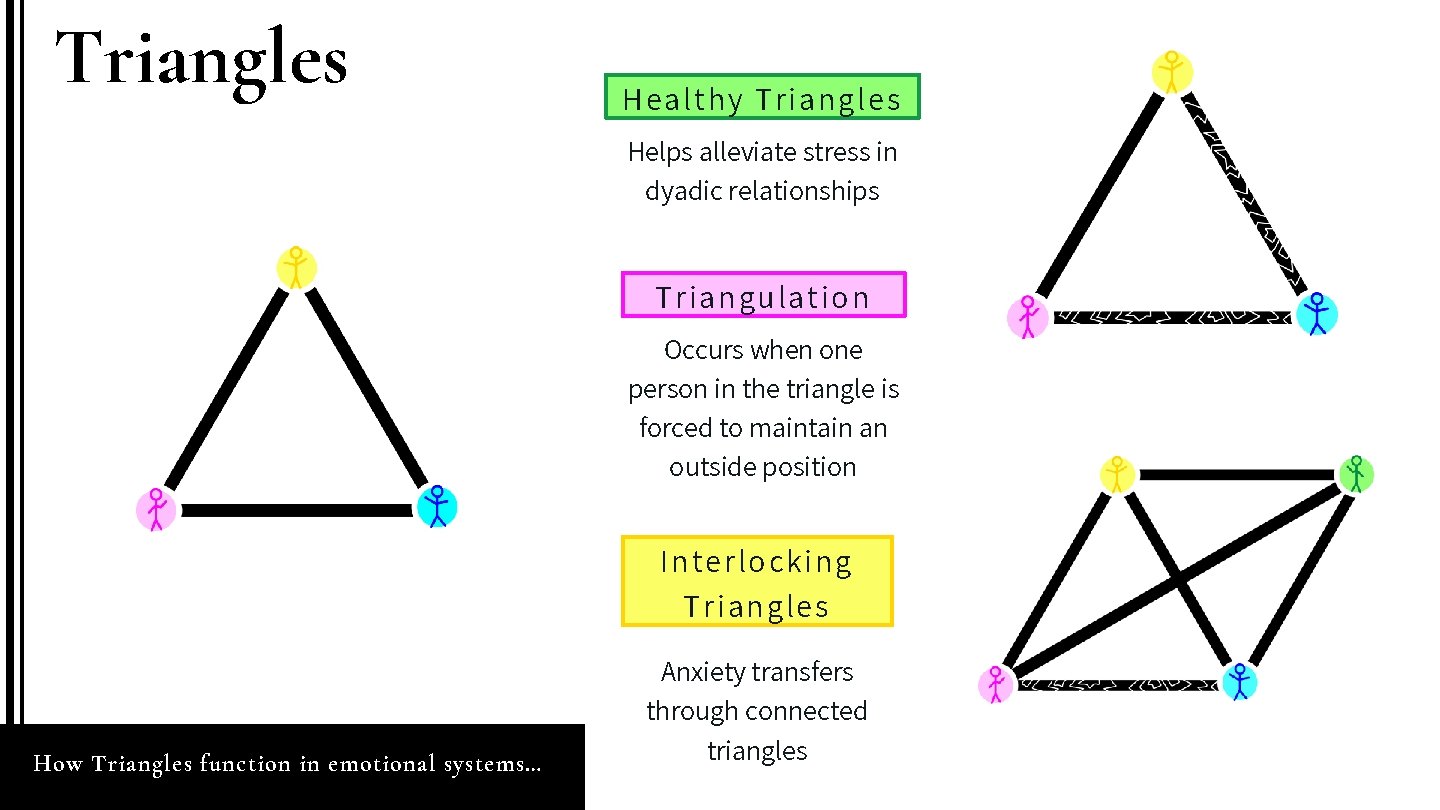
Triangles Healthy Triangles Helps alleviate stress in dyadic relationships Triangulation Occurs when one person in the triangle is forced to maintain an outside position Interlocking Triangles How Triangles function in emotional systems… Anxiety transfers through connected triangles
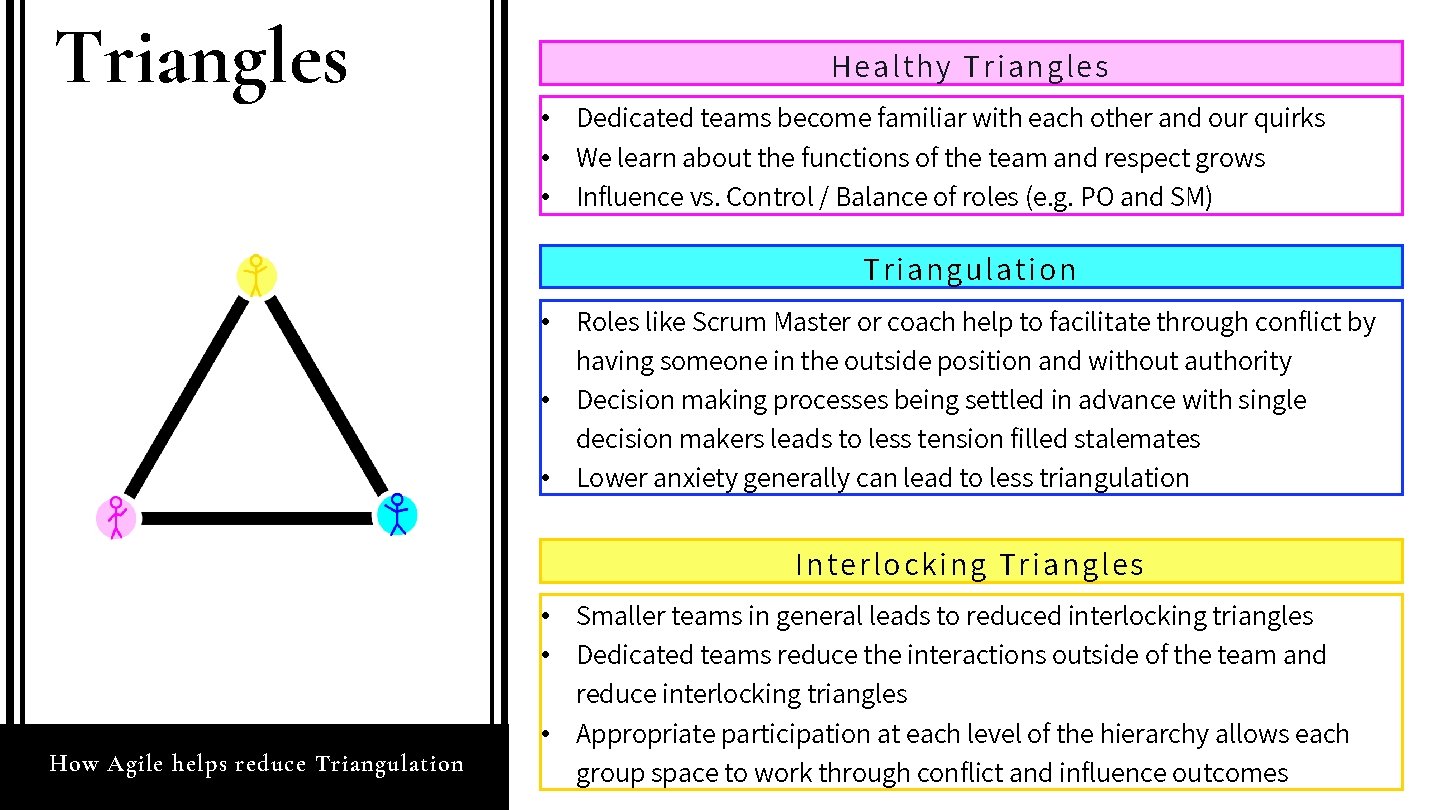
Triangles Healthy Triangles • Dedicated teams become familiar with each other and our quirks • We learn about the functions of the team and respect grows • Influence vs. Control / Balance of roles (e. g. PO and SM) Triangulation • Roles like Scrum Master or coach help to facilitate through conflict by having someone in the outside position and without authority • Decision making processes being settled in advance with single decision makers leads to less tension filled stalemates • Lower anxiety generally can lead to less triangulation Interlocking Triangles How Agile helps reduce Triangulation • Smaller teams in general leads to reduced interlocking triangles • Dedicated teams reduce the interactions outside of the team and reduce interlocking triangles • Appropriate participation at each level of the hierarchy allows each group space to work through conflict and influence outcomes
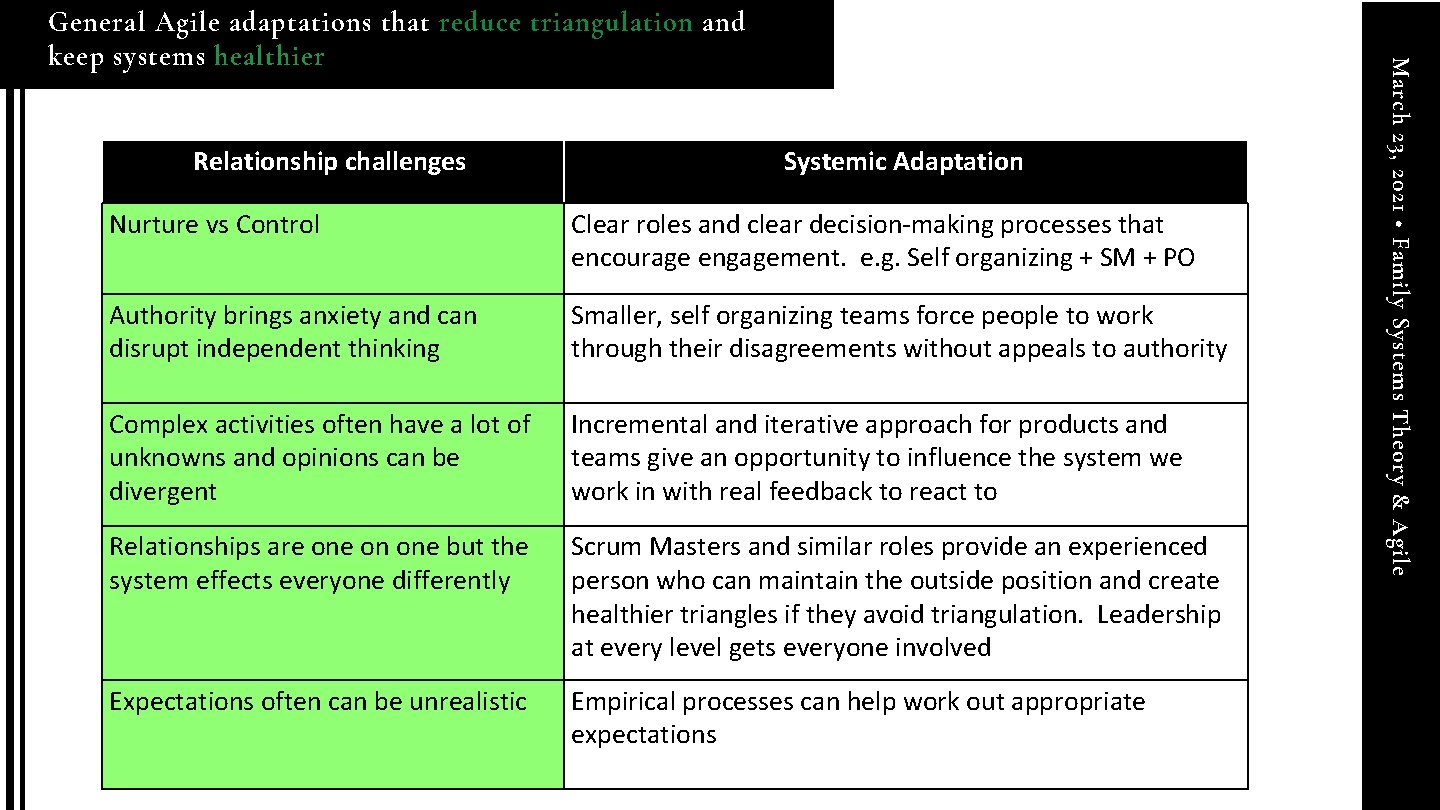
Relationship challenges Systemic Adaptation Nurture vs Control Clear roles and clear decision-making processes that encourage engagement. e. g. Self organizing + SM + PO Authority brings anxiety and can disrupt independent thinking Smaller, self organizing teams force people to work through their disagreements without appeals to authority Complex activities often have a lot of unknowns and opinions can be divergent Incremental and iterative approach for products and teams give an opportunity to influence the system we work in with real feedback to react to Relationships are on one but the system effects everyone differently Scrum Masters and similar roles provide an experienced person who can maintain the outside position and create healthier triangles if they avoid triangulation. Leadership at every level gets everyone involved Expectations often can be unrealistic Empirical processes can help work out appropriate expectations March 23, 2021 • Family Systems Theory & Agile General Agile adaptations that reduce triangulation and keep systems healthier
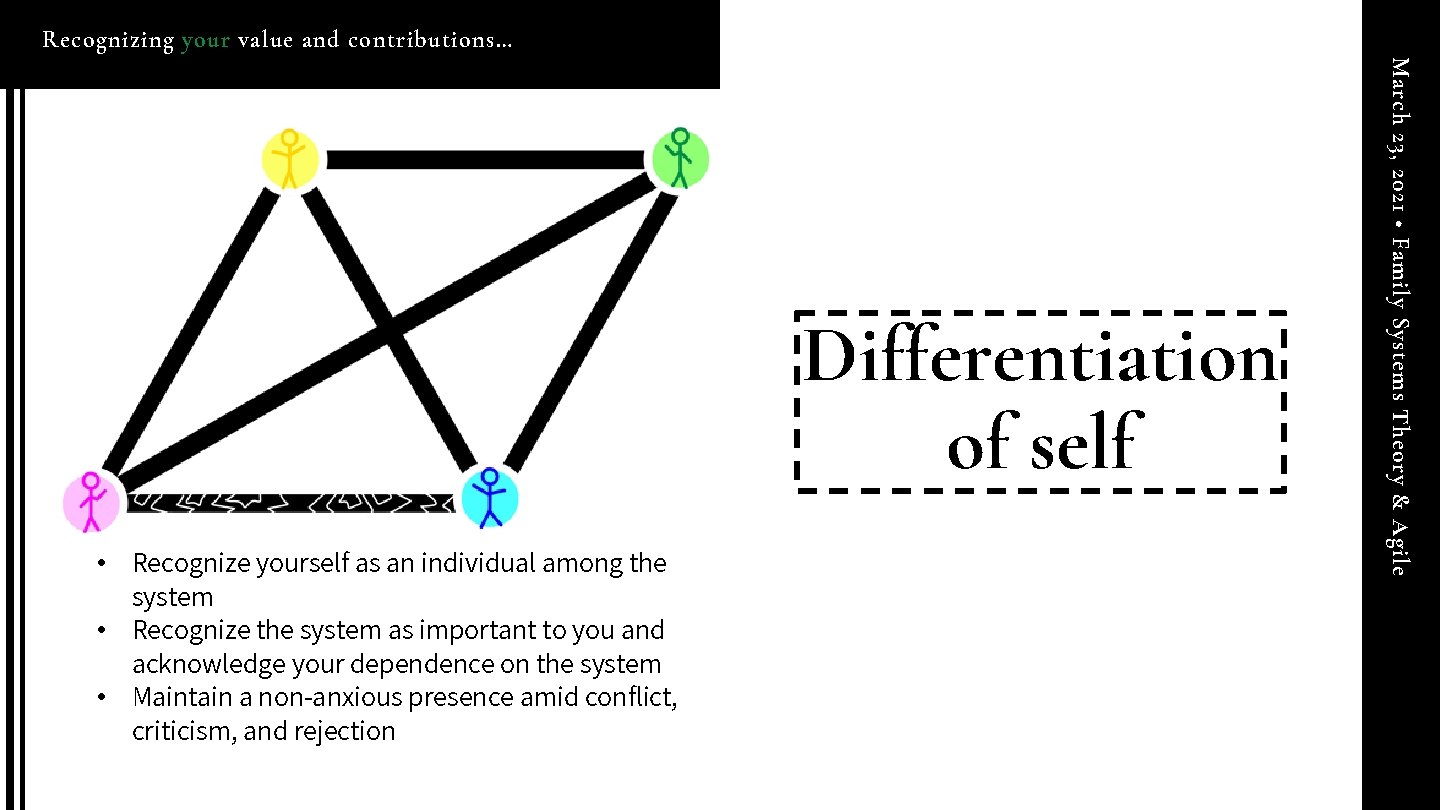
Recognizing your value and contributions… • Recognize yourself as an individual among the system • Recognize the system as important to you and acknowledge your dependence on the system • Maintain a non-anxious presence amid conflict, criticism, and rejection March 23, 2021 • Family Systems Theory & Agile Differentiation of self
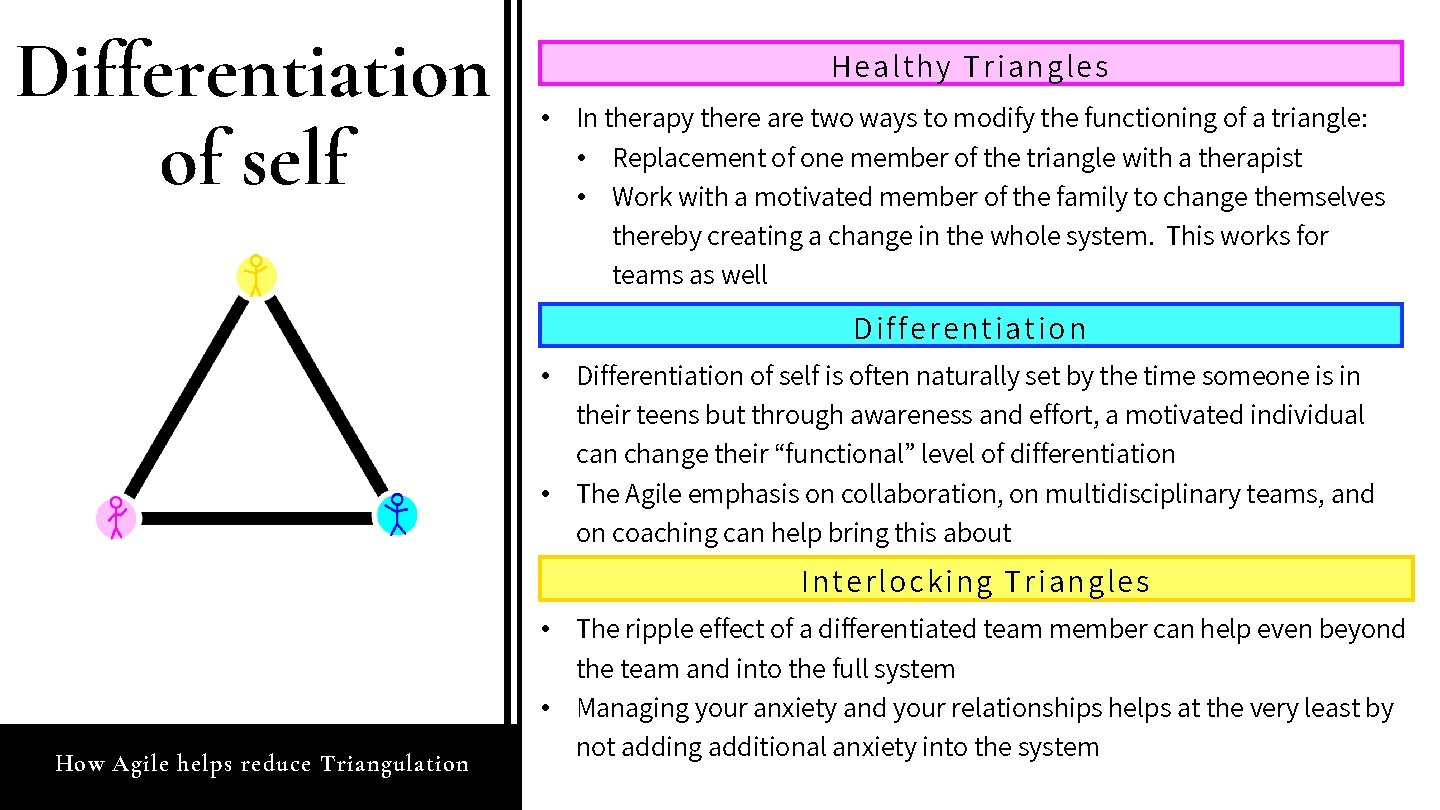
Differentiation of self Healthy Triangles • In therapy there are two ways to modify the functioning of a triangle: • Replacement of one member of the triangle with a therapist • Work with a motivated member of the family to change themselves thereby creating a change in the whole system. This works for teams as well Differentiation • Differentiation of self is often naturally set by the time someone is in their teens but through awareness and effort, a motivated individual can change their “functional” level of differentiation • The Agile emphasis on collaboration, on multidisciplinary teams, and on coaching can help bring this about Interlocking Triangles How Agile helps reduce Triangulation • The ripple effect of a differentiated team member can help even beyond the team and into the full system • Managing your anxiety and your relationships helps at the very least by not adding additional anxiety into the system
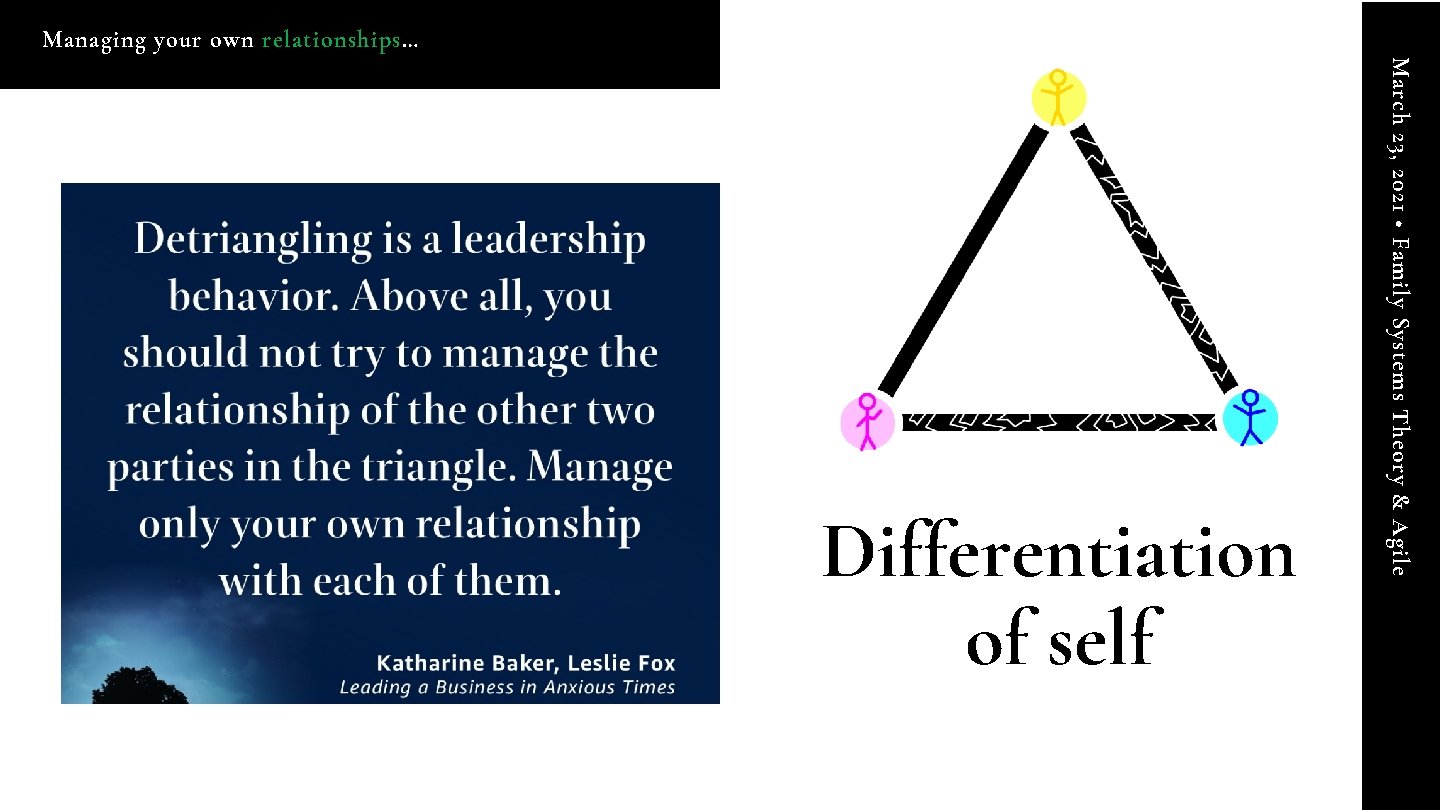
Managing your own relationships… March 23, 2021 • Family Systems Theory & Agile Differentiation of self
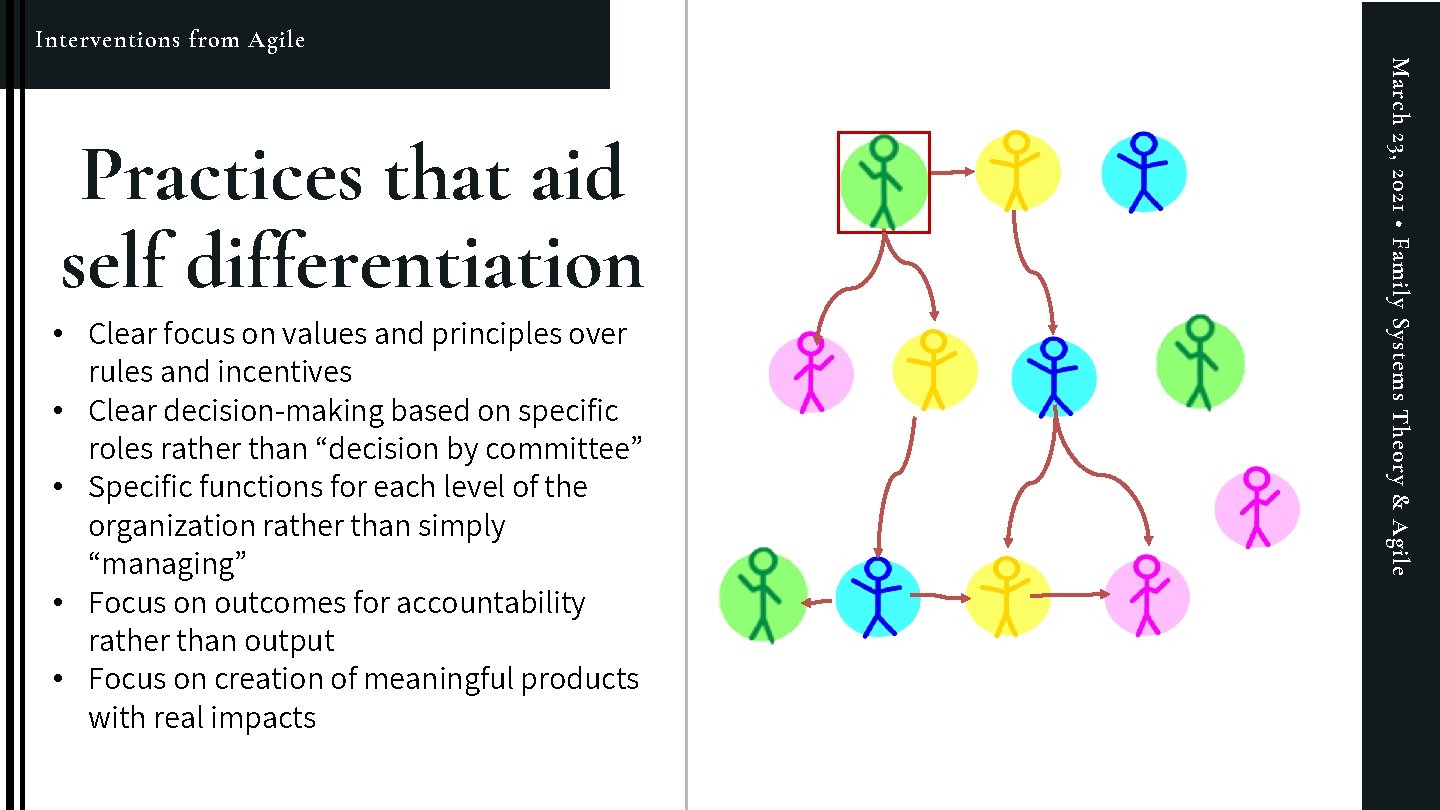
Interventions from Agile • Clear focus on values and principles over rules and incentives • Clear decision-making based on specific roles rather than “decision by committee” • Specific functions for each level of the organization rather than simply “managing” • Focus on outcomes for accountability rather than output • Focus on creation of meaningful products with real impacts March 23, 2021 • Family Systems Theory & Agile Practices that aid self differentiation
Family Therapy in Clinical Practice March 23, 2021 • Family Systems Theory & Agile Bowen, Murray. 2004. Leading a Business in Anxious Times Resources for further research: Fox, Leslie Ann and Katharine Gratwick Baker. 2009. The Bowen Center for the Study of the Family https: //thebowencenter. org/ Organization and Relationship Systems Coaching https: //crrglobal. com/about/orsc/