
March 21 st Chemical Compounds and Formulas and
- Slides: 13
March 21 st Chemical Compounds and Formulas and Diagrams 21
Chemical Compounds and Formulas
Chemical Compounds are pure substances that contain two or more different elements in a fixed proportion. They are formed when elements combine together in chemical reactions. For example: Water (H 2 O) – there always twice as many hydrogen particles as there are of oxygen particles.
A chemical formula is the combination of symbols that represents a particular compound. A chemical formula indicates which elements are found in the compound, as well as the number of atoms of each element that are found in the compound.
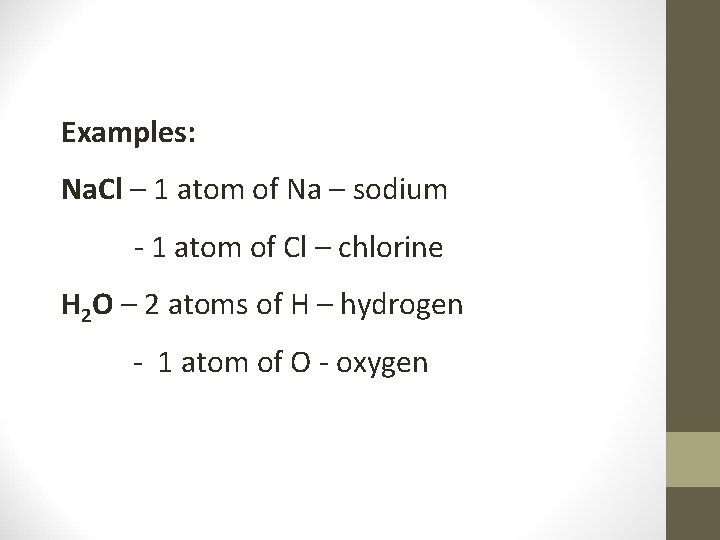
Examples: Na. Cl – 1 atom of Na – sodium - 1 atom of Cl – chlorine H 2 O – 2 atoms of H – hydrogen - 1 atom of O - oxygen
Rules For Writing The Formulas for Ionic Compounds
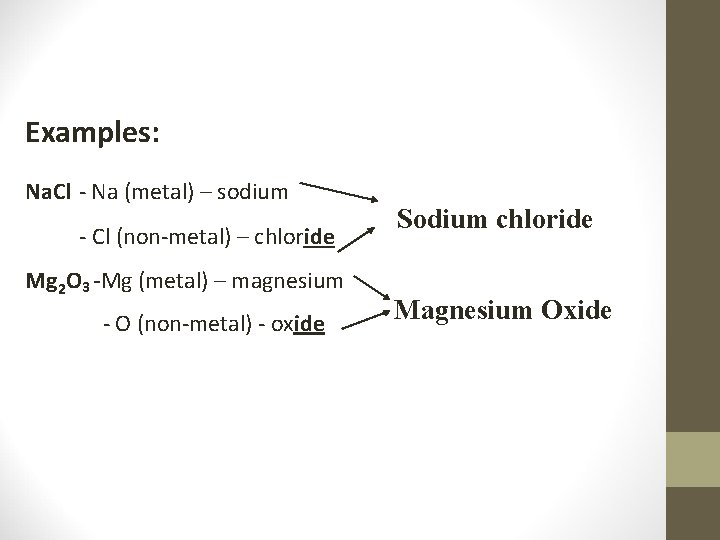
Examples: Na. Cl - Na (metal) – sodium - Cl (non-metal) – chloride Mg 2 O 3 -Mg (metal) – magnesium - O (non-metal) - oxide Sodium chloride Magnesium Oxide
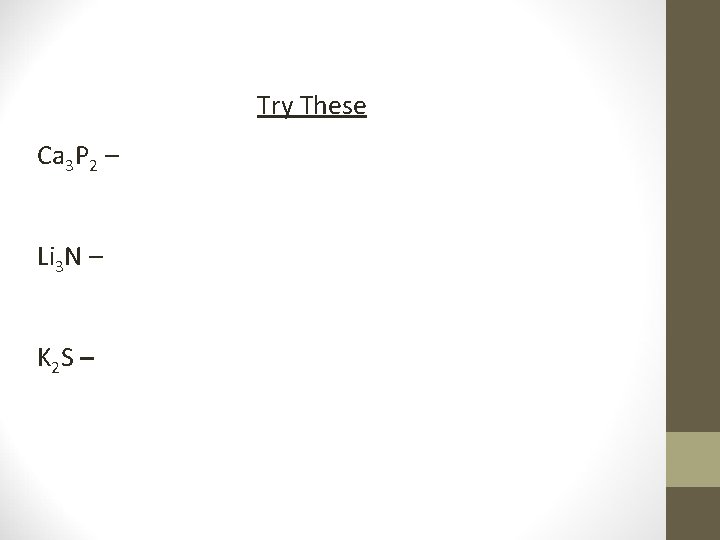
Try These Ca 3 P 2 – Li 3 N – K 2 S –
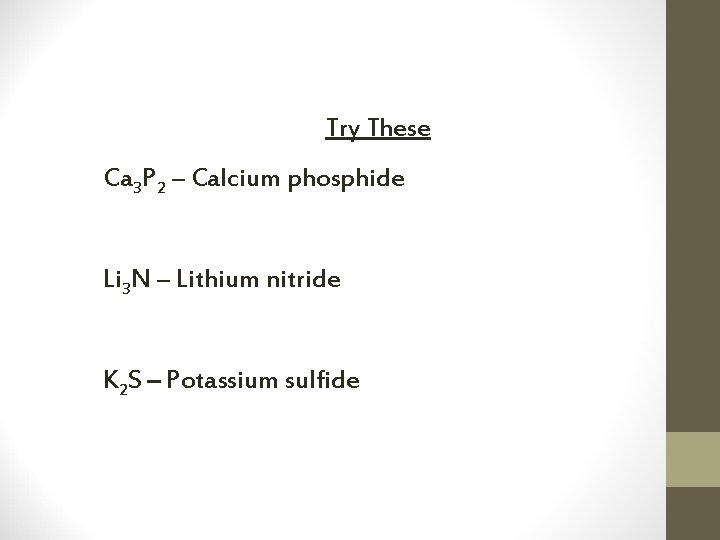
Try These Ca 3 P 2 – Calcium phosphide Li 3 N – Lithium nitride K 2 S – Potassium sulfide
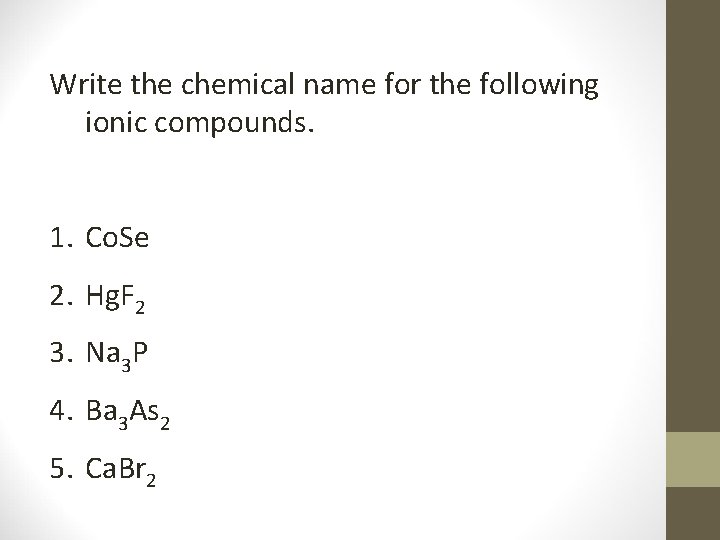
Write the chemical name for the following ionic compounds. 1. Co. Se 2. Hg. F 2 3. Na 3 P 4. Ba 3 As 2 5. Ca. Br 2
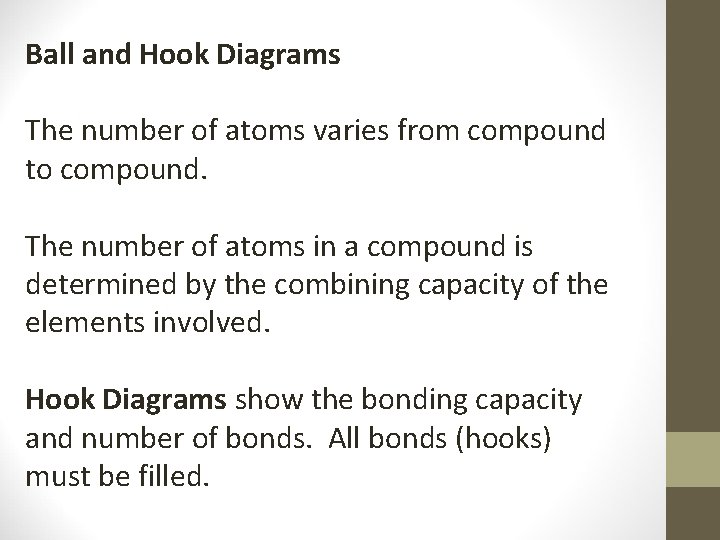
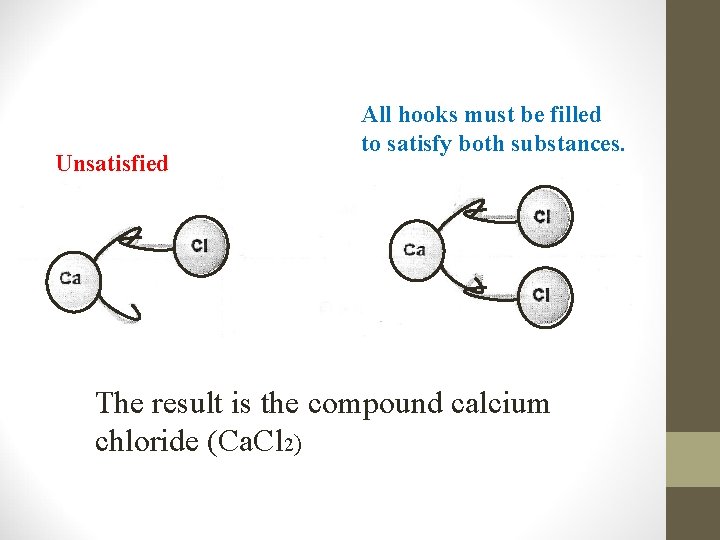
Ball and Hook Diagrams The number of atoms varies from compound to compound. The number of atoms in a compound is determined by the combining capacity of the elements involved. Hook Diagrams show the bonding capacity and number of bonds. All bonds (hooks) must be filled.
Unsatisfied All hooks must be filled to satisfy both substances. The result is the compound calcium chloride (Ca. Cl 2)