
Maps Maps A map is a symbolic representation
Maps
Maps • A map is a symbolic representation of the surface of a planet • There are many different ways this representation can be accomplished • Maps vary in the information they carry • Maps vary in the way they present that information – That is, the same information can be presented in different ways
How to read maps • Give this variation, how do you know how to read maps? • The legend • Example: the representation of elevation, i. e. , topography – – – Pictographs (Drawing hills) Hachure = density of hachure represents slope Hypsometry = contour lines Hypsometric tinting = color represents elevation Shaded relief = shadows indicate height of relief
Simply draw in the mountains
Map of Mount Shasta, California 1883

Map of the moon showing hypsometric tinting
Hypsometric tinting with contour lines
USGS Topographic 1: 24, 000 quadrangle map showing contour lines
Shaded relief compared to traditional contours: Lake Mead
Contour lines • Contour lines mark lines of constant elevation. • They never cross, but can overlap • Closed depressions are often indicated by contours that have tick marks pointing inward • Bundles of lines close together indicate steep slopes • Few lines far apart indicate relatively flat ground • Choice of interval can be difficult if there are both flat and steep areas in the same map • The contour interval should appear in the legend • Contour interval can be calculated from the labeled contour lines
USGS Map legends
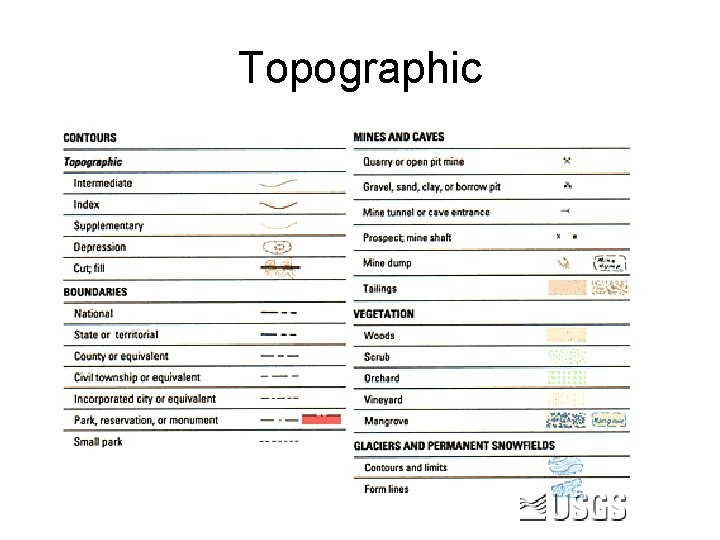
Topographic
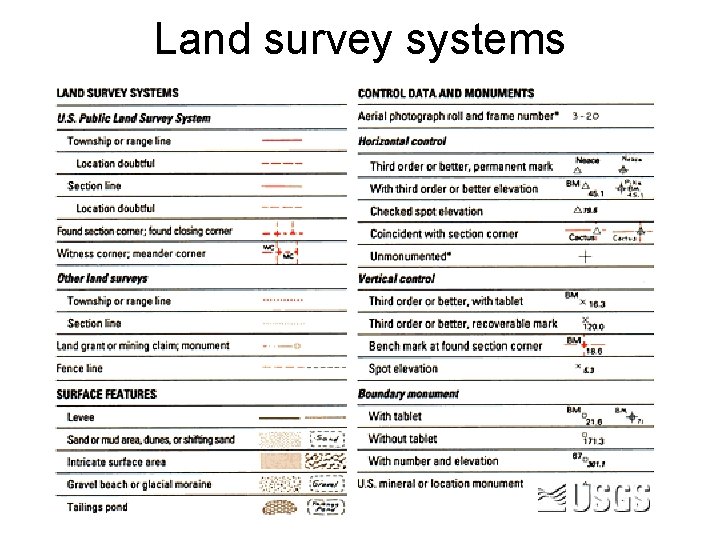
Land survey systems
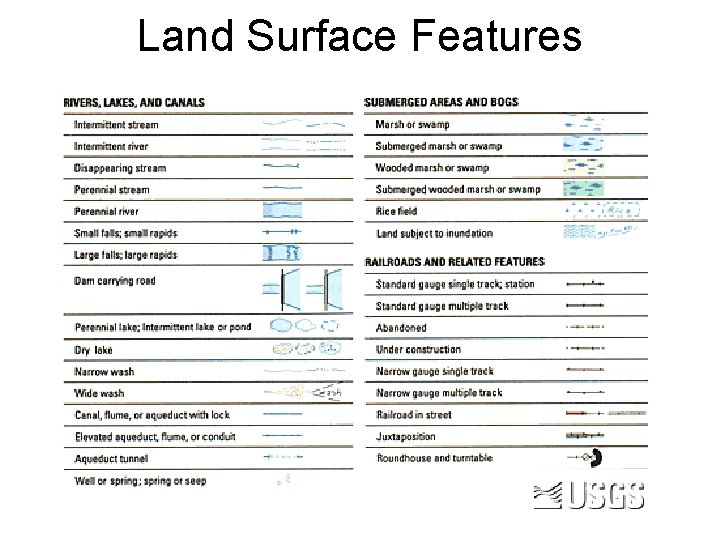
Land Surface Features
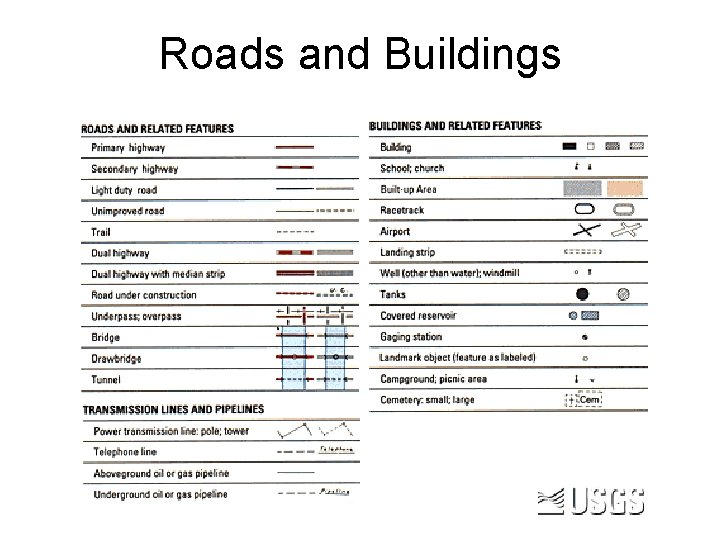
Roads and Buildings
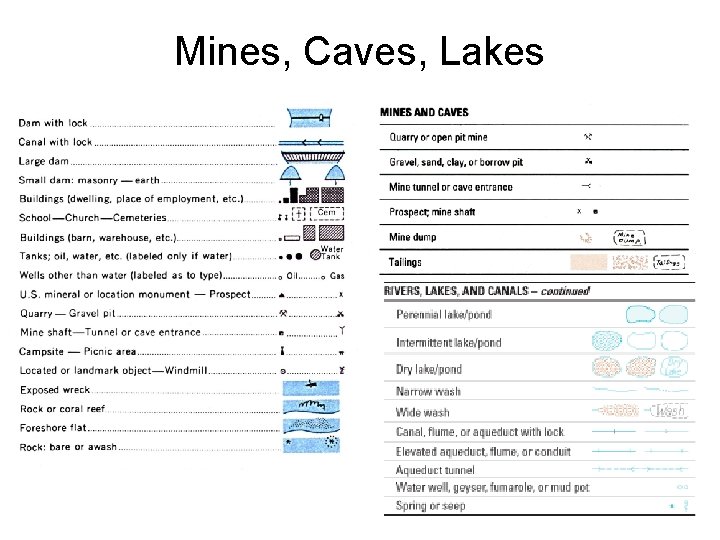
Mines, Caves, Lakes
- Slides: 16