
MAPS Earth Science Questions What do latitude lines
- Slides: 23
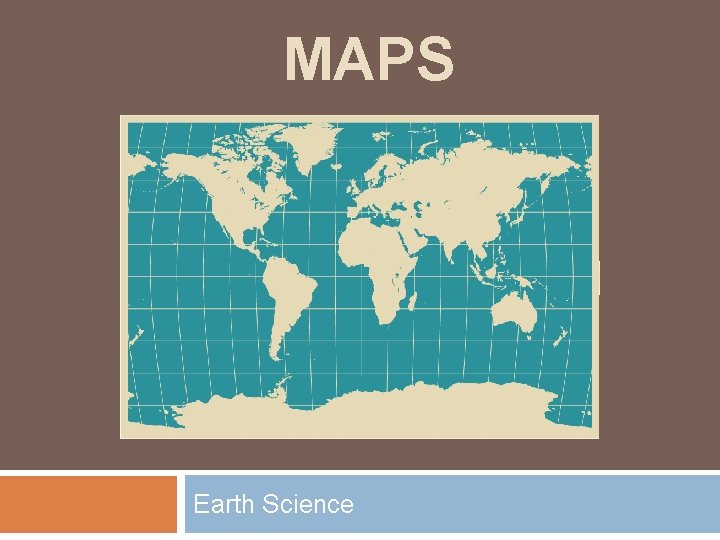
MAPS Earth Science
Questions. . . What do latitude lines measure? How do we number them? How high do they go? What is the starting point for latitude lines and what do we call it? What do Longitude lines measure? What is the starting point for longitude lines and what do we call it?
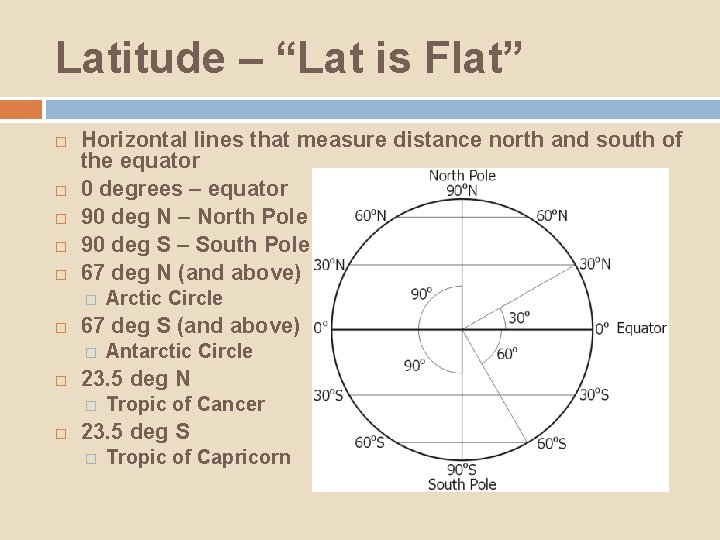
Latitude – “Lat is Flat” Horizontal lines that measure distance north and south of the equator 0 degrees – equator 90 deg N – North Pole 90 deg S – South Pole 67 deg N (and above) � 67 deg S (and above) � Antarctic Circle 23. 5 deg N � Arctic Circle Tropic of Cancer 23. 5 deg S � Tropic of Capricorn
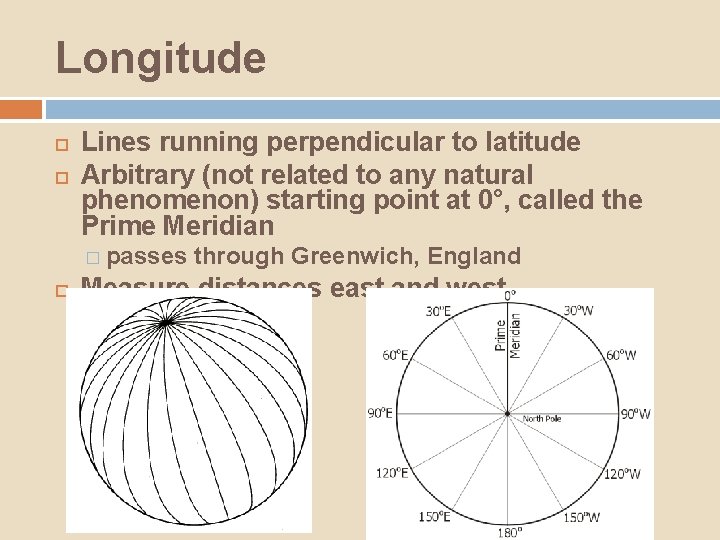
Longitude Lines running perpendicular to latitude Arbitrary (not related to any natural phenomenon) starting point at 0°, called the Prime Meridian � passes through Greenwich, England Measure distances east and west
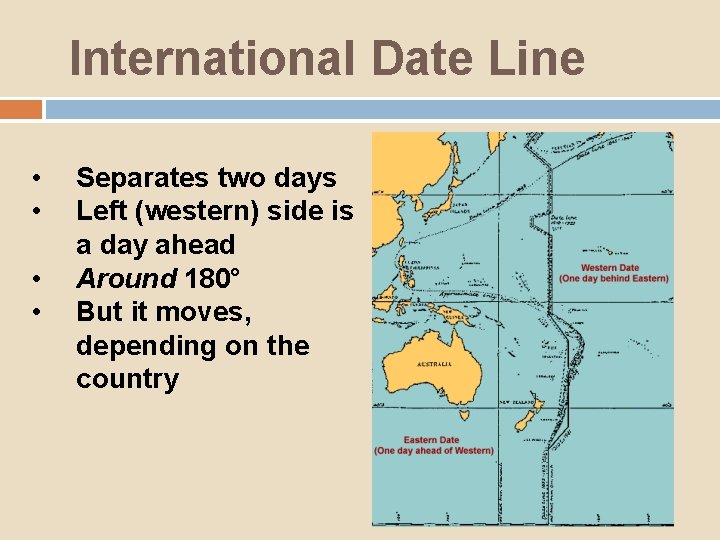
International Date Line • • Separates two days Left (western) side is a day ahead Around 180° But it moves, depending on the country
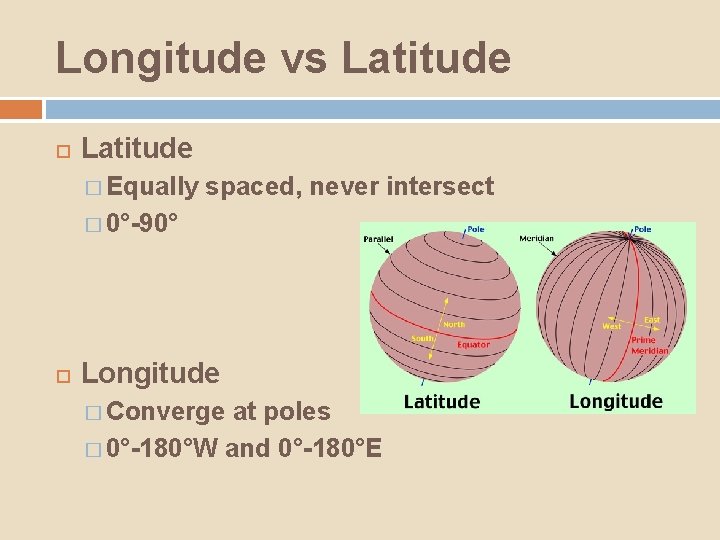
Longitude vs Latitude � Equally spaced, never intersect � 0°-90° Longitude � Converge at poles � 0°-180°W and 0°-180°E
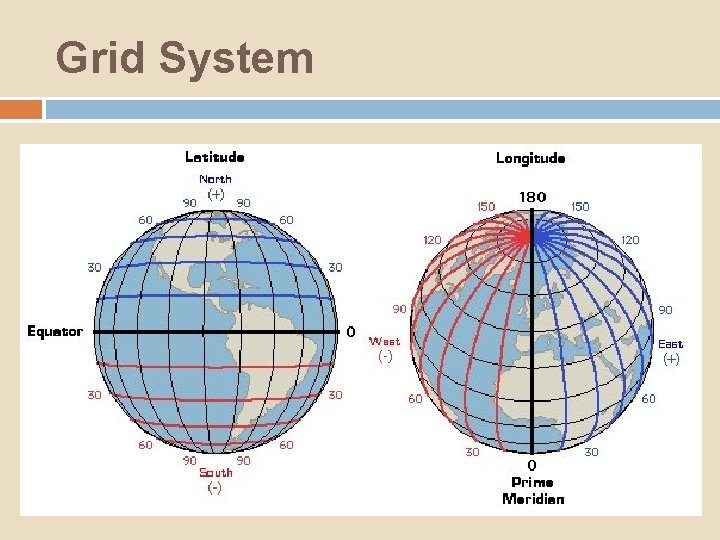
Grid System
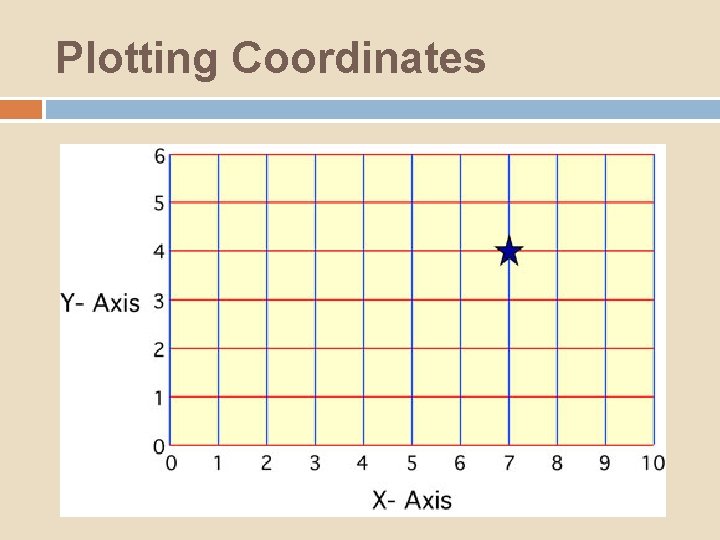
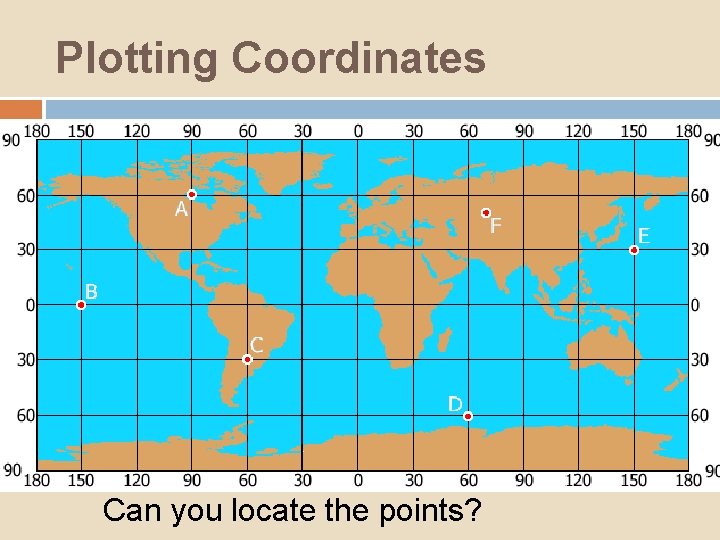
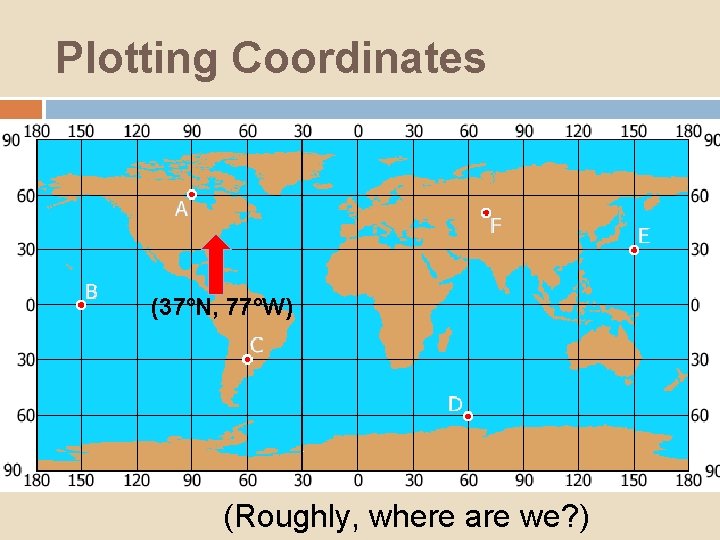
Plotting Coordinates
Plotting Coordinates Can you locate the points?
Plotting Coordinates (37°N, 77°W) (Roughly, where are we? )
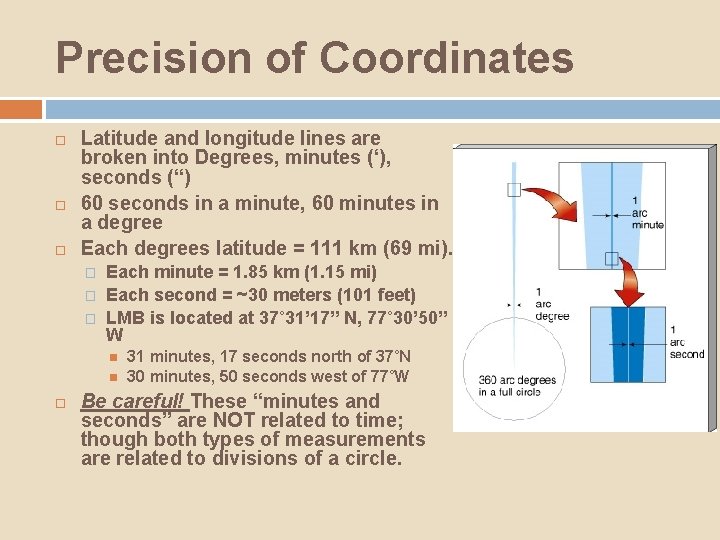
Precision of Coordinates Latitude and longitude lines are broken into Degrees, minutes (‘), seconds (“) 60 seconds in a minute, 60 minutes in a degree Each degrees latitude = 111 km (69 mi). � � � Each minute = 1. 85 km (1. 15 mi) Each second = ~30 meters (101 feet) LMB is located at 37˚ 31’ 17” N, 77˚ 30’ 50” W 31 minutes, 17 seconds north of 37˚N 30 minutes, 50 seconds west of 77˚W Be careful! These “minutes and seconds” are NOT related to time; though both types of measurements are related to divisions of a circle.
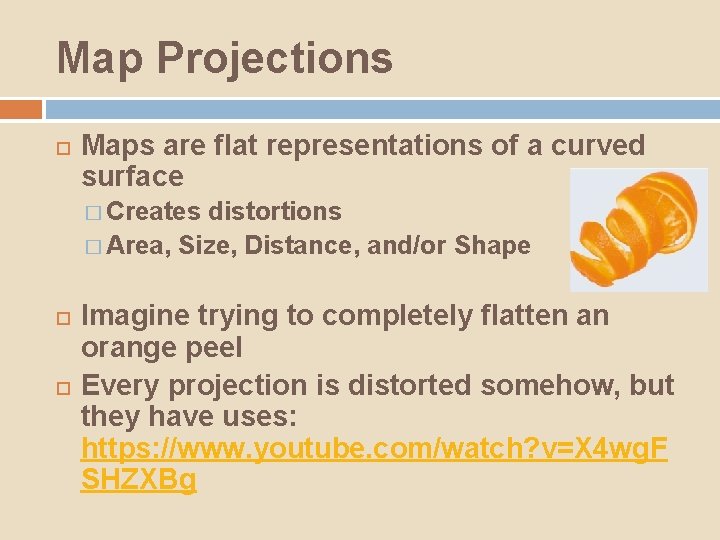
Map Projections Maps are flat representations of a curved surface � Creates distortions � Area, Size, Distance, and/or Shape Imagine trying to completely flatten an orange peel Every projection is distorted somehow, but they have uses: https: //www. youtube. com/watch? v=X 4 wg. F SHZXBg
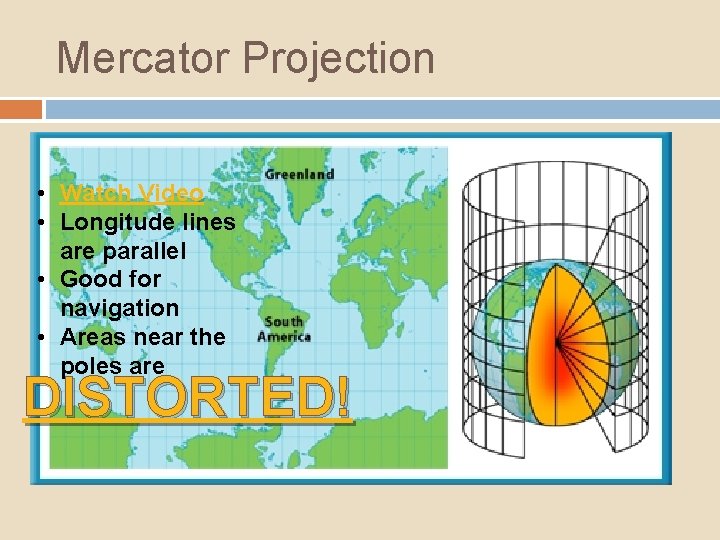
Mercator Projection • Watch Video • Longitude lines are parallel • Good for navigation • Areas near the poles are DISTORTED!
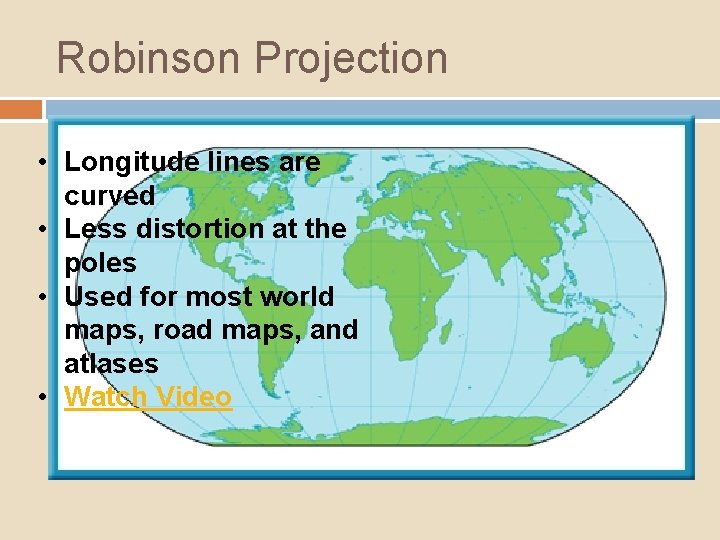
Robinson Projection • Longitude lines are curved • Less distortion at the poles • Used for most world maps, road maps, and atlases • Watch Video
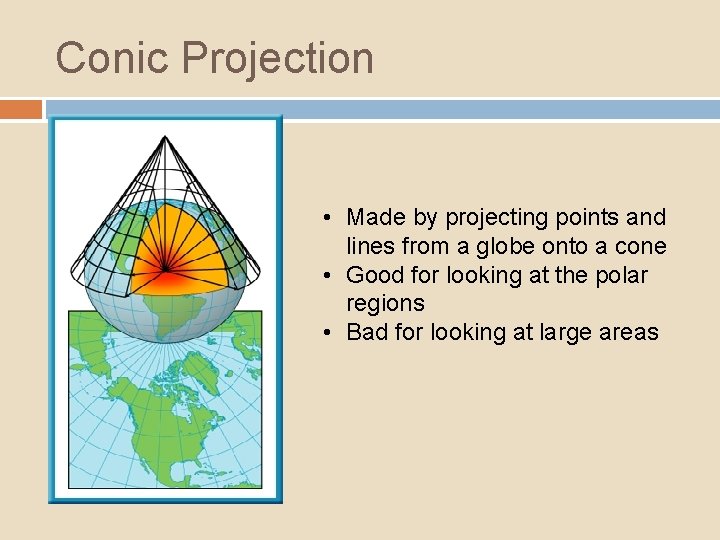
Conic Projection • Made by projecting points and lines from a globe onto a cone • Good for looking at the polar regions • Bad for looking at large areas
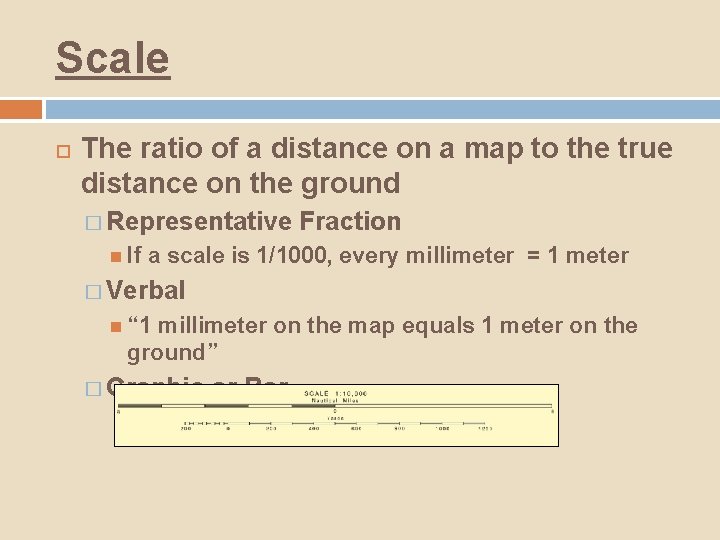
Scale The ratio of a distance on a map to the true distance on the ground � Representative If Fraction a scale is 1/1000, every millimeter = 1 meter � Verbal “ 1 millimeter on the map equals 1 meter on the ground” � Graphic or Bar
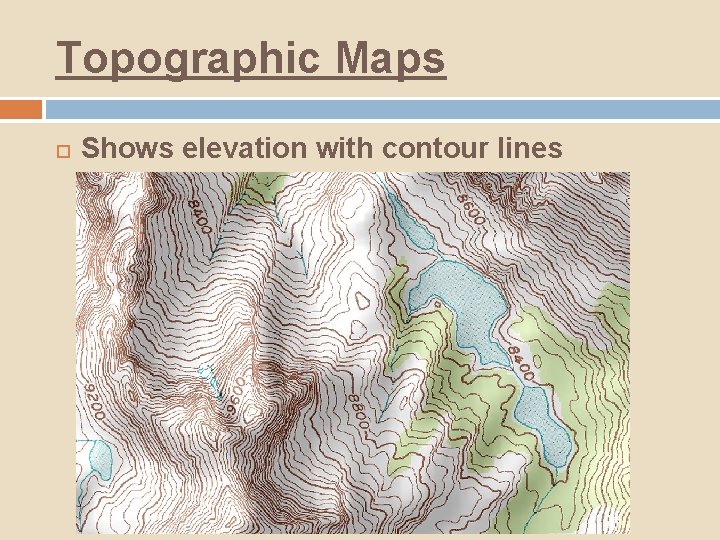
Topographic Maps Shows elevation with contour lines
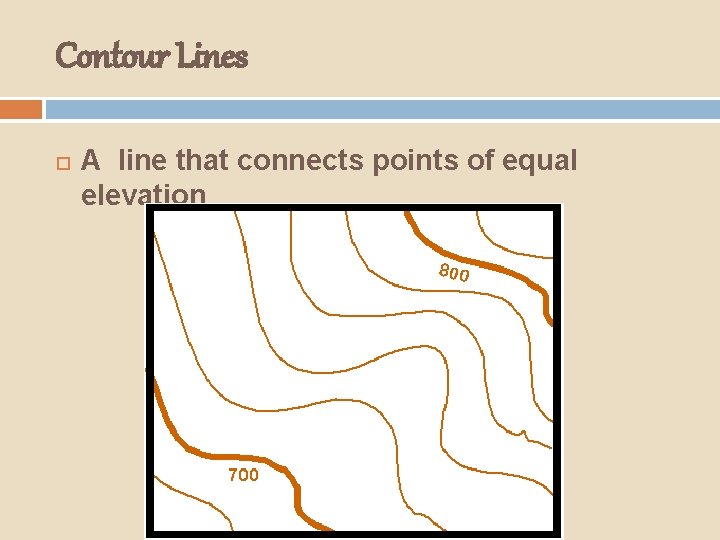
Contour Lines A line that connects points of equal elevation
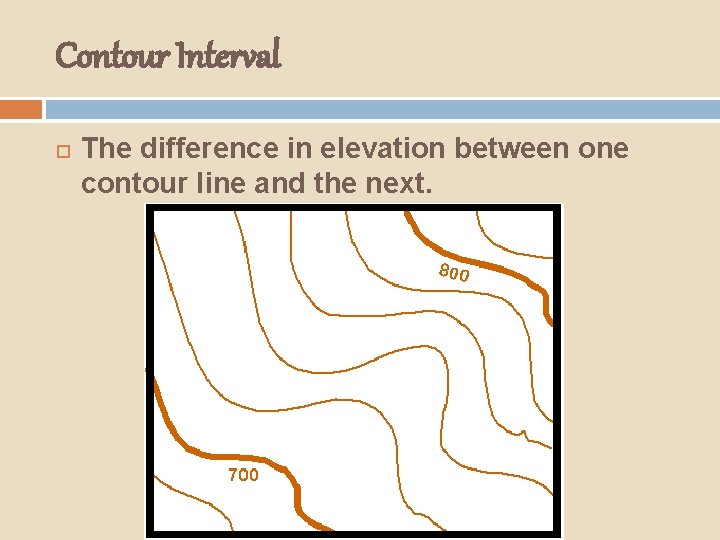
Contour Interval The difference in elevation between one contour line and the next.
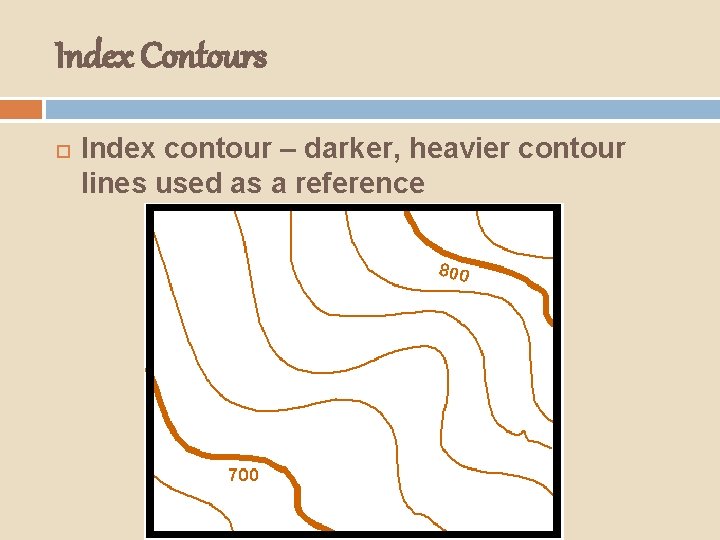
Index Contours Index contour – darker, heavier contour lines used as a reference
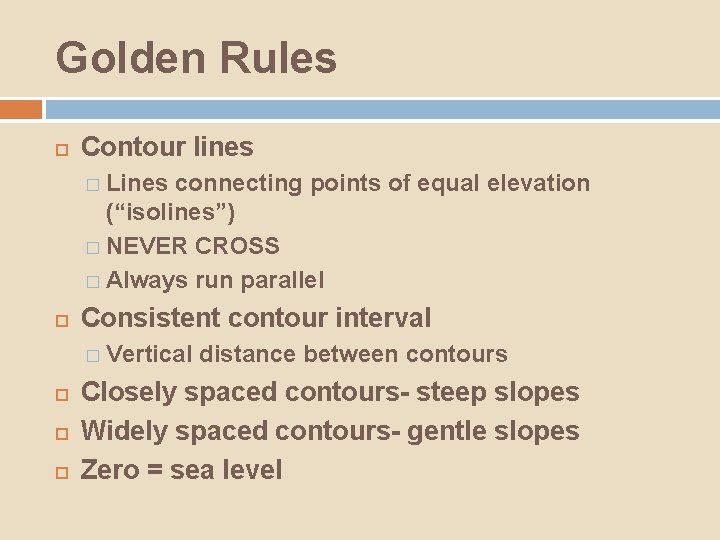
Golden Rules Contour lines � Lines connecting points of equal elevation (“isolines”) � NEVER CROSS � Always run parallel Consistent contour interval � Vertical distance between contours Closely spaced contours- steep slopes Widely spaced contours- gentle slopes Zero = sea level
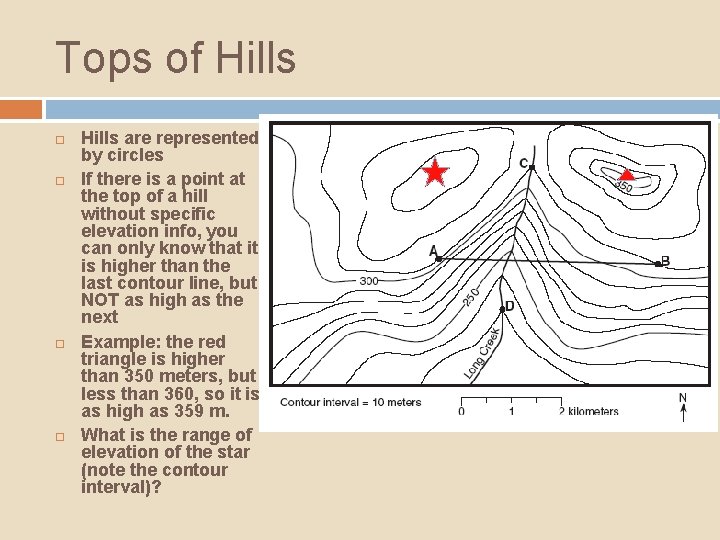
Tops of Hills are represented by circles If there is a point at the top of a hill without specific elevation info, you can only know that it is higher than the last contour line, but NOT as high as the next Example: the red triangle is higher than 350 meters, but less than 360, so it is as high as 359 m. What is the range of elevation of the star (note the contour interval)?
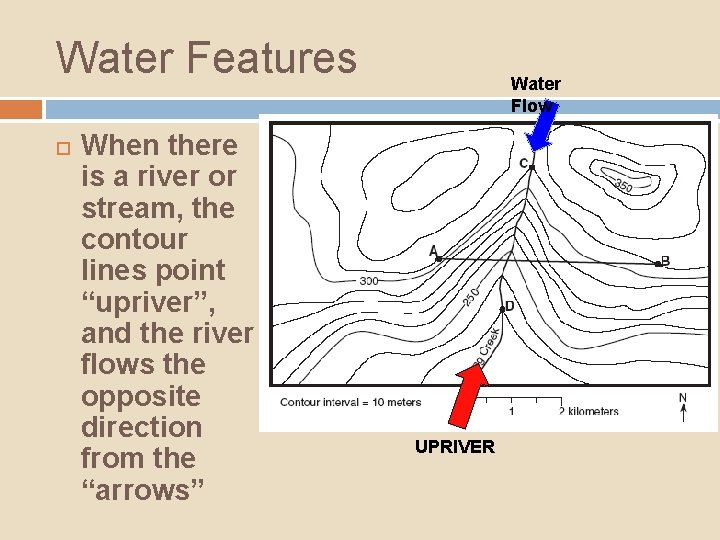
Water Features When there is a river or stream, the contour lines point “upriver”, and the river flows the opposite direction from the “arrows” Water Flow UPRIVER