
Maps and Regions Why do Geographers use Maps
- Slides: 21
Maps and Regions
Why do Geographers use Maps, and What do Maps Tell Us? Where in the World is North Korea? ?
Cartography The study and making of maps – Remote sensing – Captures images of Earth’s surface from airplanes or satellites – GPS – Global Positioning System- integrated network of satellites that orbit Earth constantly and broadcasts location information – GIS – Geographic Information Systems- software program that allows geographers to map, analyze, and model spatial data using thematic layers – Thematic layers – Layers of the Earth’s surface
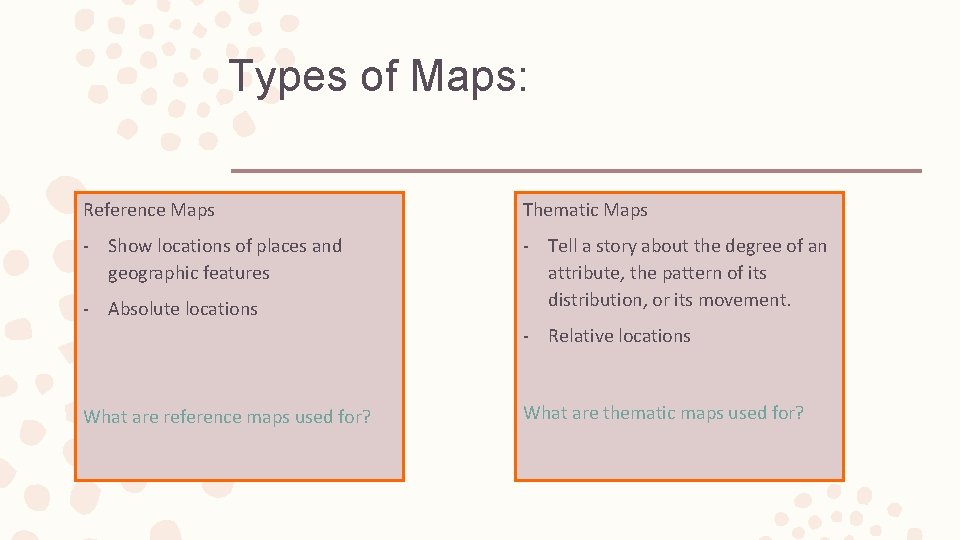
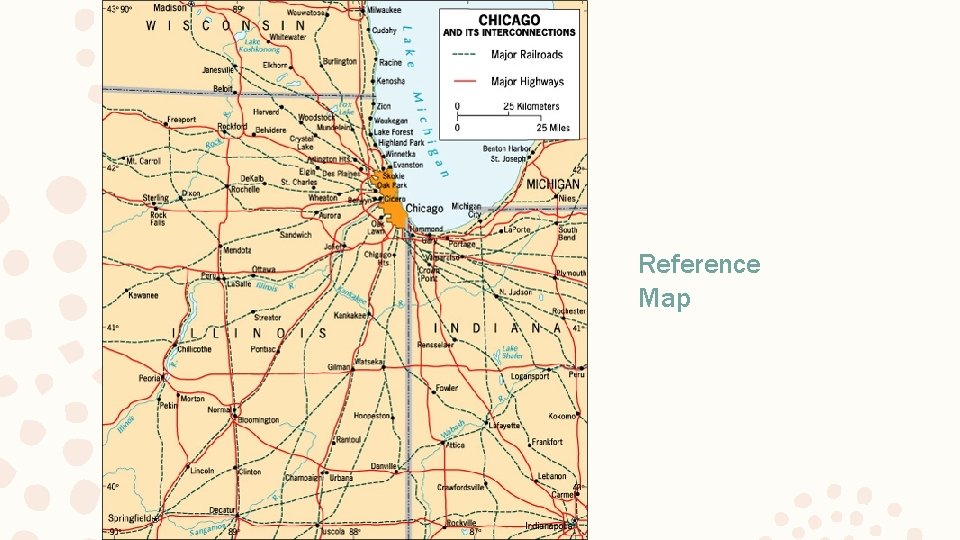
Types of Maps: Reference Maps Thematic Maps - Show locations of places and geographic features - Tell a story about the degree of an attribute, the pattern of its distribution, or its movement. - Absolute locations - Relative locations What are reference maps used for? What are thematic maps used for?
Reference Map
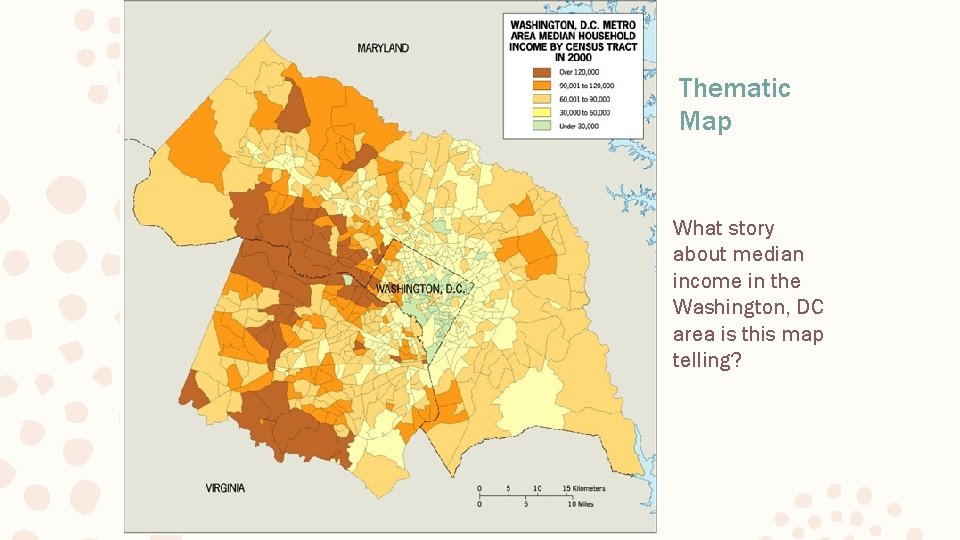
Thematic Map What story about median income in the Washington, DC area is this map telling?
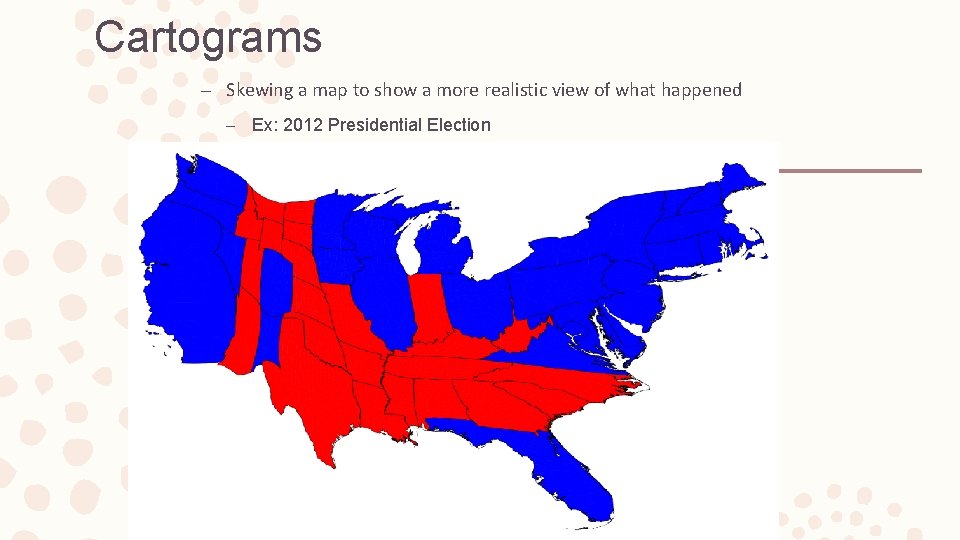
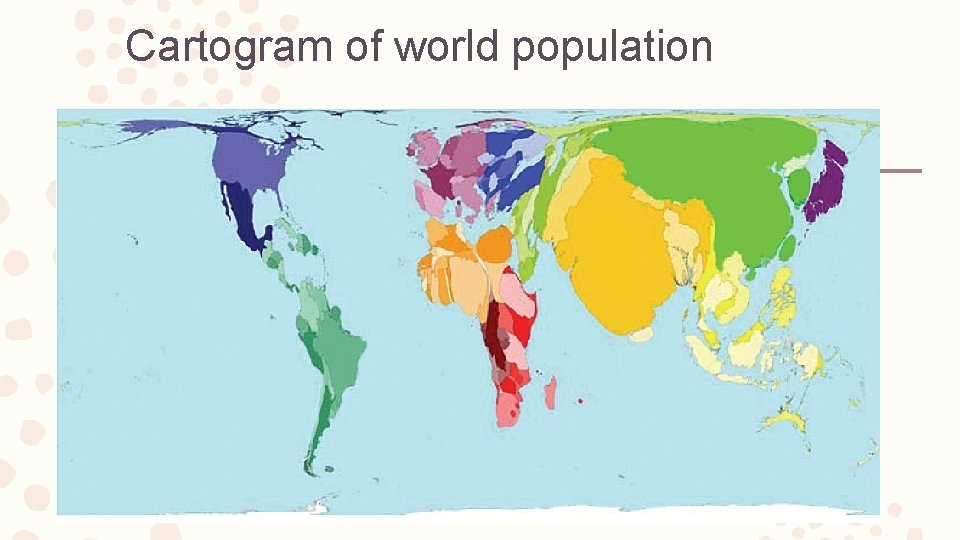
Cartograms – Skewing a map to show a more realistic view of what happened – Ex: 2012 Presidential Election
Cartogram of world population
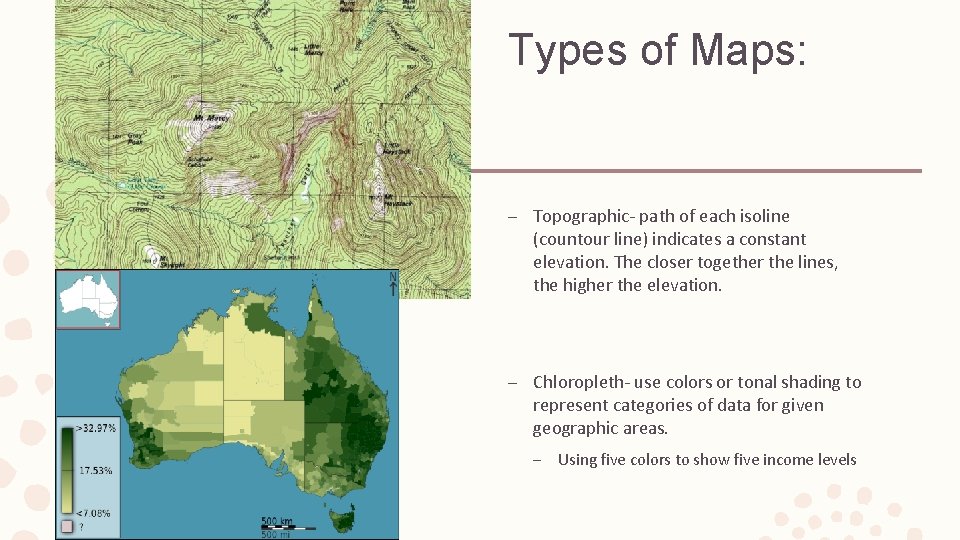
Types of Maps: – Topographic- path of each isoline (countour line) indicates a constant elevation. The closer together the lines, the higher the elevation. – Chloropleth- use colors or tonal shading to represent categories of data for given geographic areas. – Using five colors to show five income levels
Types of Maps – Cognitive- formed by people’s perceived information about their surroundings and then create a mental image – Very informative for how people interpret and understand places in which they live. – Aka mental maps – Preference- type of cognitive map that show people’s ideas about the environmental, social, or economic quality of life in various places – Both influenced by your sense of place
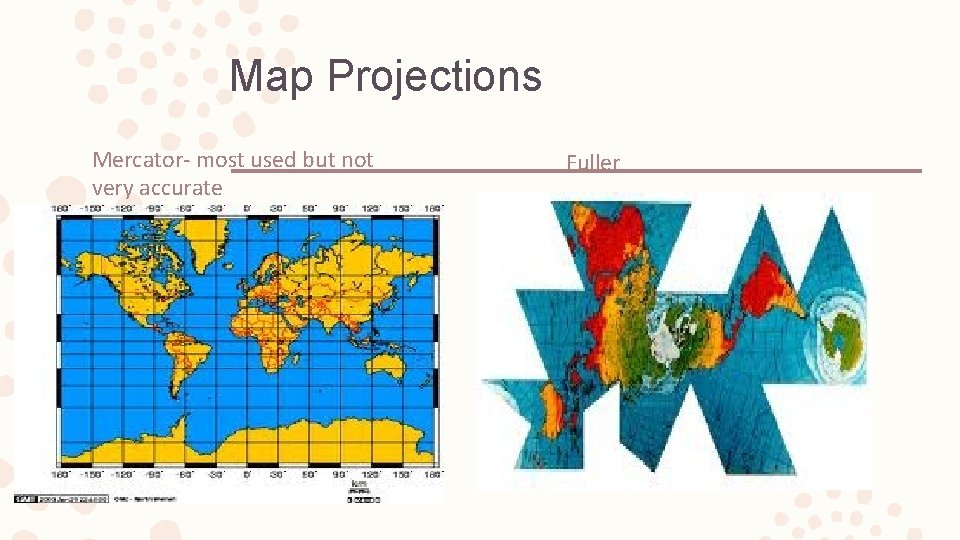
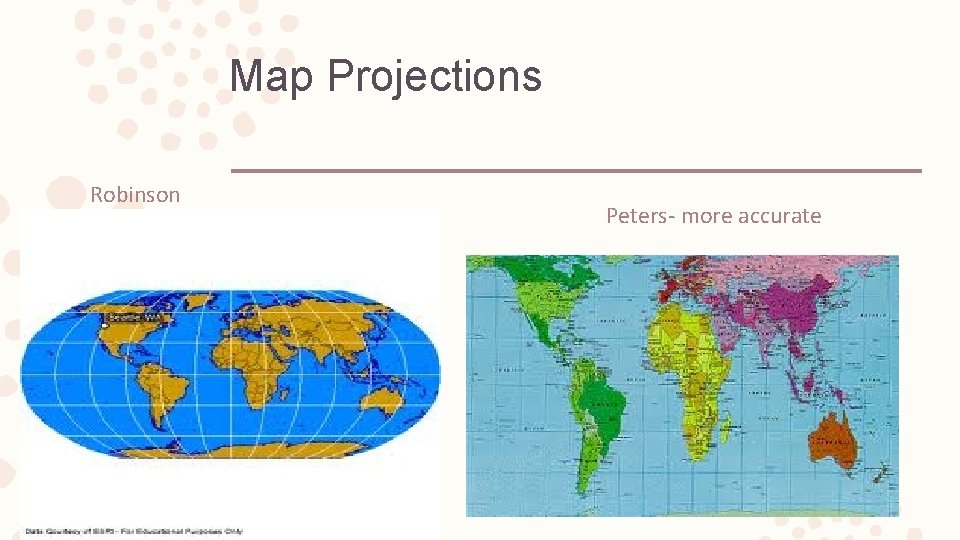
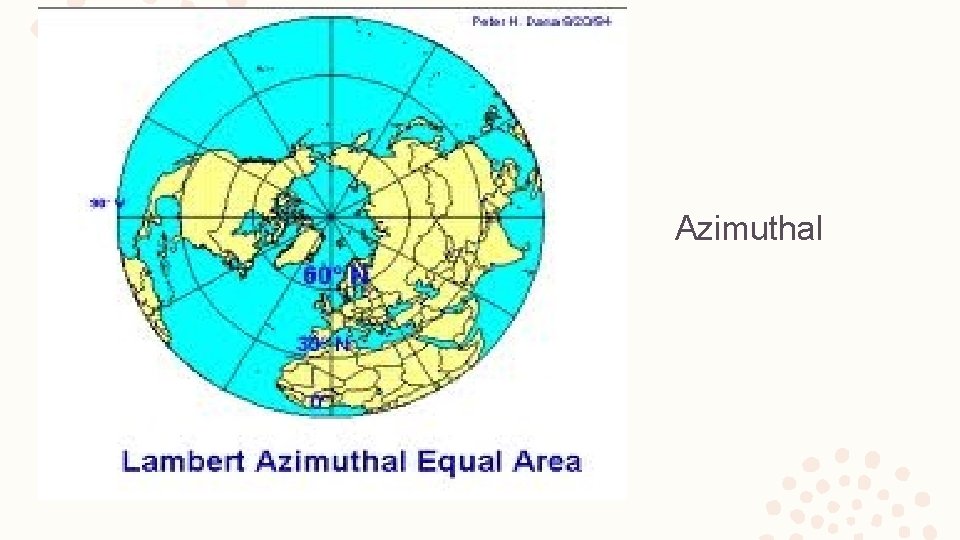
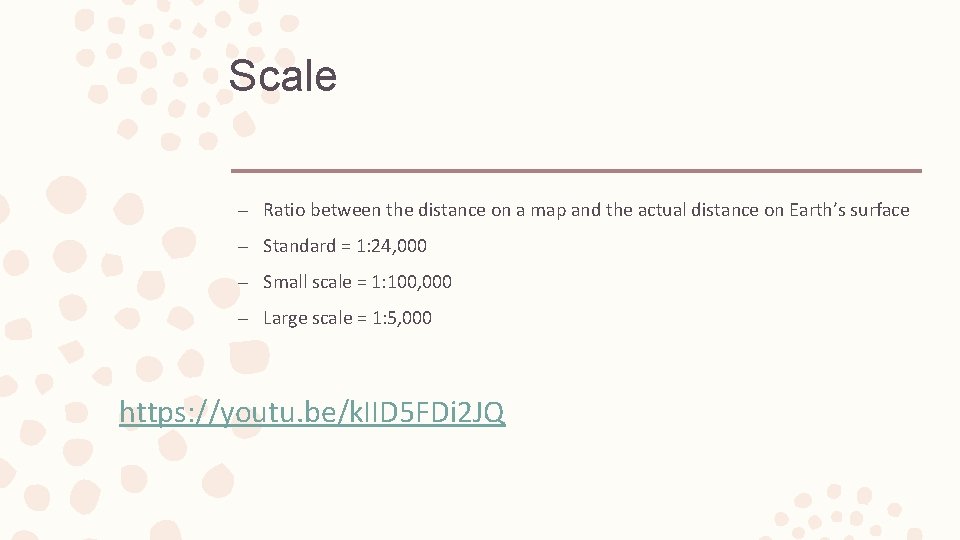
Projections Why are we changing maps? ! – Mercator- landmasses become amplified and larger closer to the poles – Fuller- maintains accurate size and shape of landmasses but rearranges direction – Robinson- attempts to balance projection errors and is aesthetically pleasing. – Frequently used by cartographers – Peters- equal-area projection centered on Africa – Azimuthal- north or south pole is in the center of the map, giving the impression that you’re looking down on the Earth
Map Projections Mercator- most used but not very accurate Fuller
Map Projections Robinson Peters- more accurate
Azimuthal
Scale – Ratio between the distance on a map and the actual distance on Earth’s surface – Standard = 1: 24, 000 – Small scale = 1: 100, 000 – Large scale = 1: 5, 000 https: //youtu. be/k. IID 5 FDi 2 JQ
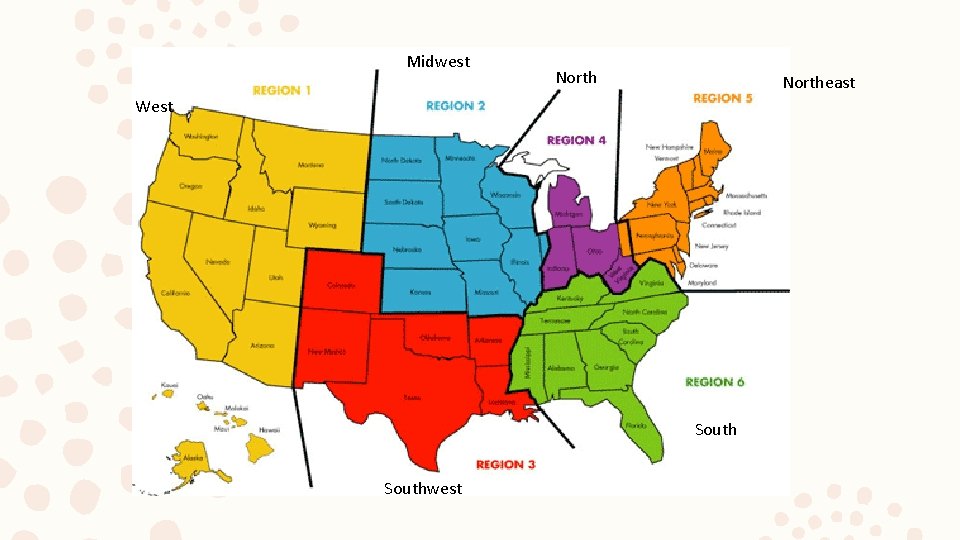
Region s World USA
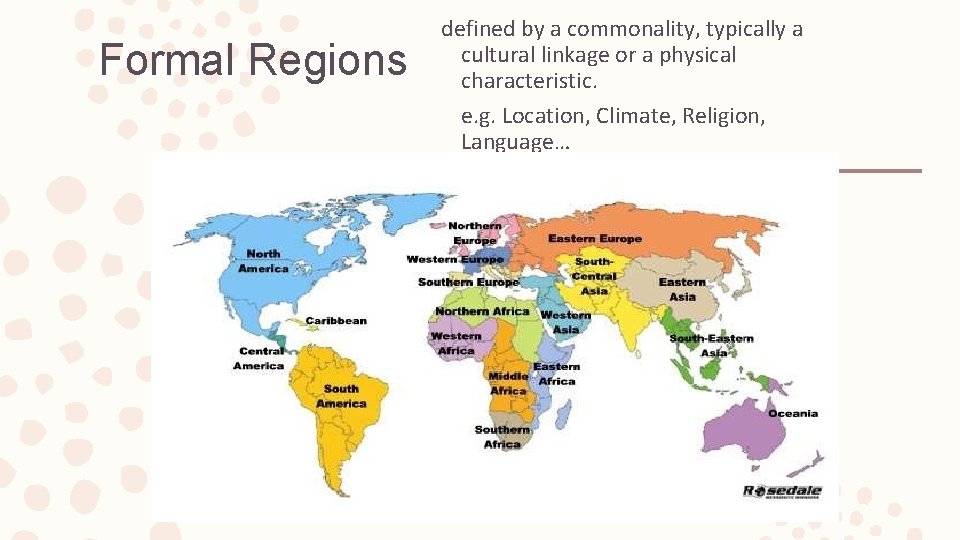
Formal Regions defined by a commonality, typically a cultural linkage or a physical characteristic. e. g. Location, Climate, Religion, Language…
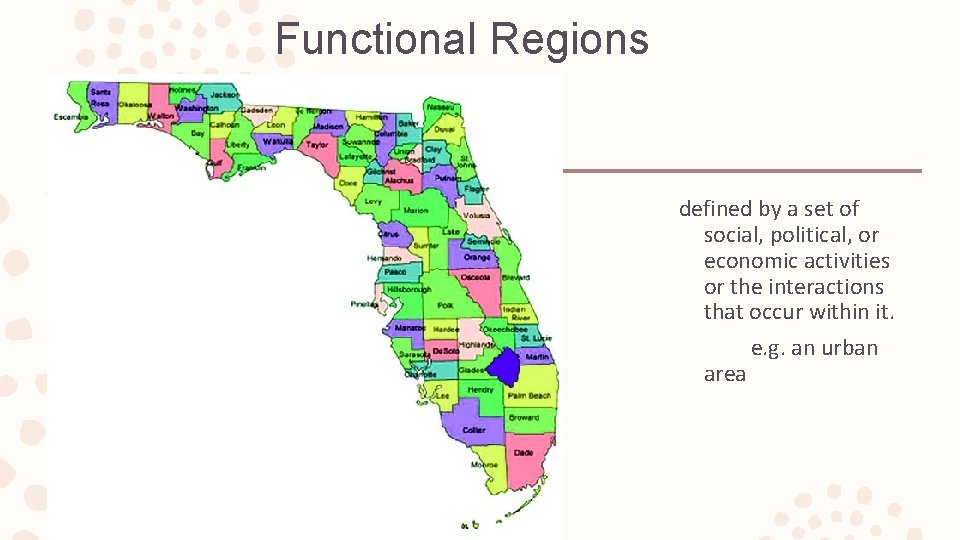
Functional Regions defined by a set of social, political, or economic activities or the interactions that occur within it. e. g. an urban area
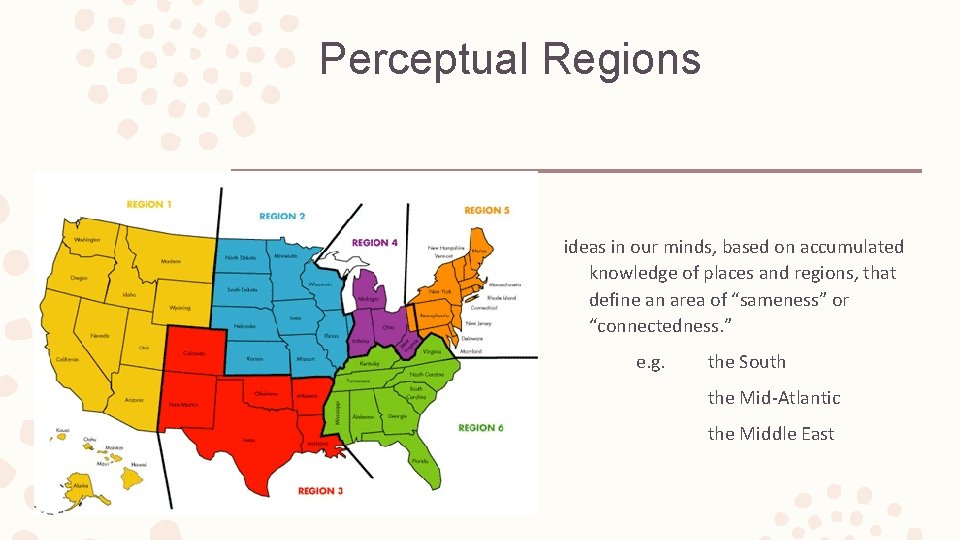
Perceptual Regions ideas in our minds, based on accumulated knowledge of places and regions, that define an area of “sameness” or “connectedness. ” e. g. the South the Mid-Atlantic the Middle East
Midwest Northeast West Southwest