
Mapping Tile Lines with Remote Sensing and GIS

- Slides: 17
Mapping Tile Lines with Remote Sensing and GIS Jim Giglierano Formerly with Iowa DNR - Geological and Water Survey Iowa State University jgiglie@iastate. edu
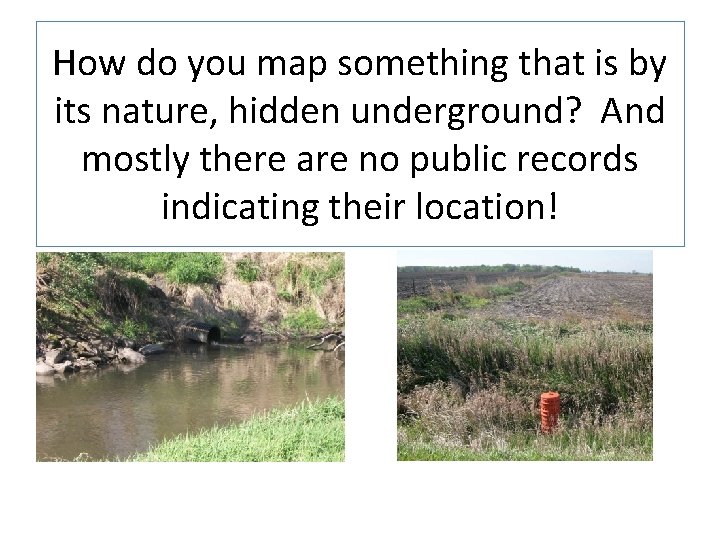
How do you map something that is by its nature, hidden underground? And mostly there are no public records indicating their location!
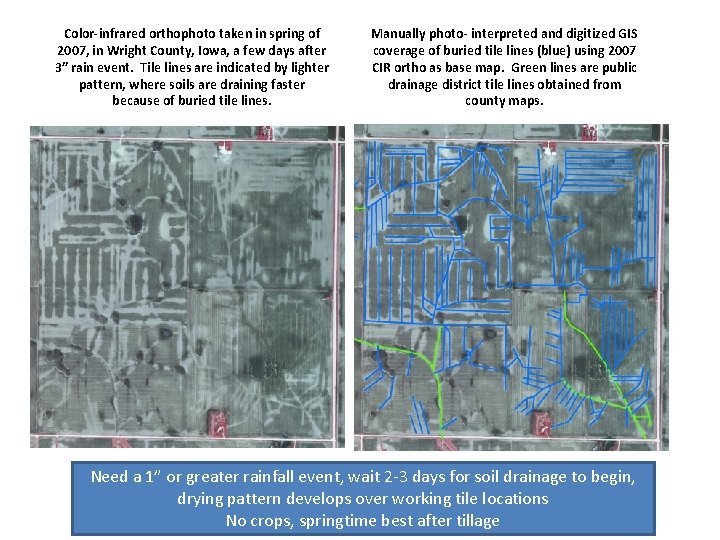
Color-infrared orthophoto taken in spring of 2007, in Wright County, Iowa, a few days after 3” rain event. Tile lines are indicated by lighter pattern, where soils are draining faster because of buried tile lines. Manually photo- interpreted and digitized GIS coverage of buried tile lines (blue) using 2007 CIR ortho as base map. Green lines are public drainage district tile lines obtained from county maps. Need a 1” or greater rainfall event, wait 2 -3 days for soil drainage to begin, drying pattern develops over working tile locations No crops, springtime best after tillage
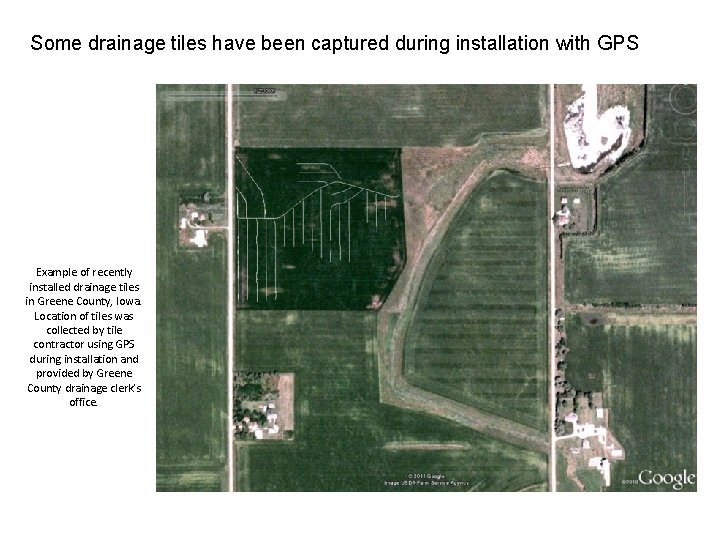
Some drainage tiles have been captured during installation with GPS Example of recently installed drainage tiles in Greene County, Iowa. Location of tiles was collected by tile contractor using GPS during installation and provided by Greene County drainage clerk’s office.
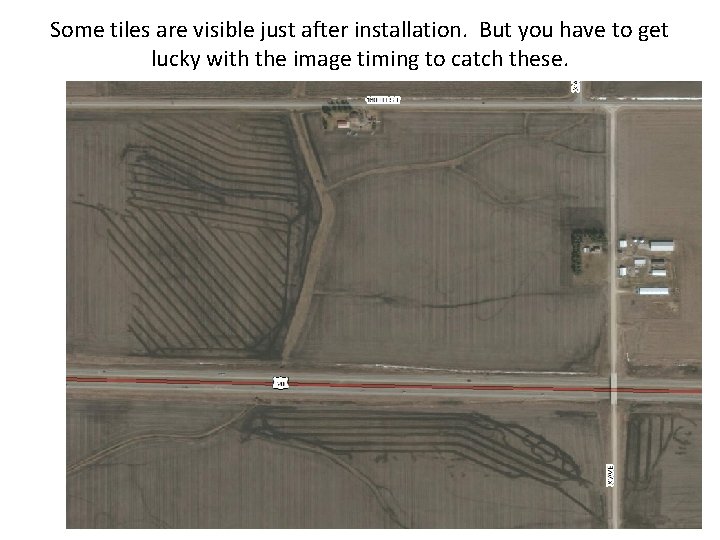
Some tiles are visible just after installation. But you have to get lucky with the image timing to catch these.
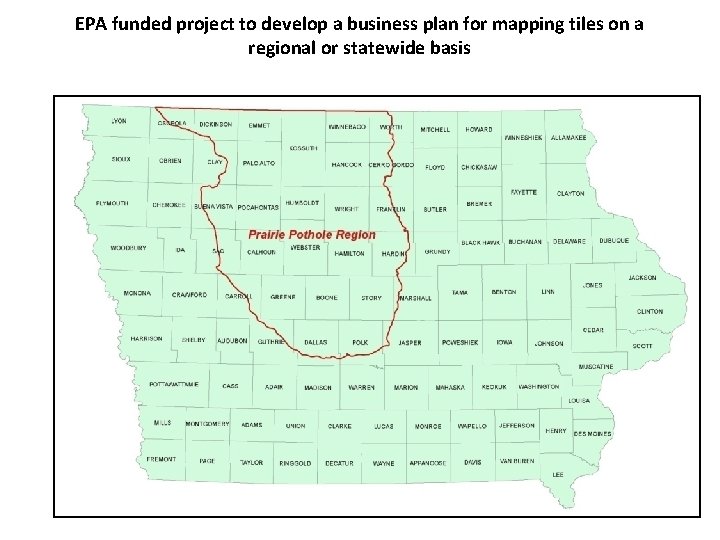
EPA funded project to develop a business plan for mapping tiles on a regional or statewide basis
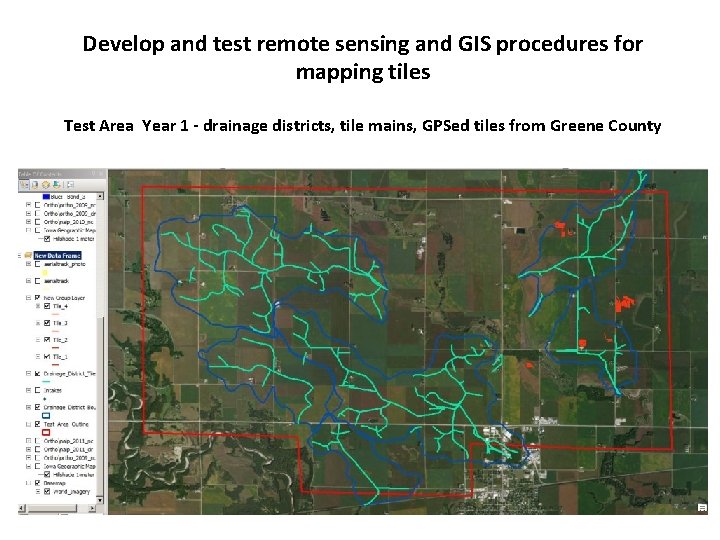
Develop and test remote sensing and GIS procedures for mapping tiles Test Area Year 1 - drainage districts, tile mains, GPSed tiles from Greene County
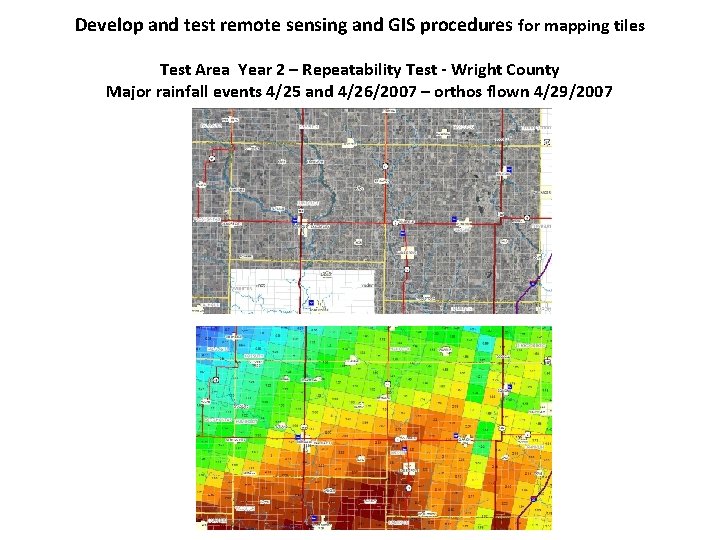
Develop and test remote sensing and GIS procedures for mapping tiles Test Area Year 2 – Repeatability Test - Wright County Major rainfall events 4/25 and 4/26/2007 – orthos flown 4/29/2007
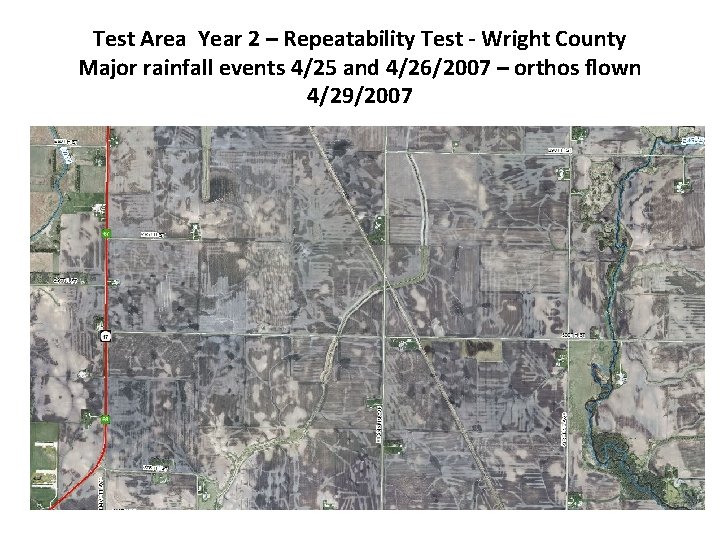
Test Area Year 2 – Repeatability Test - Wright County Major rainfall events 4/25 and 4/26/2007 – orthos flown 4/29/2007
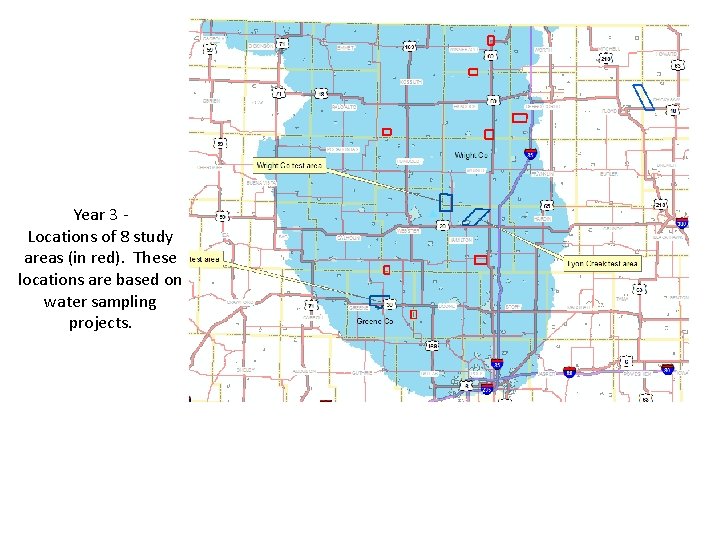
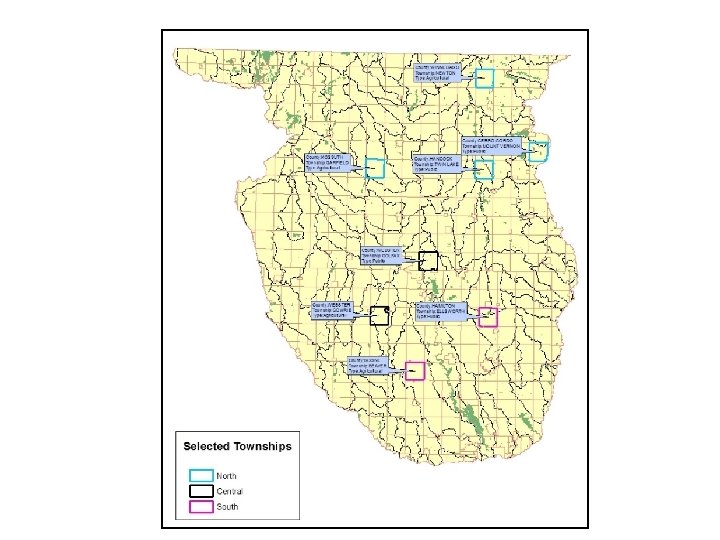
Year 3 Locations of 8 study areas (in red). These locations are based on water sampling projects.
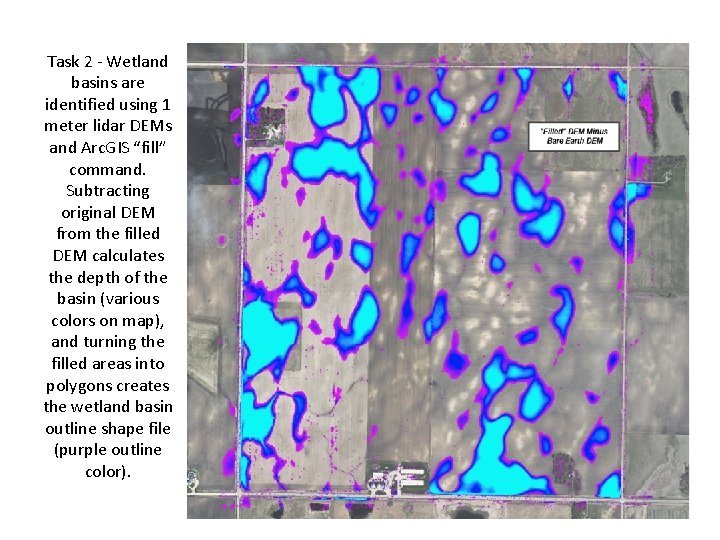
Task 2 - Wetland basins are identified using 1 meter lidar DEMs and Arc. GIS “fill” command. Subtracting original DEM from the filled DEM calculates the depth of the basin (various colors on map), and turning the filled areas into polygons creates the wetland basin outline shape file (purple outline color).
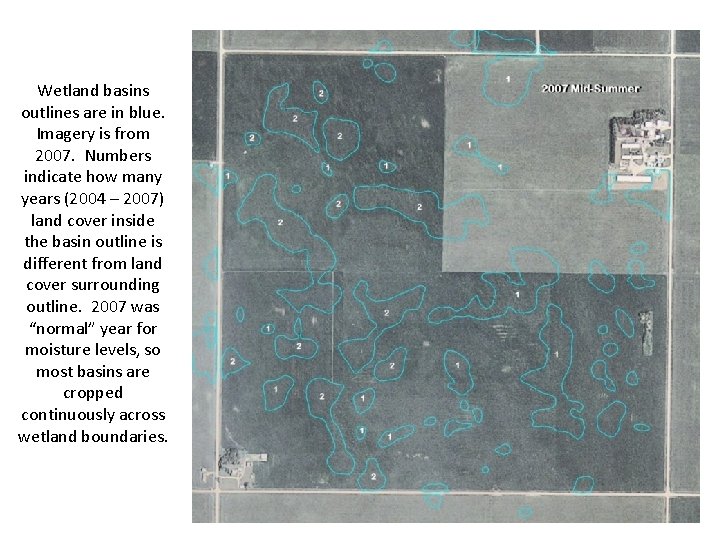
Wetland basins outlines are in blue. Imagery is from 2007. Numbers indicate how many years (2004 – 2007) land cover inside the basin outline is different from land cover surrounding outline. 2007 was “normal” year for moisture levels, so most basins are cropped continuously across wetland boundaries.
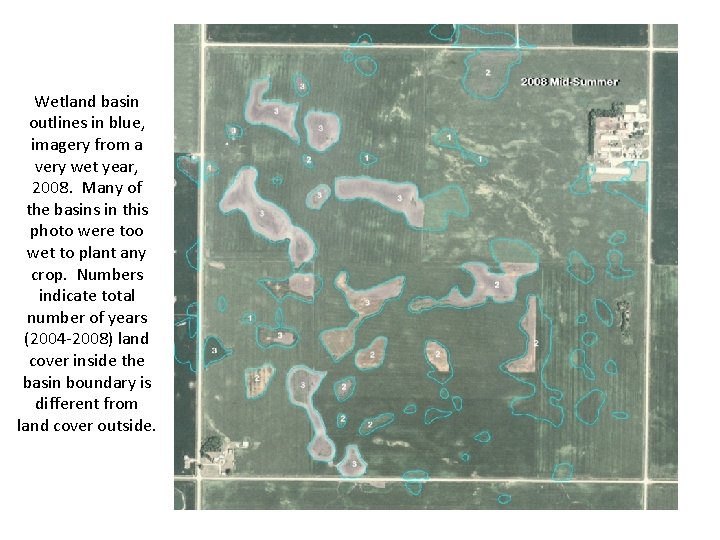
Wetland basin outlines in blue, imagery from a very wet year, 2008. Many of the basins in this photo were too wet to plant any crop. Numbers indicate total number of years (2004 -2008) land cover inside the basin boundary is different from land cover outside.
Go to Arc. GIS
Questions? Jim Giglierano jgiglie@iastate. edu