
MAPPING THE PSALMS LESSON TWO A BOOK OF
MAPPING THE PSALMS LESSON TWO: A BOOK OF POETRY
The Book of Psalms is a book of poetry.
When you and I think of poetry, we think of rhyming words.
“TREES” by Alfred Joyce Kilmer When you and I think of poetry, we think of rhyming words. I think that I shall never see A poem lovely as a tree. A tree whose hungry mouth is pressed Against the earth’s sweet flowing breast; A tree that looks at God all day, And lifts her leafy arms to pray; A tree that may in Summer wear A nest of robins in her hair; Upon whose bosom snow has lain; Who intimately lives with rain. Poems are made by fools like me, But only God can make a tree.
When you and I think of poetry, we think of rhyming words. In biblical poetry, we see rhyming ideas – things that are the same, or things that are opposites.

Comparing things that are the SAME: In a SYNONYMOUS parallel, one idea is presented two complementary ways: In Proverbs 12: 28, we see the same truth stated two different ways: In the way of righteousness is life; and in the pathway thereof there is no death.
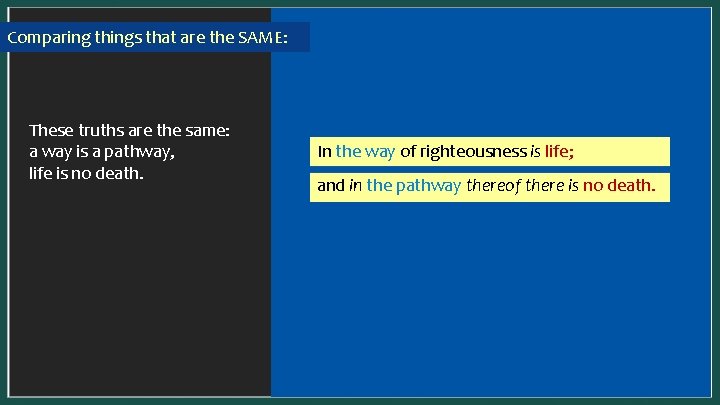
Comparing things that are the SAME: In a SYNONYMOUS parallel, one idea is presented two complementary ways: These truths are the same: a way is a pathway, life is no death. In the way of righteousness is life; and in the pathway thereof there is no death.
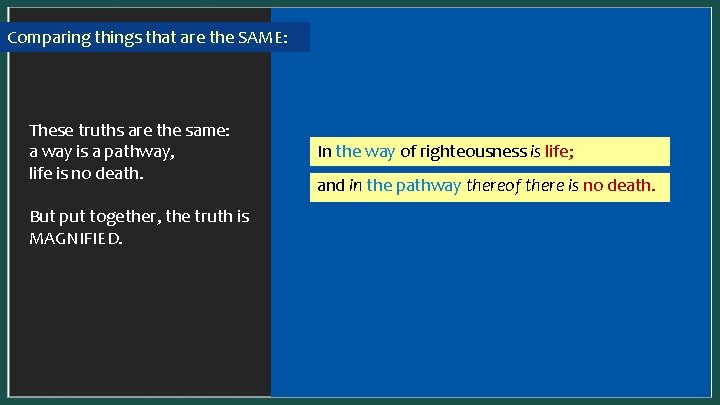
Comparing things that are the SAME: In a SYNONYMOUS parallel, one idea is presented two complementary ways: These truths are the same: a way is a pathway, life is no death. But put together, the truth is MAGNIFIED. In the way of righteousness is life; and in the pathway thereof there is no death.
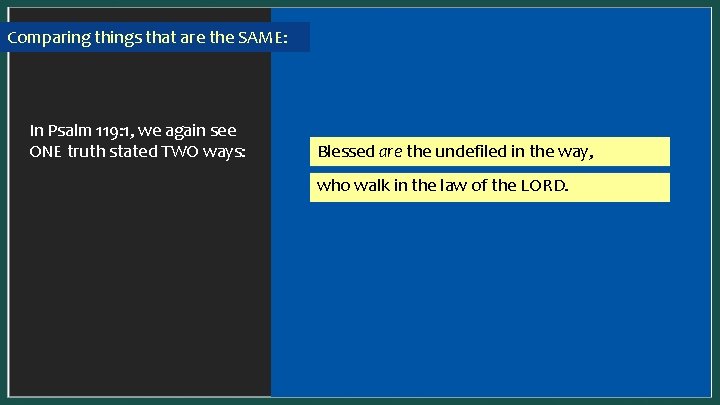
Comparing things that are the SAME: In a SYNONYMOUS parallel, one idea is presented two complementary ways: In Psalm 119: 1, we again see ONE truth stated TWO ways: Blessed are the undefiled in the way, who walk in the law of the LORD.
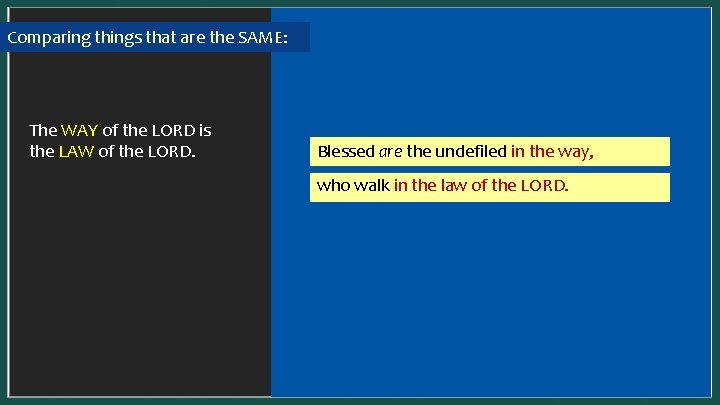
Comparing things that are the SAME: In a SYNONYMOUS parallel, one idea is presented two complementary ways: The WAY of the LORD is the LAW of the LORD. Blessed are the undefiled in the way, who walk in the law of the LORD.
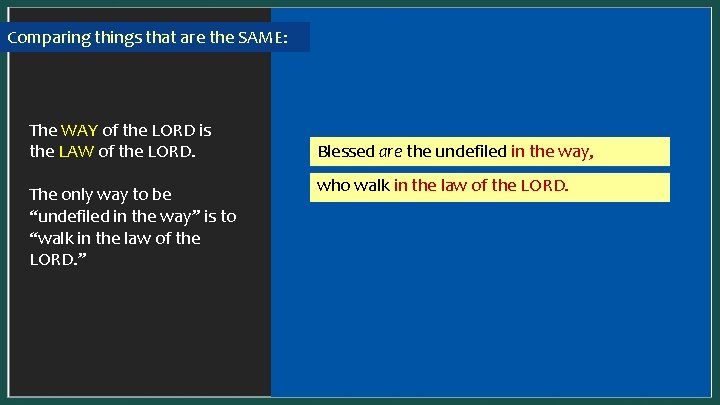
Comparing things that are the SAME: In a SYNONYMOUS parallel, one idea is presented two complementary ways: The WAY of the LORD is the LAW of the LORD. The only way to be “undefiled in the way” is to “walk in the law of the LORD. ” Blessed are the undefiled in the way, who walk in the law of the LORD.
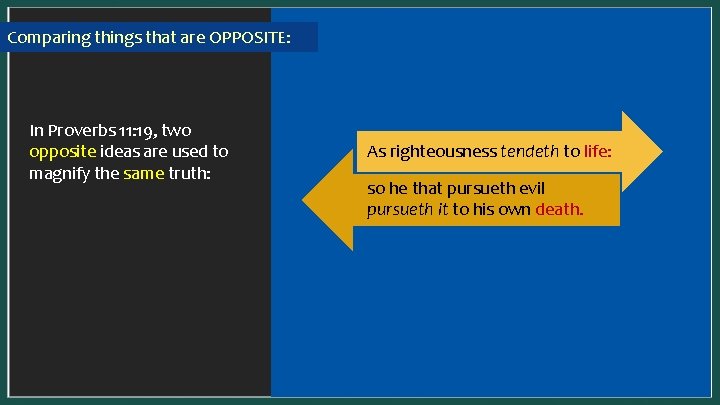
Comparing things that are OPPOSITE: In a SYNONYMOUS parallel, one idea is presented two complementary ways: In Proverbs 11: 19, two opposite ideas are used to magnify the same truth: As righteousness tendeth to life: so he that pursueth evil pursueth it to his own death.
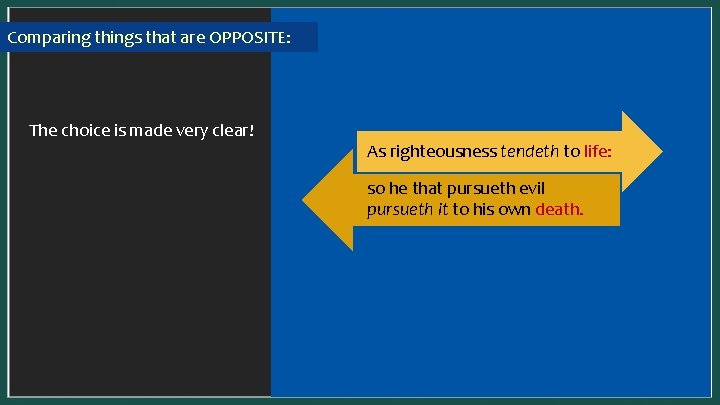
Comparing things that are OPPOSITE: In a SYNONYMOUS parallel, one idea is presented two complementary ways: The choice is made very clear! As righteousness tendeth to life: so he that pursueth evil pursueth it to his own death.
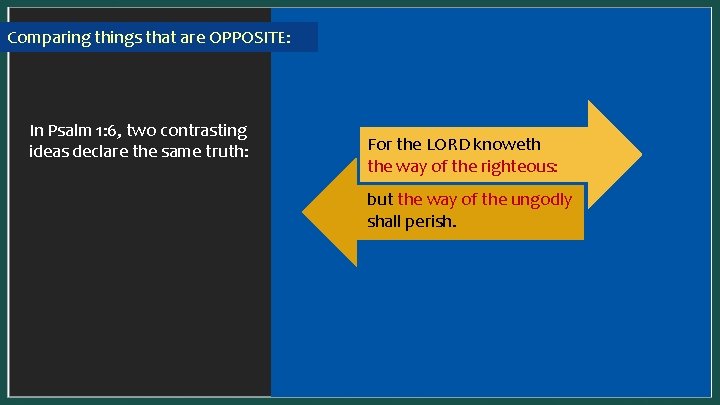
Comparing things that are OPPOSITE: In a SYNONYMOUS parallel, one idea is presented two complementary ways: In Psalm 1: 6, two contrasting ideas declare the same truth: For the LORD knoweth the way of the righteous: but the way of the ungodly shall perish.
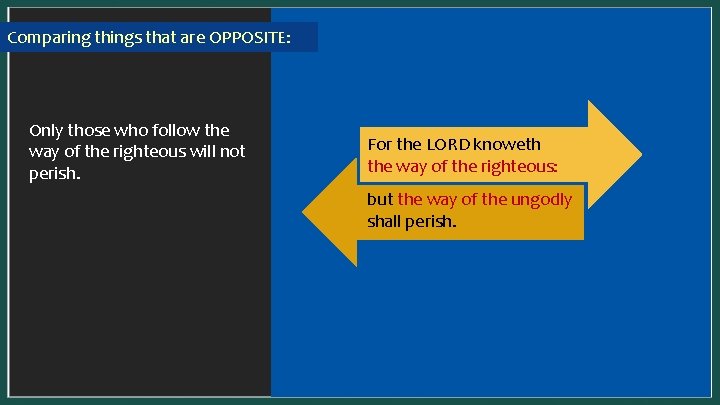
Comparing things that are OPPOSITE: In a SYNONYMOUS parallel, one idea is presented two complementary ways: Only those who follow the way of the righteous will not perish. For the LORD knoweth the way of the righteous: but the way of the ungodly shall perish.
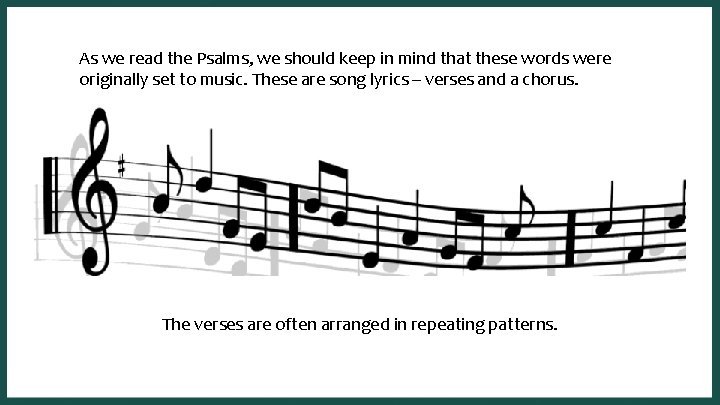
In a SYNONYMOUS parallel, one is keep in mind that these words were As we read the Psalms, weidea should presented two complementary ways: are song lyrics – verses and a chorus. originally set to music. These The verses are often arranged in repeating patterns.
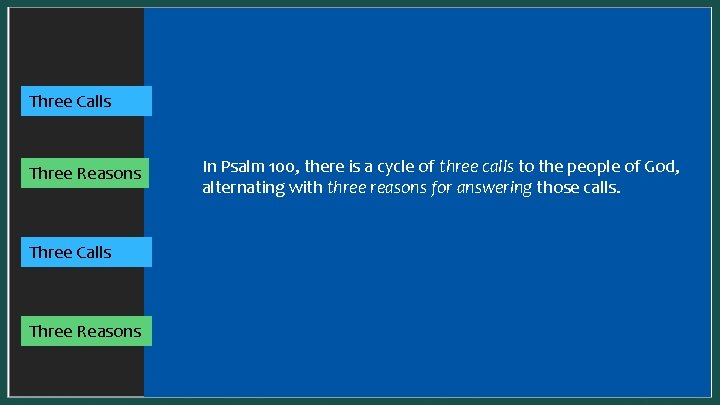
In a SYNONYMOUS parallel, one idea is presented two complementary ways: Three Calls Three Reasons In Psalm 100, there is a cycle of three calls to the people of God, alternating with three reasons for answering those calls.
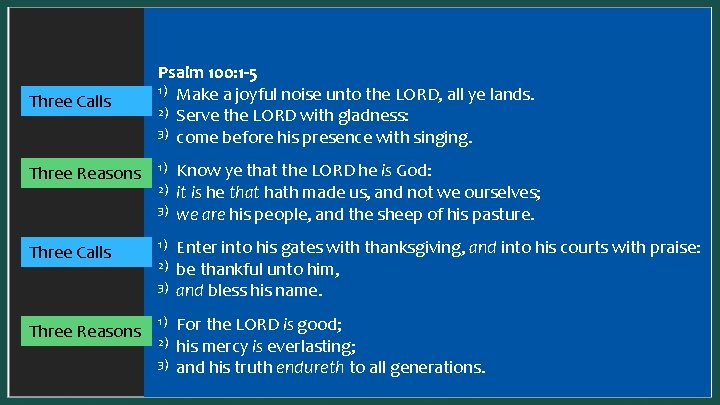
In a SYNONYMOUS parallel, one idea is presented two complementary Psalm 100: 1 -5 ways: 1) Make a joyful noise unto the LORD, all ye lands. Three Calls 2) Serve the LORD with gladness: 3) come before his presence with singing. Three Reasons 1) 2) 3) Three Calls 1) 2) 3) Three Reasons 1) 2) 3) Know ye that the LORD he is God: it is he that hath made us, and not we ourselves; we are his people, and the sheep of his pasture. Enter into his gates with thanksgiving, and into his courts with praise: be thankful unto him, and bless his name. For the LORD is good; his mercy is everlasting; and his truth endureth to all generations.
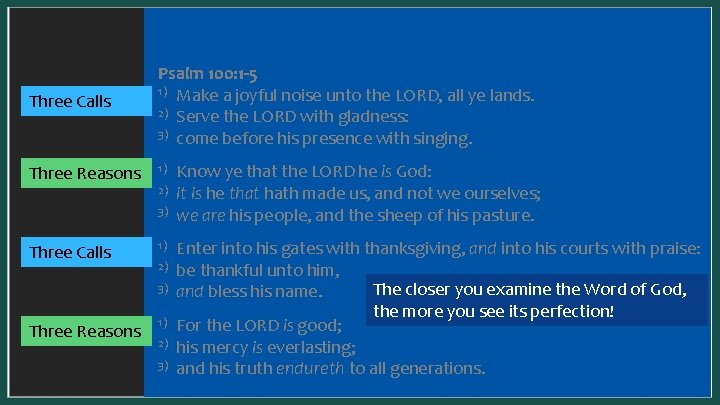
In a SYNONYMOUS parallel, one idea is presented two complementary Psalm 100: 1 -5 ways: 1) Make a joyful noise unto the LORD, all ye lands. Three Calls 2) Serve the LORD with gladness: 3) come before his presence with singing. Three Reasons 1) 2) 3) Three Calls 1) 2) 3) Three Reasons 1) 2) 3) Know ye that the LORD he is God: it is he that hath made us, and not we ourselves; we are his people, and the sheep of his pasture. Enter into his gates with thanksgiving, and into his courts with praise: be thankful unto him, The closer you examine the Word of God, and bless his name. the more you see its perfection! For the LORD is good; his mercy is everlasting; and his truth endureth to all generations.
The Bible uses words to paint pictures that will help us to better understand the mysteries of God.
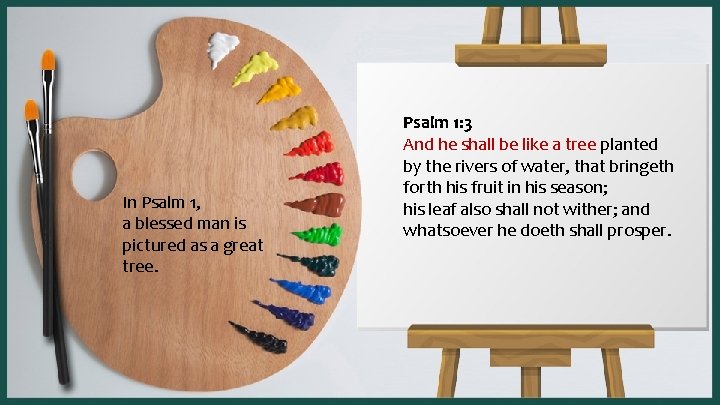
In Psalm 1, a blessed man is pictured as a great tree. Psalm 1: 3 And he shall be like a tree planted by the rivers of water, that bringeth forth his fruit in his season; his leaf also shall not wither; and whatsoever he doeth shall prosper.
In Psalm 84, God is painted as a SUN and SHIELD. Psalm 84: 11 For the LORD God is a sun and shield: the LORD will give grace and glory: no good thing will he withhold from them that walk uprightly.
God is a Spirit. A spirit has no flesh or bones (Jn 4: 24; Lk 24: 39). But just to help us know him better, the Bible often paints God with the characteristics of a man. Psalm 34: 15 The eyes of the LORD are upon the righteous, and his ears are open unto their cry.
The ways of God are even painted with features we see in animals! Psalm 91: 4 He shall cover thee with his feathers, and under his wings shalt thou trust: his truth shall be thy shield and buckler.
All learning is done by COMPARISION. God compares himself to things we know so we can understand him better. This helps us to get a picture of “the invisible God” (Col 1: 15).
The glory of God is not only seen in WHAT is written in the Bible, but also in HOW it is written. We will look for both in our quest to Map the Psalms.
Questions to test yourparallel, understanding: In a SYNONYMOUS one idea is presented two complementary ways: 1. Psalm 119: 1 teaches about the way of God by comparing two things that are (a) the same, or (b) different. What are the two things? 2. Psalm 1: 6 teaches about the way of God by comparing two things that are (a) the same, or (b) different. What are the two things? 3. In Psalm 100, what are the six reasons we should answer God’s call? 4. What are the four things seen in nature that are used to describe a blessed man in Psalm 1: 3? 5. Does God have eyes, ears, and feathers? Why is he described this way? EACH QUESTION IS WORTH 20 POINTS.
- Slides: 28