
Mapping the Cognitive Landscape of Productivity in Northern





- Slides: 26
Mapping the Cognitive Landscape of Productivity in Northern Ireland: A Systems Approach to Understanding Productivity Policy Jen Nelles (PIN/Sheffield University/CUNY) j. nelles@sheffield. ac. uk @jen_nelles CECAN Webinar, 12 February 2020
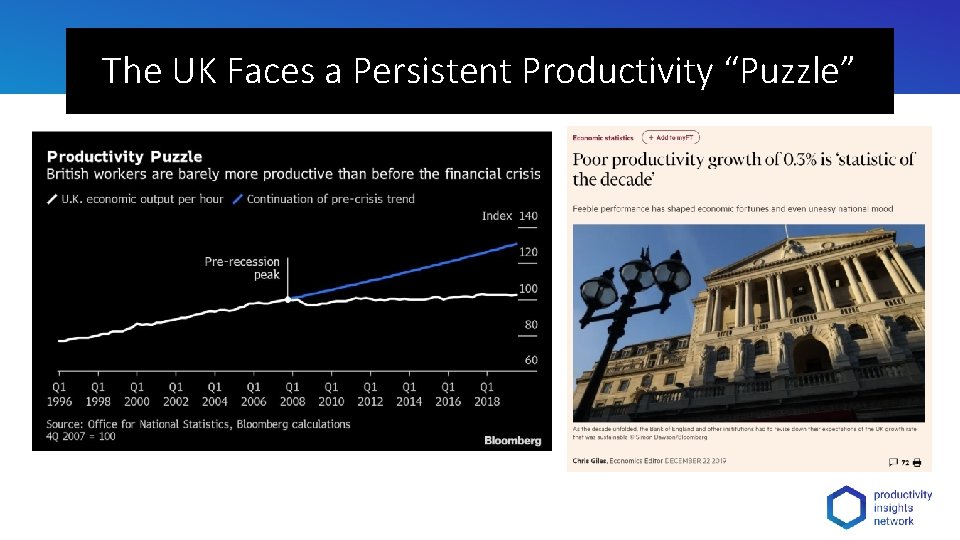
The UK Faces a Persistent Productivity “Puzzle”
Productivity Insights Network § Multidisciplinary network funded 2018 -2021 by ESRC § Aim is to change the tone of the productivity debate in theory and practice § Interested in highlighting knowledge gaps, intersections, and interdependencies § Forthcoming book: Productivity Perspectives § Funds new and ambitious interdisciplinary directions in productivity research across the social sciences that engage partners and deliver impact.
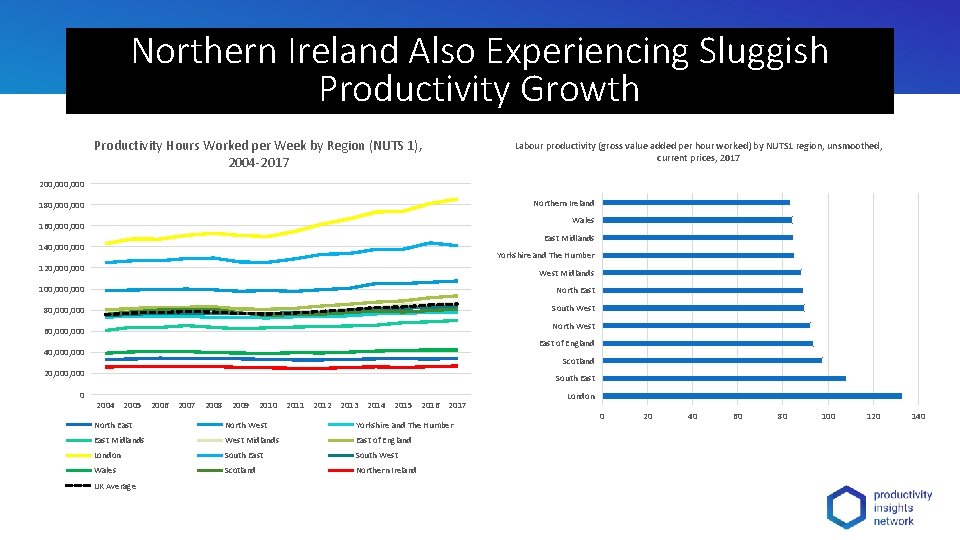
Northern Ireland Also Experiencing Sluggish Productivity Growth Productivity Hours Worked per Week by Region (NUTS 1), 2004 -2017 Labour productivity (gross value added per hour worked) by NUTS 1 region, unsmoothed, current prices, 2017 200, 000 Northern Ireland 180, 000 Wales 160, 000 East Midlands 140, 000 Yorkshire and The Humber 120, 000 West Midlands 100, 000 North East 80, 000 South West North West 60, 000 East of England 40, 000 Scotland 20, 000 0 South East 2004 2005 2006 2007 2008 2009 2010 2011 2012 2013 2014 2015 2016 2017 North East North West Yorkshire and The Humber East Midlands West Midlands East of England London South East South West Wales Scotland Northern Ireland UK Average London 0 20 40 60 80 100 120 140
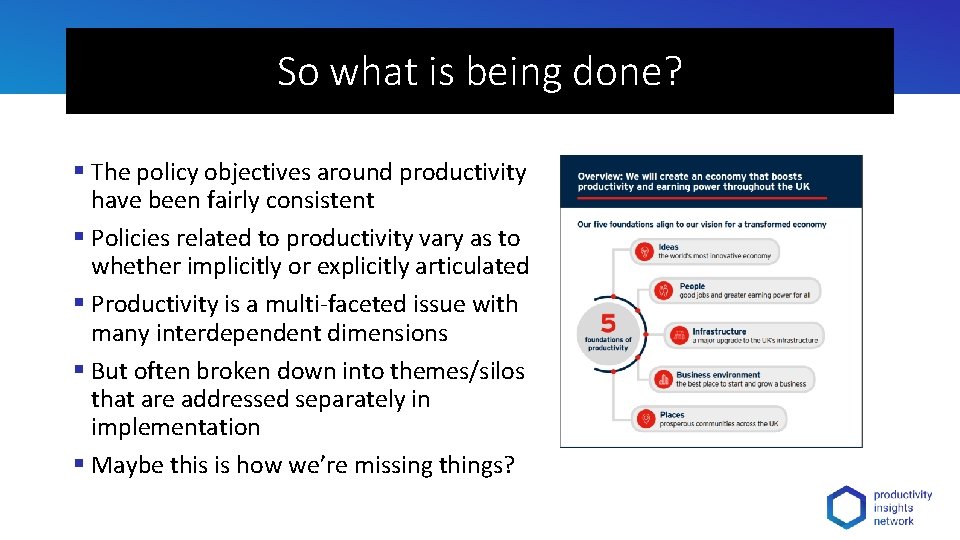
So what is being done? § The policy objectives around productivity have been fairly consistent § Policies related to productivity vary as to whether implicitly or explicitly articulated § Productivity is a multi-faceted issue with many interdependent dimensions § But often broken down into themes/silos that are addressed separately in implementation § Maybe this is how we’re missing things?
Rationale for a Systems Approach “Complexity is a core feature of most policy issues today; their components are interrelated in multiple, hard-to-define ways. Yet governments are ill-equipped to deal with complex problems” (OECD 2017, 3). Systems theory offers us a different way to think about and begin to address the productivity puzzle… …By encouraging us to acknowledge and engage with the complexity of the problem and adopt adaptive strategies
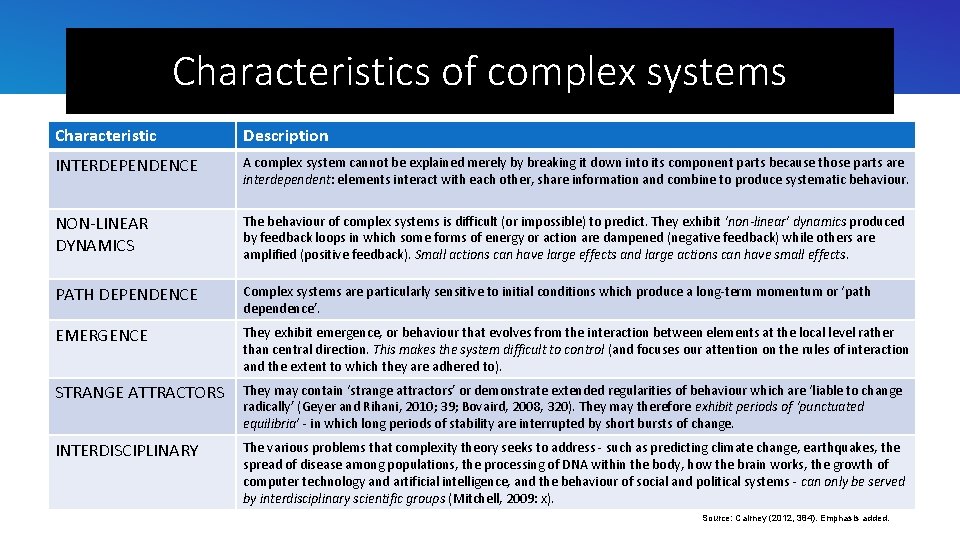
Characteristics of complex systems Characteristic Description INTERDEPENDENCE A complex system cannot be explained merely by breaking it down into its component parts because those parts are interdependent: elements interact with each other, share information and combine to produce systematic behaviour. NON-LINEAR DYNAMICS The behaviour of complex systems is difficult (or impossible) to predict. They exhibit ‘non-linear’ dynamics produced by feedback loops in which some forms of energy or action are dampened (negative feedback) while others are amplified (positive feedback). Small actions can have large effects and large actions can have small effects. PATH DEPENDENCE Complex systems are particularly sensitive to initial conditions which produce a long-term momentum or ‘path dependence’. EMERGENCE They exhibit emergence, or behaviour that evolves from the interaction between elements at the local level rather than central direction. This makes the system difficult to control (and focuses our attention on the rules of interaction and the extent to which they are adhered to). STRANGE ATTRACTORS They may contain ‘strange attractors’ or demonstrate extended regularities of behaviour which are ‘liable to change radically’ (Geyer and Rihani, 2010; 39; Bovaird, 2008, 320). They may therefore exhibit periods of ‘punctuated equilibria’ - in which long periods of stability are interrupted by short bursts of change. INTERDISCIPLINARY The various problems that complexity theory seeks to address - such as predicting climate change, earthquakes, the spread of disease among populations, the processing of DNA within the body, how the brain works, the growth of computer technology and artificial intelligence, and the behaviour of social and political systems - can only be served by interdisciplinary scientific groups (Mitchell, 2009: x). Source: Cairney (2012, 384). Emphasis added.
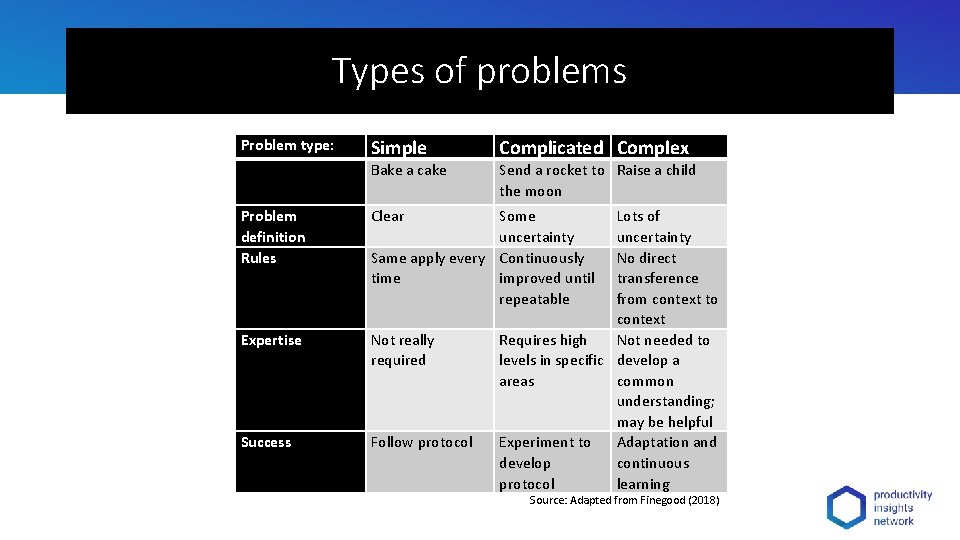
Types of problems Problem type: Simple Complicated Complex Bake a cake Send a rocket to Raise a child the moon Problem definition Rules Clear Expertise Not really required Success Follow protocol Lots of uncertainty No direct transference from context to context Requires high Not needed to levels in specific develop a areas common understanding; may be helpful Experiment to Adaptation and develop continuous protocol learning Some uncertainty Same apply every Continuously time improved until repeatable Source: Adapted from Finegood (2018)
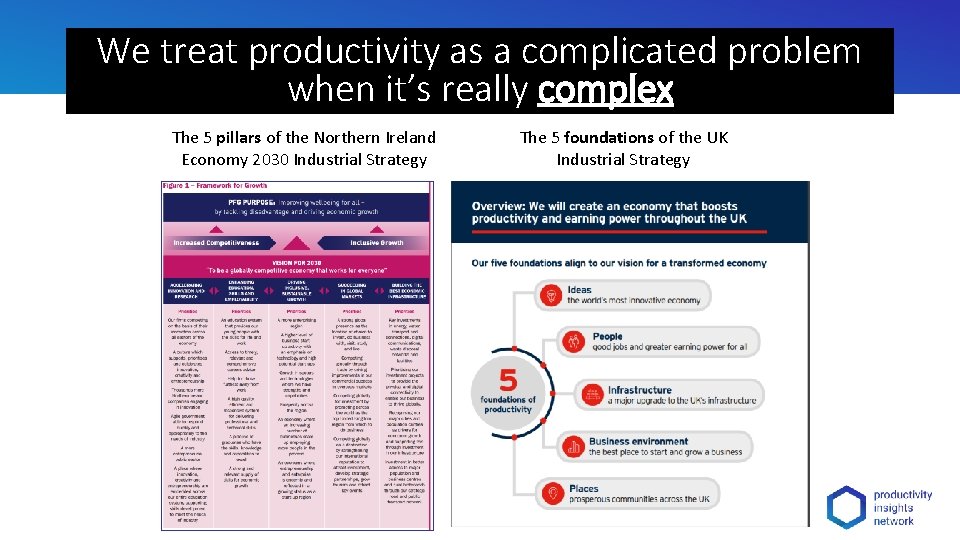
We treat productivity as a complicated problem when it’s really complex The 5 pillars of the Northern Ireland Economy 2030 Industrial Strategy The 5 foundations of the UK Industrial Strategy
Systems + Productivity in Northern Ireland Mapping the Cognitive Landscape of Productivity in Northern Ireland: A Systems Approach to Understanding Productivity Policy Adopt a systems approach to: § Understand the role of productivity in the economy through the lens of the 2017 Industrial Strategy § Explore the factors that affect productivity in Northern Ireland § Specifically look for evidence of policy silos and interdependencies that might be being overlooked § Find clues to resolving the productivity puzzle.
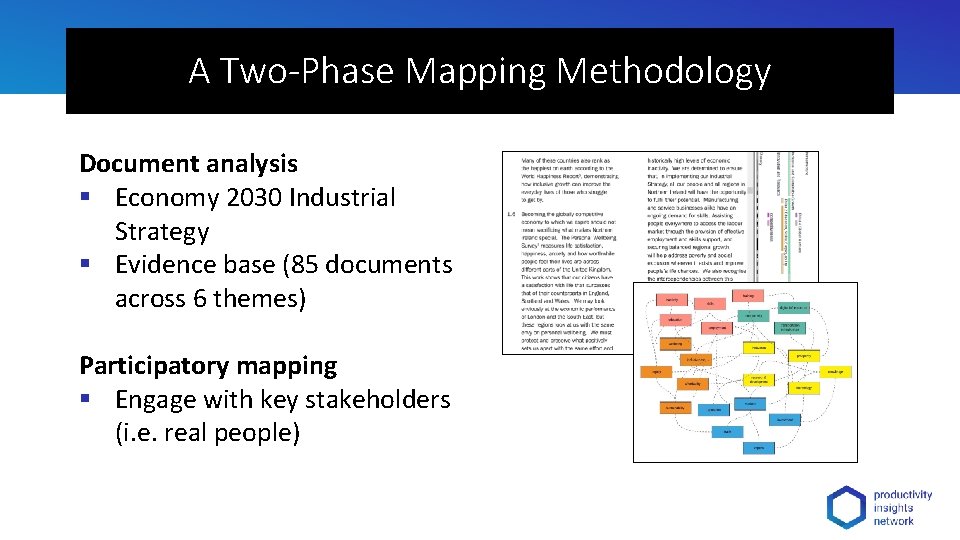
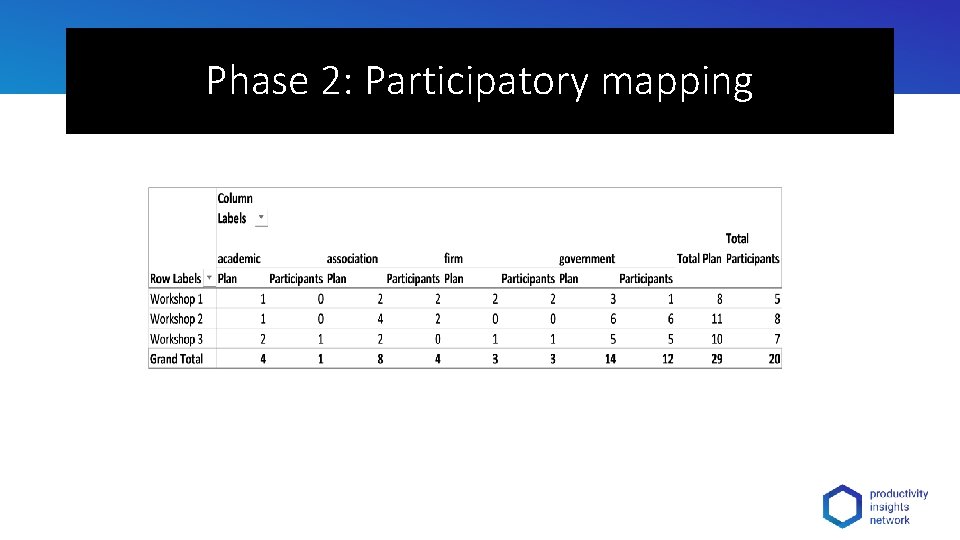
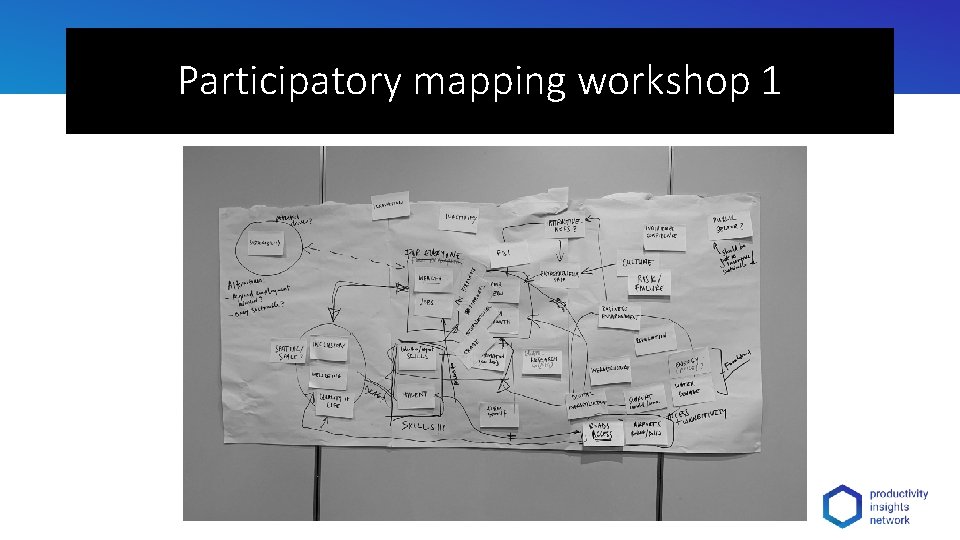
A Two-Phase Mapping Methodology Document analysis § Economy 2030 Industrial Strategy § Evidence base (85 documents across 6 themes) Participatory mapping § Engage with key stakeholders (i. e. real people)
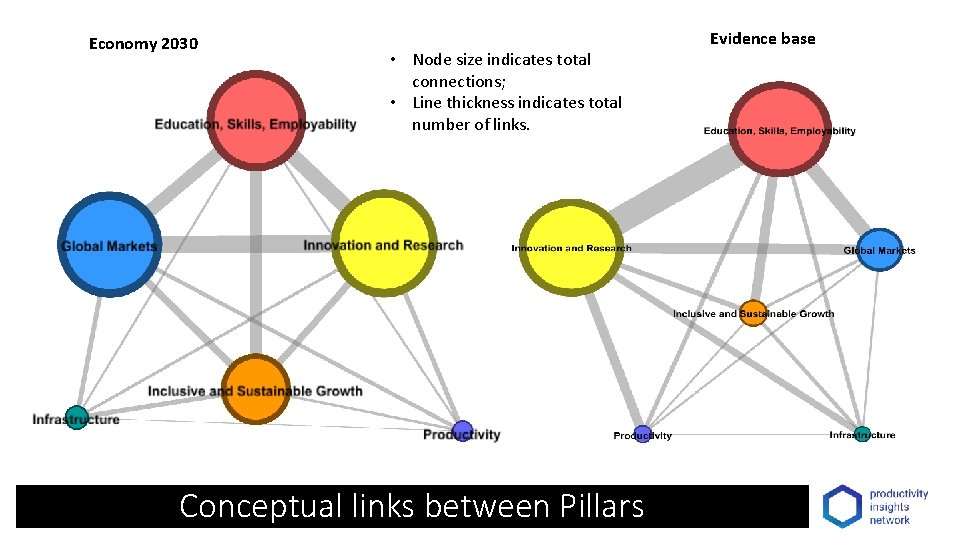
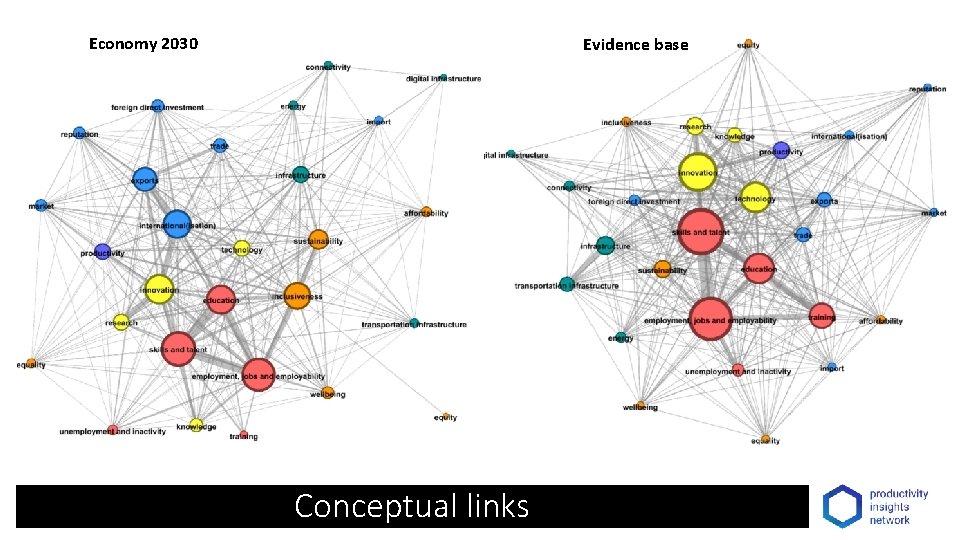
Hypotheses We were looking for: • Evidence of biases by silo but also a presence of conceptual links across pillar/theme/silo boundaries – indicating areas for potential joined up and experimental approaches; • Unexpected and missing/weak connections between concepts across pillar/theme/silo boundaries or within these groups – suggesting areas where further research could add value and models could be modified; • Differences between the conceptual relationships identified in the Industrial Strategy versus the broader evidence base, again suggesting potential biases, blind spots, OR important contextual information.
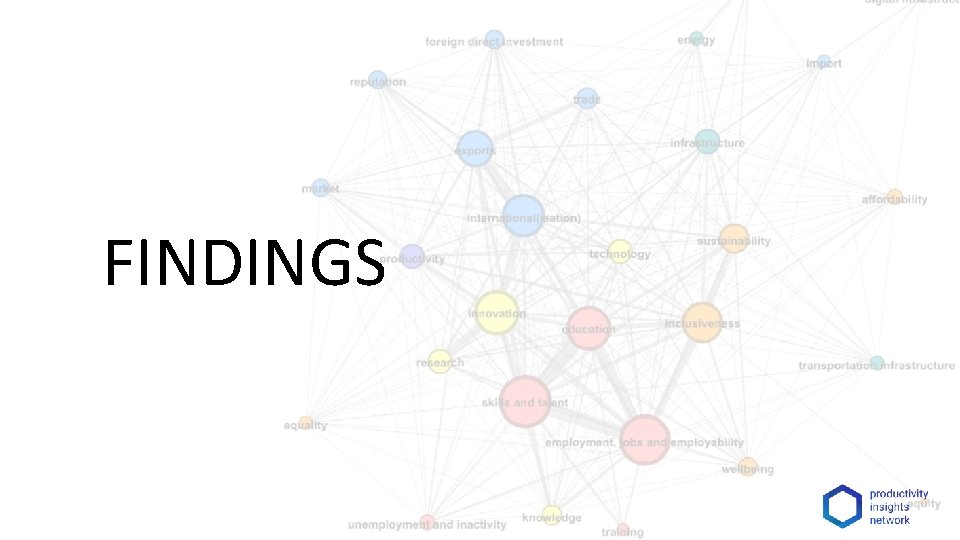
FINDINGS
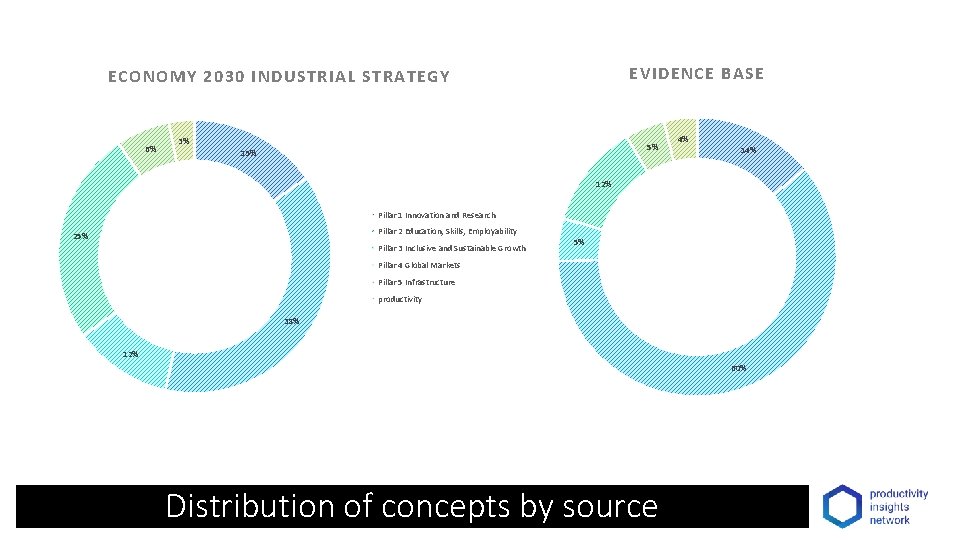
EVIDENCE BASE ECONOMY 2030 INDUSTRIAL STRATEGY 6% 3% 5% 15% 4% 12% Pillar 1 Innovation and Research Pillar 2 Education, Skills, Employability 25% Pillar 3 Inclusive and Sustainable Growth 5% Pillar 4 Global Markets Pillar 5 Infrastructure productivity 38% 12% 60% Distribution of concepts by source
Economy 2030 • Node size indicates total connections; • Line thickness indicates total number of links. Conceptual links between Pillars Evidence base
Economy 2030 Evidence base Conceptual links
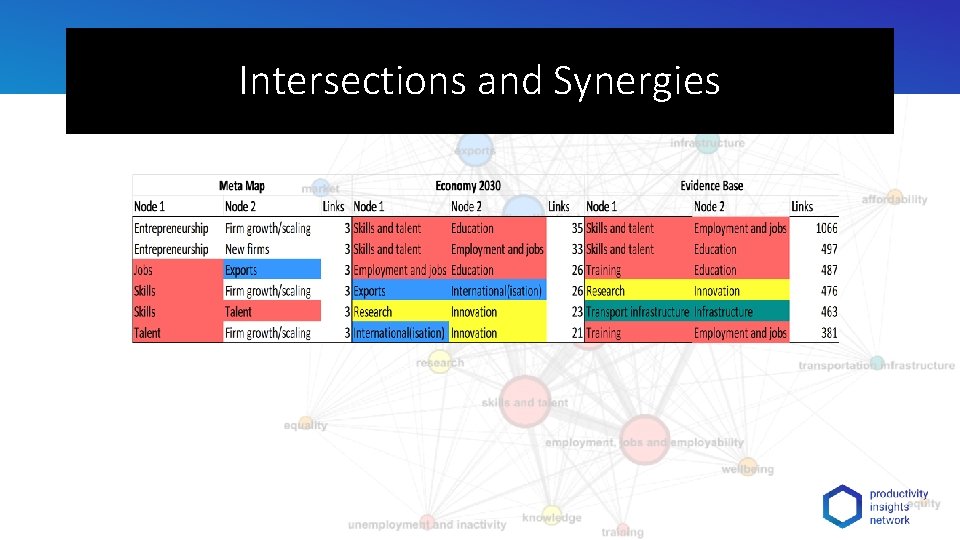
Economy 2030 Evidence base Most connected pairs
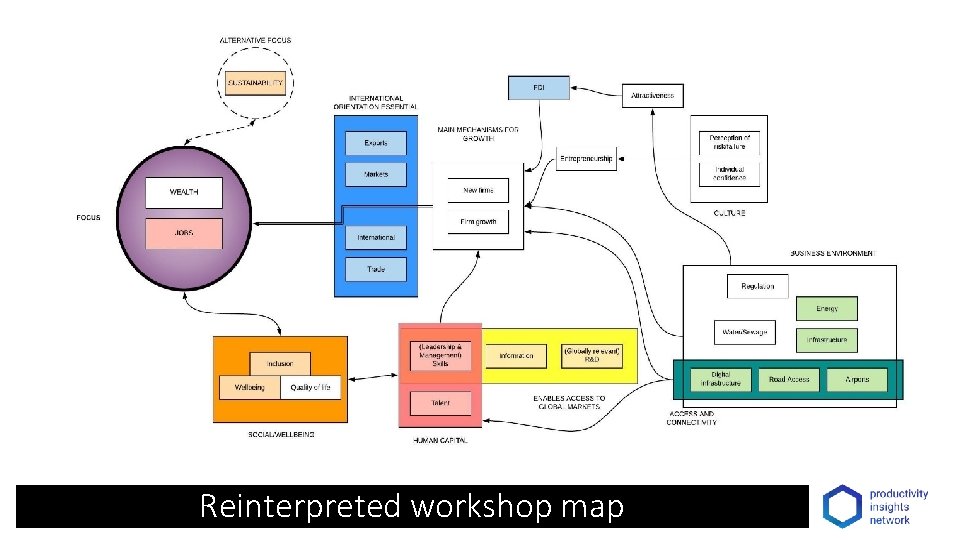
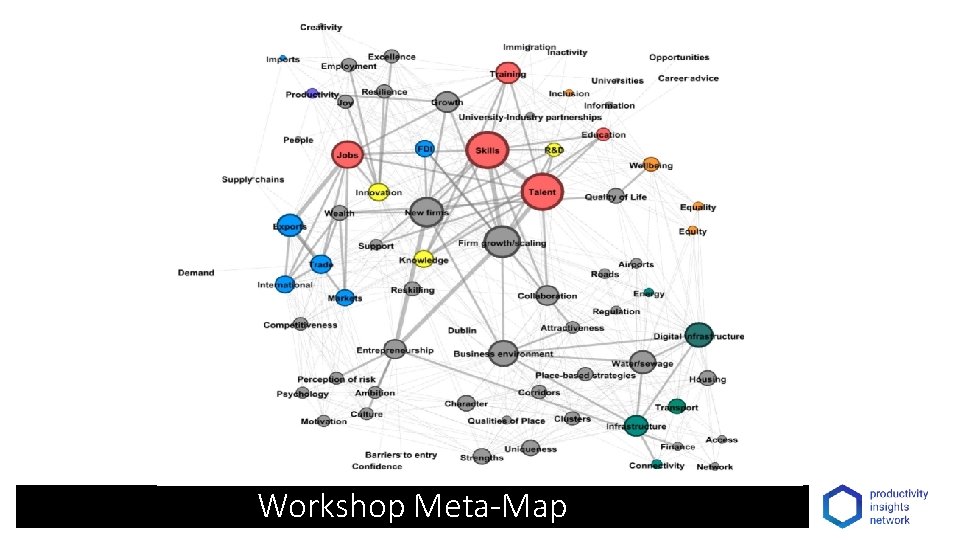
Phase 2: Participatory mapping
Participatory mapping workshop 1
Reinterpreted workshop map
Workshop Meta-Map
Intersections and Synergies
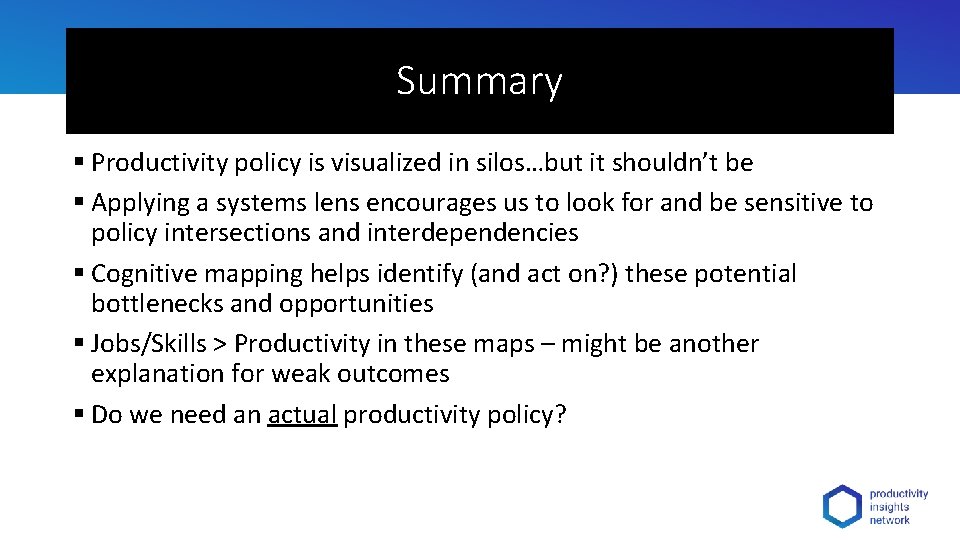
Summary § Productivity policy is visualized in silos…but it shouldn’t be § Applying a systems lens encourages us to look for and be sensitive to policy intersections and interdependencies § Cognitive mapping helps identify (and act on? ) these potential bottlenecks and opportunities § Jobs/Skills > Productivity in these maps – might be another explanation for weak outcomes § Do we need an actual productivity policy?
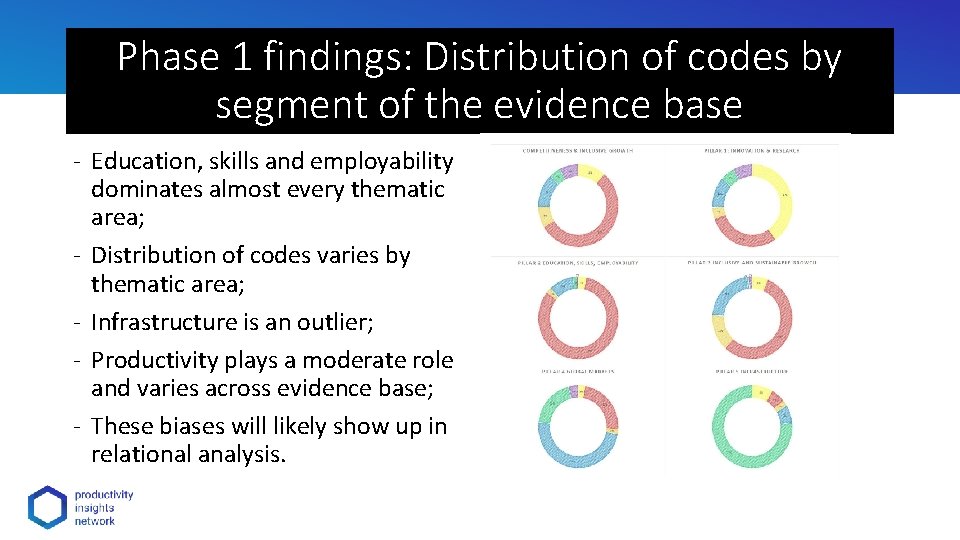
Phase 1 findings: Distribution of codes by segment of the evidence base - Education, skills and employability dominates almost every thematic area; - Distribution of codes varies by thematic area; - Infrastructure is an outlier; - Productivity plays a moderate role and varies across evidence base; - These biases will likely show up in relational analysis.