
mapping the changing face of autism liz pellicano




- Slides: 24
mapping the changing face of autism liz pellicano department of experimental psychology, university of bristol
outline of talk 1. what we know (and don’t know) about autism 2. the michael young prize: what i wanted to tell the public most about autism 3. plans to engage user groups and policymakers in the research process
defining autism reciprocal social interaction verbal + nonverbal communication restricted + repetitive behaviours onset before 36 months
fact 1: autism is a hidden condition
fact 2: there is an autism spectrum
fact 3: autism is not rare. 1 in every 100 UK individuals lie on the autism spectrum
fact 4: it is usually diagnosed around 3 years of age but sometimes much later
fact 5: individuals with autism will require lifelong support of varying degree
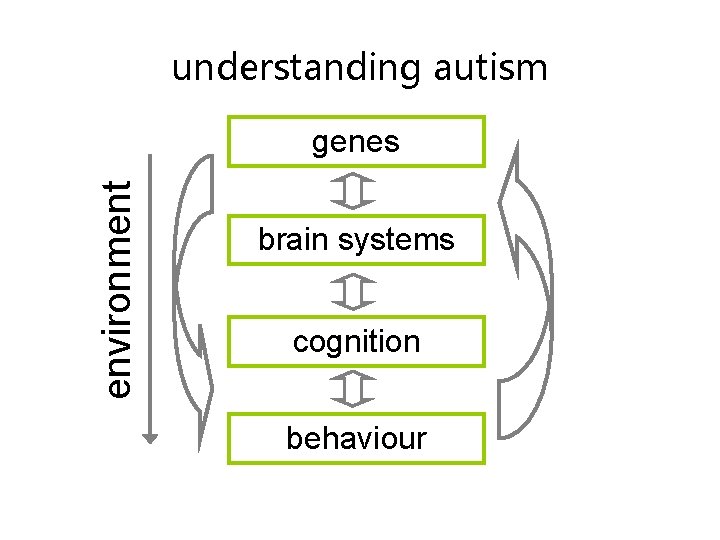
unresolved questions: what causes autism?
understanding autism environment genes brain systems cognition behaviour
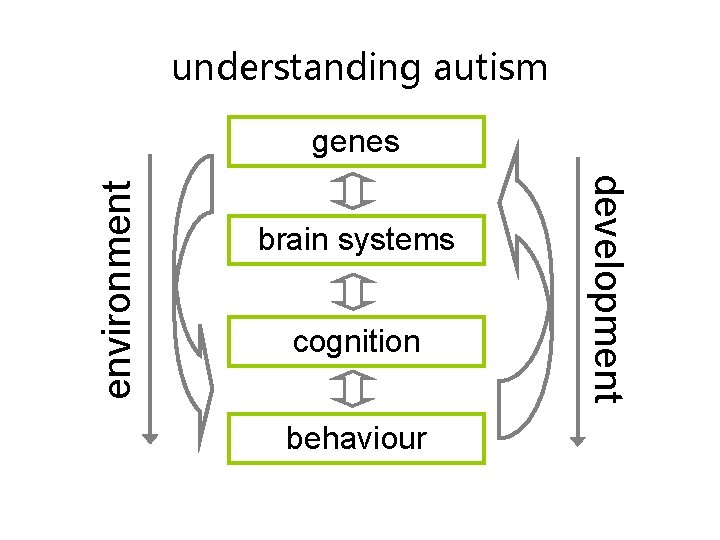
unresolved questions: how does autism develop across the lifespan?
understanding autism brain systems cognition behaviour development environment genes
methodological challenges: the difficulties of developmental (longitudinal) research
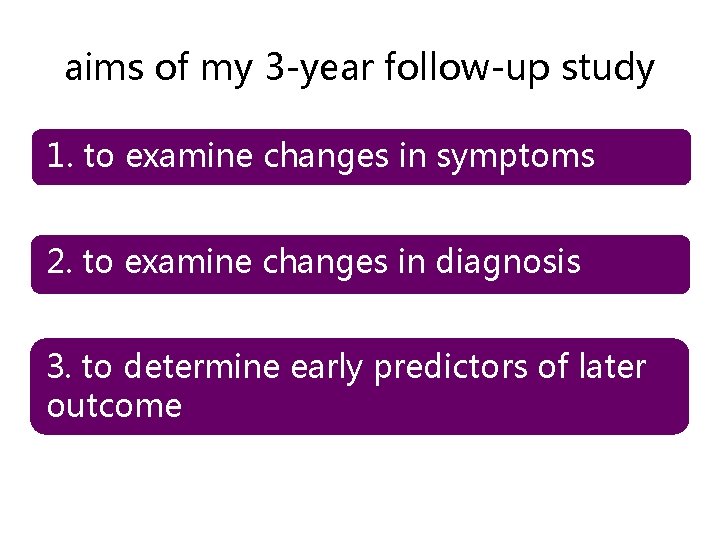
aims of my 3 -year follow-up study but studies autism 1. to such examine changesinin the symptoms field are rare … 2. to examine changes in diagnosis 3. to determine early predictors of later outcome
aim 1. to examine changes in symptoms
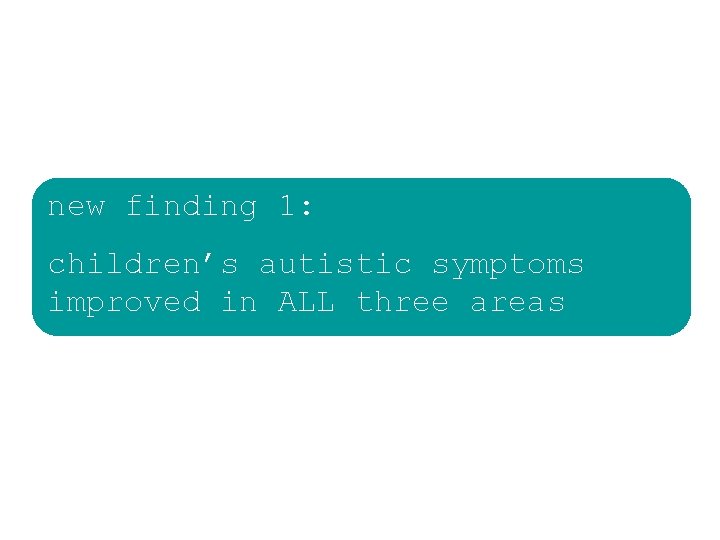
factfinding new 4: 1: children’s it is usually autistic diagnosed symptoms around 3 years of in improved age. ALL butthree sometimes areasmuch later
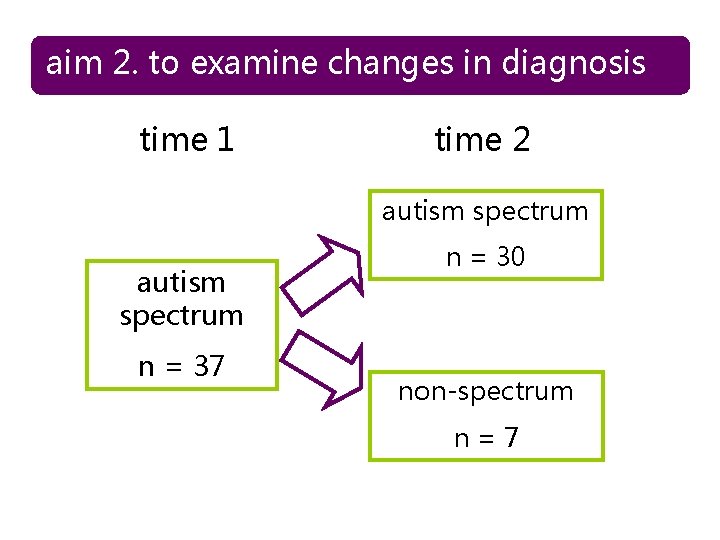
aim 2. to examine changes in diagnosis time 1 time 2 autism spectrum n = 37 n = 30 non-spectrum n=7
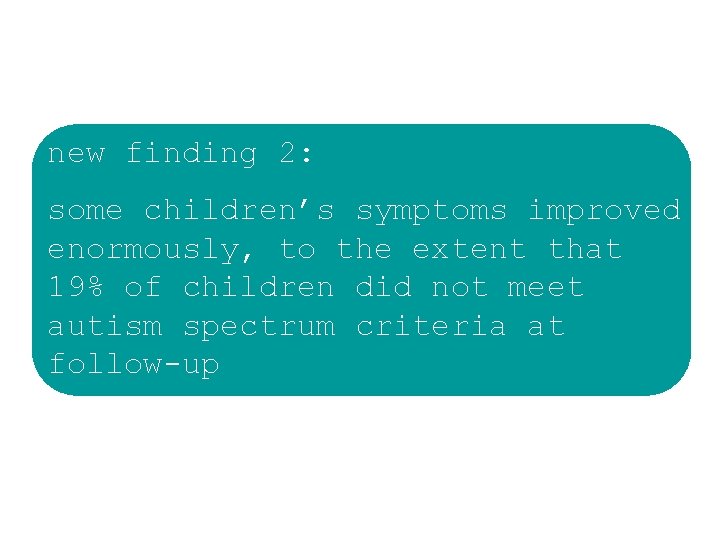
factfinding new 4: 2: some it ischildren’s usually diagnosed symptomsaround improved 3 years of ageto enormously, but the sometimes extent that much later 19% of children did not meet autism spectrum criteria at follow-up
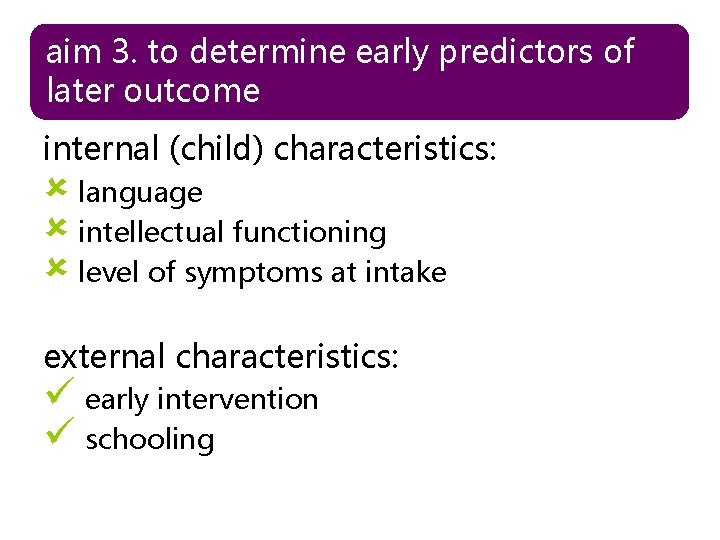
aim 3. to determine early predictors of later outcome internal (child) characteristics: û language û intellectual functioning û level of symptoms at intake external characteristics: ü early intervention ü schooling
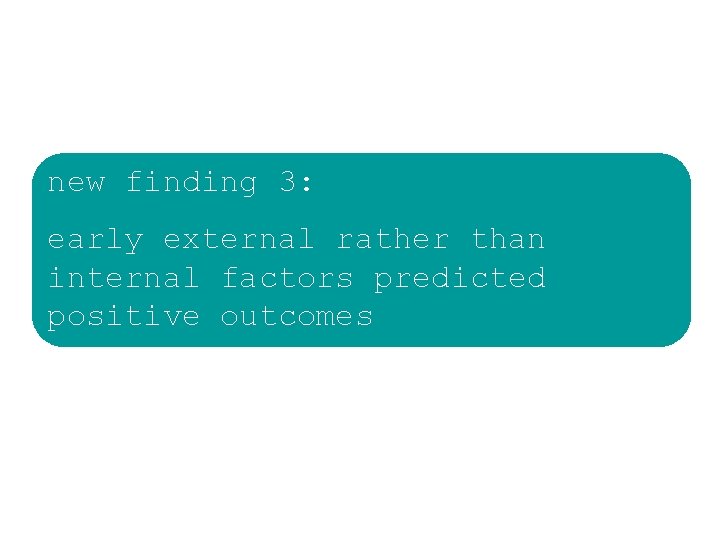
factfinding new 4: 3: early it is external usually diagnosed rather than around 3 years of factors internal age but predicted sometimes much later positive outcomes
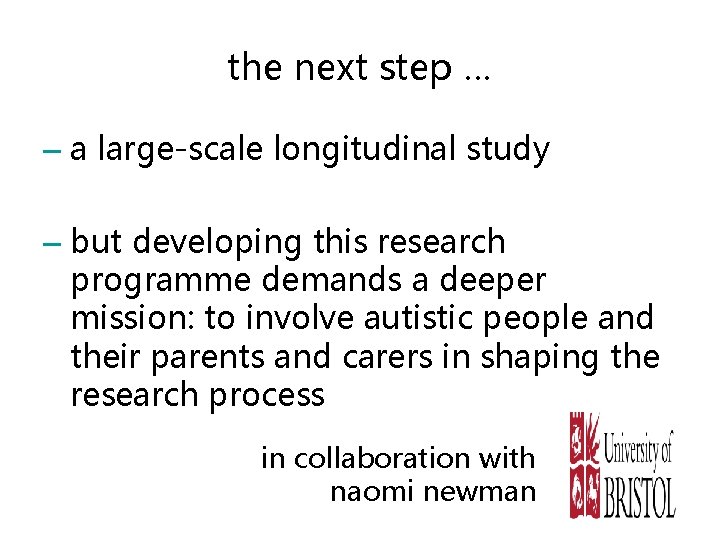
the next step … – a large-scale longitudinal study – but developing this research programme demands a deeper mission: to involve autistic people and their parents and carers in shaping the research process in collaboration with naomi newman
many thanks to. . . Kevin Durkin Alana Maley Murray Maybery Kate Nation Courtenay Norbury Marc Stears Simon Wallace all the children and families who participated in these studies