
Mapping proteinDNA interactions by Ch IP seq Zsolt

Mapping protein-DNA interactions by Ch. IP -seq Zsolt Szilagyi Institute of Biomedicine
Genome analysis -A need to understand genome function on a global scale -Gene regulation shapes cellular function. Transcription factors (TFs) are important determinants of overall transcription output of cells. Finding transcription binding sites (TFBS) Chromatin/TFBS landscape of the normal and diseased cell. Understanding ES cell growth/differentiation/reprogramming.
Traditional approaches to the problem - Experimental determination of transcription factors binding sites. EMSA, DNAse footprinting – in vitro - Computational prediction of binding motifs. Is a motif a real binding site? - DNA microarray analysis of target genes Is the target direct or indirect? The need for a more direct in vivo method.
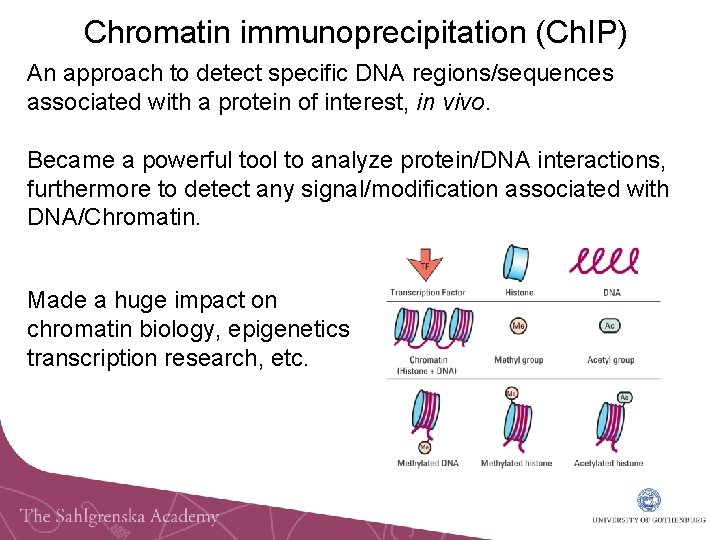
Chromatin immunoprecipitation (Ch. IP) An approach to detect specific DNA regions/sequences associated with a protein of interest, in vivo. Became a powerful tool to analyze protein/DNA interactions, furthermore to detect any signal/modification associated with DNA/Chromatin. Made a huge impact on chromatin biology, epigenetics transcription research, etc.
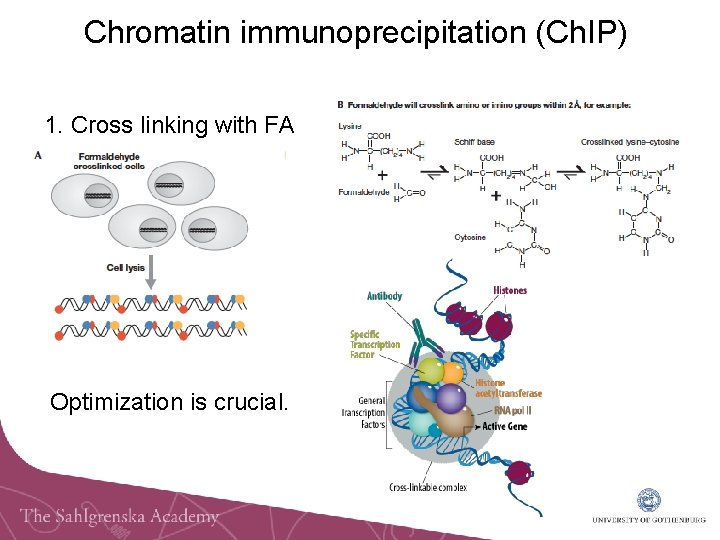
Chromatin immunoprecipitation (Ch. IP) 1. Cross linking with FA Optimization is crucial.

2. Cell lysis and sonication
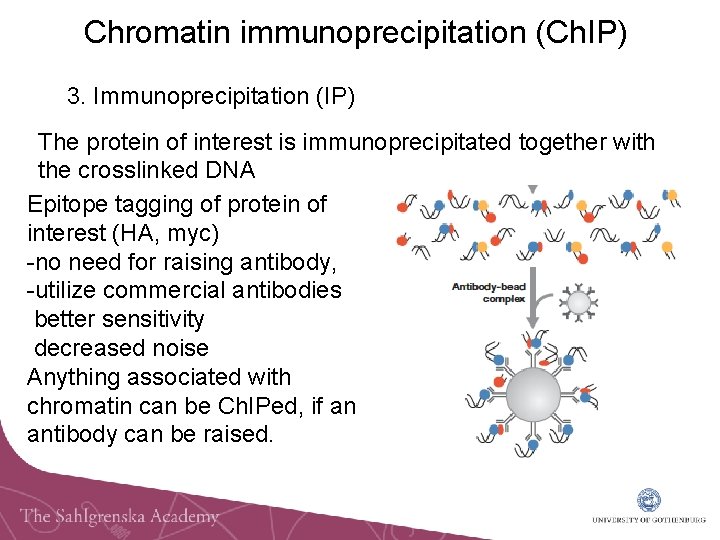
Chromatin immunoprecipitation (Ch. IP) 3. Immunoprecipitation (IP) The protein of interest is immunoprecipitated together with the crosslinked DNA Epitope tagging of protein of interest (HA, myc) -no need for raising antibody, -utilize commercial antibodies better sensitivity decreased noise Anything associated with chromatin can be Ch. IPed, if an antibody can be raised.

Chromatin immunoprecipitation (Ch. IP) 4. Decrosslinking and purification of the DNA Reverse the FA crosslinking
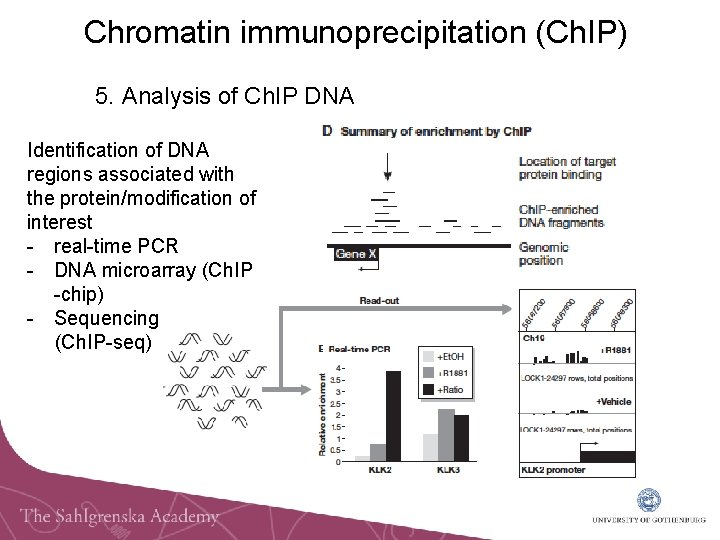
Chromatin immunoprecipitation (Ch. IP) 5. Analysis of Ch. IP DNA Identification of DNA regions associated with the protein/modification of interest - real-time PCR - DNA microarray (Ch. IP -chip) - Sequencing (Ch. IP-seq)
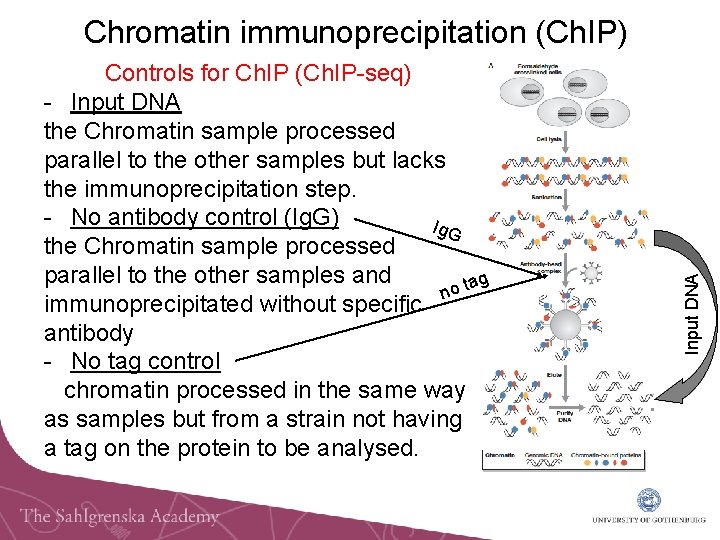
Controls for Ch. IP (Ch. IP-seq) - Input DNA the Chromatin sample processed parallel to the other samples but lacks the immunoprecipitation step. - No antibody control (Ig. G) Ig. G the Chromatin sample processed parallel to the other samples and ag no t immunoprecipitated without specific antibody - No tag control chromatin processed in the same way as samples but from a strain not having a tag on the protein to be analysed. Input DNA Chromatin immunoprecipitation (Ch. IP)
Analysis of Ch. IP DNA - Problems with real-time PCR - Not genome wide, making the identification of unknown, potentially interesting binding sites unlikely. - By the development of microarray technologies Ch. IP on chip Ch. IP DNA is amplified, labeled and hybridized to microarray Genome wide landscape of binding, good but a little laborious. - By the development of high throughput sequencing methods Ch. IP-seq
Ch. IP-seq technology Development of novel high-throughput sequencing methods - revolutionized genomic studies - enabled large scale sequence analysis through the generation of millions of short sequencing reads Chip-seq technology Instead of hybridizing the Ch. IP DNA to a microarray, each sample is processed directly into a DNA library for sequencing and subsequent bioinformatics analysis. Ch. IP-Seq has improved sensitivity and reduced background over Ch. IP-chip. 2 -4 times more TFBS are determined, compared with Chi. P-chip
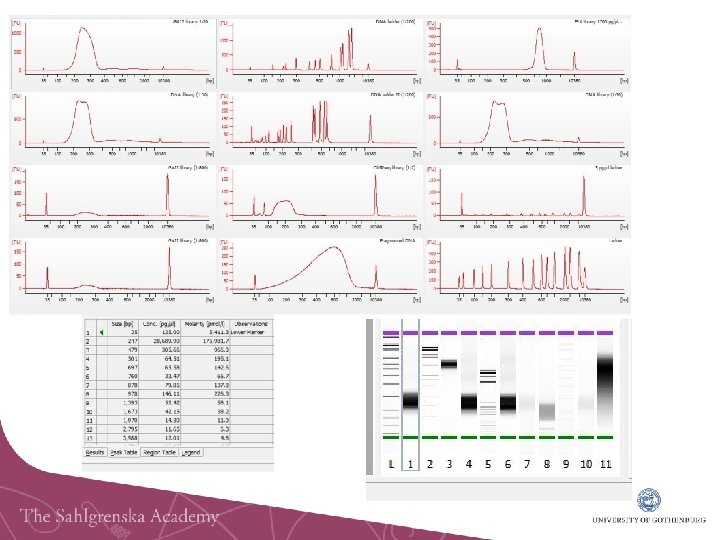
Ch. IP DNA quality for Ch. IP-seq Quality is checked by gelelectrophoresis (Bioanalyzer) - Should be between 100 -400 bp (ideally) - Quantity should be at least 5 ng DNA Often the most common cause of failure in library preparation. - Scaling up the Ch. IP is necessary.
DNA library preparation Must be done before sequencing Represents the population of short DNA fragments in the sample. Different ways of library preparation depending on the sequencing platforms (e. g. Solexa/Illumina, SOLID/ABI) A large number of short reads (~36 bp) are good enough for Ch. IP-seq approaches – advantage for Illumina and SOLID – most popular platforms today
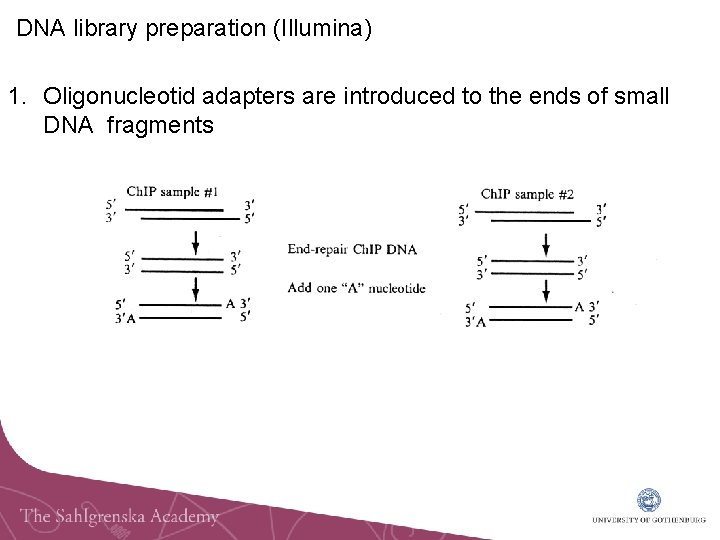
DNA library preparation (Illumina) 1. Oligonucleotid adapters are introduced to the ends of small DNA fragments
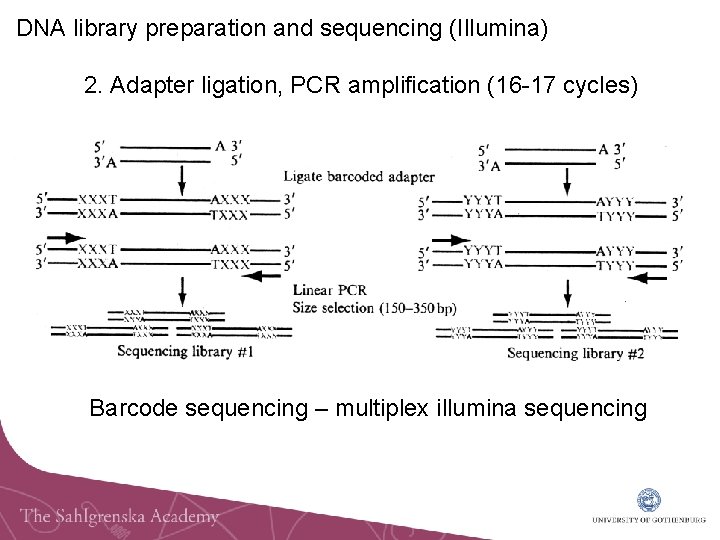
DNA library preparation and sequencing (Illumina) 2. Adapter ligation, PCR amplification (16 -17 cycles) Barcode sequencing – multiplex illumina sequencing
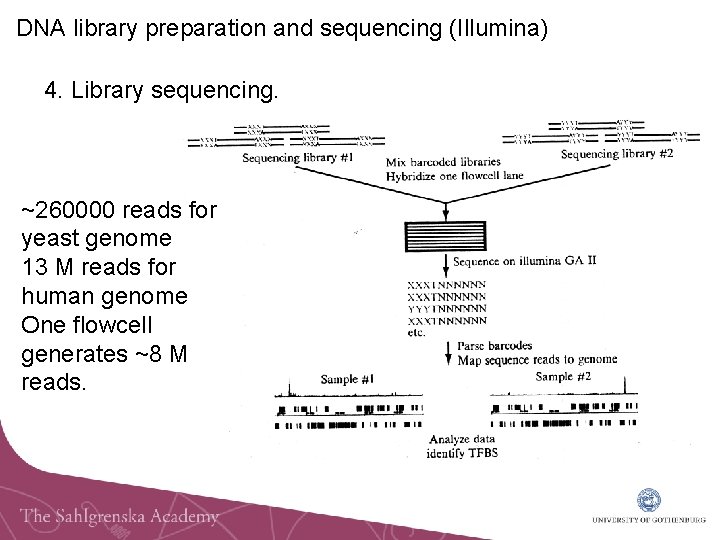
DNA library preparation and sequencing (Illumina) 4. Library sequencing. ~260000 reads for yeast genome 13 M reads for human genome One flowcell generates ~8 M reads.
Sequence data analysis - Determination of binding sites from the sequence data is a challenge. Conceptually, genomic regions with an increased number of sequencing reads (tags) compared to control is considered to be a TFBS - Statistical filtering criteria is used to determine if these putative sites represent true binding sites. - After statistical analysis of binding sites a further analysis of data is required. These may include analysis of location of binding, relative to transcription factor binding sites or potential nearby target genes.
- Slides: 19