
Mapping existing and potential infection risk zones of

- Slides: 28
Mapping existing and potential infection risk zones of yellow fever worldwide Bobby Reiner and Freya Shearer April 17 th, 2018 6 th Annual IDM Modeling Symposium
Outline • Estimating yellow fever vaccination coverage o Data collation & data issues o Age cohort models o Results • Estimating yellow fever infection risk zones o Data collation o Spatial model o Results
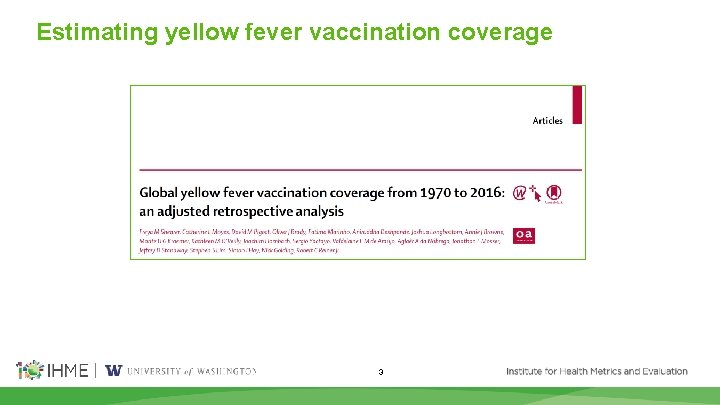
Estimating yellow fever vaccination coverage 3
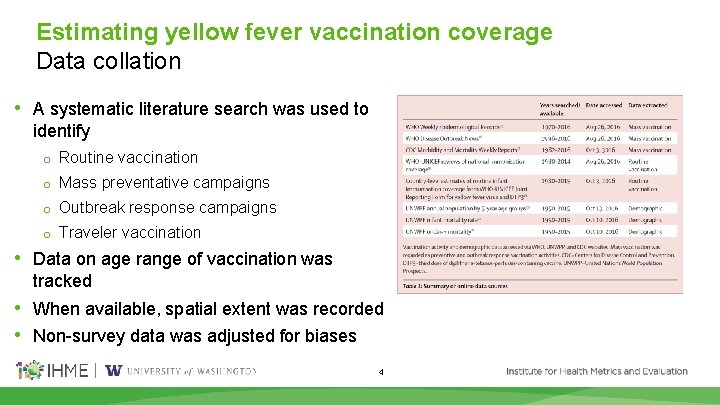
Estimating yellow fever vaccination coverage Data collation • A systematic literature search was used to identify o Routine vaccination o Mass preventative campaigns o Outbreak response campaigns o Traveler vaccination • Data on age range of vaccination was tracked • When available, spatial extent was recorded • Non-survey data was adjusted for biases 4
Estimating yellow fever vaccination coverage Data collation • The Brazilian national immunization program information system provided us with much more detailed data o Spatial scale: Admin 2 o Temporal scale: 2006 -2015 o Age bins: ─ 1 year bins from 0 -4 ─ 5 year bins from 5 -14 ─ 15 to 59 ─ 60+ • We assumed this data incorporated both routine and mass vaccination 5
Estimating yellow fever vaccination coverage Data issues • When more vaccine doses were said to have been distributed than there were people in the population (after bias correction), we set doses to the population • When age was omitted, we assumed all ages were equally likely • When age was listed as “children”, we assumed age was < 5 • There was almost always no information on which people/children were vaccinated 6
Estimating yellow fever vaccination coverage Age cohort models • Using age, time, and location-specific vaccination coverage and population, we tracked each age cohort (from 0 to 99 years) in every district through time o Started in 1871 to track coverage of individuals • We assumed mortality rate for vaccinated and unvaccinated individuals was the same • We assumed there was no movement 7
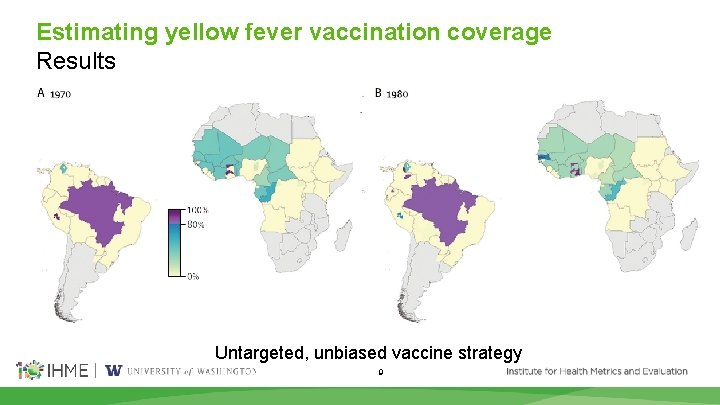
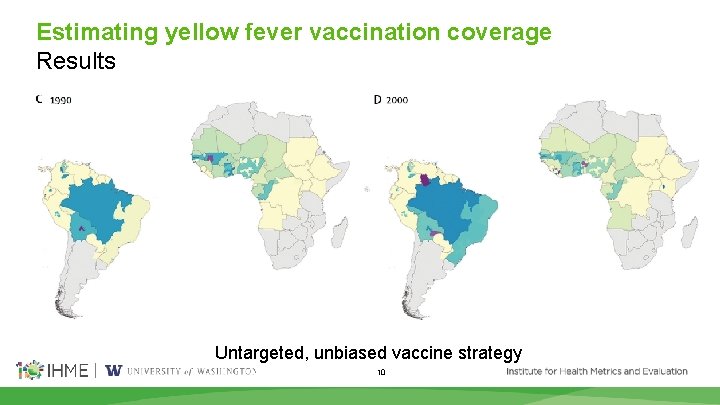
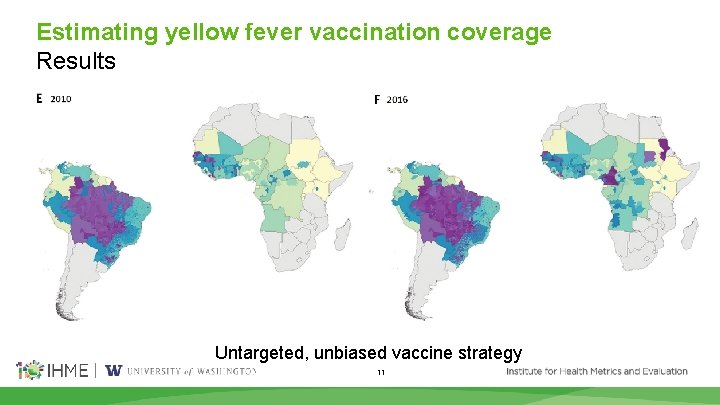
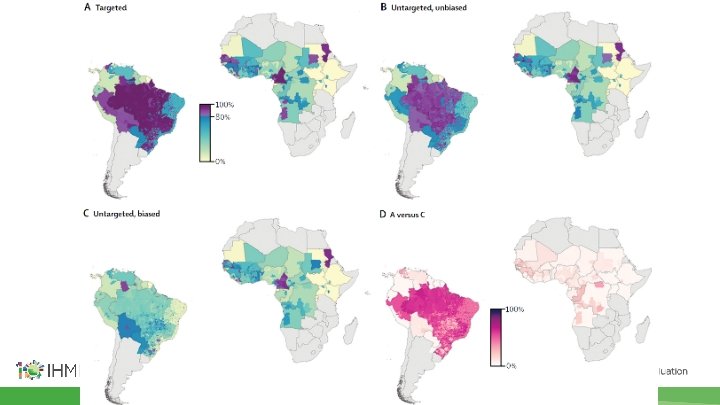
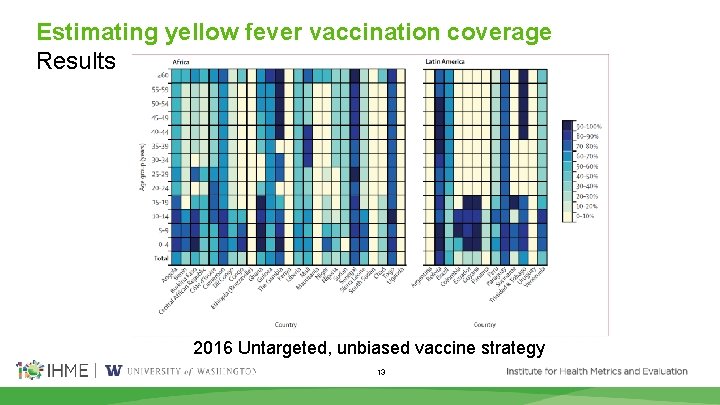
Estimating yellow fever vaccination coverage Age cohort models • It was unclear (and unlikely) if vaccination campaigns only targeted those who had not previously been vaccinated. We developed three vaccination scenarios o Targeted – Vaccination history was taken into account and only unvaccinated individuals received vaccine [most optimistic scenario] o Untargeted, unbiased – Vaccination history was not taken into account, but all individuals are equally likely to have received the vaccine o Untargeted, biased – Vaccination history was not taken into account and those who had already been vaccinated were more likely to receive vaccine than unvaccinated individuals [most conservative scenario] 8
Estimating yellow fever vaccination coverage Results Untargeted, unbiased vaccine strategy 9
Estimating yellow fever vaccination coverage Results Untargeted, unbiased vaccine strategy 10
Estimating yellow fever vaccination coverage Results Untargeted, unbiased vaccine strategy 11
12
Estimating yellow fever vaccination coverage Results 2016 Untargeted, unbiased vaccine strategy 13
Estimating yellow fever vaccination coverage Results • We calculated the estimated number of individuals that still need the vaccine to achieve a population coverage threshold of 80% by district (WHO recommendation) • We further broke this down either overall, or only those who live in an “at risk” district o Targeted – 529, 900, 000 individuals overall, 393, 700, 000 individuals in “at risk” districts o Untargeted, unbiased – 568, 200, 000 individuals overall, 412, 800, 000 individuals in “at risk” districts o Untargeted, biased – 669, 500, 000 individuals overall, 472, 000 individuals in “at risk” districts 14
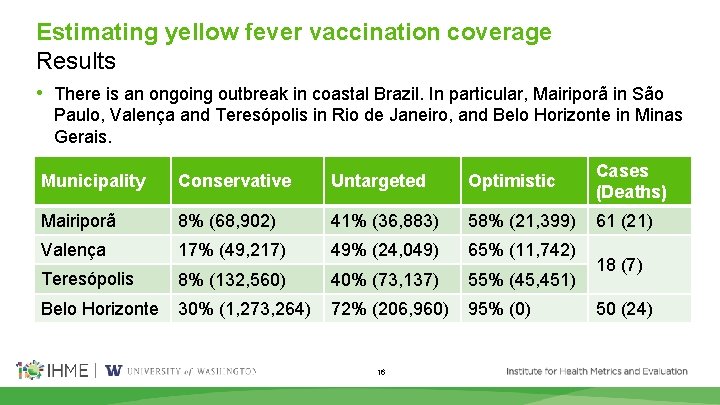
Estimating yellow fever vaccination coverage Results • There is an ongoing outbreak in coastal Brazil. In particular, Mairiporã in São Paulo, Valença and Teresópolis in Rio de Janeiro, and Belo Horizonte in Minas Gerais. 15
Estimating yellow fever vaccination coverage Results • There is an ongoing outbreak in coastal Brazil. In particular, Mairiporã in São Paulo, Valença and Teresópolis in Rio de Janeiro, and Belo Horizonte in Minas Gerais. Municipality Conservative Untargeted Optimistic Cases (Deaths) Mairiporã 8% (68, 902) 41% (36, 883) 58% (21, 399) 61 (21) Valença 17% (49, 217) 49% (24, 049) 65% (11, 742) Teresópolis 8% (132, 560) 40% (73, 137) 55% (45, 451) Belo Horizonte 30% (1, 273, 264) 72% (206, 960) 95% (0) 16 18 (7) 50 (24)
Estimating yellow fever infection risk zones 17
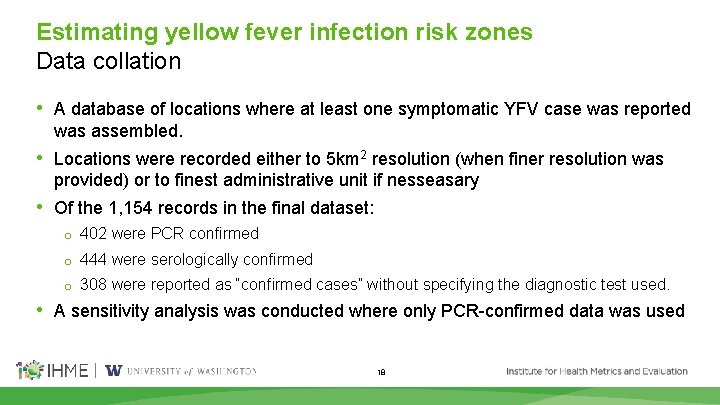
Estimating yellow fever infection risk zones Data collation • A database of locations where at least one symptomatic YFV case was reported was assembled. • Locations were recorded either to 5 km 2 resolution (when finer resolution was provided) or to finest administrative unit if nesseasary • Of the 1, 154 records in the final dataset: o 402 were PCR confirmed o 444 were serologically confirmed o 308 were reported as “confirmed cases” without specifying the diagnostic test used. • A sensitivity analysis was conducted where only PCR-confirmed data was used 18
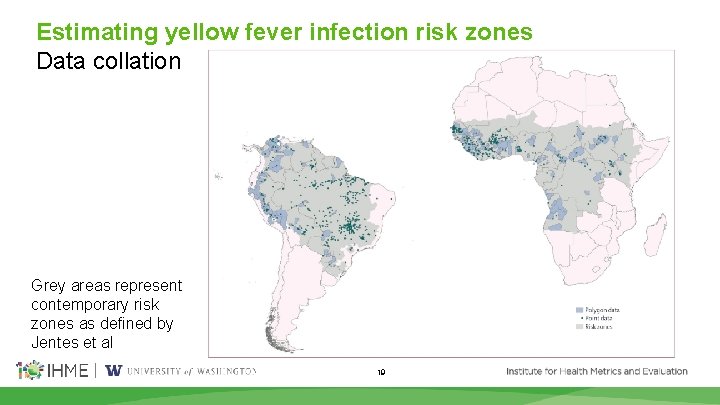
Estimating yellow fever infection risk zones Data collation Grey areas represent contemporary risk zones as defined by Jentes et al 19
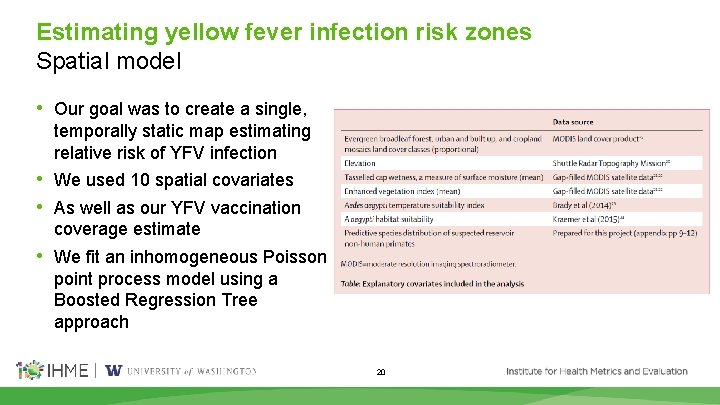
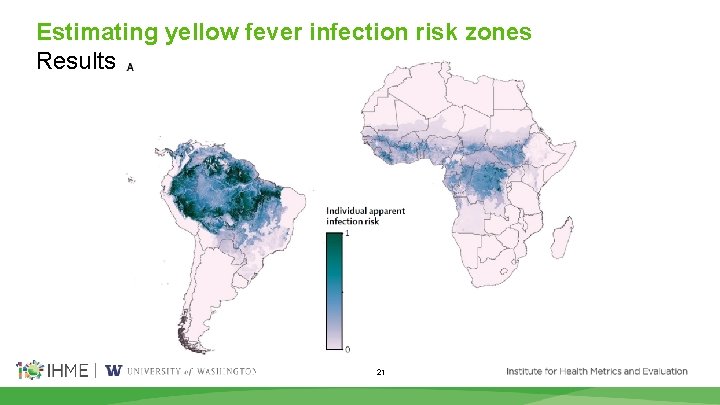
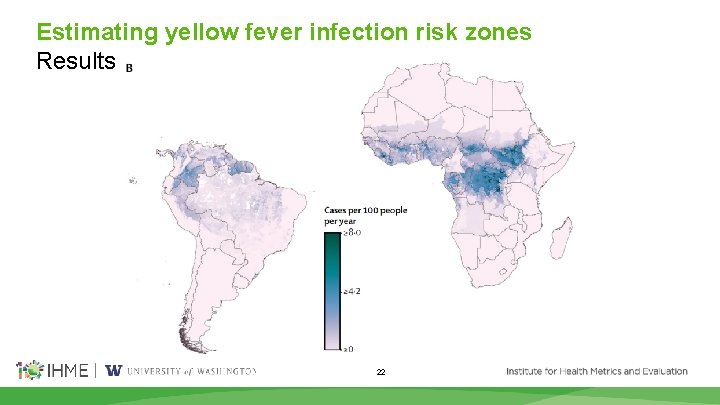
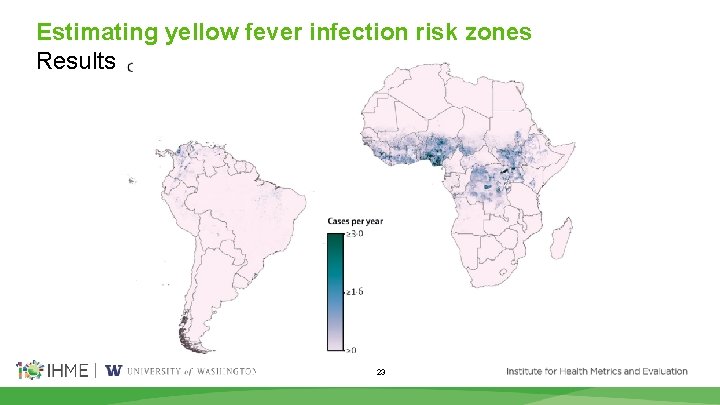
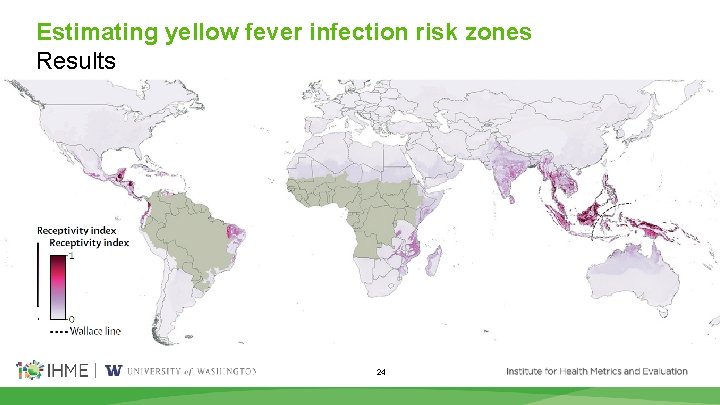
Estimating yellow fever infection risk zones Spatial model • Our goal was to create a single, temporally static map estimating relative risk of YFV infection • We used 10 spatial covariates • As well as our YFV vaccination coverage estimate • We fit an inhomogeneous Poisson point process model using a Boosted Regression Tree approach 20
Estimating yellow fever infection risk zones Results 21
Estimating yellow fever infection risk zones Results 22
Estimating yellow fever infection risk zones Results 23
Estimating yellow fever infection risk zones Results 24
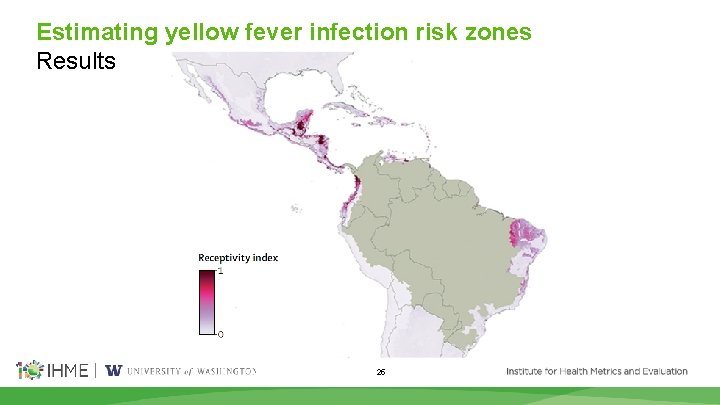
Estimating yellow fever infection risk zones Results 25
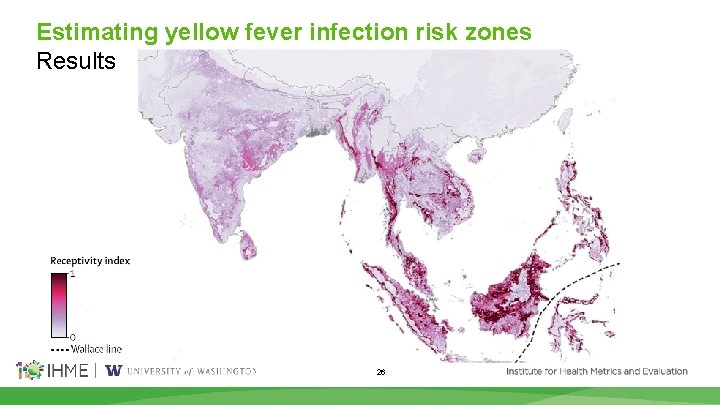
Estimating yellow fever infection risk zones Results 26
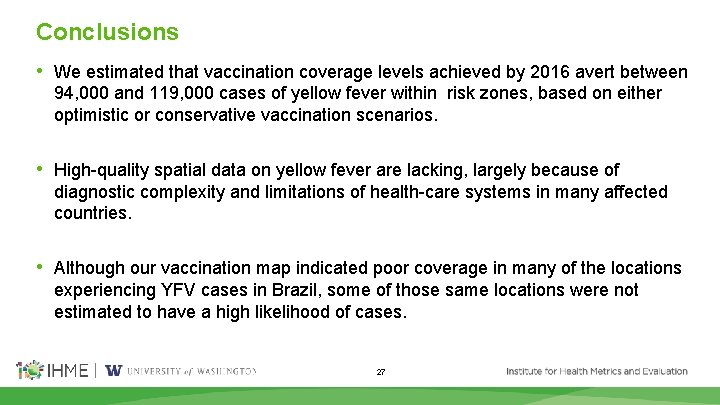
Conclusions • We estimated that vaccination coverage levels achieved by 2016 avert between 94, 000 and 119, 000 cases of yellow fever within risk zones, based on either optimistic or conservative vaccination scenarios. • High-quality spatial data on yellow fever are lacking, largely because of diagnostic complexity and limitations of health-care systems in many affected countries. • Although our vaccination map indicated poor coverage in many of the locations experiencing YFV cases in Brazil, some of those same locations were not estimated to have a high likelihood of cases. 27
Thank you! Questions? 28