
Mapping and Localization for Robots The Occupancy Grid
Mapping and Localization for Robots The Occupancy Grid Approach
Agenda Introduction q Mapping q § § § q Occupancy grids Sonar Sensor Model Dynamically Expanding Occupancy Grids Localization § § § Iconic Feature-based Monte Carlo
An intelligent robot is a mechanical creature which can function autonomously. Intelligent – the robot does not do things in a mindless, repetitive way. q Function autonomously – the robot can operate in a self-contained manner, under reasonable conditions, without interference by a human operator. q
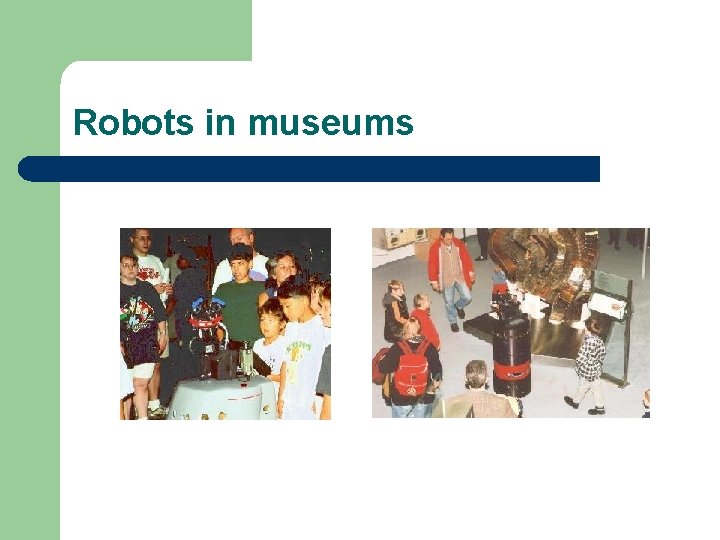
Robots in museums
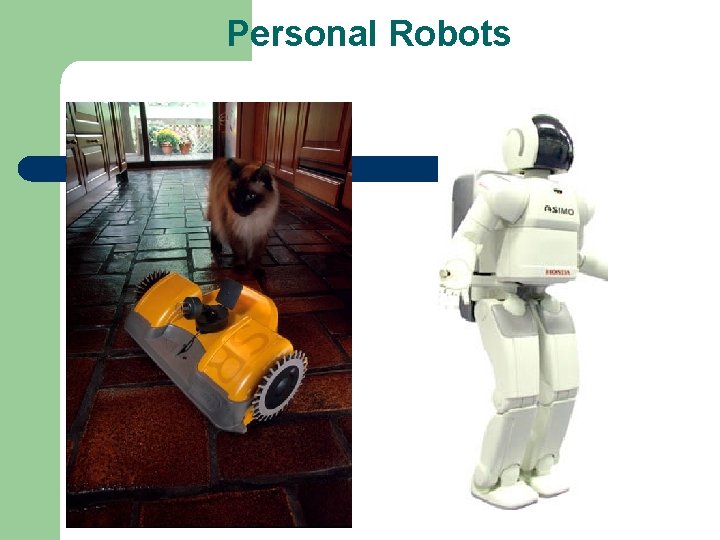
Personal Robots
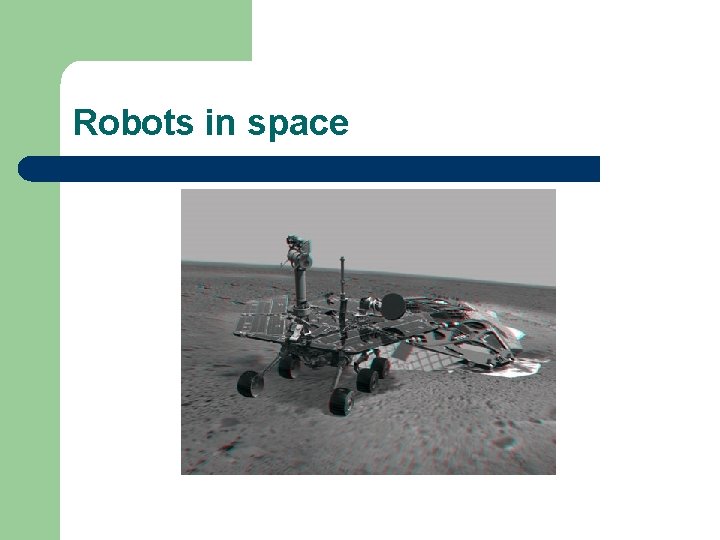
Robots in space
The problem of Navigation Where am I going? q What’s the best way there? q Where have I been? q Where am I? q How am I going to get there? q
Mapping q Topological Mapping § § § q Features and Landmarks Milestones with connections Hard to scale Metric Mapping § § § Geometric representations Occupancy Grids Larger maps much more computationally intensive
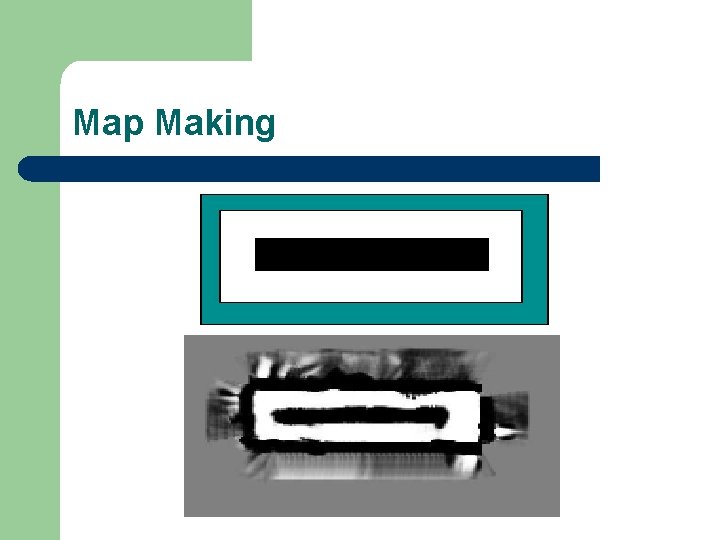
Map Making
Demo of Mapping q The Littlejohn Project http: //www-2. cs. cmu. edu/afs/cs. cmu. edu/project/mercator/www/ littlejohn/ q
Occupancy Grids l l l A tool to construct an internal model of static environments based on sensor data. The environment to be mapped is divided into regions. Each grid cell is an element and represents an area of the environment.
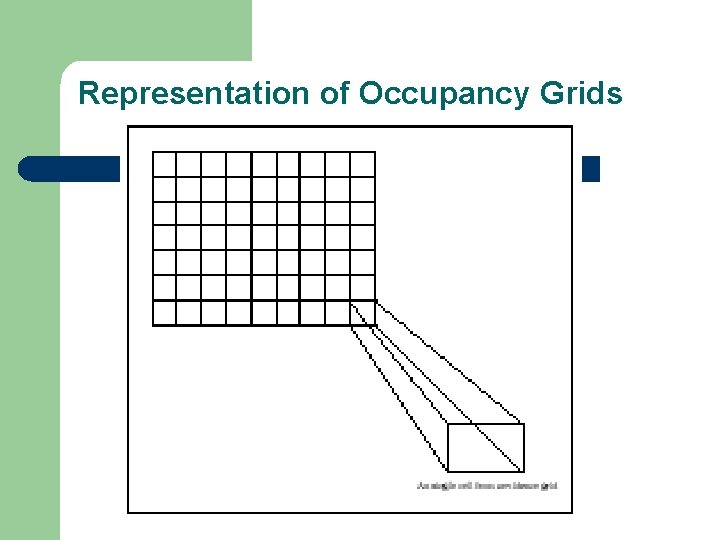
Representation of Occupancy Grids
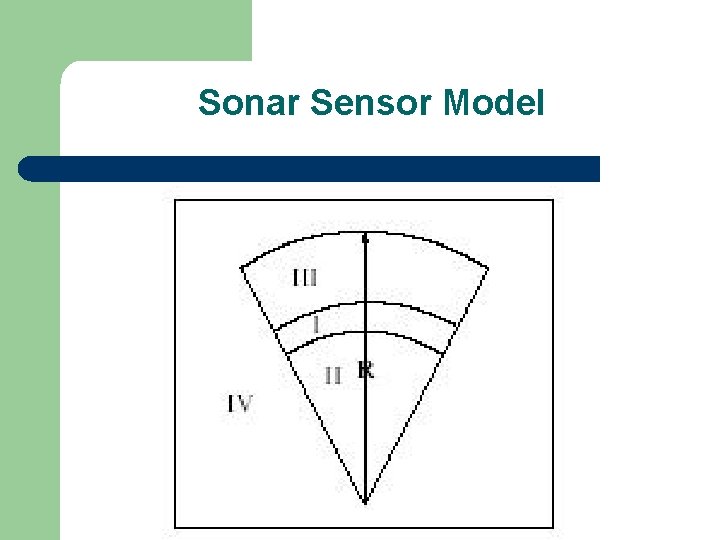
Sonar Sensor Model
Methods of Sonar Reading Probabilistic Methods: q Bayesian q Dempster-Shafer q HIMM (Histogrammic In Motion Mapping)
Why Probabilistic Mapping? q Noise in commands and sensors § § Commands are not executed exactly (eg. Slippage leads to odometry errors) Sonars have several error issues (eg. cross-talk, foreshortening, specular reflection)
Occupancy Grids q Pros § § q Simple Accurate Cons § Require fixed-size environment: difficult to update if size of mapped area changes.
Dynamically Expanding Occupancy Grids l l l Variable-sized maps Ability to increase size of map, if new areas are added to the environment Start mapping at center of nine-block grid As robot explores, new cells are added Global map is stored outside the RAM in a file or a database
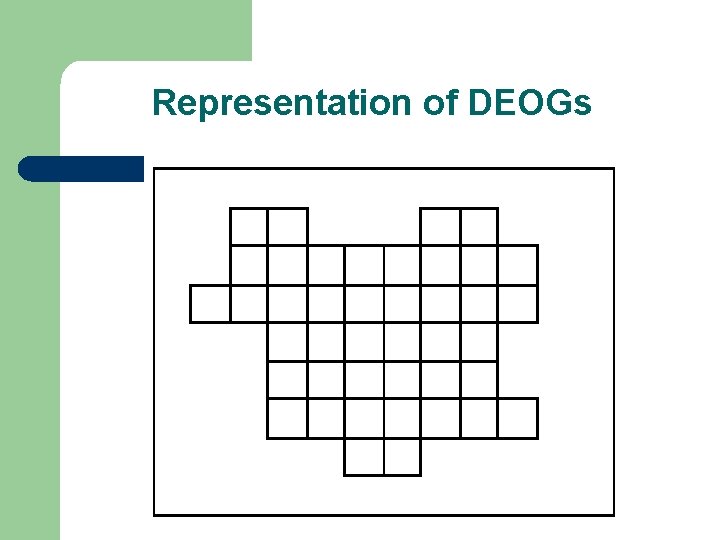
Representation of DEOGs
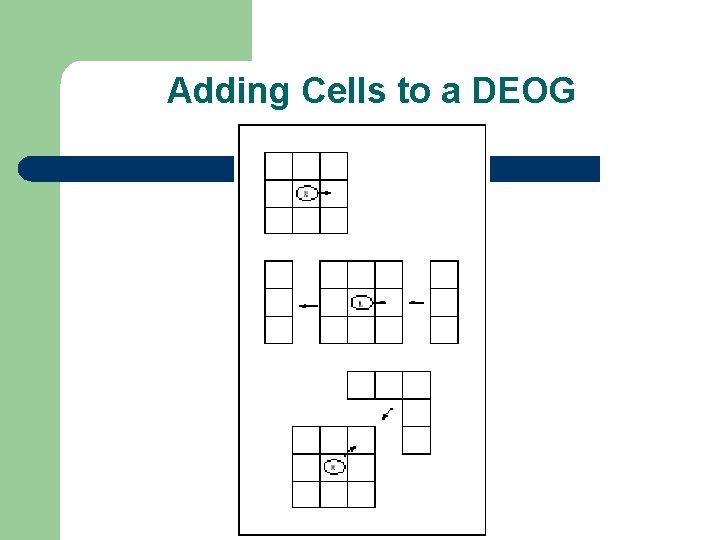
Adding Cells to a DEOG
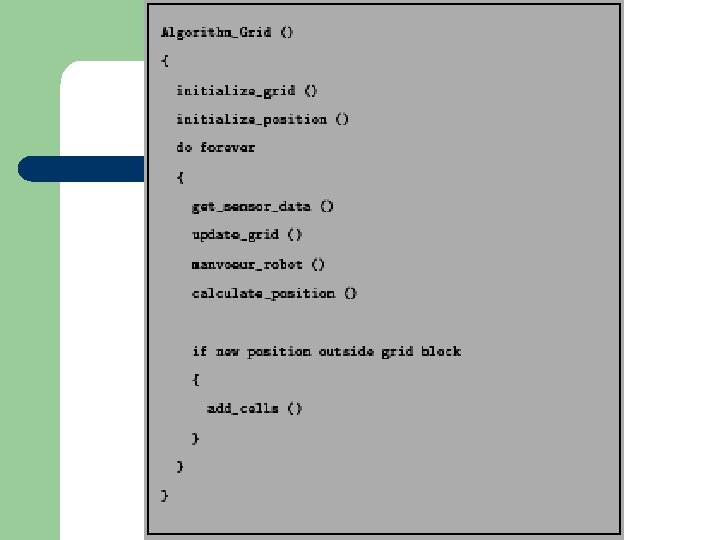
Dynamically Expanding Occupancy Grids Best (the only? ) solution for mapping changing environments. q Saves RAM q Other useful information can be stored in the map q More complicated to program than regular occupancy grids q
Localization Where am I? Methods: q Iconic q Feature-based q Monte-Carlo
Iconic Localization Use raw sensor data q Uses occupancy grids q Current map is compared with original map. If original map has errors, localization is very inaccurate. q Localization errors accumulate over time. q
The Concept “pose”: (x, y, θ) location, orientation q Compare small local occupancy grid with stored global occupancy grid. q Best fit pose is correct pose. q
Feature-based Localization Compares currently extracted features with features marked in a map. q Requires presence of easily extractable features in the environment. q If features are not easily distinguishable, may mistake one for the other. q
Monte Carlo Localization q Probabilistic § § § q 1. Start with a uniform distribution of possible poses (x, y, ) 2. Compute the probability of each pose given current sensor data and a map 3. Normalize probabilities § Throw out low probability points Performance § § Excellent in mapped environments Need non-symmetric geometries
References: q q q q Introduction to AI Robotics Dr. Robin Murphy Dynamically Expanding Occupancy Grids Bharani K. Ellore Multi-agent mapping using dynamic allocation utilizing a storage system Laura Barnes, Richard Garcia, Todd Quasny, Dr. Larry Pyeatt Robotic Mapping: A survey Sebastian Thrun Littlejohn Project http: //www-2. cs. cmu. edu/afs/cs. cmu. edu/project/mercator/www/littlejohn/ CYE www. prorobotics. com The Honda Asimo http: //asimo. honda. com Mars Rover http: //marsrovers. jpl. nasa. gov/home/
- Slides: 27