
MAPEXCEL Managerial Assessment of Proficiency Management Challenges for

- Slides: 45
MAP/EXCEL Managerial Assessment of Proficiency
“Management Challenges for the 21 st Century” by Peter F. Drucker “Simply put, successful managers are capable of influencing human behavior towards organizational purpose and goals. ” “… 90% of the skills and competencies required of effective managers transcend industries and markets. ” 2
What is MAP? Assesses Managerial Competence n Assess Important Style Characteristics n Video Scenario Based n Short “Online” & Long “Class” Versions n 3
Why MAP? Built on a solid foundation n Virtually no competition n Cost effectiveness for clients n Impressive normative base n New pricing opportunties n Objective Competence & style measure n 4
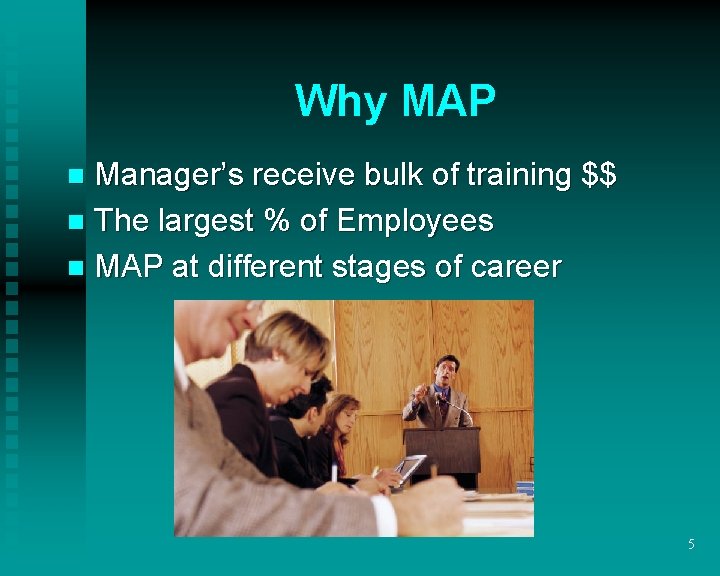
Why MAP Manager’s receive bulk of training $$ n The largest % of Employees n MAP at different stages of career n 5
Other Critical Factors for Management Success Product knowledge n Technical knowledge n Industry knowledge n Coping with change n Personality n Etc. n 6
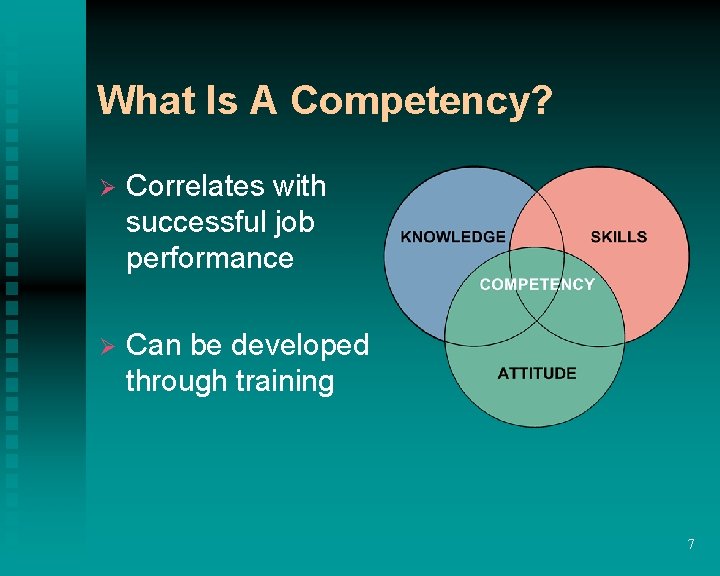
What Is A Competency? Ø Correlates with successful job performance Ø Can be developed through training 7
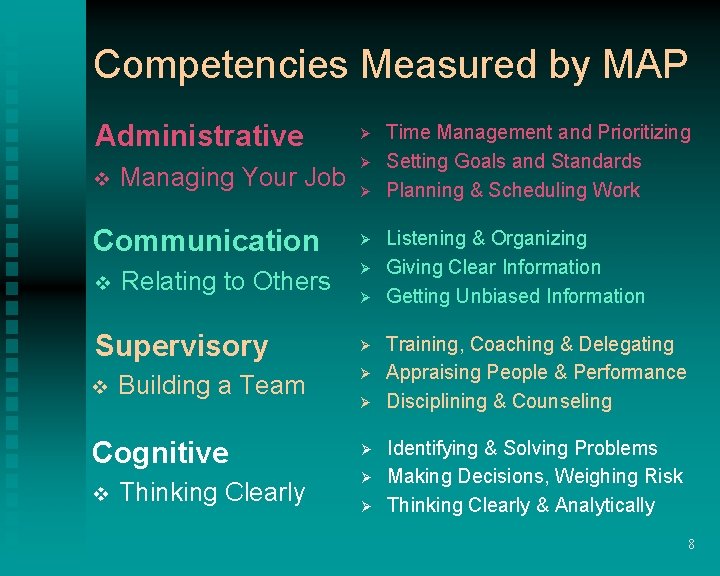
Competencies Measured by MAP Administrative v Managing Your Job Communication v Relating to Others Supervisory v Building a Team Cognitive v Thinking Clearly Ø Ø Ø Time Management and Prioritizing Setting Goals and Standards Planning & Scheduling Work Listening & Organizing Giving Clear Information Getting Unbiased Information Training, Coaching & Delegating Appraising People & Performance Disciplining & Counseling Identifying & Solving Problems Making Decisions, Weighing Risk Thinking Clearly & Analytically 8
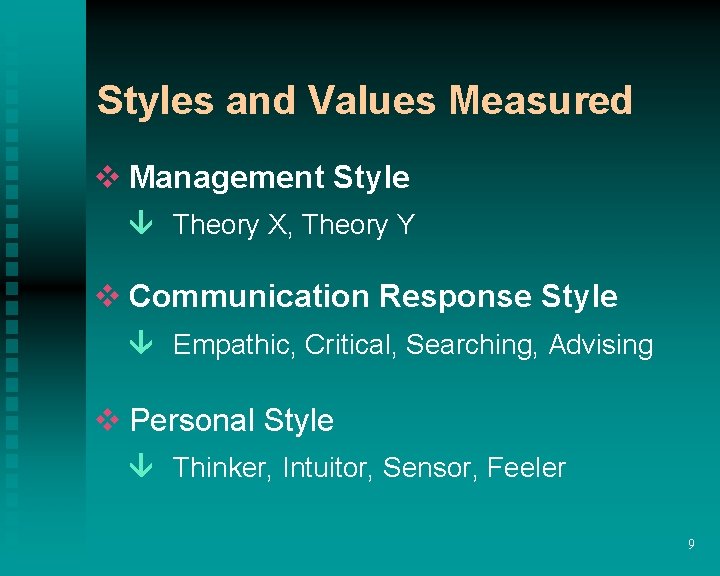
Styles and Values Measured v Management Style Theory X, Theory Y v Communication Response Style Empathic, Critical, Searching, Advising v Personal Style Thinker, Intuitor, Sensor, Feeler 9
Where Did They Come From? From studies conducted at… “Skills and competencies required of. American effective. Martin managers transcend Ford IBM Marietta Kodak AT&T Management industries…” Association – Peter F. Drucker 10
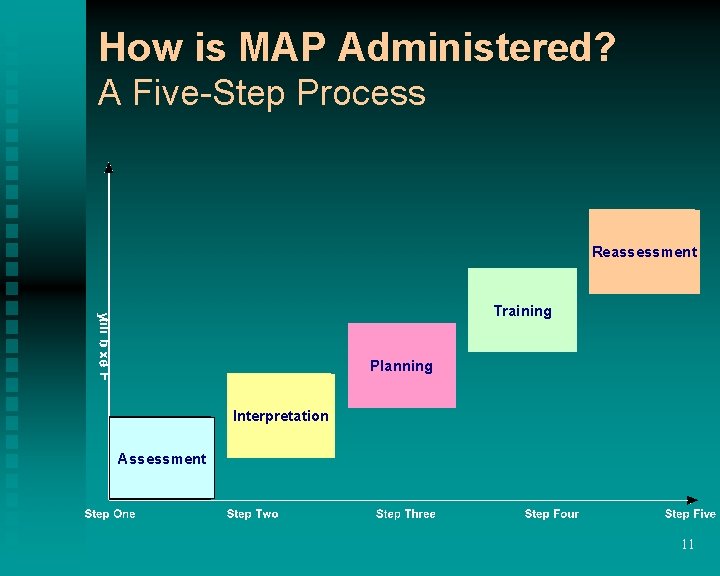
How is MAP Administered? A Five-Step Process Reassessment Training Planning Interpretation Assessment 11
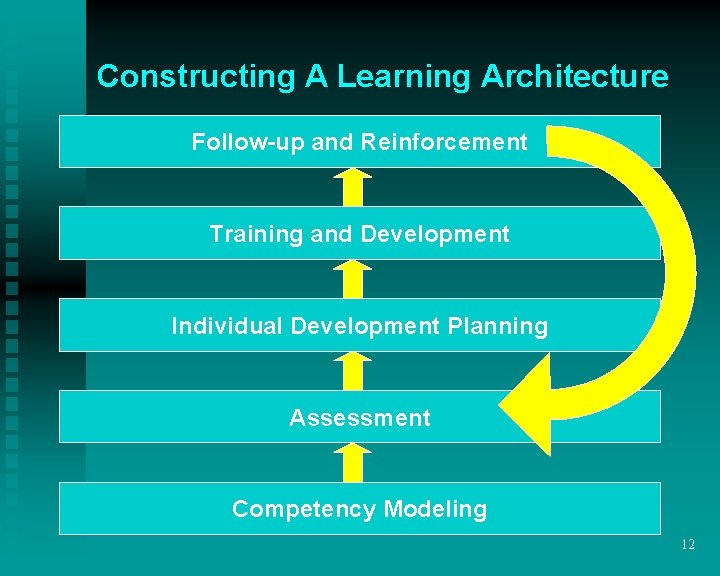
Constructing A Learning Architecture Follow-up and Reinforcement Training and Development Individual Development Planning Assessment Competency Modeling 12
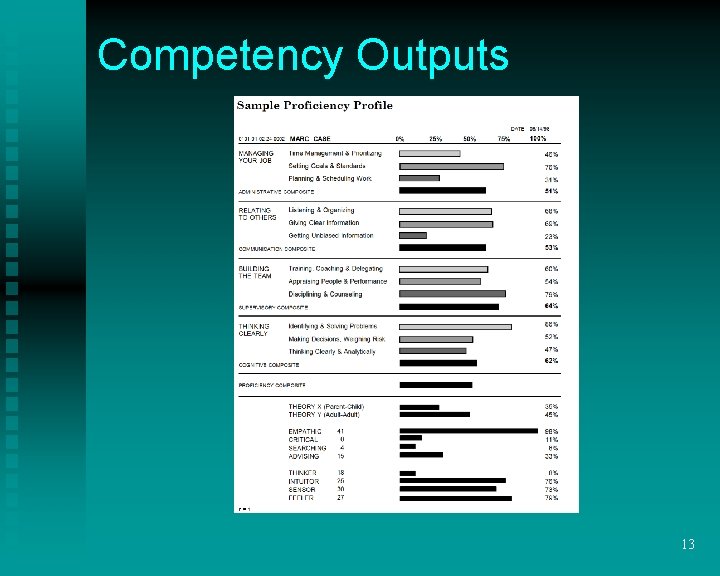
Competency Outputs 13
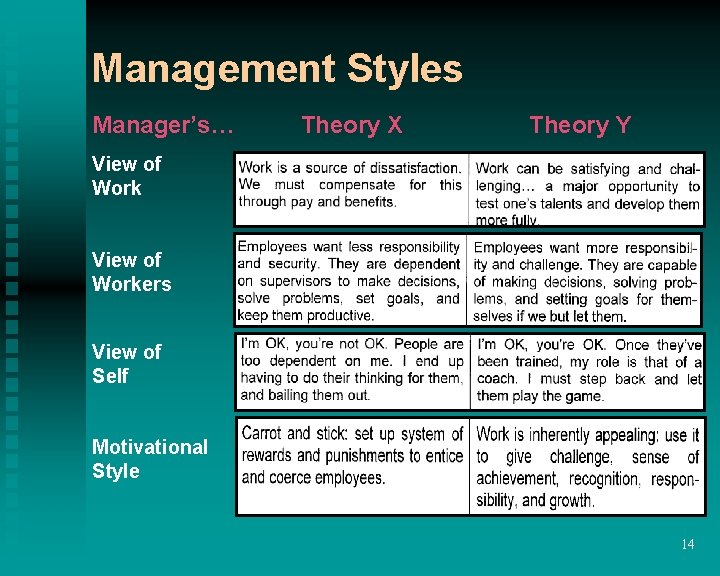
Management Styles Manager’s… Theory X Theory Y View of Workers View of Self Motivational Style 14
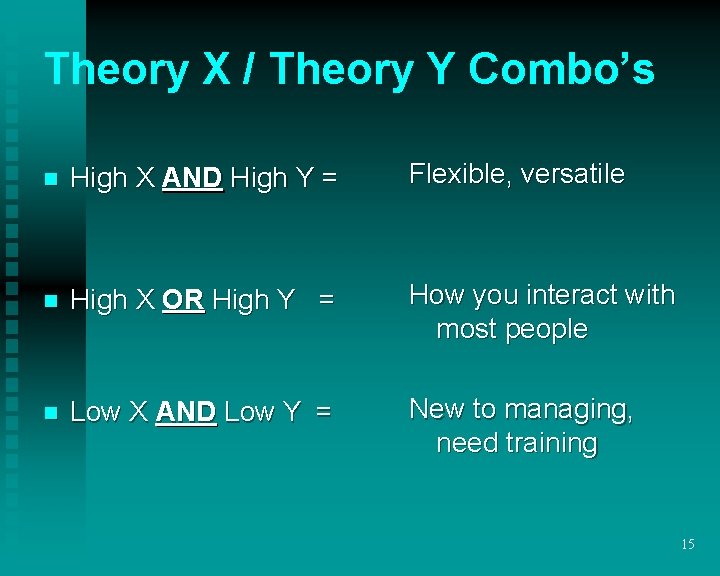
Theory X / Theory Y Combo’s n High X AND High Y = Flexible, versatile n High X OR High Y = How you interact with most people n Low X AND Low Y = New to managing, need training 15
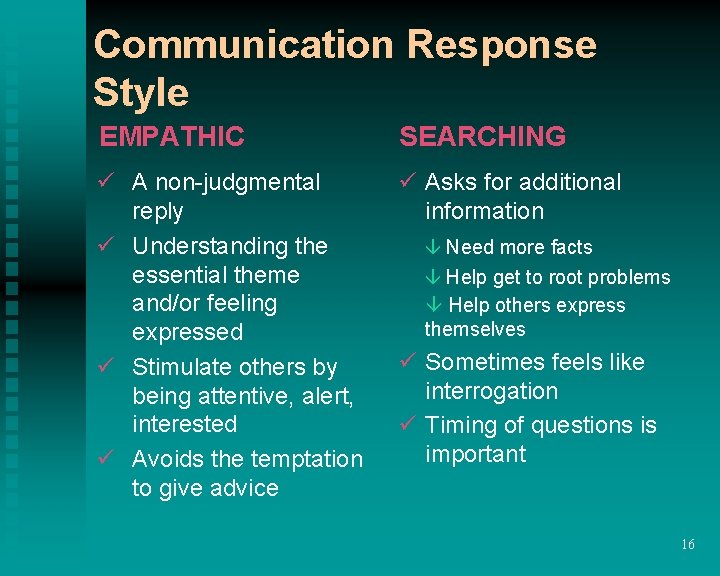
Communication Response Style EMPATHIC SEARCHING ü A non-judgmental reply ü Understanding the essential theme and/or feeling expressed ü Stimulate others by being attentive, alert, interested ü Avoids the temptation to give advice ü Asks for additional information Need more facts Help get to root problems Help others express themselves ü Sometimes feels like interrogation ü Timing of questions is important 16
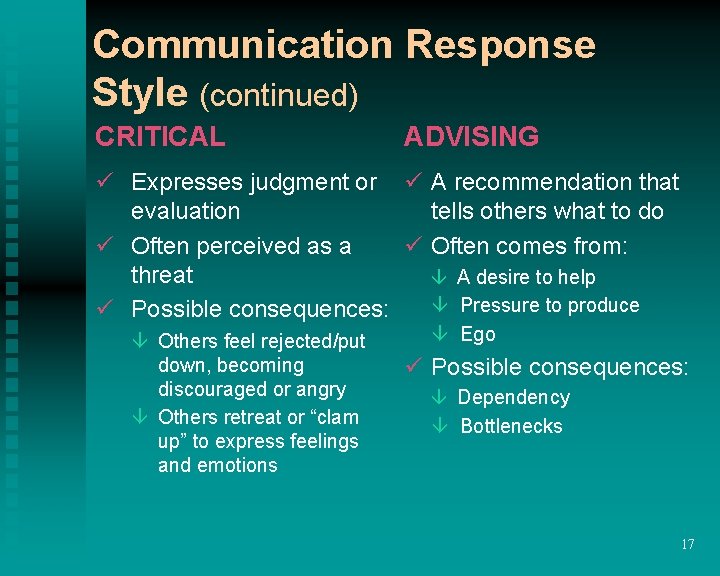
Communication Response Style (continued) CRITICAL ADVISING ü Expresses judgment or ü A recommendation that evaluation tells others what to do ü Often perceived as a ü Often comes from: threat A desire to help Pressure to produce ü Possible consequences: Others feel rejected/put down, becoming discouraged or angry Others retreat or “clam up” to express feelings and emotions Ego ü Possible consequences: Dependency Bottlenecks 17
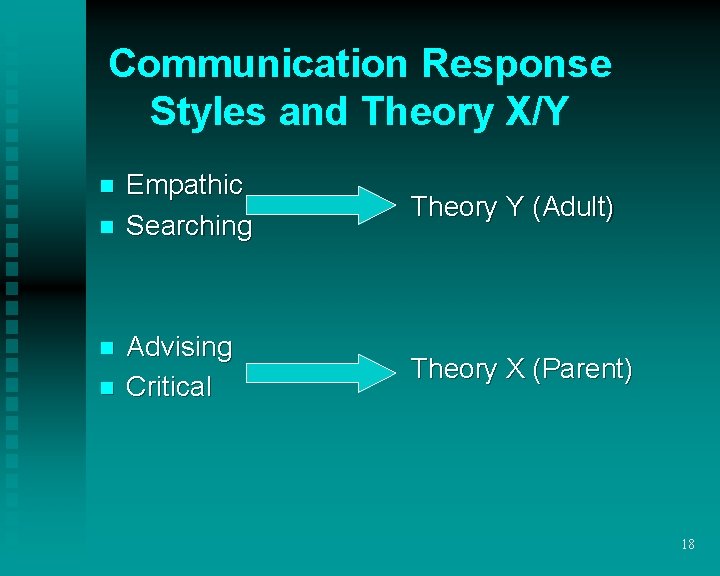
Communication Response Styles and Theory X/Y n n Empathic Searching Theory Y (Adult) Advising Critical Theory X (Parent) 18
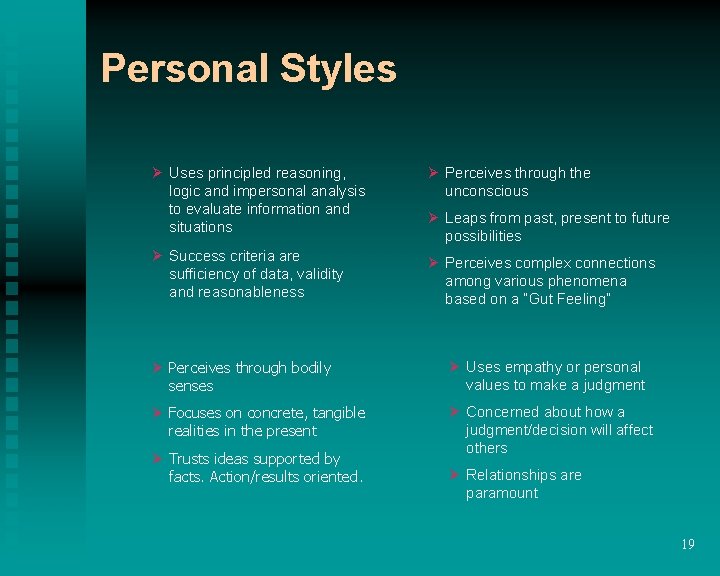
Personal Styles Ø Uses principled reasoning, logic and impersonal analysis to evaluate information and situations Ø Perceives through the unconscious Ø Success criteria are sufficiency of data, validity and reasonableness Ø Perceives complex connections among various phenomena based on a “Gut Feeling” Ø Leaps from past, present to future possibilities Ø Perceives through bodily senses Ø Uses empathy or personal values to make a judgment Ø Focuses on concrete, tangible realities in the present Ø Concerned about how a judgment/decision will affect others Ø Trusts ideas supported by facts. Action/results oriented. Ø Relationships are paramount 19
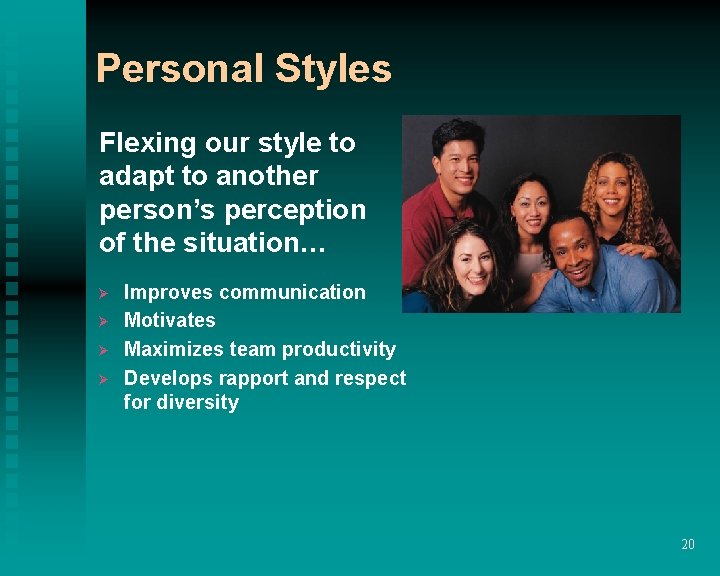
Personal Styles Flexing our style to adapt to another person’s perception of the situation… Ø Ø Improves communication Motivates Maximizes team productivity Develops rapport and respect for diversity 20
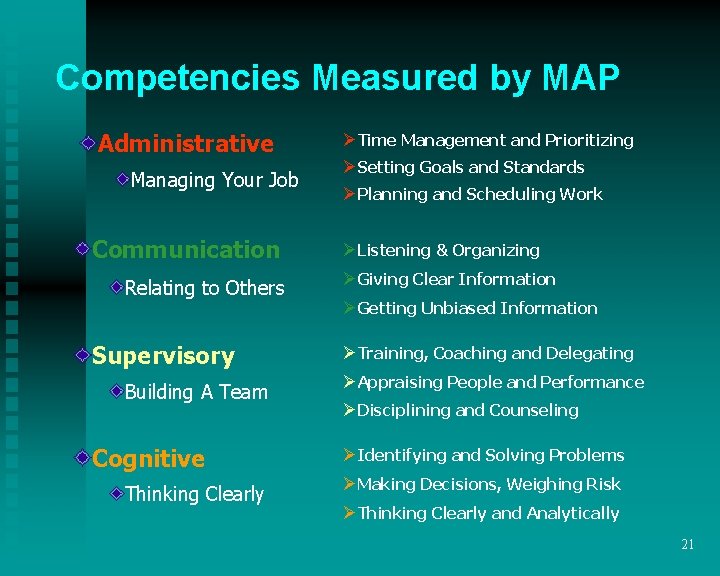
Competencies Measured by MAP Administrative Managing Your Job Communication Relating to Others Supervisory Building A Team Cognitive Thinking Clearly ØTime Management and Prioritizing ØSetting Goals and Standards ØPlanning and Scheduling Work ØListening & Organizing ØGiving Clear Information ØGetting Unbiased Information ØTraining, Coaching and Delegating ØAppraising People and Performance ØDisciplining and Counseling ØIdentifying and Solving Problems ØMaking Decisions, Weighing Risk ØThinking Clearly and Analytically 21
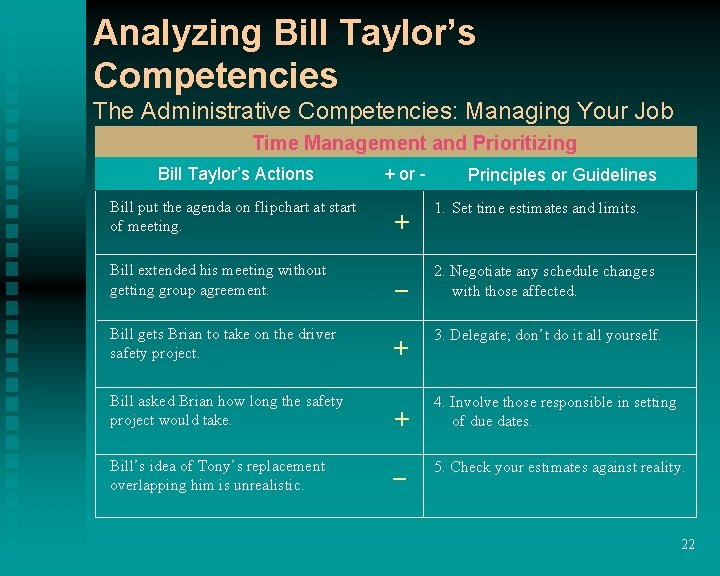
Analyzing Bill Taylor’s Competencies The Administrative Competencies: Managing Your Job Time Management and Prioritizing Bill Taylor’s Actions Bill put the agenda on flipchart at start of meeting. Bill extended his meeting without getting group agreement. Bill gets Brian to take on the driver safety project. + or - + – + Bill asked Brian how long the safety project would take. + Bill’s idea of Tony’s replacement overlapping him is unrealistic. – Principles or Guidelines 1. Set time estimates and limits. 2. Negotiate any schedule changes with those affected. 3. Delegate; don’t do it all yourself. 4. Involve those responsible in setting of due dates. 5. Check your estimates against reality. 22
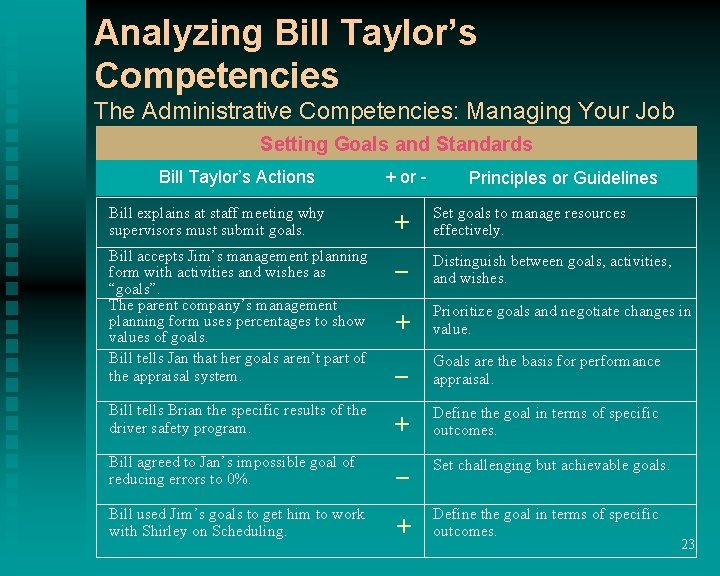
Analyzing Bill Taylor’s Competencies The Administrative Competencies: Managing Your Job Setting Goals and Standards Bill Taylor’s Actions Bill explains at staff meeting why supervisors must submit goals. + or - Principles or Guidelines + Set goals to manage resources effectively. – Distinguish between goals, activities, and wishes. + Prioritize goals and negotiate changes in value. – Goals are the basis for performance appraisal. Bill tells Brian the specific results of the driver safety program. + Define the goal in terms of specific outcomes. Bill agreed to Jan’s impossible goal of reducing errors to 0%. – Set challenging but achievable goals. Bill accepts Jim’s management planning form with activities and wishes as “goals”. The parent company’s management planning form uses percentages to show values of goals. Bill tells Jan that her goals aren’t part of the appraisal system. Bill used Jim’s goals to get him to work with Shirley on Scheduling. + Define the goal in terms of specific outcomes. 23
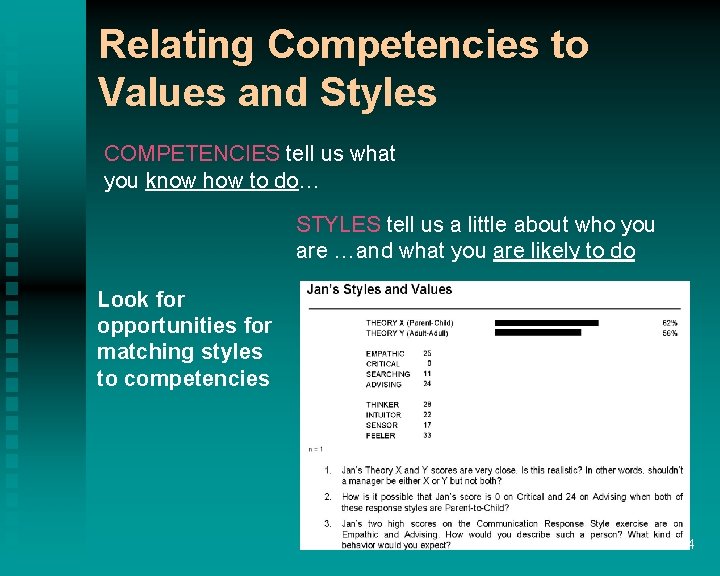
Relating Competencies to Values and Styles COMPETENCIES tell us what you know how to do… STYLES tell us a little about who you are …and what you are likely to do Look for opportunities for matching styles to competencies 24
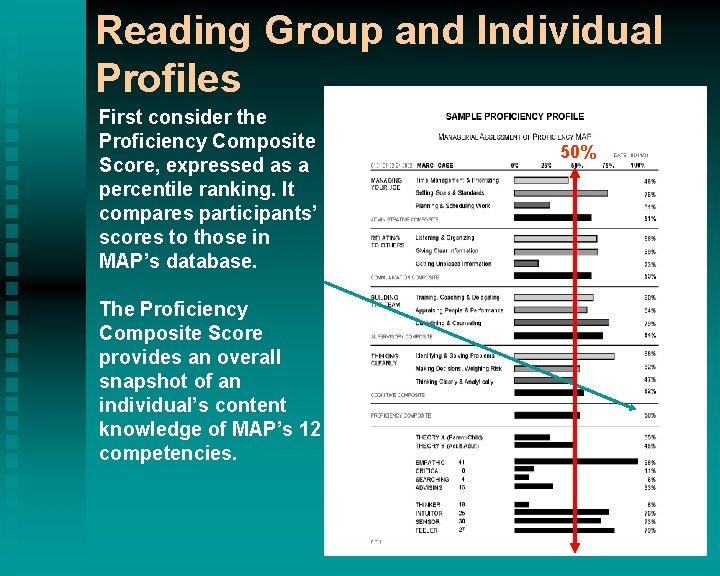
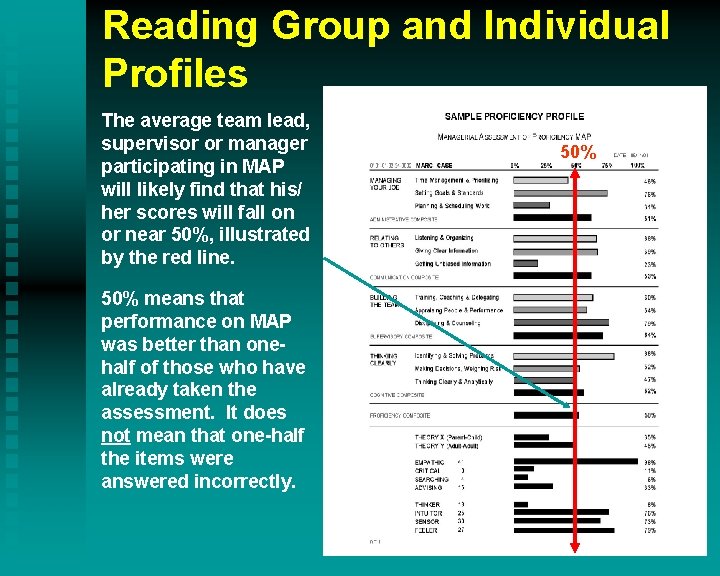
Reading Group and Individual Profiles First consider the Proficiency Composite Score, expressed as a percentile ranking. It compares participants’ scores to those in MAP’s database. 50% The Proficiency Composite Score provides an overall snapshot of an individual’s content knowledge of MAP’s 12 competencies. 25
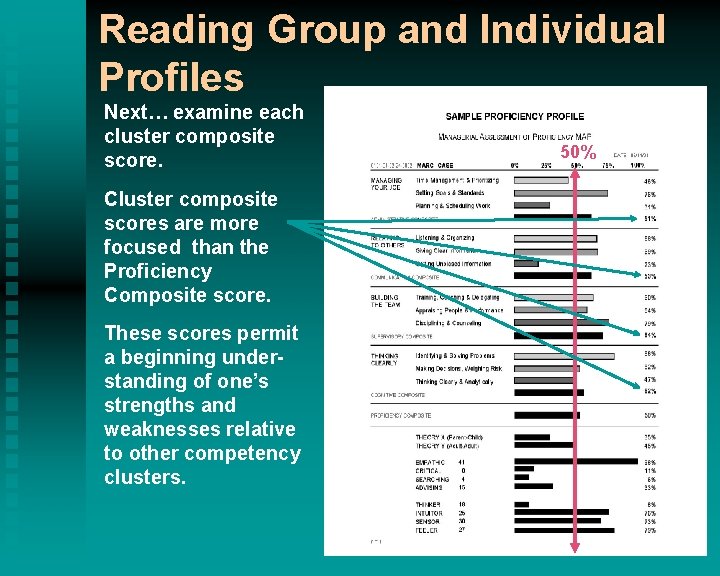
Reading Group and Individual Profiles Next… examine each cluster composite score. 50% Cluster composite scores are more focused than the Proficiency Composite score. These scores permit a beginning understanding of one’s strengths and weaknesses relative to other competency clusters. 26
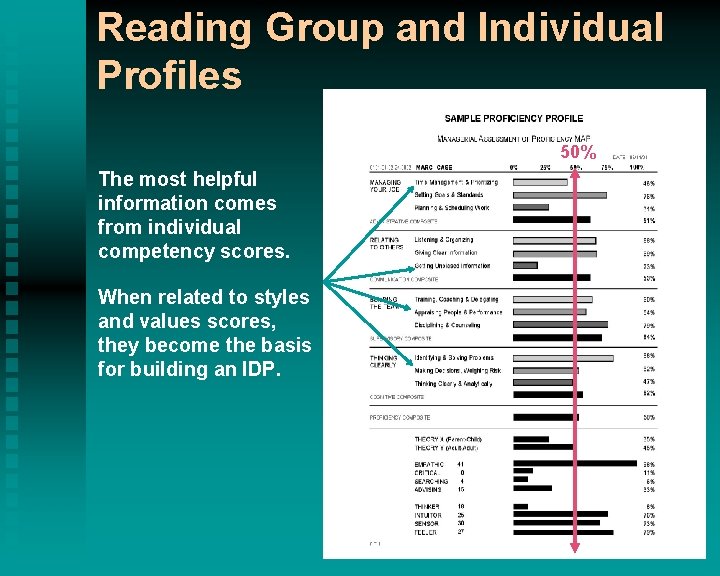
Reading Group and Individual Profiles 50% The most helpful information comes from individual competency scores. When related to styles and values scores, they become the basis for building an IDP. 27
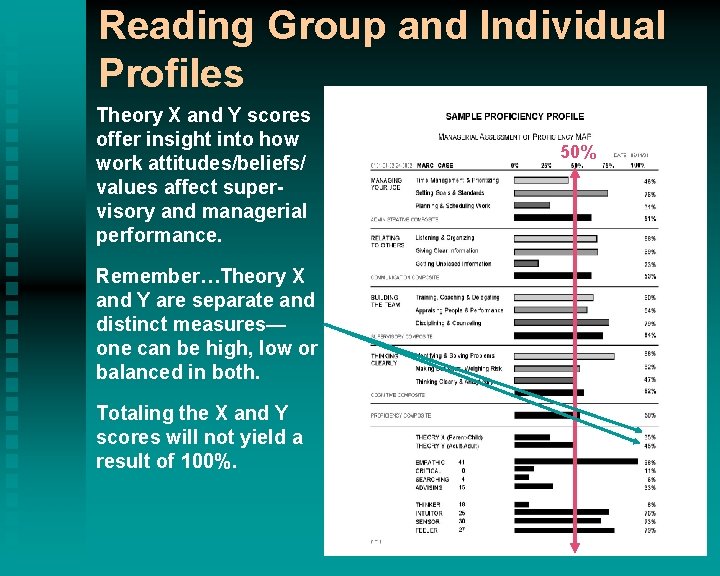
Reading Group and Individual Profiles Theory X and Y scores offer insight into how work attitudes/beliefs/ values affect supervisory and managerial performance. 50% Remember…Theory X and Y are separate and distinct measures— one can be high, low or balanced in both. Totaling the X and Y scores will not yield a result of 100%. 28
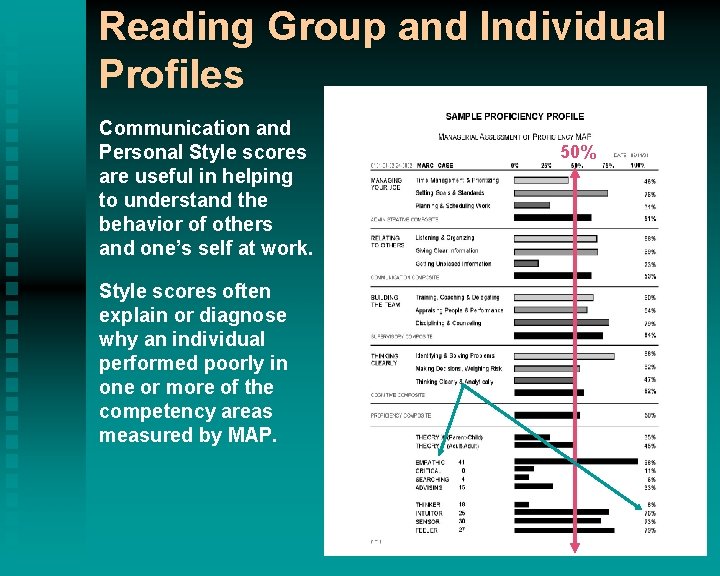
Reading Group and Individual Profiles Communication and Personal Style scores are useful in helping to understand the behavior of others and one’s self at work. 50% Style scores often explain or diagnose why an individual performed poorly in one or more of the competency areas measured by MAP. 29
Reading Group and Individual Profiles The average team lead, supervisor or manager participating in MAP will likely find that his/ her scores will fall on or near 50%, illustrated by the red line. 50% means that performance on MAP was better than onehalf of those who have already taken the assessment. It does not mean that one-half the items were answered incorrectly. 30
MAP Group Composite Profile Interpretation v Where are we strong as a group? v If you were a training director making recommendations to senior management, where do we need to improve as a group? v Any surprises? 31
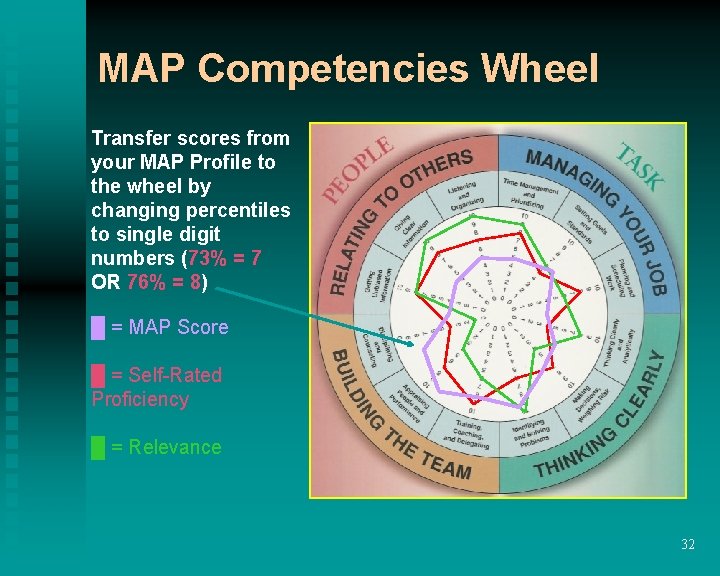
MAP Competencies Wheel Transfer scores from your MAP Profile to the wheel by changing percentiles to single digit numbers (73% = 7 OR 76% = 8) █ = MAP Score █ = Self-Rated Proficiency █ = Relevance 32
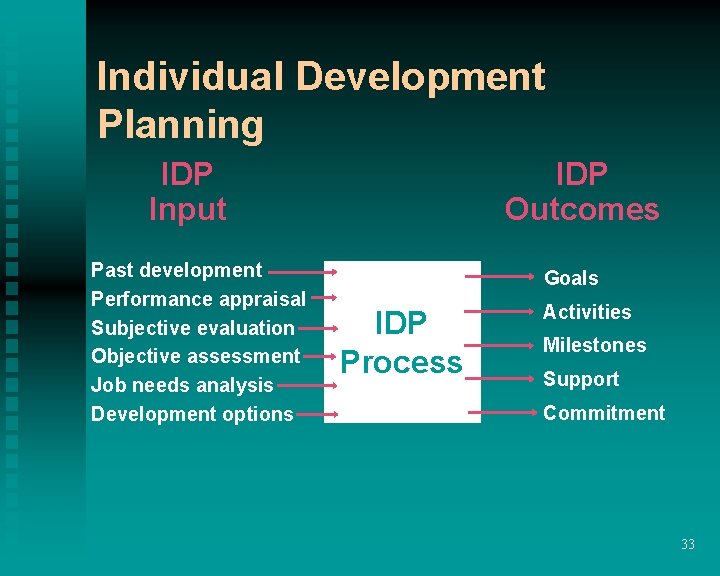
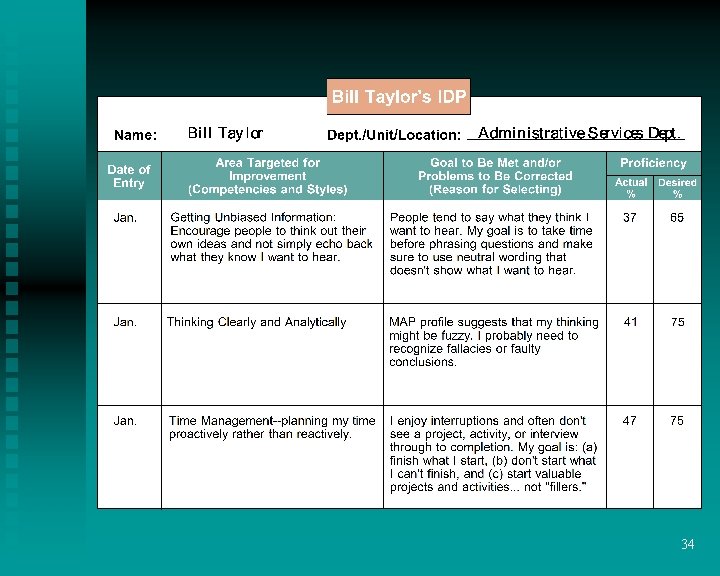
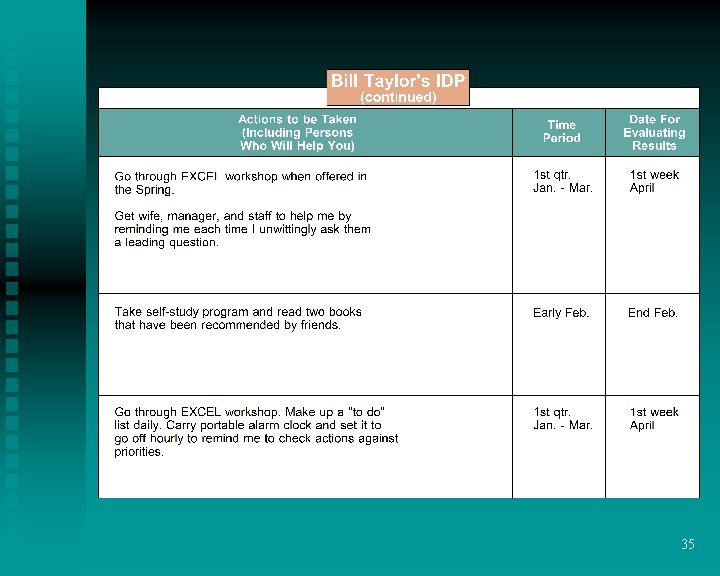
Individual Development Planning IDP Input Past development Performance appraisal Subjective evaluation Objective assessment Job needs analysis Development options IDP Outcomes Goals IDP Process Activities Milestones Support Commitment 33
34
35
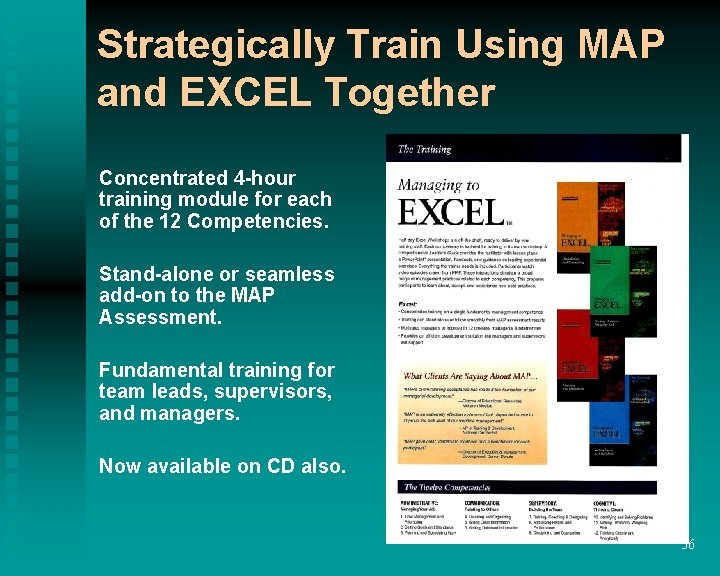
Strategically Train Using MAP and EXCEL Together Concentrated 4 -hour training module for each of the 12 Competencies. Stand-alone or seamless add-on to the MAP Assessment. Fundamental training for team leads, supervisors, and managers. Now available on CD also. 36
Selling Points: MAP/EXCEL Identifies individual areas of need n Eliminates unnecessary training n The only assessment of its kind n One of the oldest assessments of ANY kind n Provides normed scoring n Post-testing capability n Follow-on EXCEL modules n 37
How to Market MAP/EXCEL Showcases = test drives n Historically done live n Can now be done via teleconference n We may also do individual showcases n 38
Handling Objections n “It’s too expensive” n “It takes too long” n “It doesn’t allow for others’ perspectives” 39
Installing MAP/EXCEL Start with the middle, work down n Include top managers later n They’ll tell you it doesn’t reflect their jobs n Tell them to take it anyway to support their manager participants n 40
The Selling Cycle Showcase n Proposal n Pilot session (minimum 10 participants, $400/person) n If license sale, installation program (trainer, material, and scoring included) n May be months (or years) long n 41
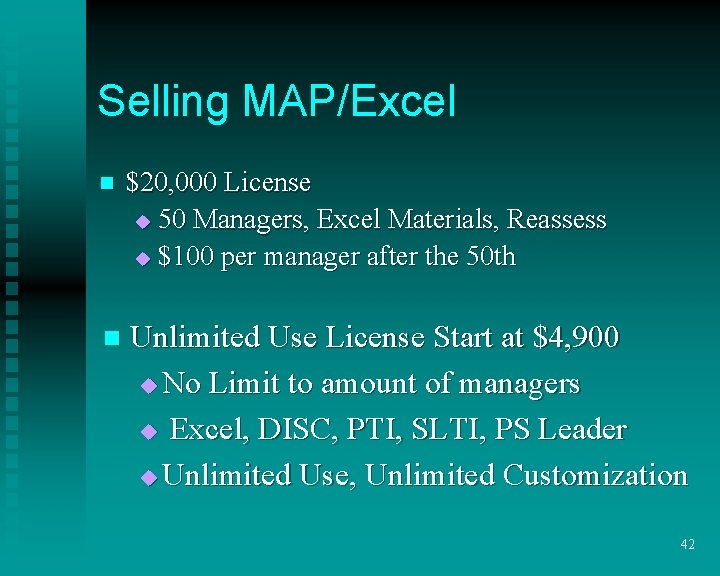
Selling MAP/Excel n $20, 000 License u 50 Managers, Excel Materials, Reassess u $100 per manager after the 50 th n Unlimited Use License Start at $4, 900 u No Limit to amount of managers u Excel, DISC, PTI, SLTI, PS Leader u Unlimited Use, Unlimited Customization 42
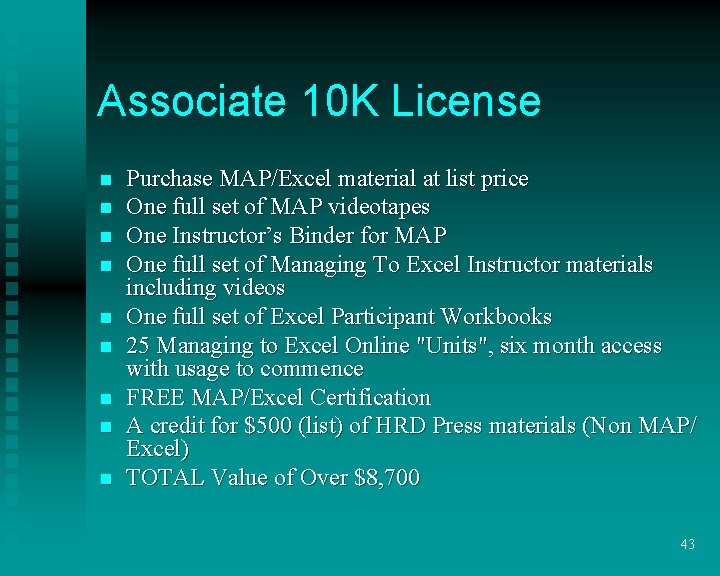
Associate 10 K License n n n n n Purchase MAP/Excel material at list price One full set of MAP videotapes One Instructor’s Binder for MAP One full set of Managing To Excel Instructor materials including videos One full set of Excel Participant Workbooks 25 Managing to Excel Online "Units", six month access with usage to commence FREE MAP/Excel Certification A credit for $500 (list) of HRD Press materials (Non MAP/ Excel) TOTAL Value of Over $8, 700 43
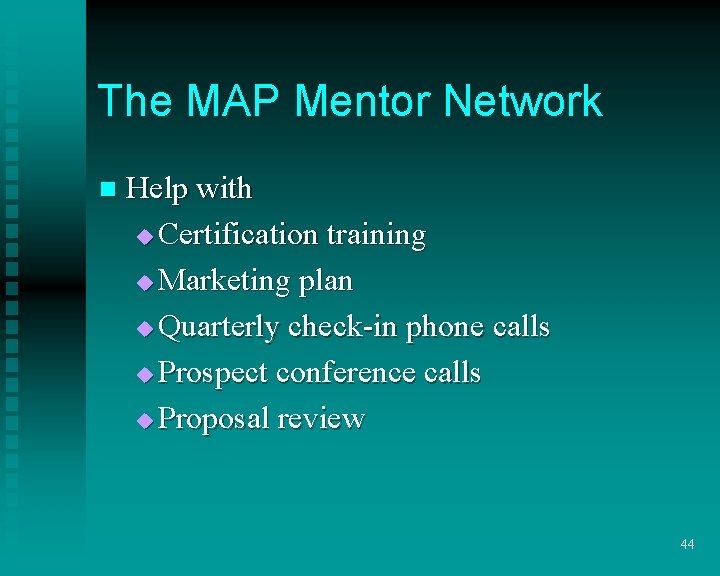
The MAP Mentor Network n Help with u Certification training u Marketing plan u Quarterly check-in phone calls u Prospect conference calls u Proposal review 44
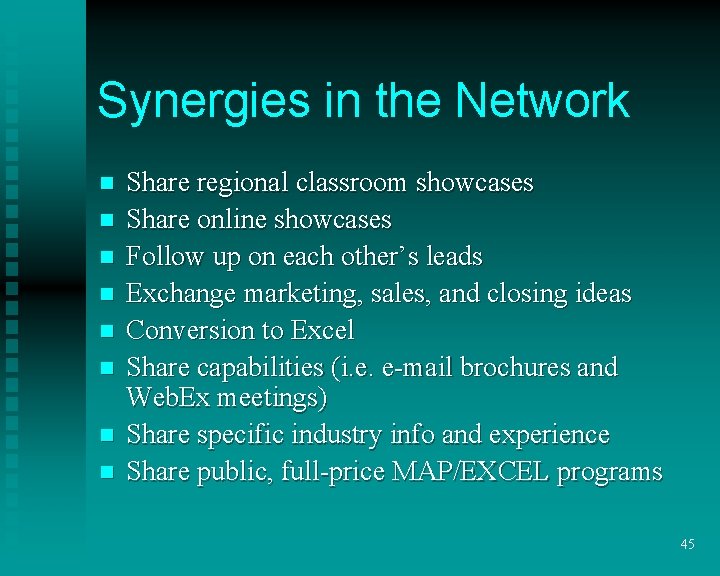
Synergies in the Network n n n n Share regional classroom showcases Share online showcases Follow up on each other’s leads Exchange marketing, sales, and closing ideas Conversion to Excel Share capabilities (i. e. e-mail brochures and Web. Ex meetings) Share specific industry info and experience Share public, full-price MAP/EXCEL programs 45