
MAP READING SKILLS REVISITED 46 38 Elements of


- Slides: 44
MAP READING SKILLS REVISITED
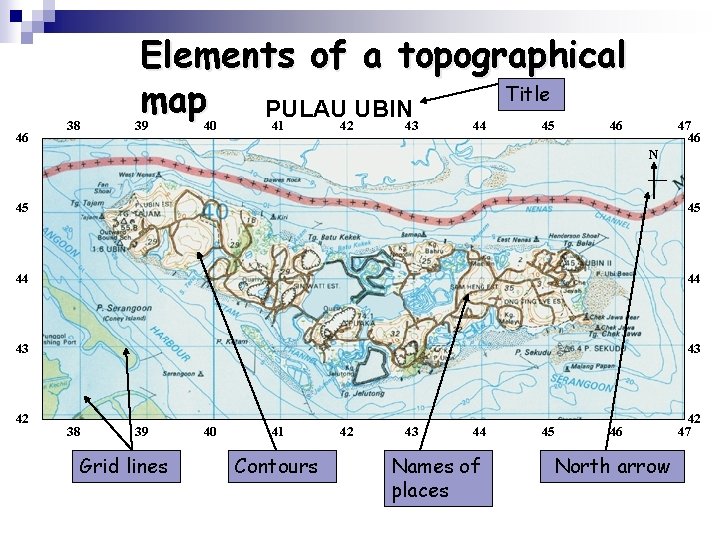
46 38 Elements of a topographical Title map PULAU UBIN 39 40 41 42 43 44 45 46 47 46 N 45 45 44 44 43 43 42 42 47 38 39 Grid lines 40 41 Contours 42 43 44 Names of places 45 46 North arrow
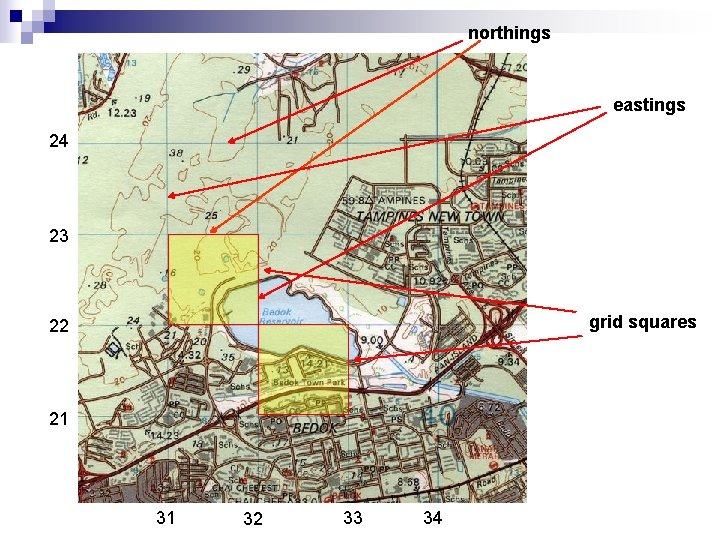
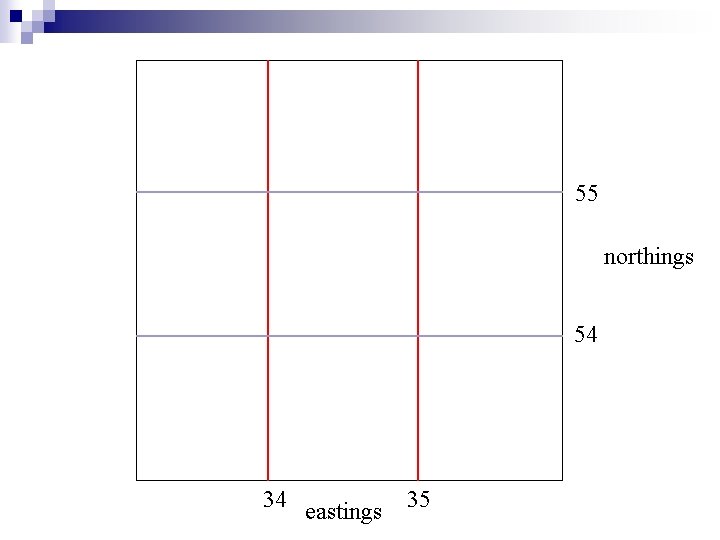
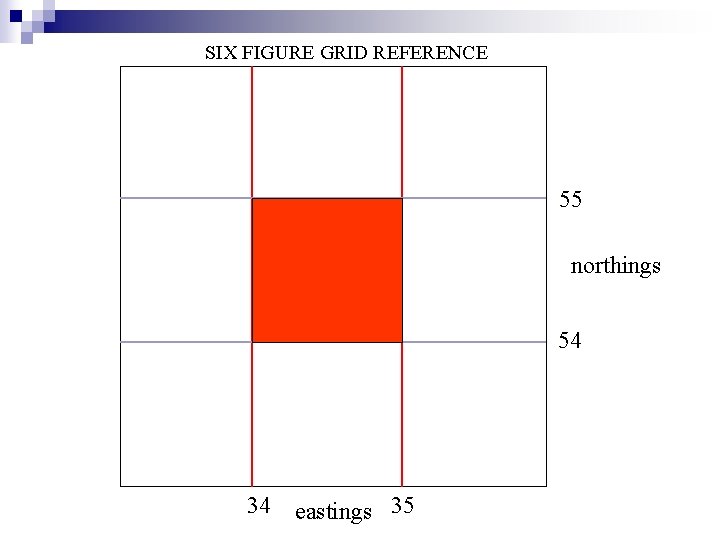
GRID REFERENCES Vertical lines on topographical maps are called eastings n Horizontal lines are called northings n Together they are called grid lines n They help to find locations on a map n
northings eastings 24 23 grid squares 22 21 31 32 33 34
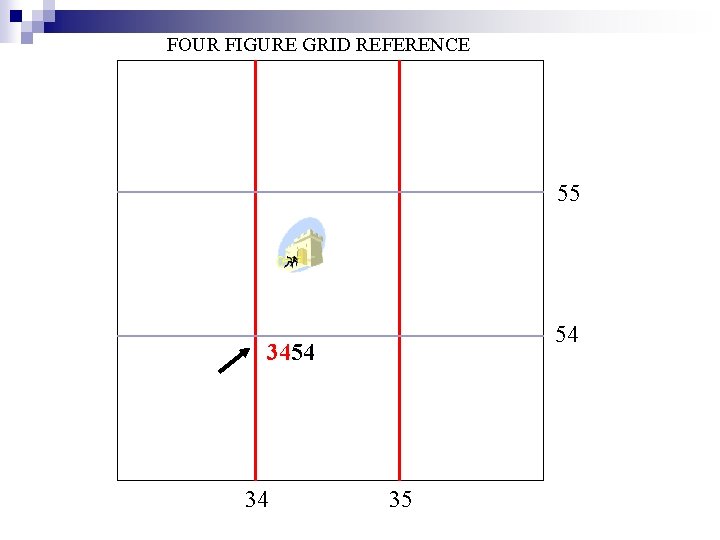
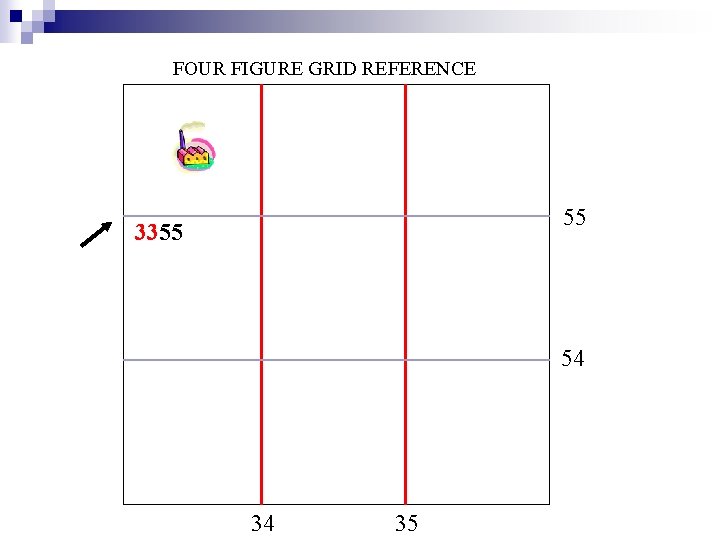
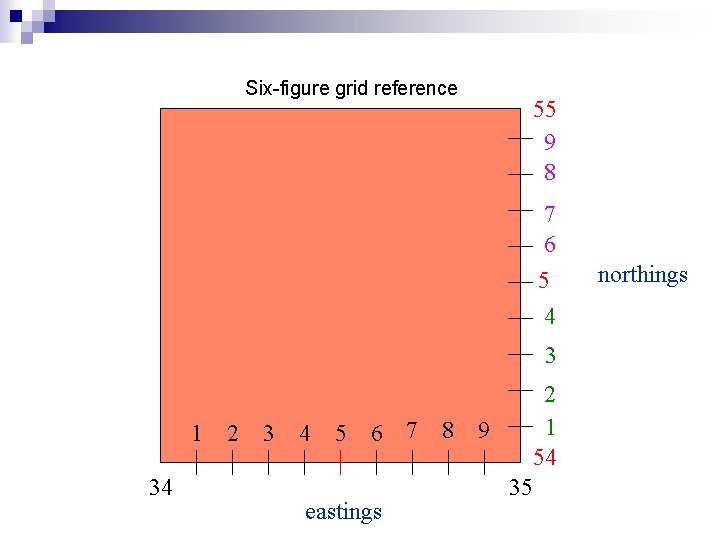
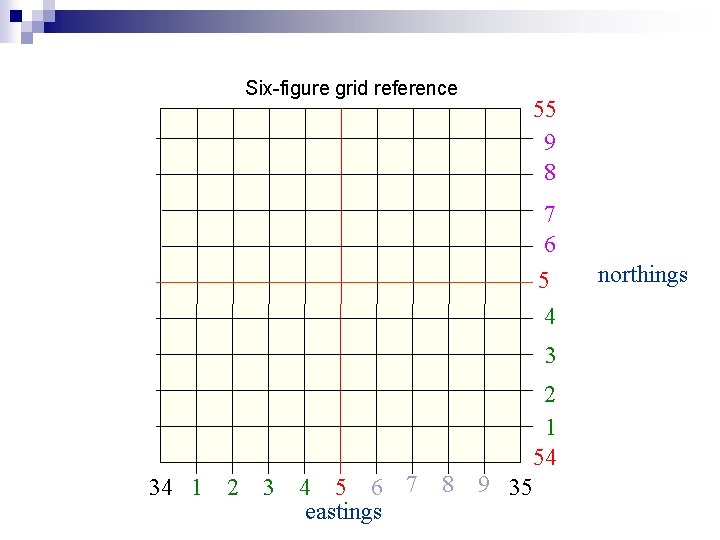
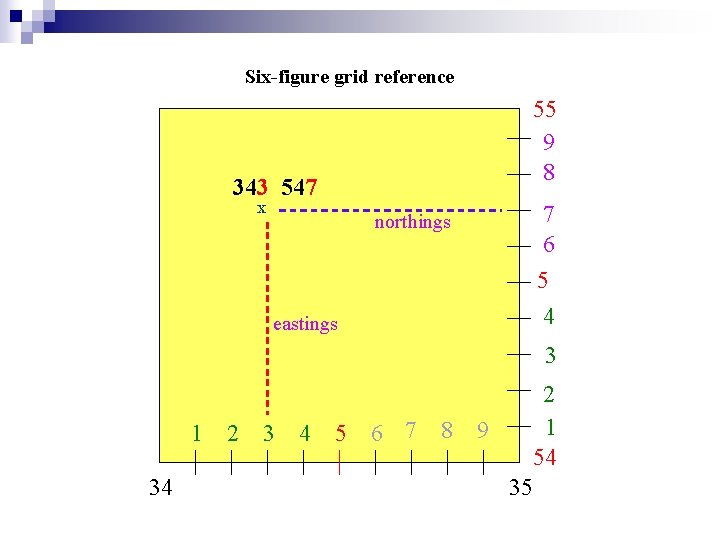
GRID REFERENCES The four – figure grid reference is used to find an area on a grid square n The six – figure grid reference is used for more accurate location n
55 northings 54 34 eastings 35
FOUR FIGURE GRID REFERENCE 55 54 34 35
FOUR FIGURE GRID REFERENCE 55 3355 54 34 35
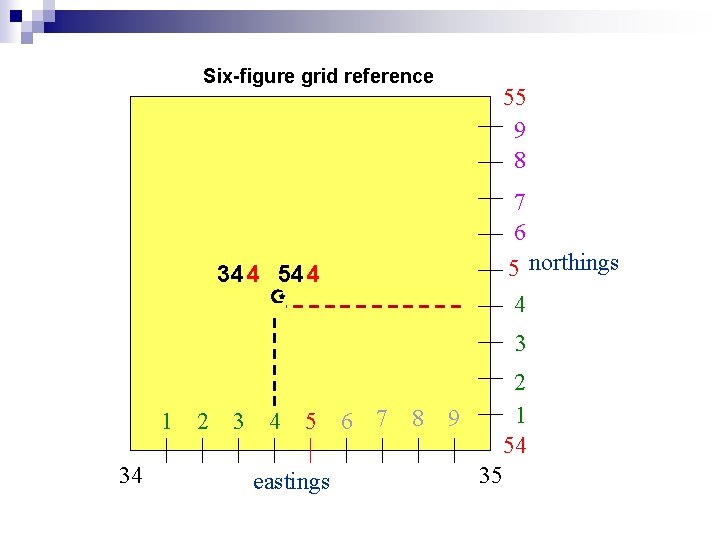
SIX FIGURE GRID REFERENCE 55 northings 54 34 eastings 35
Six-figure grid reference 55 9 8 7 6 5 4 3 1 34 2 3 4 5 6 7 eastings 8 2 1 54 9 35 northings
Six-figure grid reference 55 9 8 7 6 5 4 3 2 1 54 34 1 2 3 4 5 6 7 eastings 8 9 35 northings
Six-figure grid reference 55 9 8 343 547 x 7 6 5 4 northings eastings 3 1 34 2 3 4 5 6 7 8 2 1 54 9 35
Six-figure grid reference 55 9 8 7 6 5 northings 4 34 4 54 4 Z 3 1 34 2 3 4 5 eastings 6 7 8 2 1 9 54 35
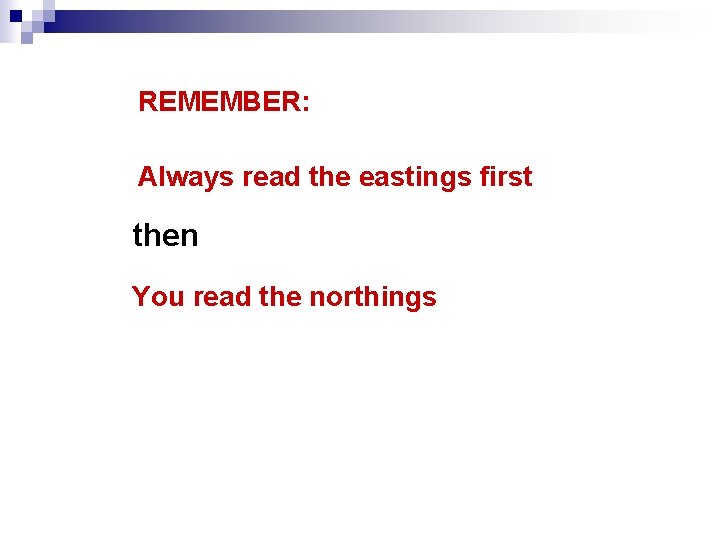
REMEMBER: Always read the eastings first then You read the northings
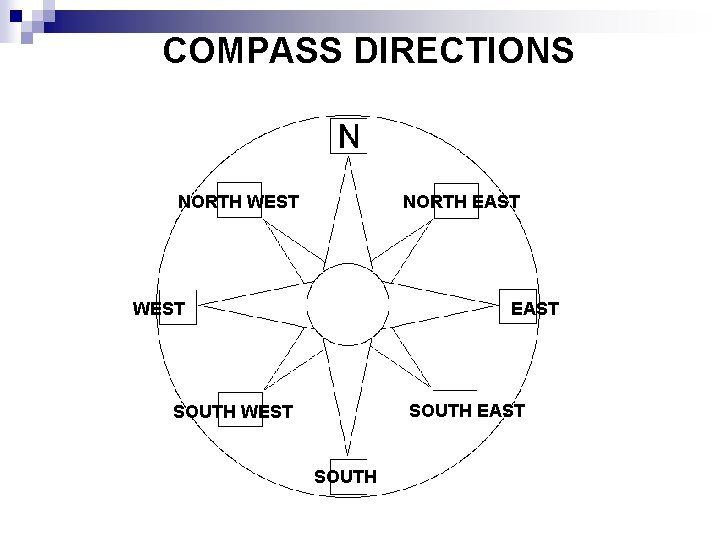
COMPASS DIRECTIONS NORTH WEST NORTH EAST WEST EAST SOUTH WEST SOUTH
Finding directions using compass points
Find the directions. . . north-east of star from triangle north-east of circle from triangle of square from triangle north-east N
What is the problem of giving directions using compass points? n Lacks accuracy
Finding directions using bearings
COMPASS BEARINGS 0° 360 ° 45 ° 315 ° NORTH EAST NORTH WEST 270 ° EAST WEST 90 ° SOUTH EAST SOUTH WEST 135 ° 225 ° SOUTH 180 °
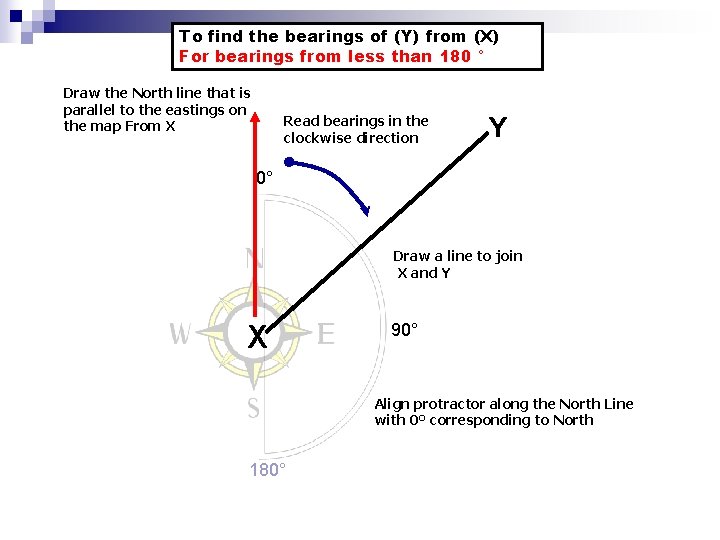
To find the bearings of (Y) from (X) For bearings from less than 180 ° Draw the North line that is parallel to the eastings on the map From X Read bearings in the clockwise direction Y 0° Draw a line to join X and Y X 90° Align protractor along the North Line with 0° corresponding to North 180°
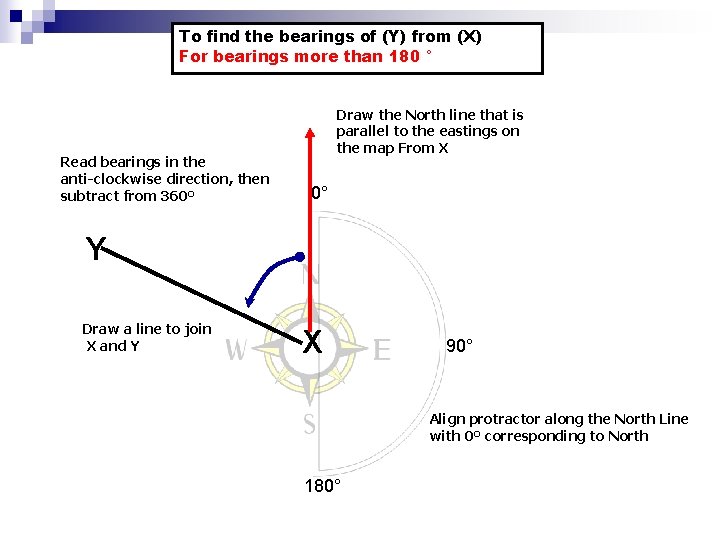
To find the bearings of (Y) from (X) For bearings more than 180 ° Read bearings in the anti-clockwise direction, then subtract from 360° Draw the North line that is parallel to the eastings on the map From X 0° Y Draw a line to join X and Y X 90° Align protractor along the North Line with 0° corresponding to North 180°
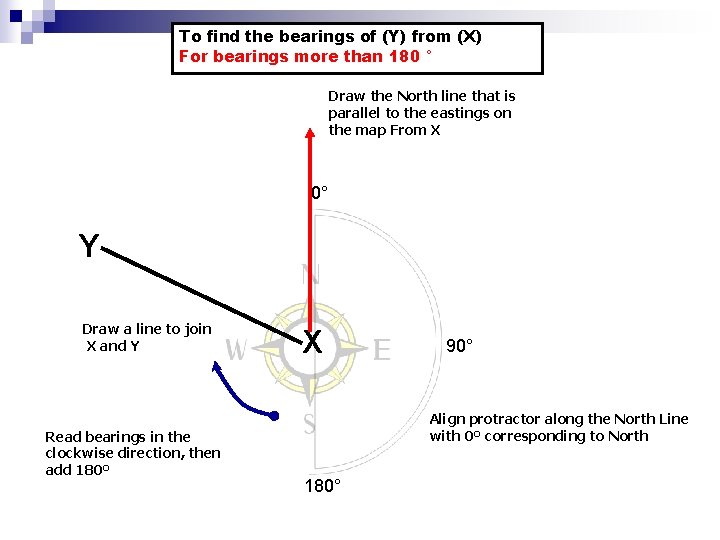
To find the bearings of (Y) from (X) For bearings more than 180 ° Draw the North line that is parallel to the eastings on the map From X 0° Y Draw a line to join X and Y Read bearings in the clockwise direction, then add 180° X 90° Align protractor along the North Line with 0° corresponding to North 180°
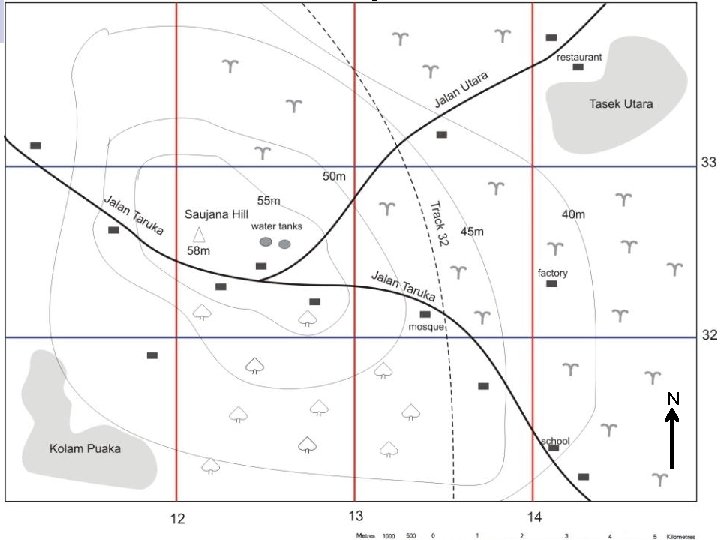
N
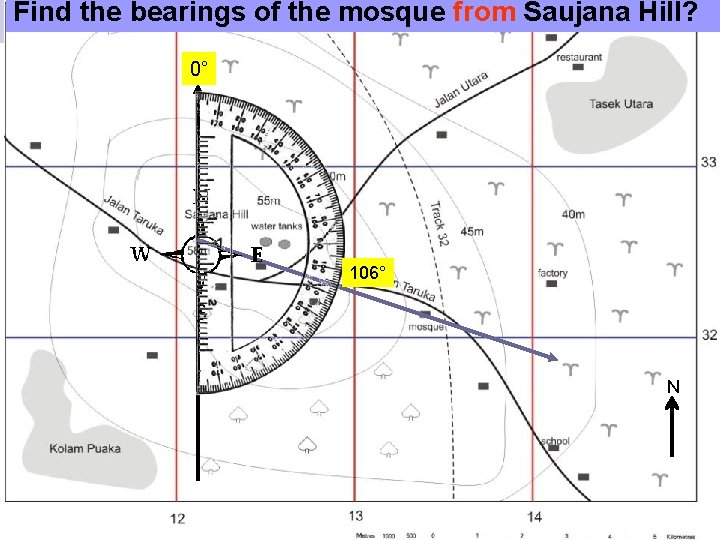
Find the bearings of the mosque from Saujana Hill? 0° 106° N
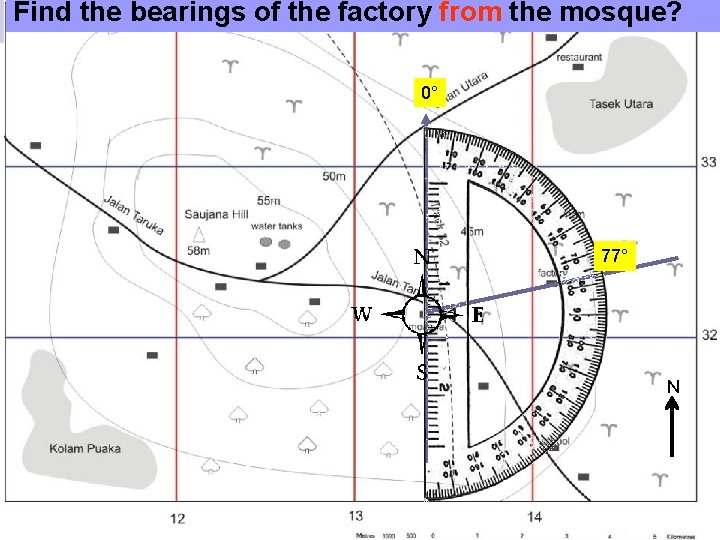
Find the bearings of the factory from the mosque? 0° 77° N
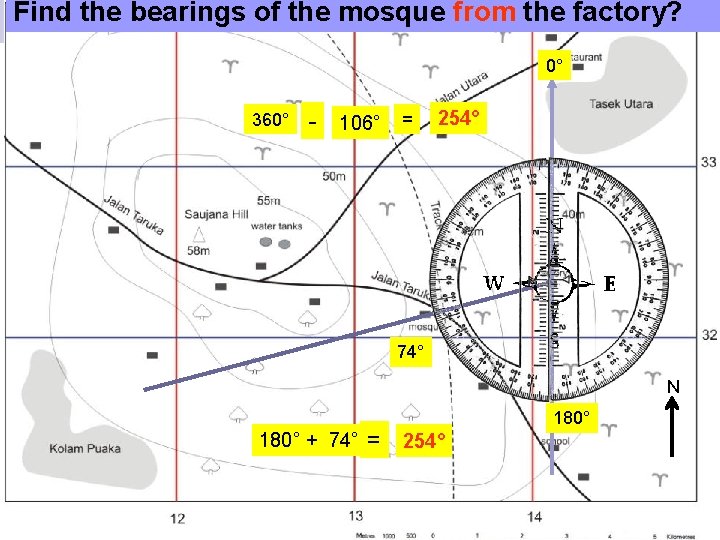
Find the bearings of the mosque from the factory? 0° 360° - 106° = 254° 74° N 180° + 74° = 254° 180°
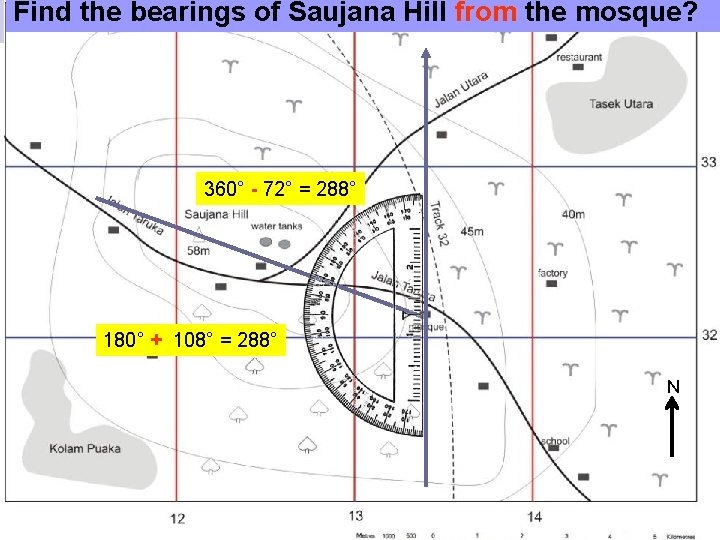
Find the bearings of Saujana Hill from the mosque? 360° - 72° = 288° 180° + 108° = 288° N
SCALES
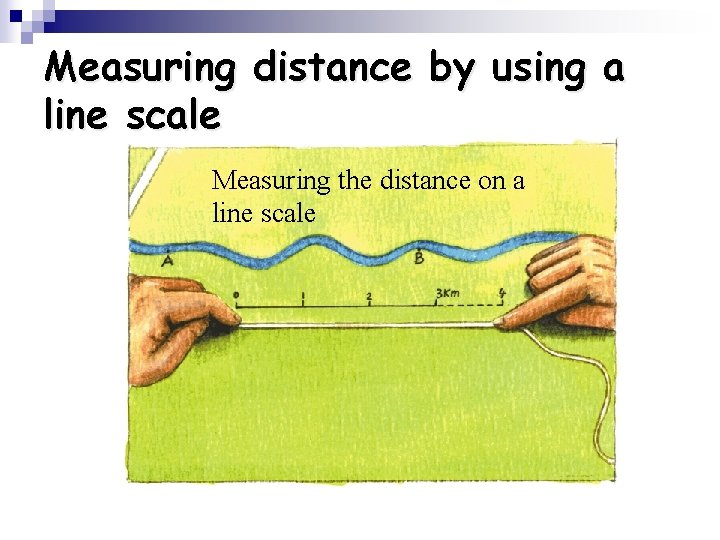
SCALES Scales are used to show distance on a map n Can be represented in many ways n For map reading we will use: 1. line scale 2. representative fraction n
Measuring distance by using a line scale Measuring the distance Tracing the route with a pieceon a Measuring straight line scale of string distance with a ruler
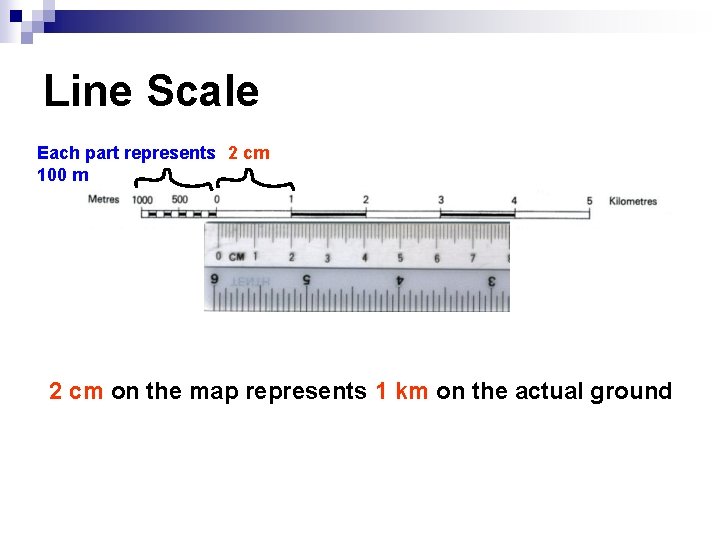
Line Scale Each part represents 2 cm 100 m 2 cm on the map represents 1 km on the actual ground
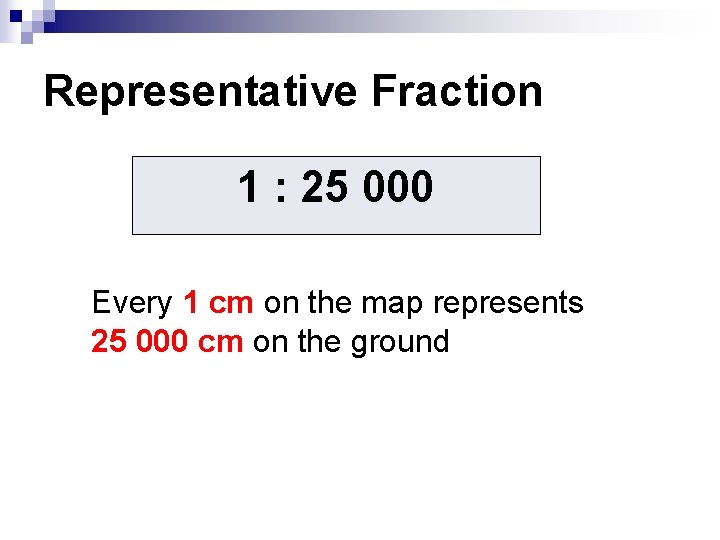
Representative Fraction 1 : 25 000 Every 1 cm on the map represents 25 000 cm on the ground
RELIEF
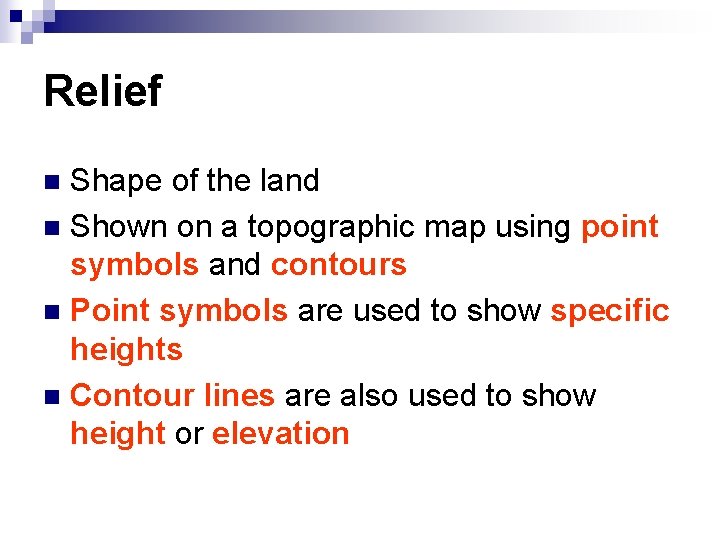
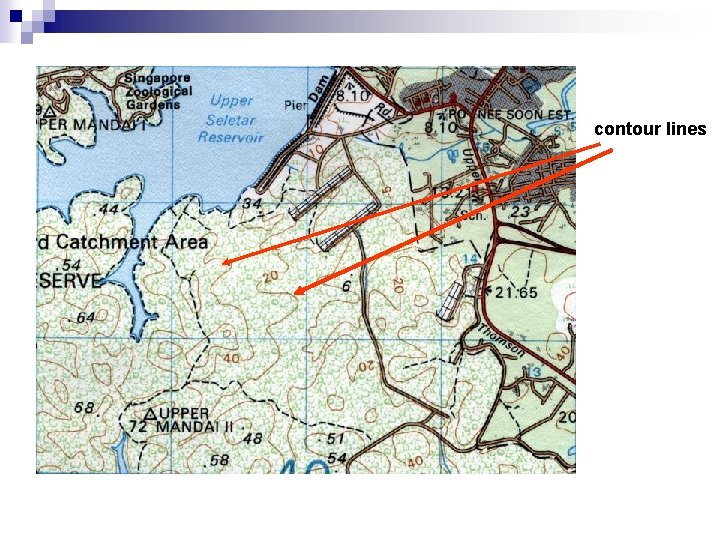
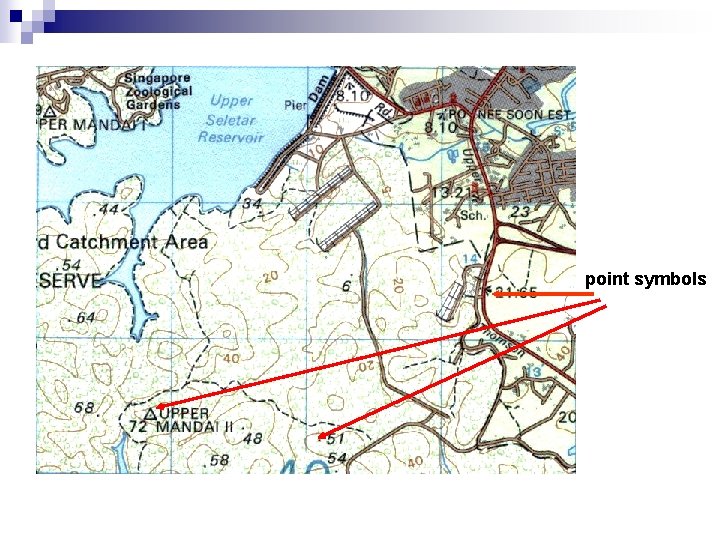
Relief Shape of the land n Shown on a topographic map using point symbols and contours n Point symbols are used to show specific heights n Contour lines are also used to show height or elevation n
contour lines
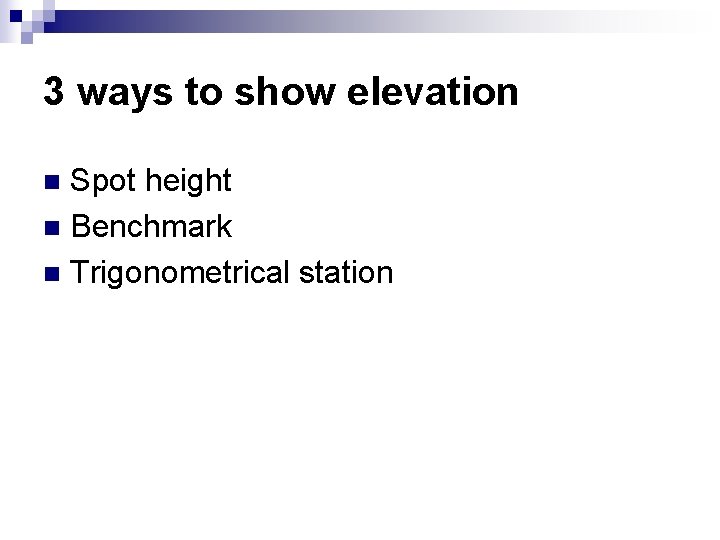
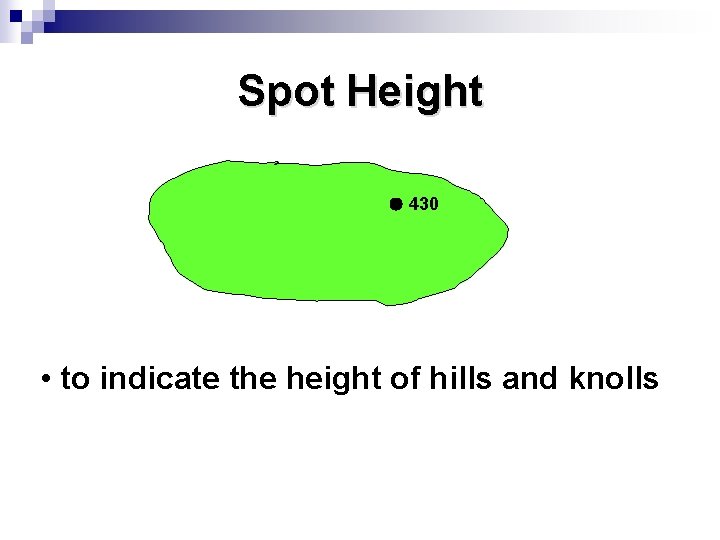
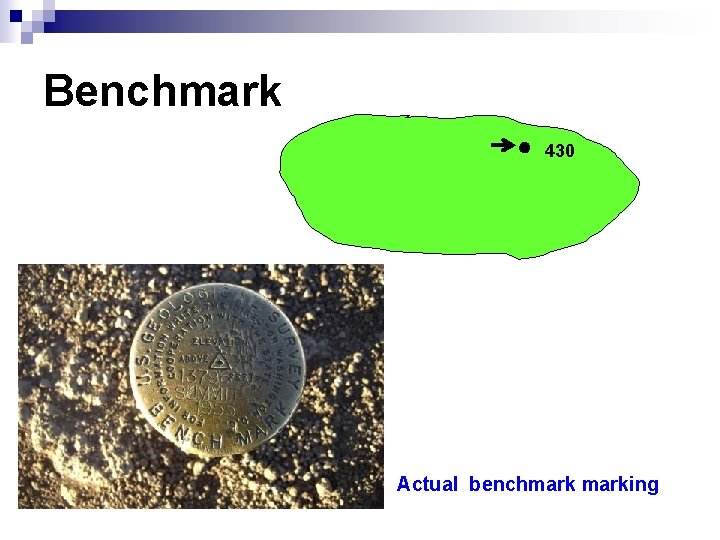
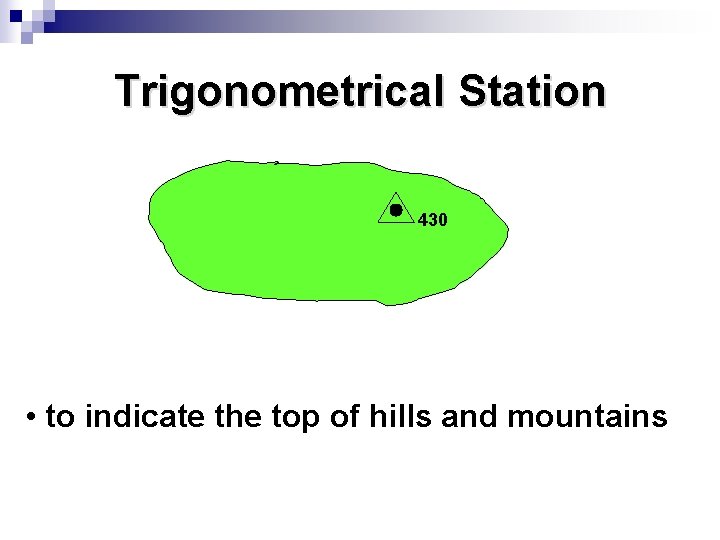
3 ways to show elevation Spot height n Benchmark n Trigonometrical station n
point symbols
Spot Height 430 • to indicate the height of hills and knolls
Benchmark 430 Actual benchmarking
Trigonometrical Station 430 • to indicate the top of hills and mountains
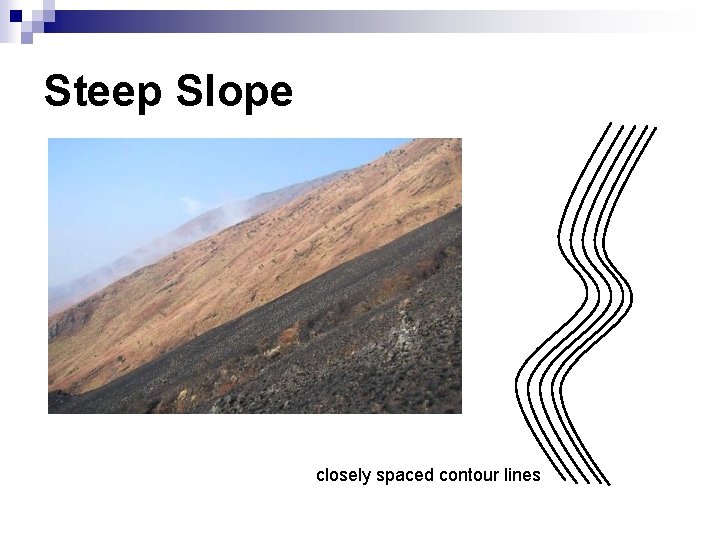
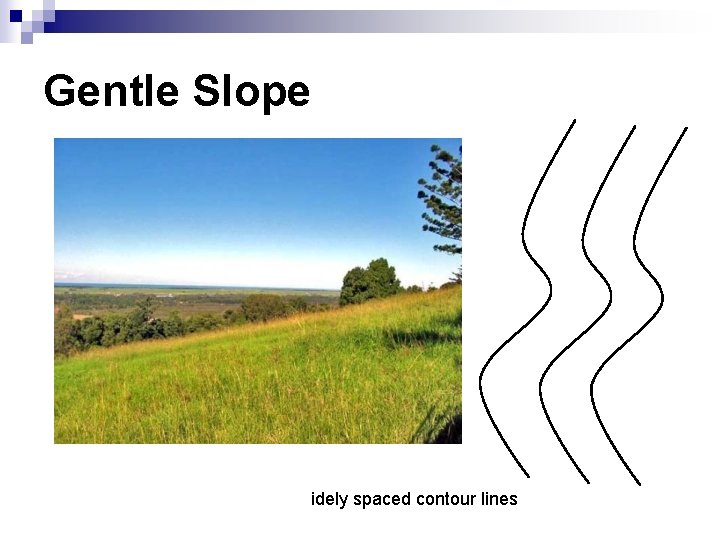
Gentle and Steep slopes n The space between contour lines will determine the gradient and shape of slopes
Steep Slope closely spaced contour lines
Gentle Slope idely spaced contour lines