
Map Projections RG 620 April 20 2016 Institute
- Slides: 44
Map Projections RG 620 April 20, 2016 Institute of Space Technology, Karachi
Converting the 3 D Model to 2 D Plane
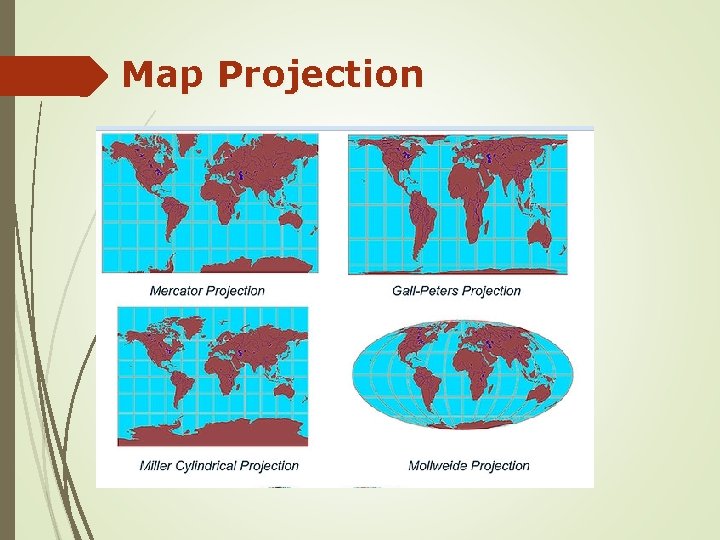
Map Projection
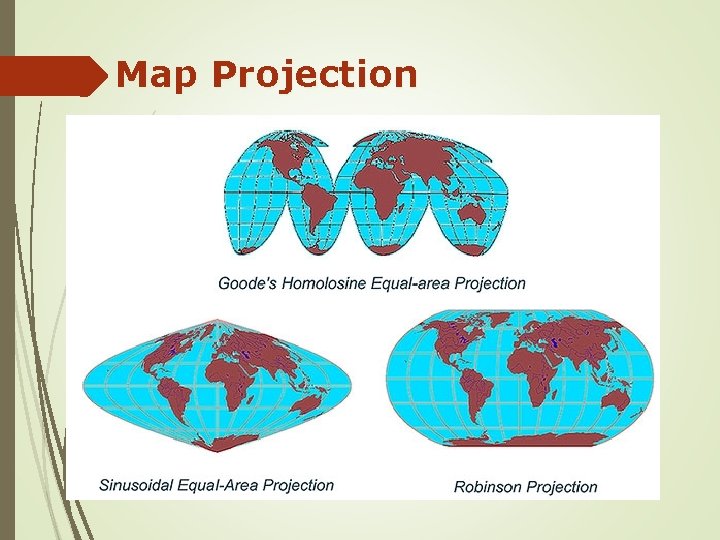
Map Projection
Map Projection Projecting Earth's Surface into a Plane Earth is 3 -D object The transformation of 3 -D Earth’s surface coordinates into 2 -D map coordinates is called Map Projection A map projection uses mathematical formulas to relate spherical coordinates on the globe to flat, planar coordinates
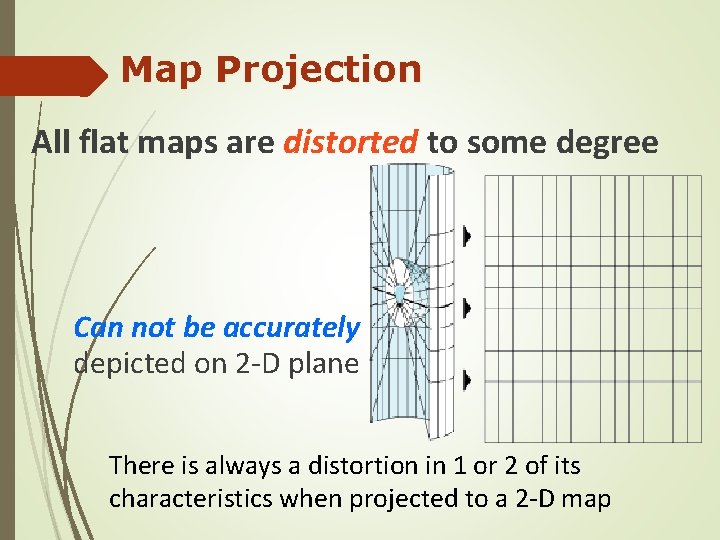
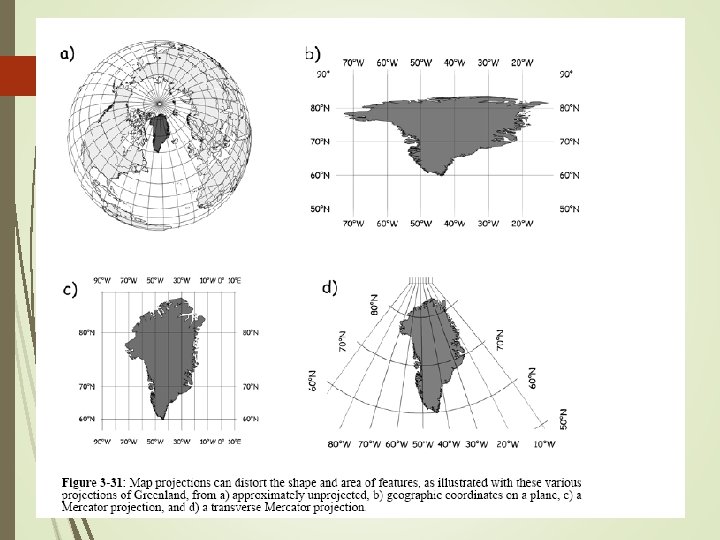
Map Projection All flat maps are distorted to some degree Can not be accurately depicted on 2 -D plane There is always a distortion in 1 or 2 of its characteristics when projected to a 2 -D map
Map Projection Classification 1. Based on Distortion Characteristics 2. Based on Developable Surface
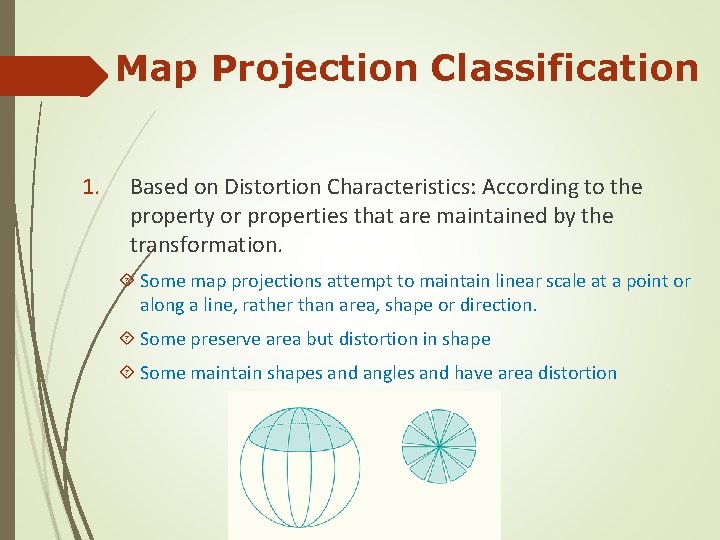
Map Projection Classification 1. Based on Distortion Characteristics: According to the property or properties that are maintained by the transformation. Some map projections attempt to maintain linear scale at a point or along a line, rather than area, shape or direction. Some preserve area but distortion in shape Some maintain shapes and angles and have area distortion
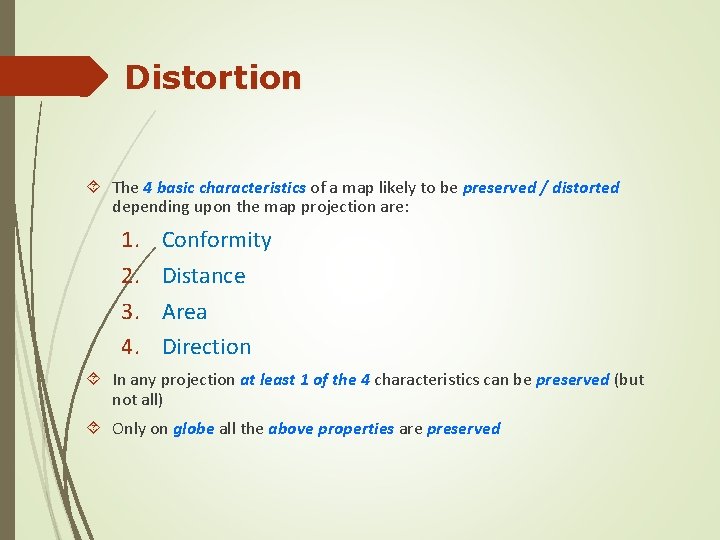
Distortion The 4 basic characteristics of a map likely to be preserved / distorted depending upon the map projection are: 1. 2. 3. 4. Conformity Distance Area Direction In any projection at least 1 of the 4 characteristics can be preserved (but not all) Only on globe all the above properties are preserved
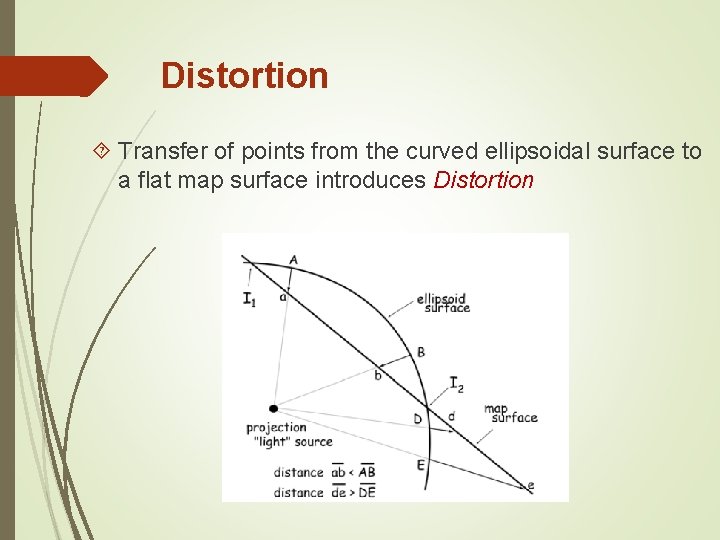
Distortion Transfer of points from the curved ellipsoidal surface to a flat map surface introduces Distortion
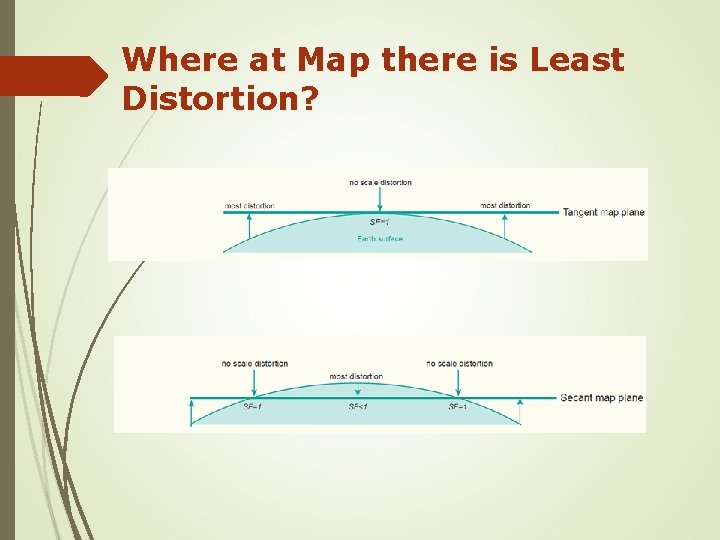
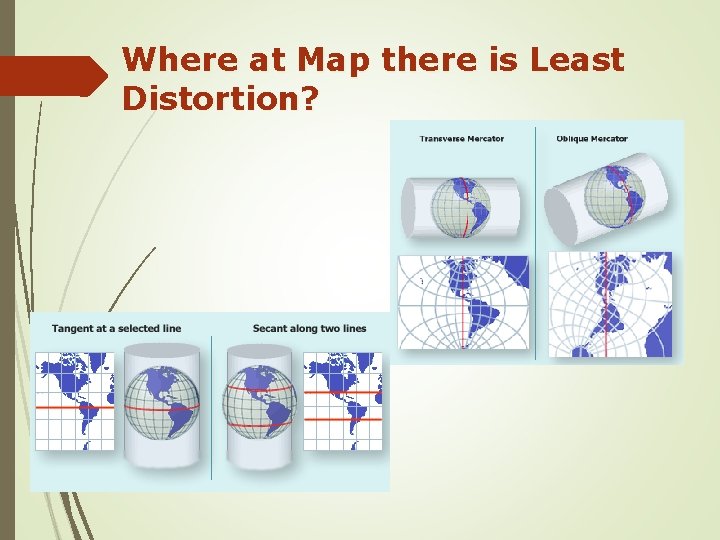
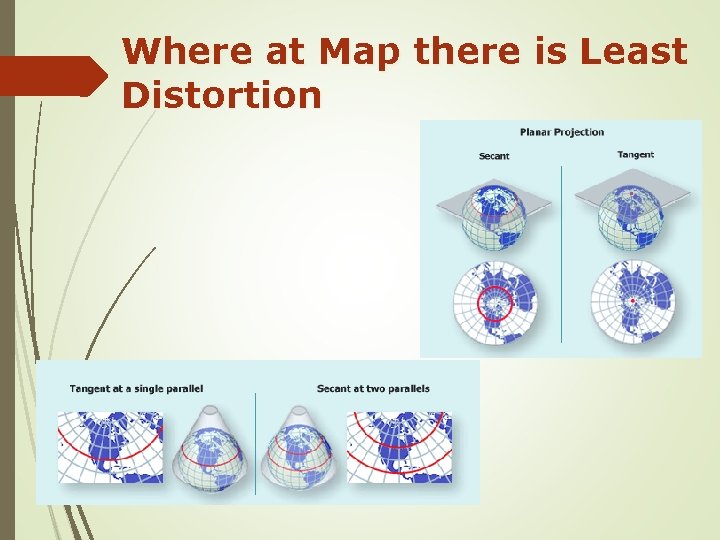
Distortion In projected maps distortions are unavoidable Different map projections distort the globe in different ways In map projections features are either compressed or expanded At few locations at map distortions may be zero Where on map there is no distortion or least distortion?
Map Projection Each type of projection has its advantages and disadvantages Choice of a projection depends on Application – for what purposes it will be used Scale of the map Compromise projection?
Map Projections 1 - Properties Based Conformal projection preserves shape Equidistance projection preserves distance Equal-area map maintains accurate relative sizes Azimuthal or True direction maps maintains directions
Map Projection - Conformal Maintains shapes and angles in small areas of map Maintains angles. Latitude and Longitude intersects at 90 o Area enclosed may be greatly distorted (increases towards polar regions) No map projection can preserve shapes of larger regions Examples: Mercator Lambert conformal conic Mercator projection
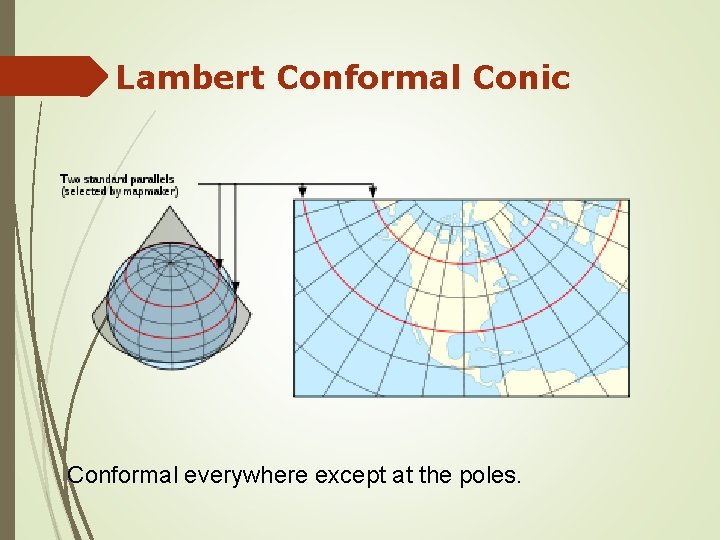
Lambert Conformal Conic Conformal everywhere except at the poles.
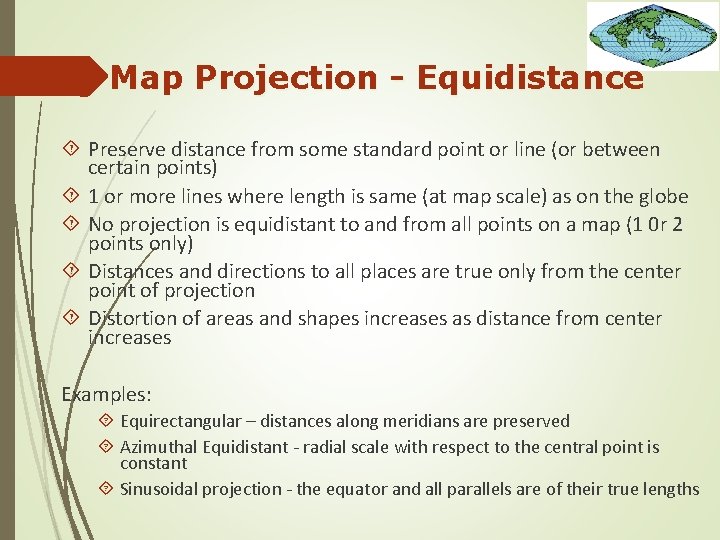
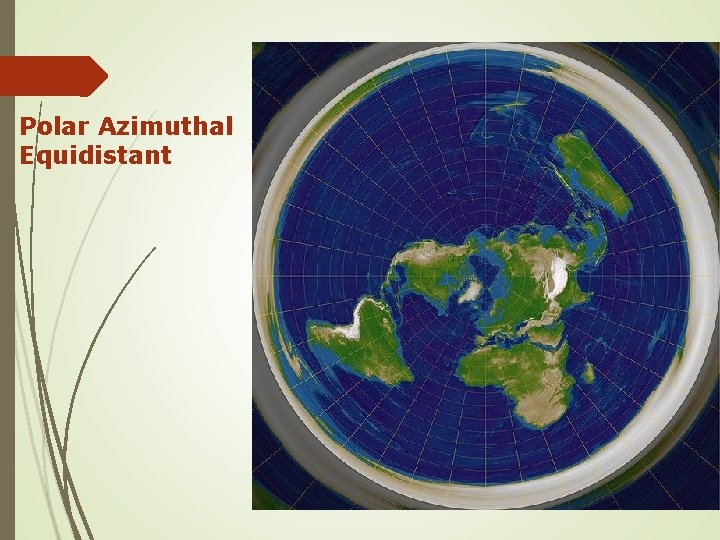
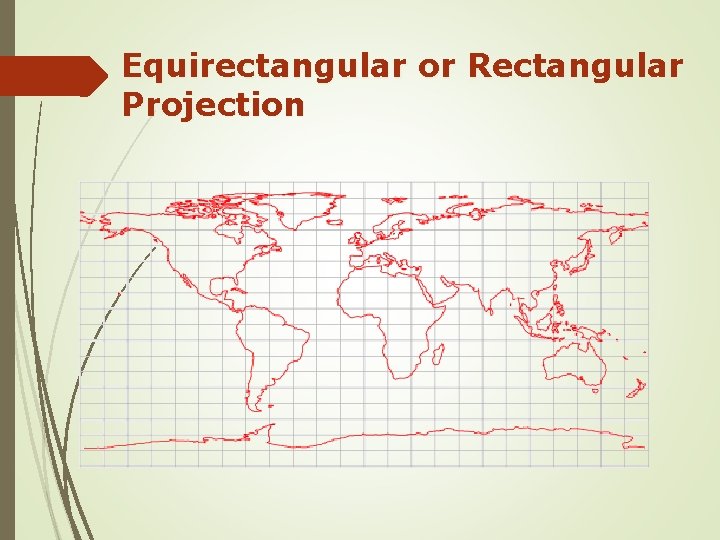
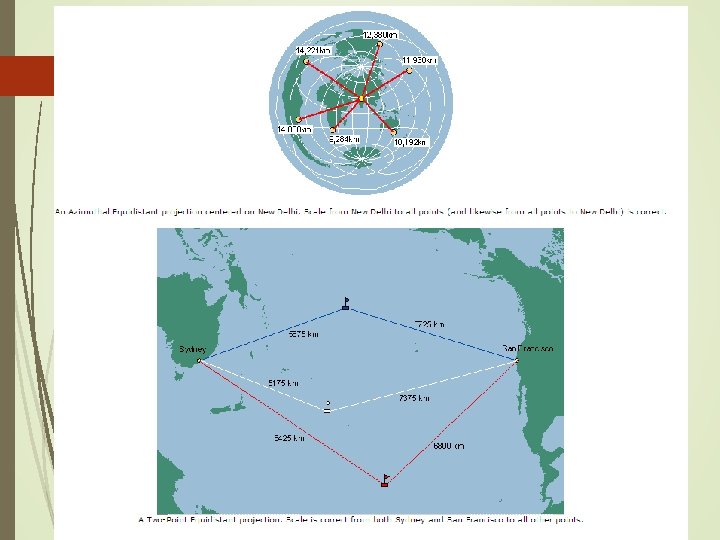
Map Projection - Equidistance Preserve distance from some standard point or line (or between certain points) 1 or more lines where length is same (at map scale) as on the globe No projection is equidistant to and from all points on a map (1 0 r 2 points only) Distances and directions to all places are true only from the center point of projection Distortion of areas and shapes increases as distance from center increases Examples: Equirectangular – distances along meridians are preserved Azimuthal Equidistant - radial scale with respect to the central point is constant Sinusoidal projection - the equator and all parallels are of their true lengths
Polar Azimuthal Equidistant
Equirectangular or Rectangular Projection
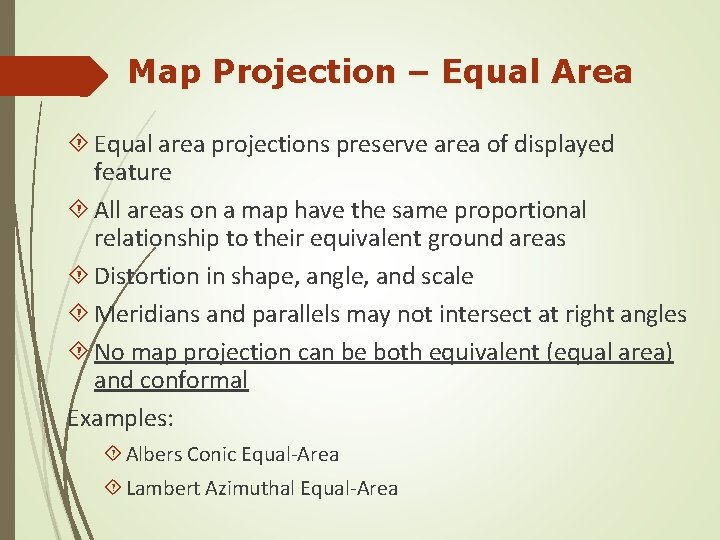
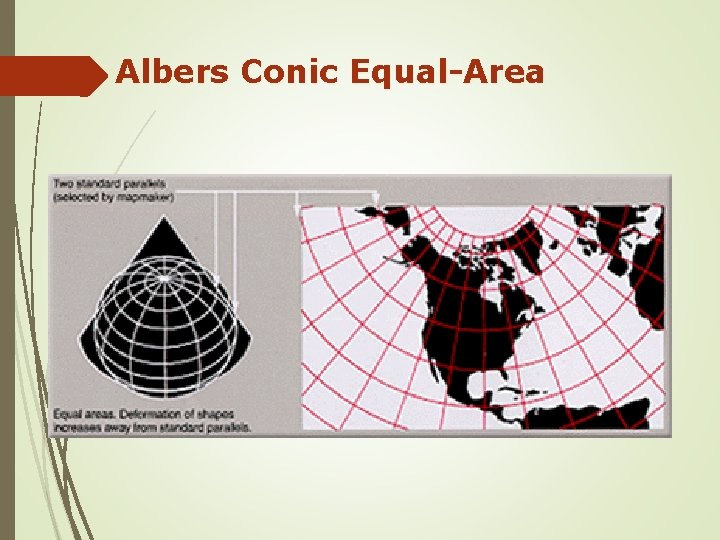
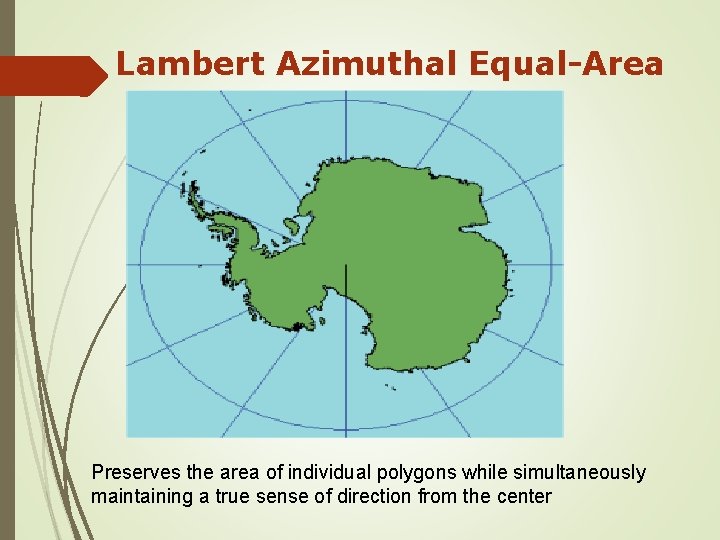
Map Projection – Equal Area Equal area projections preserve area of displayed feature All areas on a map have the same proportional relationship to their equivalent ground areas Distortion in shape, angle, and scale Meridians and parallels may not intersect at right angles No map projection can be both equivalent (equal area) and conformal Examples: Albers Conic Equal-Area Lambert Azimuthal Equal-Area
Albers Conic Equal-Area
Lambert Azimuthal Equal-Area Preserves the area of individual polygons while simultaneously maintaining a true sense of direction from the center
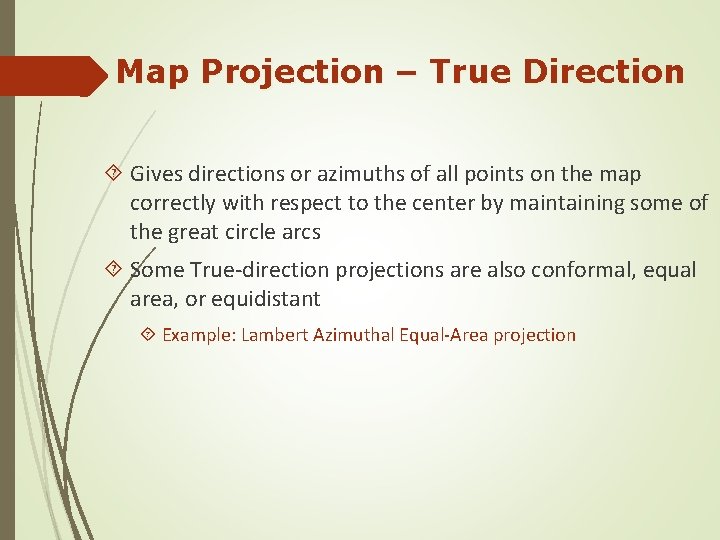
Map Projection – True Direction Gives directions or azimuths of all points on the map correctly with respect to the center by maintaining some of the great circle arcs Some True-direction projections are also conformal, equal area, or equidistant Example: Lambert Azimuthal Equal-Area projection
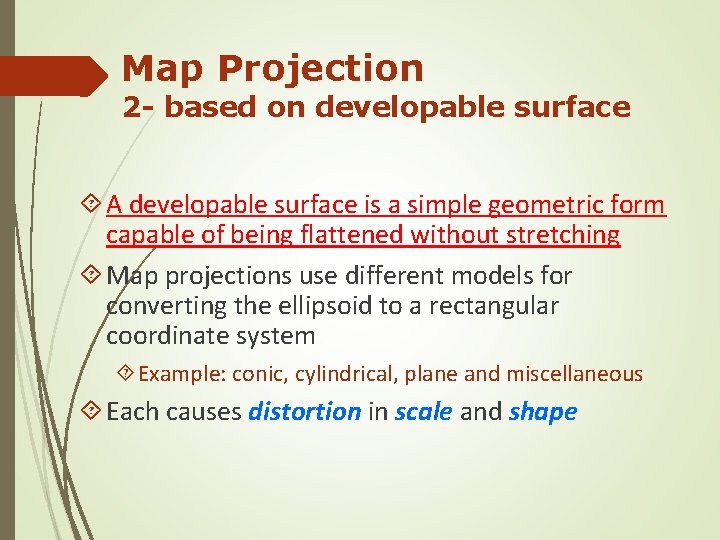
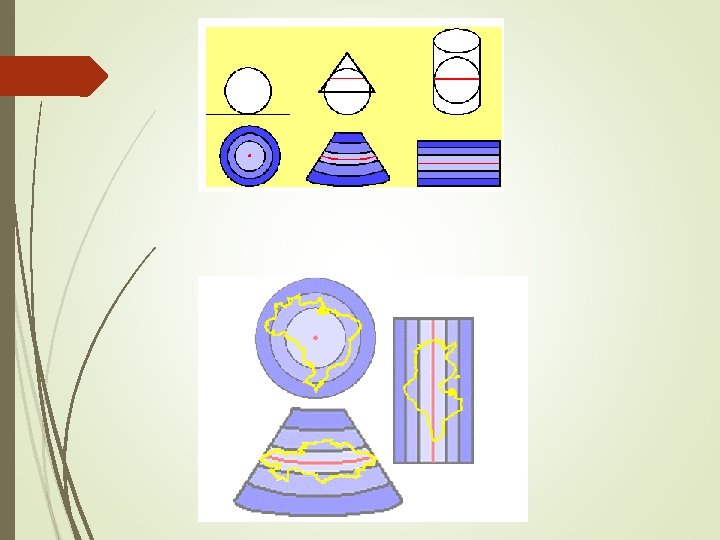
Map Projection 2 - based on developable surface A developable surface is a simple geometric form capable of being flattened without stretching Map projections use different models for converting the ellipsoid to a rectangular coordinate system Example: conic, cylindrical, plane and miscellaneous Each causes distortion in scale and shape
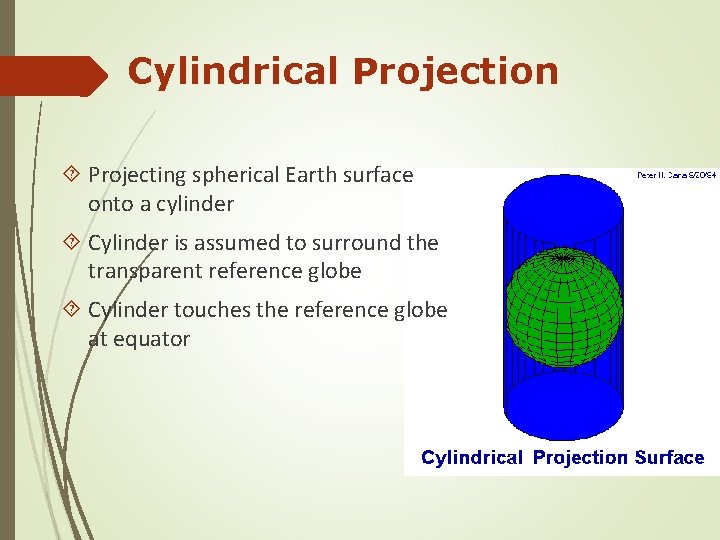
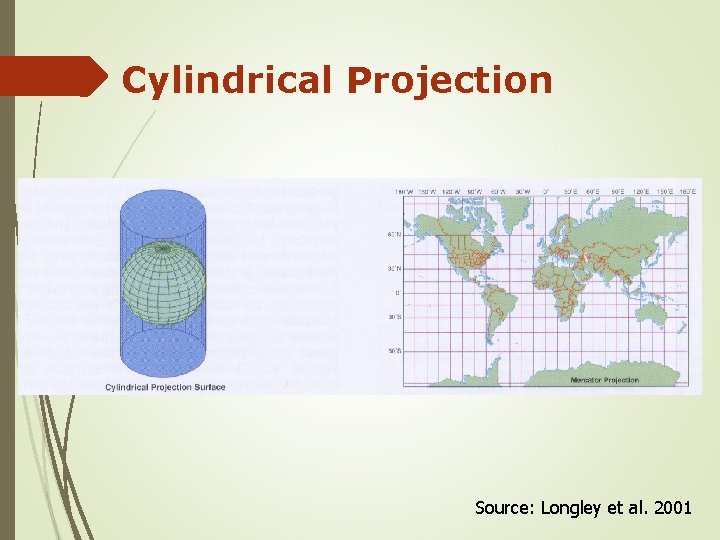
Cylindrical Projection Projecting spherical Earth surface onto a cylinder Cylinder is assumed to surround the transparent reference globe Cylinder touches the reference globe at equator
Cylindrical Projection Source: Longley et al. 2001
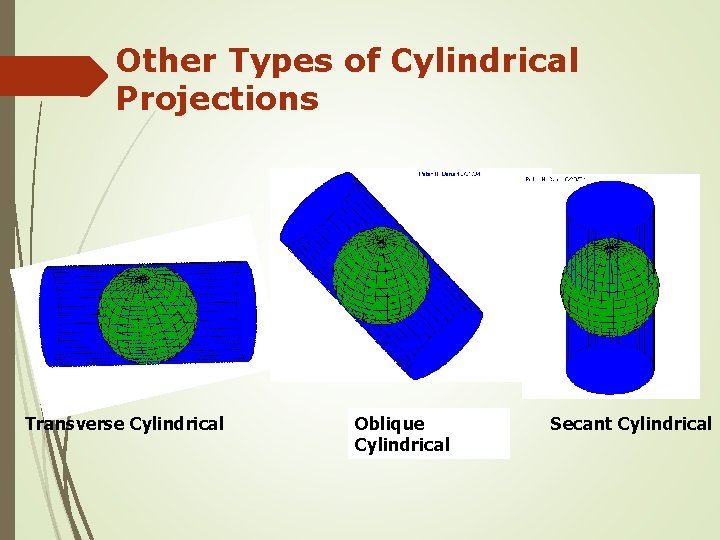
Other Types of Cylindrical Projections Transverse Cylindrical Oblique Cylindrical Secant Cylindrical
Examples of Cylindrical Projection Mercator Transverse Mercator Oblique Mercator Etc.
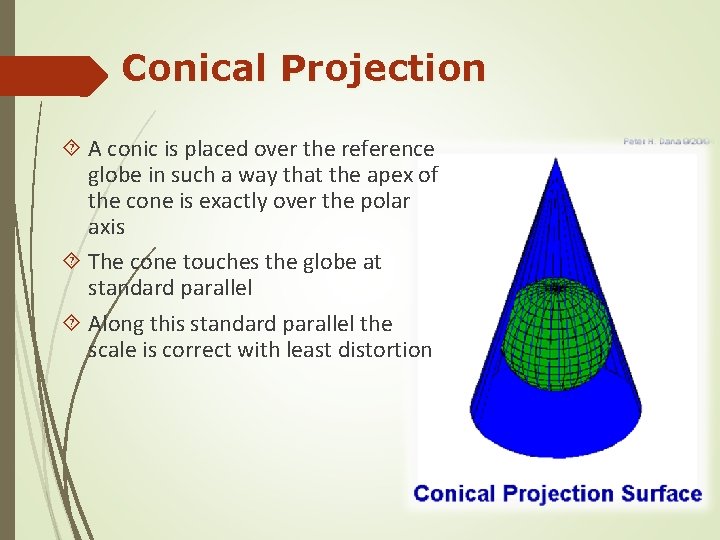
Conical Projection A conic is placed over the reference globe in such a way that the apex of the cone is exactly over the polar axis The cone touches the globe at standard parallel Along this standard parallel the scale is correct with least distortion
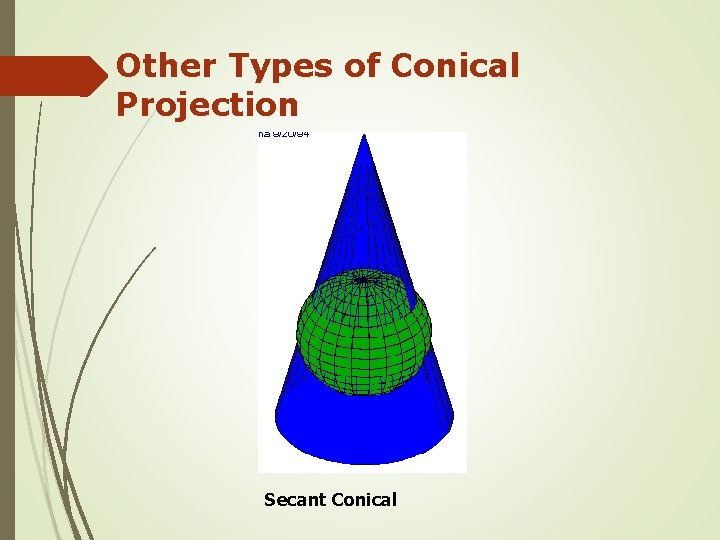
Other Types of Conical Projection Secant Conical
Examples of Conical Projection Albers Equal Area Conic Lambert Conformal Conic Equidistant Conic
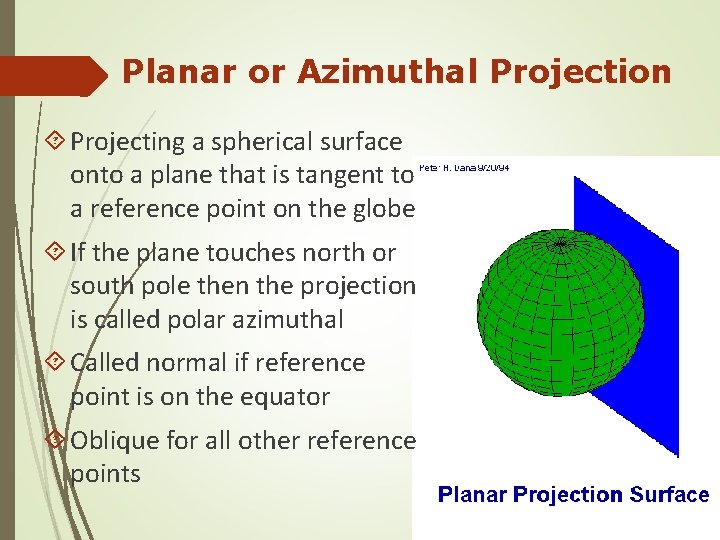
Planar or Azimuthal Projection Projecting a spherical surface onto a plane that is tangent to a reference point on the globe If the plane touches north or south pole then the projection is called polar azimuthal Called normal if reference point is on the equator Oblique for all other reference points
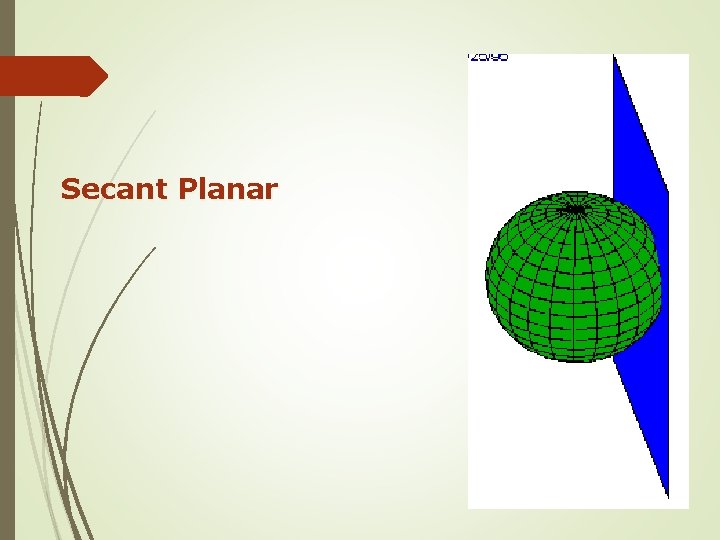
Secant Planar
Examples of Planar Projection Orthographic Stereographic Gnomonic Azimuthal Equidistance Lambert Azimuthal Equal Area
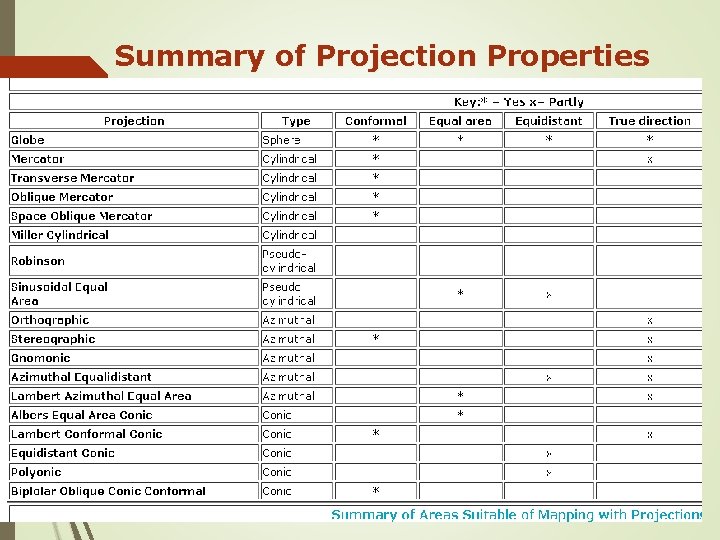
Summary of Projection Properties
Where at Map there is Least Distortion?
Where at Map there is Least Distortion?
Where at Map there is Least Distortion
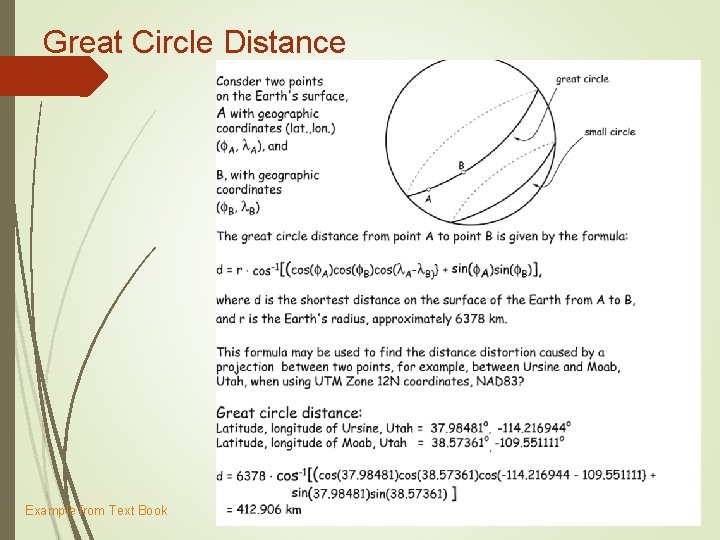
Great Circle Distance is the shortest path between two points on the Globe It’s the distance measured on the ellipsoid and in a plane through the Earth’s center. This planar surface intersects the two points on the Earth’s surface and also splits the spheroid into two equal halves How to calculate Great Circle Distance?
Great Circle Distance Example from Text Book
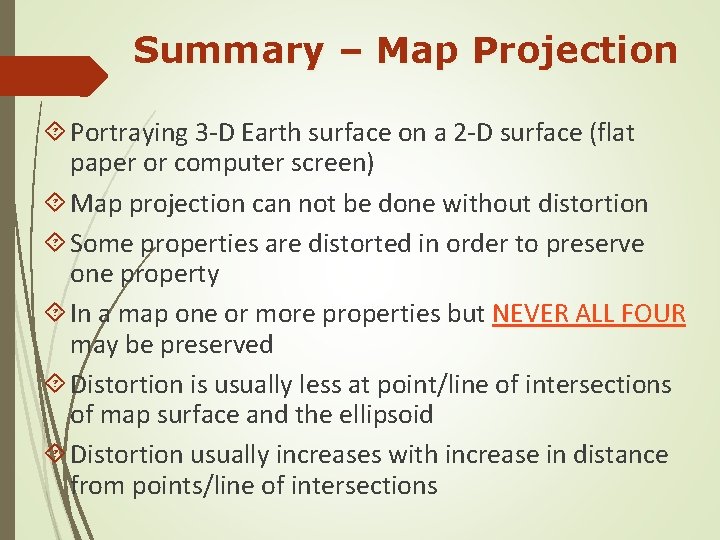
Summary – Map Projection Portraying 3 -D Earth surface on a 2 -D surface (flat paper or computer screen) Map projection can not be done without distortion Some properties are distorted in order to preserve one property In a map one or more properties but NEVER ALL FOUR may be preserved Distortion is usually less at point/line of intersections of map surface and the ellipsoid Distortion usually increases with increase in distance from points/line of intersections
Websites on Map Projection http: //www. colorado. edu/geography/gcraft/notes/mapproj. html http: //erg. usgs. gov/isb/pubs/Map. Projections/projections. html http: //www. soe. ucsc. edu/research/slvg/map. html http: //www. eoearth. org/article/Maps http: //geography. about. com/library/weekly/aa 031599. htm http: //www. btinternet. com/~se 16/js/mapproj. htm http: //www. experiencefestival. com/a/Map_projection__Projections_by_preservation_of_a_metric_property/id/4822091 http: //webhelp. esri. com/arcgisdesktop/9. 2/index. cfm? Topic. Name=About_map_ projections http: //www. nationalatlas. gov/articles/mapping/a_projections. html http: //en. wikipedia. org/wiki/ http: //memory. loc. gov/cgibin/query/h? ammem/gmd: @field(NUMBER+@band(g 5761 b+ct 001576))