
MAP Growth Loudoun County Public Schools Agenda Explanation

MAP Growth Loudoun County Public Schools
Agenda • Explanation of the Measure of Academic Progress (MAP) • Sample reports • How parents can use MAP to support their students • Discussion
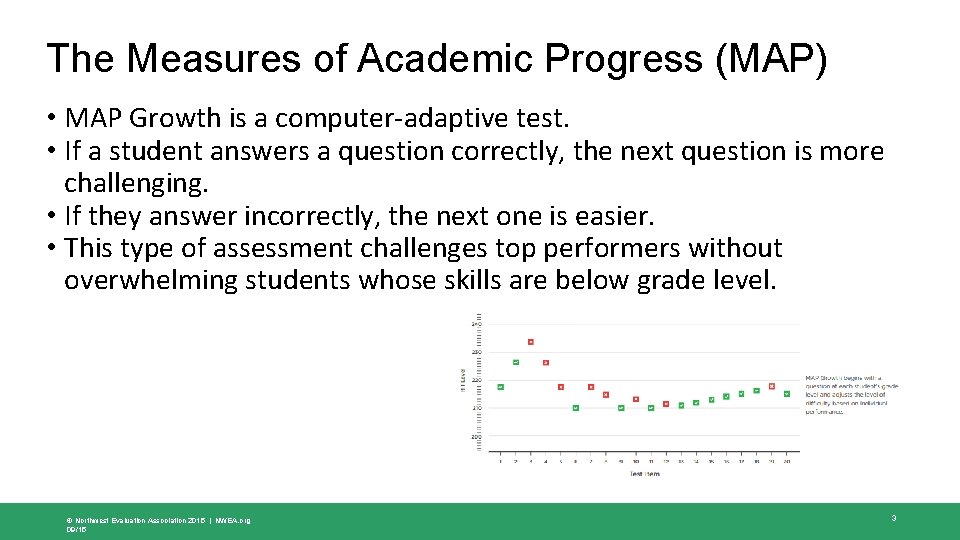
The Measures of Academic Progress (MAP) • MAP Growth is a computer-adaptive test. • If a student answers a question correctly, the next question is more challenging. • If they answer incorrectly, the next one is easier. • This type of assessment challenges top performers without overwhelming students whose skills are below grade level. © Northwest Evaluation Association 2015 | NWEA. org 09/15 3
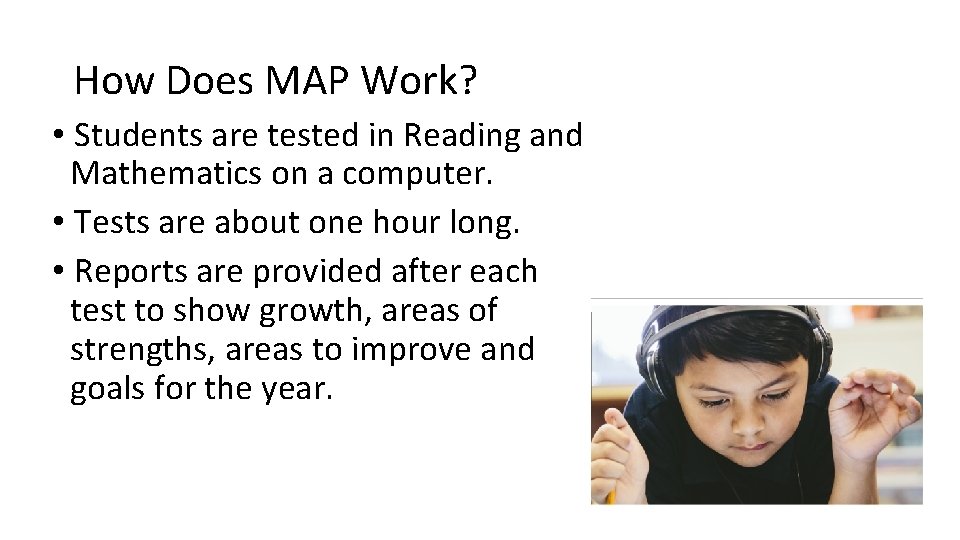
How Does MAP Work? • Students are tested in Reading and Mathematics on a computer. • Tests are about one hour long. • Reports are provided after each test to show growth, areas of strengths, areas to improve and goals for the year.
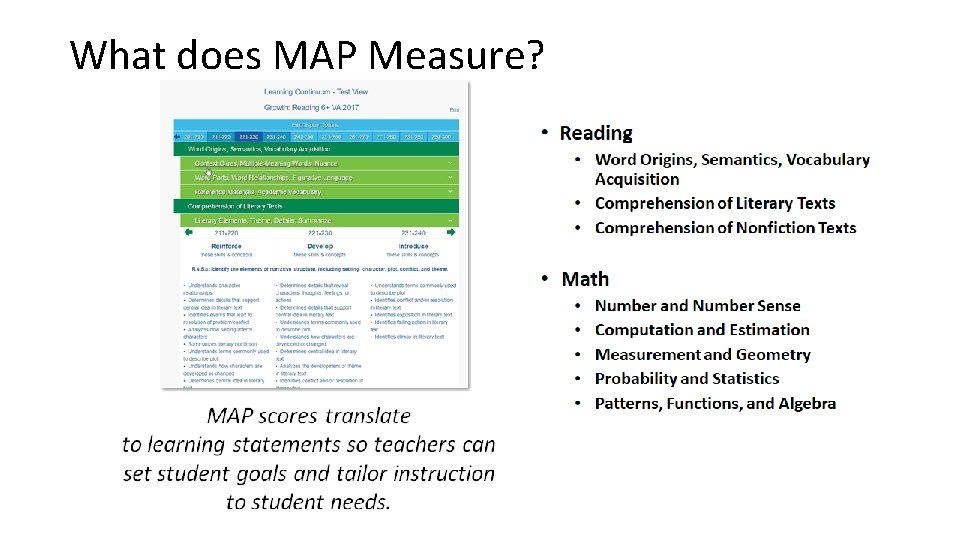
What does MAP Measure?
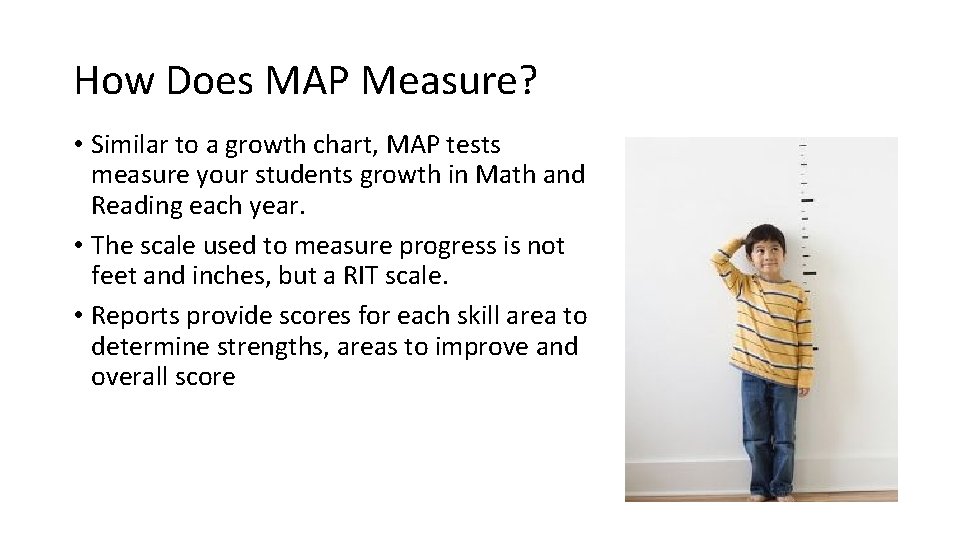
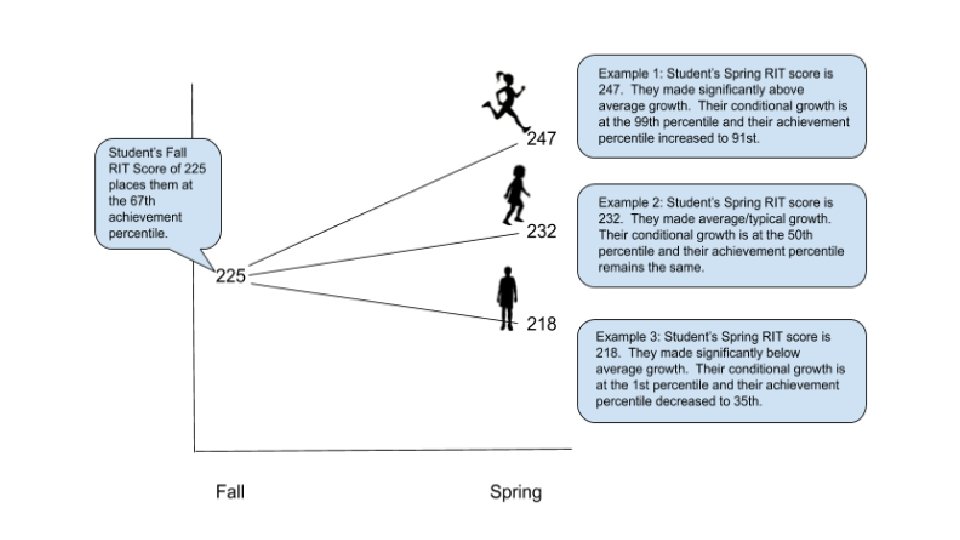
How Does MAP Measure? • Similar to a growth chart, MAP tests measure your students growth in Math and Reading each year. • The scale used to measure progress is not feet and inches, but a RIT scale. • Reports provide scores for each skill area to determine strengths, areas to improve and overall score
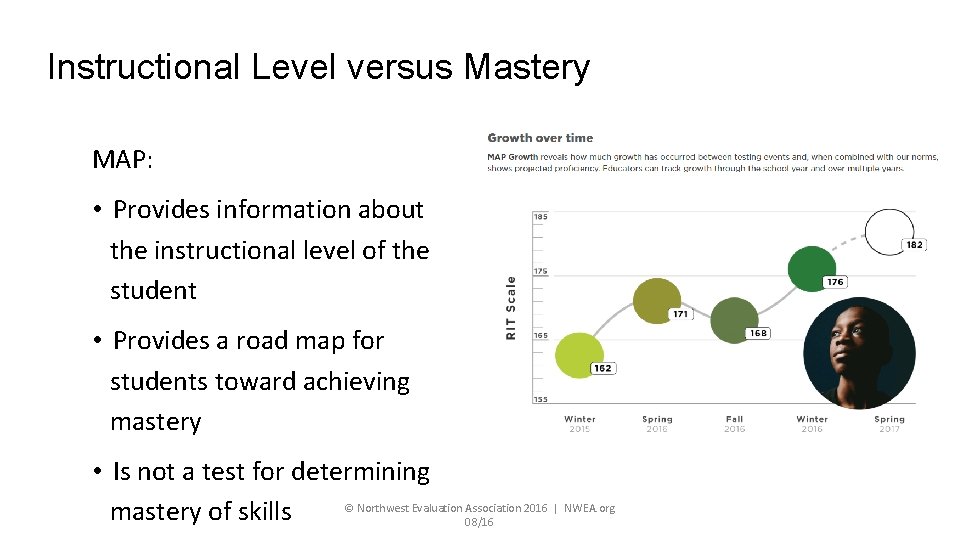
Instructional Level versus Mastery MAP: • Provides information about the instructional level of the student • Provides a road map for students toward achieving mastery • Is not a test for determining © Northwest Evaluation Association 2016 | NWEA. org mastery of skills 08/16
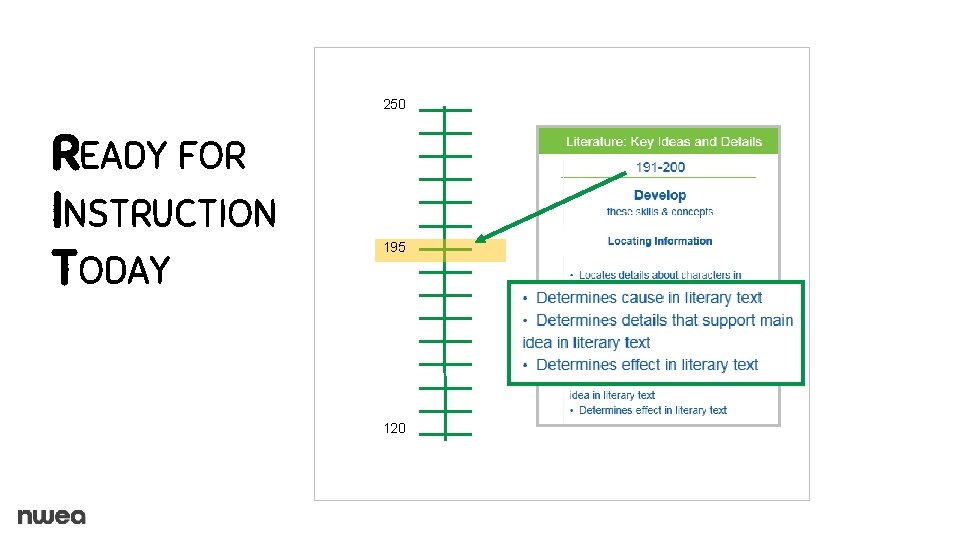
250 READY FOR INSTRUCTION TODAY 195 120
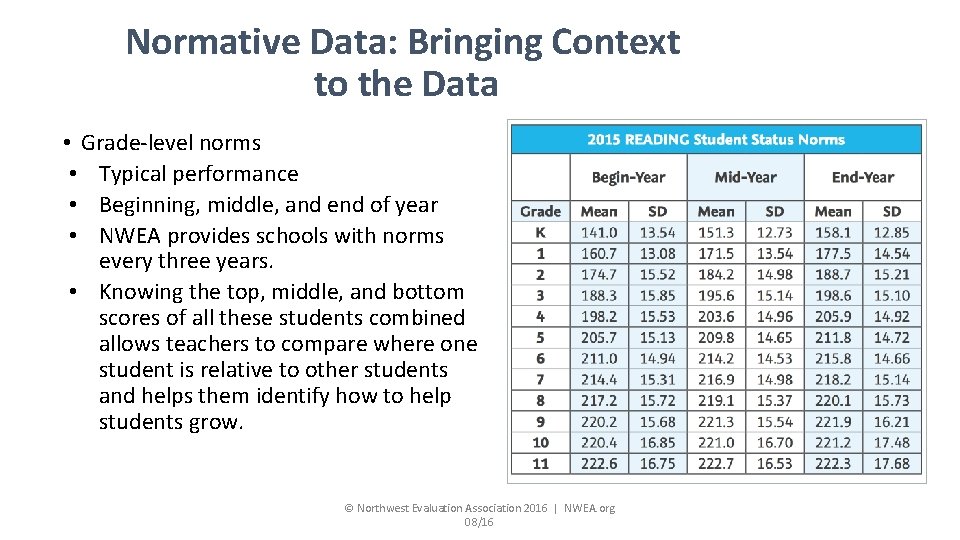
Normative Data: Bringing Context to the Data • Grade-level norms • Typical performance • Beginning, middle, and end of year • NWEA provides schools with norms every three years. • Knowing the top, middle, and bottom scores of all these students combined allows teachers to compare where one student is relative to other students and helps them identify how to help students grow. © Northwest Evaluation Association 2016 | NWEA. org 08/16
LCPS Goals with MAP • Identify the knowledge and skill levels of students in a classroom or grade for placement in groups for differentiated instruction; • Determine the strengths and needs of each group for planning ongoing instruction; • Establish growth goals for each student for ongoing monitoring and feedback to each student; and • Review overall patterns in instructional strengths and needs for professional development for teachers.
MAP Administration in LCPS • The Measures of Academic Progress Growth Test (MAP) is designed to measure students’ readiness for learning specific content and skills, as well as measure academic growth over time. • In LCPS, students in grades 2 -8 take the MAP Growth test three times each school year. • In some schools, kindergarten and first grade students also take MAP Growth, and beginning in the 2019 -2020 school year, select high school students will take MAP Growth in certain high school math courses.
MAP Administration in LCPS Testing window Makeup dates Fall Sept 3 - 20 Sept 23 - 27 Winter Nov 25 - Dec 13 Dec 16 - 20 Spring Mar 9 - 27 Mar 30 - Apr 3
Importance of Mindset Fixed Mindset - Feedback viewed as criticism Growth Mindset - Openly embraces feedback, encourages learning and effort
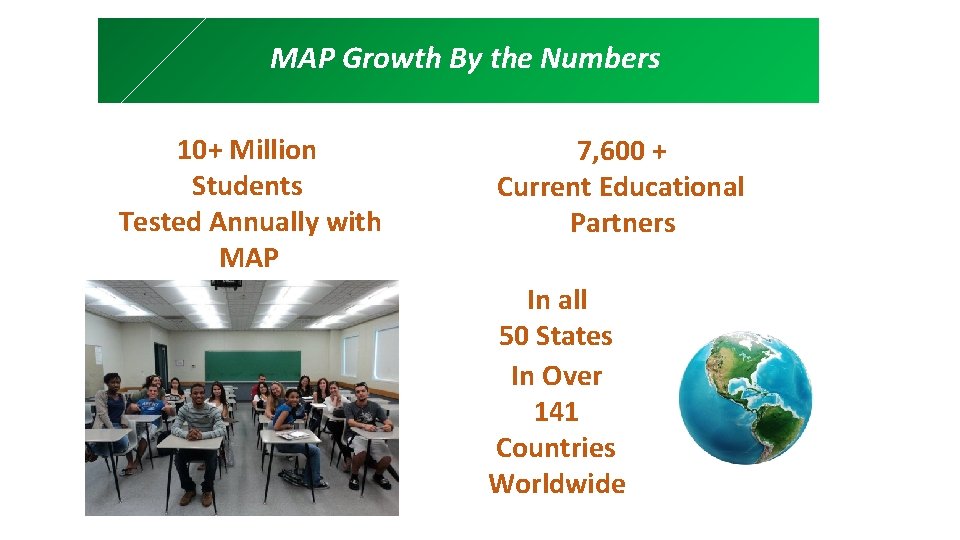
MAP Growth By the Numbers 10+ Million Students Tested Annually with MAP 7, 600 + Current Educational Partners In all 50 States In Over 141 Countries Worldwide
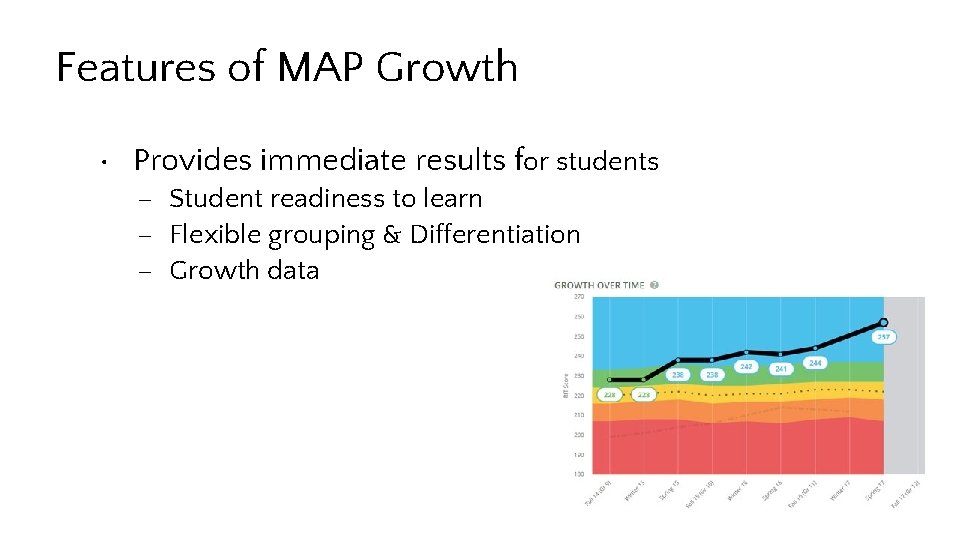
Features of MAP Growth • Provides immediate results for students – Student readiness to learn – Flexible grouping & Differentiation – Growth data
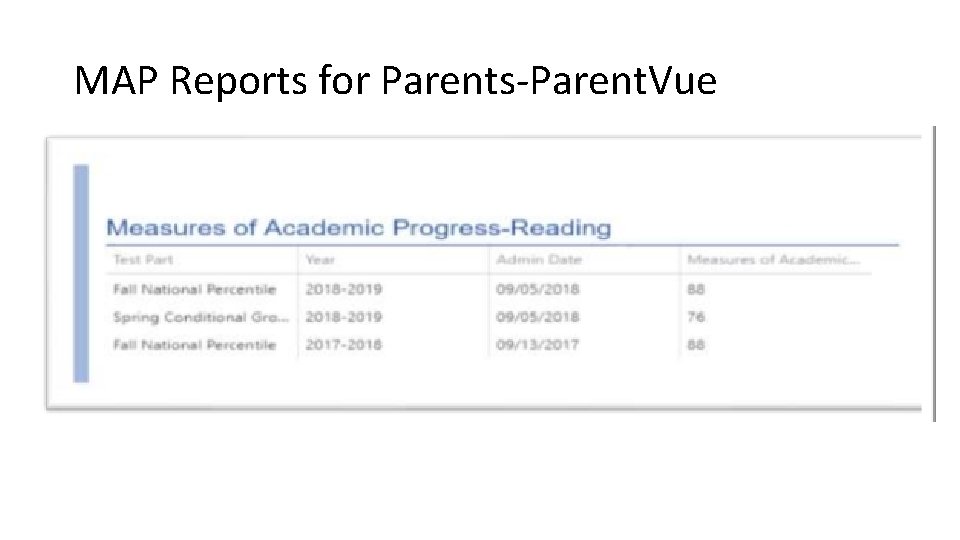
MAP Reports for Parents-Parent. Vue
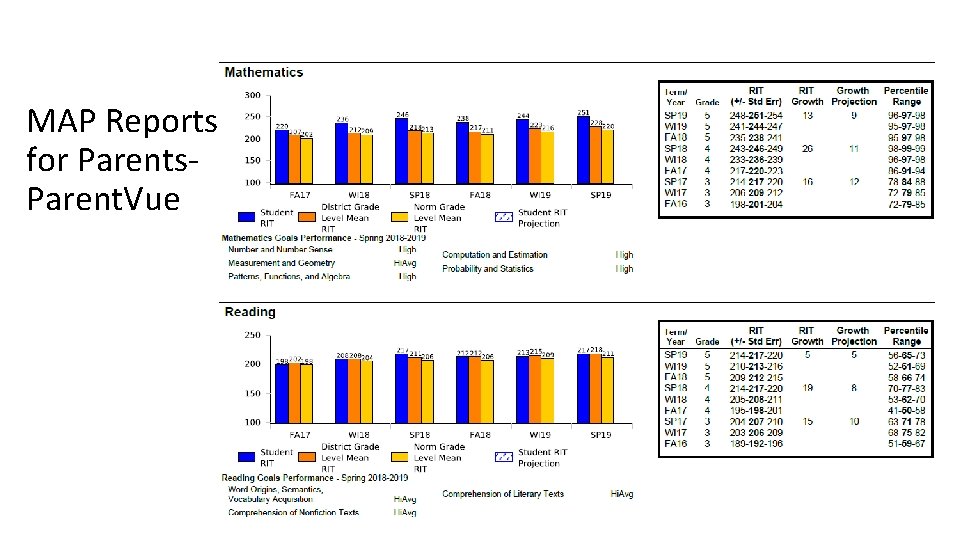
MAP Reports for Parents. Parent. Vue
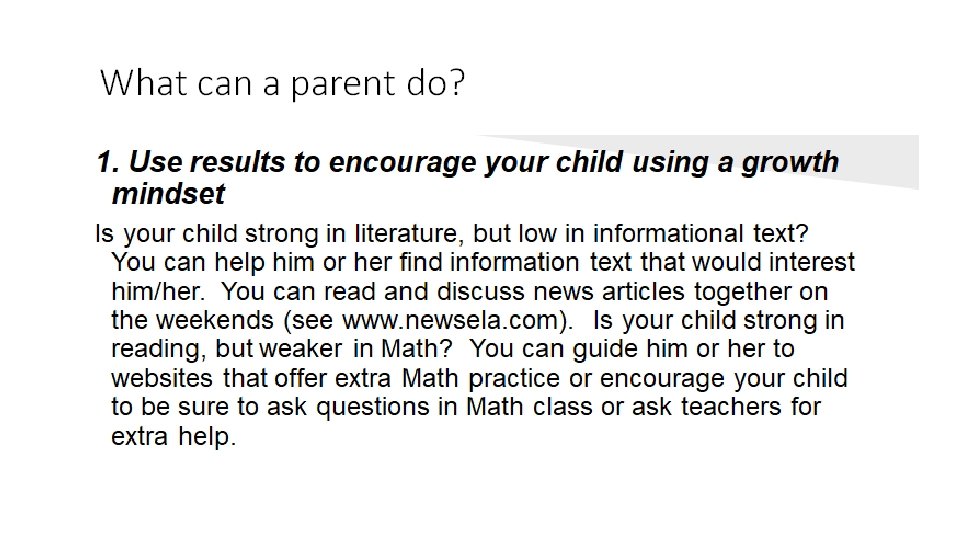
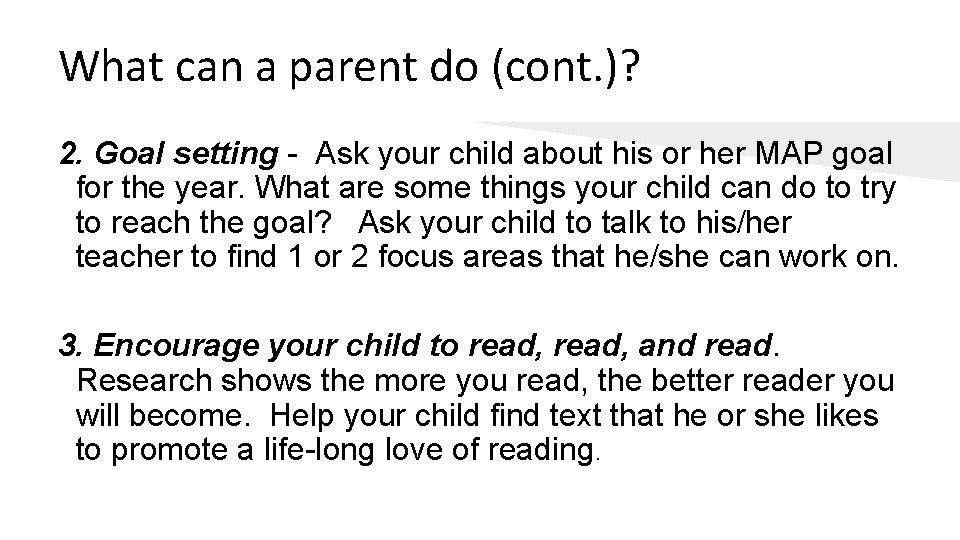
What can a parent do (cont. )? 2. Goal setting - Ask your child about his or her MAP goal for the year. What are some things your child can do to try to reach the goal? Ask your child to talk to his/her teacher to find 1 or 2 focus areas that he/she can work on. 3. Encourage your child to read, and read. Research shows the more you read, the better reader you will become. Help your child find text that he or she likes to promote a life-long love of reading.
Discussion • What are some questions you might have? • https: //www. nwea. org/ parent-toolkit/
- Slides: 21