
Map Basics Lecture 3 Intro to GIS spring
Map Basics Lecture #3, Intro to GIS spring 2006
Topics • • • Map definitions Types of maps Map projections Geodetic Datums Coordinate Systems
What are maps? • Maps are models of reality • Attempts to represent the twodimensional curved surface of the Earth or other body on a plane (flat surface) • main data source for GIS
The beginnings of Cartography • Ancient Greece: Ptolemy (90 - 168 BC)’s Geographia – bases of coordinate systems – maps – list of places
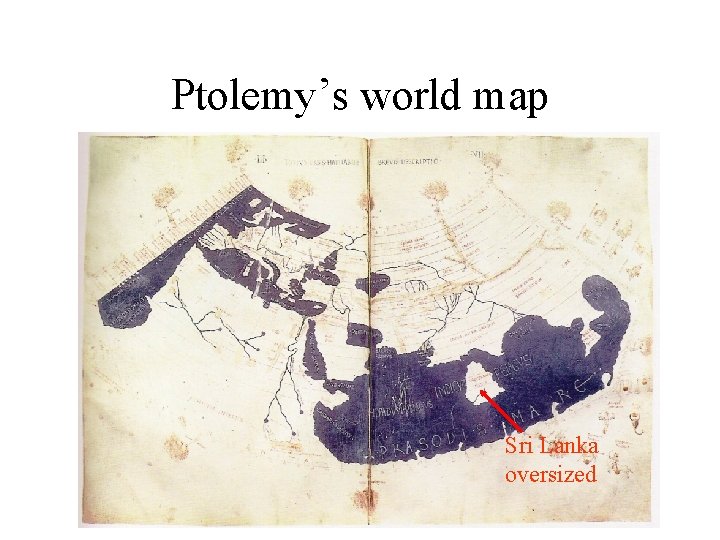
Ptolemy’s world map Sri Lanka oversized
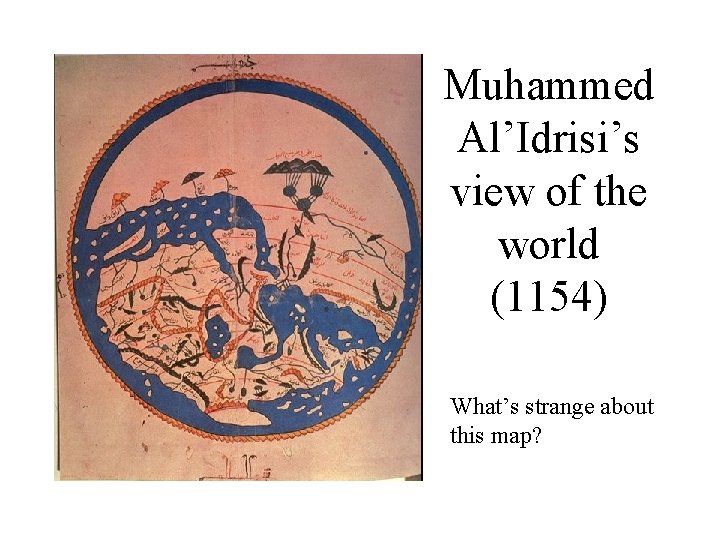
Muhammed Al’Idrisi’s view of the world (1154) What’s strange about this map?
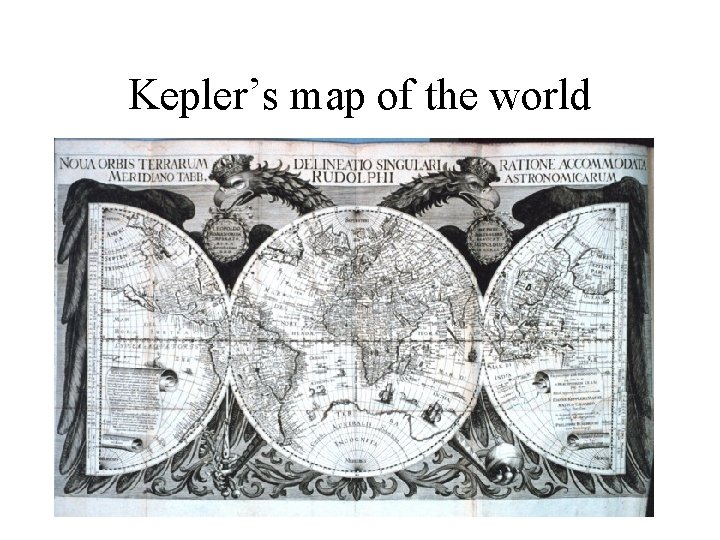
Kepler’s map of the world
Types of maps 1) Topographic map: "Topography”: pertaining to the shape of the surface, represented by contours and/or shading, but topographic maps also show roads and other prominent features
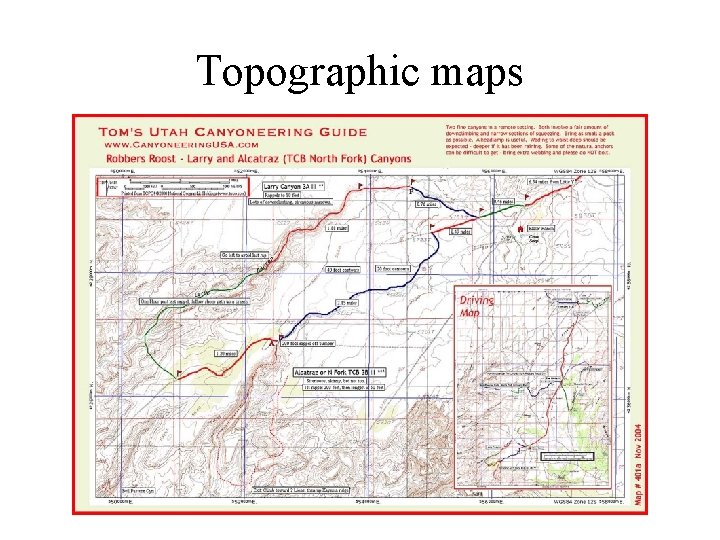
Topographic maps
Thematic map (choropleth): show geographical concepts such as the distribution of · population · climate · land use etc.
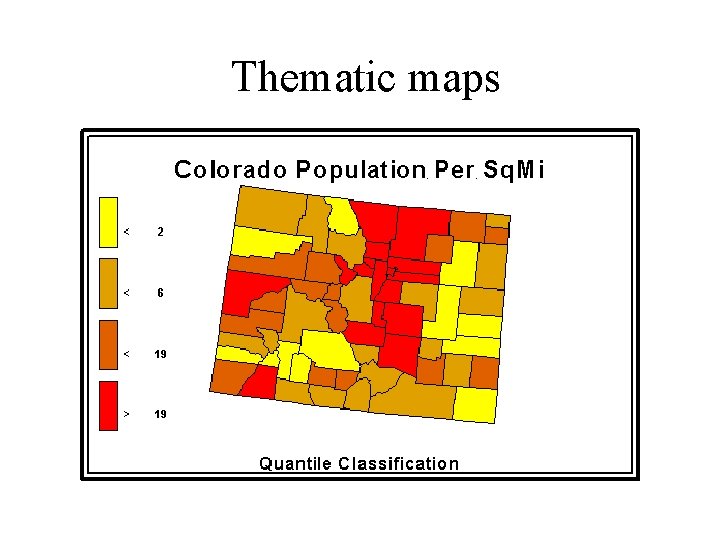
Thematic maps
Map elements • • Map features: points, lines, areas, … Scale Accuracy Extent
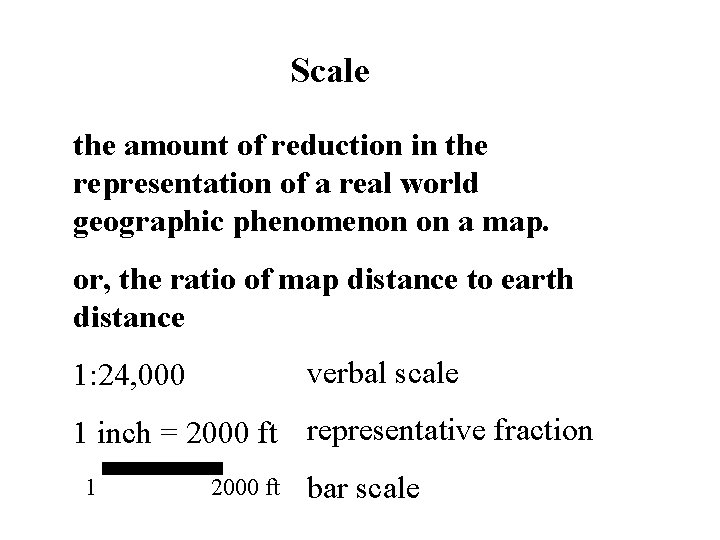
Scale the amount of reduction in the representation of a real world geographic phenomenon on a map. or, the ratio of map distance to earth distance verbal scale 1: 24, 000 1 inch = 2000 ft representative fraction 1 2000 ft bar scale
Accuracy: what is it? • • Quality of the source data Map scale mapping skills distortions from flattening Earth’s surface to fit on a sheet of paper
Construction of a map: summary Steps: 1. Select projection 2. Select a model for the shape of the earth (sphere or ellipsoid) 3. Transform geographic coordinates (longitude and latitude) to plane coordinates (eastings and northings or x, y) 4. Reduction of scale
Map Projections • Used to display locations on the curved surface of the earth on a flat sheet or surface according to some set of rules • Involve distortions in: shape (of a region) distance (between two points) direction (bearing from one point to another) area (of a region)
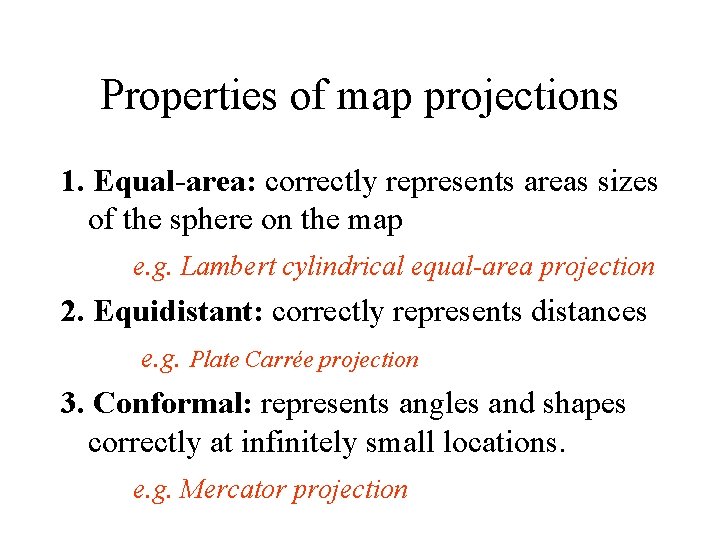
Properties of map projections 1. Equal-area: correctly represents areas sizes of the sphere on the map e. g. Lambert cylindrical equal-area projection 2. Equidistant: correctly represents distances e. g. Plate Carrée projection 3. Conformal: represents angles and shapes correctly at infinitely small locations. e. g. Mercator projection
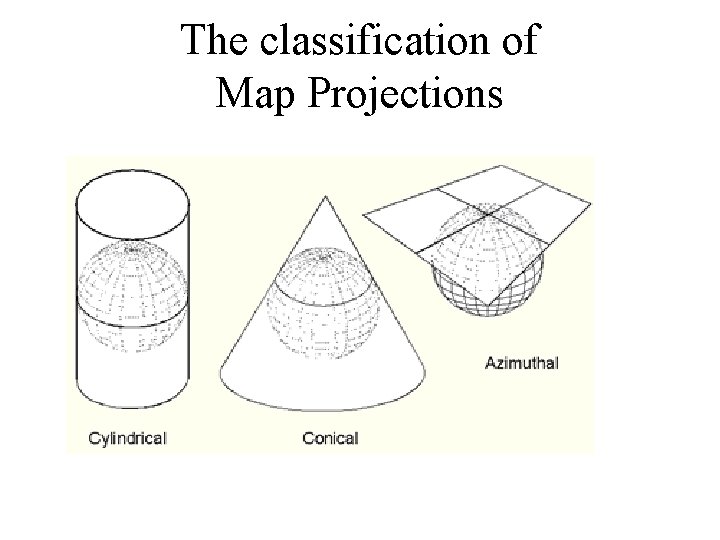
The classification of Map Projections
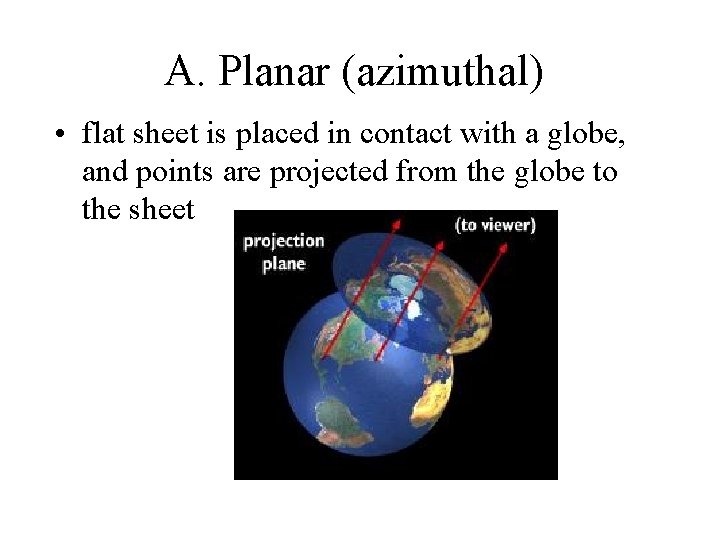
A. Planar (azimuthal) • flat sheet is placed in contact with a globe, and points are projected from the globe to the sheet
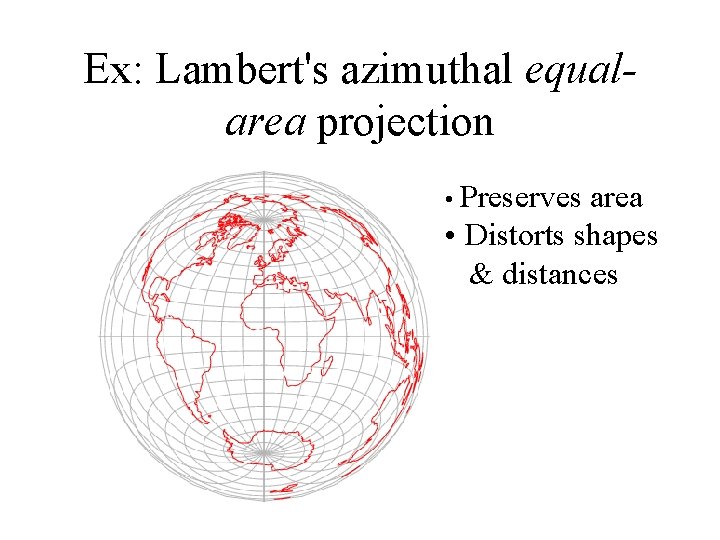
Ex: Lambert's azimuthal equalarea projection • Preserves area • Distorts shapes & distances
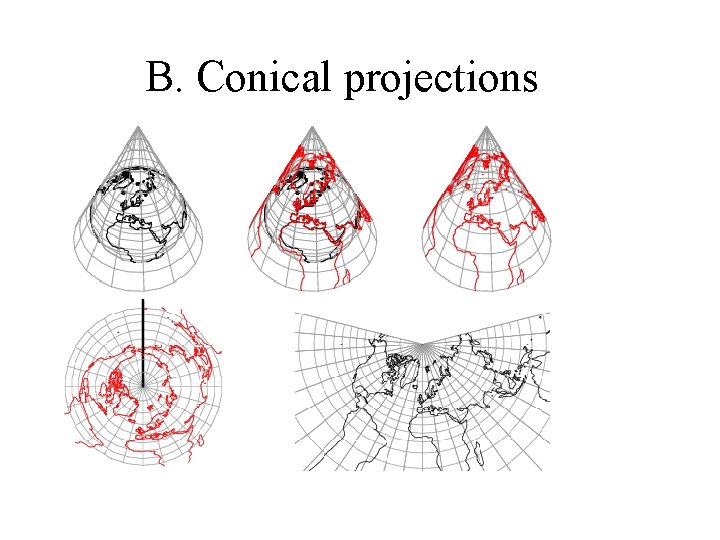
B. Conical projections
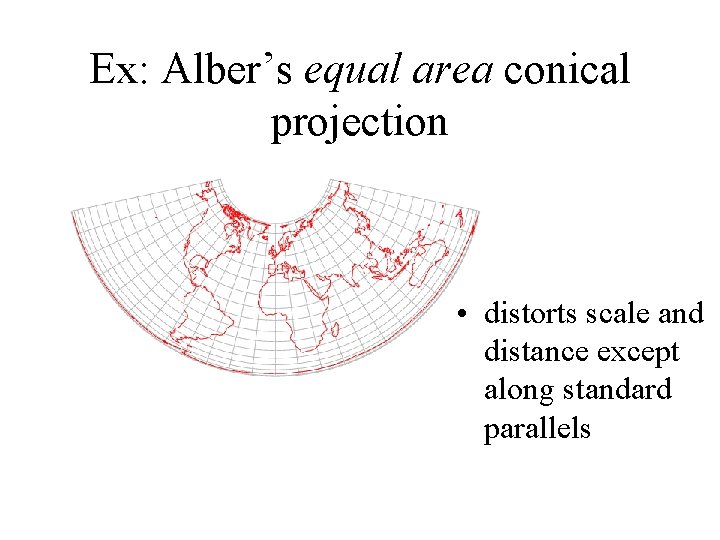
Ex: Alber’s equal area conical projection • distorts scale and distance except along standard parallels
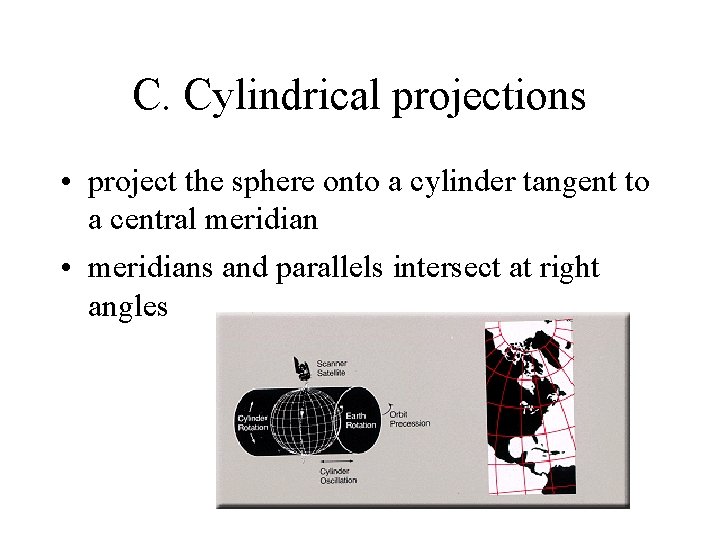
C. Cylindrical projections • project the sphere onto a cylinder tangent to a central meridian • meridians and parallels intersect at right angles
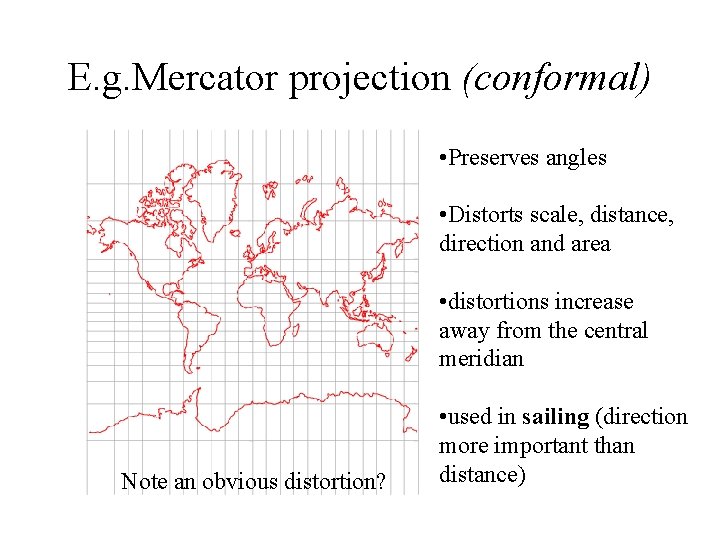
E. g. Mercator projection (conformal) • Preserves angles • Distorts scale, distance, direction and area • distortions increase away from the central meridian Note an obvious distortion? • used in sailing (direction more important than distance)
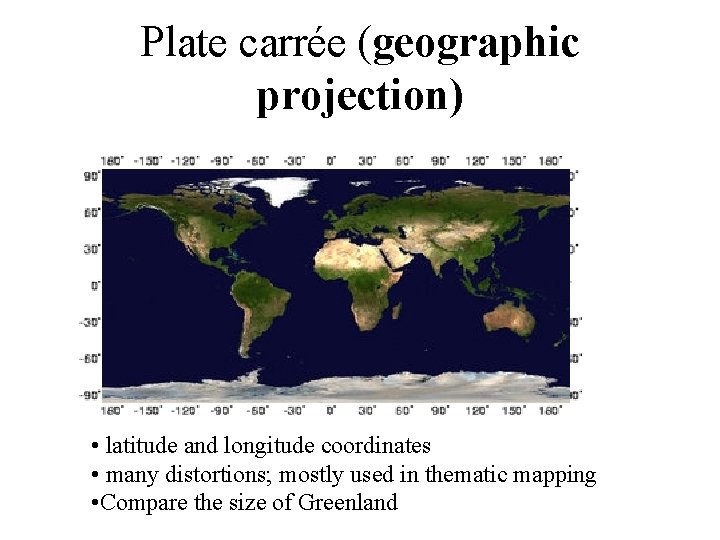
Plate carrée (geographic projection) • latitude and longitude coordinates • many distortions; mostly used in thematic mapping • Compare the size of Greenland
D. “Compromise” projections • Distortions are balanced • Make things "look right” • shape distorted more in the polar regions than at the equator
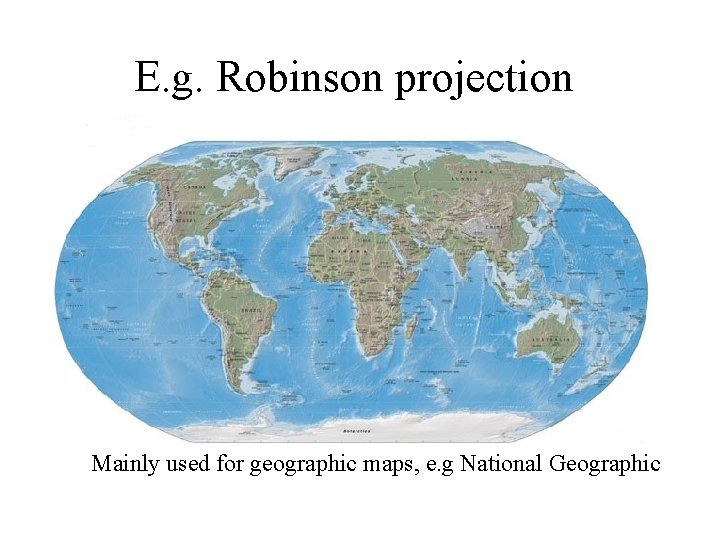
E. g. Robinson projection Mainly used for geographic maps, e. g National Geographic
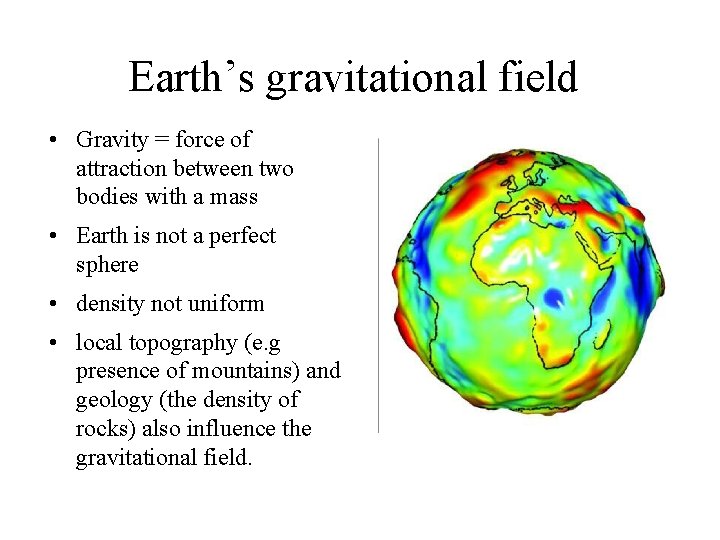
Earth’s gravitational field • Gravity = force of attraction between two bodies with a mass • Earth is not a perfect sphere • density not uniform • local topography (e. g presence of mountains) and geology (the density of rocks) also influence the gravitational field.
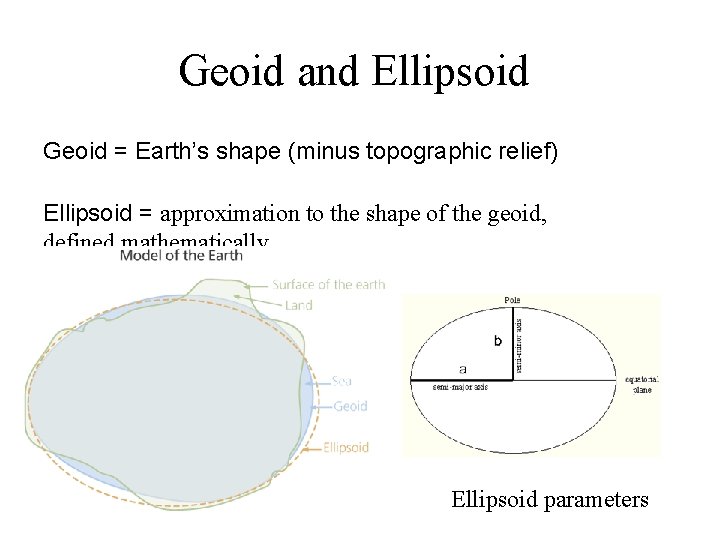
Geoid and Ellipsoid Geoid = Earth’s shape (minus topographic relief) Ellipsoid = approximation to the shape of the geoid, defined mathematically Ellipsoid parameters
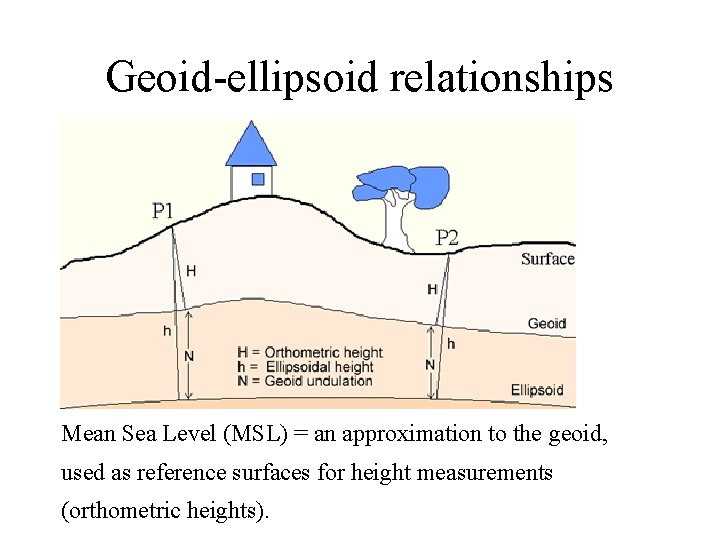
Geoid-ellipsoid relationships Mean Sea Level (MSL) = an approximation to the geoid, used as reference surfaces for height measurements (orthometric heights).
Common datums: • World Geodetic System (WGS 84): GLOBAL • NORTH AMERICAN DATUM OF 1927 • NORTH AMERICAN DATUM of 1983 Why the need for a common Reference System? For historical reasons each country has its own geodetic network and national geodetic reference frame.
Projections demo: Arc. IMS
Projections Demo: Arc. GIS • Latitude, Longitude, Map Projections and Great Circles
- Slides: 33