
Map Analysis Topic 5 Figures Figure 5 1
- Slides: 12
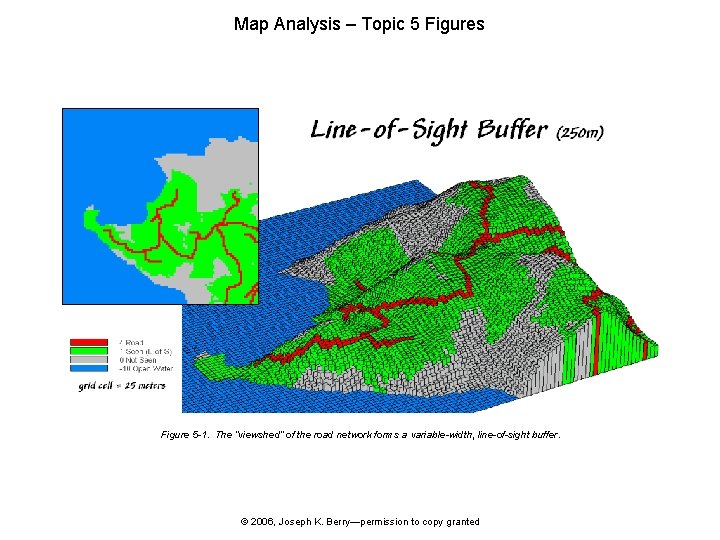
Map Analysis – Topic 5 Figures Figure 5 -1. The “viewshed” of the road network forms a variable-width, line-of-sight buffer. © 2006, Joseph K. Berry—permission to copy granted
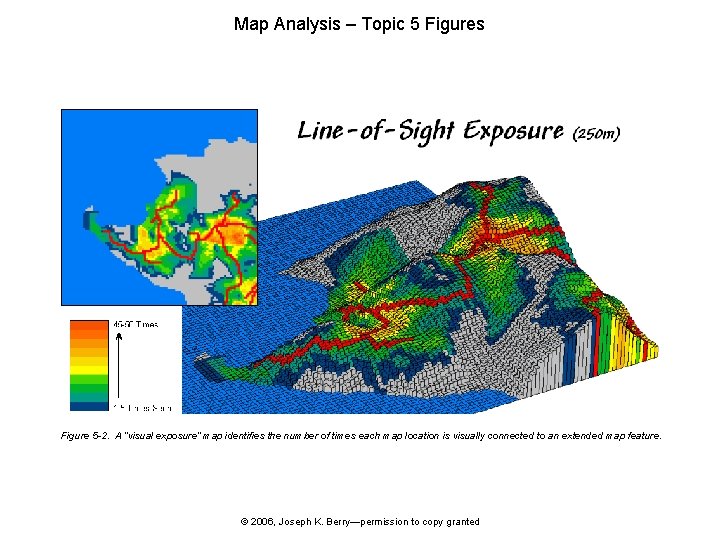
Map Analysis – Topic 5 Figures Figure 5 -2. A “visual exposure” map identifies the number of times each map location is visually connected to an extended map feature. © 2006, Joseph K. Berry—permission to copy granted
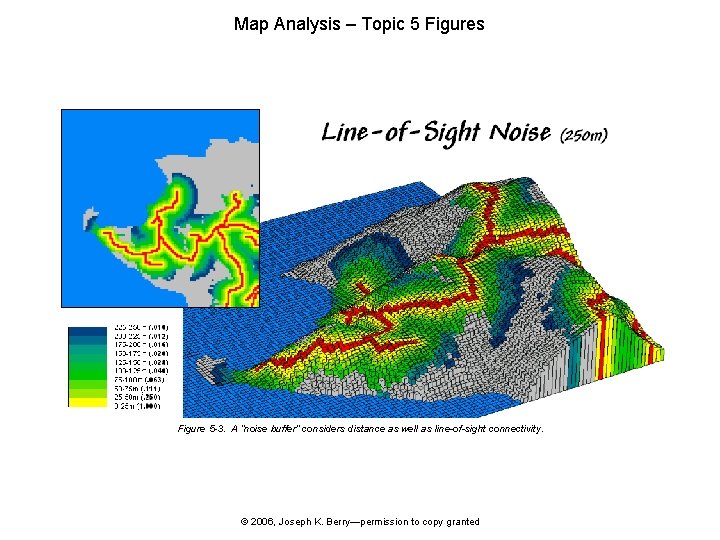
Map Analysis – Topic 5 Figures Figure 5 -3. A “noise buffer” considers distance as well as line-of-sight connectivity. © 2006, Joseph K. Berry—permission to copy granted
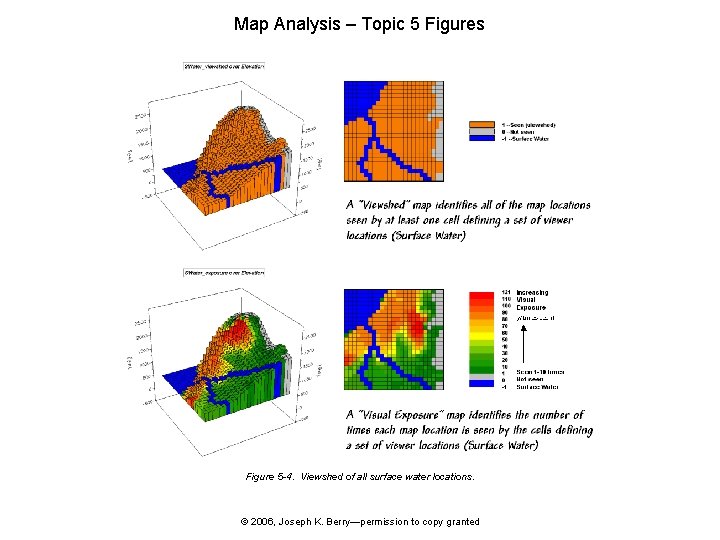
Map Analysis – Topic 5 Figures Figure 5 -4. Viewshed of all surface water locations. © 2006, Joseph K. Berry—permission to copy granted
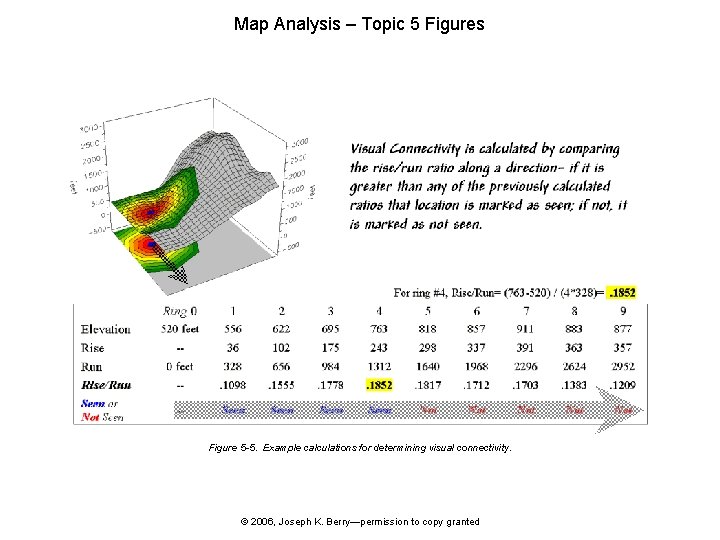
Map Analysis – Topic 5 Figures Figure 5 -5. Example calculations for determining visual connectivity. © 2006, Joseph K. Berry—permission to copy granted
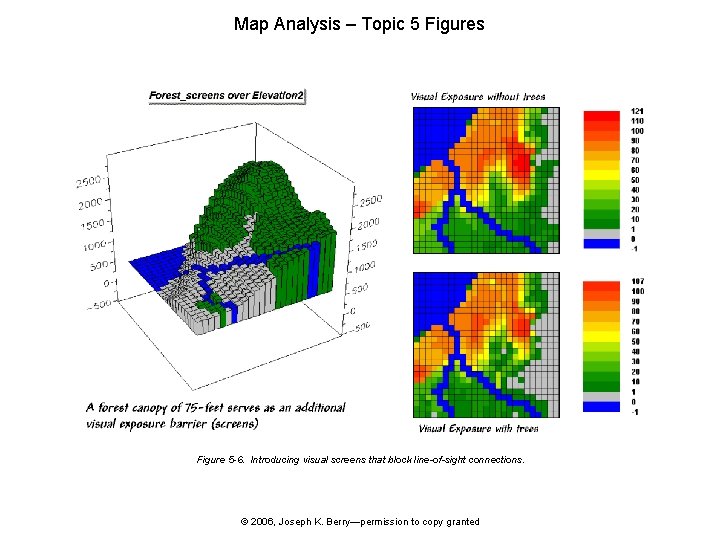
Map Analysis – Topic 5 Figures Figure 5 -6. Introducing visual screens that block line-of-sight connections. © 2006, Joseph K. Berry—permission to copy granted
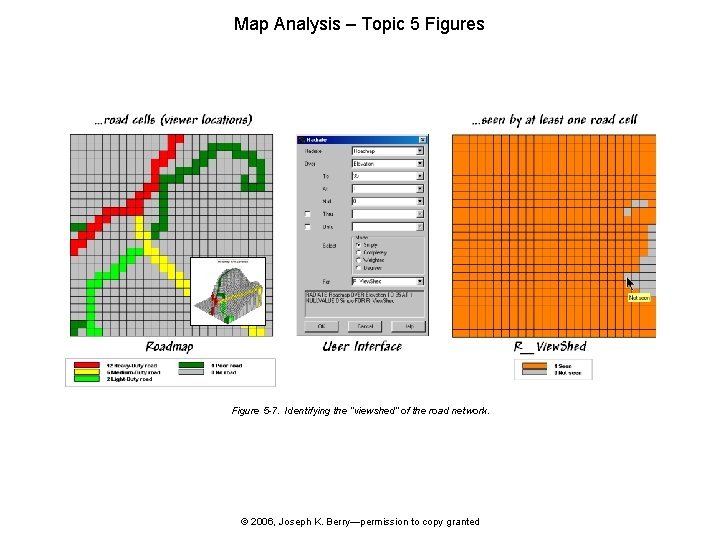
Map Analysis – Topic 5 Figures Figure 5 -7. Identifying the “viewshed” of the road network. © 2006, Joseph K. Berry—permission to copy granted
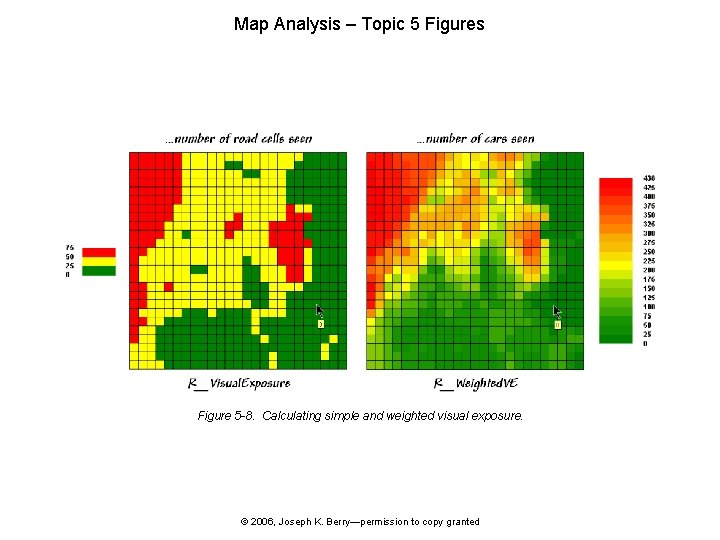
Map Analysis – Topic 5 Figures Figure 5 -8. Calculating simple and weighted visual exposure. © 2006, Joseph K. Berry—permission to copy granted
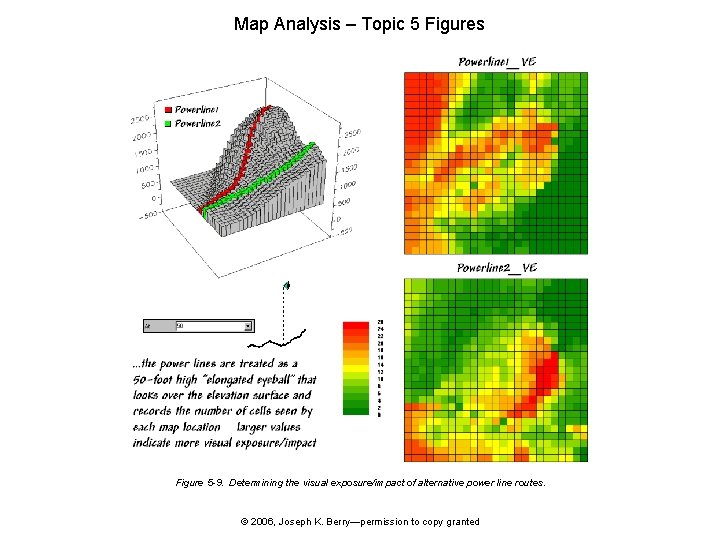
Map Analysis – Topic 5 Figures Figure 5 -9. Determining the visual exposure/impact of alternative power line routes. © 2006, Joseph K. Berry—permission to copy granted
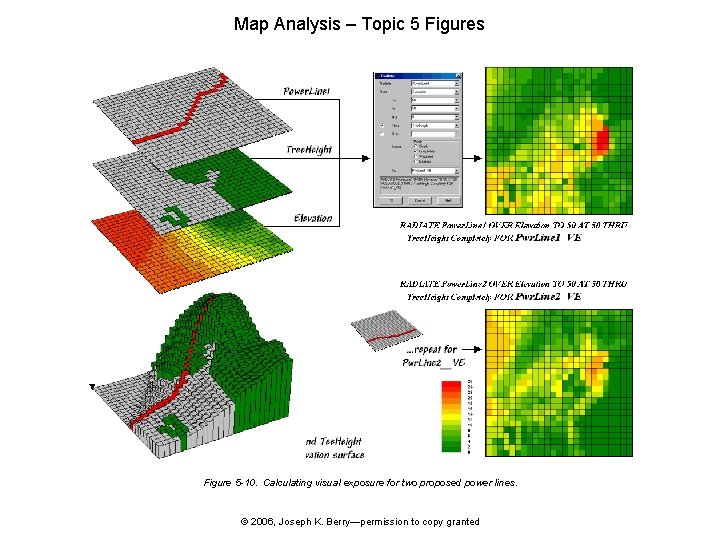
Map Analysis – Topic 5 Figures Figure 5 -10. Calculating visual exposure for two proposed power lines. © 2006, Joseph K. Berry—permission to copy granted
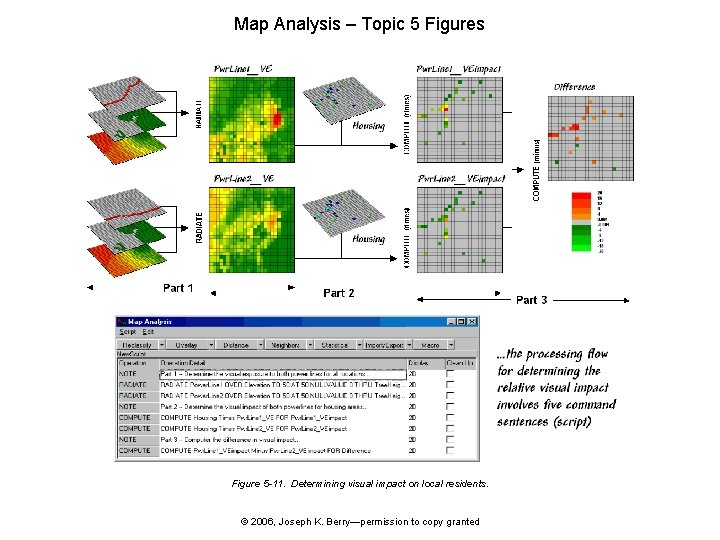
Map Analysis – Topic 5 Figures Figure 5 -11. Determining visual impact on local residents. © 2006, Joseph K. Berry—permission to copy granted
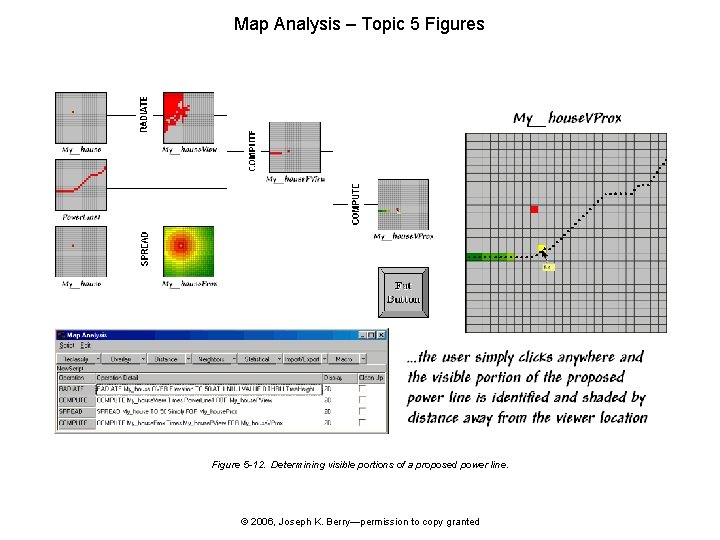
Map Analysis – Topic 5 Figures Figure 5 -12. Determining visible portions of a proposed power line. © 2006, Joseph K. Berry—permission to copy granted