
Manzanar Relocation Center Ansel Adams Dorothea Lange Clem
- Slides: 49
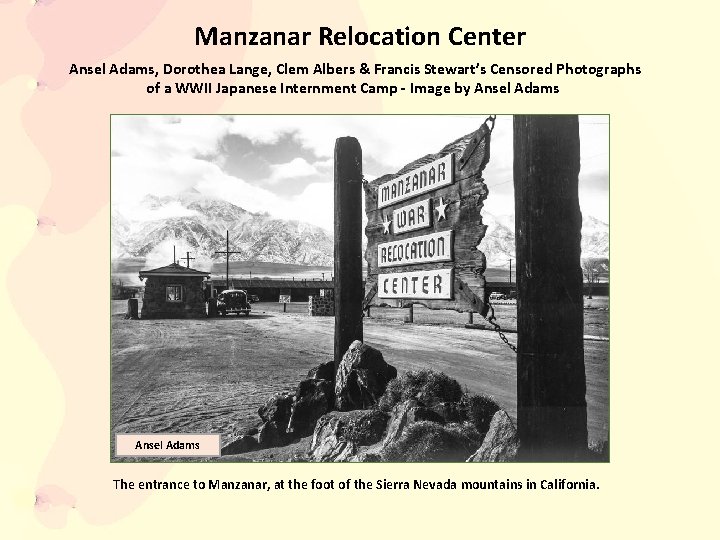
Manzanar Relocation Center Ansel Adams, Dorothea Lange, Clem Albers & Francis Stewart’s Censored Photographs of a WWII Japanese Internment Camp - Image by Ansel Adams The entrance to Manzanar, at the foot of the Sierra Nevada mountains in California.
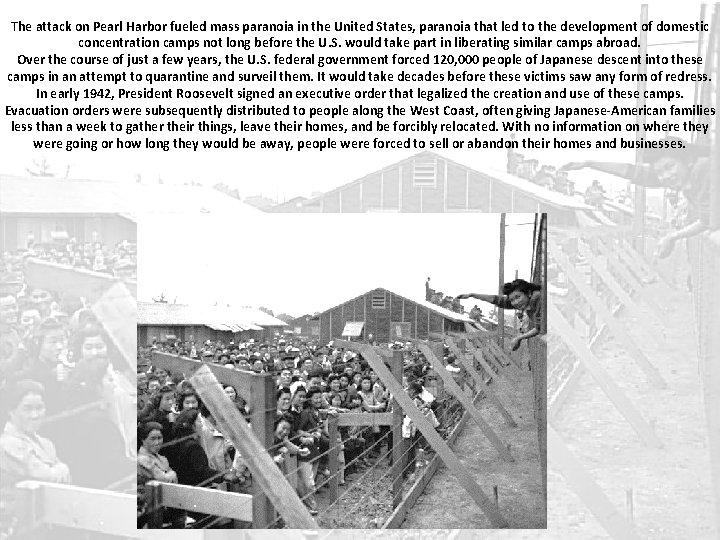
The attack on Pearl Harbor fueled mass paranoia in the United States, paranoia that led to the development of domestic concentration camps not long before the U. S. would take part in liberating similar camps abroad. Over the course of just a few years, the U. S. federal government forced 120, 000 people of Japanese descent into these camps in an attempt to quarantine and surveil them. It would take decades before these victims saw any form of redress. In early 1942, President Roosevelt signed an executive order that legalized the creation and use of these camps. Evacuation orders were subsequently distributed to people along the West Coast, often giving Japanese-American families less than a week to gather their things, leave their homes, and be forcibly relocated. With no information on where they were going or how long they would be away, people were forced to sell or abandon their homes and businesses.
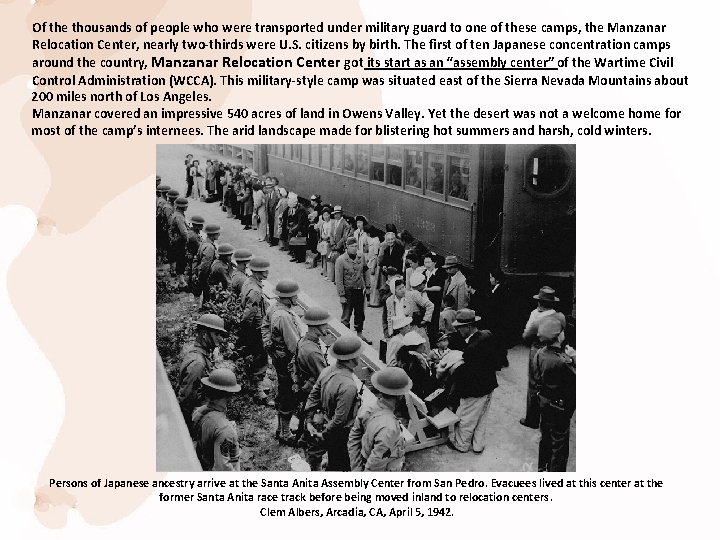
Of the thousands of people who were transported under military guard to one of these camps, the Manzanar Relocation Center, nearly two-thirds were U. S. citizens by birth. The first of ten Japanese concentration camps around the country, Manzanar Relocation Center got its start as an “assembly center” of the Wartime Civil Control Administration (WCCA). This military-style camp was situated east of the Sierra Nevada Mountains about 200 miles north of Los Angeles. Manzanar covered an impressive 540 acres of land in Owens Valley. Yet the desert was not a welcome home for most of the camp’s internees. The arid landscape made for blistering hot summers and harsh, cold winters. Persons of Japanese ancestry arrive at the Santa Anita Assembly Center from San Pedro. Evacuees lived at this center at the former Santa Anita race track before being moved inland to relocation centers. Clem Albers, Arcadia, CA, April 5, 1942.
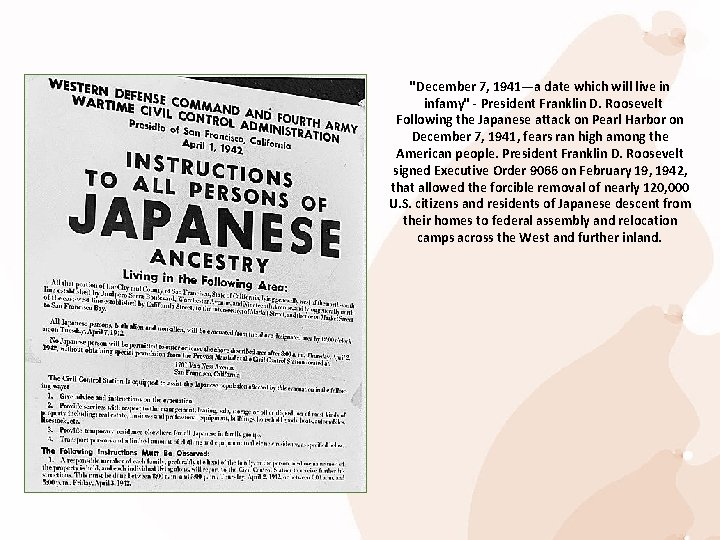
"December 7, 1941—a date which will live in infamy" - President Franklin D. Roosevelt Following the Japanese attack on Pearl Harbor on December 7, 1941, fears ran high among the American people. President Franklin D. Roosevelt signed Executive Order 9066 on February 19, 1942, that allowed the forcible removal of nearly 120, 000 U. S. citizens and residents of Japanese descent from their homes to federal assembly and relocation camps across the West and further inland.
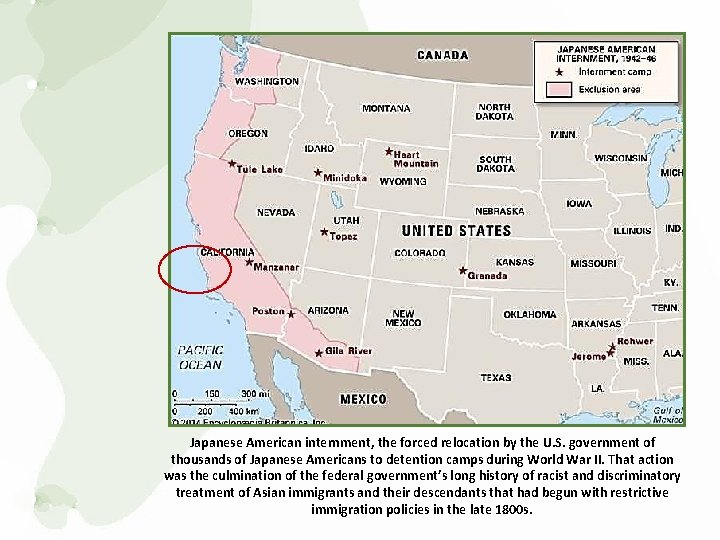
Japanese American internment, the forced relocation by the U. S. government of thousands of Japanese Americans to detention camps during World War II. That action was the culmination of the federal government’s long history of racist and discriminatory treatment of Asian immigrants and their descendants that had begun with restrictive immigration policies in the late 1800 s.
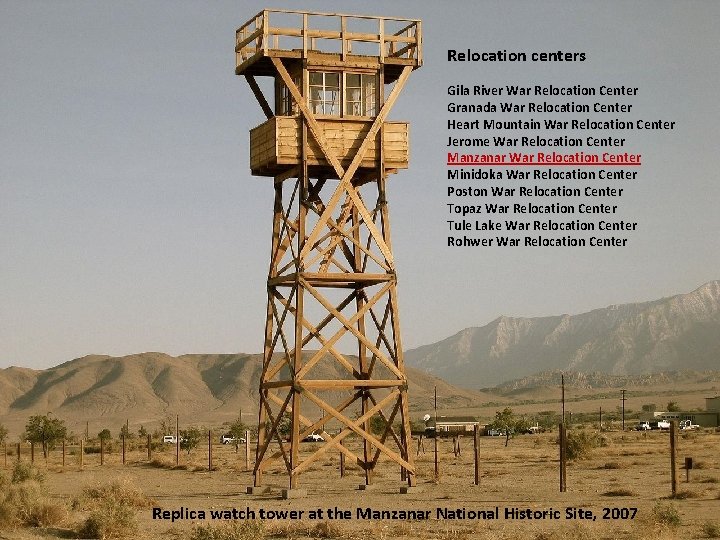
Relocation centers Gila River War Relocation Center Granada War Relocation Center Heart Mountain War Relocation Center Jerome War Relocation Center Manzanar War Relocation Center Minidoka War Relocation Center Poston War Relocation Center Topaz War Relocation Center Tule Lake War Relocation Center Rohwer War Relocation Center Replica watch tower at the Manzanar National Historic Site, 2007
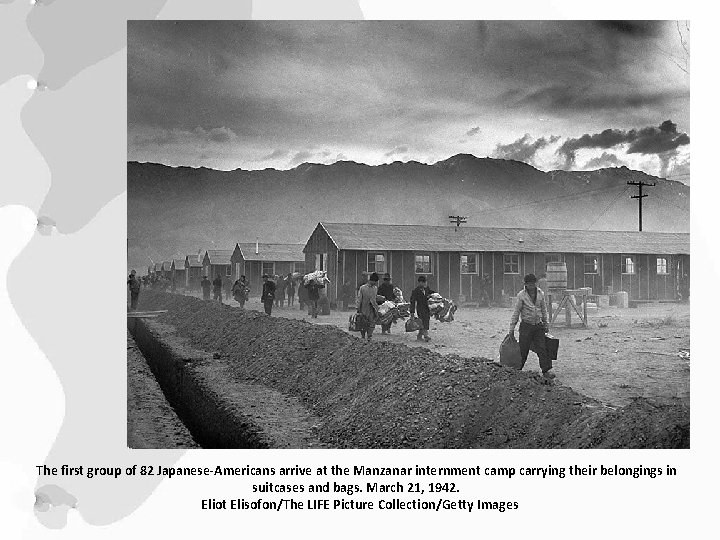
The first group of 82 Japanese-Americans arrive at the Manzanar internment camp carrying their belongings in suitcases and bags. March 21, 1942. Eliot Elisofon/The LIFE Picture Collection/Getty Images
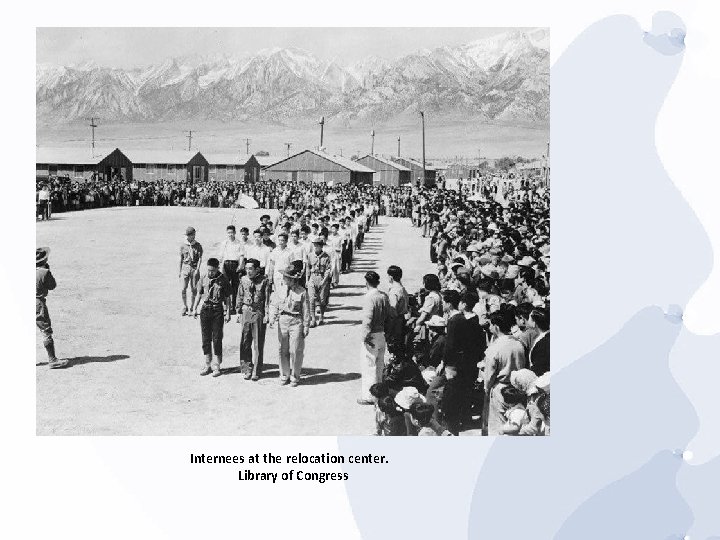
Internees at the relocation center. Library of Congress
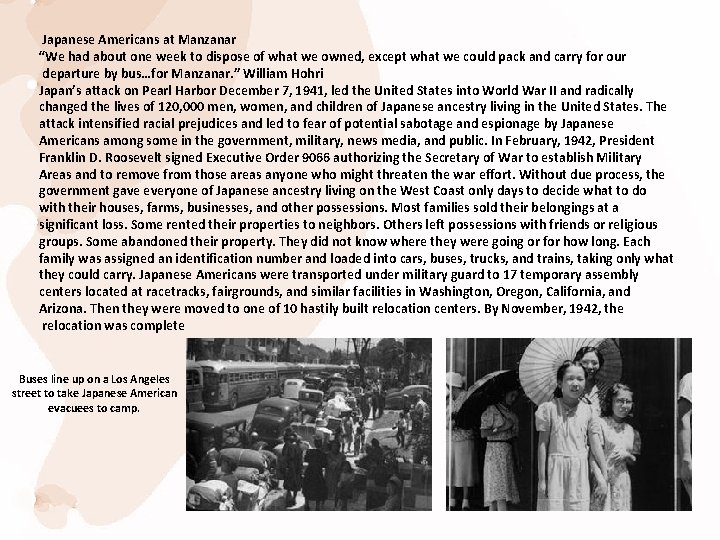
Japanese Americans at Manzanar “We had about one week to dispose of what we owned, except what we could pack and carry for our departure by bus…for Manzanar. ” William Hohri Japan’s attack on Pearl Harbor December 7, 1941, led the United States into World War II and radically changed the lives of 120, 000 men, women, and children of Japanese ancestry living in the United States. The attack intensified racial prejudices and led to fear of potential sabotage and espionage by Japanese Americans among some in the government, military, news media, and public. In February, 1942, President Franklin D. Roosevelt signed Executive Order 9066 authorizing the Secretary of War to establish Military Areas and to remove from those areas anyone who might threaten the war effort. Without due process, the government gave everyone of Japanese ancestry living on the West Coast only days to decide what to do with their houses, farms, businesses, and other possessions. Most families sold their belongings at a significant loss. Some rented their properties to neighbors. Others left possessions with friends or religious groups. Some abandoned their property. They did not know where they were going or for how long. Each family was assigned an identification number and loaded into cars, buses, trucks, and trains, taking only what they could carry. Japanese Americans were transported under military guard to 17 temporary assembly centers located at racetracks, fairgrounds, and similar facilities in Washington, Oregon, California, and Arizona. Then they were moved to one of 10 hastily built relocation centers. By November, 1942, the relocation was complete Buses line up on a Los Angeles street to take Japanese American evacuees to camp.
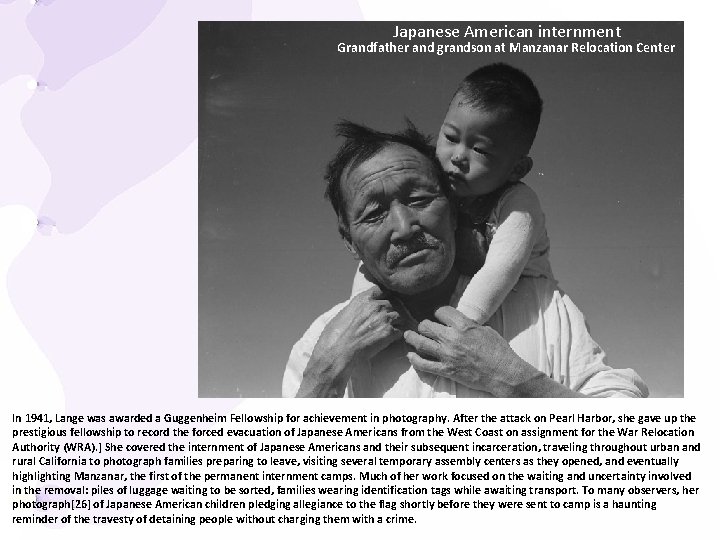
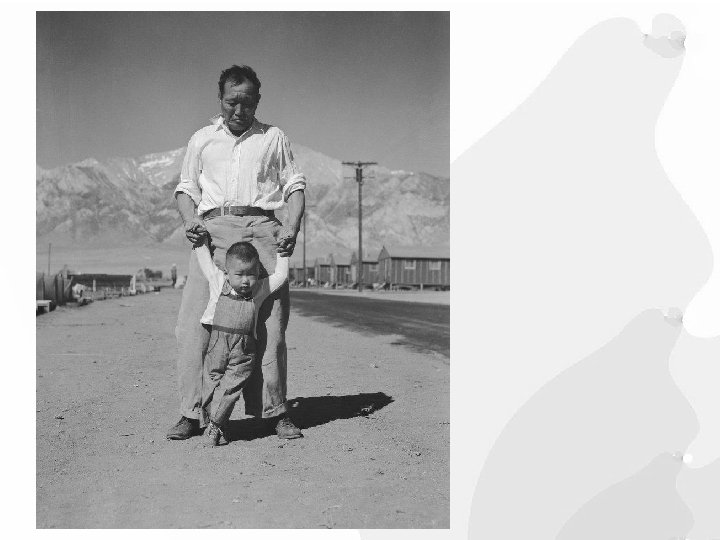
Japanese American internment Grandfather and grandson at Manzanar Relocation Center In 1941, Lange was awarded a Guggenheim Fellowship for achievement in photography. After the attack on Pearl Harbor, she gave up the prestigious fellowship to record the forced evacuation of Japanese Americans from the West Coast on assignment for the War Relocation Authority (WRA). ] She covered the internment of Japanese Americans and their subsequent incarceration, traveling throughout urban and rural California to photograph families preparing to leave, visiting several temporary assembly centers as they opened, and eventually highlighting Manzanar, the first of the permanent internment camps. Much of her work focused on the waiting and uncertainty involved in the removal: piles of luggage waiting to be sorted, families wearing identification tags while awaiting transport. To many observers, her photograph[26] of Japanese American children pledging allegiance to the flag shortly before they were sent to camp is a haunting reminder of the travesty of detaining people without charging them with a crime.
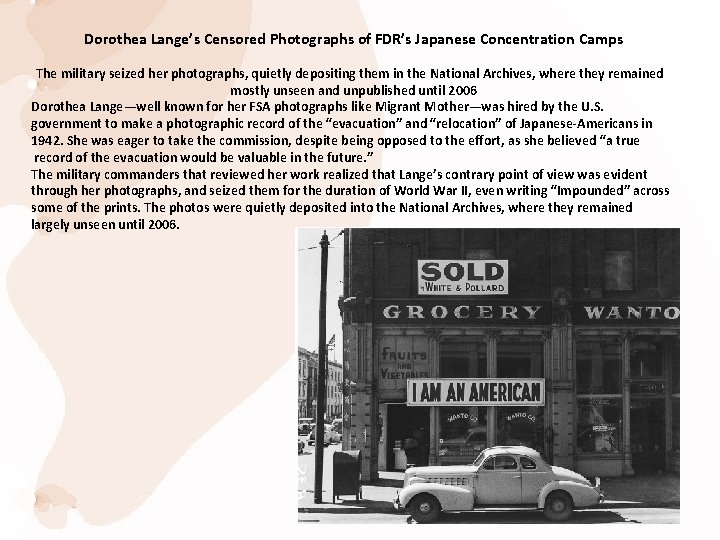
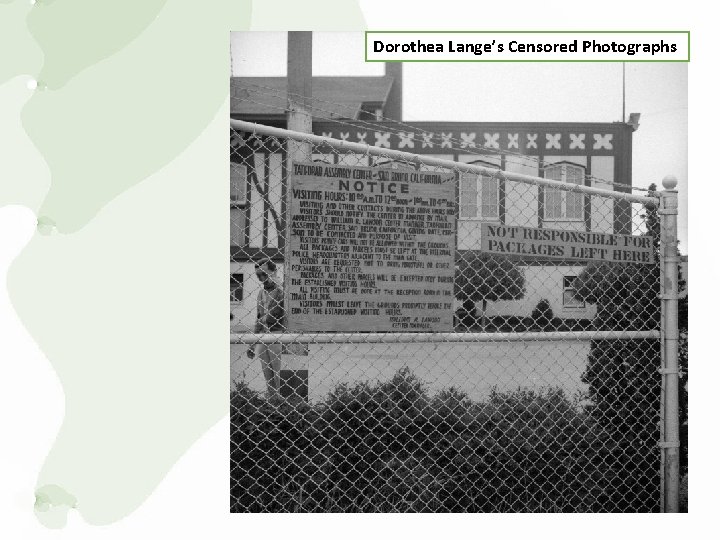
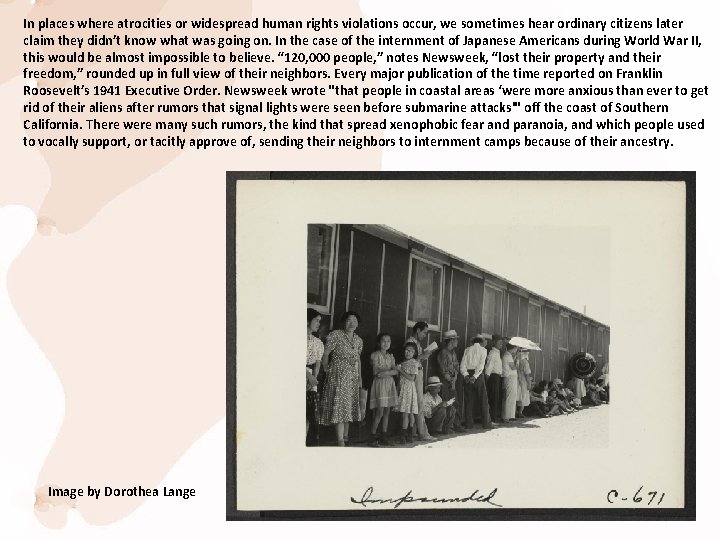
Dorothea Lange’s Censored Photographs of FDR’s Japanese Concentration Camps The military seized her photographs, quietly depositing them in the National Archives, where they remained mostly unseen and unpublished until 2006 Dorothea Lange—well known for her FSA photographs like Migrant Mother—was hired by the U. S. government to make a photographic record of the “evacuation” and “relocation” of Japanese-Americans in 1942. She was eager to take the commission, despite being opposed to the effort, as she believed “a true record of the evacuation would be valuable in the future. ” The military commanders that reviewed her work realized that Lange’s contrary point of view was evident through her photographs, and seized them for the duration of World War II, even writing “Impounded” across some of the prints. The photos were quietly deposited into the National Archives, where they remained largely unseen until 2006.
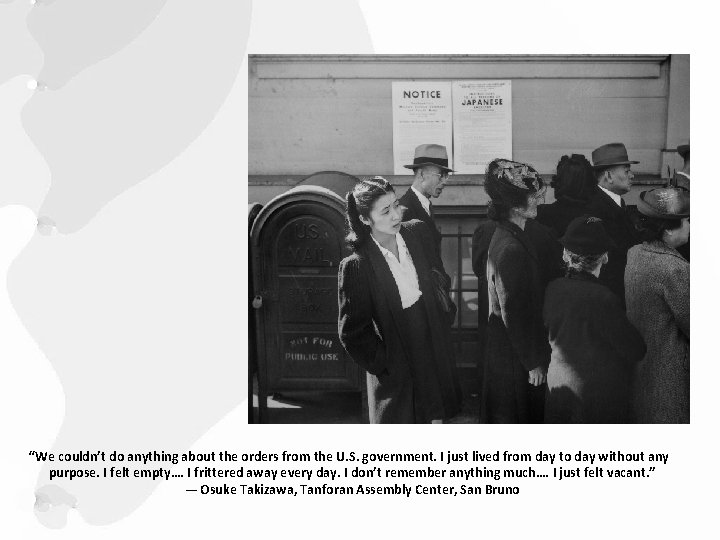
“We couldn’t do anything about the orders from the U. S. government. I just lived from day to day without any purpose. I felt empty. … I frittered away every day. I don’t remember anything much. … I just felt vacant. ” — Osuke Takizawa, Tanforan Assembly Center, San Bruno
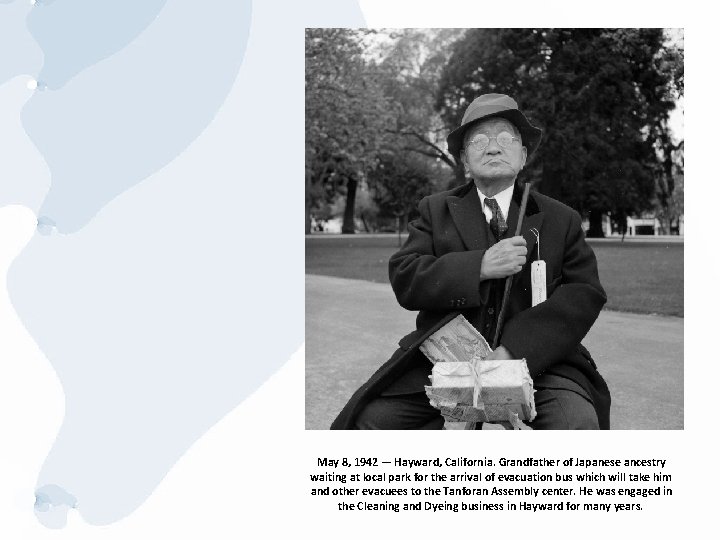
May 8, 1942 — Hayward, California. Grandfather of Japanese ancestry waiting at local park for the arrival of evacuation bus which will take him and other evacuees to the Tanforan Assembly center. He was engaged in the Cleaning and Dyeing business in Hayward for many years.
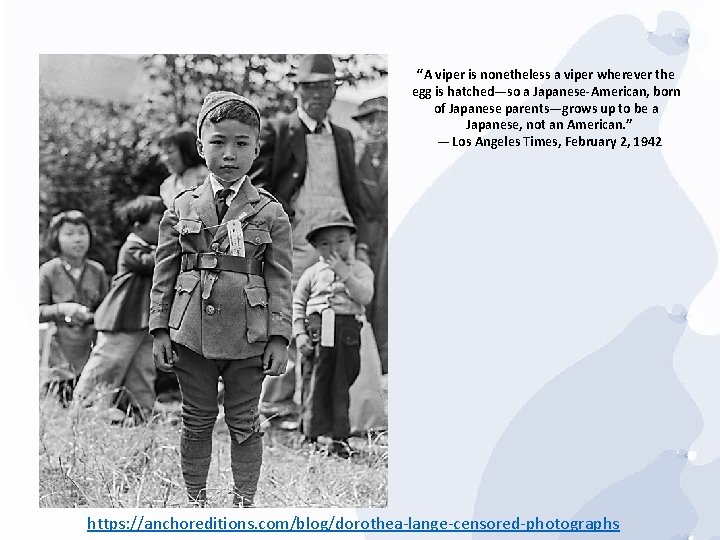
“A viper is nonetheless a viper wherever the egg is hatched—so a Japanese-American, born of Japanese parents—grows up to be a Japanese, not an American. ” — Los Angeles Times, February 2, 1942 https: //anchoreditions. com/blog/dorothea-lange-censored-photographs
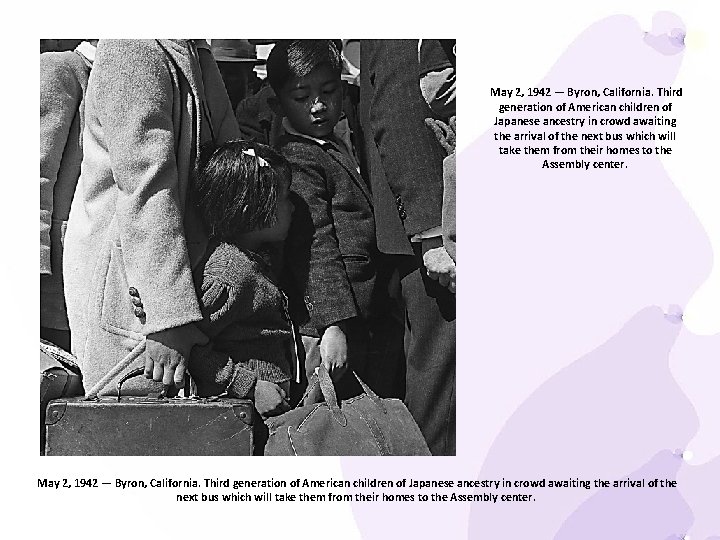
May 2, 1942 — Byron, California. Third generation of American children of Japanese ancestry in crowd awaiting the arrival of the next bus which will take them from their homes to the Assembly center.
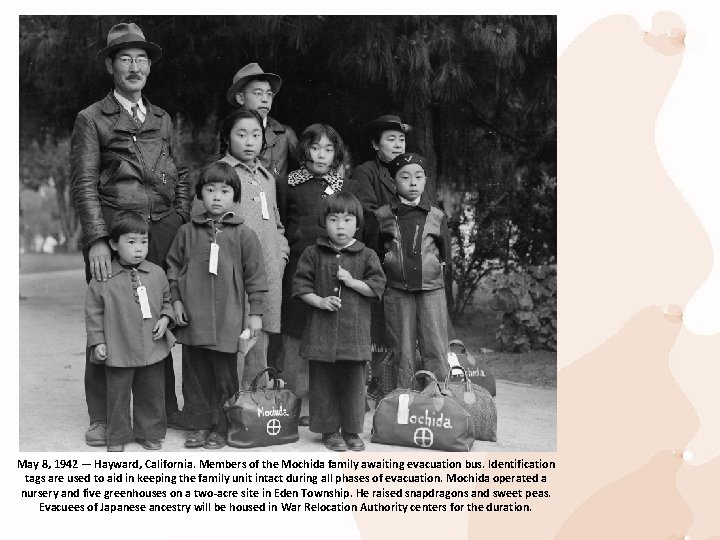
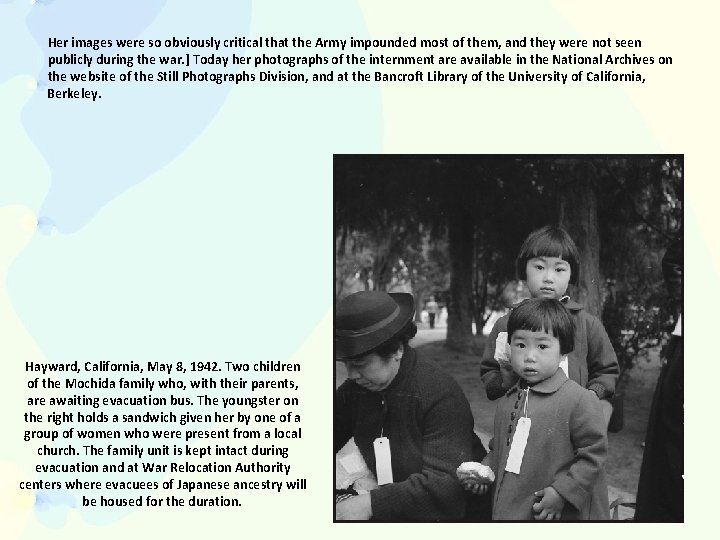
May 8, 1942 — Hayward, California. Members of the Mochida family awaiting evacuation bus. Identification tags are used to aid in keeping the family unit intact during all phases of evacuation. Mochida operated a nursery and five greenhouses on a two-acre site in Eden Township. He raised snapdragons and sweet peas. Evacuees of Japanese ancestry will be housed in War Relocation Authority centers for the duration.
Dorothea Lange’s Censored Photographs
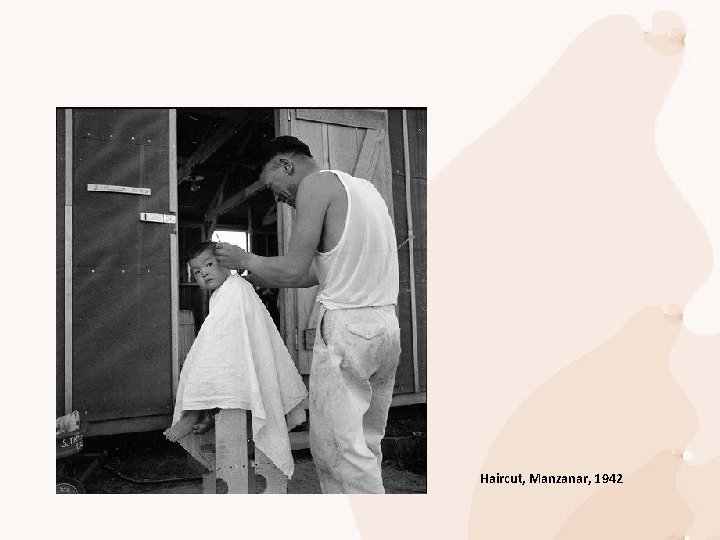
Haircut, Manzanar, 1942
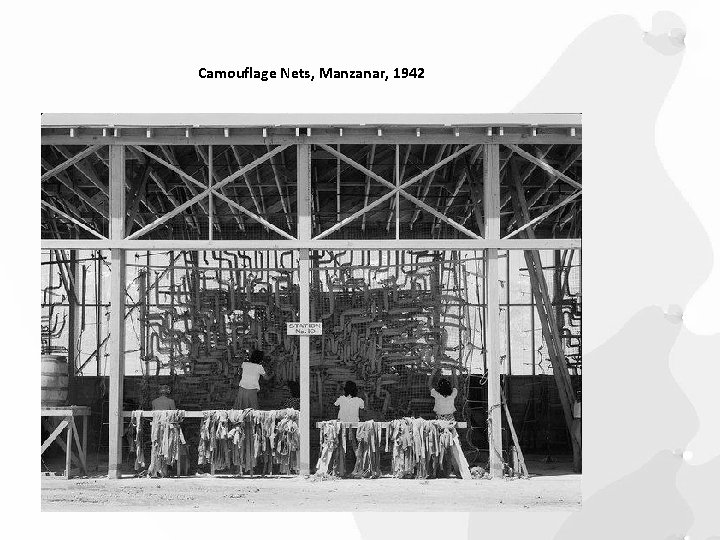
Camouflage Nets, Manzanar, 1942
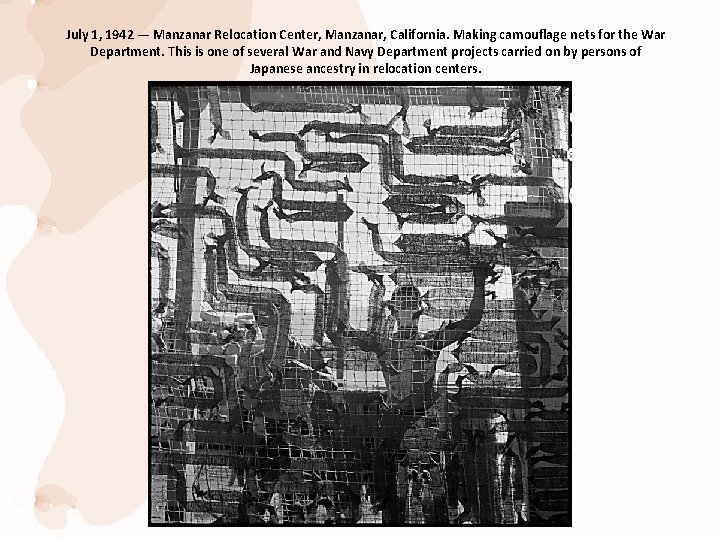
July 1, 1942 — Manzanar Relocation Center, Manzanar, California. Making camouflage nets for the War Department. This is one of several War and Navy Department projects carried on by persons of Japanese ancestry in relocation centers.
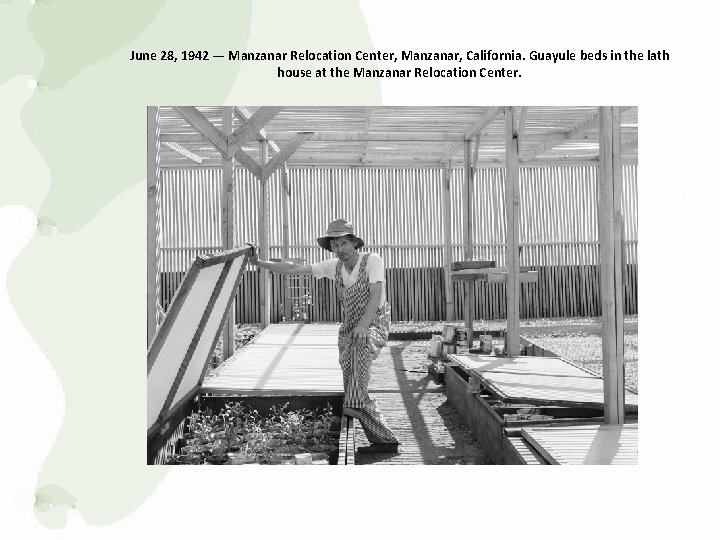
June 28, 1942 — Manzanar Relocation Center, Manzanar, California. Guayule beds in the lath house at the Manzanar Relocation Center.
In places where atrocities or widespread human rights violations occur, we sometimes hear ordinary citizens later claim they didn’t know what was going on. In the case of the internment of Japanese Americans during World War II, this would be almost impossible to believe. “ 120, 000 people, ” notes Newsweek, “lost their property and their freedom, ” rounded up in full view of their neighbors. Every major publication of the time reported on Franklin Roosevelt’s 1941 Executive Order. Newsweek wrote "that people in coastal areas ‘were more anxious than ever to get rid of their aliens after rumors that signal lights were seen before submarine attacks'" off the coast of Southern California. There were many such rumors, the kind that spread xenophobic fear and paranoia, and which people used to vocally support, or tacitly approve of, sending their neighbors to internment camps because of their ancestry. Image by Dorothea Lange
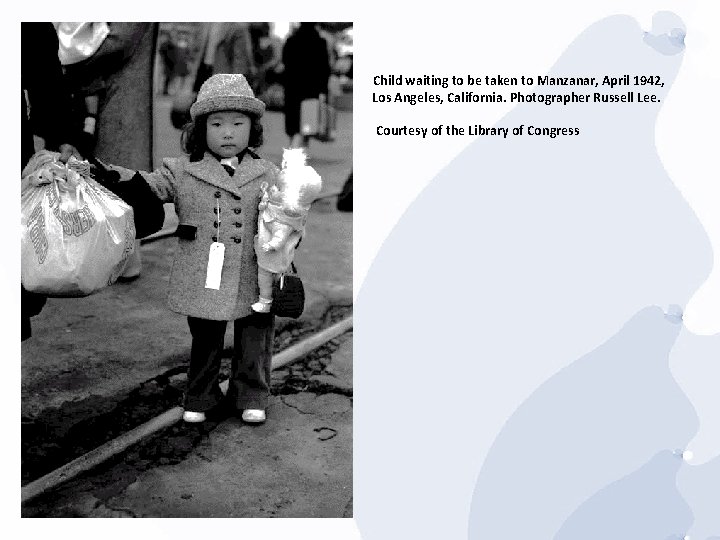
Child waiting to be taken to Manzanar, April 1942, Los Angeles, California. Photographer Russell Lee. Courtesy of the Library of Congress
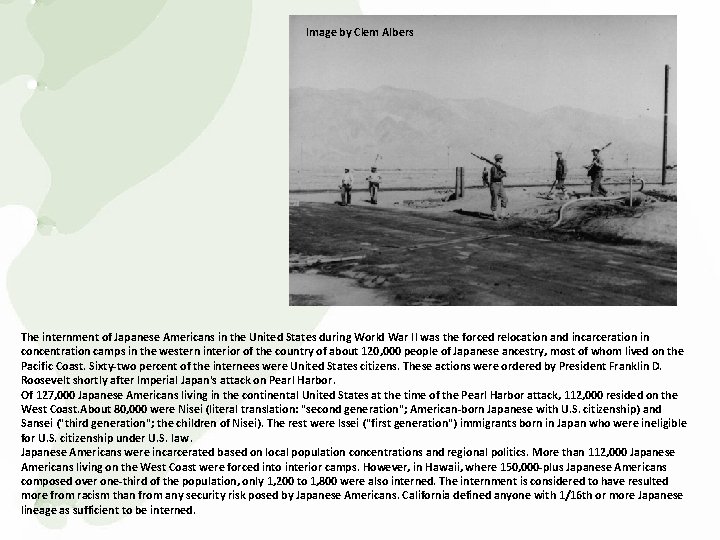
Image by Clem Albers The internment of Japanese Americans in the United States during World War II was the forced relocation and incarceration in concentration camps in the western interior of the country of about 120, 000 people of Japanese ancestry, most of whom lived on the Pacific Coast. Sixty-two percent of the internees were United States citizens. These actions were ordered by President Franklin D. Roosevelt shortly after Imperial Japan's attack on Pearl Harbor. Of 127, 000 Japanese Americans living in the continental United States at the time of the Pearl Harbor attack, 112, 000 resided on the West Coast. About 80, 000 were Nisei (literal translation: "second generation"; American-born Japanese with U. S. citizenship) and Sansei ("third generation"; the children of Nisei). The rest were Issei ("first generation") immigrants born in Japan who were ineligible for U. S. citizenship under U. S. law. Japanese Americans were incarcerated based on local population concentrations and regional politics. More than 112, 000 Japanese Americans living on the West Coast were forced into interior camps. However, in Hawaii, where 150, 000 -plus Japanese Americans composed over one-third of the population, only 1, 200 to 1, 800 were also interned. The internment is considered to have resulted more from racism than from any security risk posed by Japanese Americans. California defined anyone with 1/16 th or more Japanese lineage as sufficient to be interned.
Her images were so obviously critical that the Army impounded most of them, and they were not seen publicly during the war. ] Today her photographs of the internment are available in the National Archives on the website of the Still Photographs Division, and at the Bancroft Library of the University of California, Berkeley. Hayward, California, May 8, 1942. Two children of the Mochida family who, with their parents, are awaiting evacuation bus. The youngster on the right holds a sandwich given her by one of a group of women who were present from a local church. The family unit is kept intact during evacuation and at War Relocation Authority centers where evacuees of Japanese ancestry will be housed for the duration.
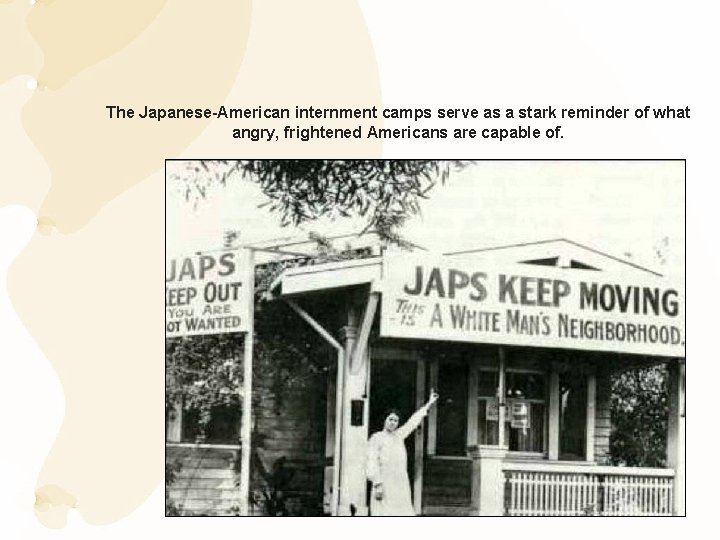
The Japanese-American internment camps serve as a stark reminder of what angry, frightened Americans are capable of.
While some large-scale farming helped keep the concentration camp self-sufficient, most of the internees were forced to hold industrial jobs at the camp’s garment and mattress factories. Wages for their work often topped out at less than 20 dollars a month. Though it was surrounded by barbed wire and a series of guard towers, Manzanar comprised a variety of buildings, including churches, shops, a hospital, a post office, and an auditorium for schooling. Men and women shared bathrooms and bathing facilities, and living assignments were frequently random, meaning that a woman might be assigned to live with a man other than her husband. All in all, mess halls and residences were crowded and sparse. In spite of these conditions, people at Manzanar tried to make the best of the situation. They established churches and recreational programs, and even created a local publication, the Manzanar Free Press. At its peak, more than 10, 000 people of Japanese descent called Manzanar their home. It was the most closely guarded internment camp, likely due to its geographical location and particularly hostile population. On December 6, 1942, internees protested camp conditions after Harry Ueno, a cook who had been organizing internees, was arrested. Camp director Ralph Merritt sought the help of military police to quiet the protesters. But when they refused to disband, police used tear gas and eventually fired into the crowd, killing two people and injuring an additional ten. The event is now known as the “Manzanar Incident. ”
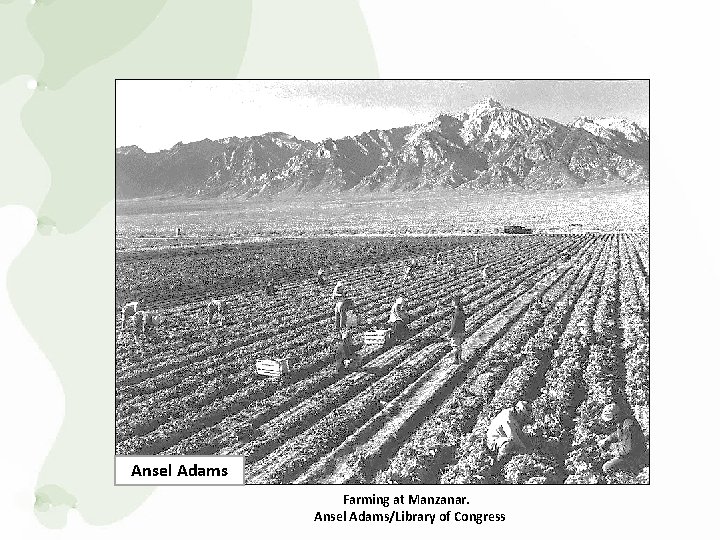
Ansel Adams Farming at Manzanar. Ansel Adams/Library of Congress
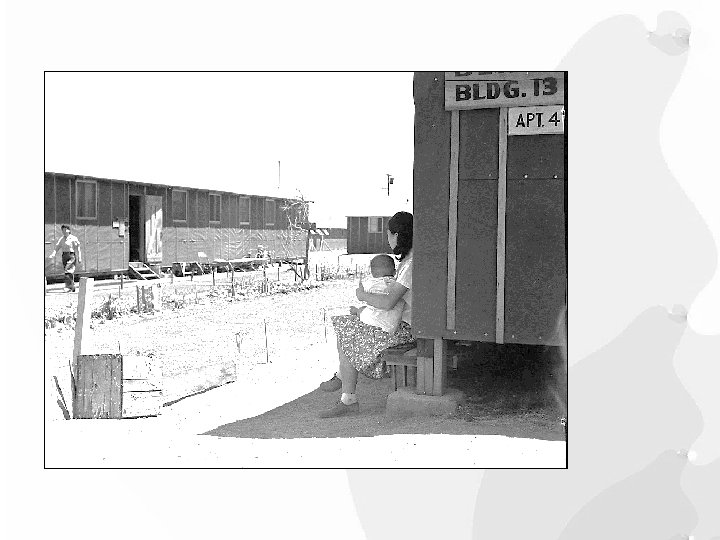
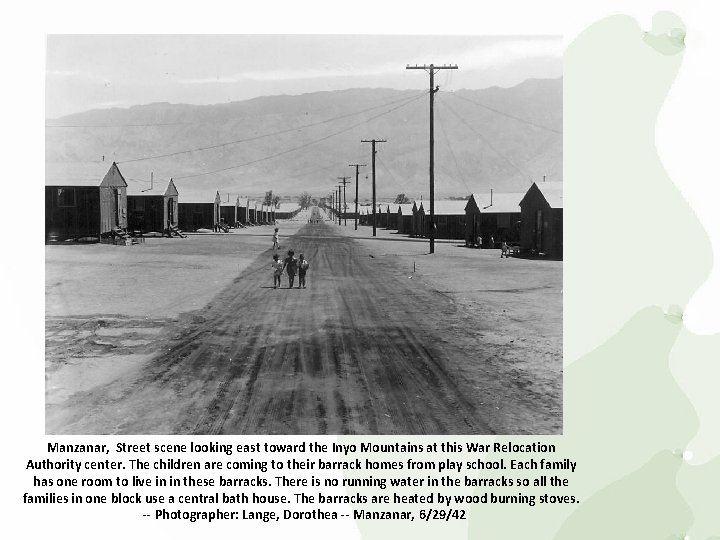
Manzanar, Street scene looking east toward the Inyo Mountains at this War Relocation Authority center. The children are coming to their barrack homes from play school. Each family has one room to live in in these barracks. There is no running water in the barracks so all the families in one block use a central bath house. The barracks are heated by wood burning stoves. -- Photographer: Lange, Dorothea -- Manzanar, 6/29/42
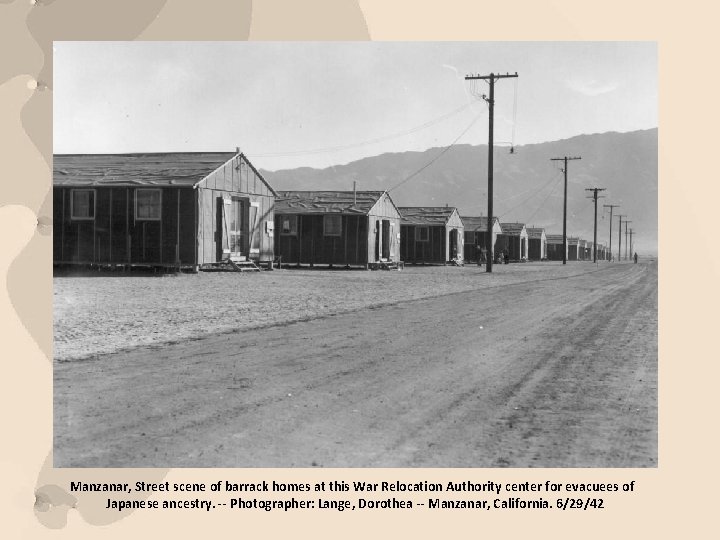
Manzanar, Street scene of barrack homes at this War Relocation Authority center for evacuees of Japanese ancestry. -- Photographer: Lange, Dorothea -- Manzanar, California. 6/29/42
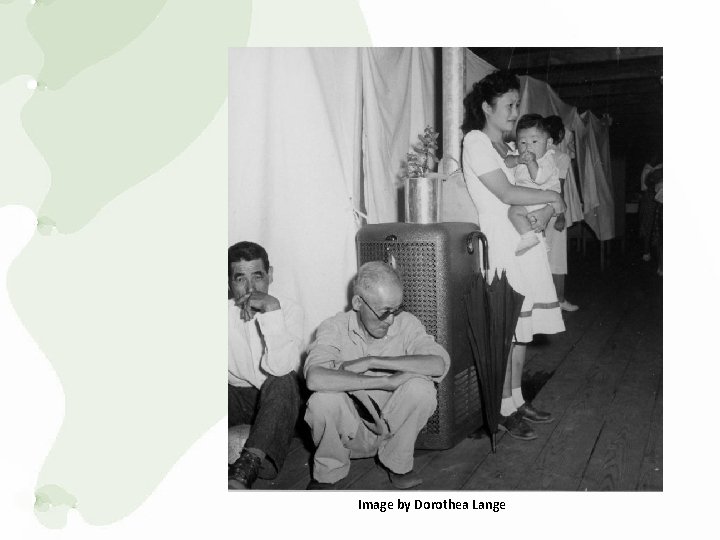
Image by Dorothea Lange
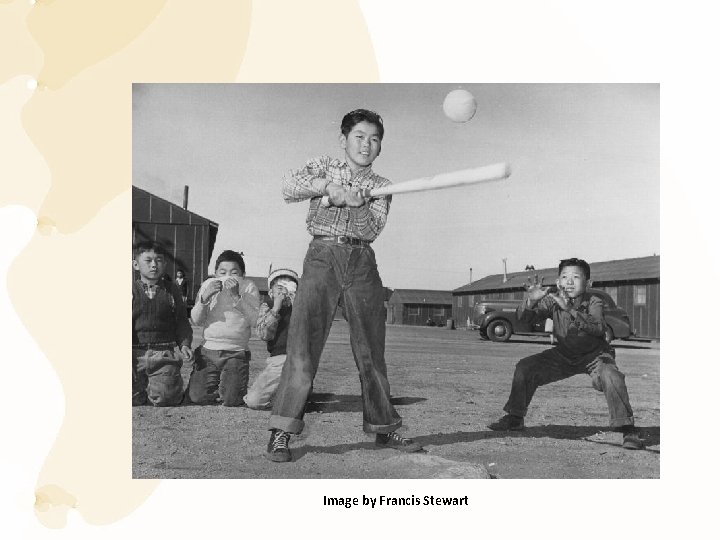
Image by Francis Stewart
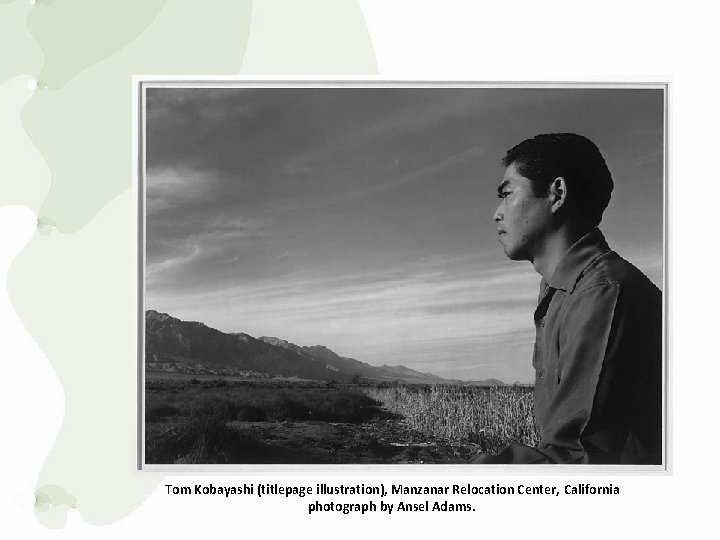
Tom Kobayashi (titlepage illustration), Manzanar Relocation Center, California photograph by Ansel Adams.
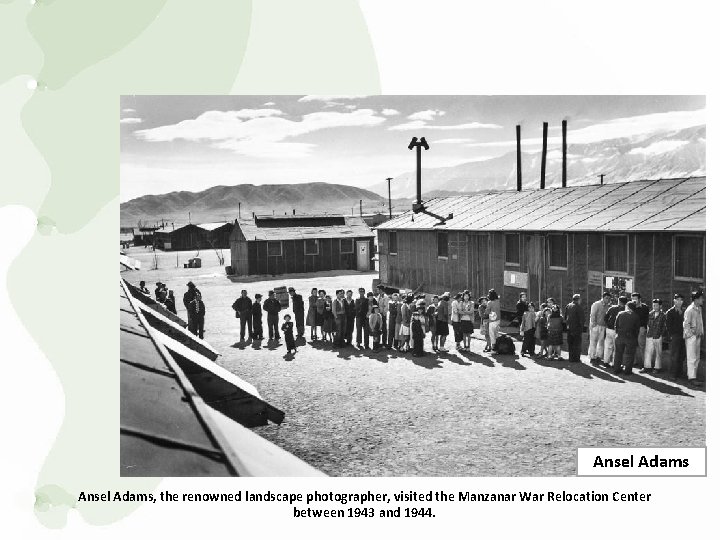
Ansel Adams, the renowned landscape photographer, visited the Manzanar War Relocation Center between 1943 and 1944.
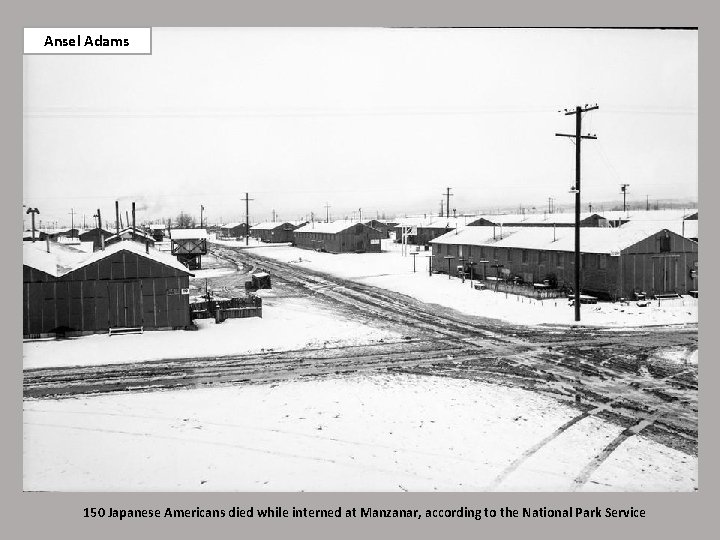
Ansel Adams 150 Japanese Americans died while interned at Manzanar, according to the National Park Service
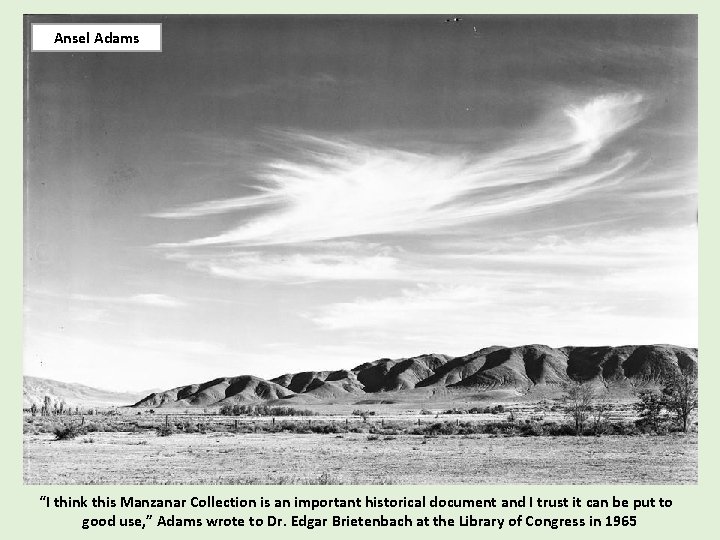
Ansel Adams “I think this Manzanar Collection is an important historical document and I trust it can be put to good use, ” Adams wrote to Dr. Edgar Brietenbach at the Library of Congress in 1965
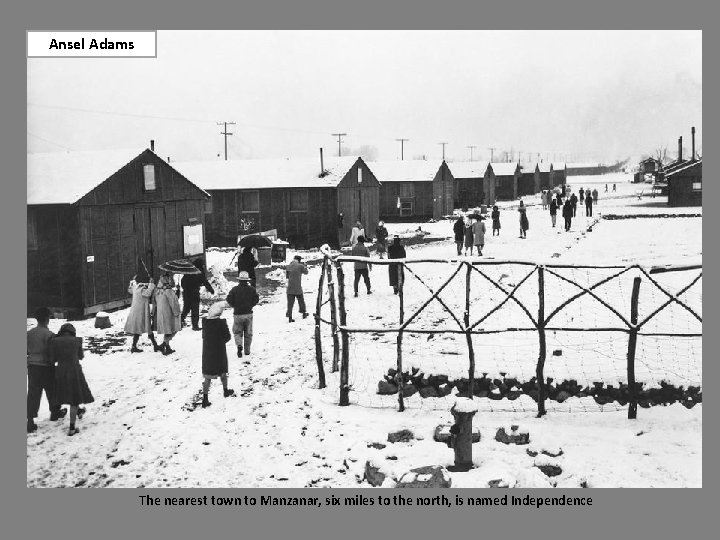
Ansel Adams The nearest town to Manzanar, six miles to the north, is named Independence
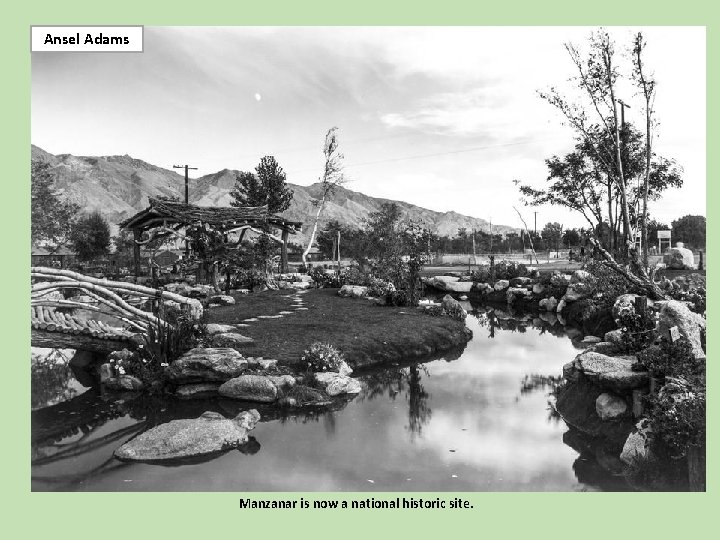
Ansel Adams Manzanar is now a national historic site.
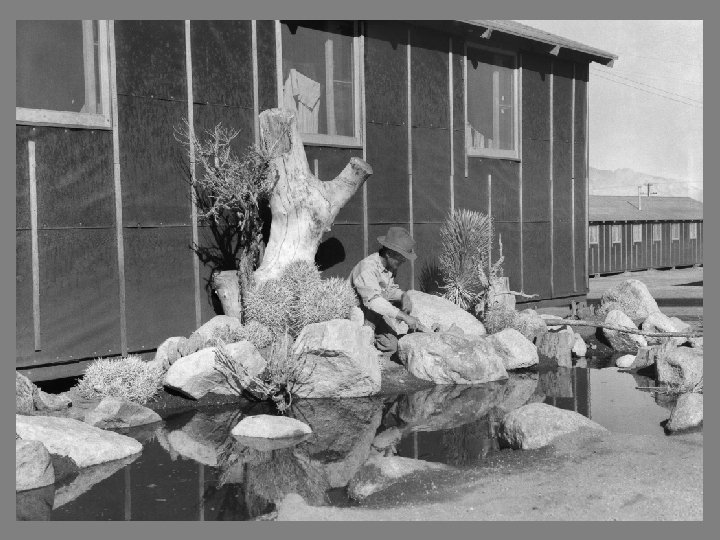
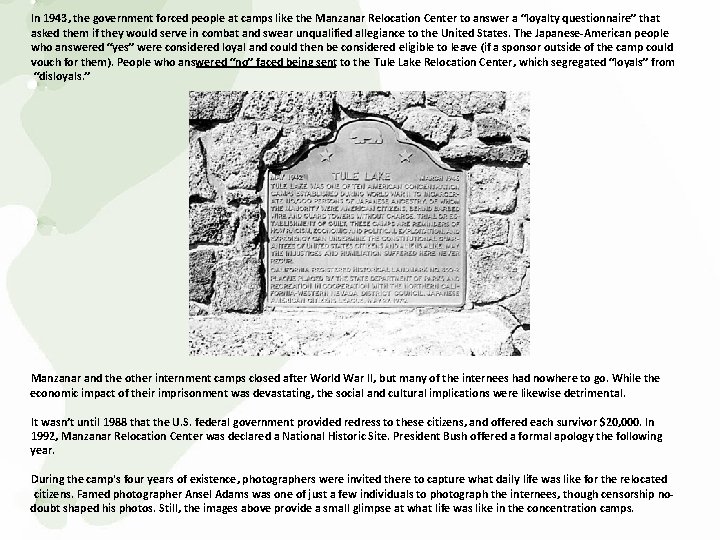
In 1943, the government forced people at camps like the Manzanar Relocation Center to answer a “loyalty questionnaire” that asked them if they would serve in combat and swear unqualified allegiance to the United States. The Japanese-American people who answered “yes” were considered loyal and could then be considered eligible to leave (if a sponsor outside of the camp could vouch for them). People who answered “no” faced being sent to the Tule Lake Relocation Center , which segregated “loyals” from “disloyals. ” Manzanar and the other internment camps closed after World War II, but many of the internees had nowhere to go. While the economic impact of their imprisonment was devastating, the social and cultural implications were likewise detrimental. It wasn’t until 1988 that the U. S. federal government provided redress to these citizens, and offered each survivor $20, 000. In 1992, Manzanar Relocation Center was declared a National Historic Site. President Bush offered a formal apology the following year. During the camp's four years of existence, photographers were invited there to capture what daily life was like for the relocated citizens. Famed photographer Ansel Adams was one of just a few individuals to photograph the internees, though censorship nodoubt shaped his photos. Still, the images above provide a small glimpse at what life was like in the concentration camps.
In 1941, more than 100, 000 people of Japanese ancestry – two-thirds of whom were natural-born citizens of the United States – lived and worked in the West Coast states. In July of that year, the U. S. government imposed sanctions on the Empire of Japan aimed at breaking its war machine. It was strongly suspected that this would eventually trigger a war with Japan, so when, on September 24, a Japanese cable was intercepted that suggested a sneak attack was being planned, the Roosevelt Administration took it very seriously. One of Roosevelt’s first acts was to commission Detroit-based businessman Curtis Munson to investigate the loyalty of America’s Japanese population. The Munson Report, as it came to be known, was assembled in record time. Munson delivered his draft copy on October 7, and the final version was on Roosevelt’s desk a month later, on November 7. The report’s findings were unequivocal: No threat of armed insurrection or other sabotage among the overwhelmingly loyal Japanese-American population existed.
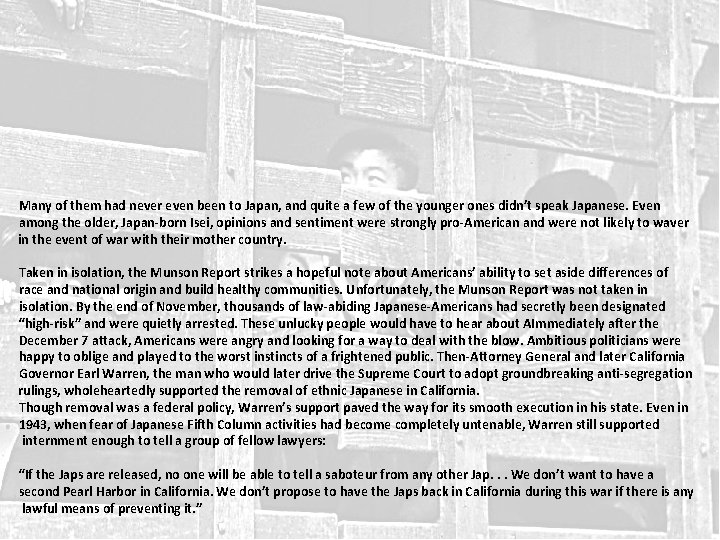
Many of them had never even been to Japan, and quite a few of the younger ones didn’t speak Japanese. Even among the older, Japan-born Isei, opinions and sentiment were strongly pro-American and were not likely to waver in the event of war with their mother country. Taken in isolation, the Munson Report strikes a hopeful note about Americans’ ability to set aside differences of race and national origin and build healthy communities. Unfortunately, the Munson Report was not taken in isolation. By the end of November, thousands of law-abiding Japanese-Americans had secretly been designated “high-risk” and were quietly arrested. These unlucky people would have to hear about AImmediately after the December 7 attack, Americans were angry and looking for a way to deal with the blow. Ambitious politicians were happy to oblige and played to the worst instincts of a frightened public. Then-Attorney General and later California Governor Earl Warren, the man who would later drive the Supreme Court to adopt groundbreaking anti-segregation rulings, wholeheartedly supported the removal of ethnic Japanese in California. Though removal was a federal policy, Warren’s support paved the way for its smooth execution in his state. Even in 1943, when fear of Japanese Fifth Column activities had become completely untenable, Warren still supported internment enough to tell a group of fellow lawyers: “If the Japs are released, no one will be able to tell a saboteur from any other Jap. . . We don’t want to have a second Pearl Harbor in California. We don’t propose to have the Japs back in California during this war if there is any lawful means of preventing it. ”
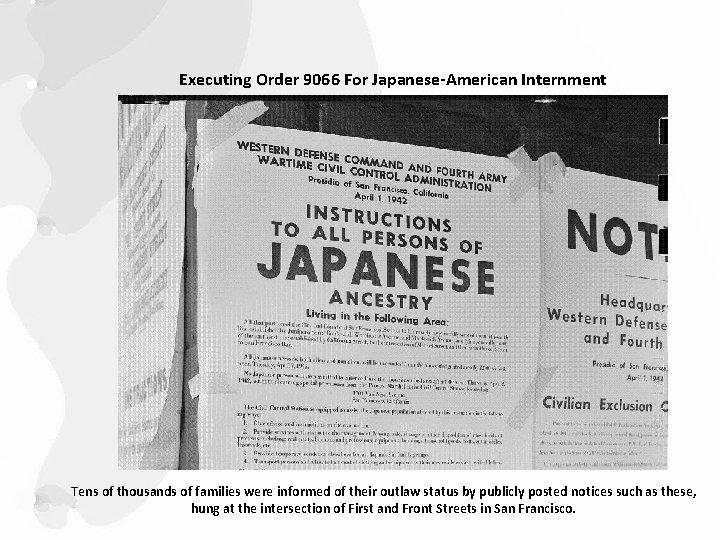
Executing Order 9066 For Japanese-American Internment Tens of thousands of families were informed of their outlaw status by publicly posted notices such as these, hung at the intersection of First and Front Streets in San Francisco.
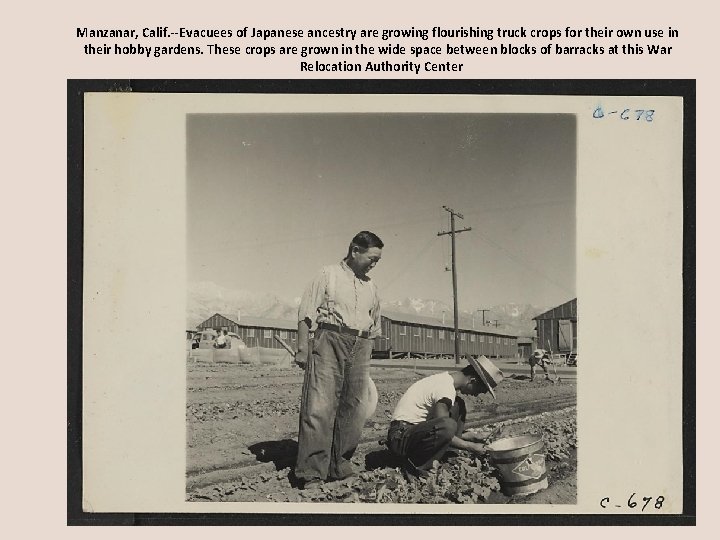
Manzanar, Calif. --Evacuees of Japanese ancestry are growing flourishing truck crops for their own use in their hobby gardens. These crops are grown in the wide space between blocks of barracks at this War Relocation Authority Center
We welcome everyone to view more English presentations in our website: http: //www. clarita-efraim. com/PPSCat. aspx? Cat=14&Sub. Cat=42 For English photography presentations in our website, click: http: //www. clarita-efraim. com/PPSCat. aspx? Cat=8&Sub. Cat=14
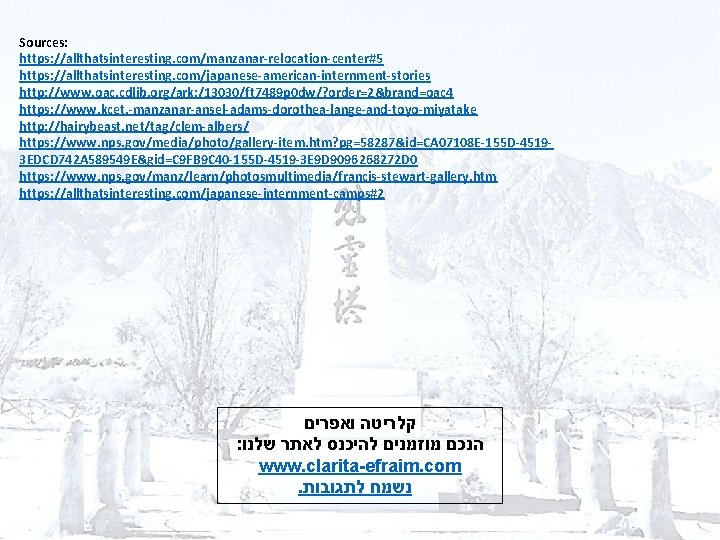
Sources: https: //allthatsinteresting. com/manzanar-relocation-center#5 https: //allthatsinteresting. com/japanese-american-internment-stories http: //www. oac. cdlib. org/ark: /13030/ft 7489 p 0 dw/? order=2&brand=oac 4 https: //www. kcet. -manzanar-ansel-adams-dorothea-lange-and-toyo-miyatake http: //hairybeast. net/tag/clem-albers/ https: //www. nps. gov/media/photo/gallery-item. htm? pg=58287&id=CA 07108 E-155 D-45193 EDCD 742 A 589549 E&gid=C 9 FB 9 C 40 -155 D-4519 -3 E 9 D 9096268272 D 0 https: //www. nps. gov/manz/learn/photosmultimedia/francis-stewart-gallery. htm https: //allthatsinteresting. com/japanese-internment-camps#2 קלריטה ואפרים : הנכם מוזמנים להיכנס לאתר שלנו www. clarita-efraim. com. נשמח לתגובות