
Manure Handling Systems Composting Options Teresa Dvorak Livestock

- Slides: 38
Manure Handling Systems & Composting Options Teresa Dvorak Livestock Nutrient Management Specialist Dickinson Research Extension Center
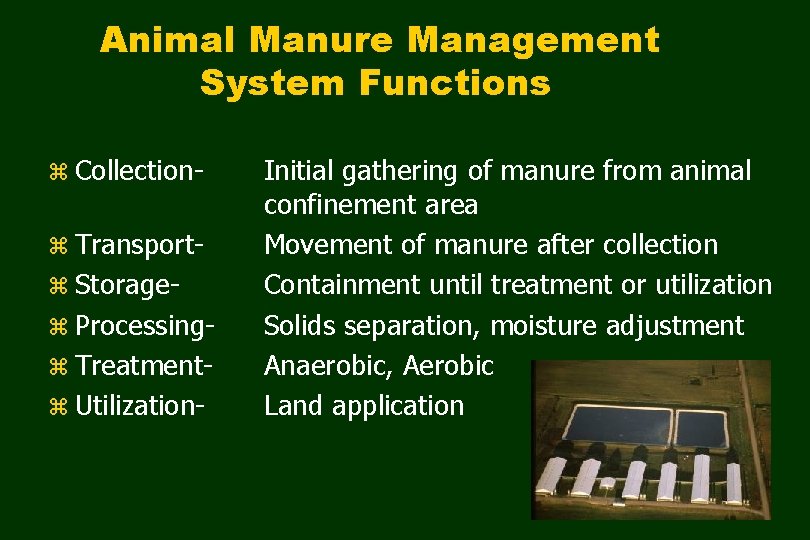
Animal Manure Management System Functions z Collectionz Transportz Storagez Processingz Treatmentz Utilization- Initial gathering of manure from animal confinement area Movement of manure after collection Containment until treatment or utilization Solids separation, moisture adjustment Anaerobic, Aerobic Land application
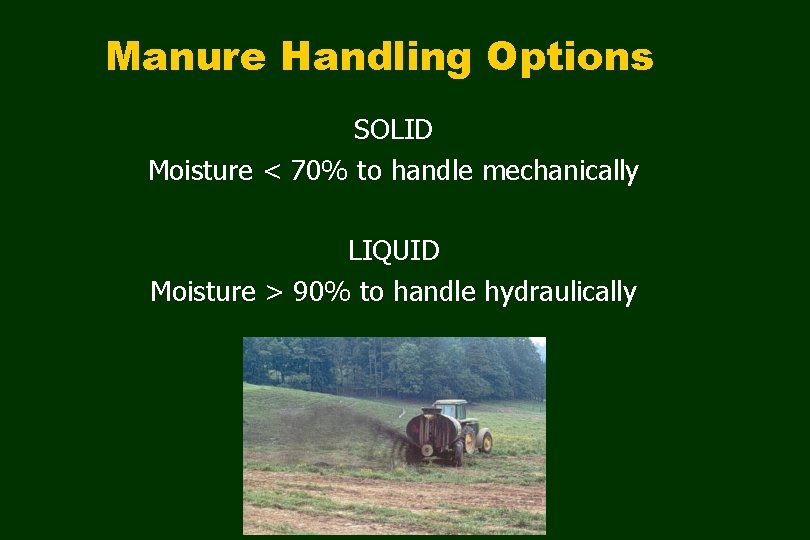
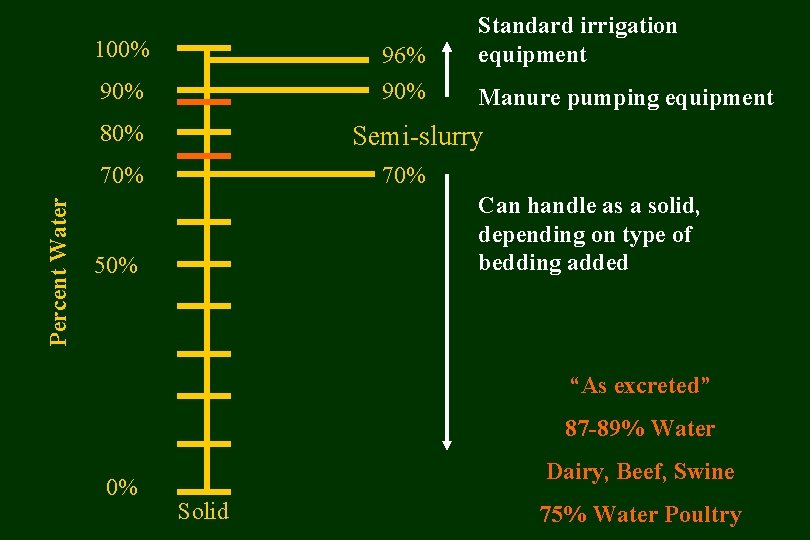
Manure Handling Options SOLID Moisture < 70% to handle mechanically LIQUID Moisture > 90% to handle hydraulically
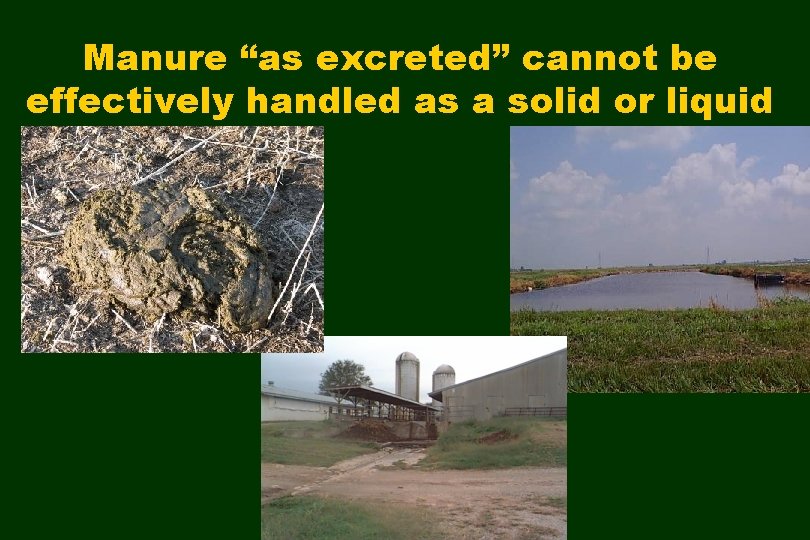
Manure “as excreted” cannot be effectively handled as a solid or liquid
100% 96% 90% 80% Manure pumping equipment Semi-slurry 70% Percent Water Standard irrigation equipment 70% Can handle as a solid, depending on type of bedding added 50% “As excreted” 87 -89% Water 0% Dairy, Beef, Swine Solid 75% Water Poultry
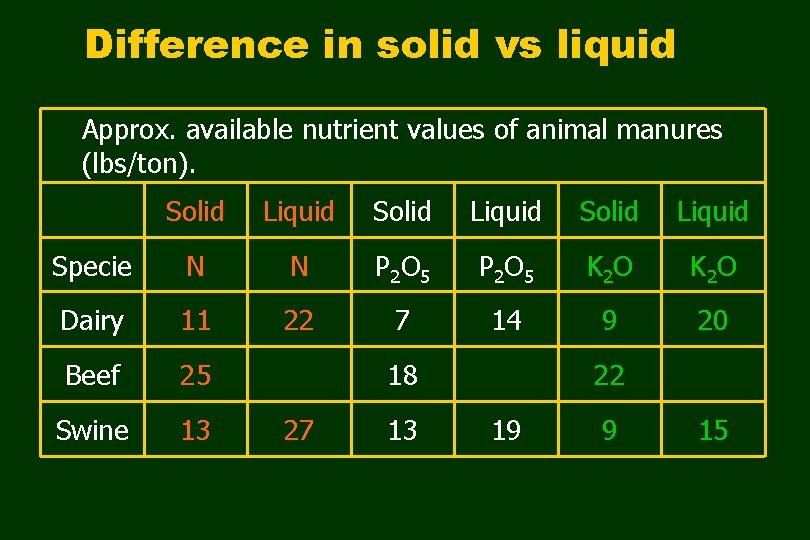
Difference in solid vs liquid Approx. available nutrient values of animal manures (lbs/ton). Solid Liquid Specie N N P 2 O 5 K 2 O Dairy 11 22 7 14 9 20 Beef 25 Swine 13 18 27 13 22 19 9 15
Manure Handling Systems By Specie: Beef Dairy Swine
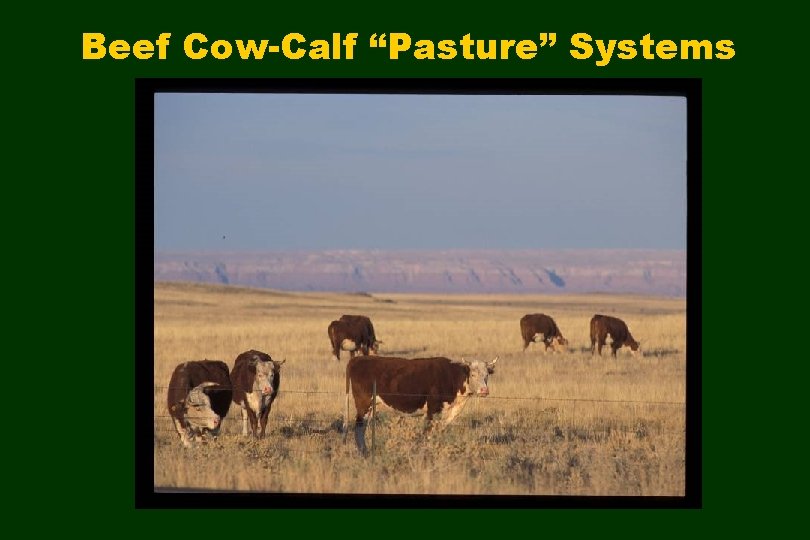
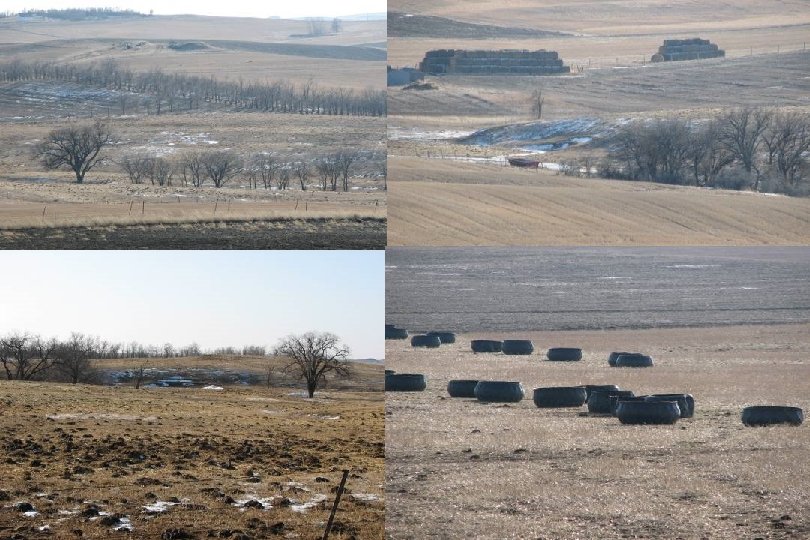
Beef Cow-Calf “Pasture” Systems
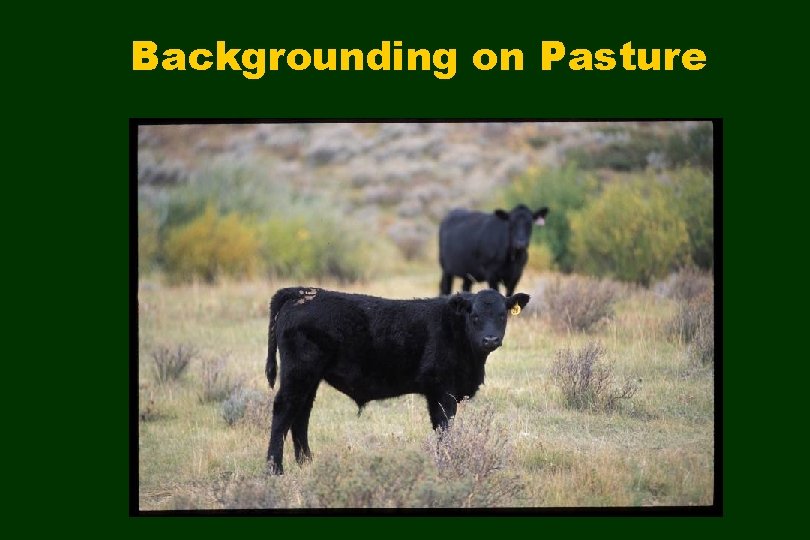
Backgrounding on Pasture
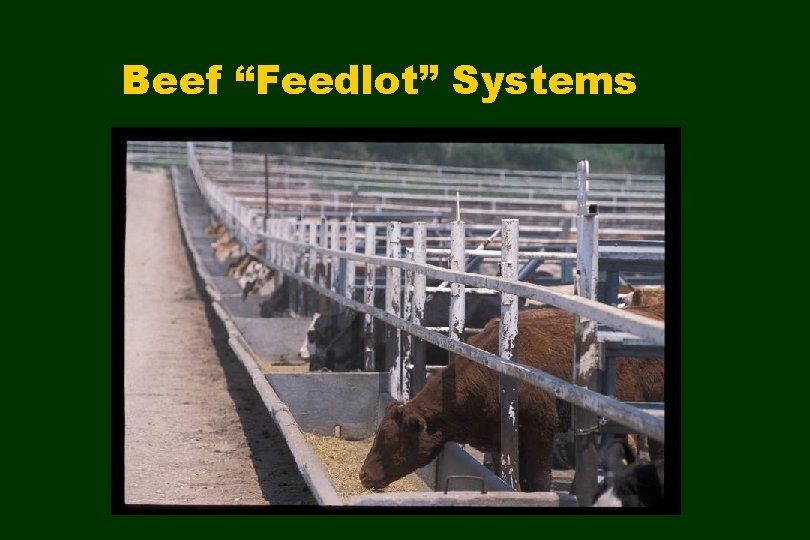
Beef “Feedlot” Systems
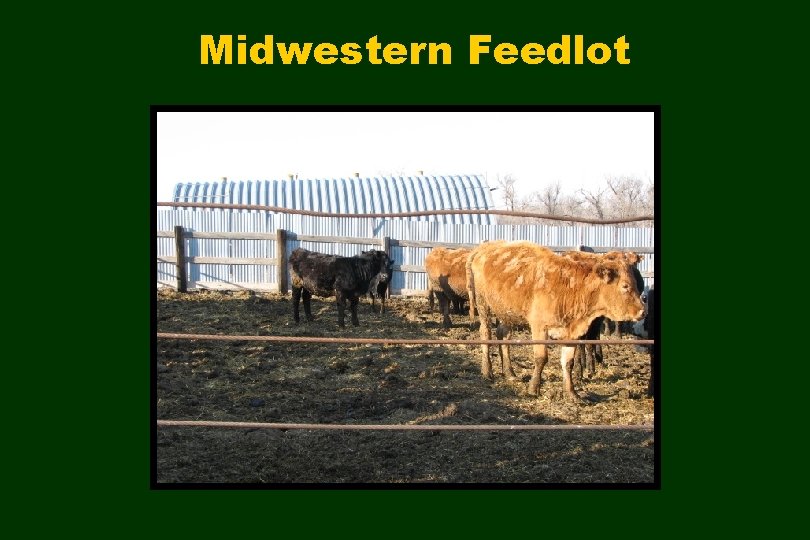
Midwestern Feedlot
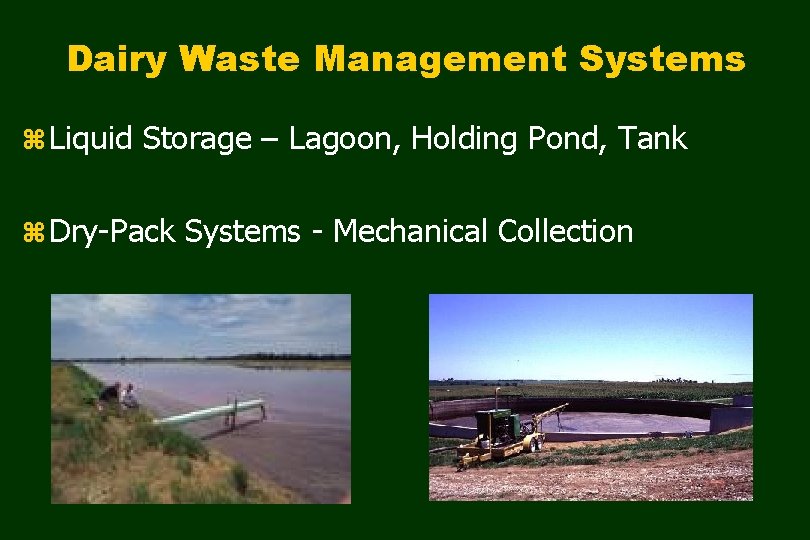
Dairy Waste Management Systems z Liquid Storage – Lagoon, Holding Pond, Tank z Dry-Pack Systems - Mechanical Collection
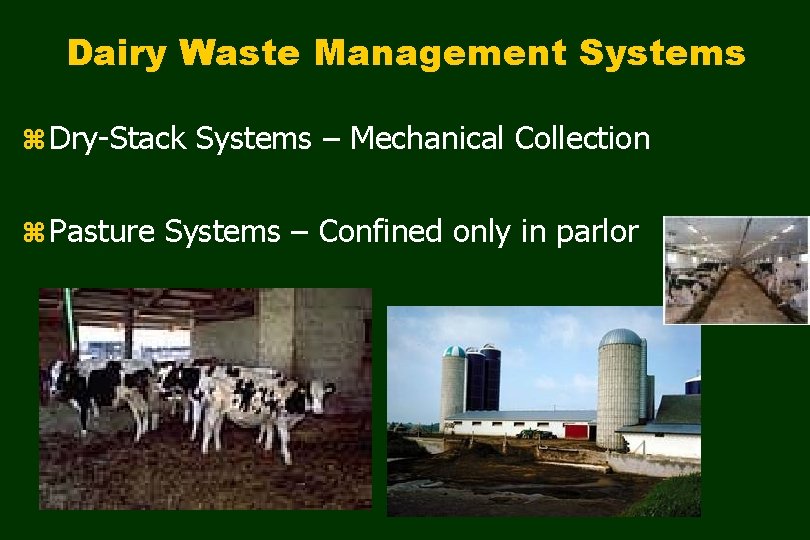
Dairy Waste Management Systems z Dry-Stack Systems – Mechanical Collection z Pasture Systems – Confined only in parlor
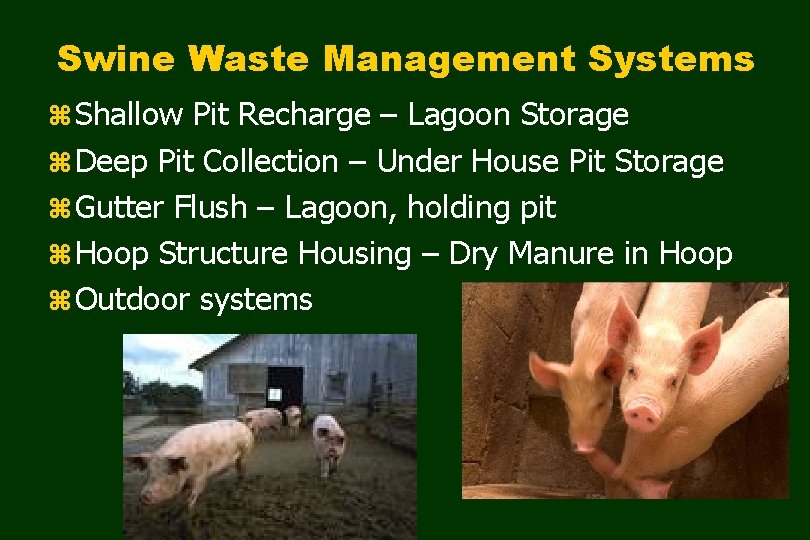
Swine Waste Management Systems z Shallow Pit Recharge – Lagoon Storage z Deep Pit Collection – Under House Pit Storage z Gutter Flush – Lagoon, holding pit z Hoop Structure Housing – Dry Manure in Hoop z Outdoor systems
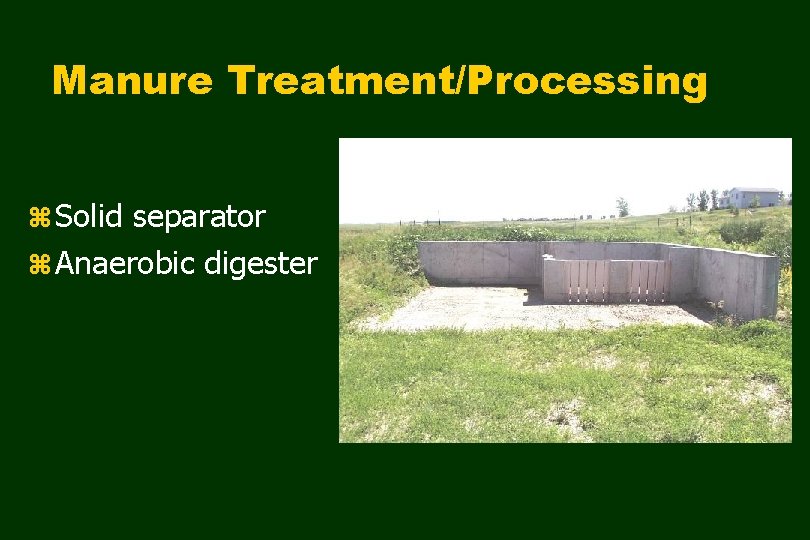
Manure Treatment/Processing z Solid separator z Anaerobic digester
Solid separator z Advantages § Increases handling flexibility § Extend time between cleanout of lagoon (control odor), decrease sludge buildup § Solids can be hauled farther z Disadvantages § Solid and liquid handling equipment needed § Solid separation may not be cost effective for small operations
Anaerobic digester z Biochemical degradation converting OM (manure) into methane and by-products z Covered anaerobic lagoon – 2% solids, warm climates only z Complete mix – 3 -10% solids z Plug flow – 11 -14% solids, not swine z Odor control
Manure Application Techniques Applying Solid Manure z Load with front end loader § Truck mounted beater § Flail or spinner-type spreader boxes § Pull-type spreaders z Limitations § Spreader size § Distance
Manure Application Techniques z Liquid manure § Agitate before and during § Pump from storage to hauling equipment z Limitations § Pump flow rate § Volume of tank § Distance
Manure Application Techniques z Spreading Liquid § Conventional tank wagon § Box-type spreader for liquid z Drag hose § Injected and incorporated immediately § Continuous flow advantage § Distance can be disadvantage z Lagoon § May or may not be agitated § Effluent removed by pumping (irrigation equipment)
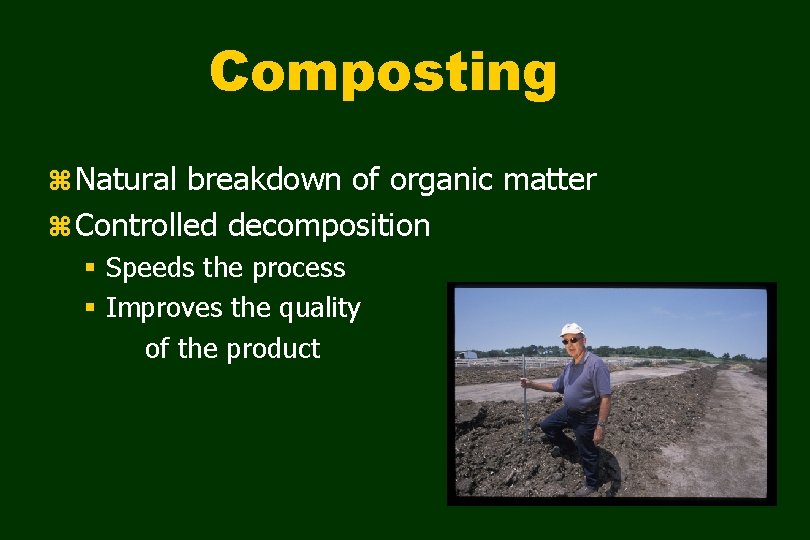
Composting z Natural breakdown of organic matter z Controlled decomposition § Speeds the process § Improves the quality of the product
Advantages of composting Manure z Reduces weight and volume z Easier handling characteristics z Reduce/eliminate pathogens and weed seeds z Reduce odors z Stabilize nitrogen z May create a saleable product
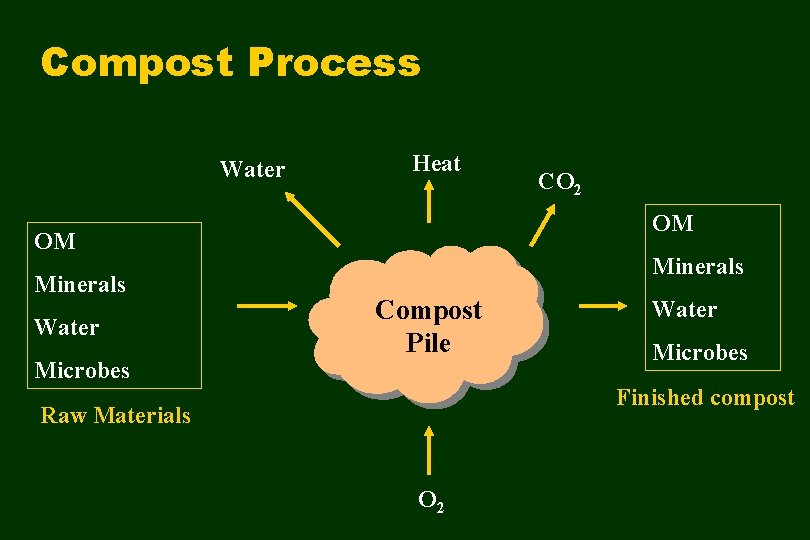
Function of Microbes z Feed on organic matter z Consume oxygen z Produce heat z Produce carbon dioxide z Produce water vapor
Compost Process Water Heat OM OM Minerals Water Microbes CO 2 Minerals Compost Pile Water Microbes Finished compost Raw Materials O 2
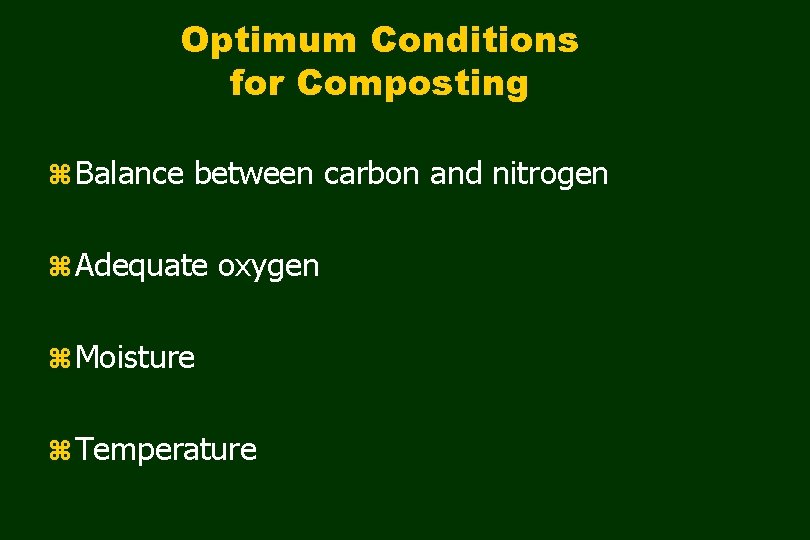
Optimum Conditions for Composting z Balance between carbon and nitrogen z Adequate oxygen z Moisture z Temperature
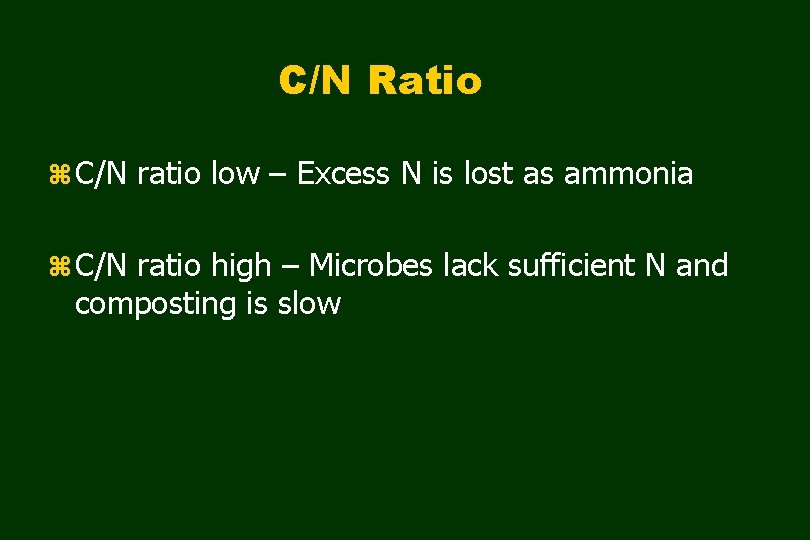
C/N Ratio z C/N ratio low – Excess N is lost as ammonia z C/N ratio high – Microbes lack sufficient N and composting is slow
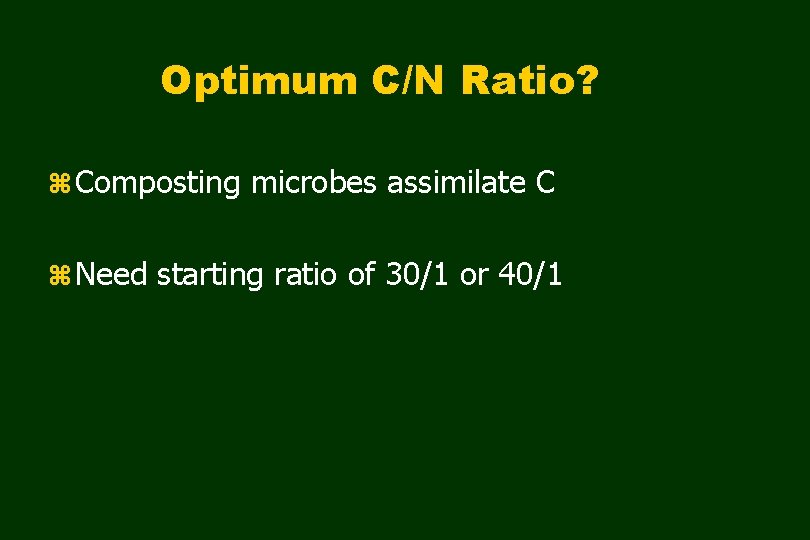
Optimum C/N Ratio? z Composting microbes assimilate C z Need starting ratio of 30/1 or 40/1
Optimum Oxygen Level z Composting microbes require at least 5% z Optimum is 10% or more z Atmosphere is 21% z Insufficient oxygen? § Anaerobic decomposition, little heat produced, slow composting § Produces methane and other odorous compounds
Optimum Moisture z 40 -65% water z Composting results in water vapor § Start on the wetter side
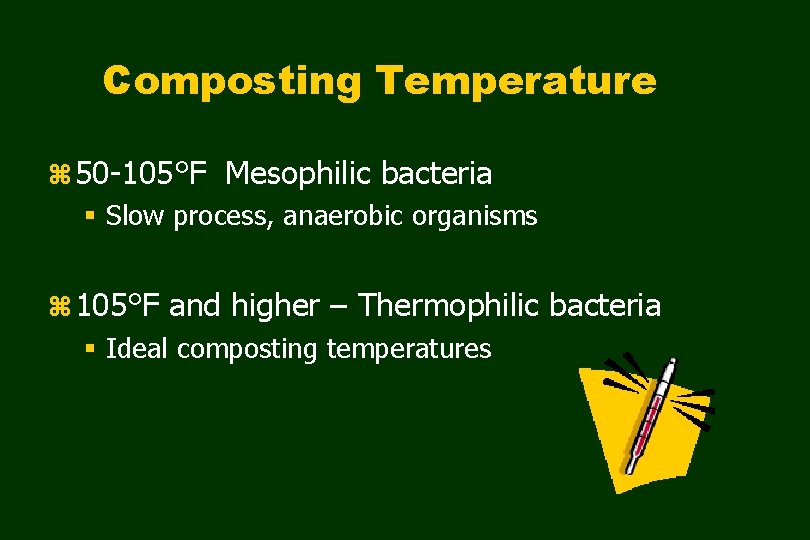
Composting Temperature z 50 -105°F Mesophilic bacteria § Slow process, anaerobic organisms z 105°F and higher – Thermophilic bacteria § Ideal composting temperatures
Ideal Composting Temps z 110 -150°F z 131°F destroys pathogens z 145°F destroys weed seeds z Over 150°F may kill beneficial microbes
Composting Technologies z Static piles z Windrow composting z Passively aerated windrows (PAWS) z Forced aeration, static piles z Enclosed (in-vessel) composting z Vermicomposting (worms)
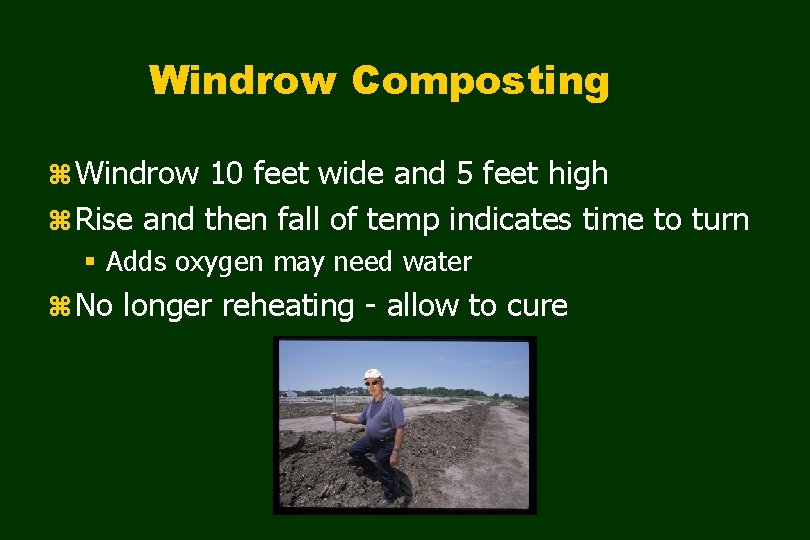
Windrow Composting z Windrow 10 feet wide and 5 feet high z Rise and then fall of temp indicates time to turn § Adds oxygen may need water z No longer reheating - allow to cure
Composting Mortalities z Alternative to rendering, burying or incineration z Advantages § Environmentally safe § Conserves nutrients § Low odor z Disadvantages § High initial cost § Labor (monitoring and maintenance)
Mortality Management z Surround dead animal with >12 inches of bulking agent (straw or sawdust) z Maintain moisture content of bulking agent z Anaerobic microbes work on carcass z Odorous gases diffuse into bulking agent where aerobic composting takes over
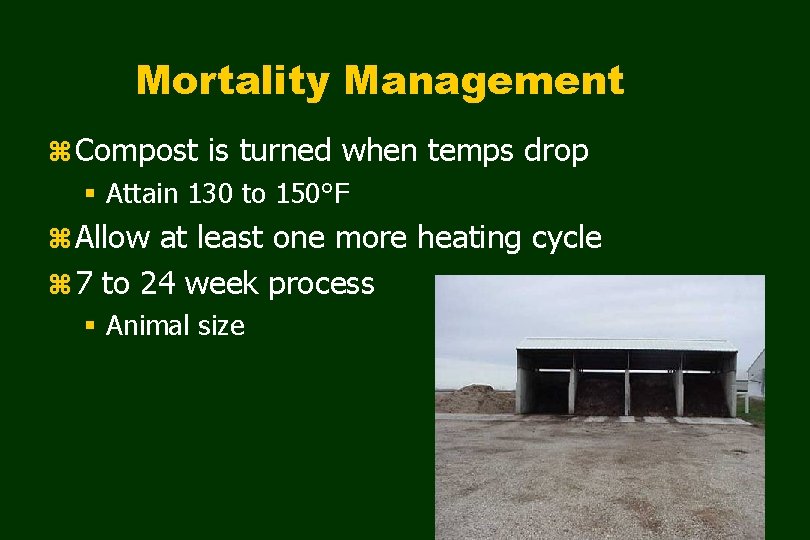
Mortality Management z Compost is turned when temps drop § Attain 130 to 150°F z Allow at least one more heating cycle z 7 to 24 week process § Animal size
Thank you