
MANUFACTURING TECHNOLOGYI ME 6302 III SEMESTER II YEAR


- Slides: 39
MANUFACTURING TECHNOLOGY-I [ME 6302] III SEMESTER / II YEAR – ‘B’ SECTION MECHANICAL ENGINEERING [Academic Year: 2014 -2015 – Batch: 2013 -2017]
Ø ‘Manufacturing’ is derived from the Latin, manus = hand factus = made, that is, the literal meaning is “made by hand”. Ø‘Manufacturing’ means the making of goods and articles by hand and/or by machinery. Ø ‘Manufacturing Technology’ or “Production Technology” can be defined as the study of the various processes required to produce parts and to assemble them into machines and mechanisms.
Ø SAND CASTING Ø Sand moulds Ø Type of patterns – Pattern materials – Pattern allowances Ø Moulding sand – Types – Properties – Testing Ø Core making – Types – Applications Ø Moulding machines – Types – Application Ø MELTING FURNACES – Blast – Cupola Ø SPECIAL CASTING PROCESSES – Shell – investment casting – Ceramic mould – Lost Wax process – Pressure die casting – Centrifugal casting – CO 2 process – Stir Casting (Working principle) Ø DEFECTS IN SAND CASTING
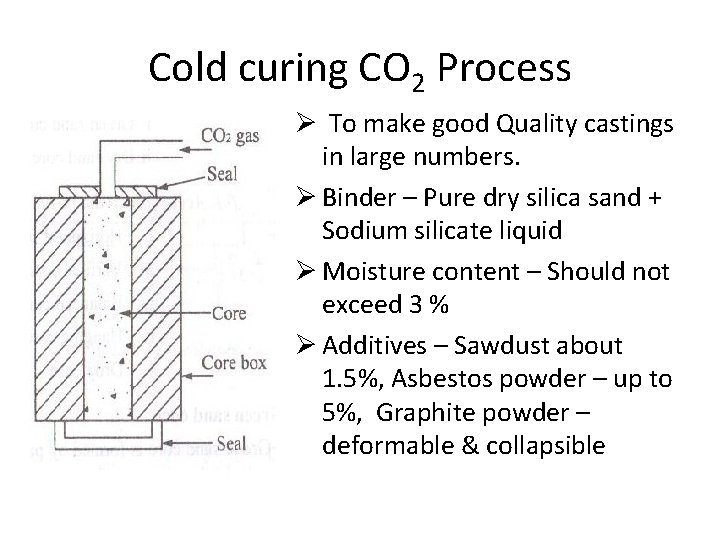
Cold curing CO 2 Process Ø To make good Quality castings in large numbers. Ø Binder – Pure dry silica sand + Sodium silicate liquid Ø Moisture content – Should not exceed 3 % Ø Additives – Sawdust about 1. 5%, Asbestos powder – up to 5%, Graphite powder – deformable & collapsible
v CO 2 gas is passed through the core for 30 sec at 140 KN/m 2. v CO 2 + Sodium silicate = Sodium carbonate + Silica jell v Silica jell binds the sand.
(MOULDING) SAND TESTING METHODS 1. 2. 3. 4. 5. 6. 7. 8. 9. Moisture content test Clay content test Grain fitness test Permeability test Strength test Deformation or Toughness test Hot strength test Refractoriness test Mould hardness test
(CORE) SAND TESTING METHODS 1. 2. 3. 4. 5. Green strength test Baked strength test Retained strength test Core strength test Moisture content test
MOULDING Moulding is the process of making a mould cavity by packing prepared moulding sand around the pattern and removing the pattern from the mould to form the mould cavity. Types: 1. Green sand mould 2. Dry sand mould 3. Loam sand mould
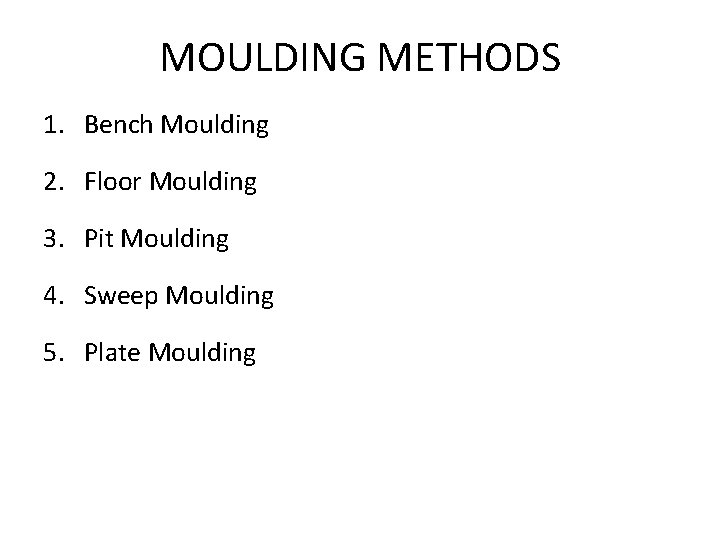
MOULDING METHODS 1. Bench Moulding 2. Floor Moulding 3. Pit Moulding 4. Sweep Moulding 5. Plate Moulding
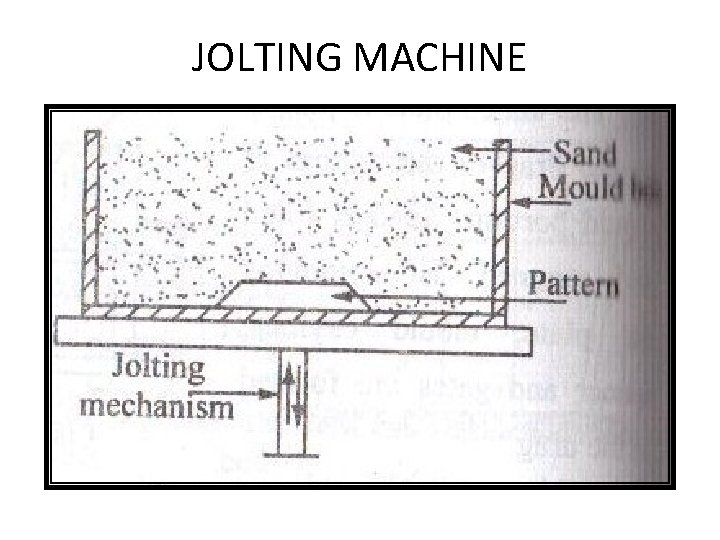
JOLTING MACHINE
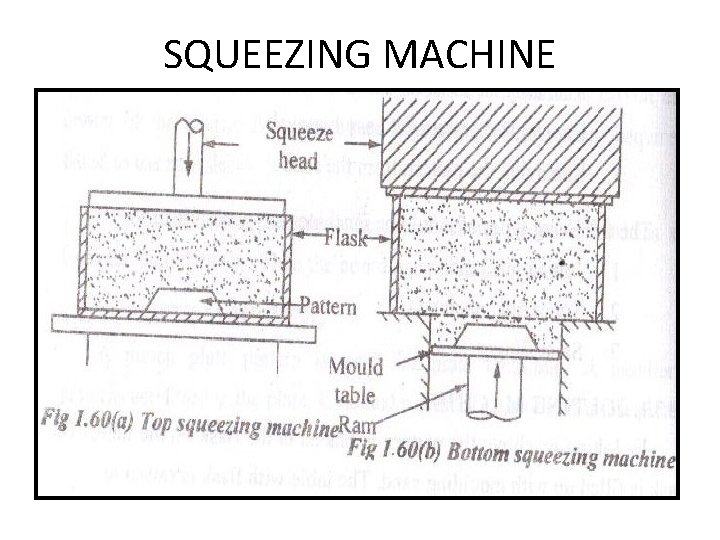
SQUEEZING MACHINE
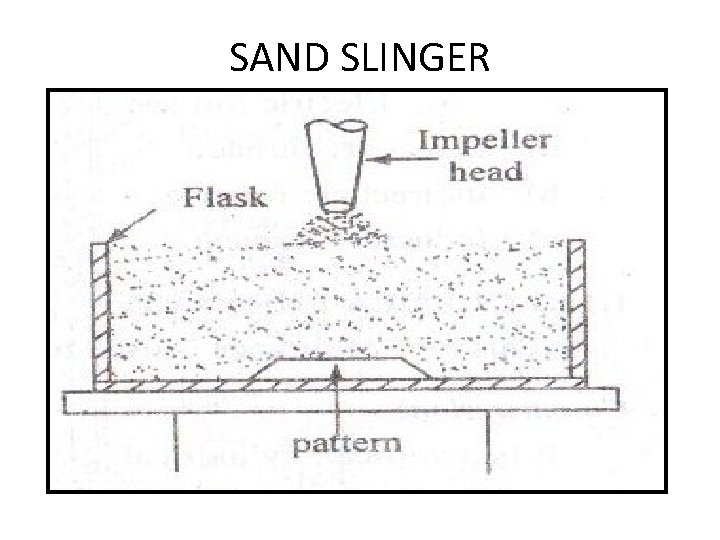
SAND SLINGER
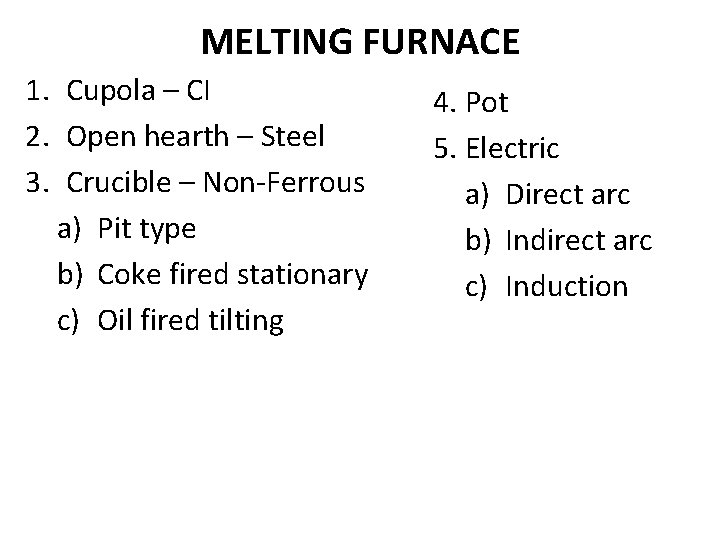
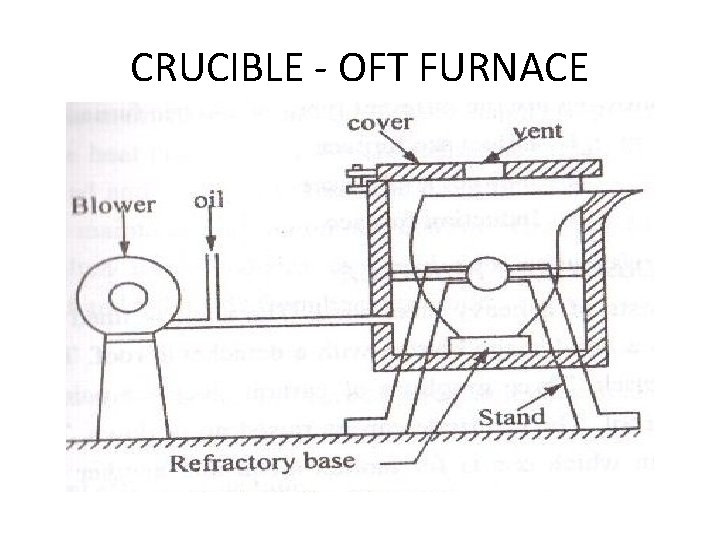
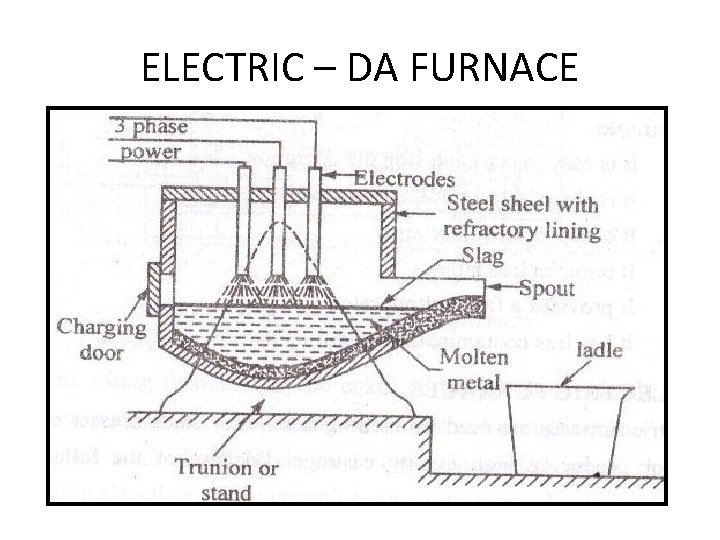
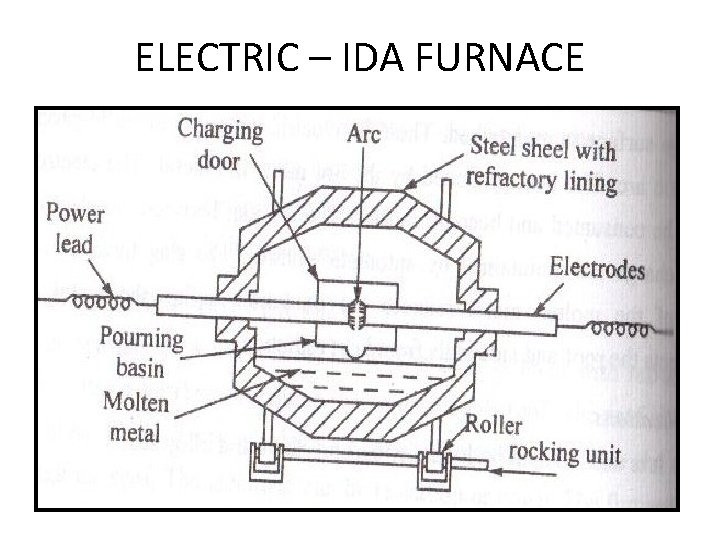
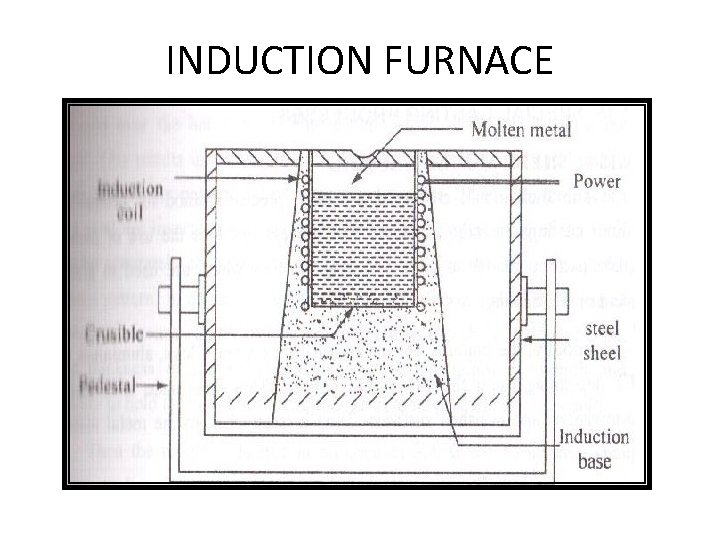
MELTING FURNACE 1. Cupola – CI 2. Open hearth – Steel 3. Crucible – Non-Ferrous a) Pit type b) Coke fired stationary c) Oil fired tilting 4. Pot 5. Electric a) Direct arc b) Indirect arc c) Induction
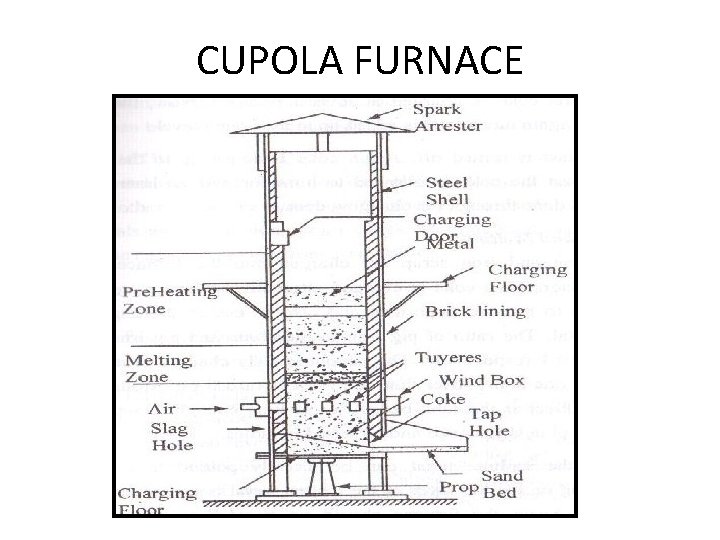
CUPOLA FURNACE
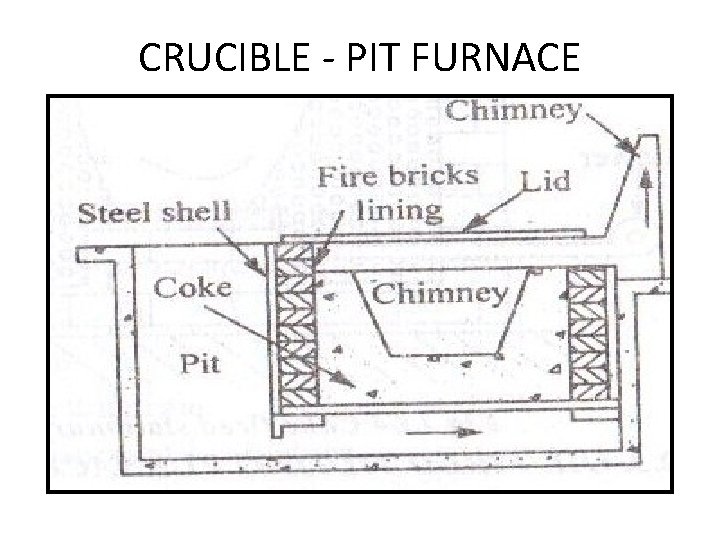
CRUCIBLE - PIT FURNACE
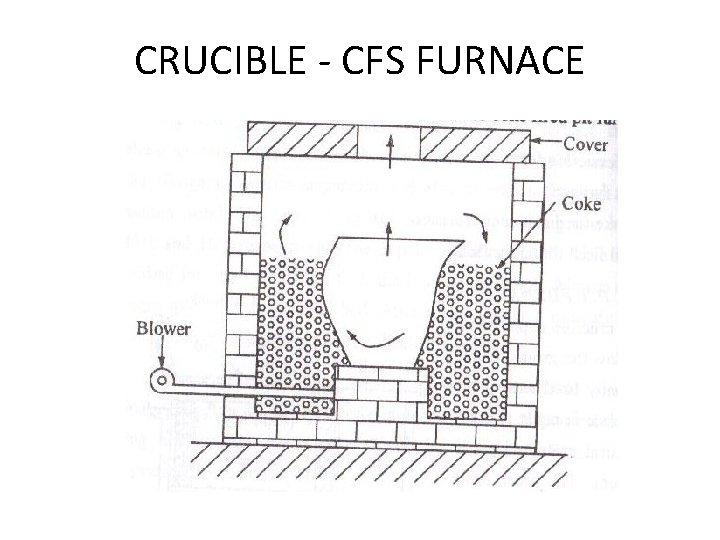
CRUCIBLE - CFS FURNACE
CRUCIBLE - OFT FURNACE
ELECTRIC – DA FURNACE
ELECTRIC – IDA FURNACE
INDUCTION FURNACE
SPECIAL CASTING PROCESSES 1. Shell Mould Casting 2. Investment Casting 3. Ceramic Mould Casting 4. Lost Wax Process
5. Pressure Die Casting 1) Hot chamber Die Casting 2) Cold chamber Die Casting 6. Gravity Die Casting 7. Centrifugal Casting 8. Continuous Casting process
SHELL MOULD CASTING
v 5 to 10% - Phenolic resin mixed with fine dry silica (Mixer – dry oil or presence of alcohol) v No water v 230 – 600◦C v Release Agent – Silicone (sprayed over pattern) v Thickness of shell – time of contact of the mixture with the heated pattern (Ex: 20 -30 sec, 6 mm) v Then the mould is heated in an Oven at 300◦C for 1560 sec. v After cooling &Solidification, the shells are broken or shaken away from the castings. v Brake drums, Bushings, Cam shaft, rollers etc. ,
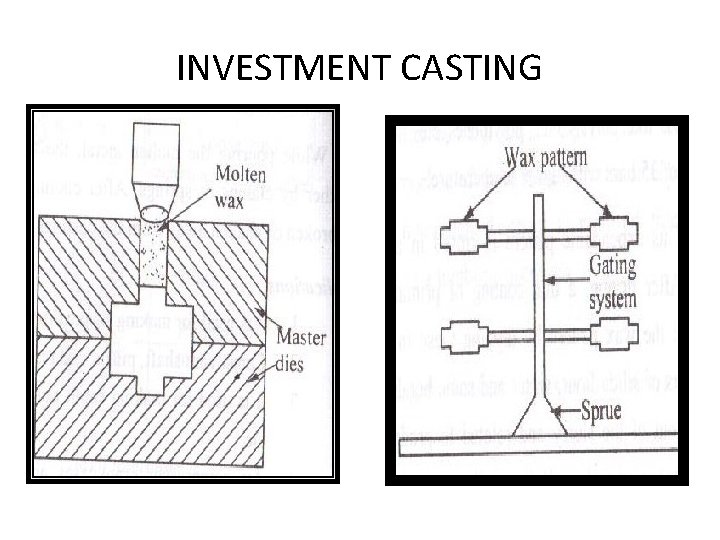
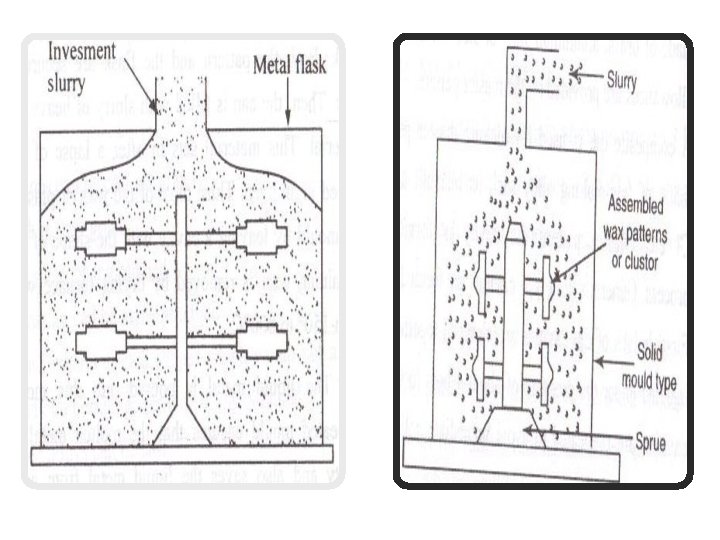
INVESTMENT CASTING
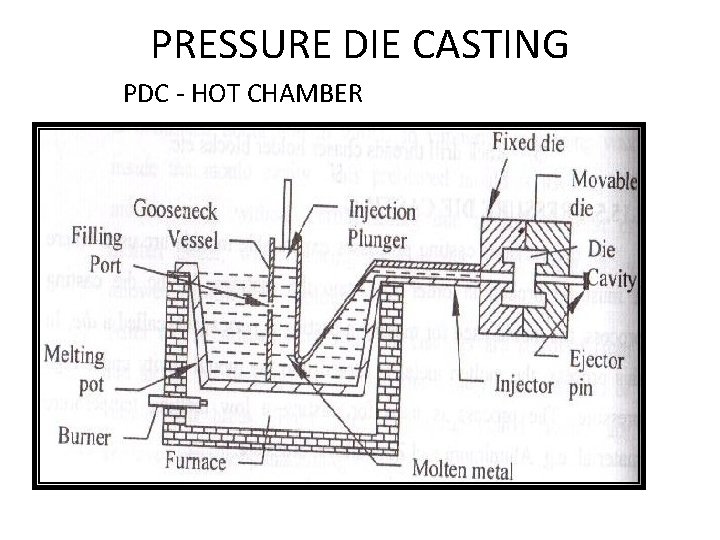
PRESSURE DIE CASTING PDC - HOT CHAMBER
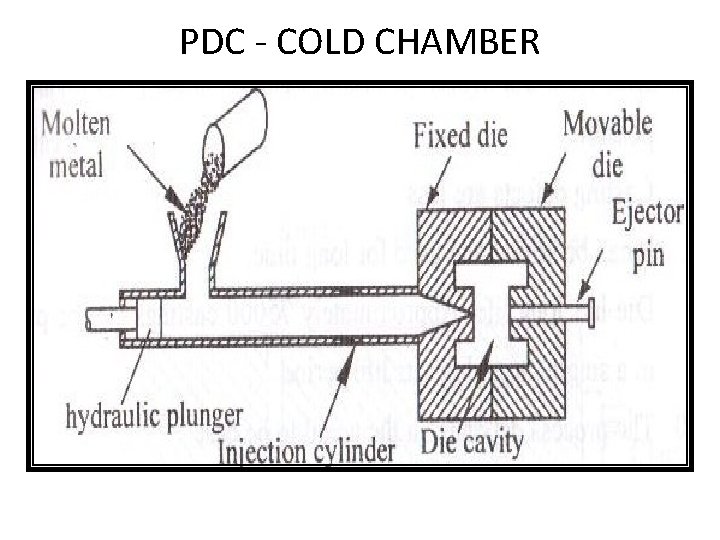
PDC - COLD CHAMBER
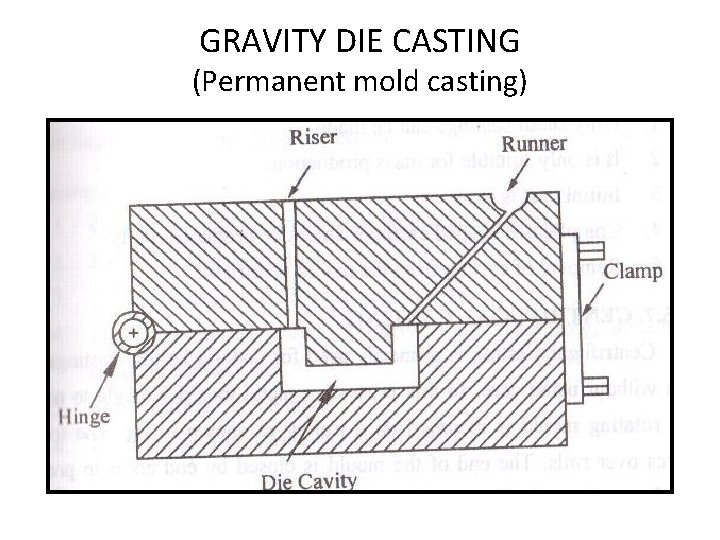
GRAVITY DIE CASTING (Permanent mold casting)
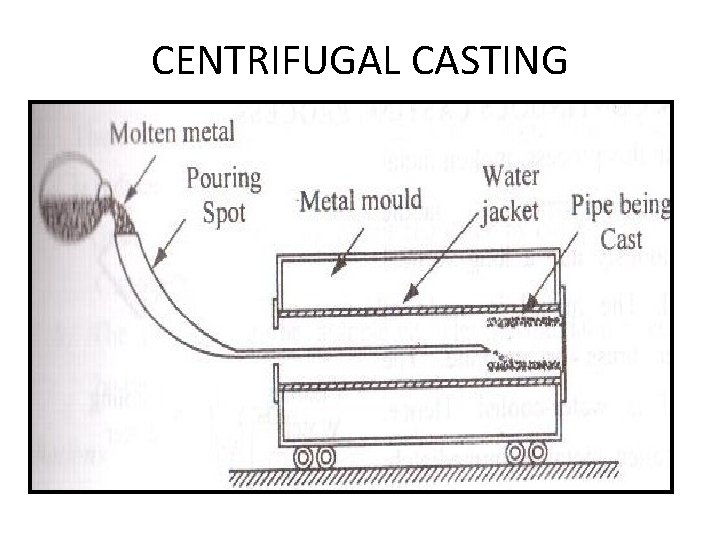
CENTRIFUGAL CASTING
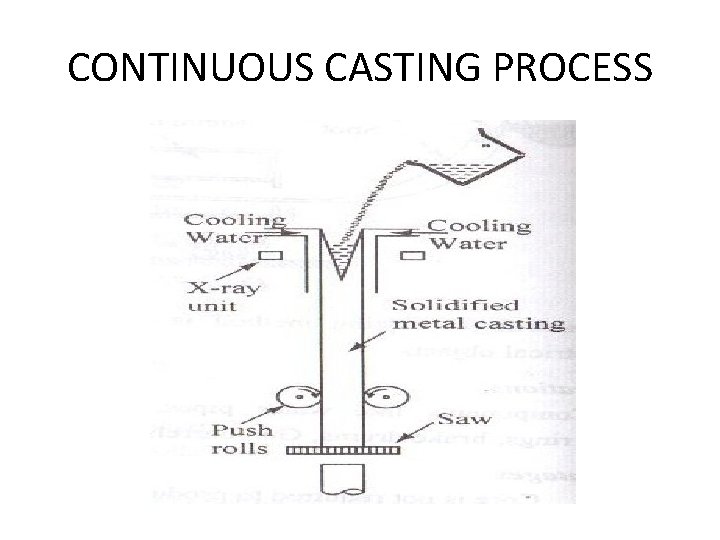
CONTINUOUS CASTING PROCESS
OTHER CASTING METHODS • LOST WAX PROCESS • CERAMIC MOULD CASTING
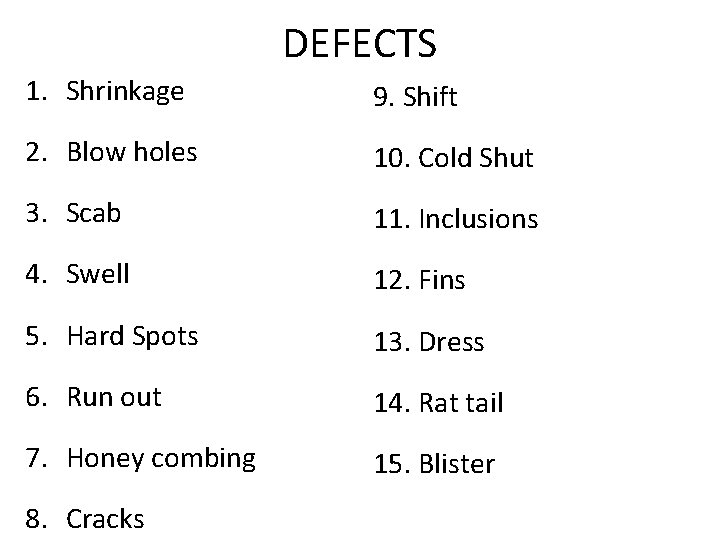
DEFECTS 1. Shrinkage 9. Shift 2. Blow holes 10. Cold Shut 3. Scab 11. Inclusions 4. Swell 12. Fins 5. Hard Spots 13. Dress 6. Run out 14. Rat tail 7. Honey combing 15. Blister 8. Cracks
INSPECTION METHODS 1. Visual Inspection 2. Pressure Test 3. Magnetic Particle Inspection 4. Dye-Penetrant Inspection 5. Radiographic Inspection 6. Ultrasonic Inspection 7. Thermography Inspection
Queries………. . ?
(QB) ASSIGNMENT - I Two Marks 1. What are the different types of patterns used in foundry? 2. Define: Foundry, Casting, Mould, Pattern 3. Generally sweep patterns are used in _____ moulding. 4. What do you understand by core setting? 5. What is a core print? Mention its purpose. 6. Mention the specific advantages of CO 2 process? 7. What are the properties of good moulding and core sand.
7. Write the composition of good moulding sand 8. List out any five moulding tools. 9. What are chaplets? 10. List the factors to be considered in the choice of metal melting furnaces. 11. What are the types of alloys cast in cold chamber die casting machines? 12. What is the need for providing chills in casting? 13. Blow holes in castings occur due to ______ 14. How casting defects are identified? 15. Give any two casting defects and its reason and remedies.
16 marks 1. What are the pattern allowances? Explain briefly each. 2. Discuss the properties of moulding sand. 3. What are the different types of furnace used in foundry? Describe in detail with neat sketches any two of them. 4. State the different types of mould. Write a short notes on ‘Green sand Mould’ and ‘Shell moulding’. 5. Explain briefly the various moulding methods used in foundaries. 6. Describe the various types of casting process.
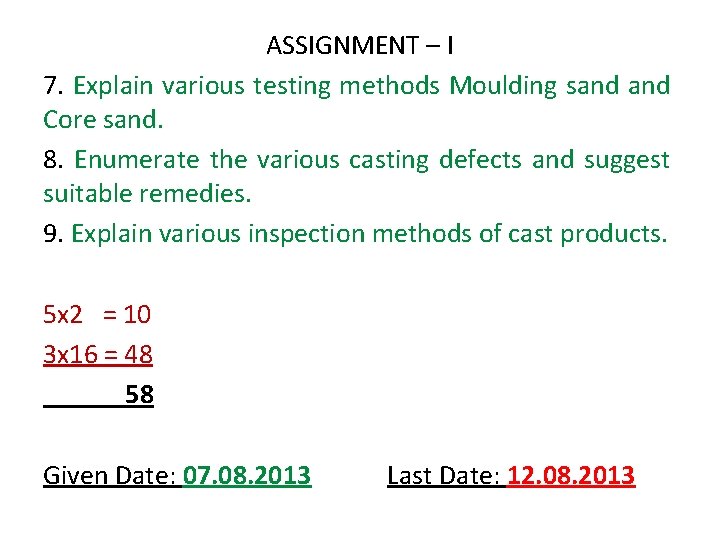
ASSIGNMENT – I 7. Explain various testing methods Moulding sand Core sand. 8. Enumerate the various casting defects and suggest suitable remedies. 9. Explain various inspection methods of cast products. 5 x 2 = 10 3 x 16 = 48 58 Given Date: 07. 08. 2013 Last Date: 12. 08. 2013