
Manufacturing NZ 5 S Introduction Workplace Organisation Definition
- Slides: 15
Manufacturing NZ 5 S Introduction – Workplace Organisation
Definition Workplace organisation is a visual and physical method of correctly organising the workplace. It ensures that only the required material and equipment is present, that it is in good condition, and that it is stored in a manner that aids the efficiency of the production facility or workplace.
Step 1: SORT – clear out • Identify all items in the workplace which are not required to do the regular jobs, e. g. – – – – Scrap material Unused stillages Unused Jigs and fixtures Unnecessary tools Obsolete components Personal possessions Etc. • These items should be immediately removed from the work area.
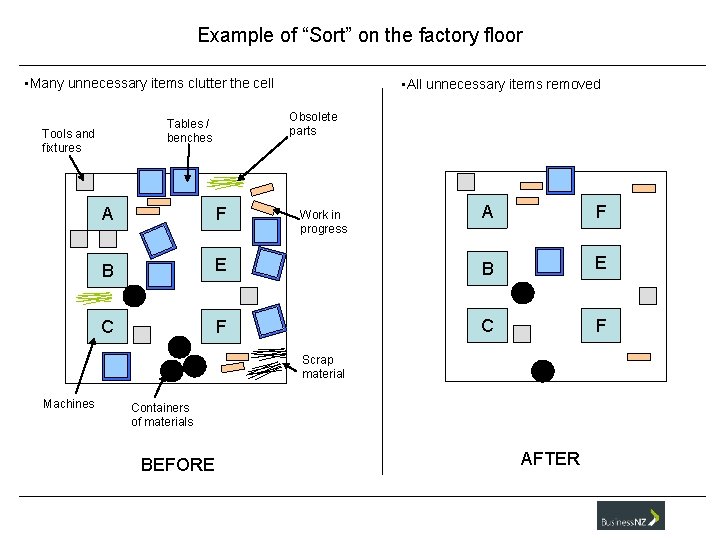
Example of “Sort” on the factory floor • Many unnecessary items clutter the cell Obsolete parts Tables / benches Tools and fixtures • All unnecessary items removed A F E B E F C F A F B C Work in progress Scrap material Machines Containers of materials BEFORE AFTER
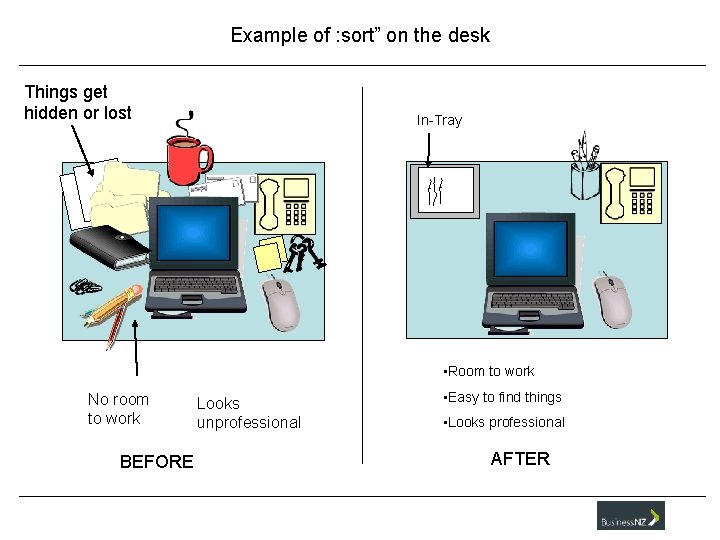
Example of : sort” on the desk Things get hidden or lost In-Tray • Room to work No room to work BEFORE Looks unprofessional • Easy to find things • Looks professional AFTER
Step 2: Set in order – create layout Properly identify, arrange and locate the material & equipment that is necessary to do the job. E. g. • • • Production components Tooling and fixtures Hand tools Containers Etc.
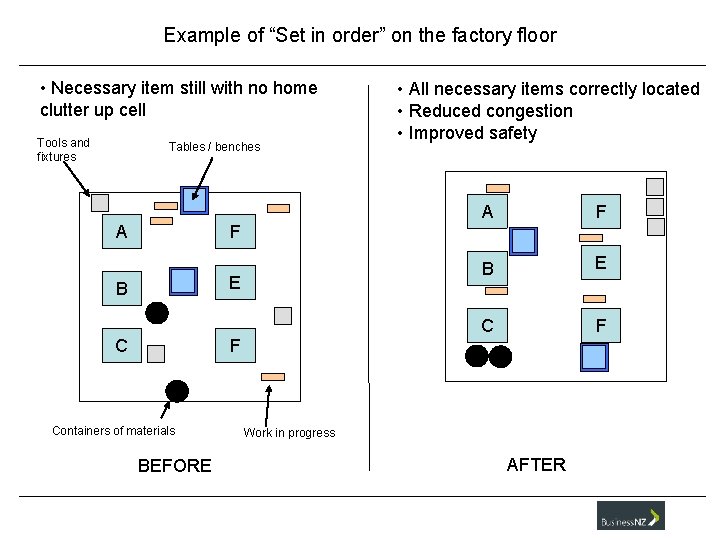
Example of “Set in order” on the factory floor • Necessary item still with no home clutter up cell Tools and fixtures Tables / benches A • All necessary items correctly located • Reduced congestion • Improved safety A F B E C F F E B C F Containers of materials BEFORE Work in progress AFTER
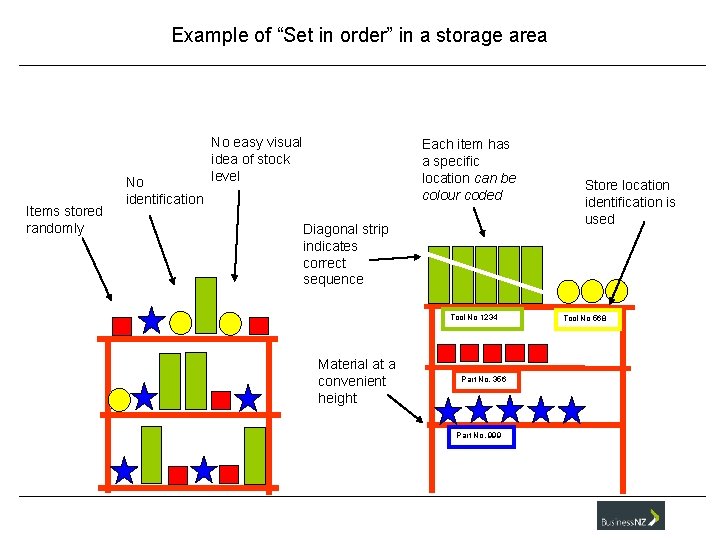
Example of “Set in order” in a storage area Items stored randomly No identification No easy visual idea of stock level Each item has a specific location can be colour coded Diagonal strip indicates correct sequence Tool No 1234 Material at a convenient height Part No. 356 Part No. 999 Store location identification is used Tool No 568
Step 3: Shine • All tools and equipment associated with the process must be thoroughly cleaned and then checked for: • • • Leaks Wear Loose fittings Incorrect settings Etc. • “shine” must also be applied to the whole workplace, i. e. Floor and other factory fixtures and fitting including lights and heating. • Any concerns identified should be formally logged and followed up until resolved.
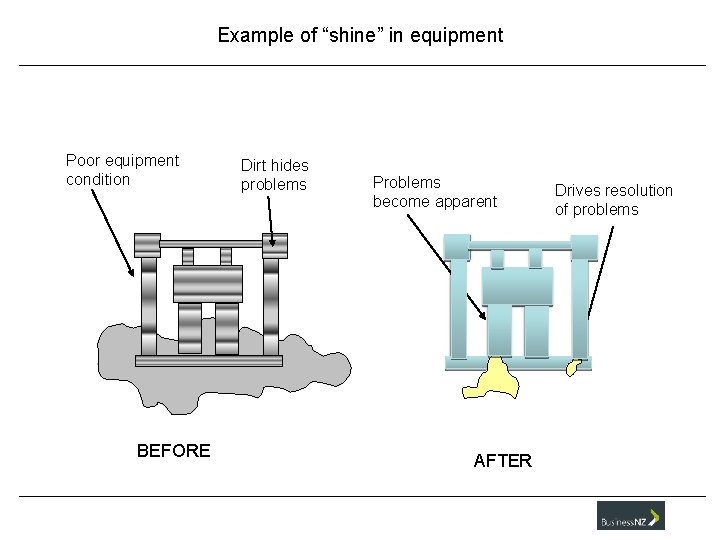
Example of “shine” in equipment Poor equipment condition BEFORE Dirt hides problems Problems become apparent AFTER Drives resolution of problems
Step 4: Standardise • The systemised approach of maintaining high standards of workplace organisation at all times by: • • Recording requirements Allocating responsibilities Determining frequencies Display of instructions and guidelines.
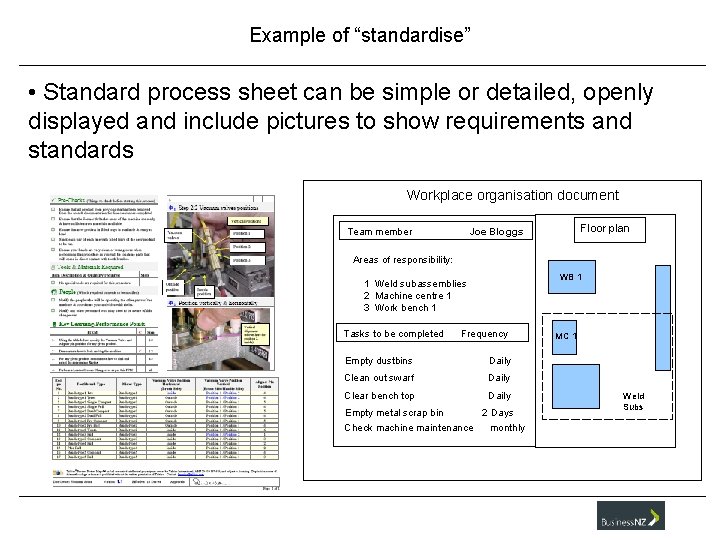
Example of “standardise” • Standard process sheet can be simple or detailed, openly displayed and include pictures to show requirements and standards Workplace organisation document Team member Floor plan Joe Bloggs Areas of responsibility: WB 1 1 Weld subassemblies 2 Machine centre 1 3 Work bench 1 Tasks to be completed Frequency Empty dustbins Daily Clean out swarf Daily Clear bench top Daily Empty metal scrap bin Check machine maintenance 2 Days monthly MC 1 Weld Subs
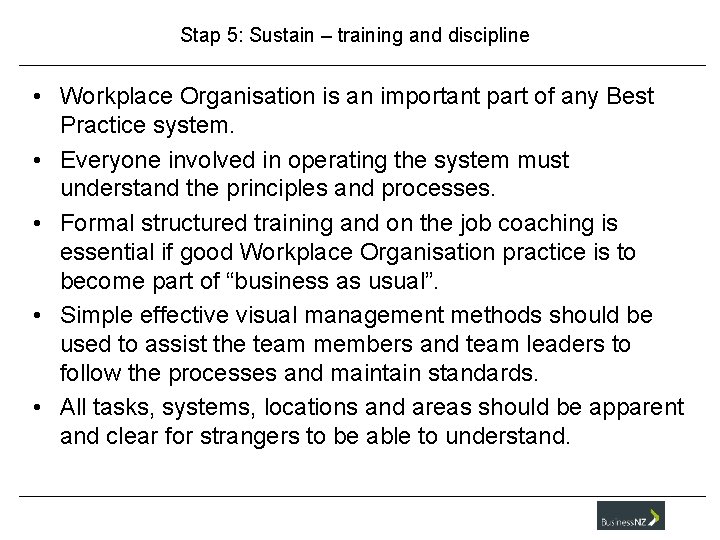
Stap 5: Sustain – training and discipline • Workplace Organisation is an important part of any Best Practice system. • Everyone involved in operating the system must understand the principles and processes. • Formal structured training and on the job coaching is essential if good Workplace Organisation practice is to become part of “business as usual”. • Simple effective visual management methods should be used to assist the team members and team leaders to follow the processes and maintain standards. • All tasks, systems, locations and areas should be apparent and clear for strangers to be able to understand.
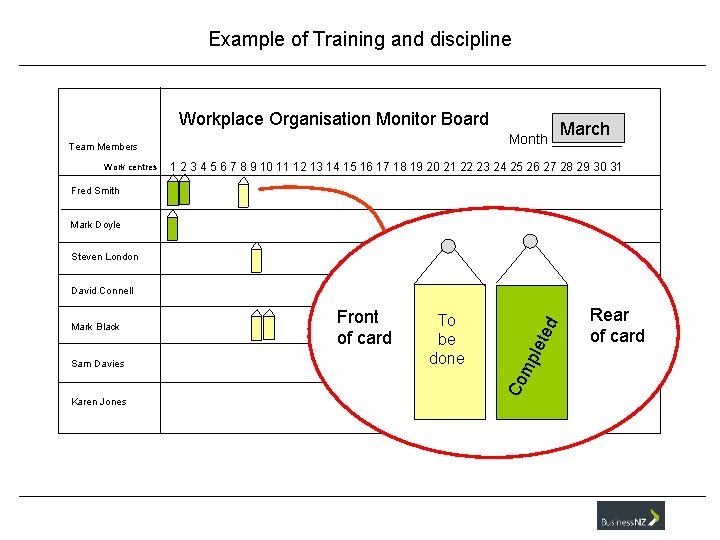
Example of Training and discipline Workplace Organisation Monitor Board Team Members Work centres March Month _____ 1 2 3 4 5 6 7 8 9 10 11 12 13 14 15 16 17 18 19 20 21 22 23 24 25 26 27 28 29 30 31 Fred Smith Mark Doyle Steven London Karen Jones To be done mp le Sam Davies Front of card Co Mark Black ted David Connell Rear of card
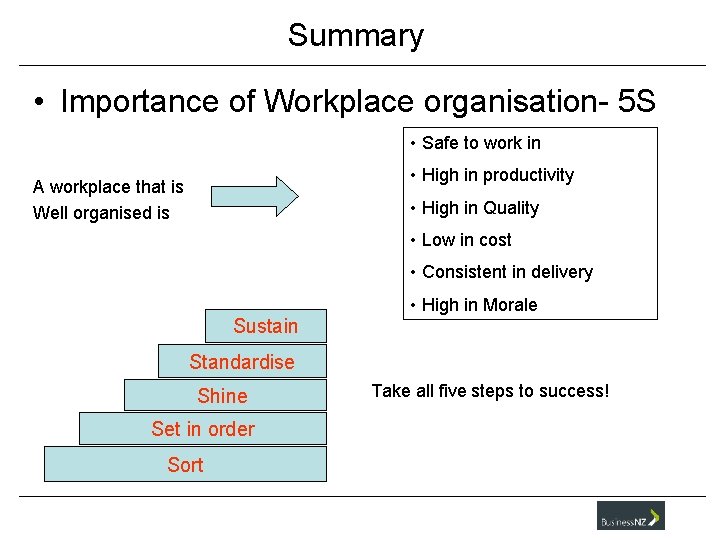
Summary • Importance of Workplace organisation- 5 S • Safe to work in • High in productivity A workplace that is Well organised is • High in Quality • Low in cost • Consistent in delivery • High in Morale Sustain Standardise Shine Set in order Sort Take all five steps to success!