
Manual Handling Unit 1 Health and safety Aims
- Slides: 34
Manual Handling Unit 1 – Health and safety
Aims To understand the importance of correct manual Handling
Objectives � That manual handling operations can be hazardous to health � How manual handling operations can cause injury and harm � The scope of legal requirements with regard to manual handling operations in the workplace � The value of risk assessment and how it applies to safe manual handling practice
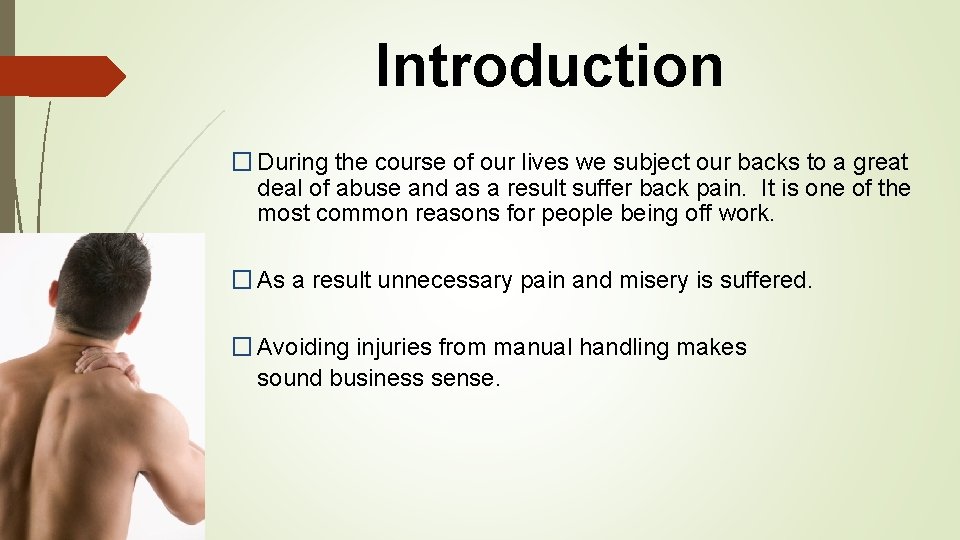
Introduction � During the course of our lives we subject our backs to a great deal of abuse and as a result suffer back pain. It is one of the most common reasons for people being off work. � As a result unnecessary pain and misery is suffered. � Avoiding injuries from manual handling makes sound business sense.
‘it goes with the job’ There is a lot of resistance to change because ‘people have always done it this way’, ‘nothing has ever gone wrong in the past’, ‘who are you to tell us how not to do things but don’t put anything in its place’ ‘you people are not in the real world’.
Avoiding Manual Handling Check whether you need to move it at all For example: � Does a large work piece really need to be moved, or can the activity (e. g. wrapping or machining) safely be done where the item already is? � Can you take the treatment to the patient, not vice versa? � Can raw materials be piped to their point of use? Consider automation, particularly for new processes
How can we move things to where they need to be?
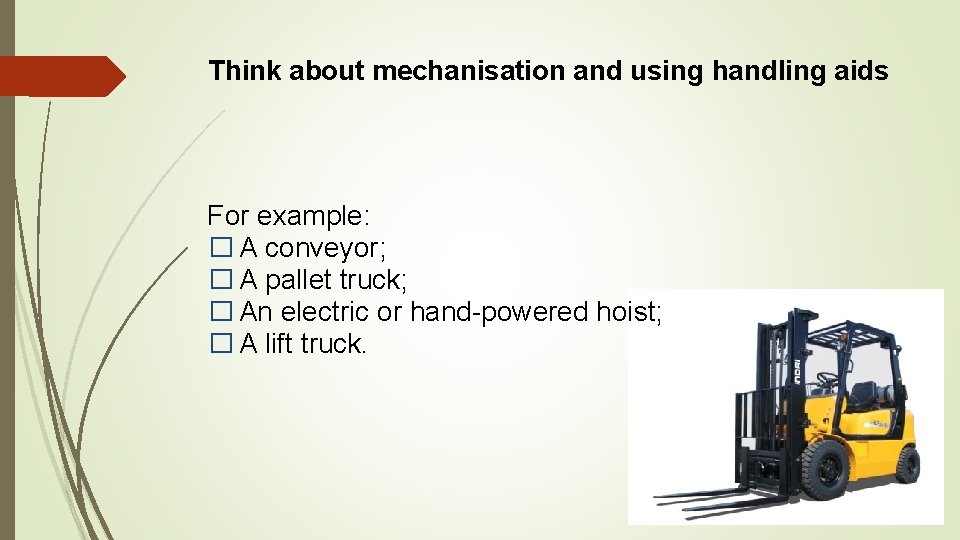
Think about mechanisation and using handling aids For example: � A conveyor; � A pallet truck; � An electric or hand-powered hoist; � A lift truck.
But beware of new hazards from automation or mechanisation � For example: � Automated plant machinery needs cleaning, maintenance etc; � Lift trucks must be suited to the work and have properly trained operators
Risk Assessment � Holding awkward postures for a long time. � Frequently repeating awkward or heavy activities � Working at a speed beyond your capability or the is uncomfortable � Insufficient rest periods between tasks or operations � Working in poor lighting, draughty, cold, or hot environment. � Working with machinery that requires an awkward posture or where extra effort has to be exerted � Pushing, pulling or lifting heavy loads.
Good Assessments will result in: � Less work-related injuries � Lower costs � Less output loss � Increased efficiency � Increased staff morale
All Risk Assessments must be Suitable and Sufficient
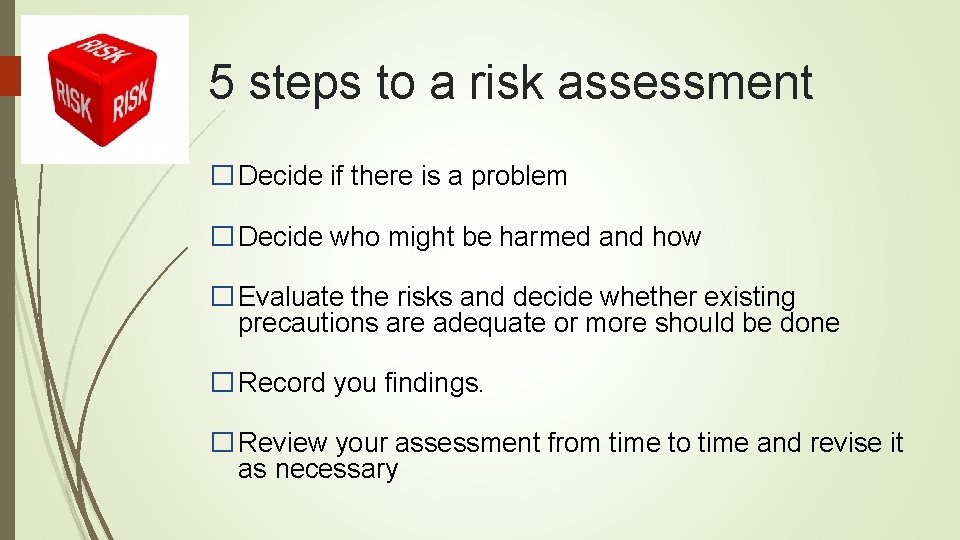
5 steps to a risk assessment � Decide if there is a problem � Decide who might be harmed and how � Evaluate the risks and decide whether existing precautions are adequate or more should be done � Record you findings. � Review your assessment from time to time and revise it as necessary
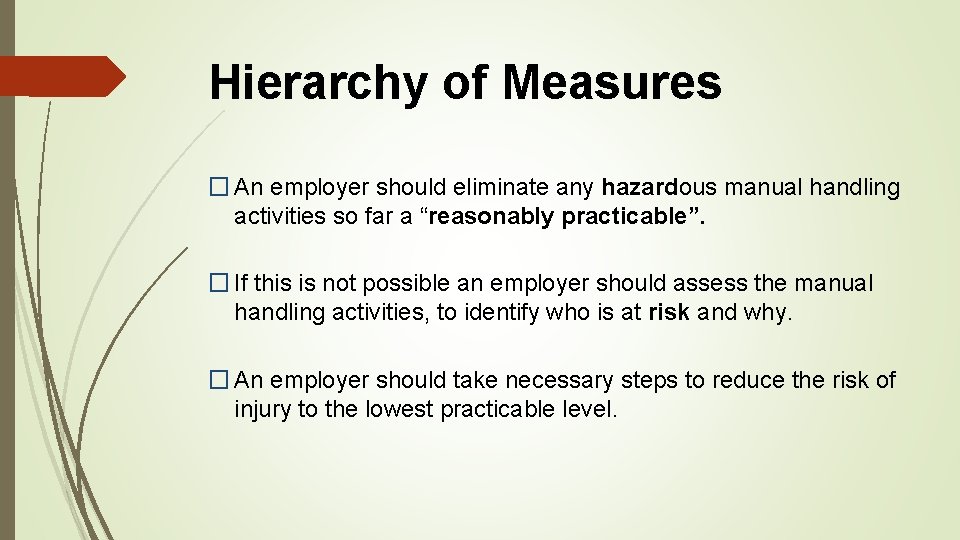
Hierarchy of Measures � An employer should eliminate any hazardous manual handling activities so far a “reasonably practicable”. � If this is not possible an employer should assess the manual handling activities, to identify who is at risk and why. � An employer should take necessary steps to reduce the risk of injury to the lowest practicable level.
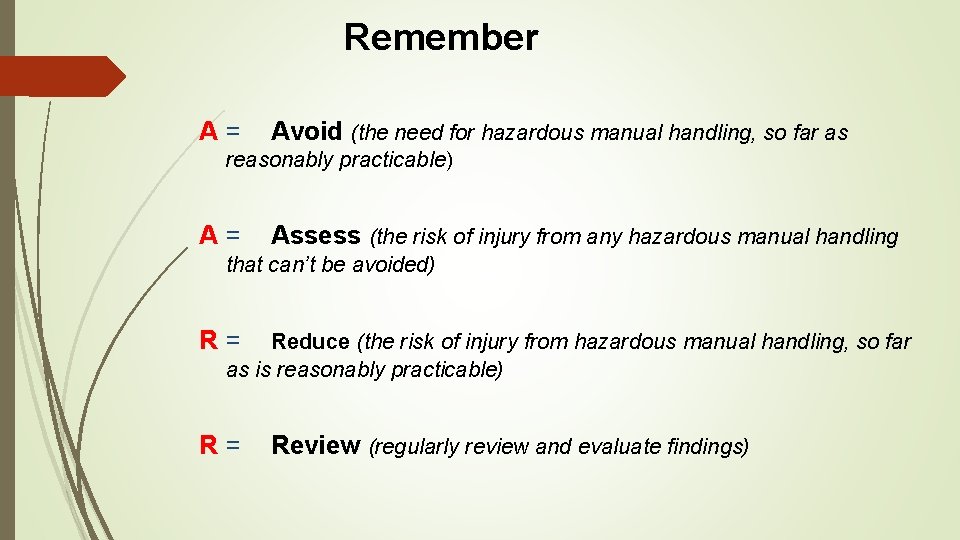
Remember A= Avoid (the need for hazardous manual handling, so far as reasonably practicable) A= Assess (the risk of injury from any hazardous manual handling that can’t be avoided) R= Reduce (the risk of injury from hazardous manual handling, so far as is reasonably practicable) R= Review (regularly review and evaluate findings)
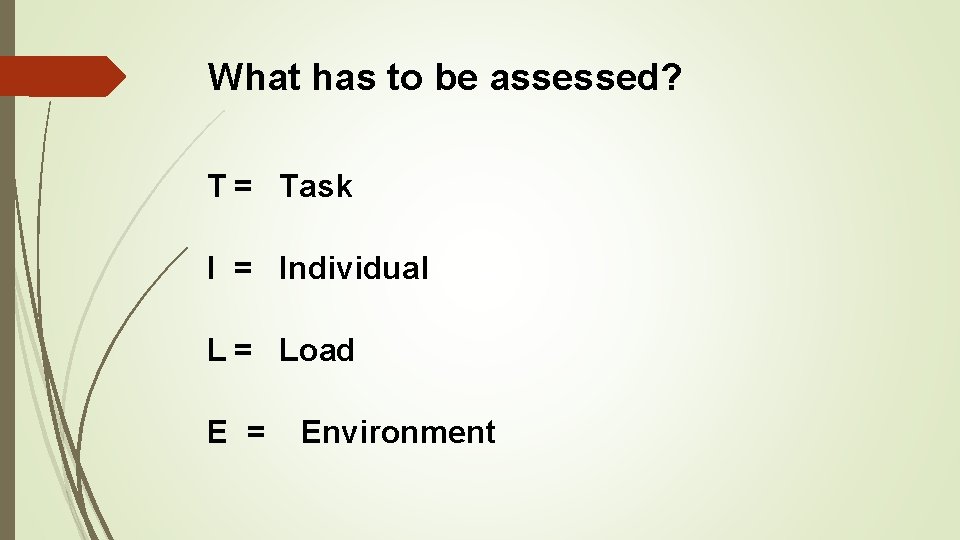
What has to be assessed? T = Task I = Individual L = Load E = Environment
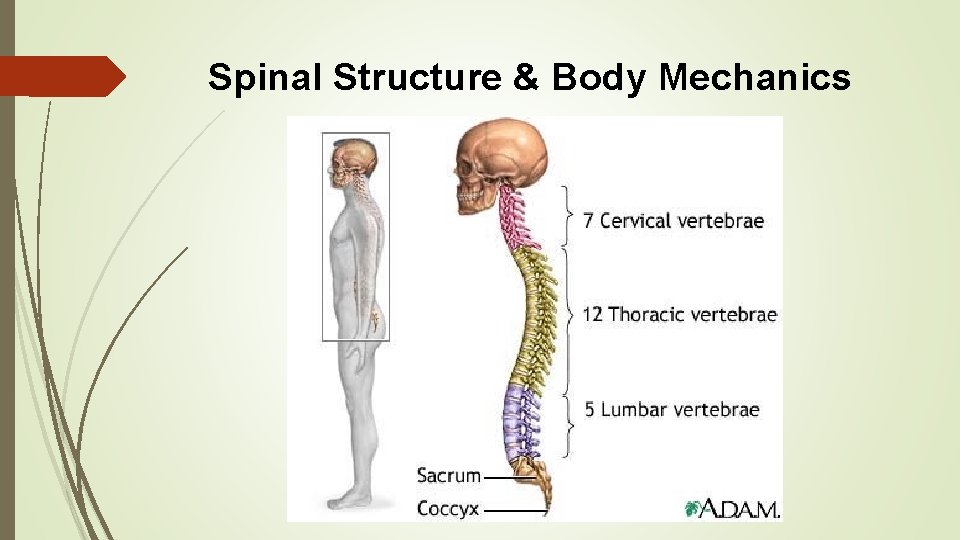
Spinal Structure & Body Mechanics
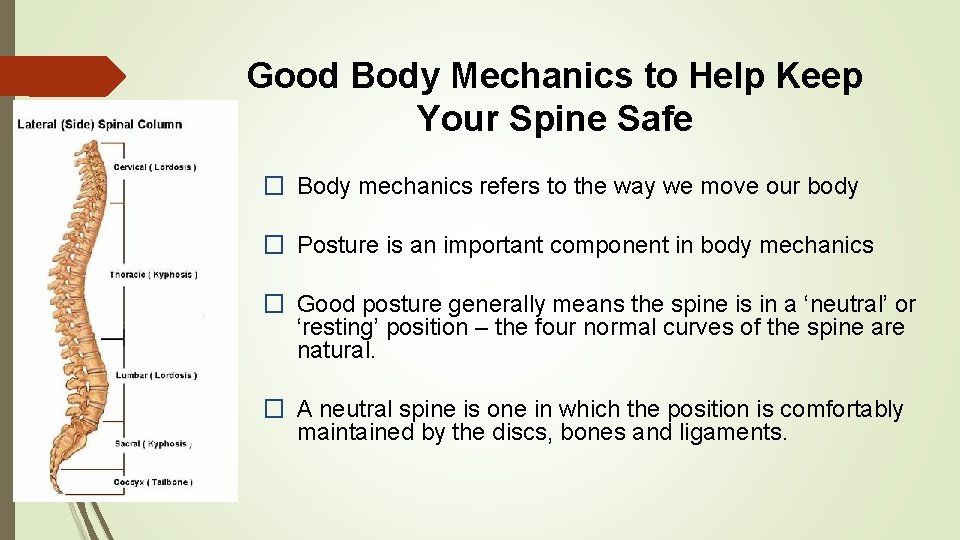
Good Body Mechanics to Help Keep Your Spine Safe � Body mechanics refers to the way we move our body � Posture is an important component in body mechanics � Good posture generally means the spine is in a ‘neutral’ or ‘resting’ position – the four normal curves of the spine are natural. � A neutral spine is one in which the position is comfortably maintained by the discs, bones and ligaments.
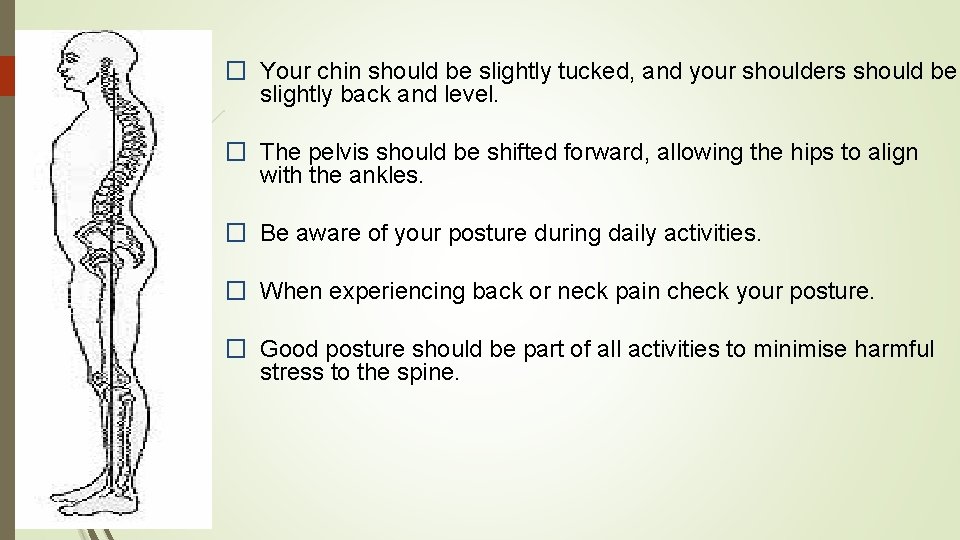
� Your chin should be slightly tucked, and your shoulders should be slightly back and level. � The pelvis should be shifted forward, allowing the hips to align with the ankles. � Be aware of your posture during daily activities. � When experiencing back or neck pain check your posture. � Good posture should be part of all activities to minimise harmful stress to the spine.
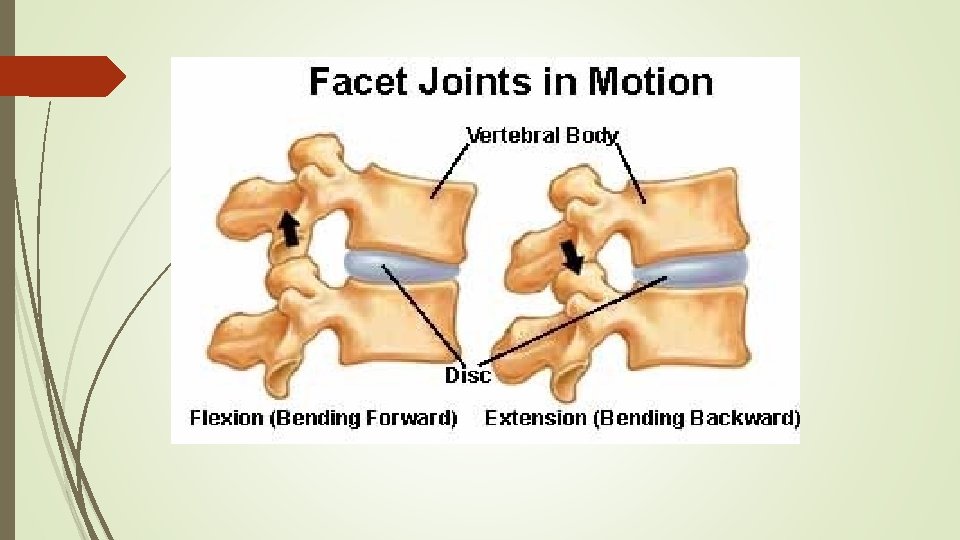
Minimise Bending & Twisting � One movement that tends to aggravate back pain – more than other activities – is bending and twisting simultaneously. � Combined these movements place force on the facet joints and the discs. Some people often bend and twist to pick an object off the floor, reach for the milk in the refrigerator, pull a file out of the cabinet, and so on.
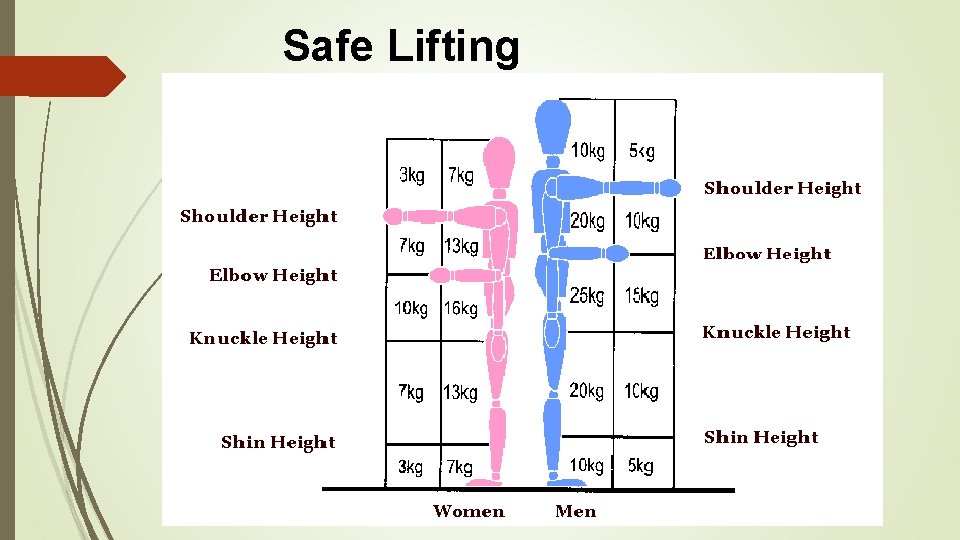
Safe Lifting Loads? ?
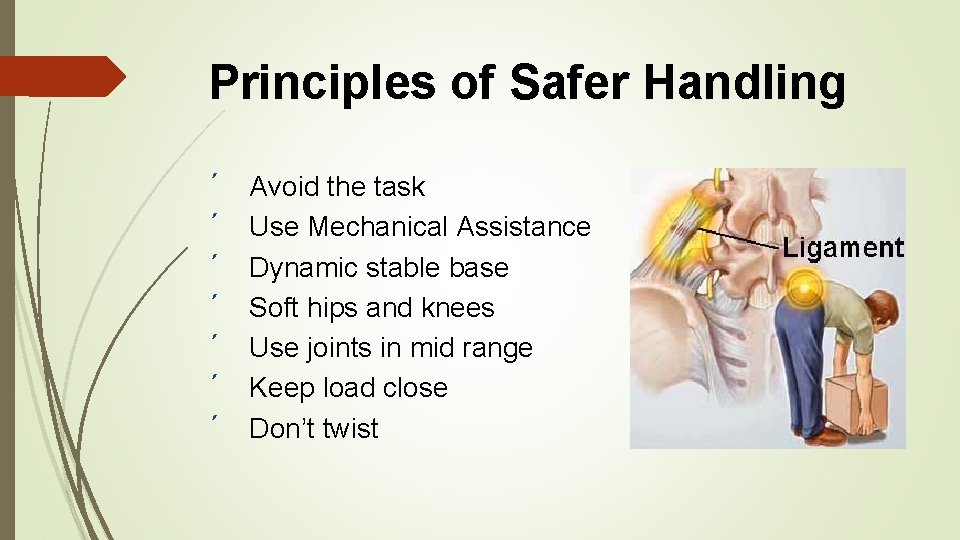
Principles of Safer Handling ´ ´ ´ ´ Avoid the task Use Mechanical Assistance Dynamic stable base Soft hips and knees Use joints in mid range Keep load close Don’t twist
Plan and Prepare � Think before you start � Avoid where possible: – Do I have to move the item at all? – Does the load have to be moved by hand? – Can I use available equipment? � Time spent on planning and preparing is rarely wasted
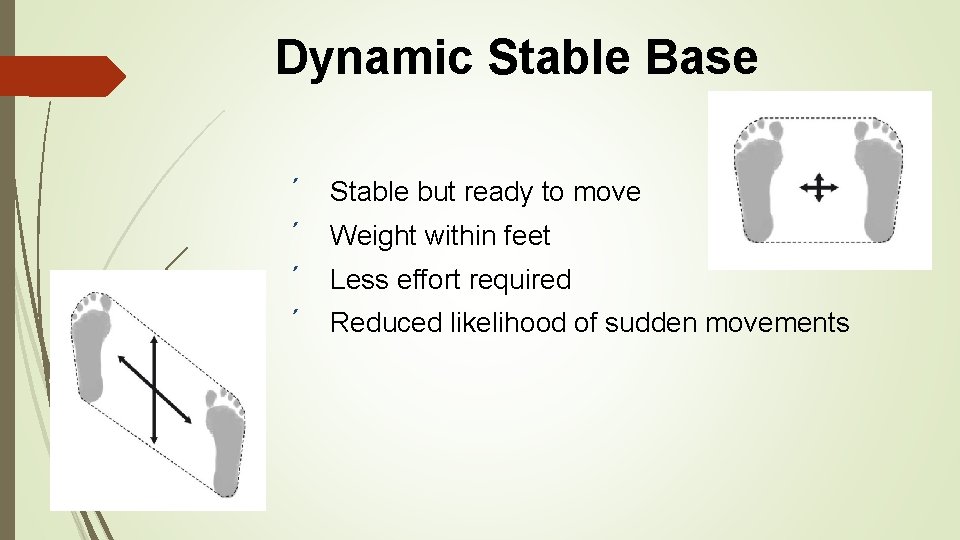
Dynamic Stable Base ´ Stable but ready to move ´ Weight within feet ´ Less effort required ´ Reduced likelihood of sudden movements
Soft Hips and Knees ´ Reduces loading on the back ´ Increased stability and balance ´ Forces transferred through legs ´ Ready for movement
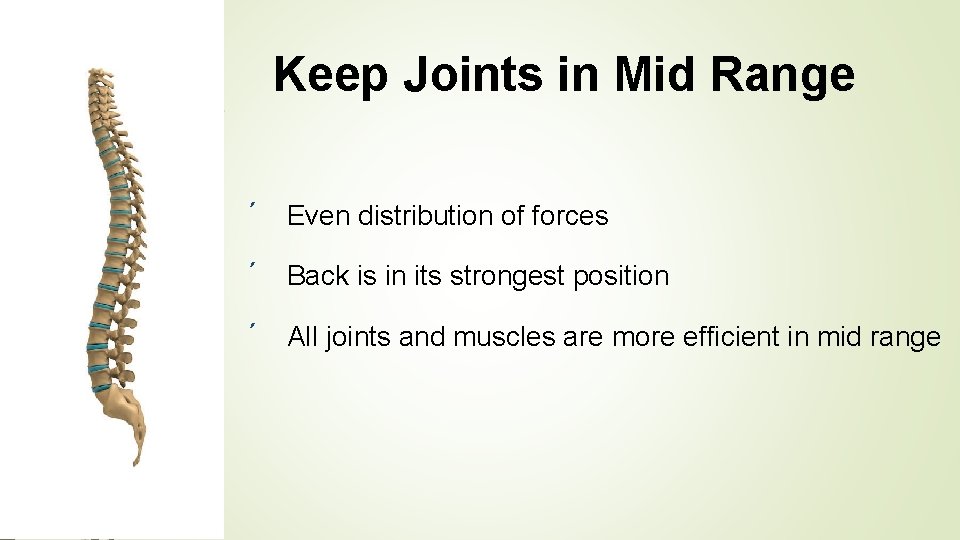
Keep Joints in Mid Range ´ Even distribution of forces ´ Back is in its strongest position ´ All joints and muscles are more efficient in mid range
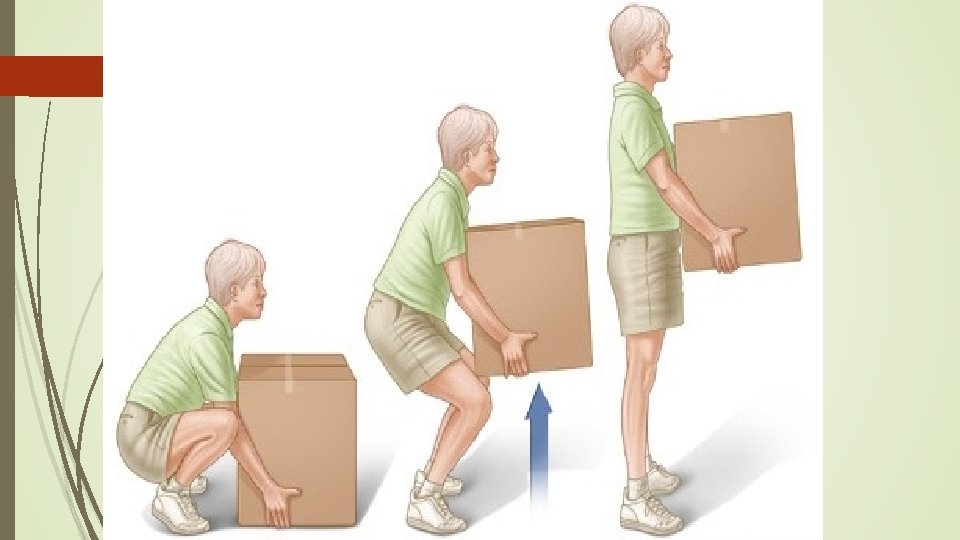
Get a good hold – � Where possible the load should be hugged as close as possible to the body. � This may be better than gripping it tightly with hands only.
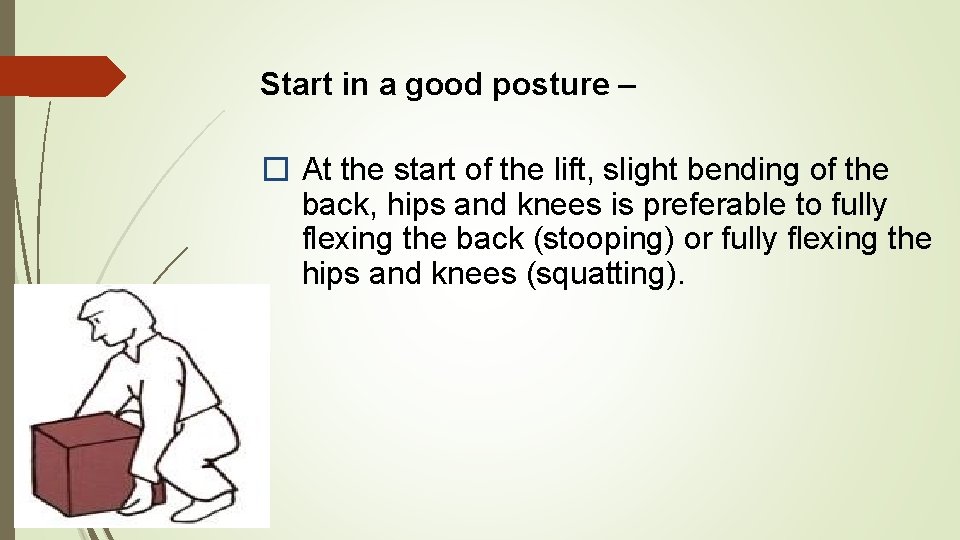
Start in a good posture – � At the start of the lift, slight bending of the back, hips and knees is preferable to fully flexing the back (stooping) or fully flexing the hips and knees (squatting).
Don’t flex the back any further while lifting – � This can happen if the legs begin to straighten before starting to raise the load.
Avoid twisting the back or leaning sideways – � Especially while the back is bent. � Shoulders should be kept level and facing in the same direction as the hips. � Turning and moving the feet is better than twisting and lifting at the same time.
Move smoothly – � The load should not be jerked or snatched as this can make it harder to keep control and can increase the risk of injury. Don’t lift or handle more than can be easily managed – � There is a difference between what people can lift and what they can safely lift. Pushing & Pulling � Pushing is a strong force and is generally preferred over pulling as you use your leg muscles and keep your back strong. Hand position is important
Keeping you safe ´ On a day-to-day basis you will need to decide for yourself how to carry out any manual handling tasks ´ You need to recognise your own capabilities ´ This is your responsibility