
Manual Handling Training Presented by Kevin Evans Dip
Manual Handling Training Presented by Kevin Evans Dip. SM. MIIRSM
Course Content Statistics Definition Anatomy & Injuries Mechanics Law Risk Assessment Lifting Safely
Accident Statistics l More than a third of all reportable accidents (3+ days of absence) reported to the HSE each year are caused by Manual Handling
Accident Statistics Largest cause of accidents at work l l l 37% Manual Handling 19% Slips, Trips and Falls 12% Other Causes 20% Struck by an Object 7% Falling from Height 5% Machinery
Accident Statistics Interpreted another way - the overall figure means that: v 86000 people are absent daily v 26, 500, 000 working days are lost annually v £ 1000, 000 is lost in production, sickness benefit and medical costs In terms of suffering each injury results in an average of 11 days off work – some never fully recover. Four out of five people suffer with back related problems at some time – the risk is greater after the age of 30. Bases on HSE statistics 1996 -98

Definition of Manual Handling WHAT IS MANUAL HANDLING? l Pulling l Pushing l Lifting l Lowering l Moving of loads l Repetitive movements l Using physical effort, direct or indirect

Parts of the Body Effected Hands l Arms l Neck l Shoulders l Back l Groin l Feet l
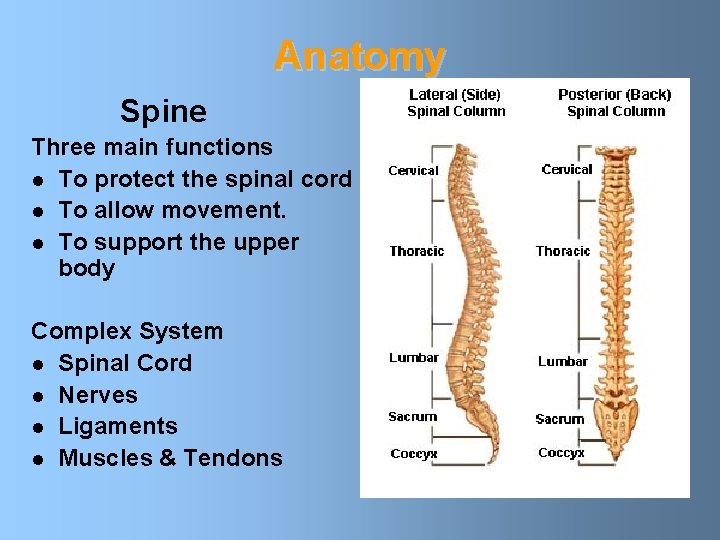
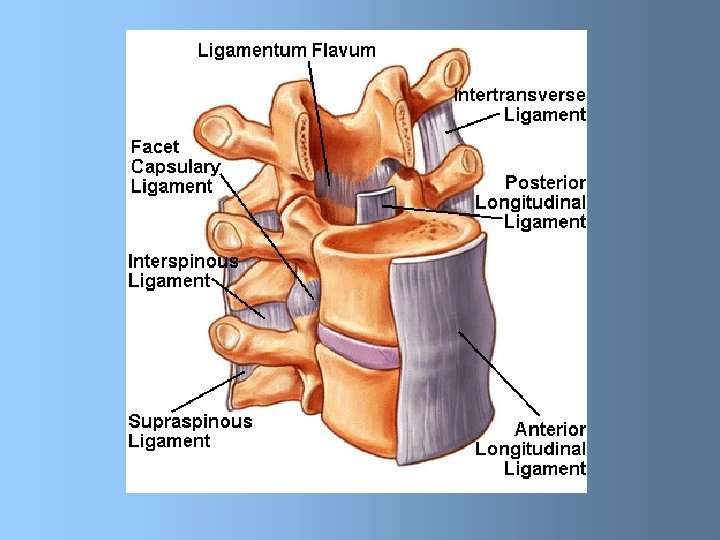
Anatomy Spine Three main functions l To protect the spinal cord l To allow movement. l To support the upper body Complex System l Spinal Cord l Nerves l Ligaments l Muscles & Tendons
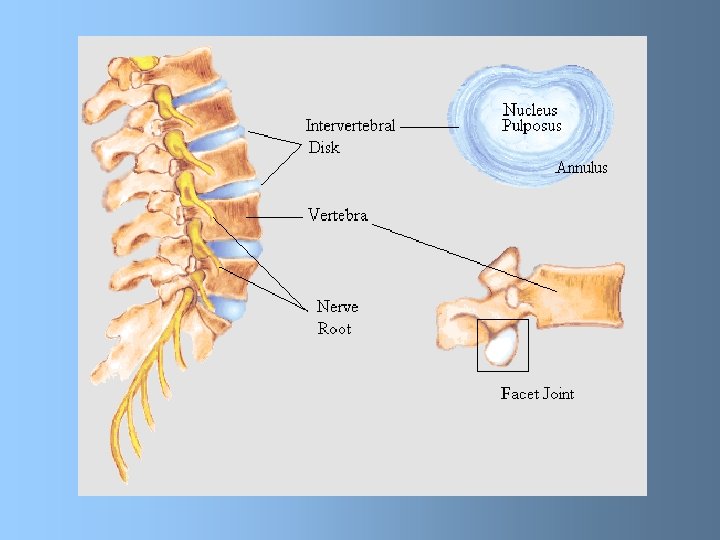
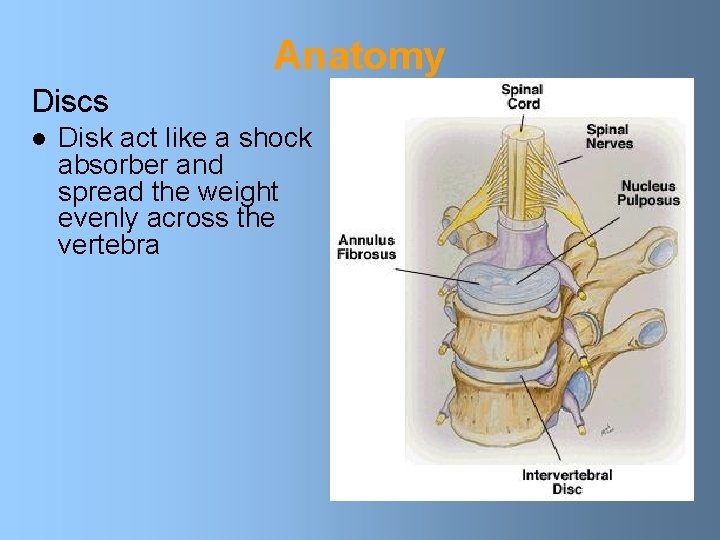
Anatomy Discs l Disk act like a shock absorber and spread the weight evenly across the vertebra
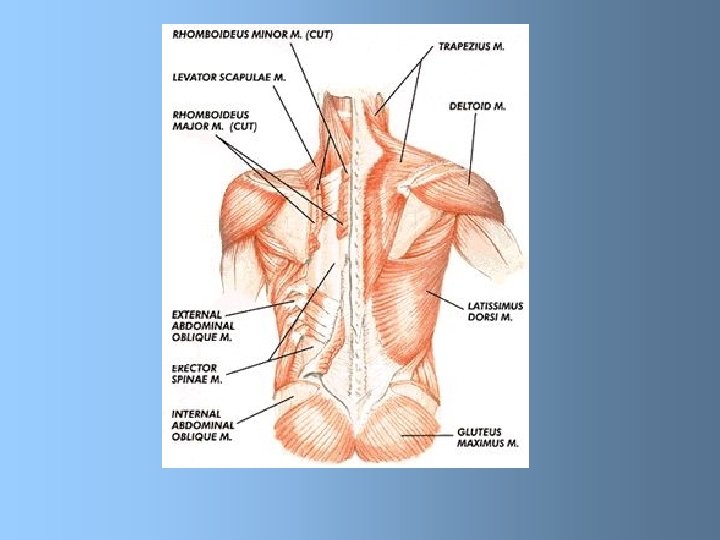
Muscles l l l Muscles are bundles of fibre which enable movement Connected to the bones by tendons A damaged muscle is often referred to as “strain”
Injury Types Muscles l Tendons l Ligaments l Discs l Vertebra l Hernia l Nerves l
Mechanics l l l Balance point is through centre of body when standing A load held in front disturbs the balance tension is generated in the back muscles to compensate Forms a lever effect Average person holding a 10 kg load at arms length generates a counterbalancing tension up to 10 times more – to avoid falling over High or repetitive levels of tension in the back can cause damage – called muscle strain
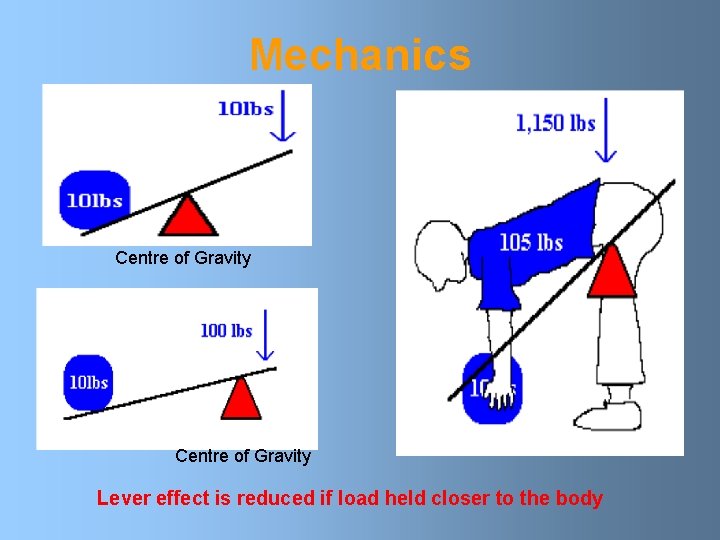
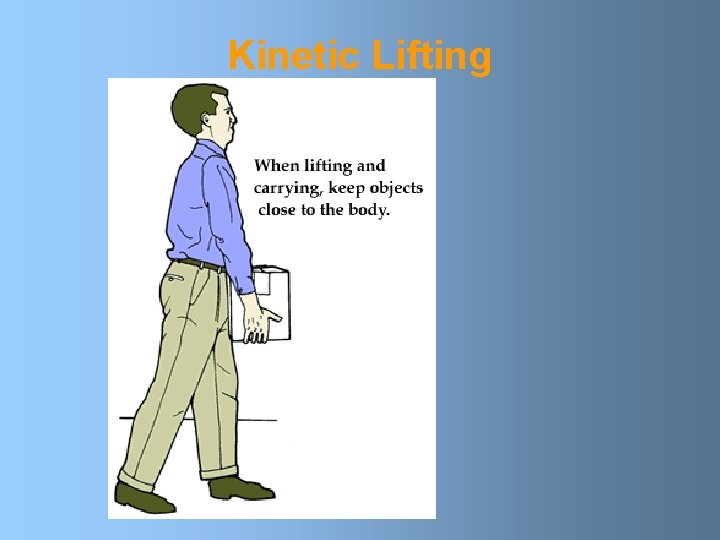
Mechanics Centre of Gravity Lever effect is reduced if load held closer to the body
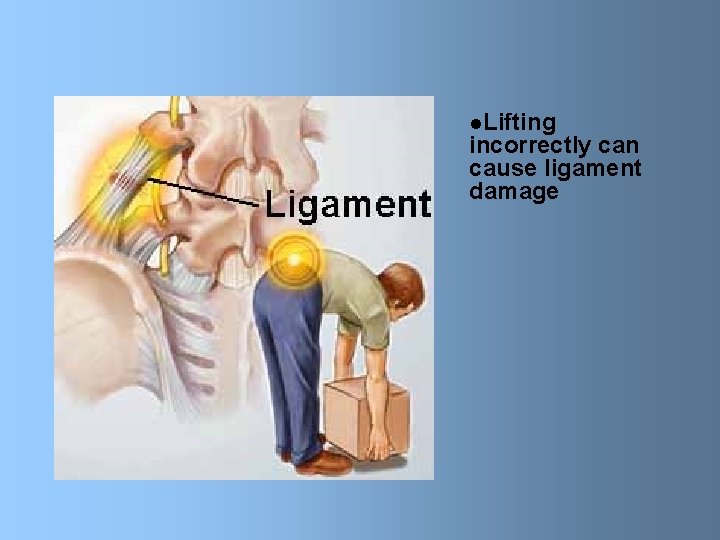
l. Lifting incorrectly can cause ligament damage
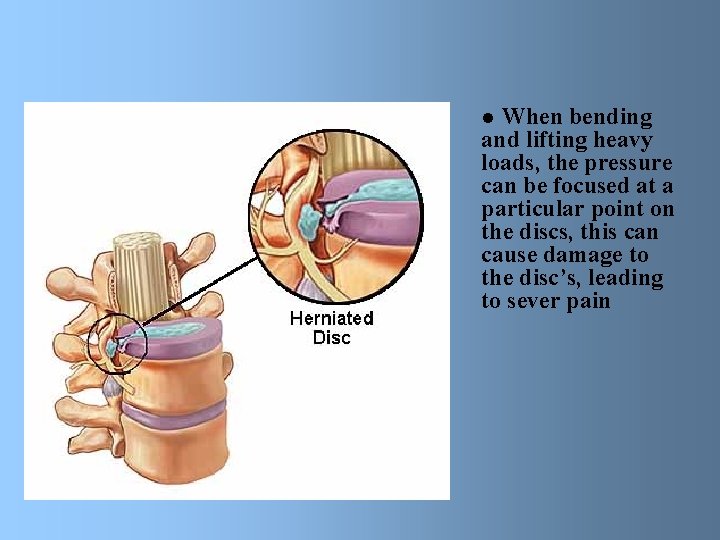
When bending and lifting heavy loads, the pressure can be focused at a particular point on the discs, this can cause damage to the disc’s, leading to sever pain l
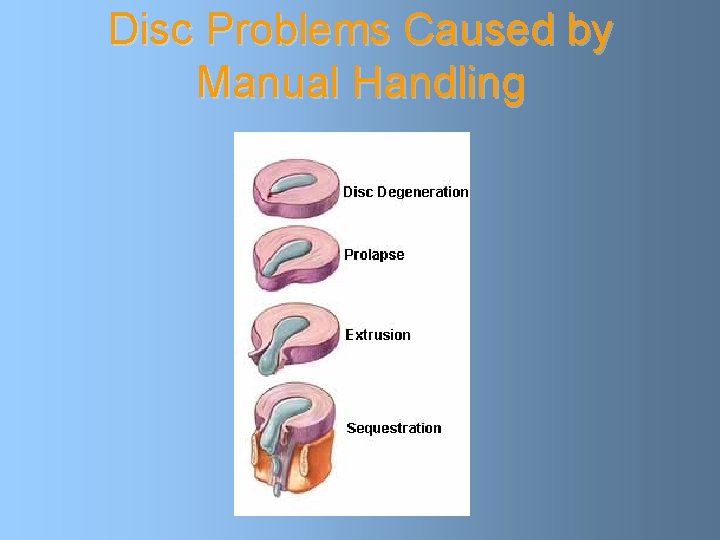
Disc Problems Caused by Manual Handling
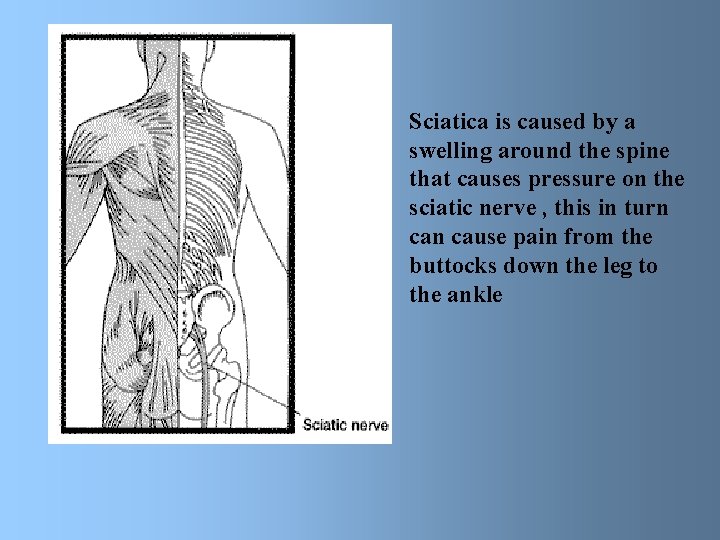
Sciatica is caused by a swelling around the spine that causes pressure on the sciatic nerve , this in turn cause pain from the buttocks down the leg to the ankle

Health and Safety Law
Manual Handling Regulations 1992 Regulations provide a hierarchy of measures Employers must: Avoid manual handling where possible Assess any hazardous activities where manual handling can’t be avoided If the assessment indicates a significant risk of injury a more specific assessment must be made Reduce the risk of injury as far as is reasonably practicable
Manual Handling Regulations 1992 Employees have duties too: – Follow all systems of work – Make full and proper use of any equipment provided – Co-operate in all H&S matters – Advise your manager if you are unwell – Not putting other people at risk
RISK ASSESSMENT
Risk Assessment T Task I Individual’s capabilities L Load E Environment
The Task l l l Does the Task Involve Holding loads away Strenuous pushing and pulling from body Unpredictable Twisting movement of load Stooping Repetitive handling Reaching upwards Insufficient rest or Large vertical recovery time movements Workrate imposed by the process Long travel distances
Individual Capability l l l Physical condition Illness Pregnancy Requires unusual capabilities Call for special information or training
The Load Heavy Bulky or unwieldy Difficult to grasp Unstable/unpredictable Harmful ie sharp/hot
The Working Environment Constraints on posture eg lack of space Poor floors Variations in levels Hot/cold/rain/ice/humid conditions Strong air movement Poor lighting conditions Noise
Risk Assessment Identify the elements of significant risk Decide who might be harmed and how Evaluate risks/ Implement Control measures Record the findings of assessment Review assessment T I L E Task Individual’s capabilities Load Environment
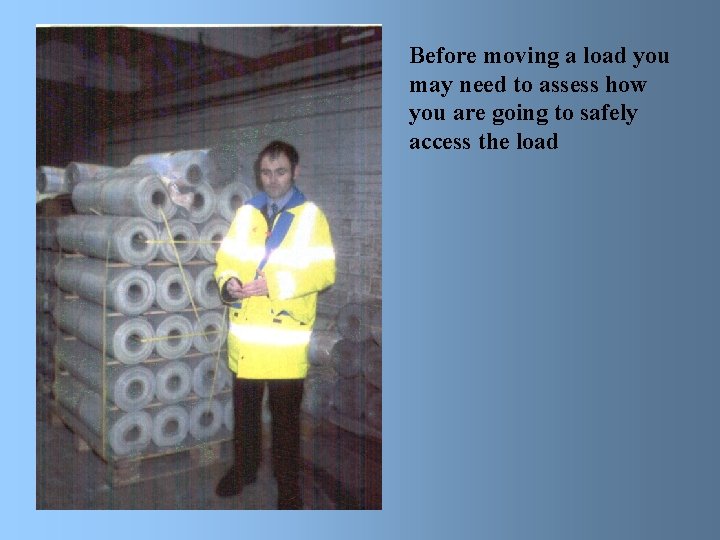
Before moving a load you may need to assess how you are going to safely access the load
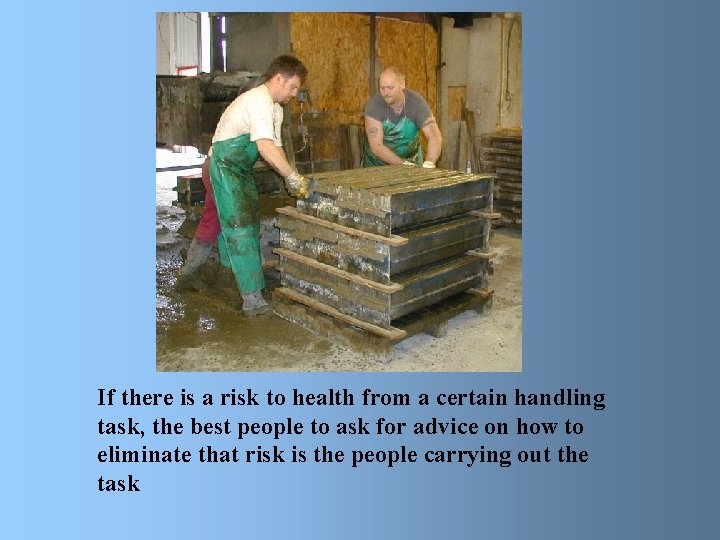
If there is a risk to health from a certain handling task, the best people to ask for advice on how to eliminate that risk is the people carrying out the task
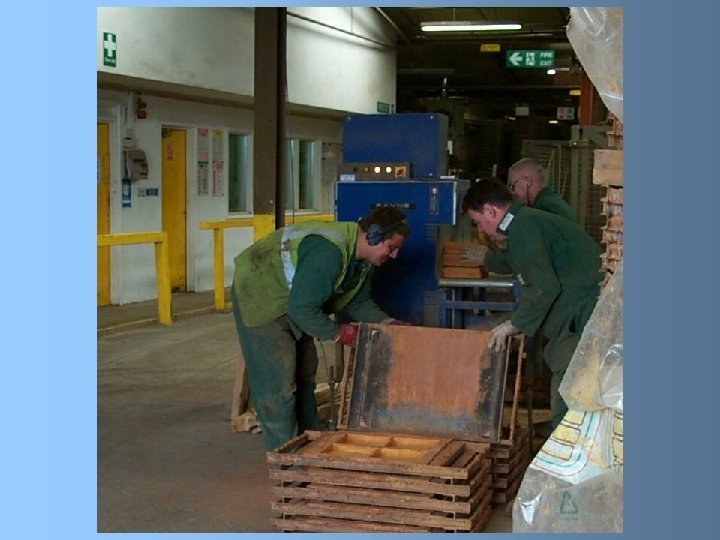
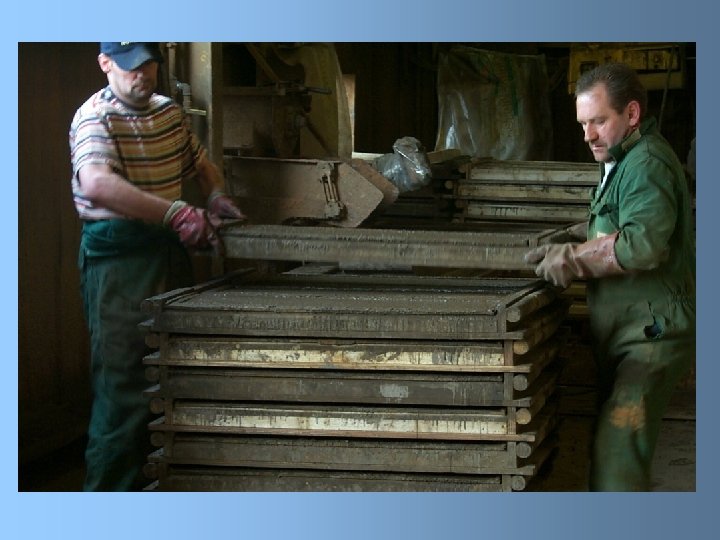

WHAT CAN WE DO ?
Lifting Safely Ultimate Objective To Relieve Fatigue & Strain and avoid injury Use correct handling techniques Ensure good vision Change position regularly Avoid over reaching or stretching Adjust work surface heights Relax where possible Use mechanical aids
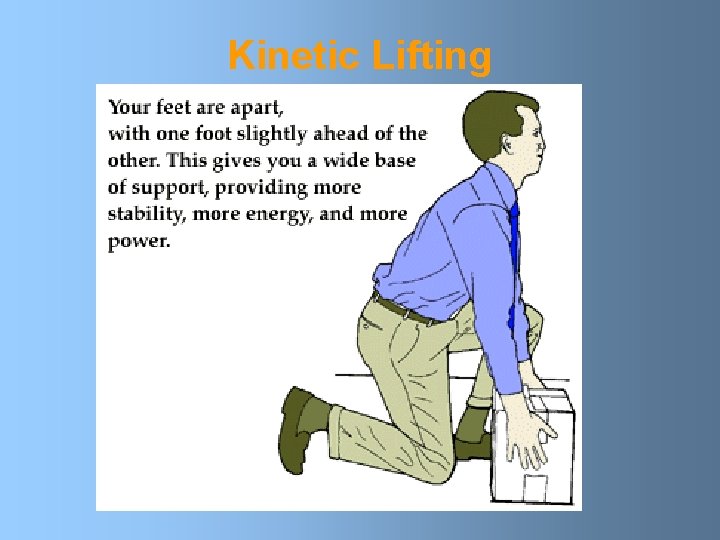
Kinetic Lifting Summarised by: Plan the Route Assess the load Correct position of feet Straight back Correct grip Lift smoothly
Kinetic Lifting Plan the Route l l l Where is the load going Are there obstructions in the way Is there somewhere to set it down
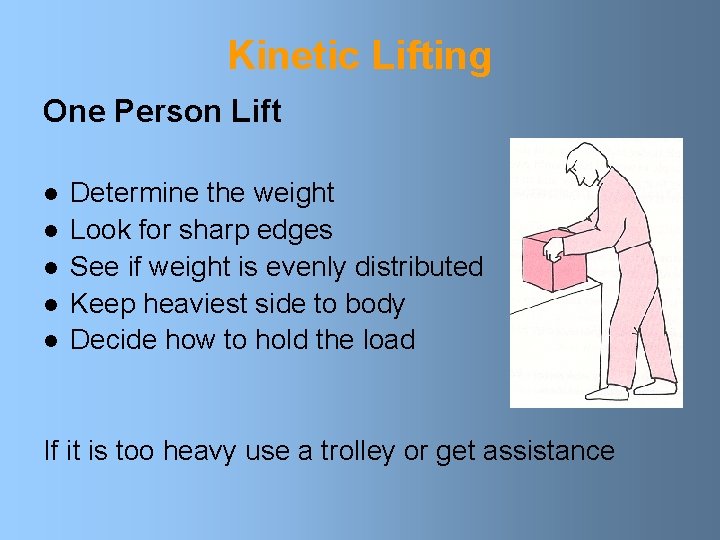
Kinetic Lifting One Person Lift l l l Determine the weight Look for sharp edges See if weight is evenly distributed Keep heaviest side to body Decide how to hold the load If it is too heavy use a trolley or get assistance
Kinetic Lifting
Kinetic Lifting
Kinetic Lifting
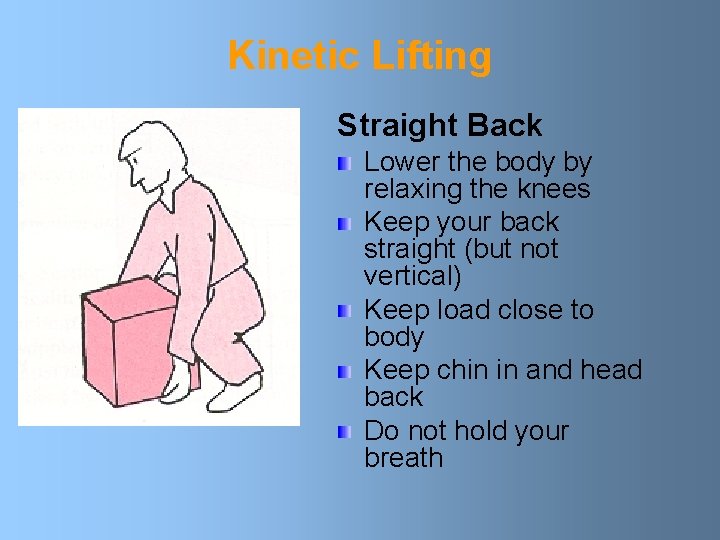
Kinetic Lifting Straight Back Lower the body by relaxing the knees Keep your back straight (but not vertical) Keep load close to body Keep chin in and head back Do not hold your breath
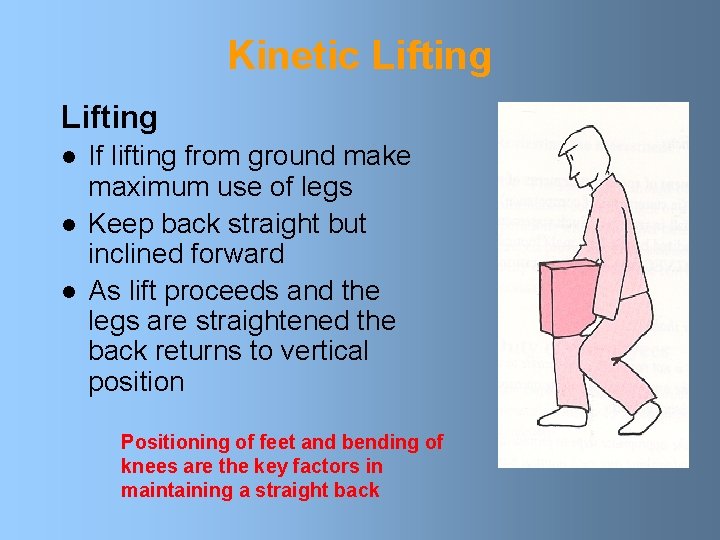
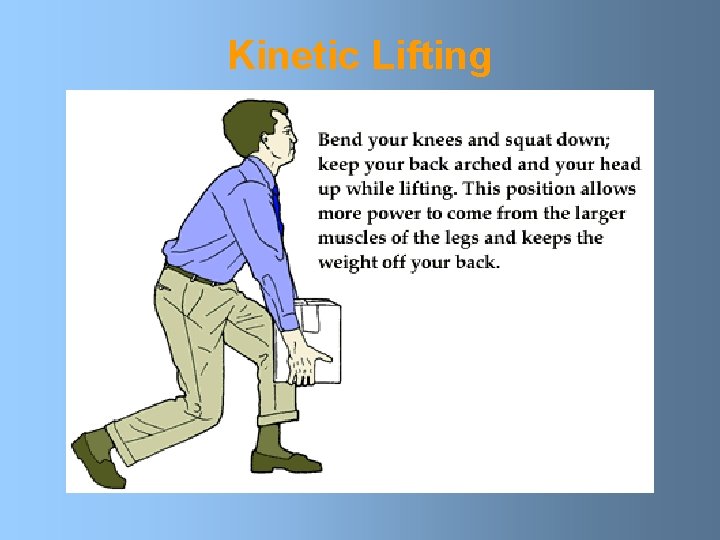
Kinetic Lifting l l l If lifting from ground make maximum use of legs Keep back straight but inclined forward As lift proceeds and the legs are straightened the back returns to vertical position Positioning of feet and bending of knees are the key factors in maintaining a straight back
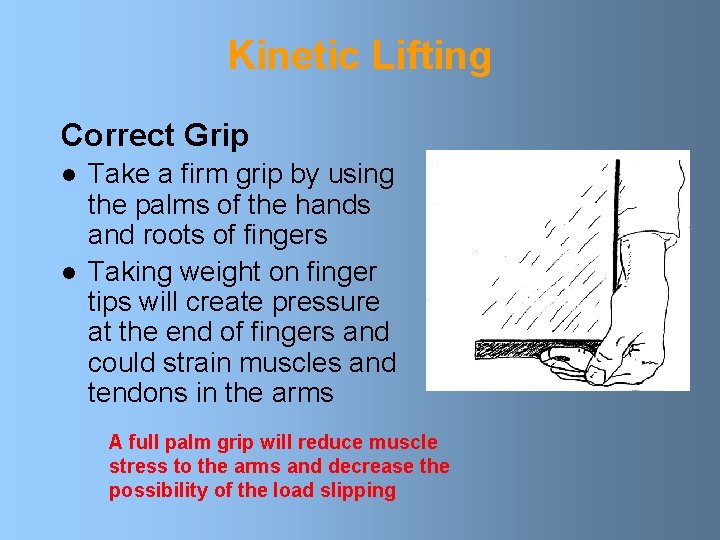
Kinetic Lifting Correct Grip l l Take a firm grip by using the palms of the hands and roots of fingers Taking weight on finger tips will create pressure at the end of fingers and could strain muscles and tendons in the arms A full palm grip will reduce muscle stress to the arms and decrease the possibility of the load slipping
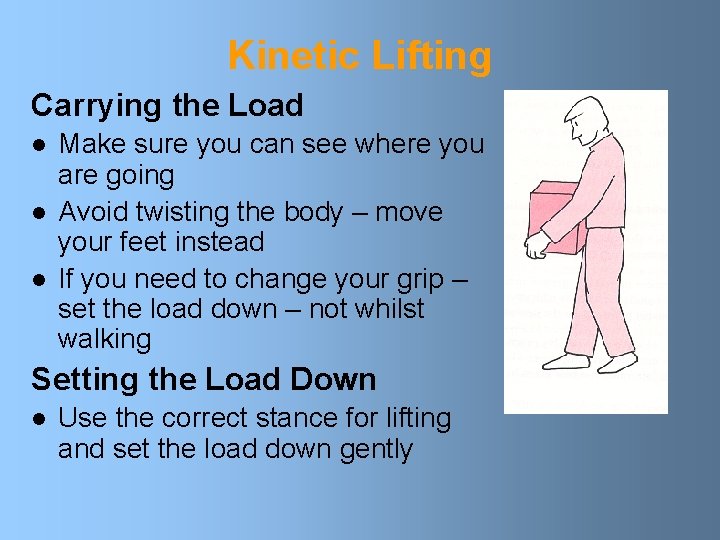
Kinetic Lifting Carrying the Load l l l Make sure you can see where you are going Avoid twisting the body – move your feet instead If you need to change your grip – set the load down – not whilst walking Setting the Load Down l Use the correct stance for lifting and set the load down gently
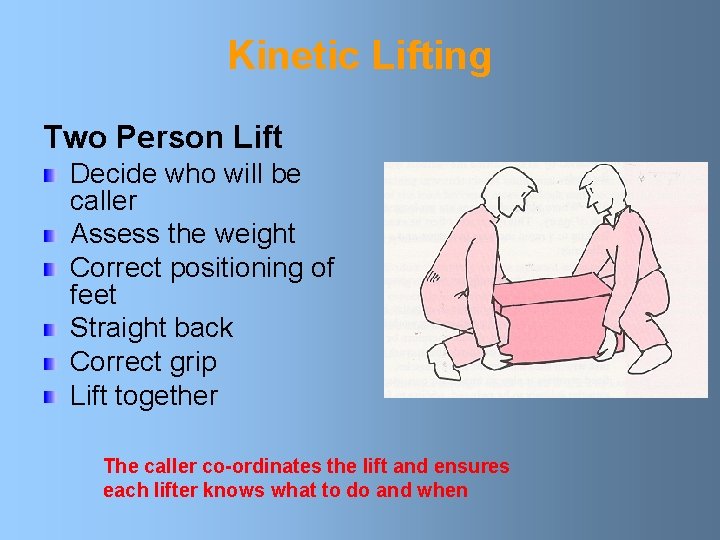
Kinetic Lifting Two Person Lift Decide who will be caller Assess the weight Correct positioning of feet Straight back Correct grip Lift together The caller co-ordinates the lift and ensures each lifter knows what to do and when
Kinetic Lifting - Summary üPlan the route, the lift and the set down point üPosition your feet - bent knees, Firm grip üstraight back, lift smoothly, üMove the feet – do not twist body üKeep the load close to the body üPut down smoothly – then adjust for final position
- Slides: 49