
Manual Handling Soft Skills Programme Nexus Alliance Ltd
- Slides: 41
Manual Handling Soft Skills Programme Nexus Alliance Ltd
Session Elements 1. Definition 2. Injuries and Statistics 3. Anatomy of the Spine 4. Risk Assessment 5. Safe Handling Techniques 2. Mechanical Aids
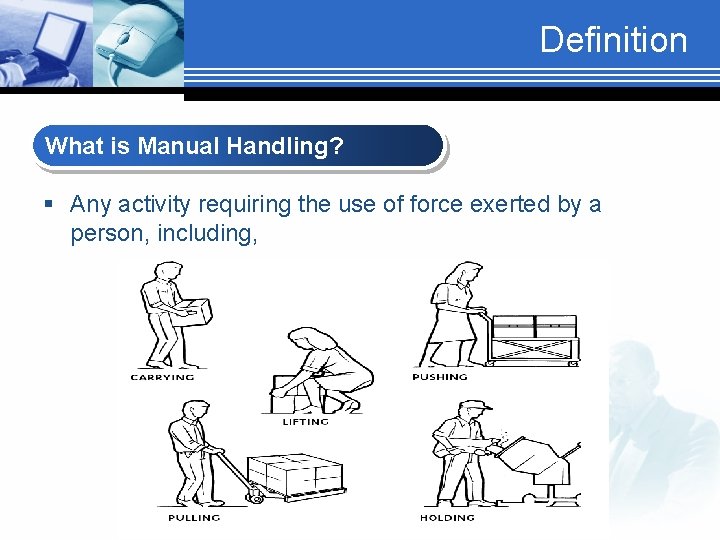
Definition What is Manual Handling? § Any activity requiring the use of force exerted by a person, including,
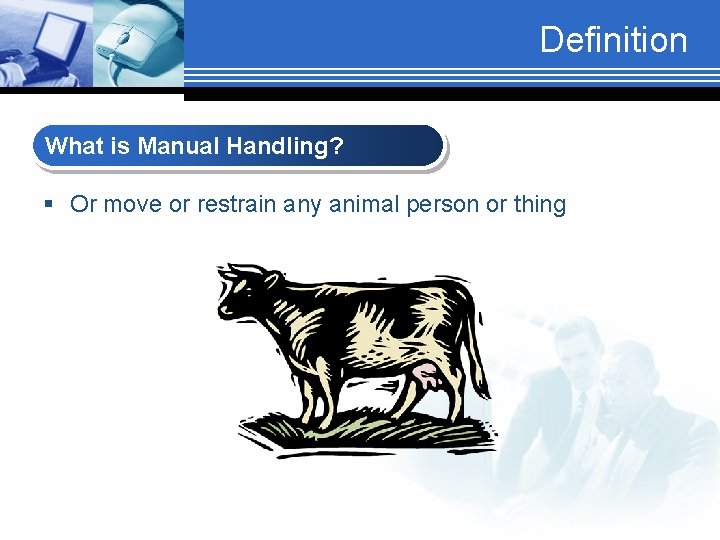
Definition What is Manual Handling? § Or move or restrain any animal person or thing
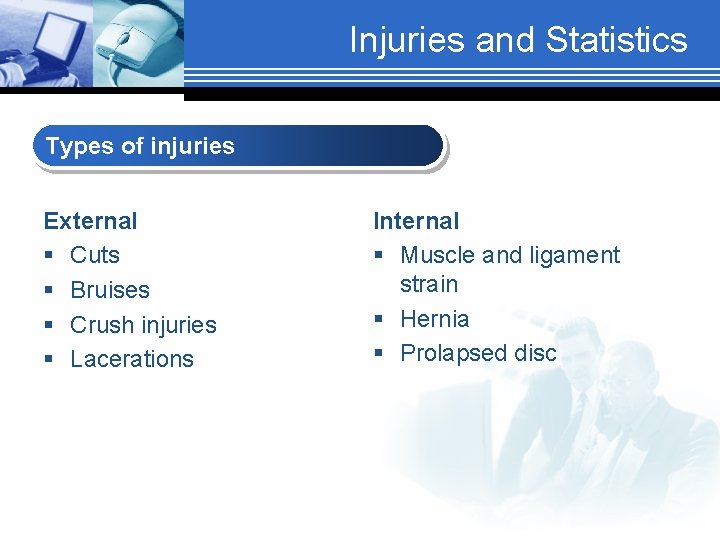
Injuries and Statistics Types of injuries External § Cuts § Bruises § Crush injuries § Lacerations Internal § Muscle and ligament strain § Hernia § Prolapsed disc
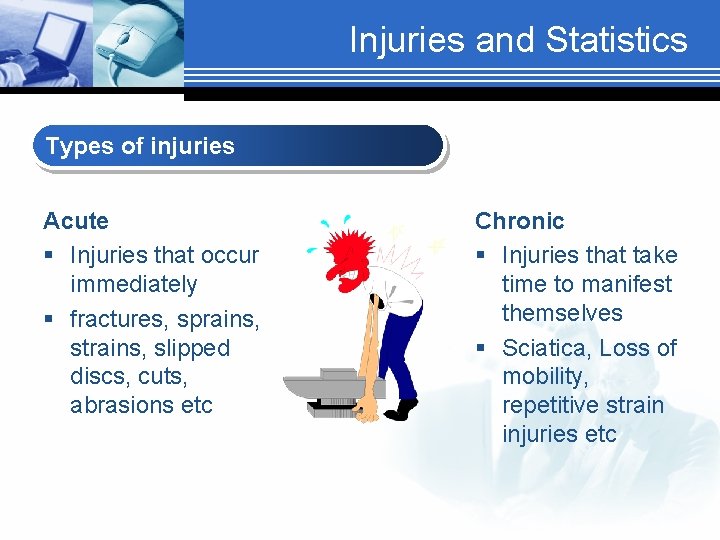
Injuries and Statistics Types of injuries Acute § Injuries that occur immediately § fractures, sprains, strains, slipped discs, cuts, abrasions etc Chronic § Injuries that take time to manifest themselves § Sciatica, Loss of mobility, repetitive strain injuries etc
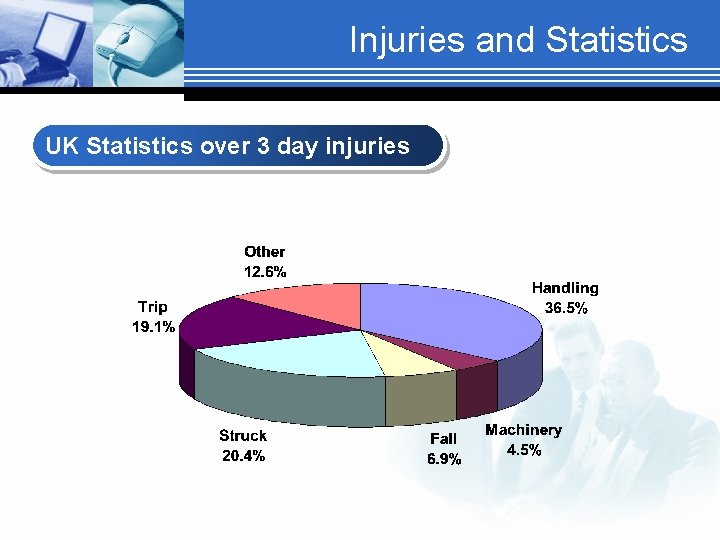
Injuries and Statistics UK Statistics over 3 day injuries
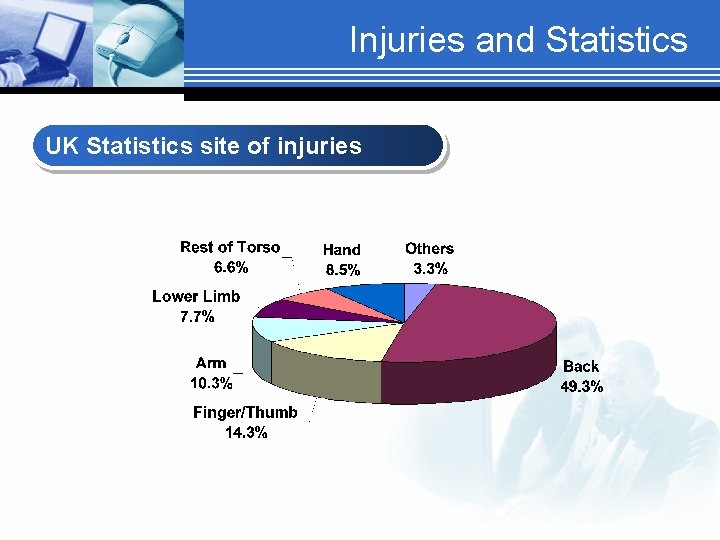
Injuries and Statistics UK Statistics site of injuries
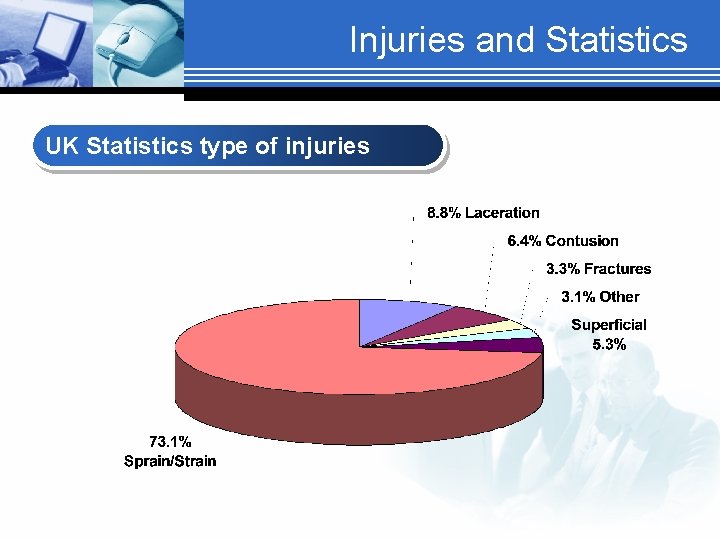
Injuries and Statistics UK Statistics type of injuries
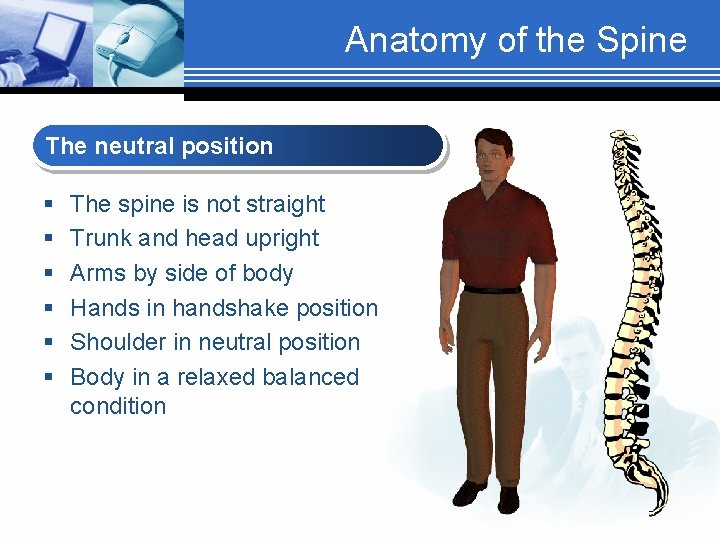
Anatomy of the Spine The neutral position § § § The spine is not straight Trunk and head upright Arms by side of body Hands in handshake position Shoulder in neutral position Body in a relaxed balanced condition
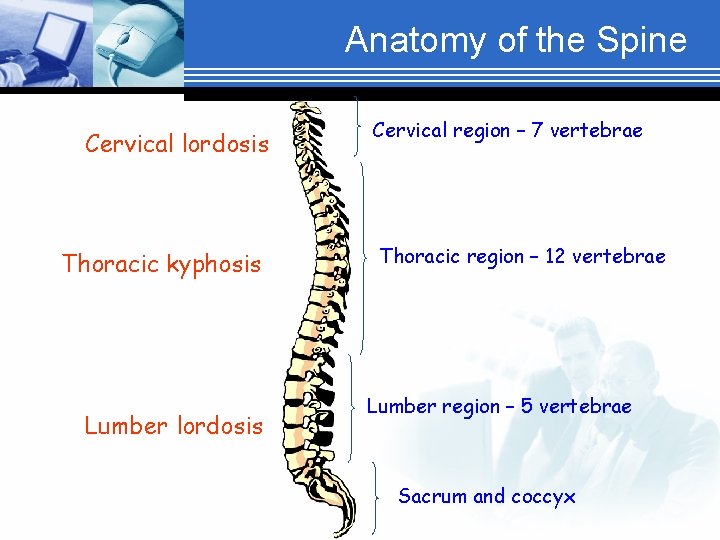
Anatomy of the Spine Cervical lordosis Thoracic kyphosis Lumber lordosis Cervical region – 7 vertebrae Thoracic region – 12 vertebrae Lumber region – 5 vertebrae Sacrum and coccyx
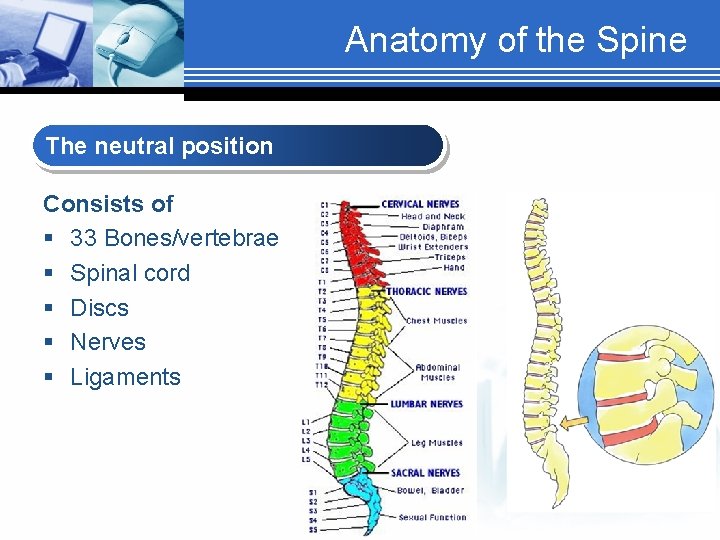
Anatomy of the Spine The neutral position Consists of § 33 Bones/vertebrae § Spinal cord § Discs § Nerves § Ligaments
Risk Assessment Hazard and Risk Hazard § Something with the potential to cause harm § Can be physical, chemical, biological, ergonomic or psychological Risk § The likelihood that harm will occur and the severity of the harm
Risk Assessment Will cover following headings § § Task Individual Load Environment
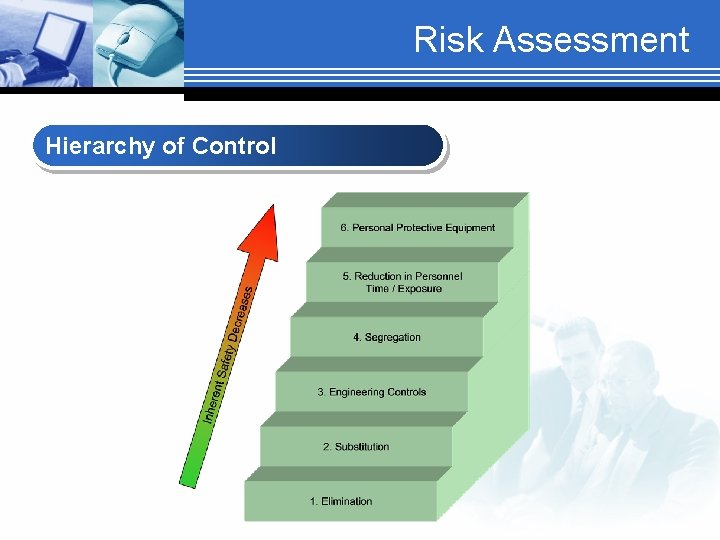
Risk Assessment Hierarchy of Control
Risk Assessment Group exercise
Safe Handling Techniques Hazard and Risk Hazard § Something with the potential to cause harm § Can be physical, chemical, biological, ergonomic or psychological Risk § The likelihood that harm will occur and the severity of the harm
Safe Handling Techniques Group exercise
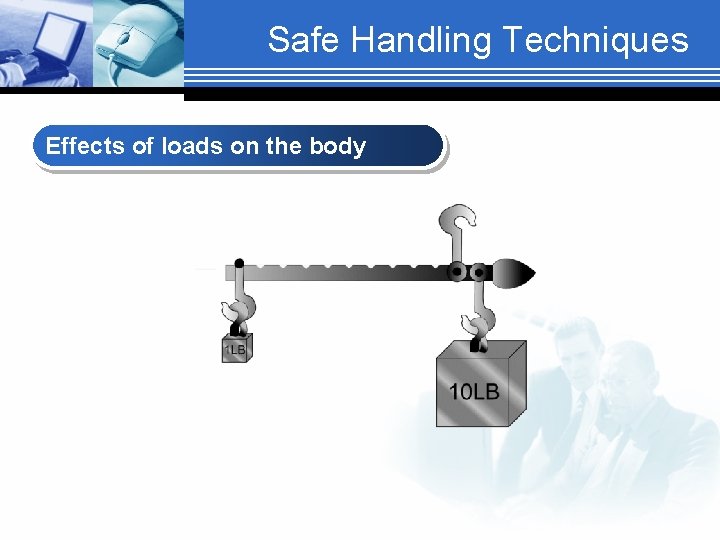
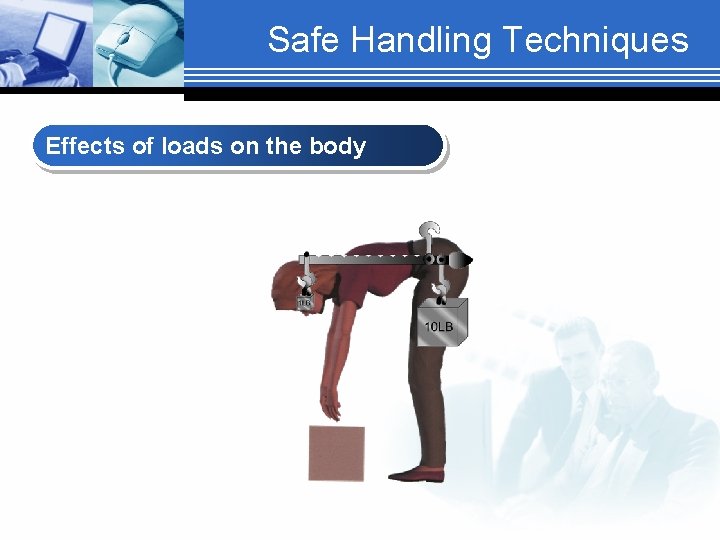
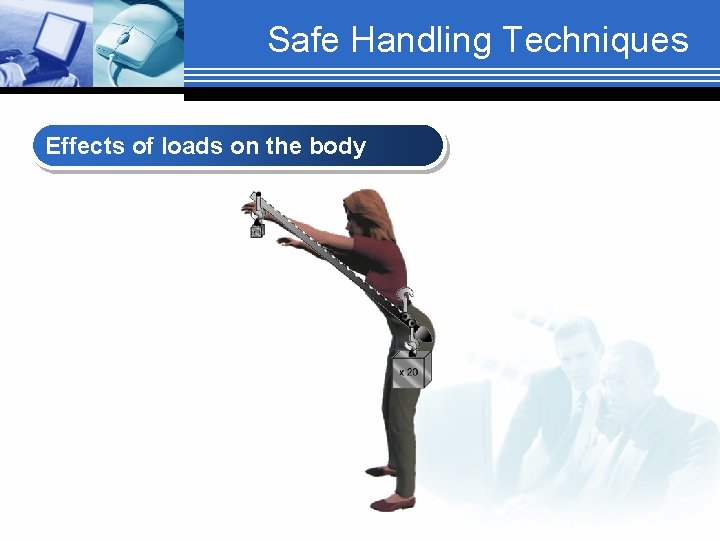
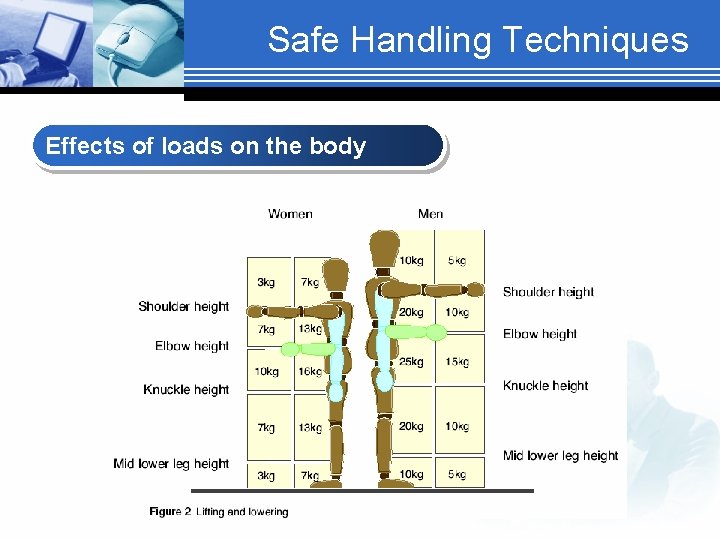
Safe Handling Techniques Effects of loads on the body
Safe Handling Techniques Effects of loads on the body
Safe Handling Techniques Effects of loads on the body
Safe Handling Techniques Effects of loads on the body
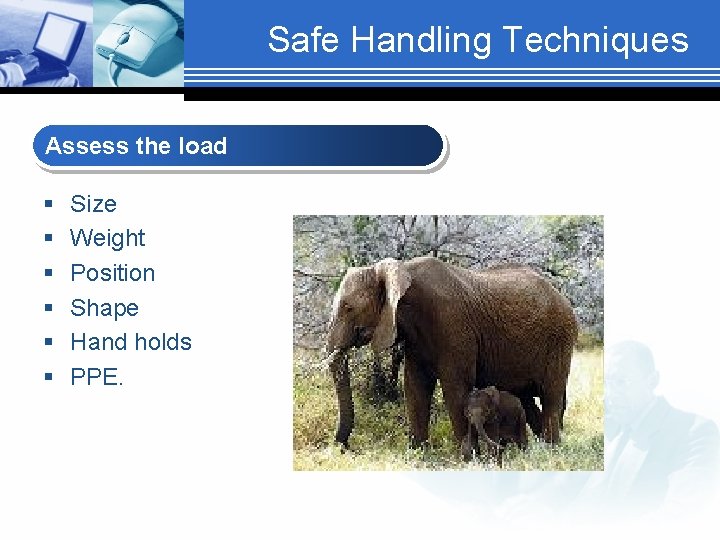
Safe Handling Techniques Assess the load § § § Size Weight Position Shape Hand holds PPE.
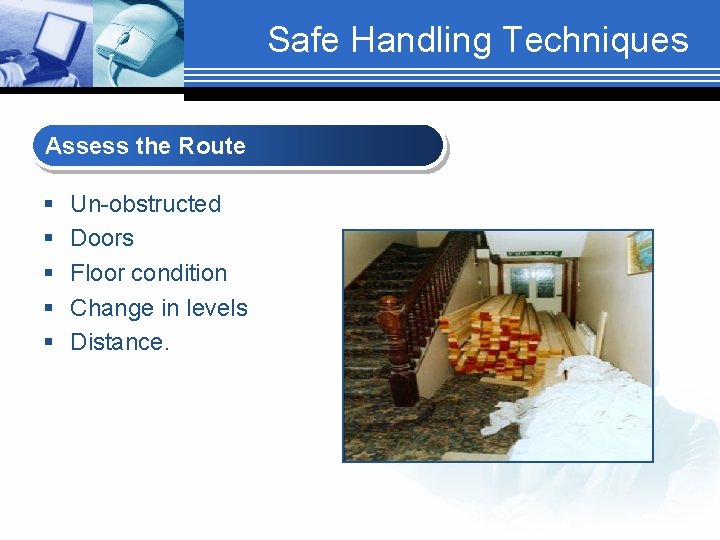
Safe Handling Techniques Assess the Route § § § Un-obstructed Doors Floor condition Change in levels Distance.
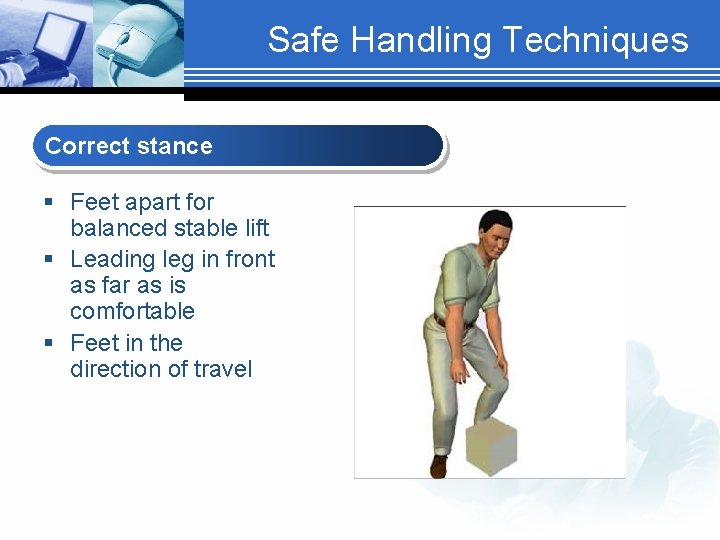
Safe Handling Techniques Correct stance § Feet apart for balanced stable lift § Leading leg in front as far as is comfortable § Feet in the direction of travel
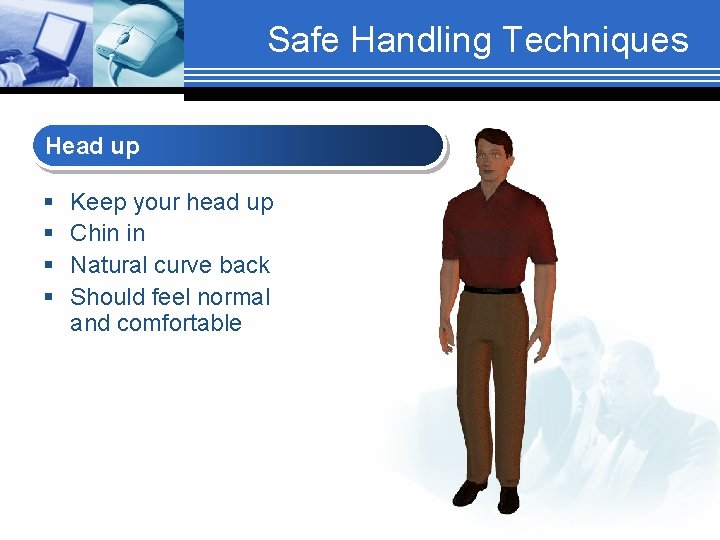
Safe Handling Techniques Head up § § Keep your head up Chin in Natural curve back Should feel normal and comfortable
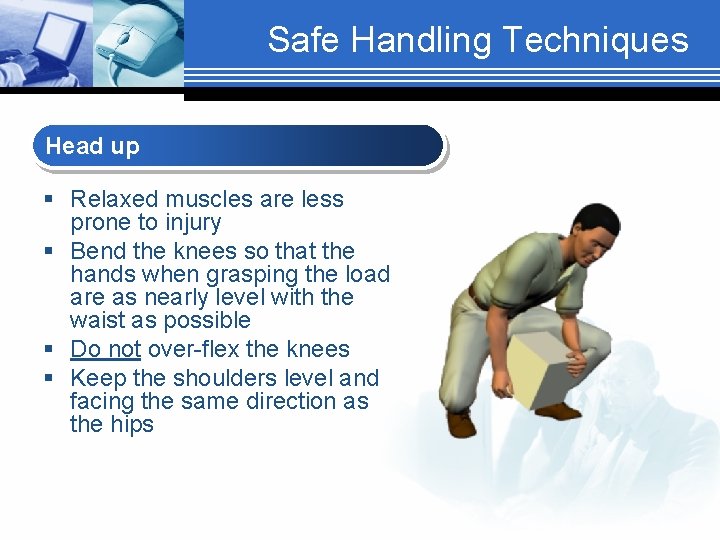
Safe Handling Techniques Head up § Relaxed muscles are less prone to injury § Bend the knees so that the hands when grasping the load are as nearly level with the waist as possible § Do not over-flex the knees § Keep the shoulders level and facing the same direction as the hips
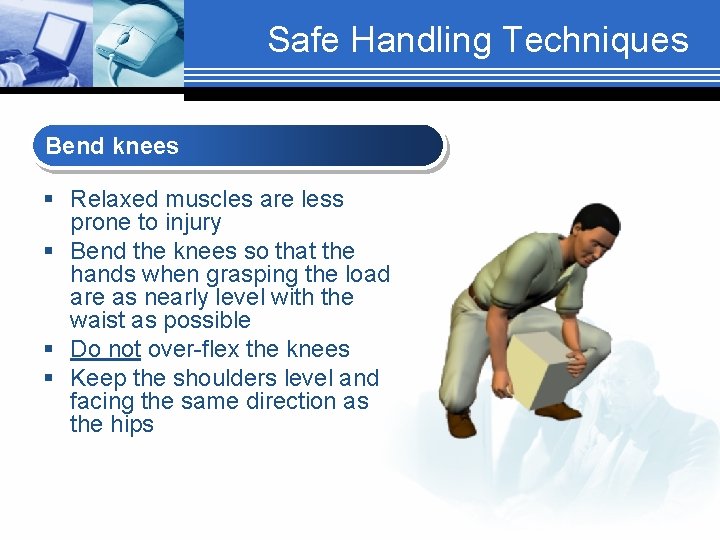
Safe Handling Techniques Bend knees § Relaxed muscles are less prone to injury § Bend the knees so that the hands when grasping the load are as nearly level with the waist as possible § Do not over-flex the knees § Keep the shoulders level and facing the same direction as the hips
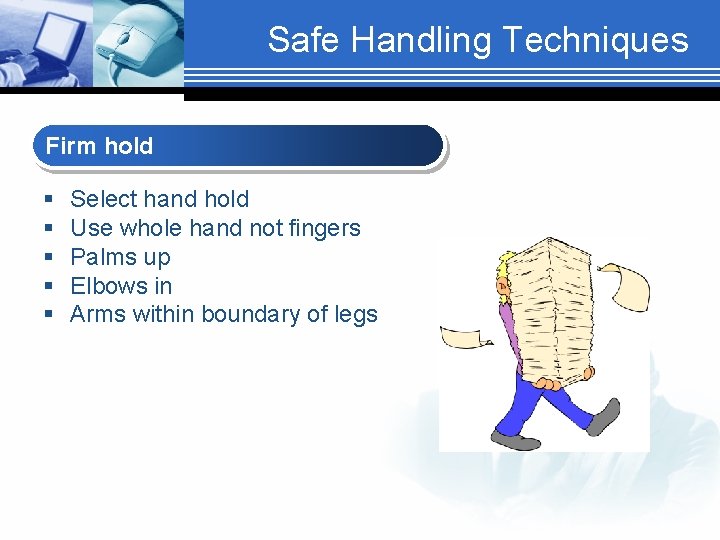
Safe Handling Techniques Firm hold § § § Select hand hold Use whole hand not fingers Palms up Elbows in Arms within boundary of legs
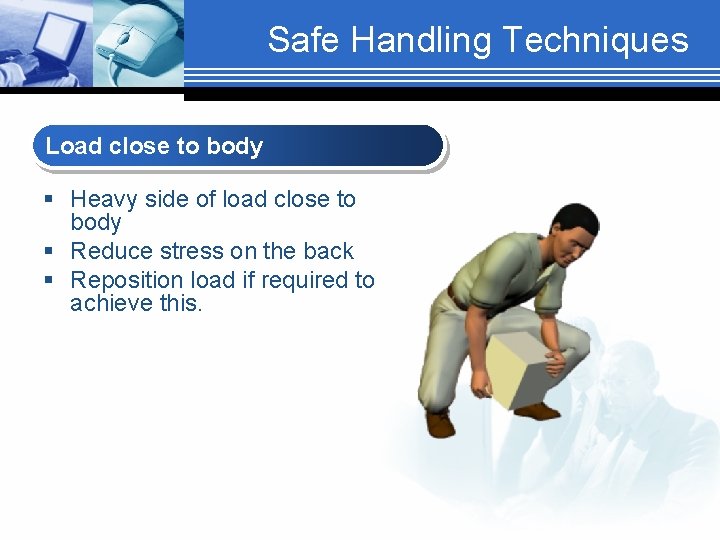
Safe Handling Techniques Load close to body § Heavy side of load close to body § Reduce stress on the back § Reposition load if required to achieve this.
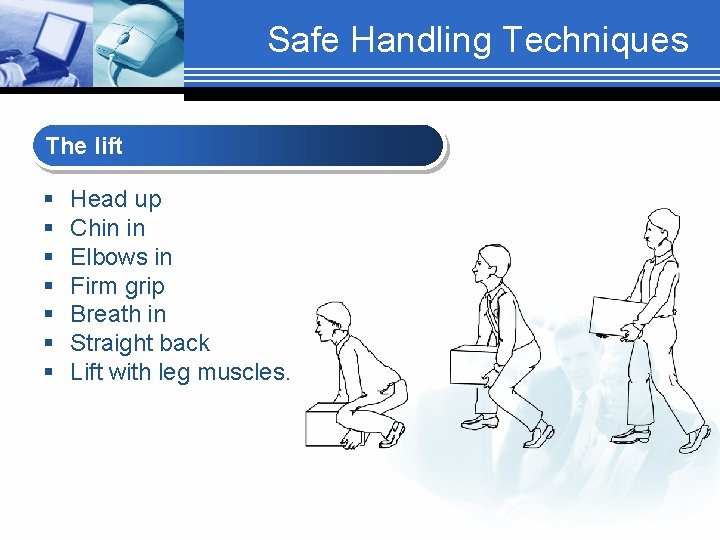
Safe Handling Techniques The lift § § § § Head up Chin in Elbows in Firm grip Breath in Straight back Lift with leg muscles.
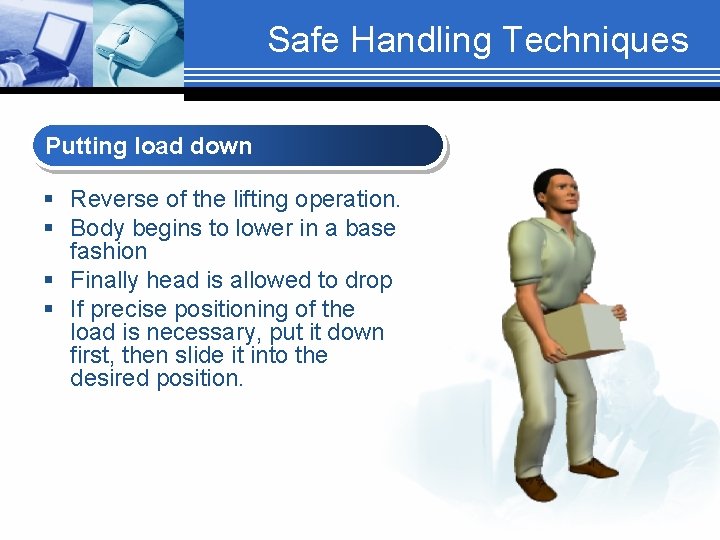
Safe Handling Techniques Putting load down § Reverse of the lifting operation. § Body begins to lower in a base fashion § Finally head is allowed to drop § If precise positioning of the load is necessary, put it down first, then slide it into the desired position.
Safe Handling Techniques Group exercise
Safe Handling Techniques Group exercise
Safe Handling Techniques Group exercise
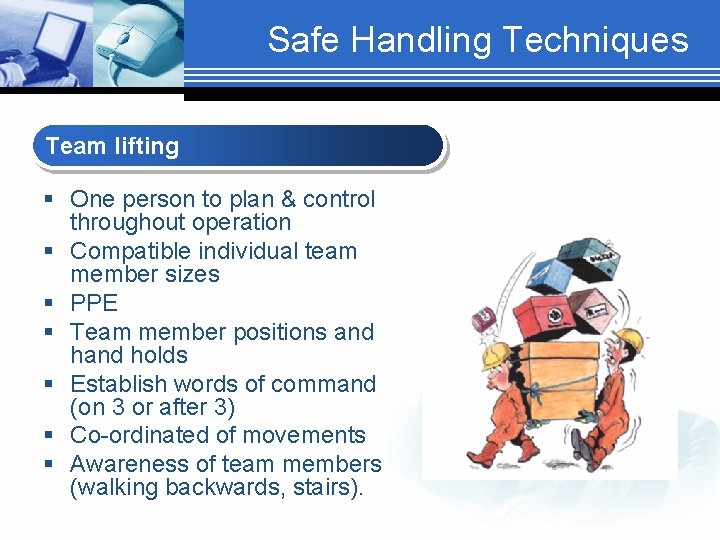
Safe Handling Techniques Team lifting § One person to plan & control throughout operation § Compatible individual team member sizes § PPE § Team member positions and holds § Establish words of command (on 3 or after 3) § Co-ordinated of movements § Awareness of team members (walking backwards, stairs).
Safe Handling Techniques Group exercise
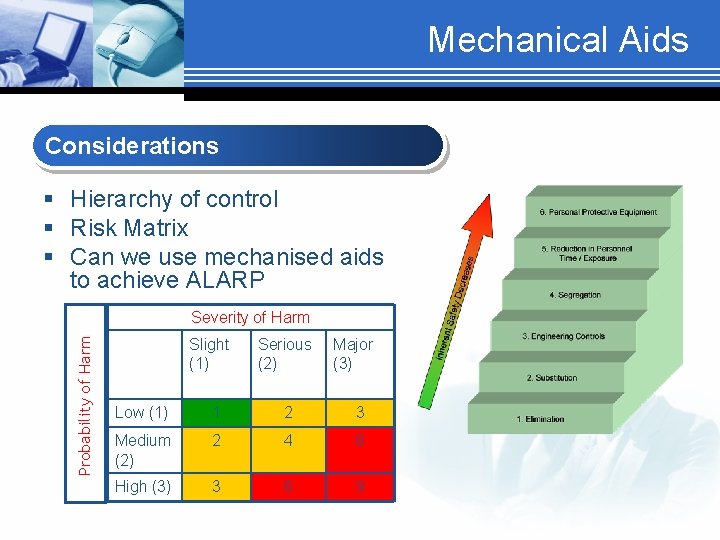
Mechanical Aids Considerations § Hierarchy of control § Risk Matrix § Can we use mechanised aids to achieve ALARP Probability of Harm Severity of Harm Slight (1) Serious (2) Major (3) Low (1) 1 2 3 Medium (2) 2 4 6 High (3) 3 6 9
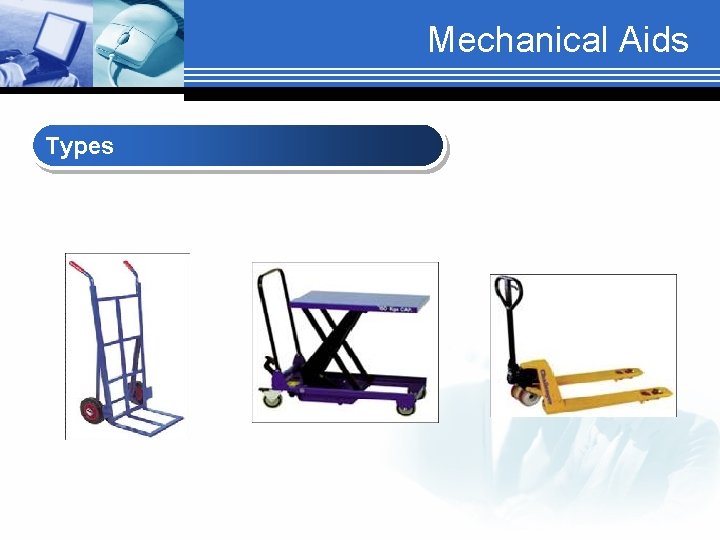
Mechanical Aids Types
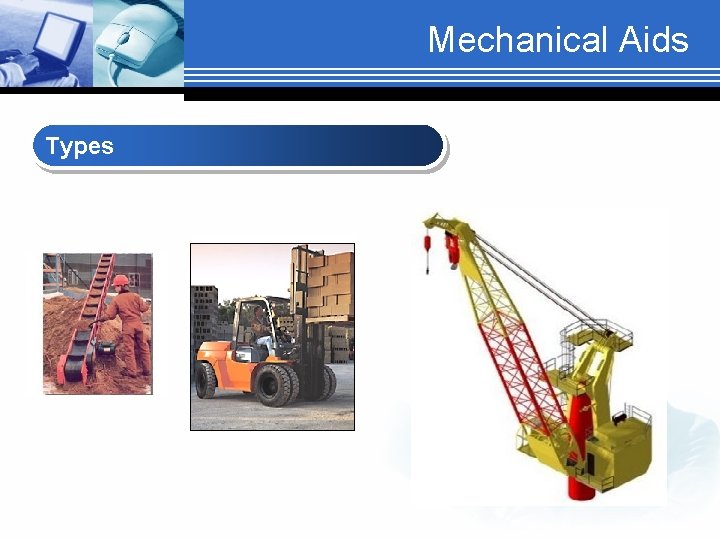
Mechanical Aids Types
Manual Handling Any Questions?