
Manual Arc Gas Shielded MAGS Welding 1 Gas
- Slides: 14
Manual Arc Gas Shielded (MAGS) Welding 1
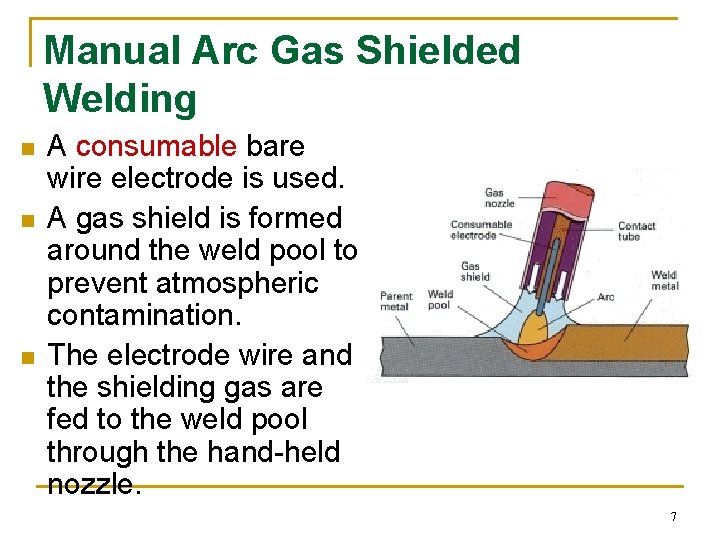
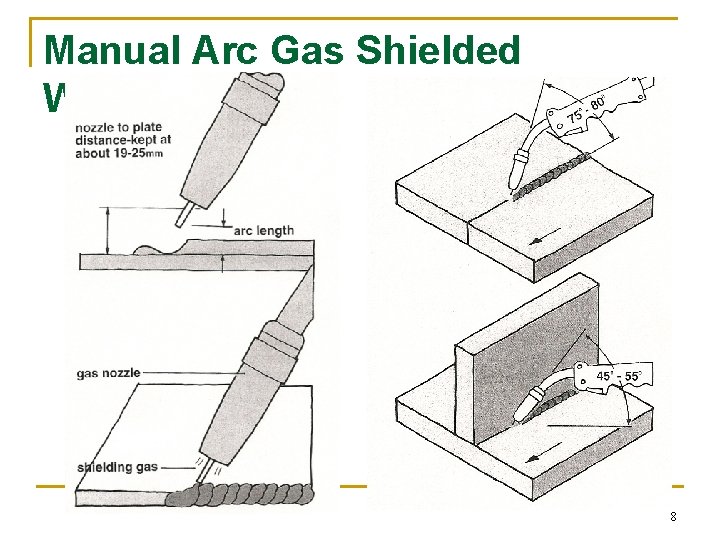
Gas Shielded Welding Terms n n n Arc Length – Distance between the tip of the electrode and the surface of the weld pool Parent Metal – The metal from which the components of the joint are made. Bead – A single run of weld metal deposited onto the surface of the parent metal. Burn-off Rate – The rate at which the wire is melted (m/min) Deposited Metal – filler material which is added either from the electrode or filler rode/wire. 2
Gas Shielded Welding Terms n n n Electrode – The flux coated rod MMA welding, the tungsten in TIG and the consumable wire in MAGS. Nozzle – A metal or ceramic tube which confines the shielding gas to the weld area. Preheat Temperature – The temperature of the parent metal just before welding is started. Root Run – The first run deposited in a joint where further runs are needed. Sealing Run – A run of weld metal deposited on the reverse side of a butt joint, along the line of the root. 3
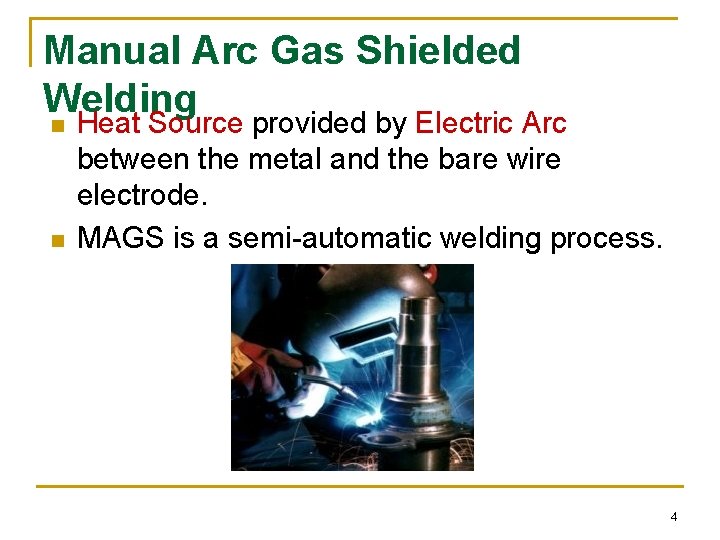
Manual Arc Gas Shielded Welding n n Heat Source provided by Electric Arc between the metal and the bare wire electrode. MAGS is a semi-automatic welding process. 4
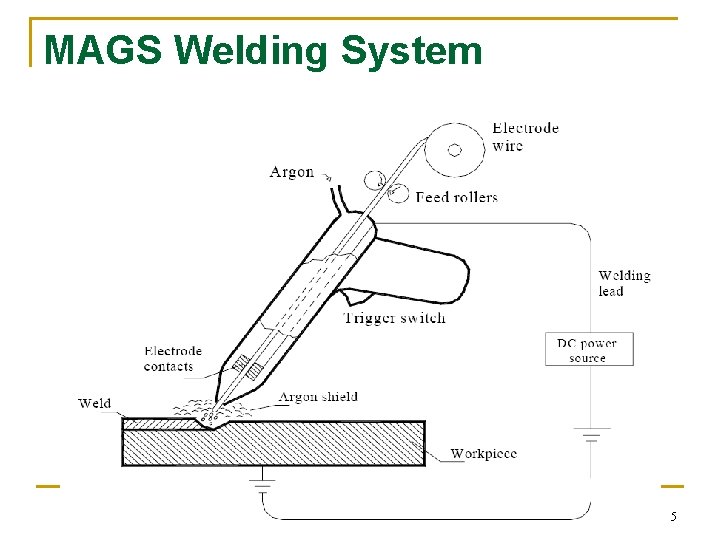
MAGS Welding System 5
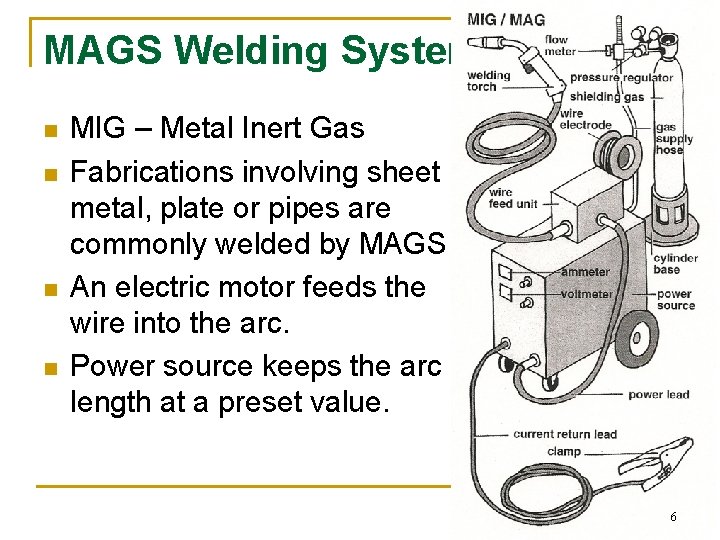
MAGS Welding System n n MIG – Metal Inert Gas Fabrications involving sheet metal, plate or pipes are commonly welded by MAGS An electric motor feeds the wire into the arc. Power source keeps the arc length at a preset value. 6
Manual Arc Gas Shielded Welding n n n A consumable bare wire electrode is used. A gas shield is formed around the weld pool to prevent atmospheric contamination. The electrode wire and the shielding gas are fed to the weld pool through the hand-held nozzle. 7
Manual Arc Gas Shielded Welding 8
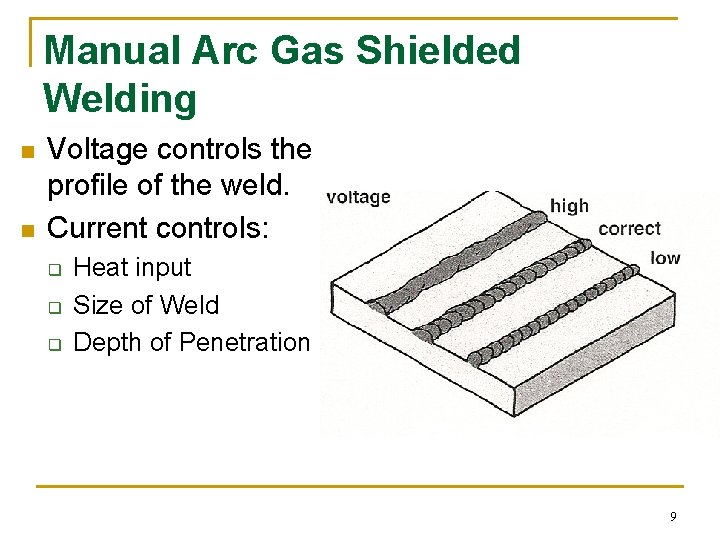
Manual Arc Gas Shielded Welding n n Voltage controls the profile of the weld. Current controls: q q q Heat input Size of Weld Depth of Penetration 9
Power Source n n n A power source with DC output and the electrode wire connected to the positive pole supplies current via the contact tip in the torch. Voltage and Wire feed speed are controlled at the power source to suit welding conditions. E. g. Wire diameter or Metal Thickness The operator is then left to control the arc length and the speed of travel. 10
Protective Gas Shield n n The end of the molten electrode, the weld pool and the molten parent metal must be protected from atmospheric contamination. As mentioned earlier this is achieved by a Gas shield. Supplied in cylinders or bulk supply piped to the power source. Argon, Carbon Dioxide and Oxygen are common shielding gases. 11
Selection of Protective Gas n Choice of gas depends on: q q n The compatibility with the metal being welded. Physical properties of the material. The welding process and mode of operation. Joint type and thickness Gases can be used to improve heat conductivity and reduce preheat requirements and improve penetration on thicker section. E. g. Helium on Aluminium or Copper 12
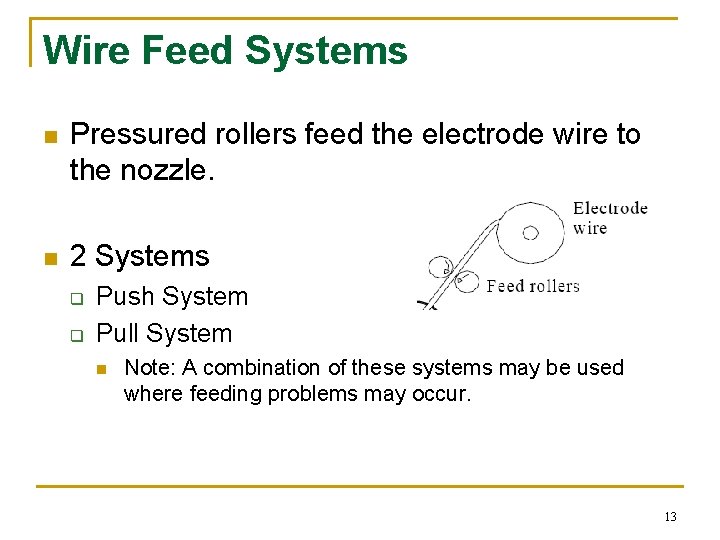
Wire Feed Systems n Pressured rollers feed the electrode wire to the nozzle. n 2 Systems q q Push System Pull System n Note: A combination of these systems may be used where feeding problems may occur. 13
Main Features of the Process n Low heat input compared to MMA n Continuous Operation. n High Operating efficiency n High Productivity n High deposition rate particularly spray transfer n No Heavy Slag, little cleaning required. 14