
Mantova September 2015 SAP ECC 6 0 DEVELOPMENT
Mantova, September 2015 SAP ECC 6. 0 DEVELOPMENT ABAP SAP develop enviroment & Transport organizer
SAP System • • • 3 Tier Architecture Dialog Work Process Architecture What’s ABAP? Creating program in the abap editor Program Attribute ABAP Editor ABAP Syntax Implementing a simple program SAP Transport Management
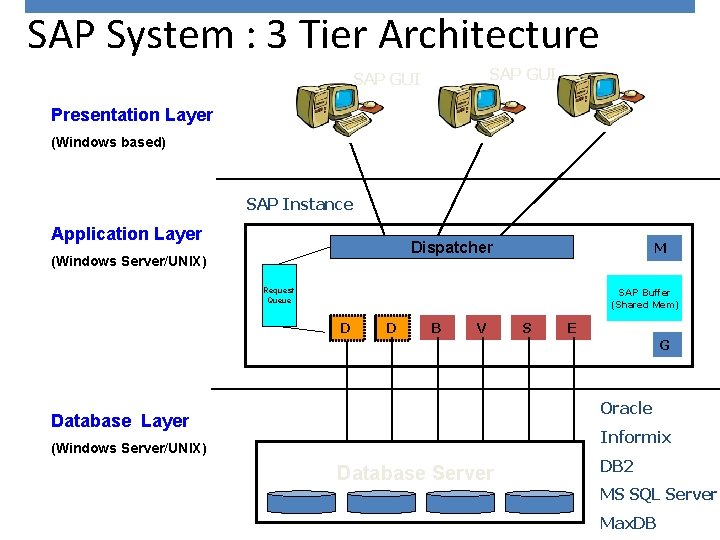
SAP System : 3 Tier Architecture SAP GUI Presentation Layer (Windows based) SAP Instance Application Layer Dispatcher (Windows Server/UNIX) M Request Queue SAP Buffer (Shared Mem) D D B V S E G Oracle Database Layer Informix (Windows Server/UNIX) Database Server DB 2 MS SQL Server Max. DB
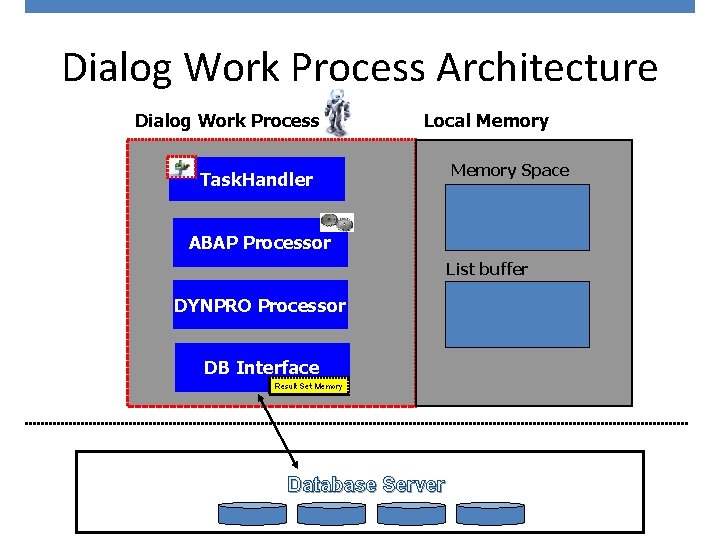
Dialog Work Process Architecture Dialog Work Process Local Memory Task. Handler Memory Space ABAP Processor List buffer DYNPRO Processor DB Interface Result Set Memory Database Server
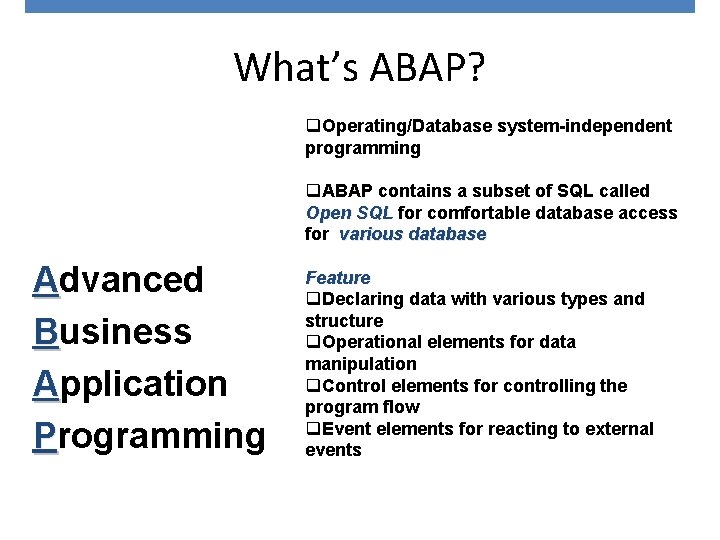
What’s ABAP? q. Operating/Database system-independent programming q. ABAP contains a subset of SQL called Open SQL for comfortable database access for various database Advanced Business Application Programming Feature q. Declaring data with various types and structure q. Operational elements for data manipulation q. Control elements for controlling the program flow q. Event elements for reacting to external events
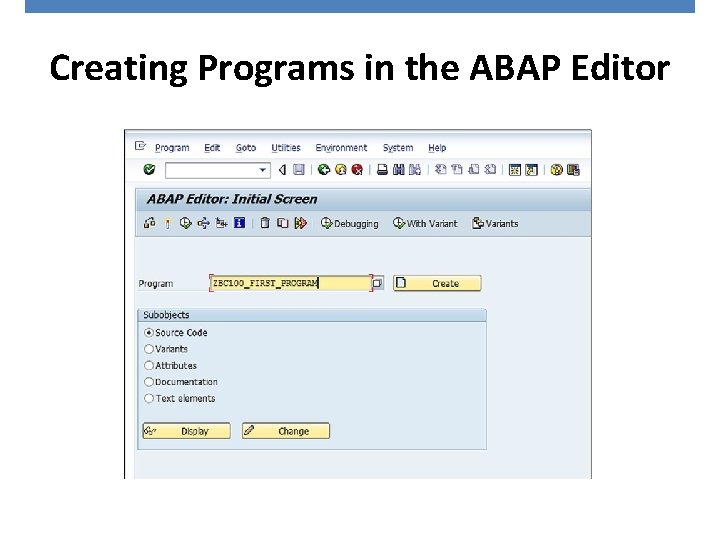
Creating Programs in the ABAP Editor
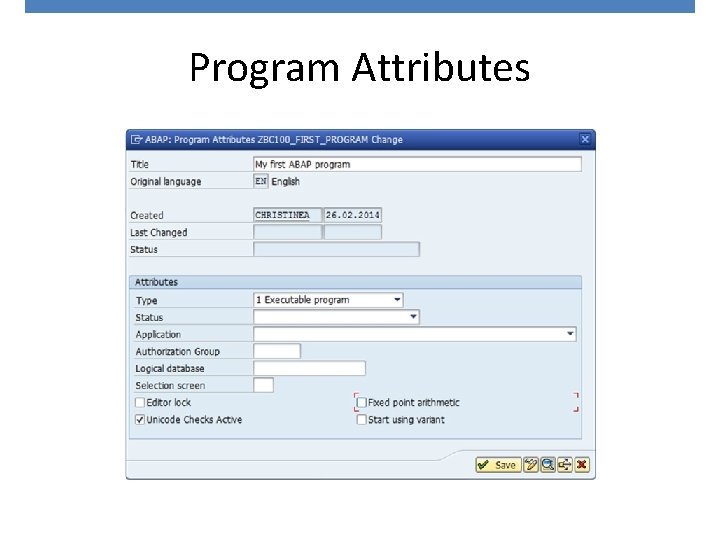
Program Attributes
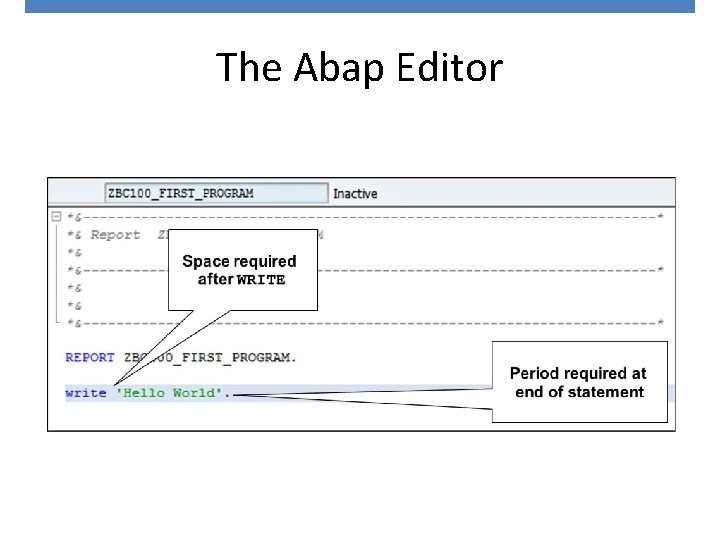
The Abap Editor
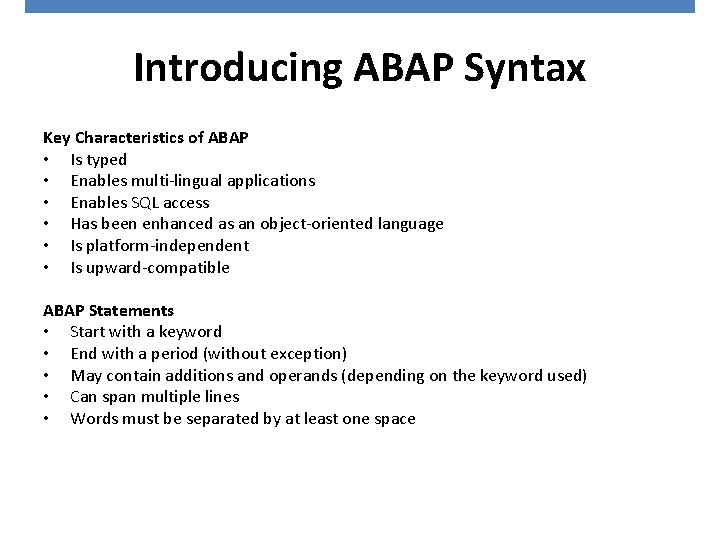
Introducing ABAP Syntax Key Characteristics of ABAP • Is typed • Enables multi-lingual applications • Enables SQL access • Has been enhanced as an object-oriented language • Is platform-independent • Is upward-compatible ABAP Statements • Start with a keyword • End with a period (without exception) • May contain additions and operands (depending on the keyword used) • Can span multiple lines • Words must be separated by at least one space
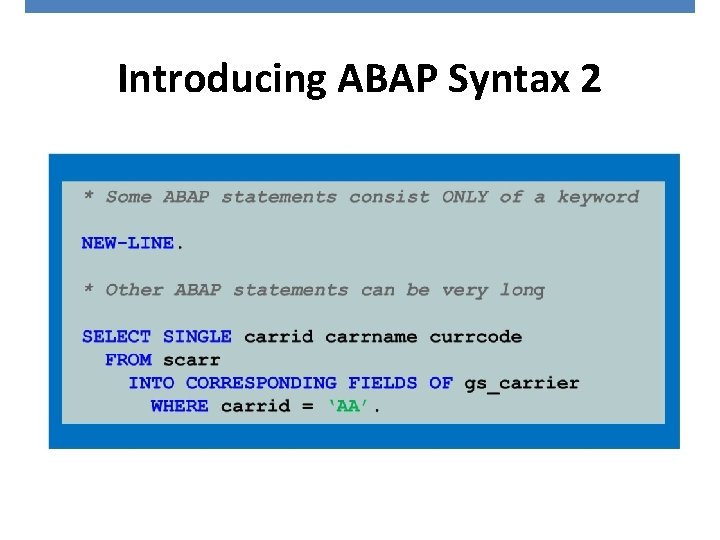
Introducing ABAP Syntax 2
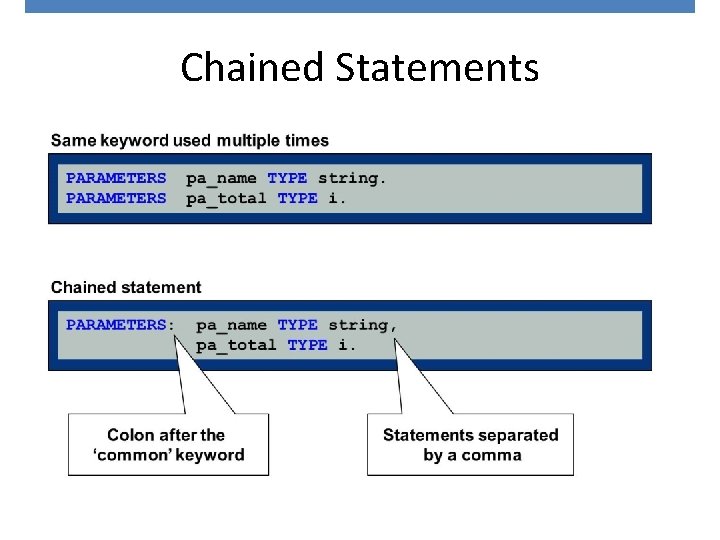
Chained Statements
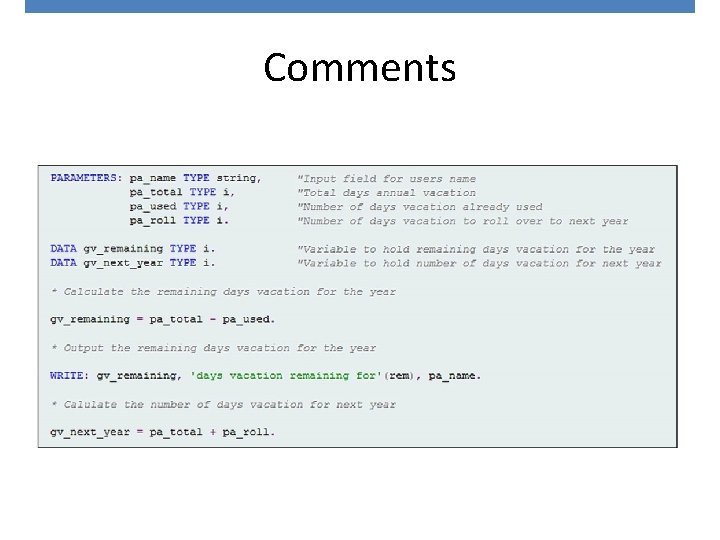
Comments
Implementing a simple program 13
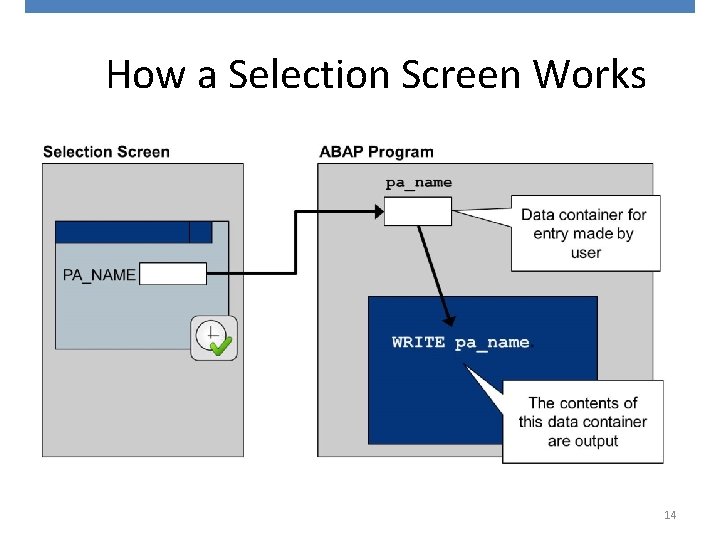
How a Selection Screen Works 14
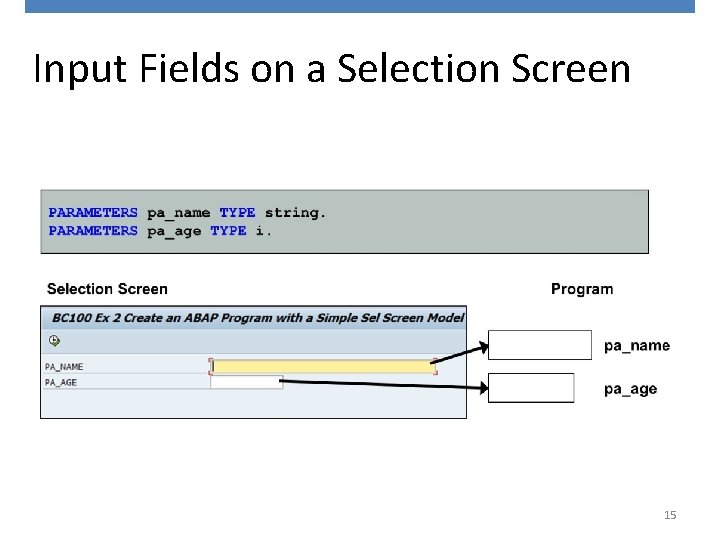
Input Fields on a Selection Screen 15
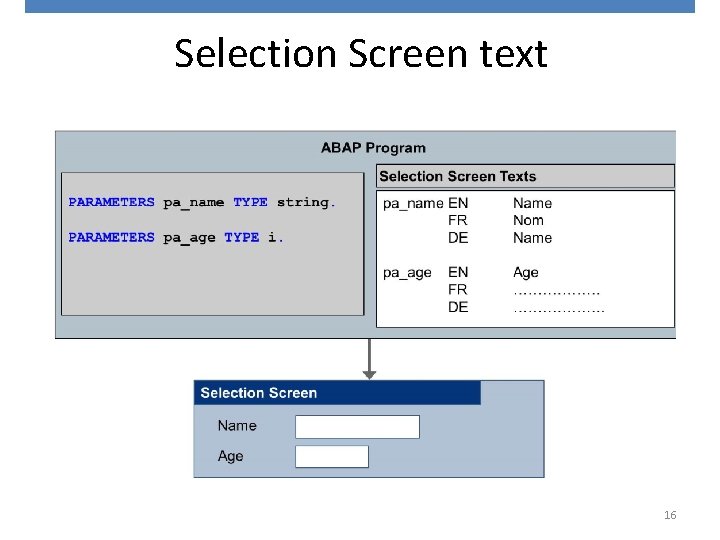
Selection Screen text 16
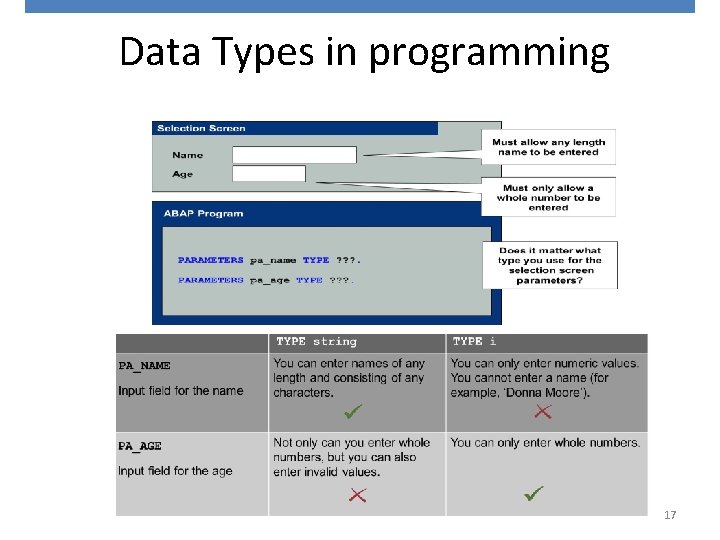
Data Types in programming 17

SAP Types 18
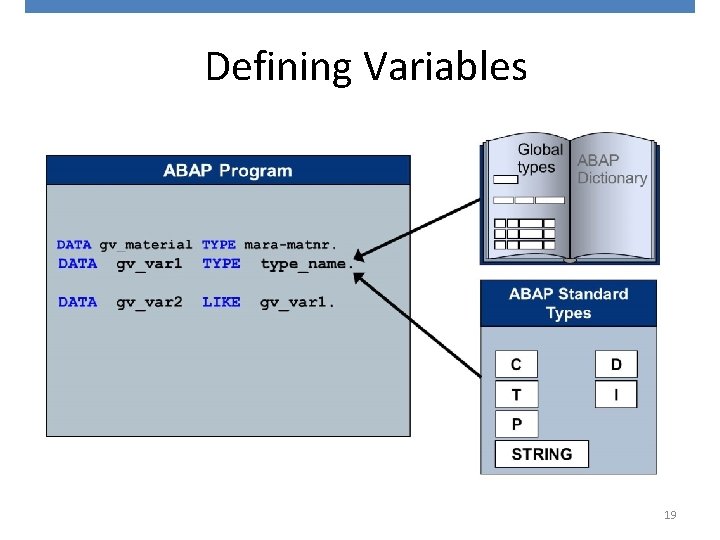
Defining Variables 19
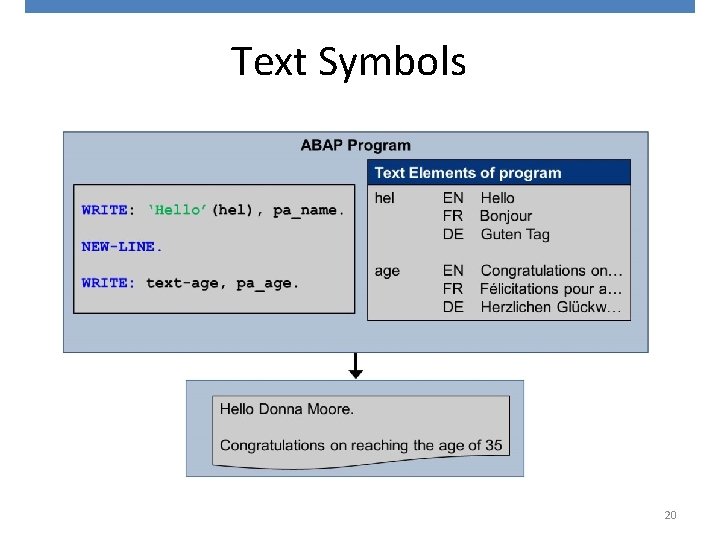
Text Symbols 20
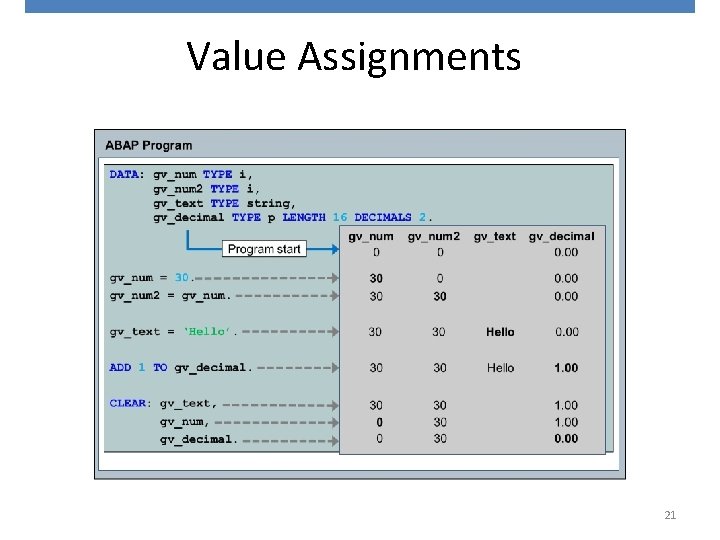
Value Assignments 21
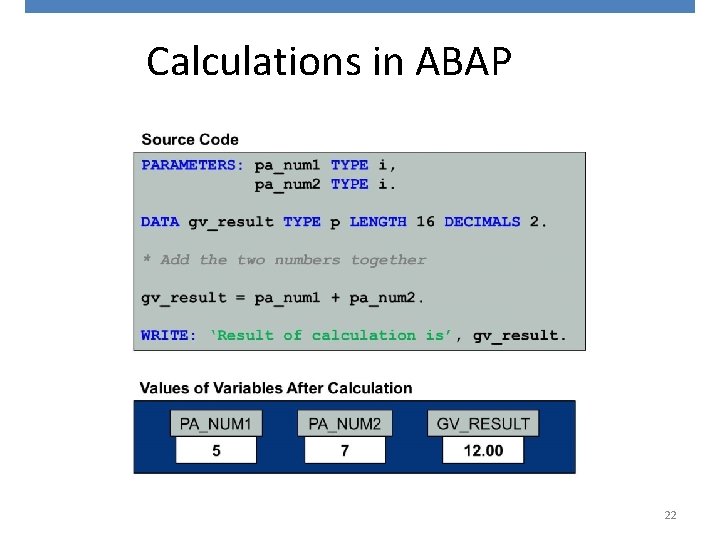
Calculations in ABAP 22
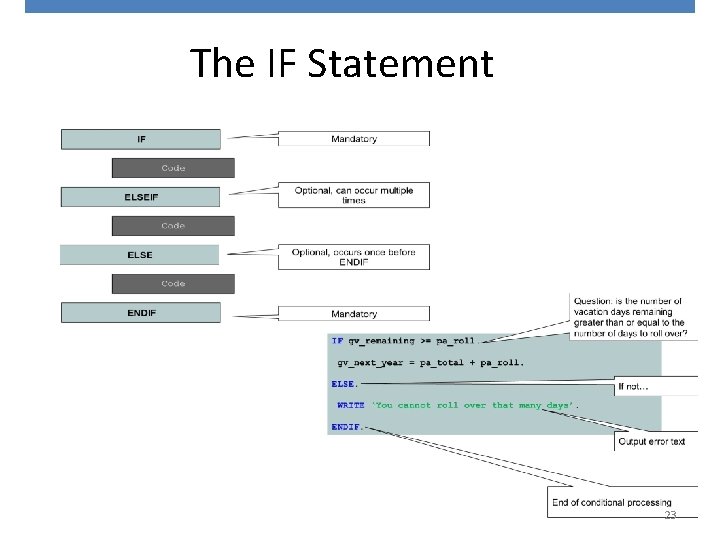
The IF Statement 23
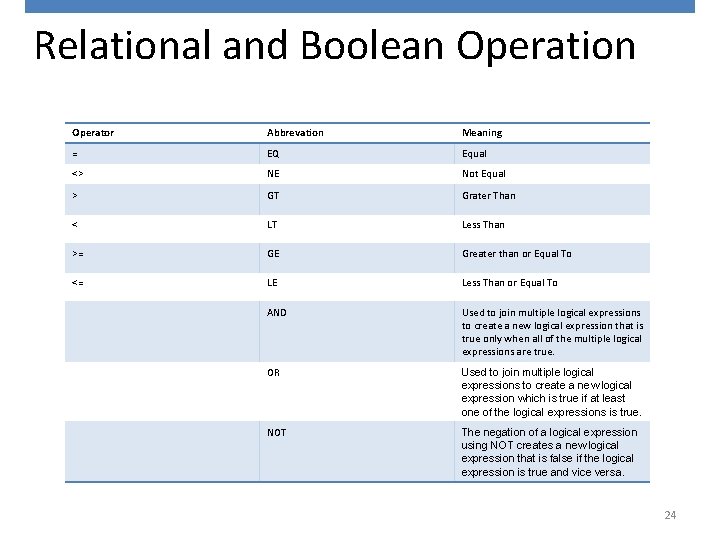
Relational and Boolean Operation Operator Abbrevation Meaning = EQ Equal <> NE Not Equal > GT Grater Than < LT Less Than >= GE Greater than or Equal To <= LE Less Than or Equal To AND Used to join multiple logical expressions to create a new logical expression that is true only when all of the multiple logical expressions are true. OR Used to join multiple logical expressions to create a new logical expression which is true if at least one of the logical expressions is true. NOT The negation of a logical expression using NOT creates a new logical expression that is false if the logical expression is true and vice versa. 24
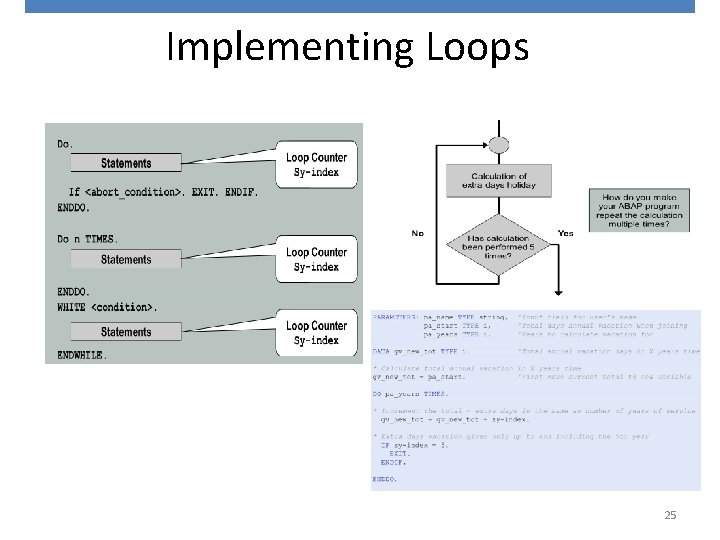
Implementing Loops 25
SAP Transport Management
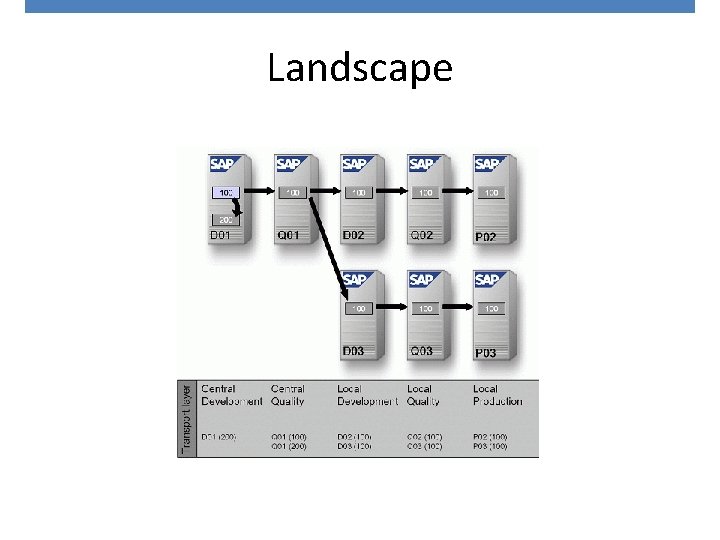
Landscape
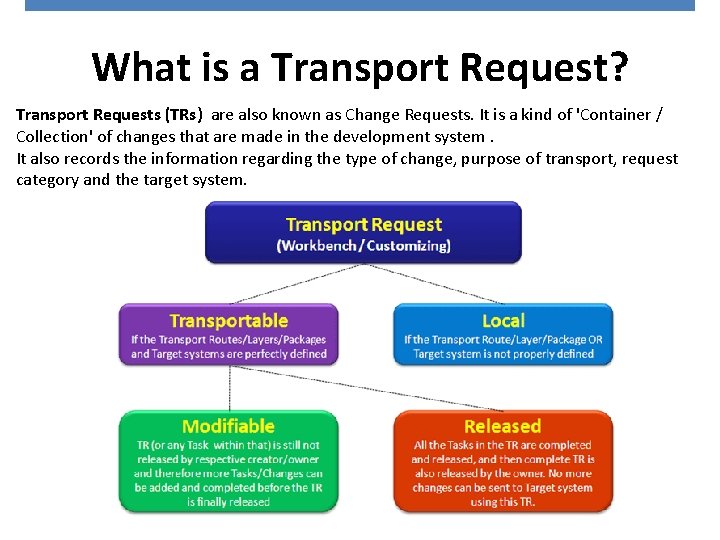
What is a Transport Request? Transport Requests (TRs) are also known as Change Requests. It is a kind of 'Container / Collection' of changes that are made in the development system. It also records the information regarding the type of change, purpose of transport, request category and the target system.
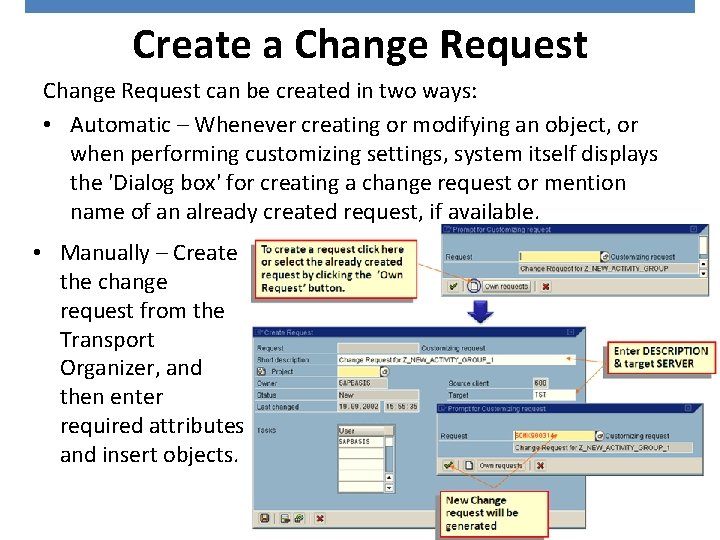
Create a Change Request can be created in two ways: • Automatic – Whenever creating or modifying an object, or when performing customizing settings, system itself displays the 'Dialog box' for creating a change request or mention name of an already created request, if available. • Manually – Create the change request from the Transport Organizer, and then enter required attributes and insert objects.
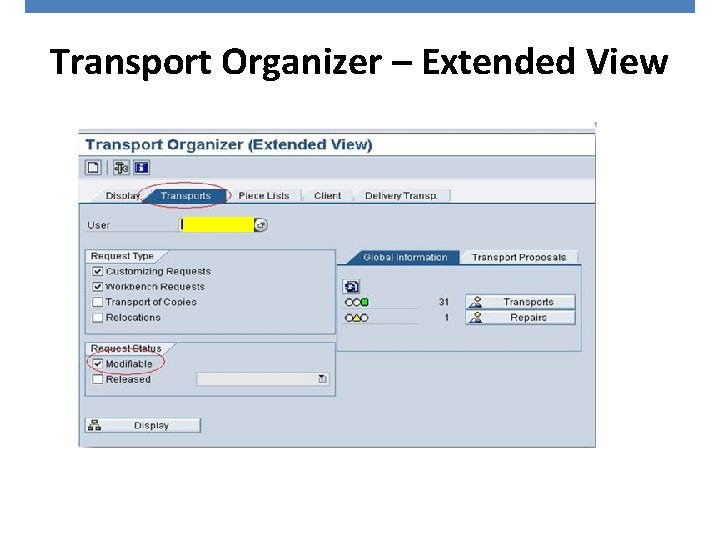
Transport Organizer – Extended View
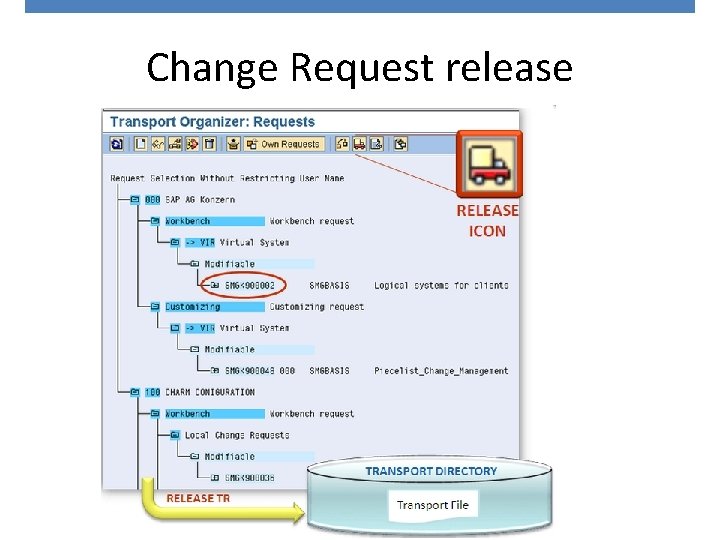
Change Request release
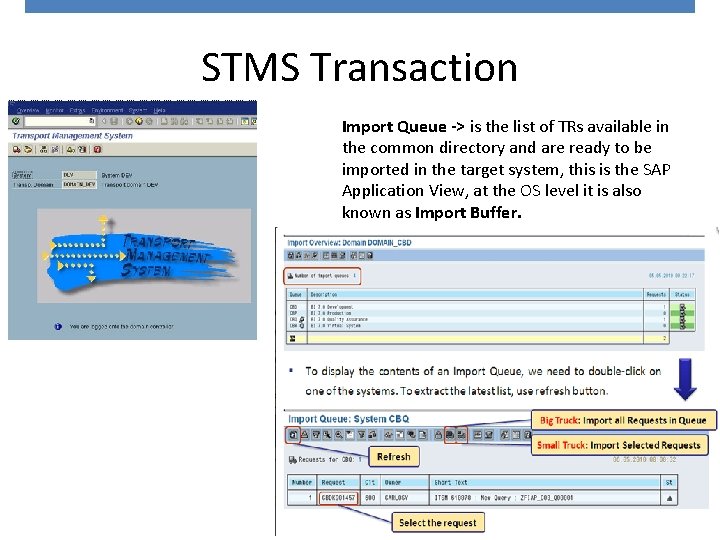
STMS Transaction Import Queue -> is the list of TRs available in the common directory and are ready to be imported in the target system, this is the SAP Application View, at the OS level it is also known as Import Buffer.
Questions & Answers 33
- Slides: 33