
Mantis shrimp Still the fastest claw in the




- Slides: 64
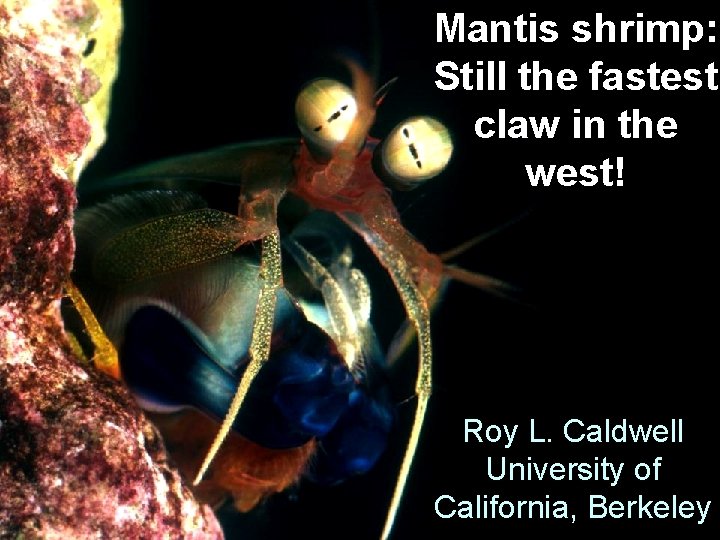
Mantis shrimp: Still the fastest claw in the west! Roy L. Caldwell University of California, Berkeley
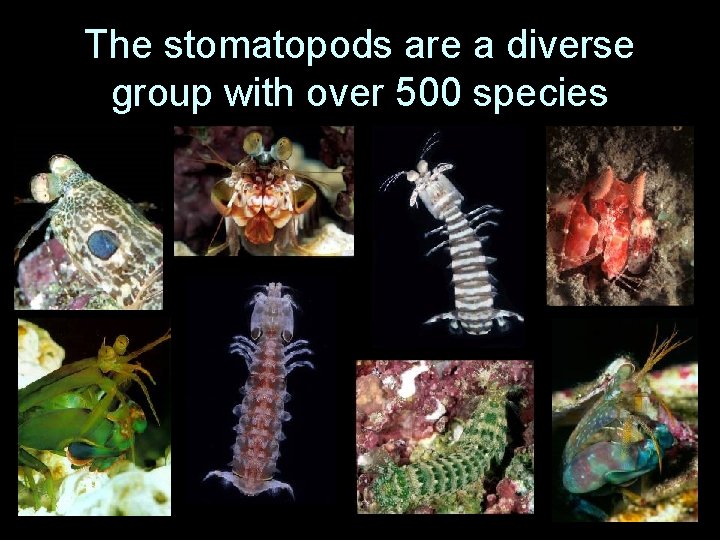
The stomatopods are a diverse group with over 500 species
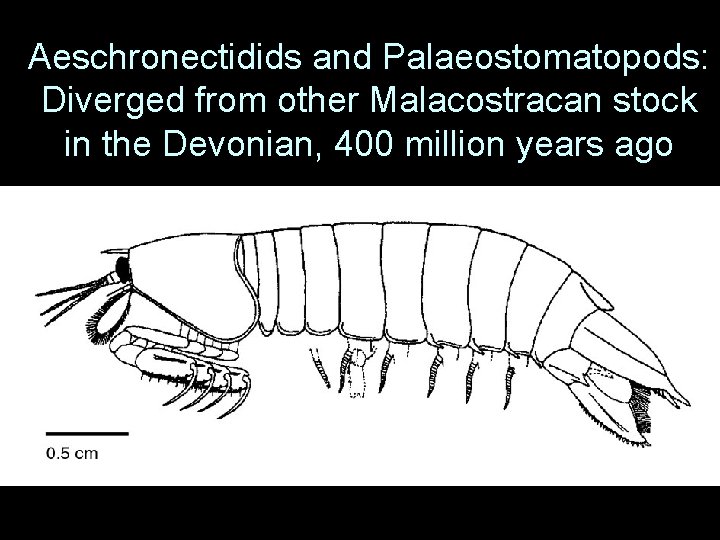
Aeschronectidids and Palaeostomatopods: Diverged from other Malacostracan stock in the Devonian, 400 million years ago
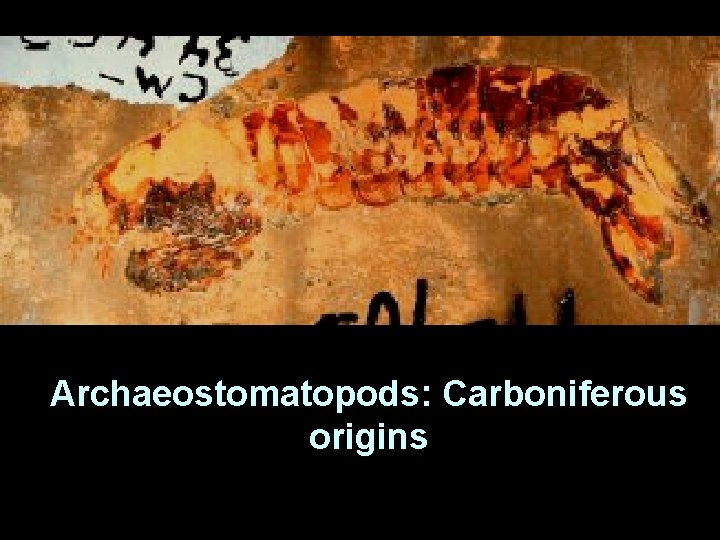
Archaeostomatopods: Carboniferous origins
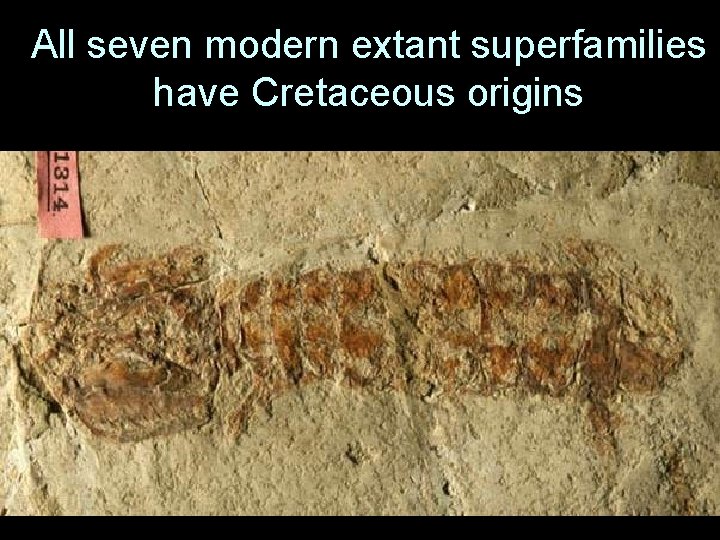
All seven modern extant superfamilies have Cretaceous origins
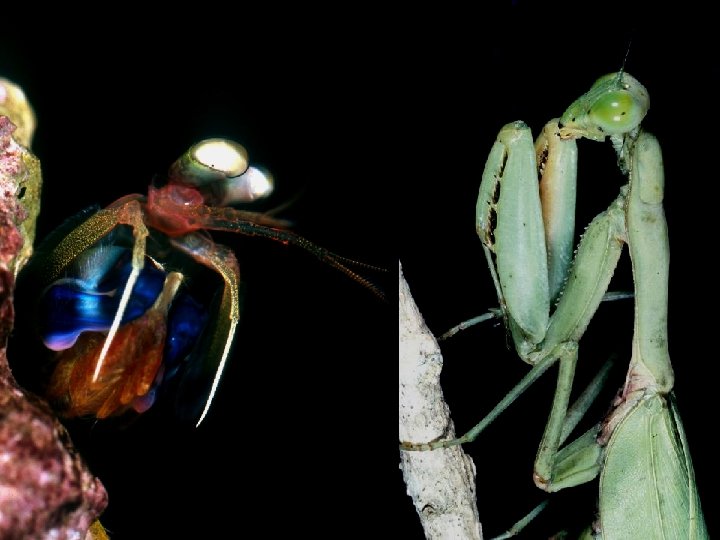
The key innovation in the evolution of modern stomatopods was the enlargement of the second thoracopods into lethal raptorial appendages 300 million years ago.
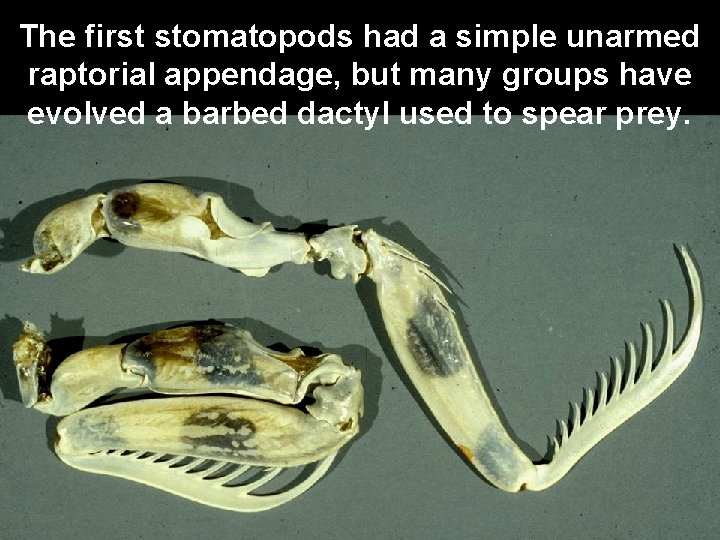
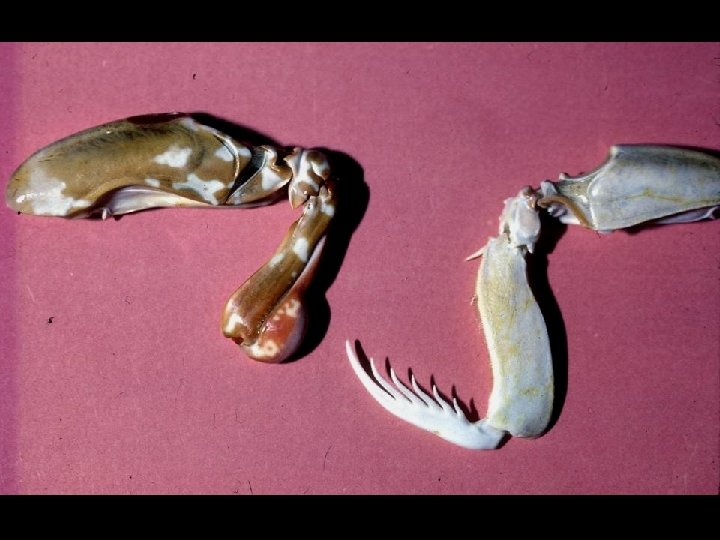
The first stomatopods had a simple unarmed raptorial appendage, but many groups have evolved a barbed dactyl used to spear prey.
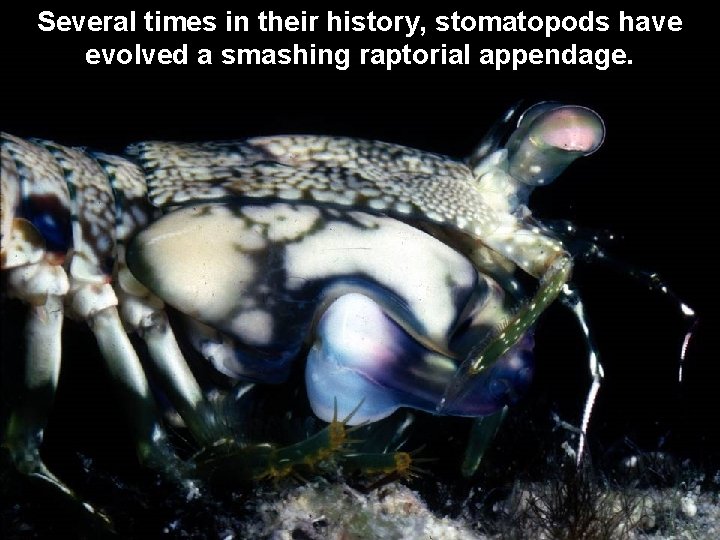
Several times in their history, stomatopods have evolved a smashing raptorial appendage.
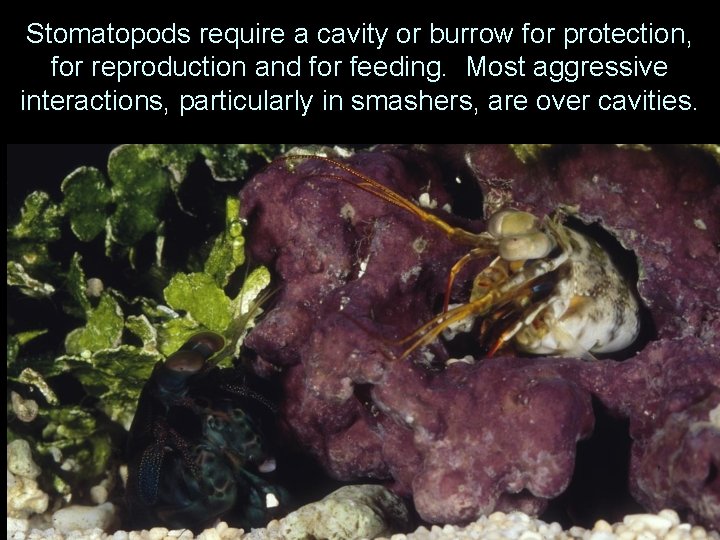
Stomatopods require a cavity or burrow for protection, for reproduction and for feeding. Most aggressive interactions, particularly in smashers, are over cavities.
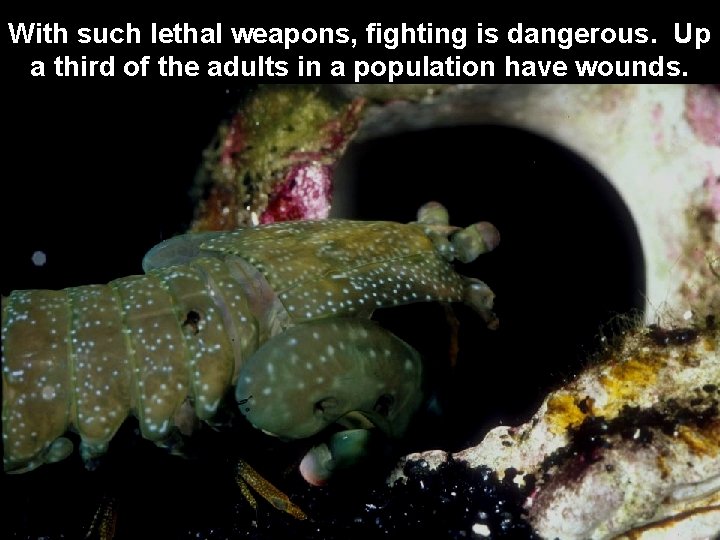
With such lethal weapons, fighting is dangerous. Up a third of the adults in a population have wounds.
Forces at impact and due to cavitation.
The Strike of a 14 cm male Odontodactylus scyllarus recorded at 5000 frames/s • Dactyl speed of 23 m/s • Peak angular speed of 990 rad/s • Peak acceleration of 104, 000 m/s 2 • Duration of strike < 2 ms • Recorded force of 1400 N • Most strikes show cavitation
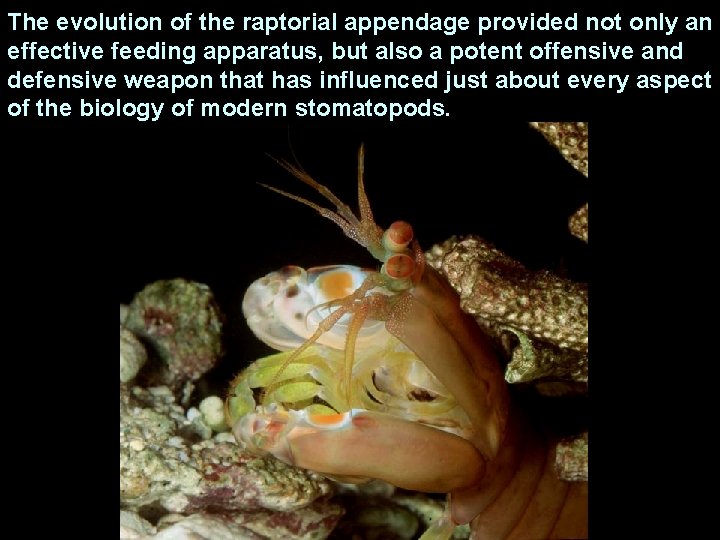
The evolution of the raptorial appendage provided not only an effective feeding apparatus, but also a potent offensive and defensive weapon that has influenced just about every aspect of the biology of modern stomatopods.
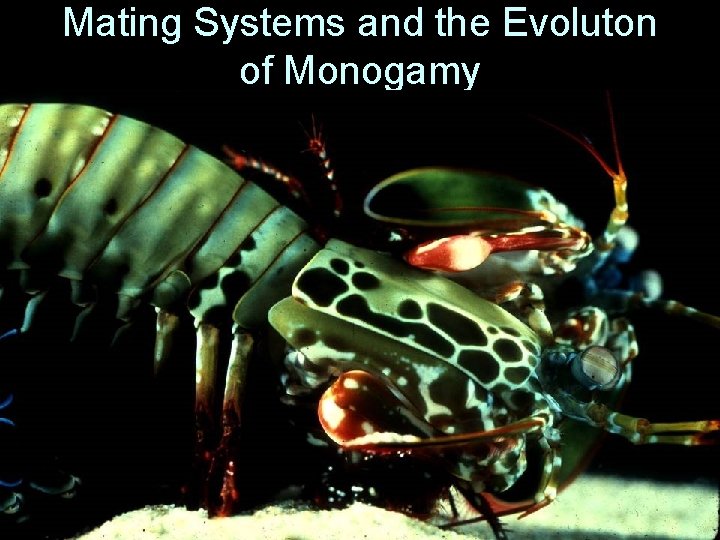
Mating Systems and the Evoluton of Monogamy
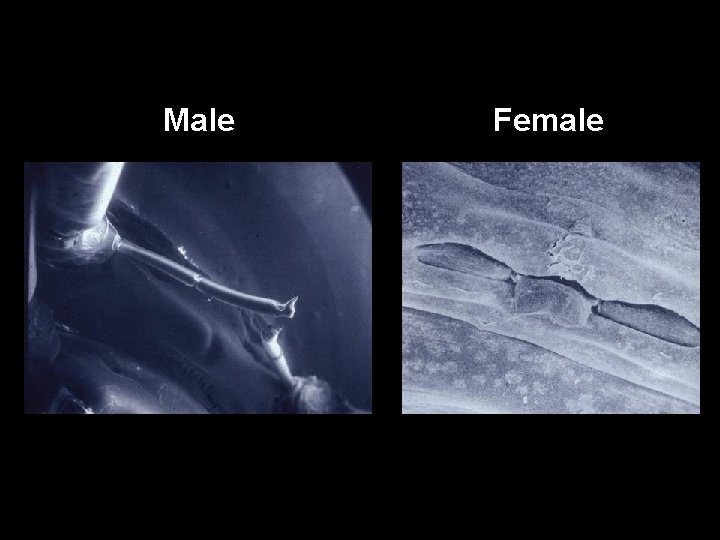
Male Female
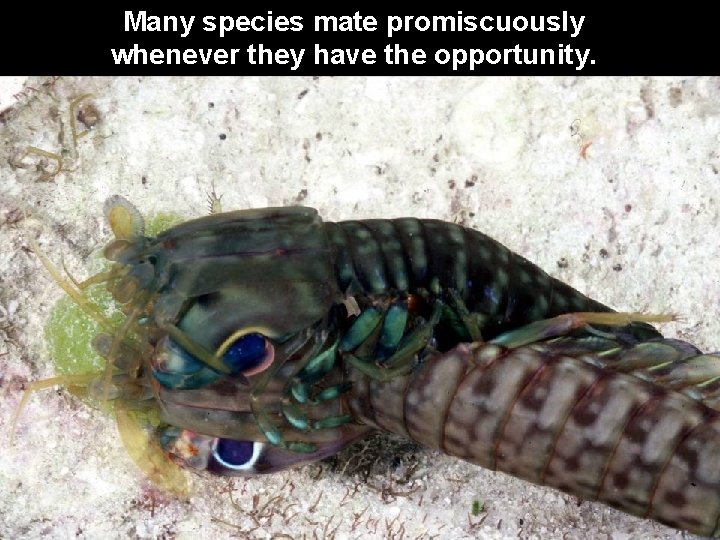
Many species mate promiscuously whenever they have the opportunity.
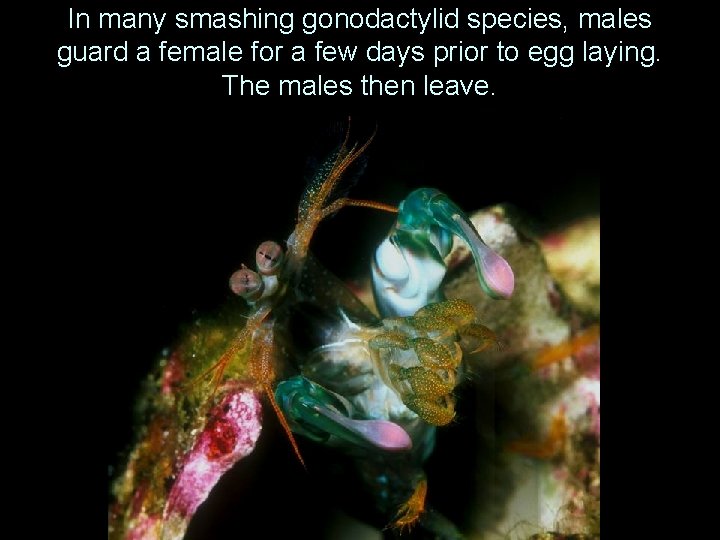
In many smashing gonodactylid species, males guard a female for a few days prior to egg laying. The males then leave.
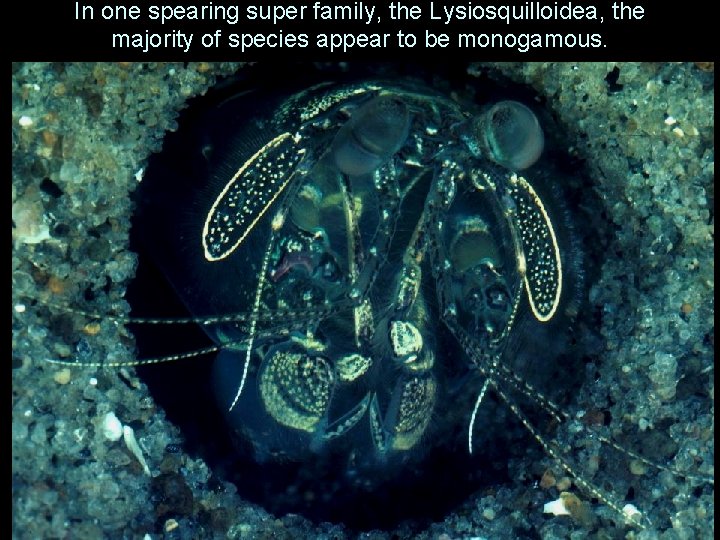
In one spearing super family, the Lysiosquilloidea, the majority of species appear to be monogamous.
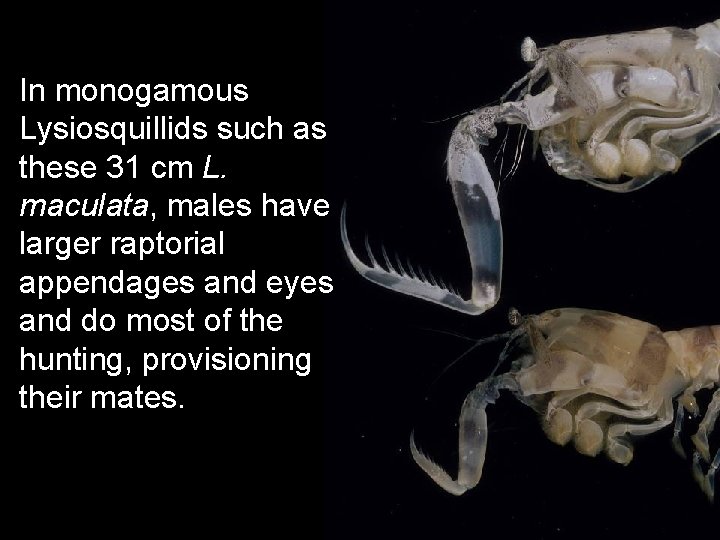
In monogamous Lysiosquillids such as these 31 cm L. maculata, males have larger raptorial appendages and eyes and do most of the hunting, provisioning their mates.
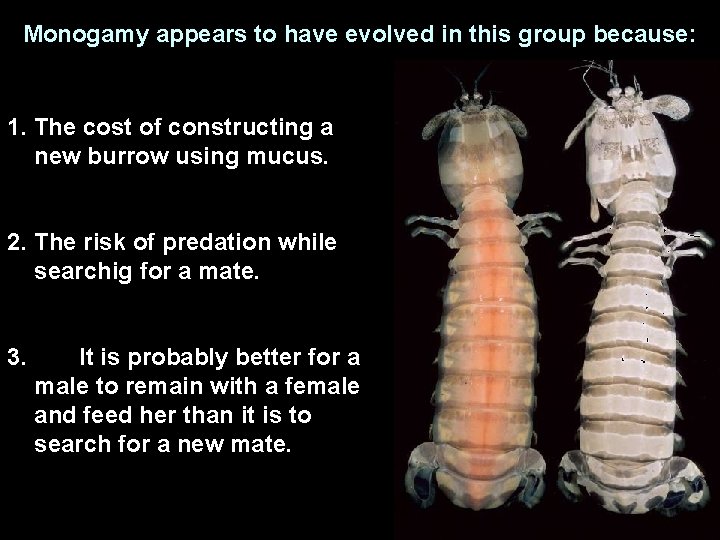
Monogamy appears to have evolved in this group because: 1. The cost of constructing a new burrow using mucus. 2. The risk of predation while searchig for a mate. 3. It is probably better for a male to remain with a female and feed her than it is to search for a new mate.
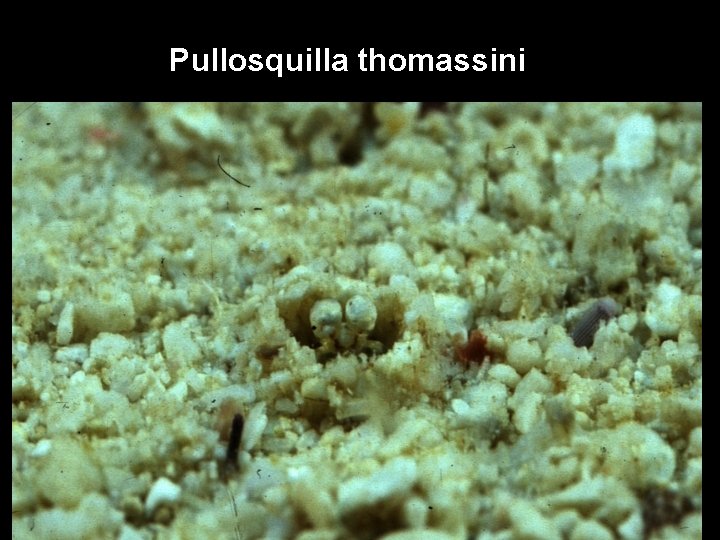
Pullosquilla thomassini
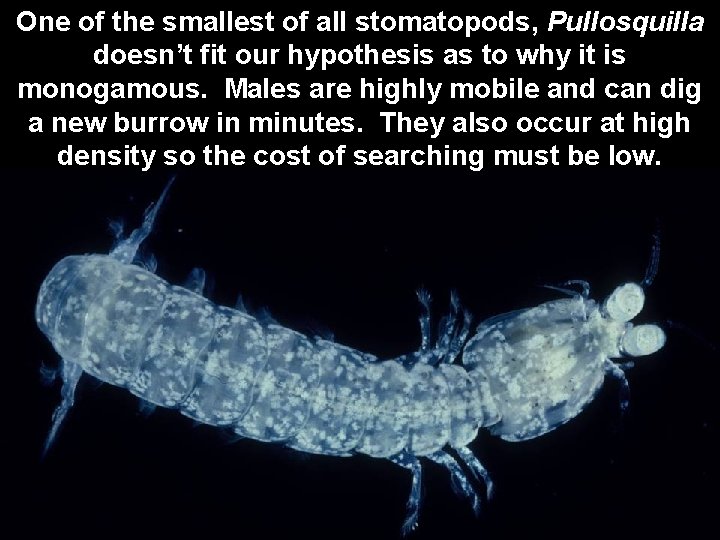
One of the smallest of all stomatopods, Pullosquilla doesn’t fit our hypothesis as to why it is monogamous. Males are highly mobile and can dig a new burrow in minutes. They also occur at high density so the cost of searching must be low.
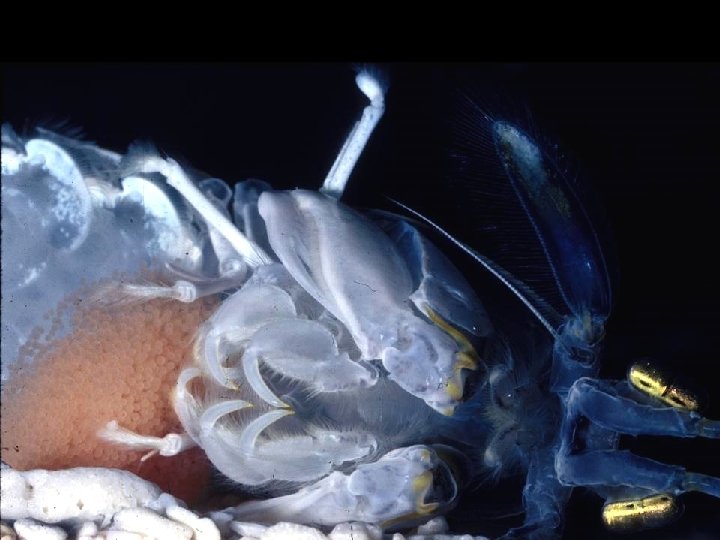
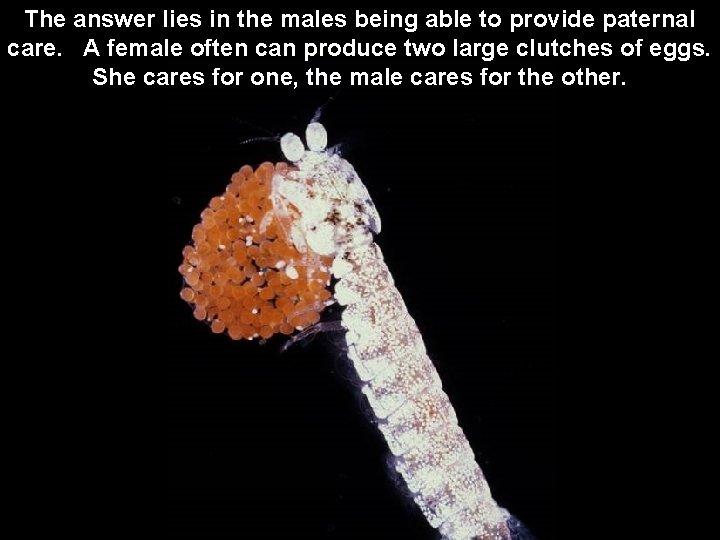
The answer lies in the males being able to provide paternal care. A female often can produce two large clutches of eggs. She cares for one, the male cares for the other.
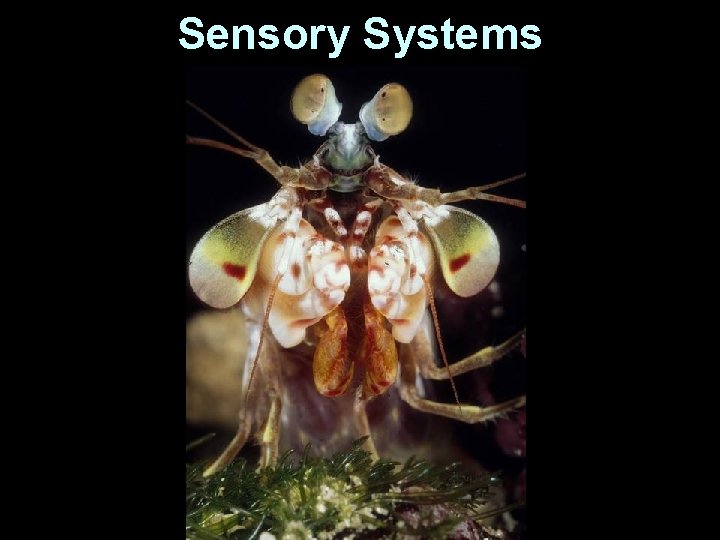
Sensory Systems
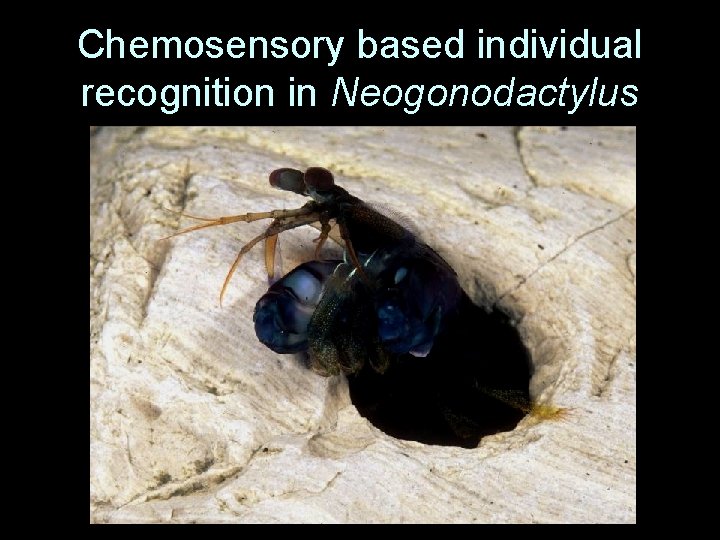
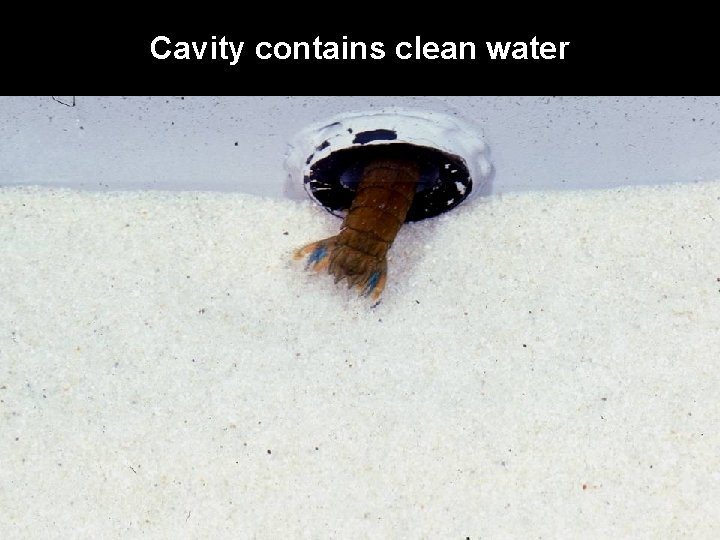
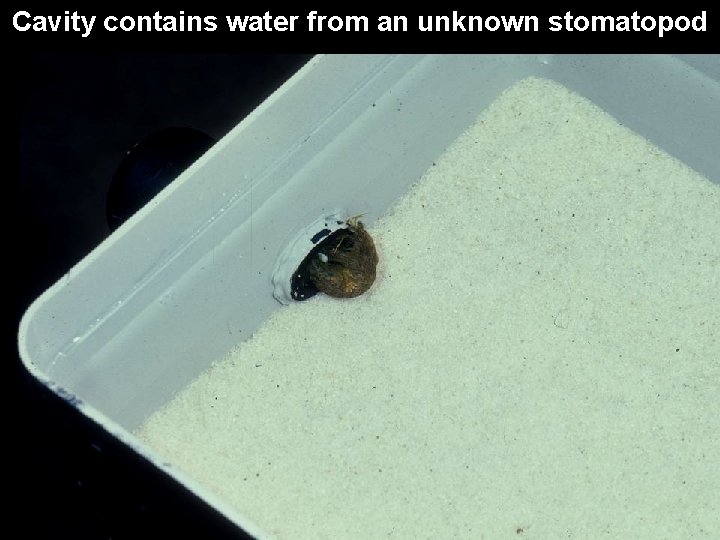
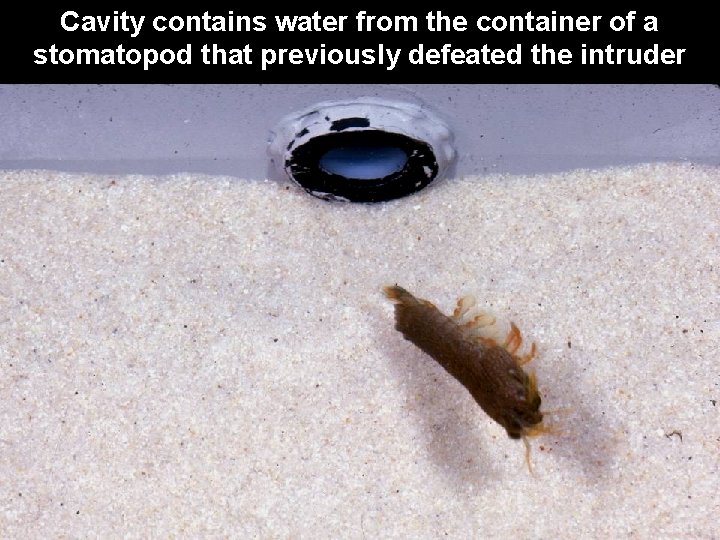
Chemosensory based individual recognition in Neogonodactylus
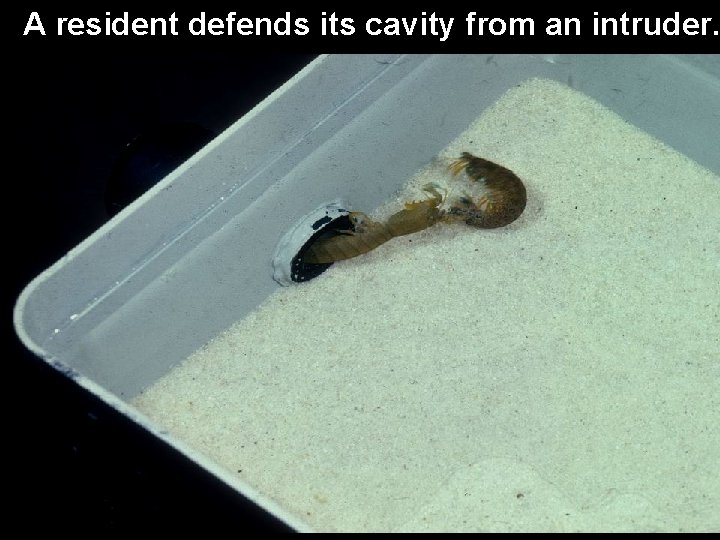
Test arena for Neogonodactylus festae
A resident defends its cavity from an intruder.
Cavity contains clean water
Cavity contains water from an unknown stomatopod
Cavity contains water from the container of a stomatopod that previously defeated the intruder
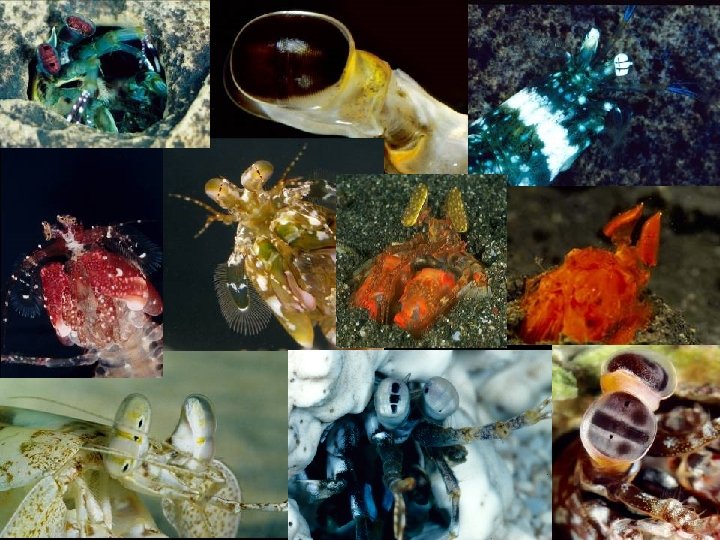
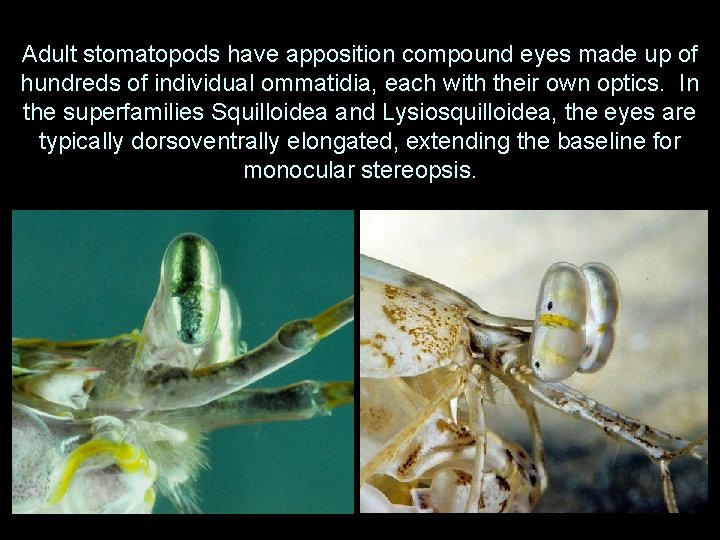
Adult stomatopods have apposition compound eyes made up of hundreds of individual ommatidia, each with their own optics. In the superfamilies Squilloidea and Lysiosquilloidea, the eyes are typically dorsoventrally elongated, extending the baseline for monocular stereopsis.
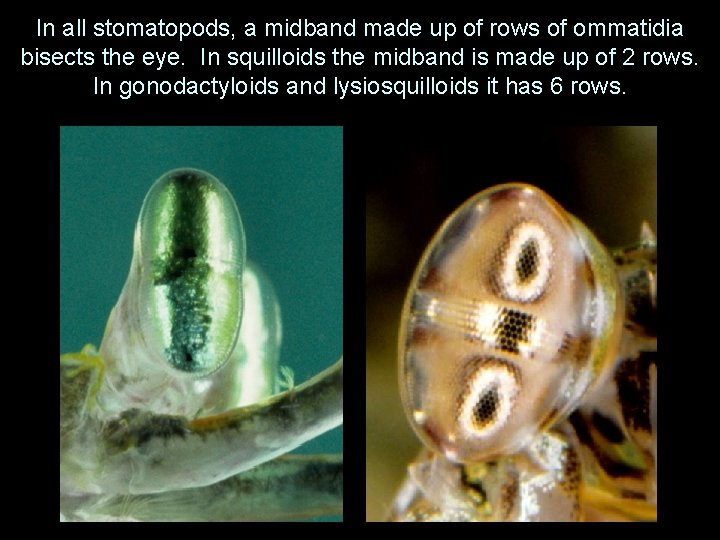
In all stomatopods, a midband made up of rows of ommatidia bisects the eye. In squilloids the midband is made up of 2 rows. In gonodactyloids and lysiosquilloids it has 6 rows.
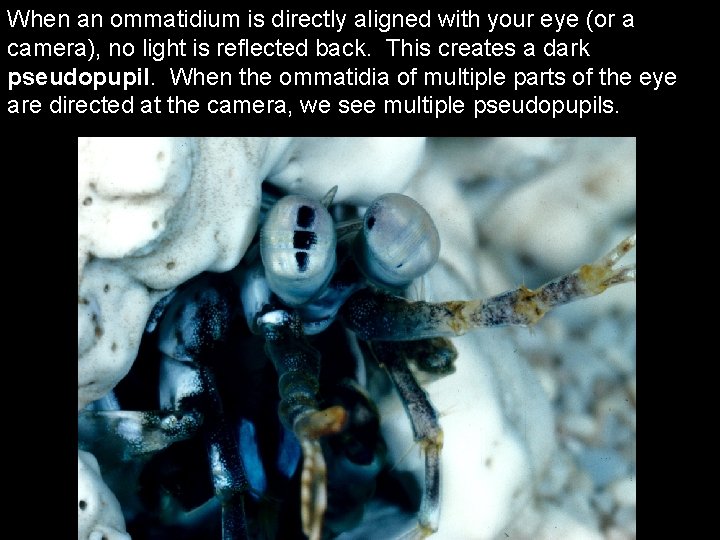
When an ommatidium is directly aligned with your eye (or a camera), no light is reflected back. This creates a dark pseudopupil. When the ommatidia of multiple parts of the eye are directed at the camera, we see multiple pseudopupils.
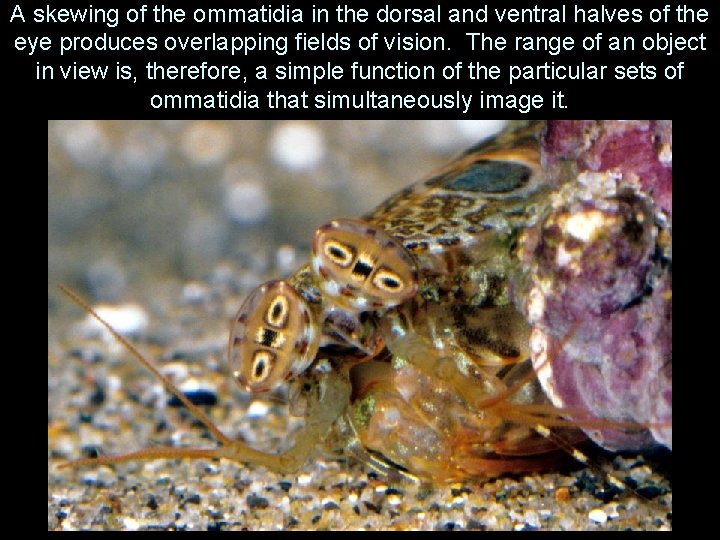
A skewing of the ommatidia in the dorsal and ventral halves of the eye produces overlapping fields of vision. The range of an object in view is, therefore, a simple function of the particular sets of ommatidia that simultaneously image it.
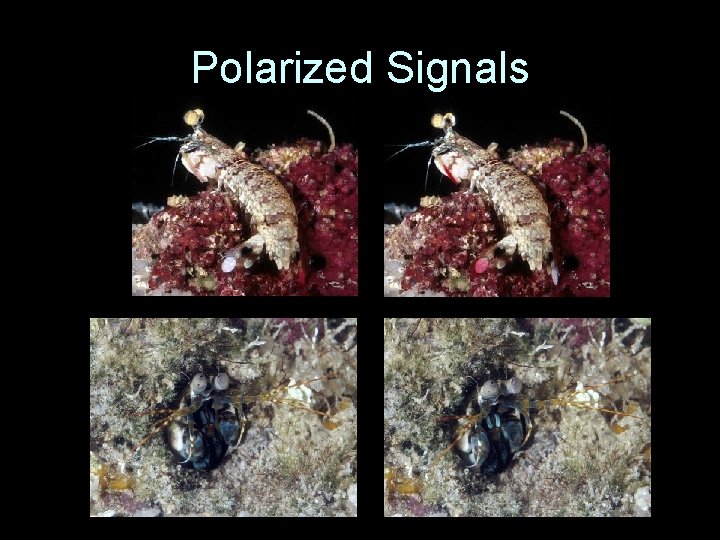
Polarized Signals
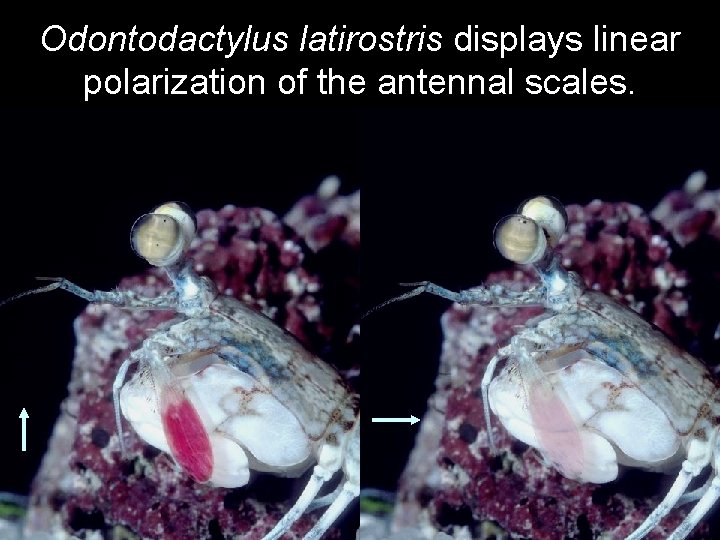
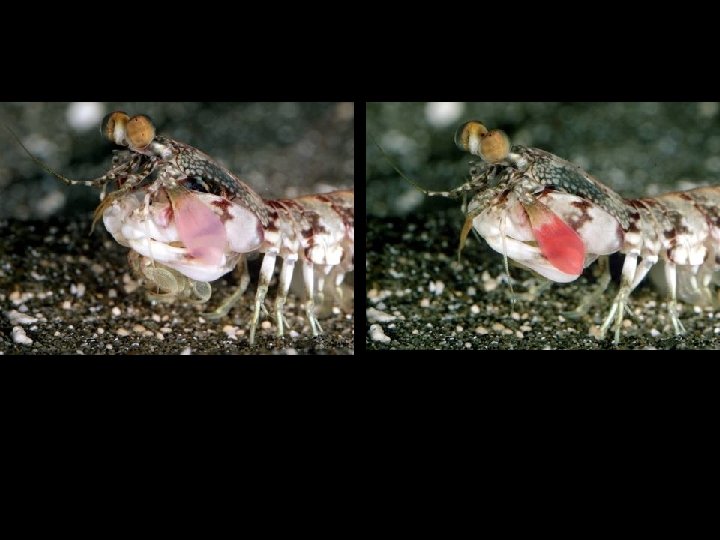
Odontodactylus latirostris displays linear polarization of the antennal scales.
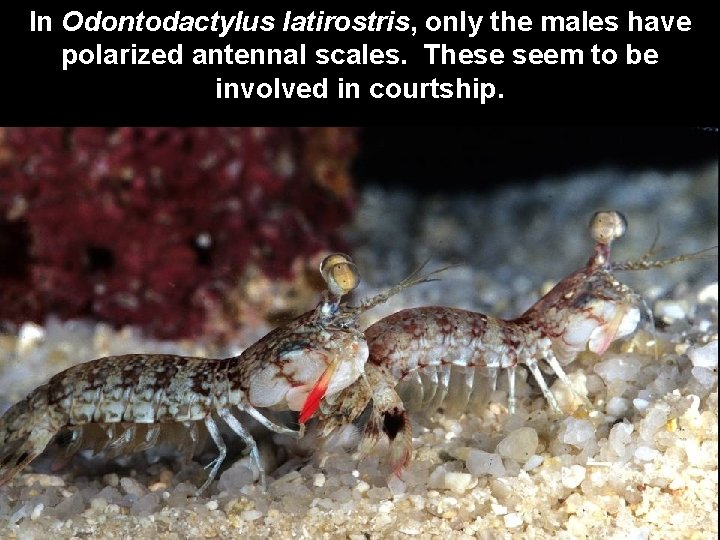
In Odontodactylus latirostris, only the males have polarized antennal scales. These seem to be involved in courtship.
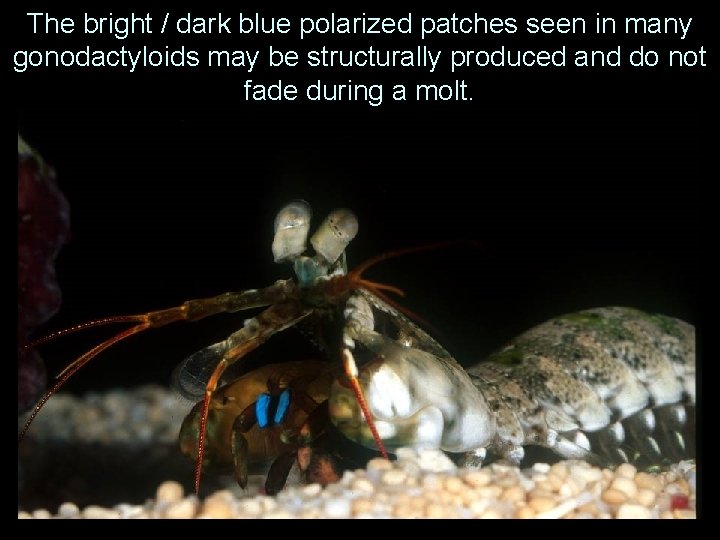
The bright / dark blue polarized patches seen in many gonodactyloids may be structurally produced and do not fade during a molt.
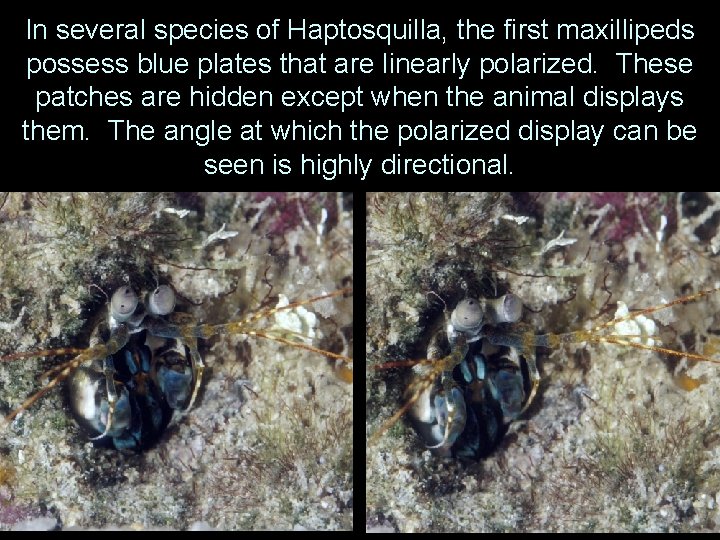
In several species of Haptosquilla, the first maxillipeds possess blue plates that are linearly polarized. These patches are hidden except when the animal displays them. The angle at which the polarized display can be seen is highly directional.
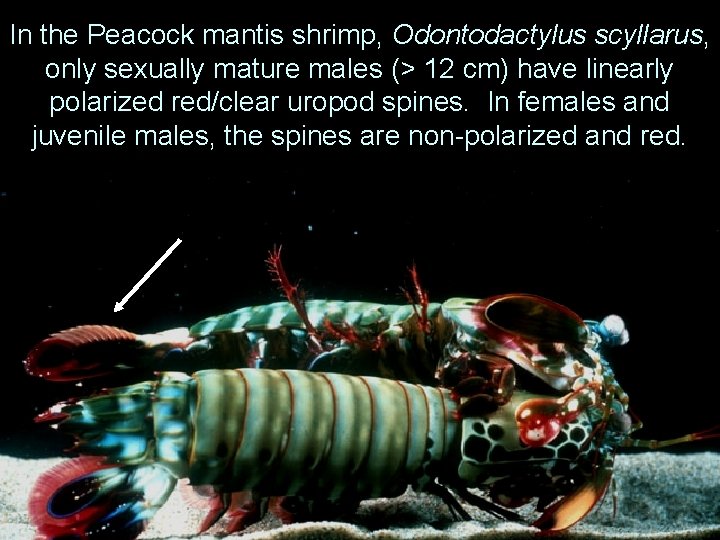
In the Peacock mantis shrimp, Odontodactylus scyllarus, only sexually mature males (> 12 cm) have linearly polarized red/clear uropod spines. In females and juvenile males, the spines are non-polarized and red.
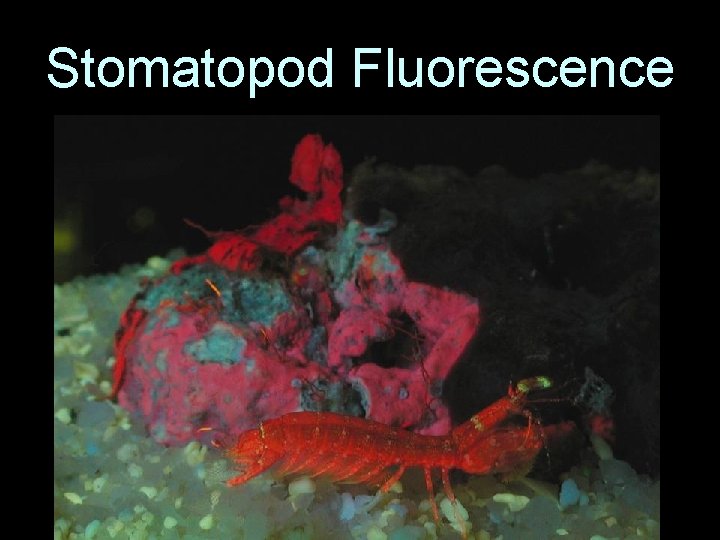
Stomatopod Fluorescence
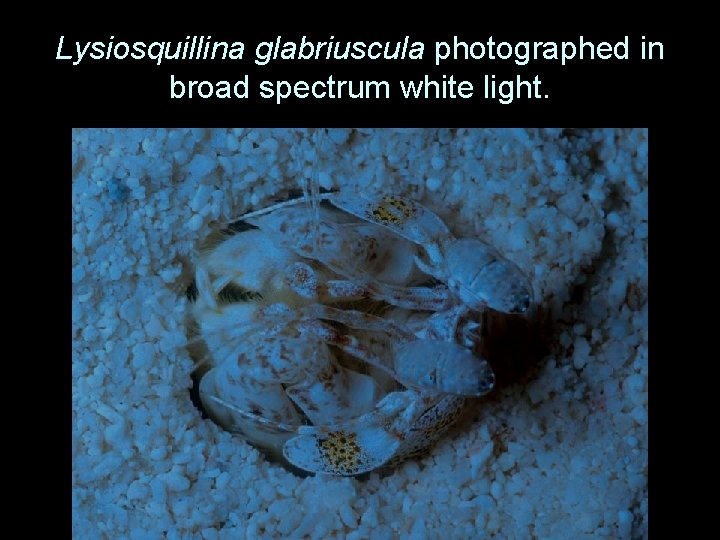
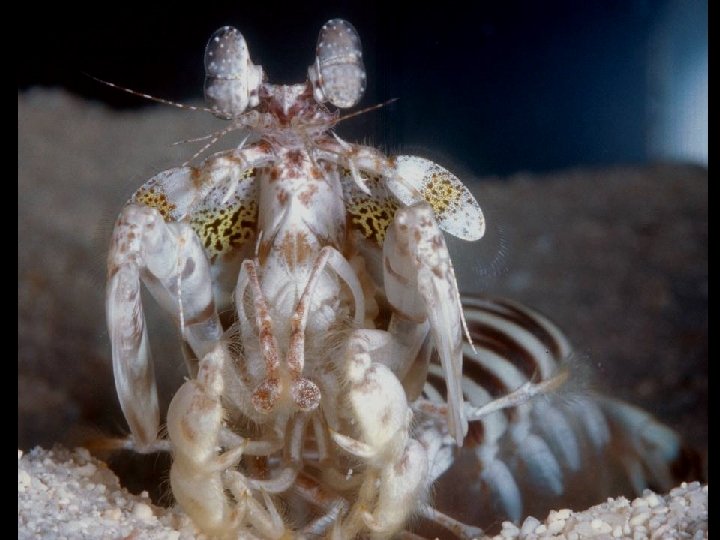
Lysiosquillina glabriuscula photographed in broad spectrum white light.
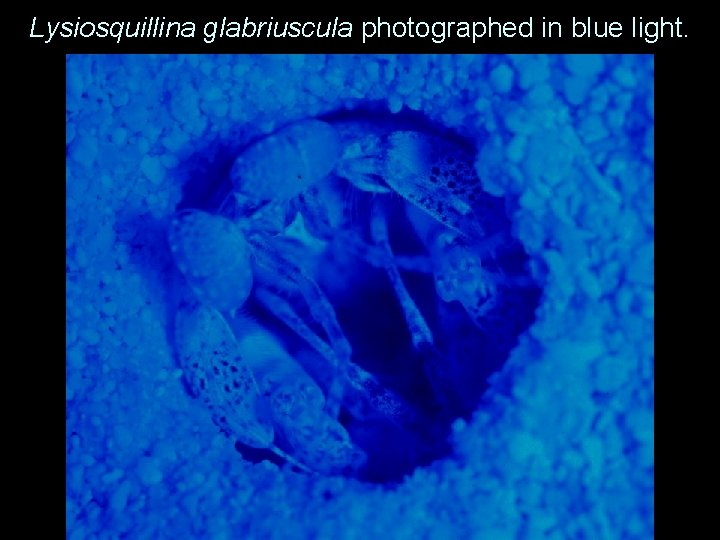
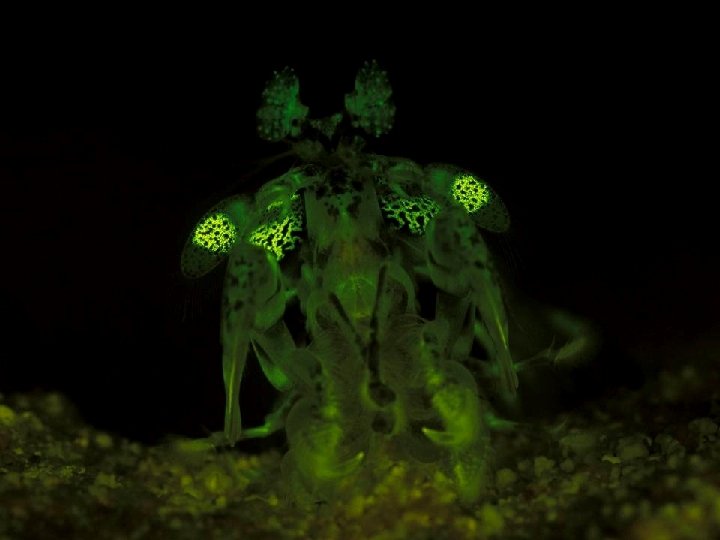
Lysiosquillina glabriuscula photographed in blue light.
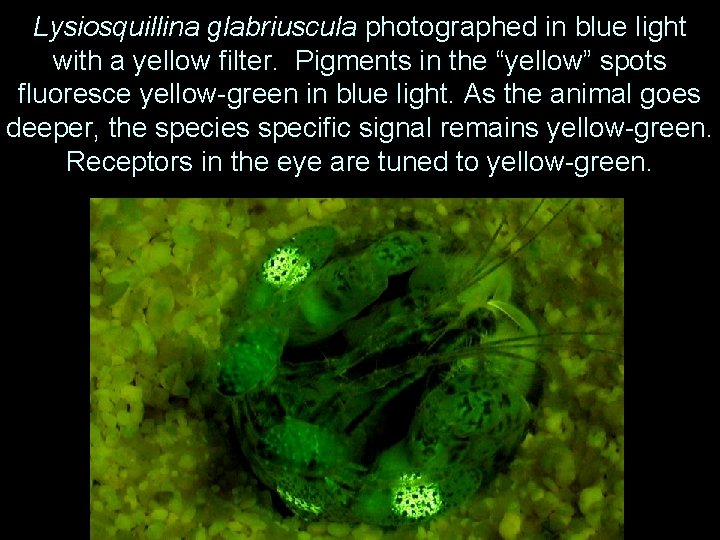
Lysiosquillina glabriuscula photographed in blue light with a yellow filter. Pigments in the “yellow” spots fluoresce yellow-green in blue light. As the animal goes deeper, the species specific signal remains yellow-green. Receptors in the eye are tuned to yellow-green.
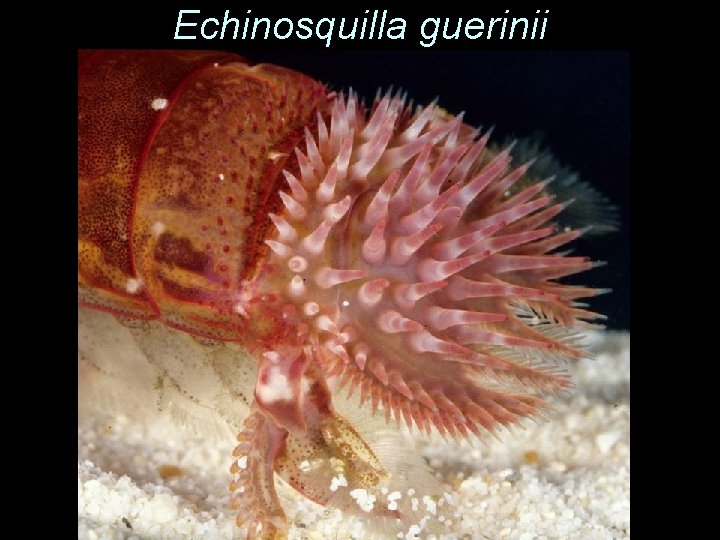
Echinosquilla guerinii