
MANIPULATING HIGH SCHOOL SPACES TO ACHIEVE COLLEGIATE EXPERIENCES


- Slides: 16
MANIPULATING HIGH SCHOOL SPACES TO ACHIEVE COLLEGIATE EXPERIENCES Charles Fournier Cheyenne, Wyoming Cheyenne East High School Laramie County Community College
CHARLES FOURNIER q. MA Literature University of Wyoming q 7 years of experience teaching public high school English q 4 th year teaching CE English Laramie County Community College q. Spent 2+ years at University of Wyoming as a lecturer in the English department, Honors Program, and the Synergy Program for restrictively admitted students.
ASSIGNMENT • Local Business Rhetoric • My Old Apartment • A copy of The Lorax and a coffee-stained Edward Abbey essay sit on a tv dinner stand; a green leather recliner has a torn headrest; empty boxes of Totino’s Pizza Rolls overflow a plastic garbage can behind the chair; and a television sitting on plastic crates has a blanket covering the screen. • What expectations, goals, fears does this space project? • Student Reactions and Application
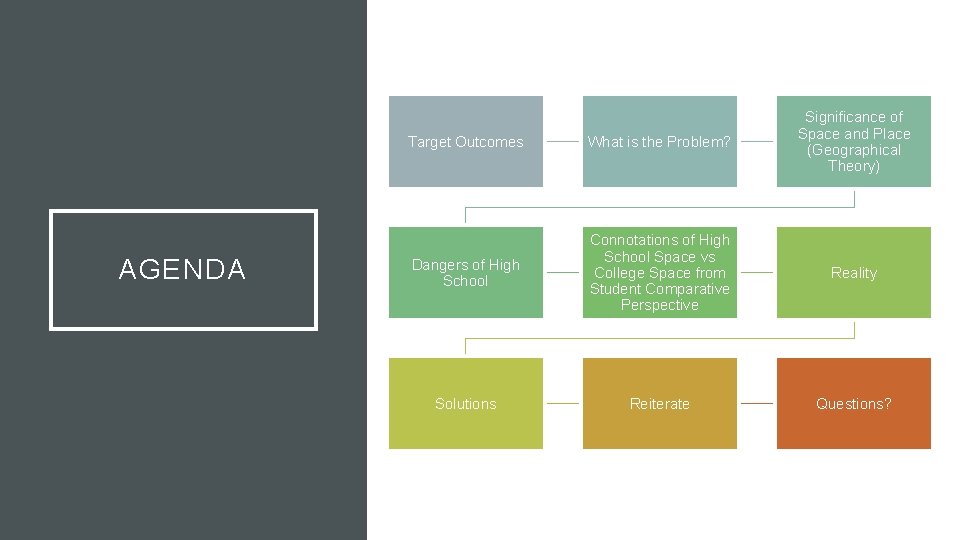
AGENDA Target Outcomes What is the Problem? Significance of Space and Place (Geographical Theory) Dangers of High School Connotations of High School Space vs College Space from Student Comparative Perspective Reality Solutions Reiterate Questions?
TARGET OUTCOMES • How can you deconstruct or manipulate high school spaces to achieve a collegiate rigor in CE classrooms? • Creation of discussion and future collaboration on the topic.
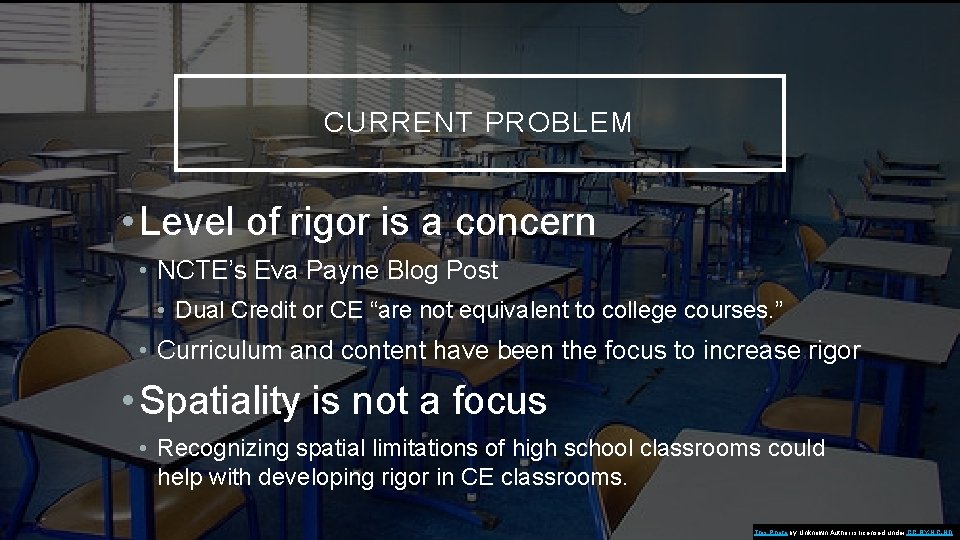
CURRENT PROBLEM • Level of rigor is a concern • NCTE’s Eva Payne Blog Post • Dual Credit or CE “are not equivalent to college courses. ” • Curriculum and content have been the focus to increase rigor • Spatiality is not a focus • Recognizing spatial limitations of high school classrooms could help with developing rigor in CE classrooms. This Photo by Unknown Author is licensed under CC BY-NC-ND
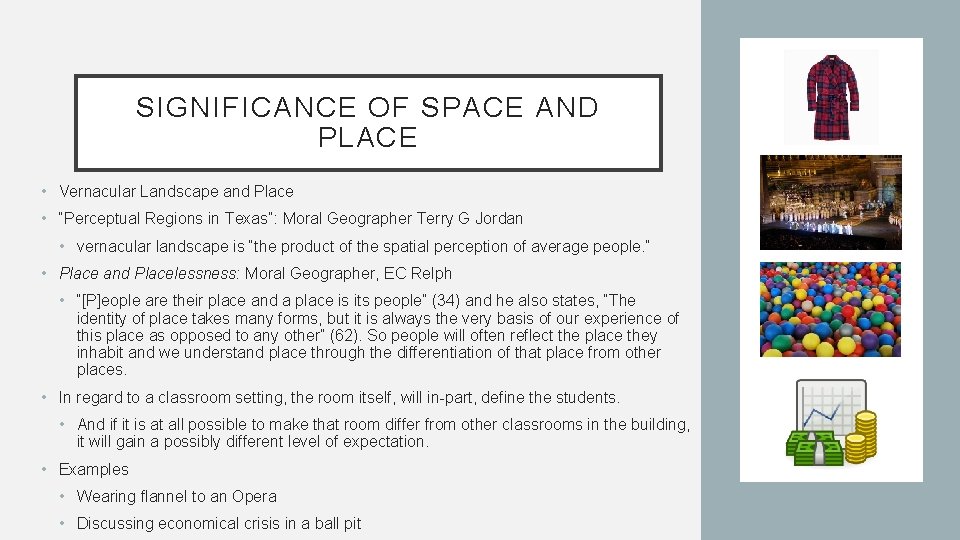
SIGNIFICANCE OF SPACE AND PLACE • Vernacular Landscape and Place • “Perceptual Regions in Texas”: Moral Geographer Terry G Jordan • vernacular landscape is “the product of the spatial perception of average people. ” • Place and Placelessness: Moral Geographer, EC Relph • “[P]eople are their place and a place is its people” (34) and he also states, “The identity of place takes many forms, but it is always the very basis of our experience of this place as opposed to any other” (62). So people will often reflect the place they inhabit and we understand place through the differentiation of that place from other places. • In regard to a classroom setting, the room itself, will in-part, define the students. • And if it is at all possible to make that room differ from other classrooms in the building, it will gain a possibly different level of expectation. • Examples • Wearing flannel to an Opera • Discussing economical crisis in a ball pit
Dangers • Do not allow students to shift their frame of mind into the expectations of a collegiate setting • Expectations, quality of work, effort, & policies are all tied to the space Limitation s • Can’t tear down posters in between classes • Traveling Teachers • Variety of classes in the same space THE HIGH SCHOOL CLASSROOM
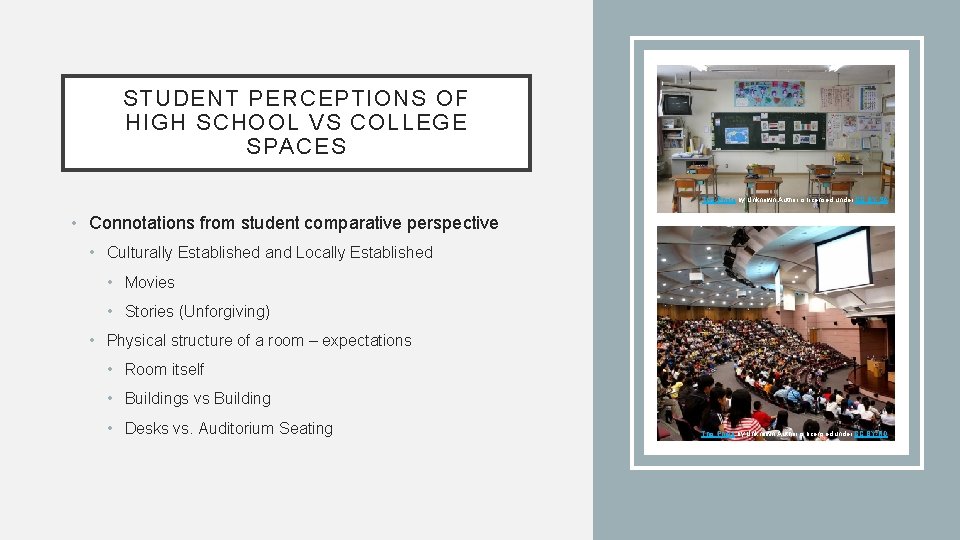
STUDENT PERCEPTIONS OF HIGH SCHOOL VS COLLEGE SPACES This Photo by Unknown Author is licensed under CC BY-SA • Connotations from student comparative perspective • Culturally Established and Locally Established • Movies • Stories (Unforgiving) • Physical structure of a room – expectations • Room itself • Buildings vs Building • Desks vs. Auditorium Seating This Photo by Unknown Author is licensed under CC BY-ND
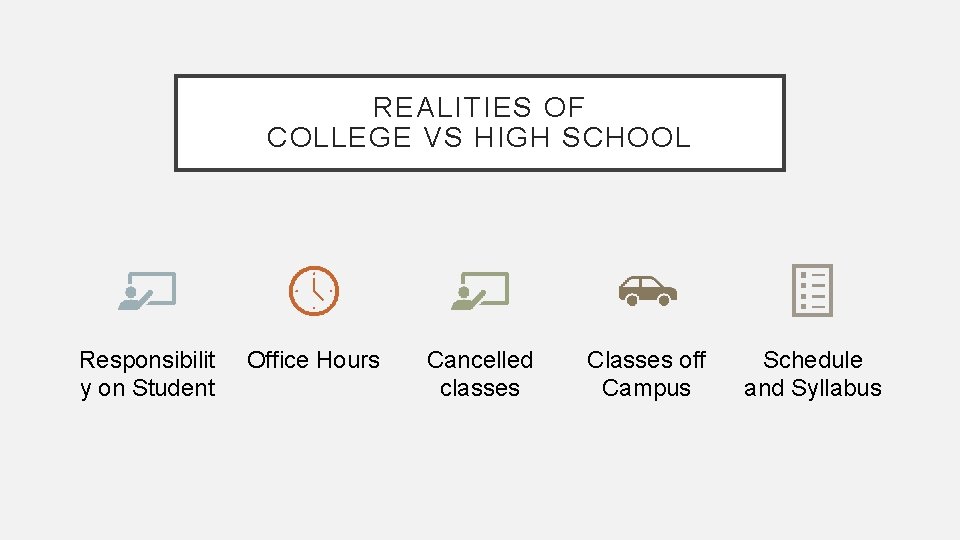
REALITIES OF COLLEGE VS HIGH SCHOOL Responsibilit y on Student Office Hours Cancelled classes Classes off Campus Schedule and Syllabus
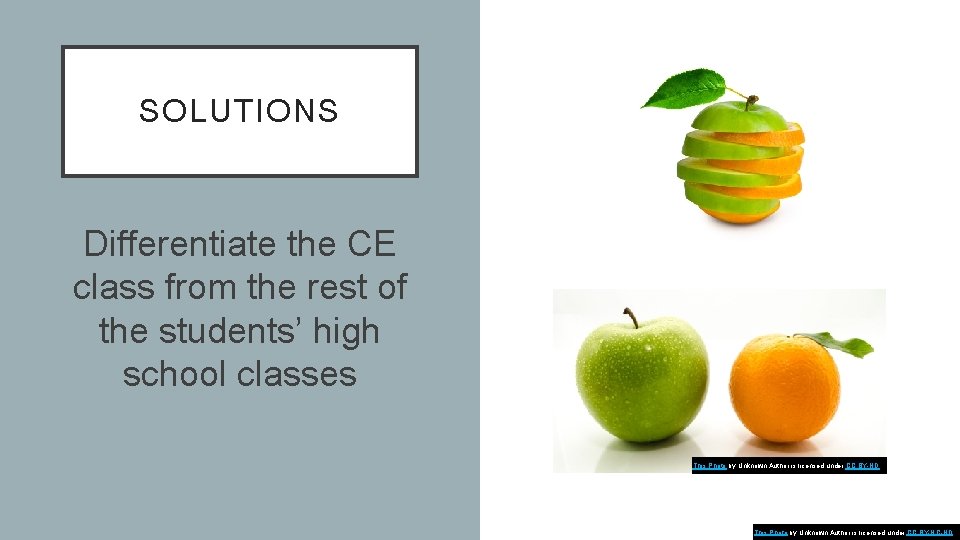
SOLUTIONS Differentiate the CE class from the rest of the students’ high school classes This Photo by Unknown Author is licensed under CC BY-ND This Photo by Unknown Author is licensed under CC BY-NC-ND
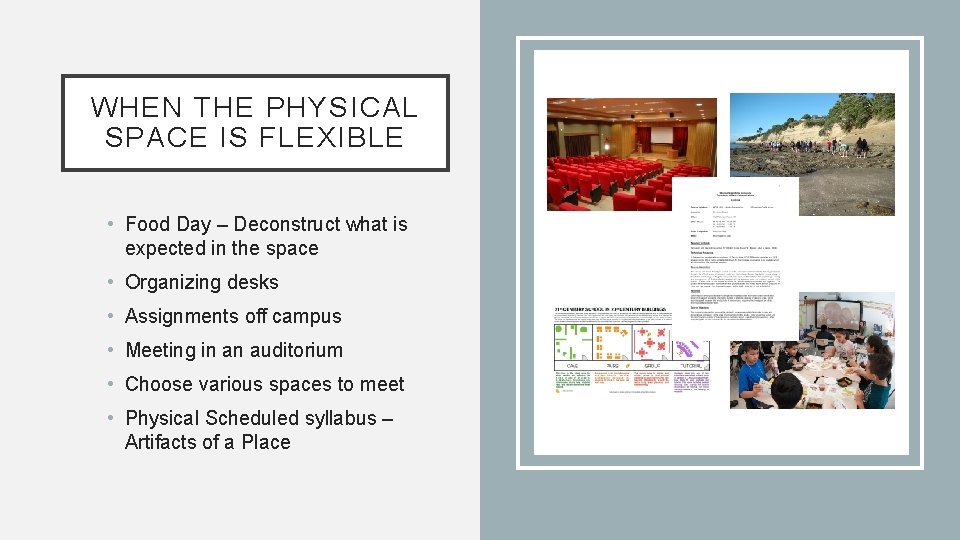
WHEN THE PHYSICAL SPACE IS FLEXIBLE • Food Day – Deconstruct what is expected in the space • Organizing desks • Assignments off campus • Meeting in an auditorium • Choose various spaces to meet • Physical Scheduled syllabus – Artifacts of a Place
WHEN THE PHYSICAL SPACE IS NOT FLEXIBLE q. Online resources q. Online submissions q. Emails q. Connection to College Campus Resources
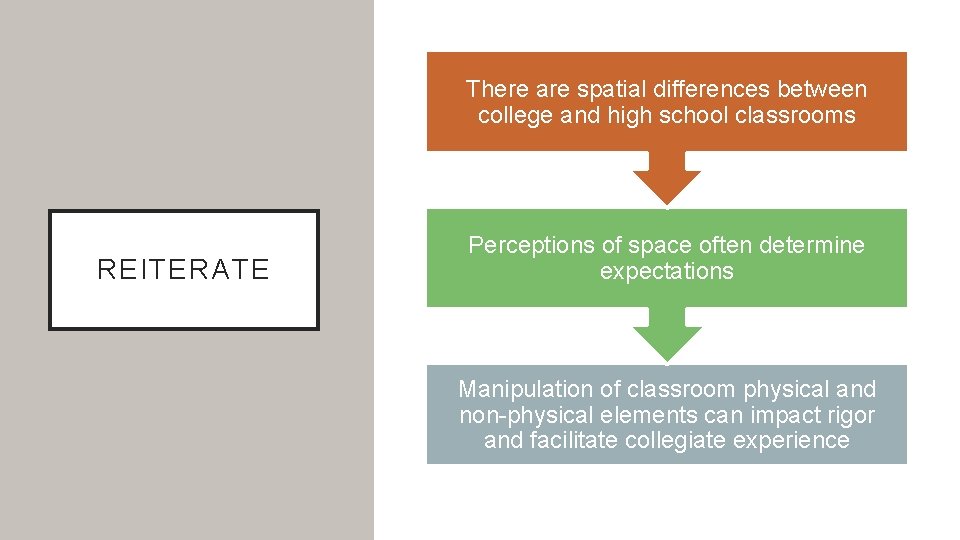
There are spatial differences between college and high school classrooms REITERATE Perceptions of space often determine expectations Manipulation of classroom physical and non-physical elements can impact rigor and facilitate collegiate experience
QUESTIONS? • Contact Information: ØCharles. Fournier@laramie 1. or g
Upcoming NACEP Events: January 17: Introduction to NACEP’s National Standards Webinar February 12: Coffee with a Commissioner March 10 -12: NACEP Southeast Regional Conference and Accreditation Institute, Savannah, GA