
MANDATOS FORMALES Formal Commands Commands in English without

- Slides: 32
MANDATOS FORMALES (Formal Commands)
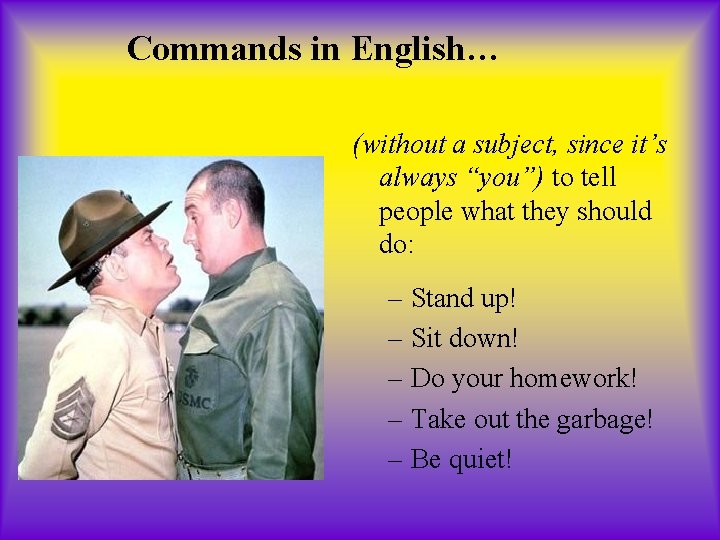
Commands in English… (without a subject, since it’s always “you”) to tell people what they should do: – Stand up! – Sit down! – Do your homework! – Take out the garbage! – Be quiet!
Commands in English… … and what they shouldn’t do: – Don’t write in your books! – Don’t speak English in Spanish class! – Don’t be silly!
Mandatos (Commands) en español… What forms of “you” do you know in Spanish? .
Spanish “you” forms: – Tú: informal, singular – Vosotros: informal, plural – Ud. : formal, singular – Uds. : formal, plural
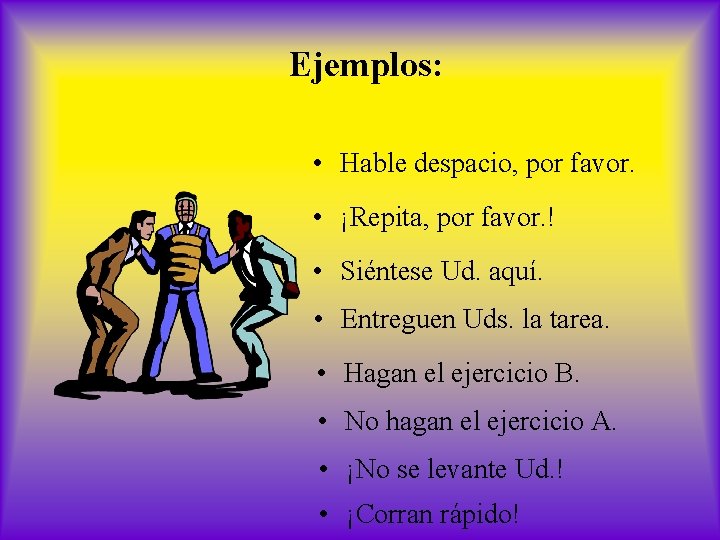
Ejemplos: • Hable despacio, por favor. • ¡Repita, por favor. ! • Siéntese Ud. aquí. • Entreguen Uds. la tarea. • Hagan el ejercicio B. • No hagan el ejercicio A. • ¡No se levante Ud. ! • ¡Corran rápido!
Hable despacio, por favor. • The speaker is talking to one person. • Take the “yo” form of the present: HABLO • Drop the –o: HABL • “Hablar” is an –AR verb, so add –E to form the command: HABLE
Repita, por favor. • The speaker is talking to one person. • Take the “yo” form of the present: REPITO • Drop the –o: REPIT • “Repetir” is an –IR verb, so add –A to form the command: REPITA
¡Corra rápido! • The speaker is talking to one person. • Take the “yo” form of the present: CORRO • Drop the –o: CORR • “Correr” is an –ER verb, so add –A to form the command: CORRA(N)
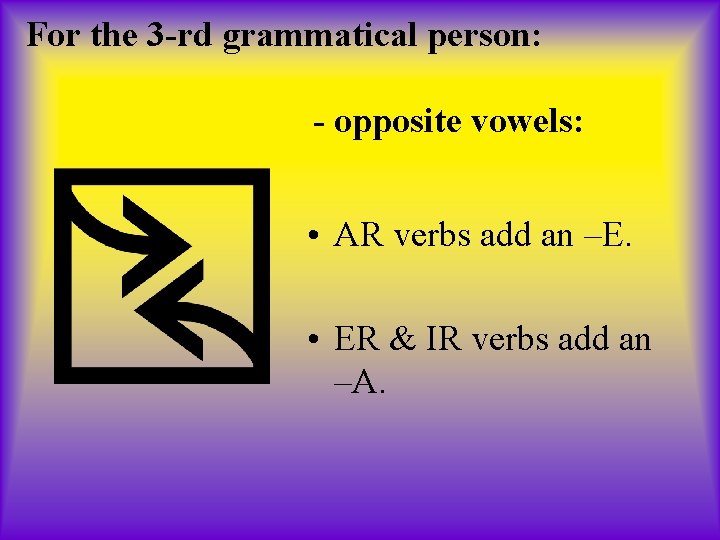
For the 3 -rd grammatical person: - opposite vowels: • AR verbs add an –E. • ER & IR verbs add an –A.
¡No! – ¡No fume! – ¡No tome café! – ¡No coma tanto! – ¡No hable ahora!
¡Intentemos! • Comer: ¡______ Ud. ! ¡Coma Ud. ! • Escribir: ¡_____ Ud. ! ¡Escriba Ud. ! • No Tomar: ¡_____ Ud. ! ¡No Tome Ud. ! • Entregar Ud. : ¡_____ la tarea! ¡Entregue la tarea! (Note the spelling change because of the final –g sound. )
Mandatos en plural: • No Comer: ¡______ Uds. ! ¡No Coman Uds. ! • Escribir: ¡_____ Uds. ! ¡Escriban Uds. ! • Tomar: ¡_____ Uds. ! ¡Tomen Uds. ! • Entregar Uds. : ¡_____ la tarea! ¡Entreguen la tarea! (Note the spelling change because of the final –g sound. )
¿Y los verbos reflexivos? • In affirmative commands, all objects pronouns are attached to the end of the verb. – Levante + se – Levante + los • ¡Levántese! / ¡Levántelos!
¡No se levante! • In negative commands, all objects precede the verb. – No se levante. – No los levanten. • ¡No se levante! • ¡No los levante!
Algunos verbos irregulares – Haga la tarea. – Tenga paciencia. – Salga ahora. – Vuelva a casa. – Piense bien.
¿Qué pasa? • Haga la tarea. – Hacer > yo hago > - o + a • Tenga paciencia. – Tener > yo tengo > - o + a • Salga ahora. – Salir > yo salgo > - o + a • Vuelva a casa. – Volver > yo vuelvo > - o + a • Piense bien. – Pensar > yo pienso > - o + e • These verbs follow the same formula: start with the yo form, drop the o, and add the opposite vowel.
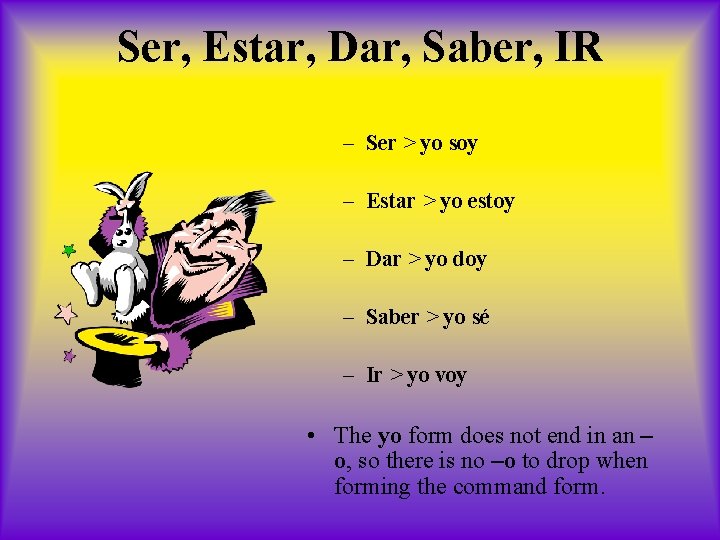
Ser, Estar, Dar, Saber, IR – Ser > yo soy – Estar > yo estoy – Dar > yo doy – Saber > yo sé – Ir > yo voy • The yo form does not end in an – o, so there is no –o to drop when forming the command form.
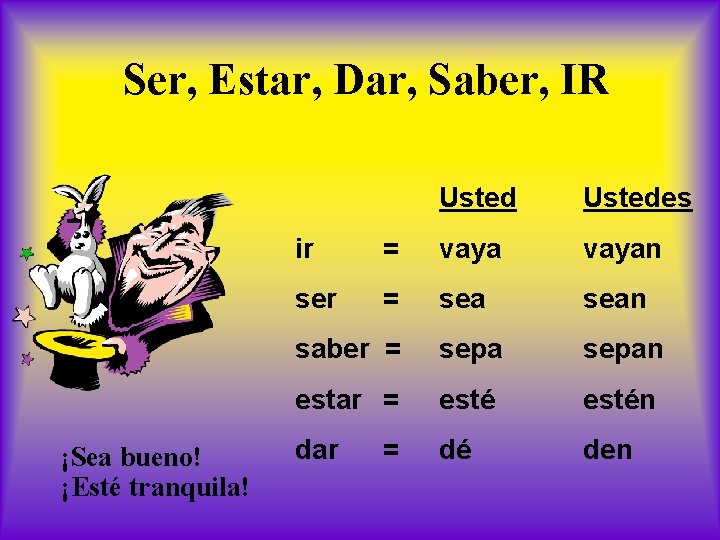
Ser, Estar, Dar, Saber, IR ¡Sea bueno! ¡Esté tranquila! Ustedes ir = vayan ser = sean saber = sepan estar = estén dar dé den =
Vamos a praticar • P. 127 actividad 13 parte A
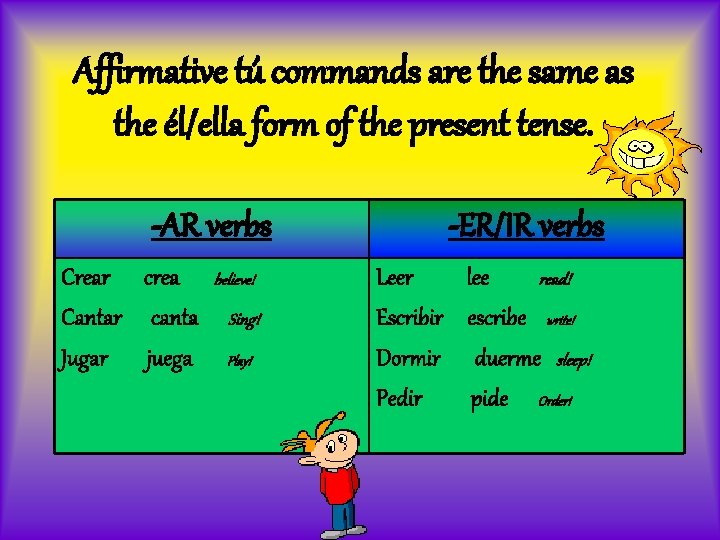
Los Mandatos informales • To give a command or to make a suggestion to someone you address as “tú”…we use the informal command form.
Affirmative tú commands are the same as the él/ella form of the present tense. -AR verbs Crear crea Cantar canta Jugar juega believe! Sing! Play! -ER/IR verbs Leer lee read! Escribir escribe write! Dormir duerme sleep! Pedir pide Order!
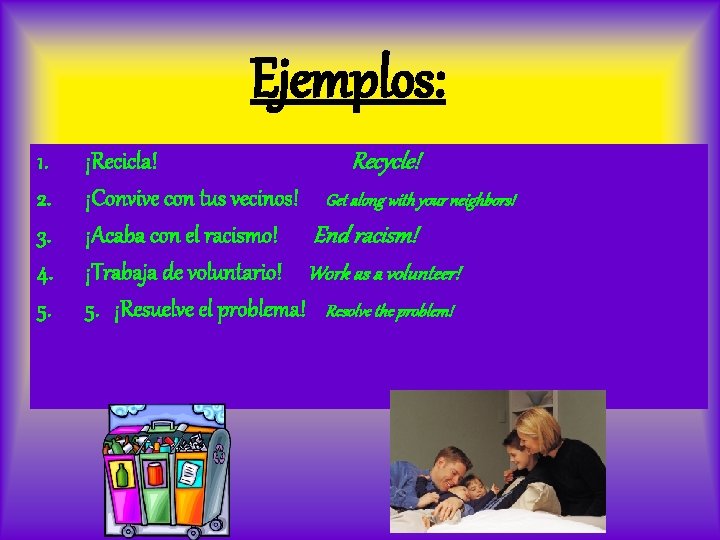
Ejemplos: 1. 2. 3. 4. 5. ¡Recicla! Recycle! ¡Convive con tus vecinos! Get along with your neighbors! ¡Acaba con el racismo! End racism! ¡Trabaja de voluntario! Work as a volunteer! 5. ¡Resuelve el problema! Resolve the problem!
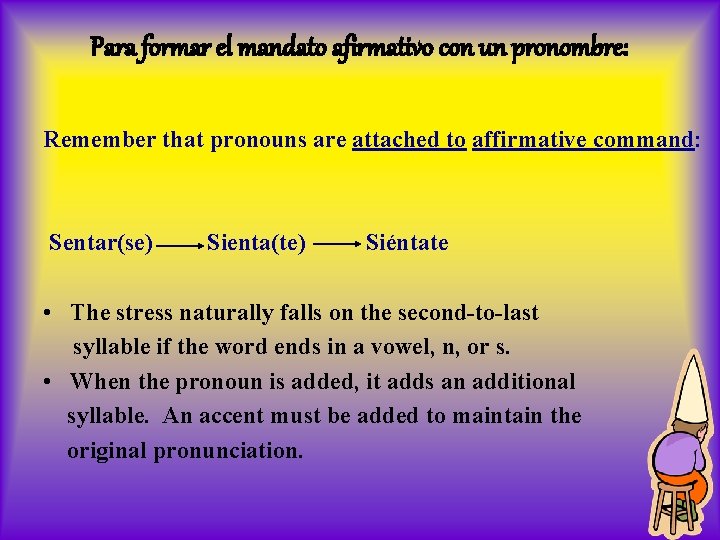
Para formar el mandato afirmativo con un pronombre: Remember that pronouns are attached to affirmative command: Sentar(se) Sienta(te) Siéntate • The stress naturally falls on the second-to-last syllable if the word ends in a vowel, n, or s. • When the pronoun is added, it adds an additional syllable. An accent must be added to maintain the original pronunciation.
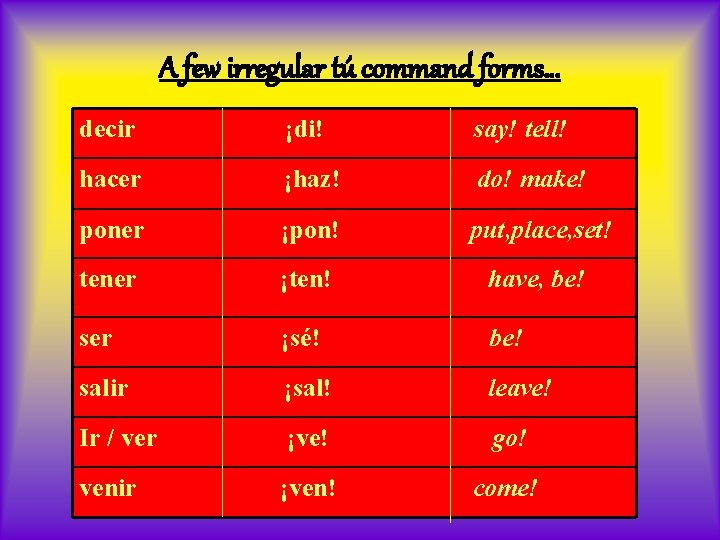
A few irregular tú command forms… decir ¡di! say! tell! hacer ¡haz! do! make! poner ¡pon! put, place, set! tener ¡ten! have, be! ser ¡sé! be! salir ¡sal! leave! Ir / ver ¡ve! go! venir ¡ven! come!
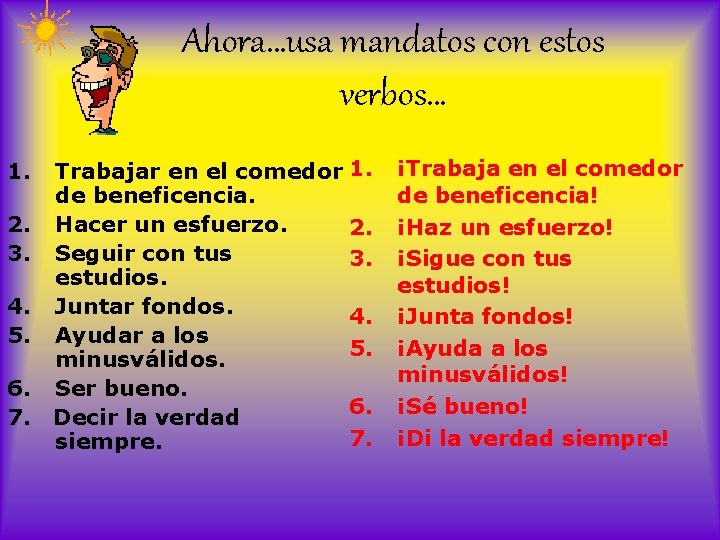
Ahora…usa mandatos con estos verbos… 1. 2. 3. 4. 5. 6. 7. Trabajar en el comedor 1. de beneficencia. Hacer un esfuerzo. 2. Seguir con tus 3. estudios. Juntar fondos. 4. Ayudar a los 5. minusválidos. Ser bueno. 6. Decir la verdad 7. siempre. ¡Trabaja en el comedor de beneficencia! ¡Haz un esfuerzo! ¡Sigue con tus estudios! ¡Junta fondos! ¡Ayuda a los minusválidos! ¡Sé bueno! ¡Di la verdad siempre!
Negative Tú Commands
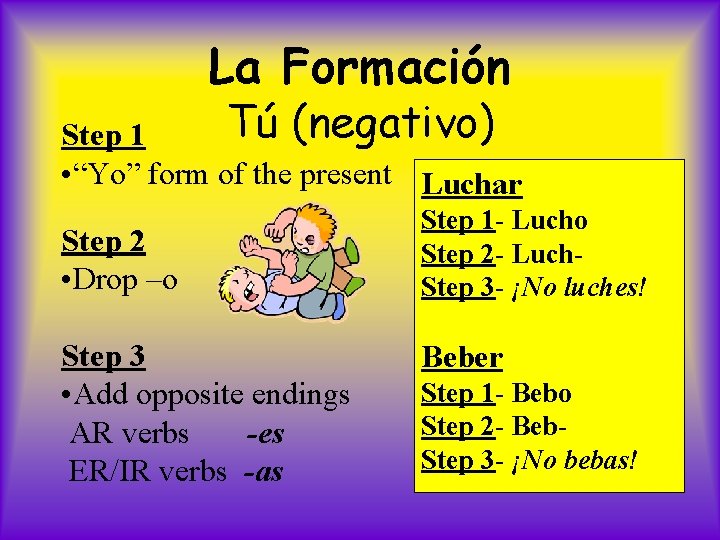
La Formación Tú (negativo) Step 1 • “Yo” form of the present Luchar Step 2 • Drop –o Step 3 • Add opposite endings AR verbs -es ER/IR verbs -as Step 1 - Lucho Step 2 - Luch. Step 3 - ¡No luches! Beber Step 1 - Bebo Step 2 - Beb. Step 3 - ¡No bebas!
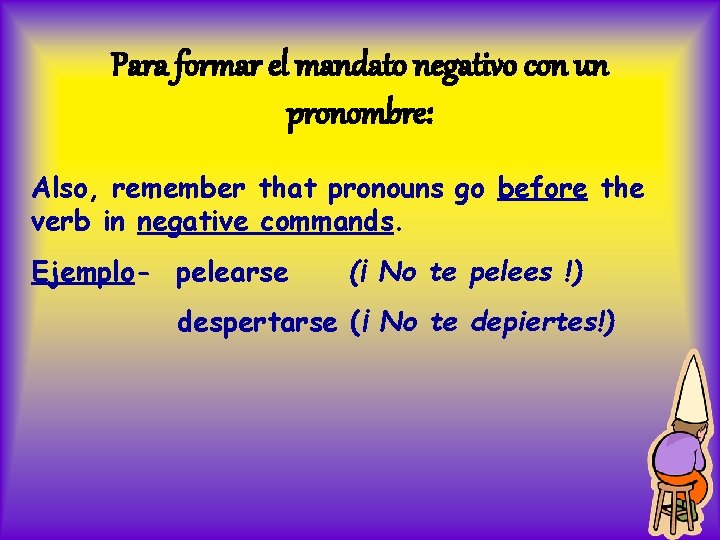
Para formar el mandato negativo con un pronombre: Also, remember that pronouns go before the verb in negative commands. Ejemplo- pelearse (¡ No te pelees !) despertarse (¡ No te depiertes!)
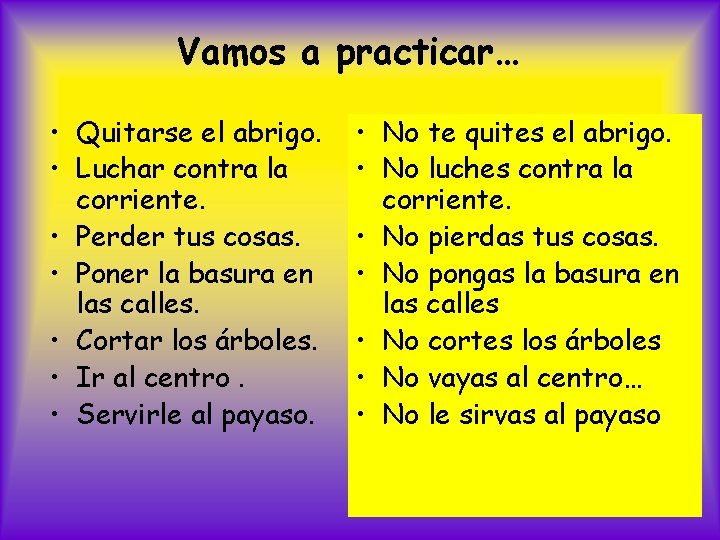
Vamos a practicar… • Quitarse el abrigo. • Luchar contra la corriente. • Perder tus cosas. • Poner la basura en las calles. • Cortar los árboles. • Ir al centro. • Servirle al payaso. • No te quites el abrigo. • No luches contra la corriente. • No pierdas tus cosas. • No pongas la basura en las calles • No cortes los árboles • No vayas al centro… • No le sirvas al payaso
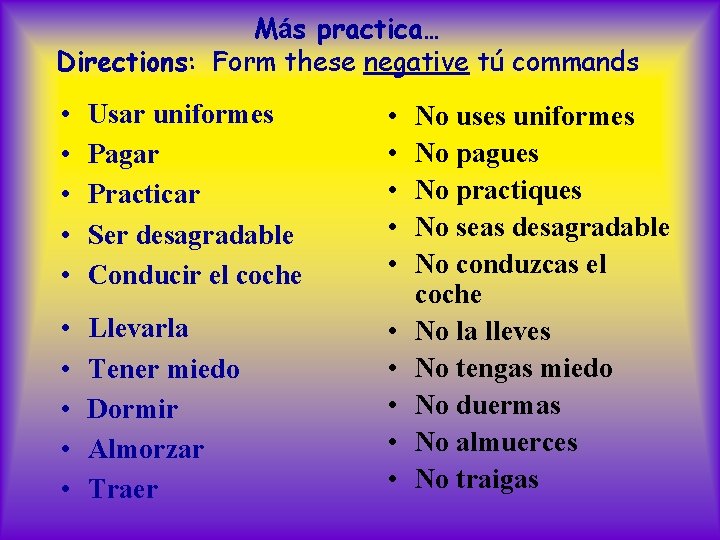
Más practica… Directions: Form these negative tú commands • • • Usar uniformes Pagar Practicar Ser desagradable Conducir el coche • • • Llevarla Tener miedo Dormir Almorzar Traer • • • No uses uniformes No pagues No practiques No seas desagradable No conduzcas el coche No la lleves No tengas miedo No duermas No almuerces No traigas
Vamos a practicar aún más… • P. 130 actividad 15