
MANDATOS En espaol qu son mandatos What is


- Slides: 23
MANDATOS En español
¿qué son mandatos? What is a ‘command’? A command is when you TRY to make someone DO, or NOT DO what you want. ¿Ejemplos? (Examples? )
¿tipos? What TYPES of commands are there in Spanish? There are two ‘categories’ AFFIRMATIVE (telling someone to DO something) NEGATIVE (telling someone to NOT DO something) ** - - -y ahora, una de mis películas favoritas - - -**
¿a quién hablas? It also matters TO WHOM you are giving a command HOW do you ‘address’ the person(s) to whom you are giving the command?
Puedes dar un mandato a: UD TÚ UDS VOSOTROS/VOSOTRAS NOSOTROS/NOSOTRAS
Para empezar To begin, let’s look at the AFFIRMATIVE USTED command. You use UD commands with _______.
PARA FORMAR Let’s use the verb CORRER To form the USTED command, you: START with the YO form of the verb in the present tense (in this case – CORRO) DROP the ‘O’ (here, we end up with CORR) ADD the ‘opposite vowel’, meaning AR infinitive – use E, ER and IR infinitives use A (here, we end up with CORRA)
otro Let’s try another verb – how about TRABAJAR YO FORM = ? ? ? Trabajo DROP ‘O’ = TRABAJ ADD opposite vowel. . . Trabaje
Y. . . VIVIR YO = VIVO DROP ‘O’ = VIV ADD OPPOSITE VOWEL = VIVA
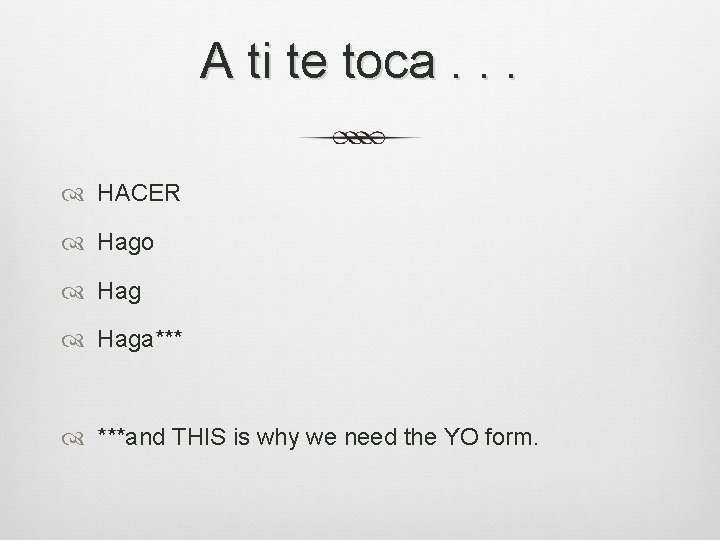
A ti te toca. . . HACER Hago Haga*** ***and THIS is why we need the YO form.
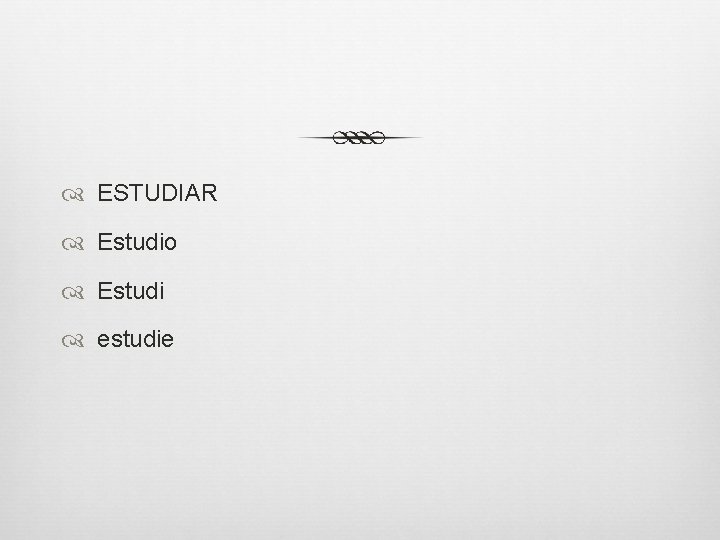
ESTUDIAR Estudio Estudi estudie
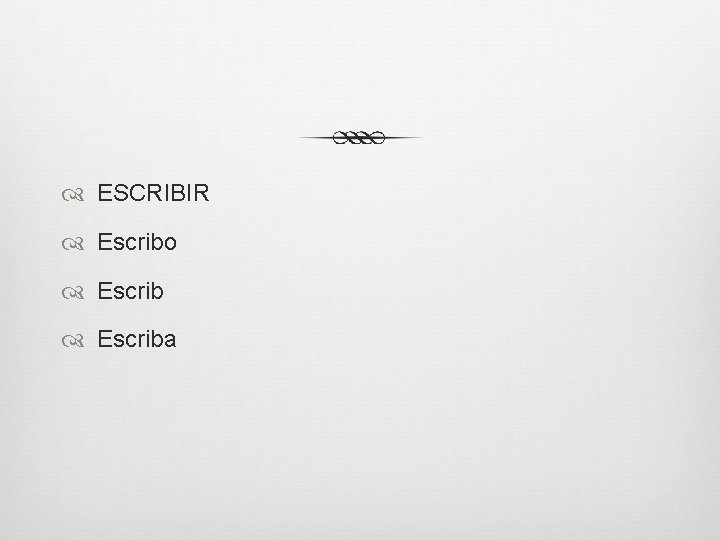
ESCRIBIR Escribo Escriba
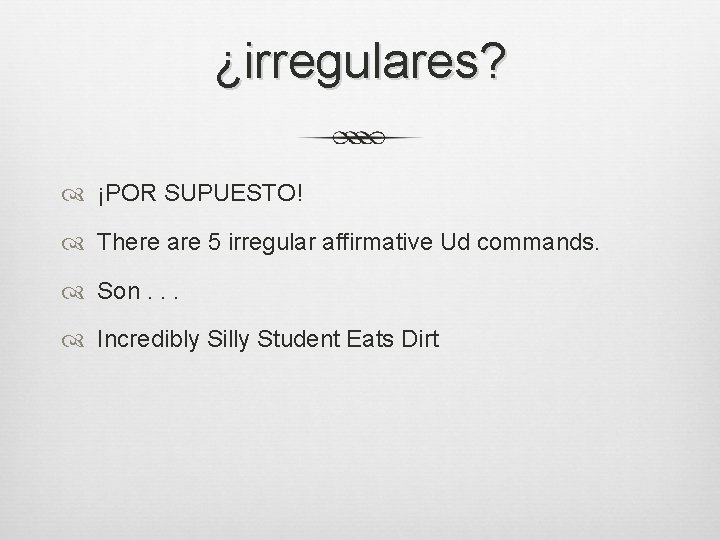
¿irregulares? ¡POR SUPUESTO! There are 5 irregular affirmative Ud commands. Son. . . Incredibly Silly Student Eats Dirt
IR (to go) Ud command = VAYA
SABER = to know (facts/info/how to ) Ud command = SEPA
SER = to be Ud command = SEA
ESTAR = to be Ud command = ESTÉ* (*only thing ‘irregular’ is the accent) (WHY do we have the accent? )
DAR = to give Ud command = DÉ* (*only thing ‘irregular’ AGAIN, is the accent) (WHY do we have the accent? )
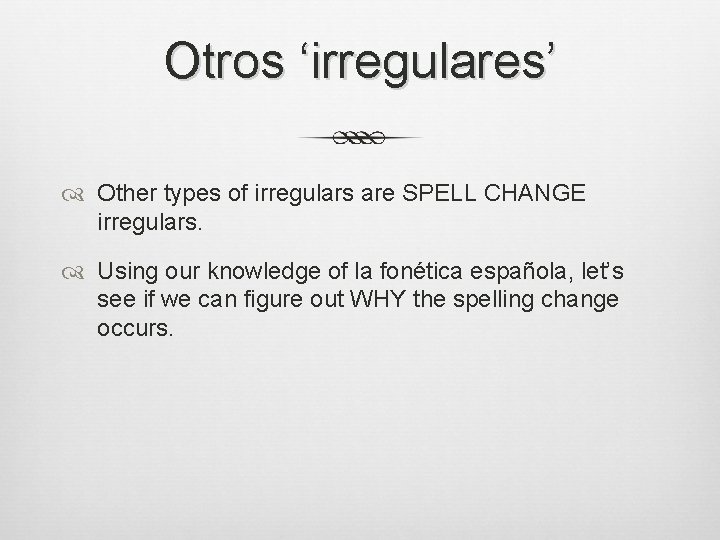
Otros ‘irregulares’ Other types of irregulars are SPELL CHANGE irregulars. Using our knowledge of la fonética española, let’s see if we can figure out WHY the spelling change occurs.
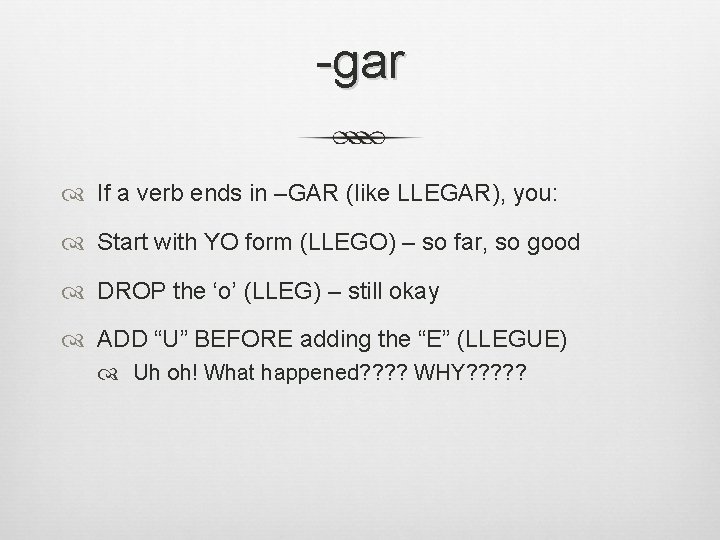
-gar If a verb ends in –GAR (like LLEGAR), you: Start with YO form (LLEGO) – so far, so good DROP the ‘o’ (LLEG) – still okay ADD “U” BEFORE adding the “E” (LLEGUE) Uh oh! What happened? ? WHY? ? ?
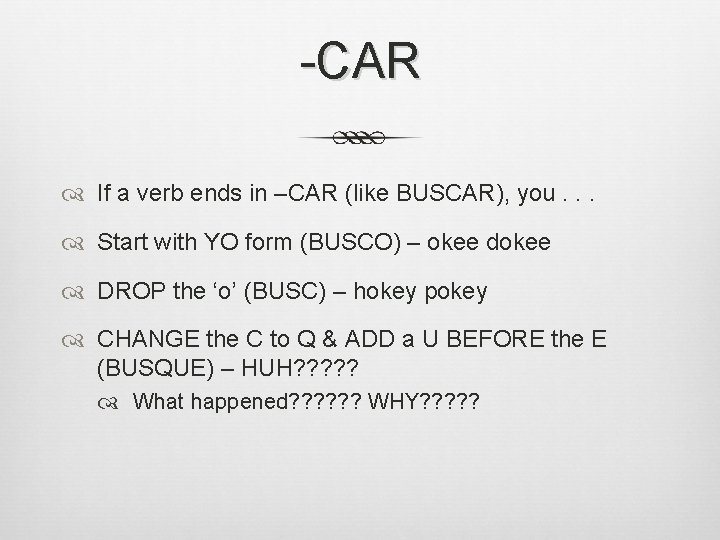
-CAR If a verb ends in –CAR (like BUSCAR), you. . . Start with YO form (BUSCO) – okee dokee DROP the ‘o’ (BUSC) – hokey pokey CHANGE the C to Q & ADD a U BEFORE the E (BUSQUE) – HUH? ? ? What happened? ? ? WHY? ? ?
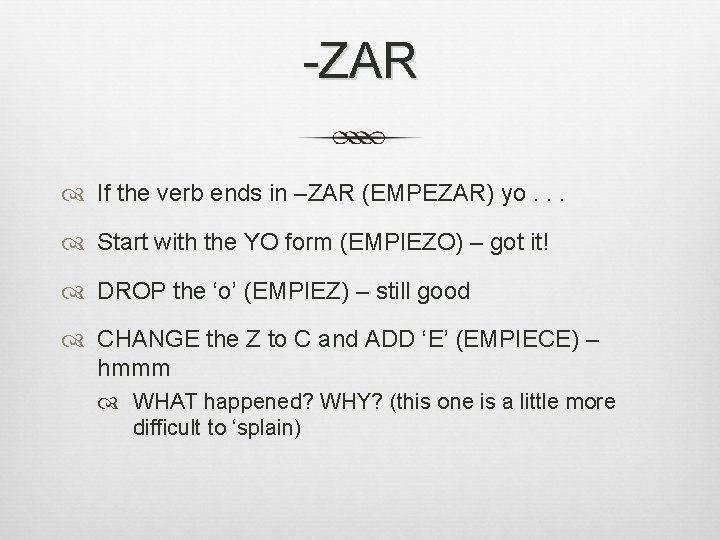
-ZAR If the verb ends in –ZAR (EMPEZAR) yo. . . Start with the YO form (EMPIEZO) – got it! DROP the ‘o’ (EMPIEZ) – still good CHANGE the Z to C and ADD ‘E’ (EMPIECE) – hmmm WHAT happened? WHY? (this one is a little more difficult to ‘splain)
Y ahora Now – you can give commands to * me (RIGHT! Go ahead and try!) *your boss (AGAIN, HA!) *a stranger on the street (would they even listen? ) *ANYONE you refer to as UD