
Mandatos afirmativos y negativos Captulo 3 Mandatos afirmativos





- Slides: 18
Mandatos afirmativos y negativos Capítulo 3
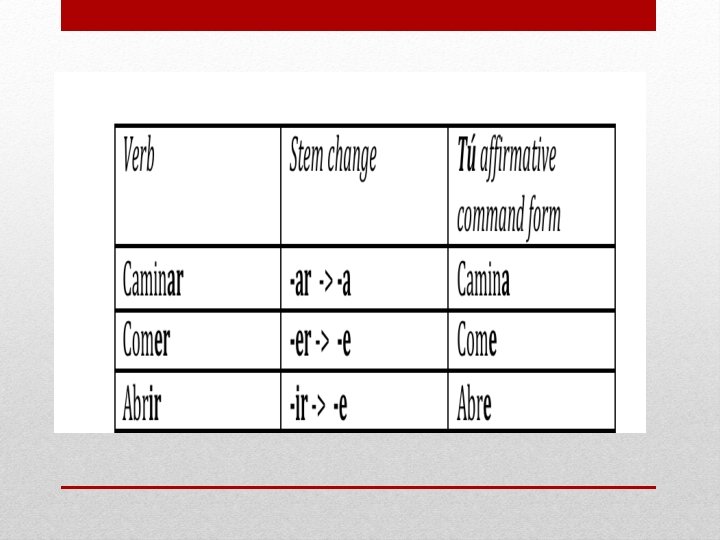
Mandatos afirmativos con tú/ Affirmative commands in tú form • Use the tú command to tell a close friend or family member to do something. • When giving a command in the tú form, use the present tense Ud. /él/ ella form. • This also applies to stem changing verbs like jugar (juega), volver (vuelve), perder (pierde), seguir (sigue), cerrar (cierra), and pedir (pide).
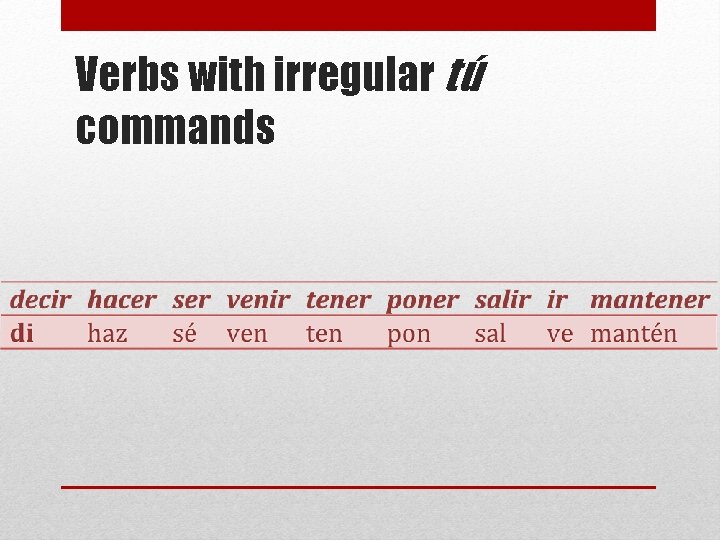
Verbs with irregular tú commands
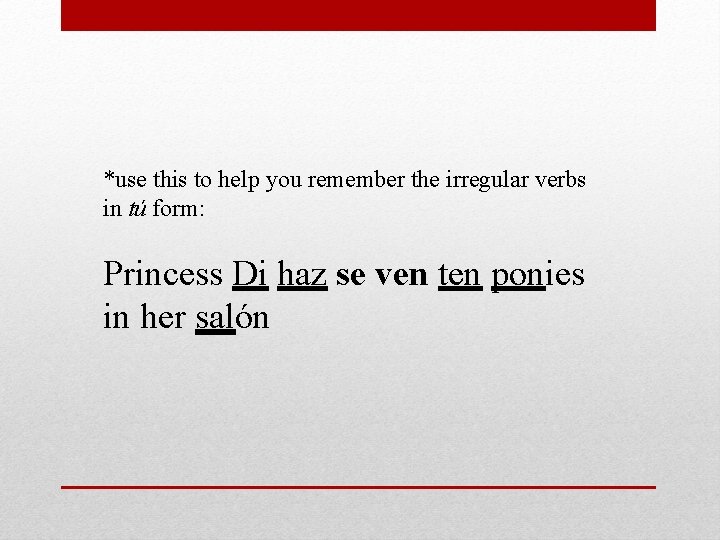
*use this to help you remember the irregular verbs in tú form: Princess Di haz se ven ten ponies in her salón
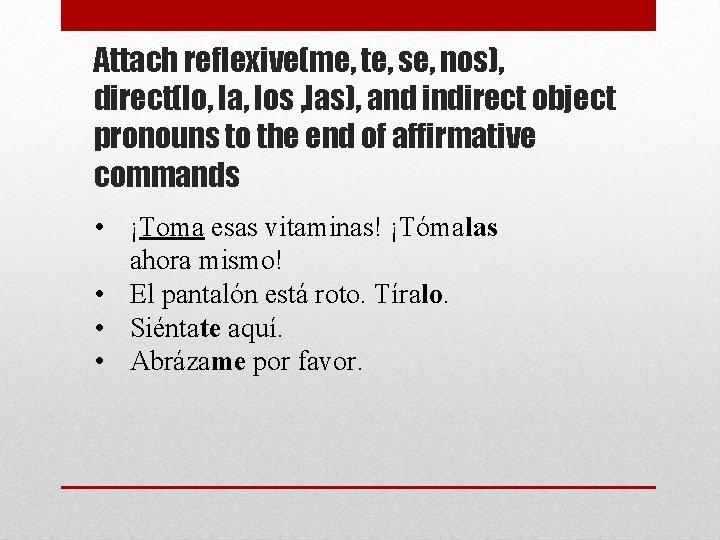
Attach reflexive(me, te, se, nos), direct(lo, la, los , las), and indirect object pronouns to the end of affirmative commands • ¡Toma esas vitaminas! ¡Tómalas . ahora mismo! • El pantalón está roto. Tíralo. • Siéntate aquí. • Abrázame por favor.
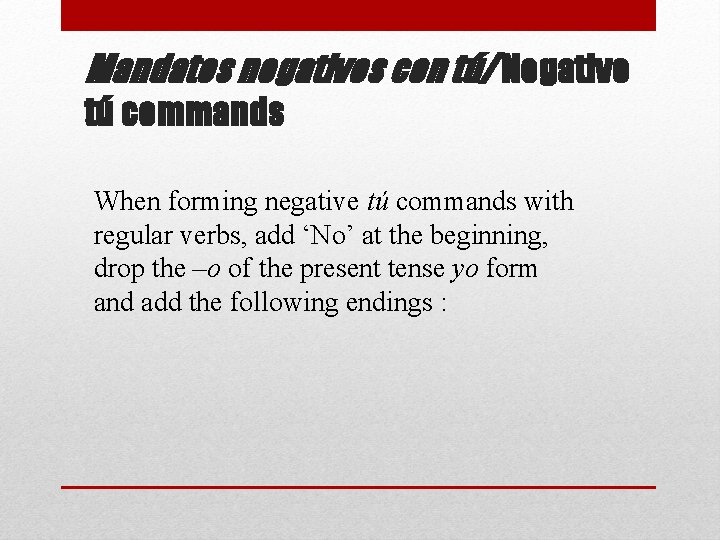
Mandatos negativos con tú/ Negative tú commands When forming negative tú commands with regular verbs, add ‘No’ at the beginning, drop the –o of the present tense yo form and add the following endings :
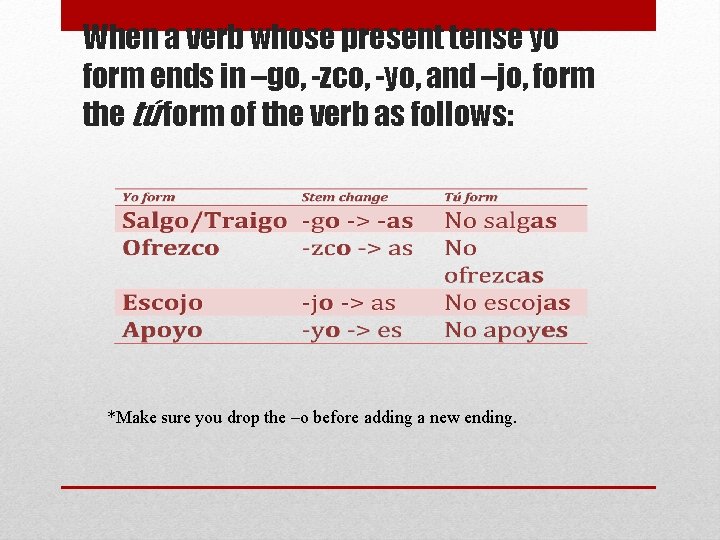
When a verb whose present tense yo form ends in –go, -zco, -yo, and –jo, form the tú form of the verb as follows: *Make sure you drop the –o before adding a new ending.
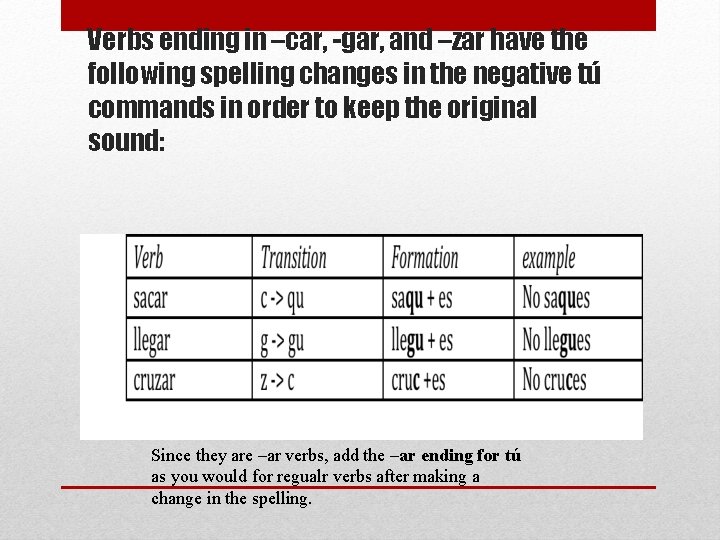
Verbs ending in –car, -gar, and –zar have the following spelling changes in the negative tú commands in order to keep the original sound: Since they are –ar verbs, add the –ar ending for tú as you would for regualr verbs after making a change in the spelling.
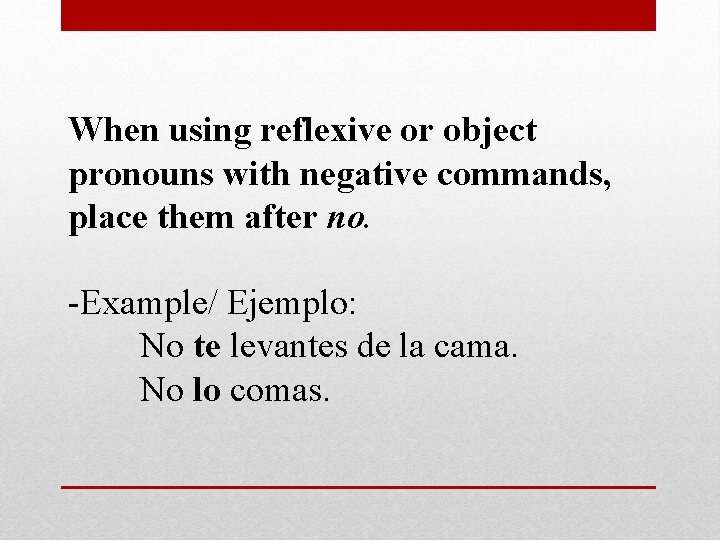
When using reflexive or object pronouns with negative commands, place them after no. -Example/ Ejemplo: No te levantes de la cama. No lo comas.
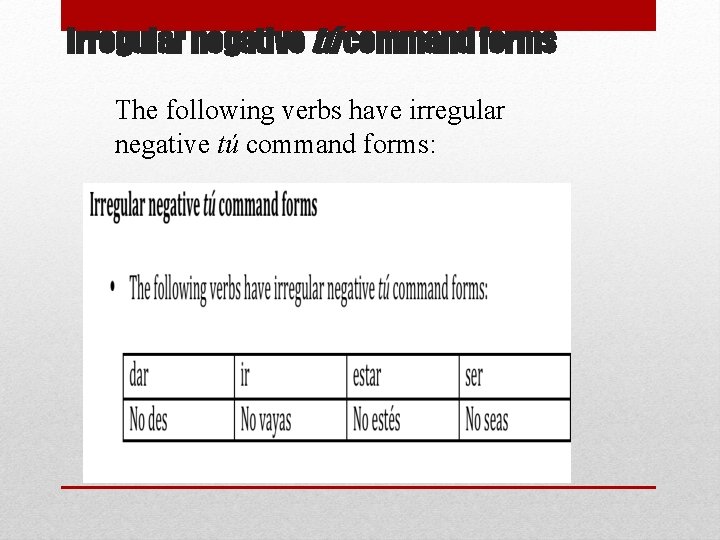
Irregular negative tú command forms The following verbs have irregular negative tú command forms:
Mandatos afirmativos y negativos con Ud. Y Uds.
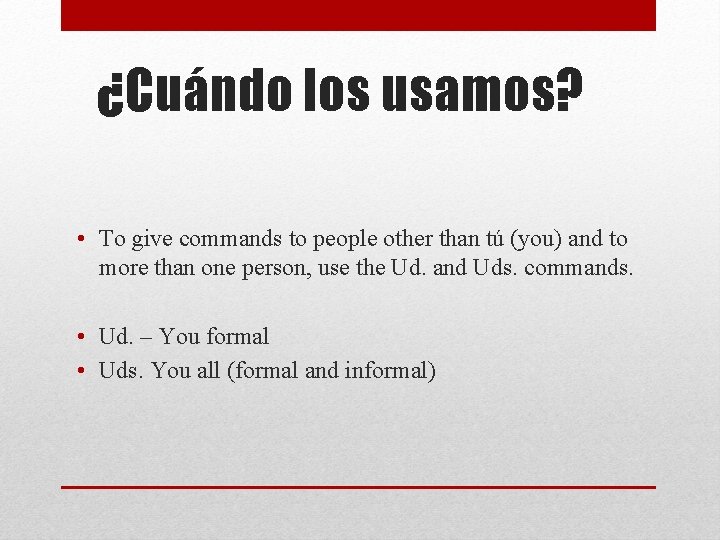
¿Cuándo los usamos? • To give commands to people other than tú (you) and to more than one person, use the Ud. and Uds. commands. • Ud. – You formal • Uds. You all (formal and informal)
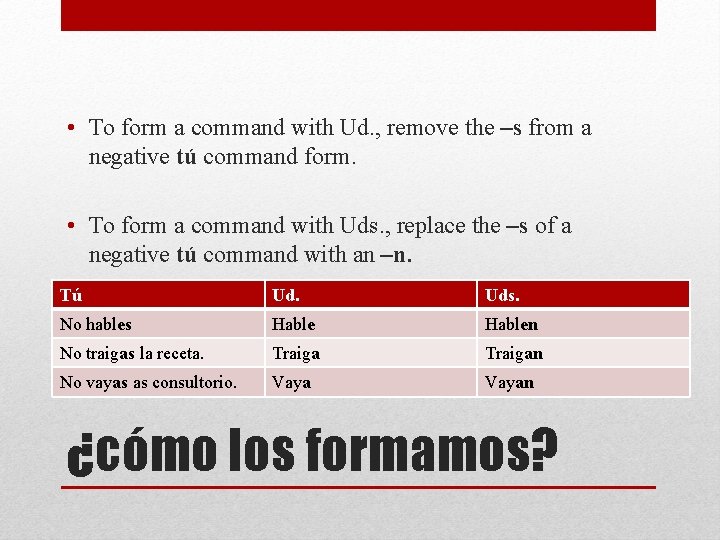
• To form a command with Ud. , remove the –s from a negative tú command form. • To form a command with Uds. , replace the –s of a negative tú command with an –n. Tú Ud. Uds. No hables Hablen No traigas la receta. Traigan No vayas as consultorio. Vayan ¿cómo los formamos?
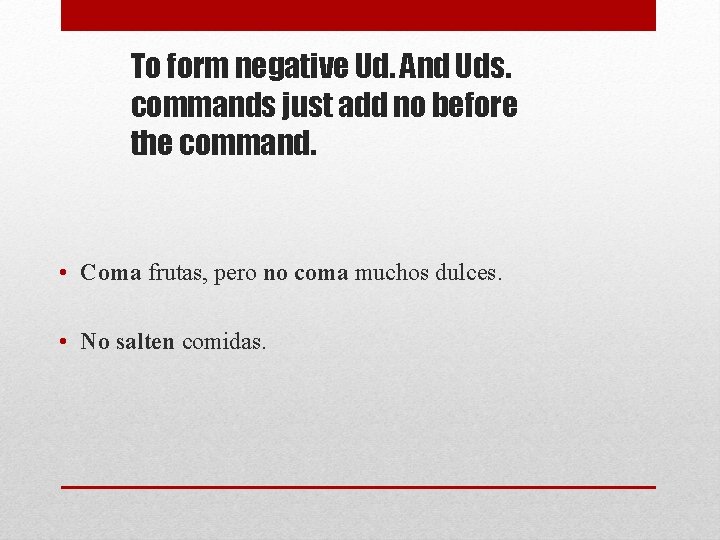
To form negative Ud. And Uds. commands just add no before the command. • Coma frutas, pero no coma muchos dulces. • No salten comidas.
Attach reflexive, direct, and indirect object pornouns to the end of affirmative Ud. And Uds. Commands. In negative commands, add the pronoun between no and the verb. • ¡Tomen estas pastillas! ¡Tómenlas ahora mismo! • ¡Cepíllese los dientes después de comer!
FIN