
Managing Venous Thromboembolism in the Emergency Department November
Managing Venous Thromboembolism in the Emergency Department November 9, 2017 Jeffrey A Kline, MD Department of Emergency Medicine Indiana University School of Medicine @klinelab
Disclosures JAK Research funding: NIH, Ikaria Consultant: Diagnostica Stago Advisory Board: Janssen Stock: CP Diagnostics
Session overview • Risk factors for PE in the ED • Ruling out PE without imaging • Risk stratification to allow home treatment
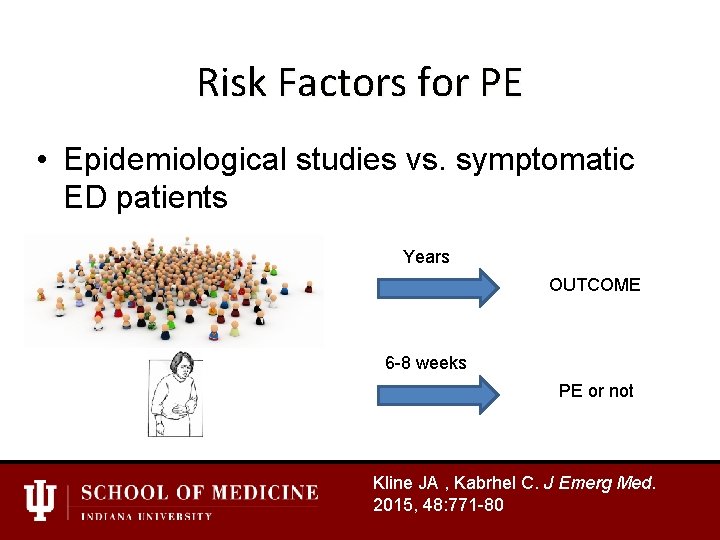
Risk Factors for PE • Epidemiological studies vs. symptomatic ED patients Years OUTCOME 6 -8 weeks PE or not Kline JA , Kabrhel C. J Emerg Med. 2015, 48: 771 -80
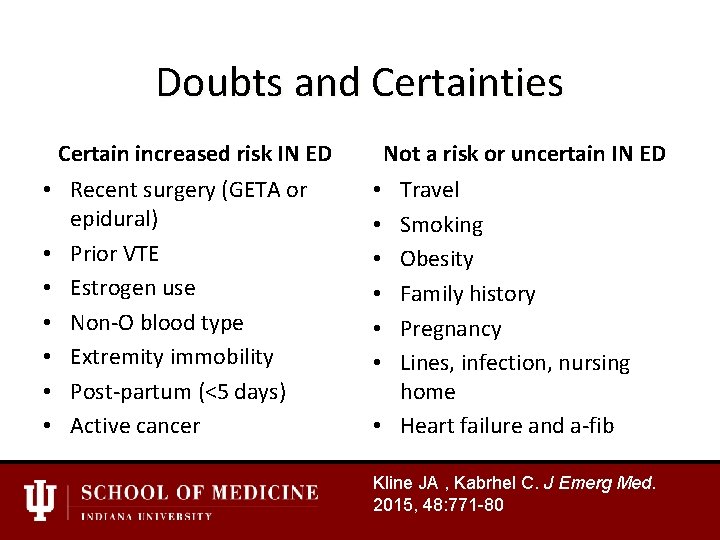
Doubts and Certainties Certain increased risk IN ED • Recent surgery (GETA or epidural) • Prior VTE • Estrogen use • Non-O blood type • Extremity immobility • Post-partum (<5 days) • Active cancer Not a risk or uncertain IN ED Travel Smoking Obesity Family history Pregnancy Lines, infection, nursing home • Heart failure and a-fib • • • Kline JA , Kabrhel C. J Emerg Med. 2015, 48: 771 -80
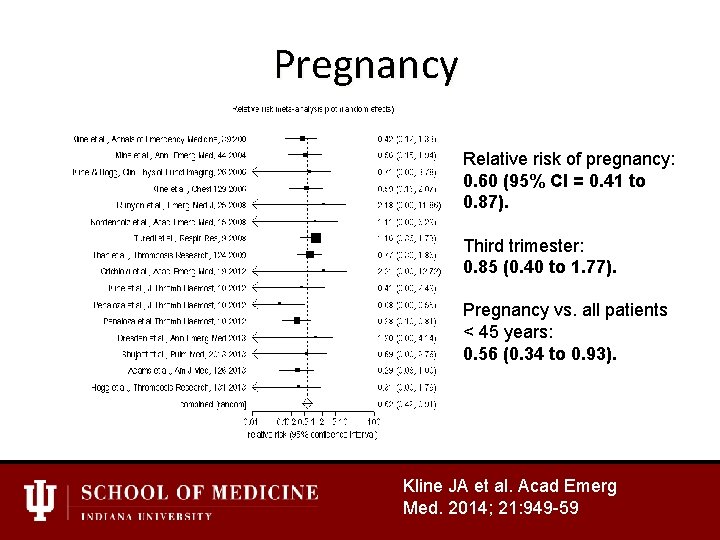
Pregnancy Relative risk of pregnancy: 0. 60 (95% CI = 0. 41 to 0. 87). Third trimester: 0. 85 (0. 40 to 1. 77). Pregnancy vs. all patients < 45 years: 0. 56 (0. 34 to 0. 93). Kline JA et al. Acad Emerg Med. 2014; 21: 949 -59
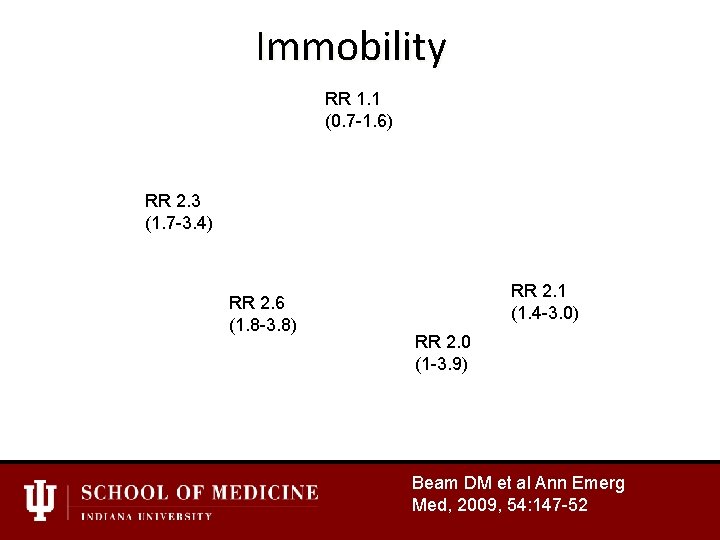
Immobility RR 1. 1 (0. 7 -1. 6) RR 2. 3 (1. 7 -3. 4) RR 2. 6 (1. 8 -3. 8) RR 2. 1 (1. 4 -3. 0) RR 2. 0 (1 -3. 9) Beam DM et al Ann Emerg Med, 2009, 54: 147 -52
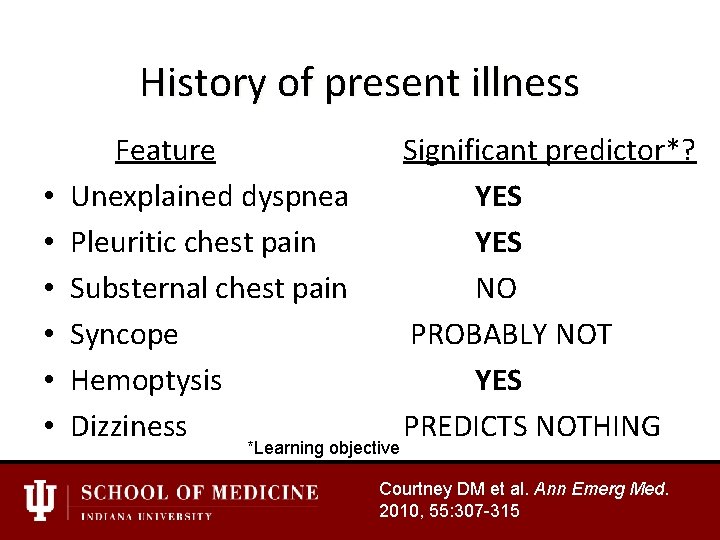
History of present illness • • • Feature Unexplained dyspnea Pleuritic chest pain Substernal chest pain Syncope Hemoptysis Dizziness *Learning objective Significant predictor*? YES NO PROBABLY NOT YES PREDICTS NOTHING Courtney DM et al. Ann Emerg Med. 2010, 55: 307 -315
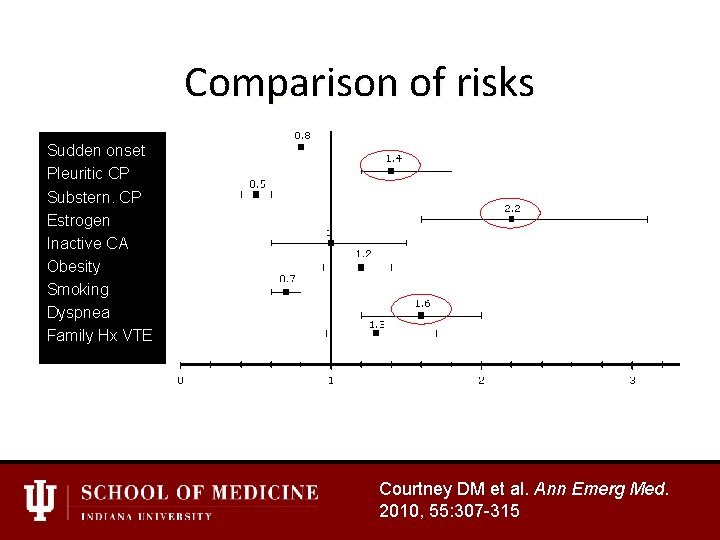
Comparison of risks Sudden onset Pleuritic CP Substern. CP Estrogen Inactive CA Obesity Smoking Dyspnea Family Hx VTE Courtney DM et al. Ann Emerg Med. 2010, 55: 307 -315
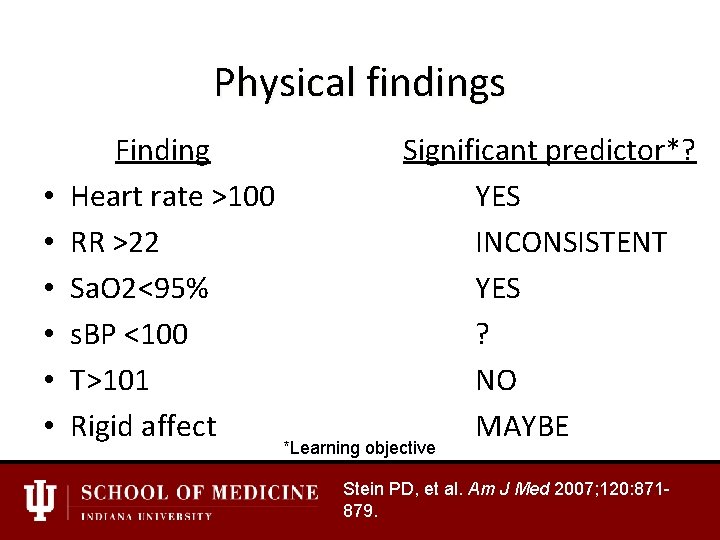
Physical findings • • • Finding Heart rate >100 RR >22 Sa. O 2<95% s. BP <100 T>101 Rigid affect Significant predictor*? YES INCONSISTENT YES ? NO MAYBE *Learning objective Stein PD, et al. Am J Med 2007; 120: 871879.
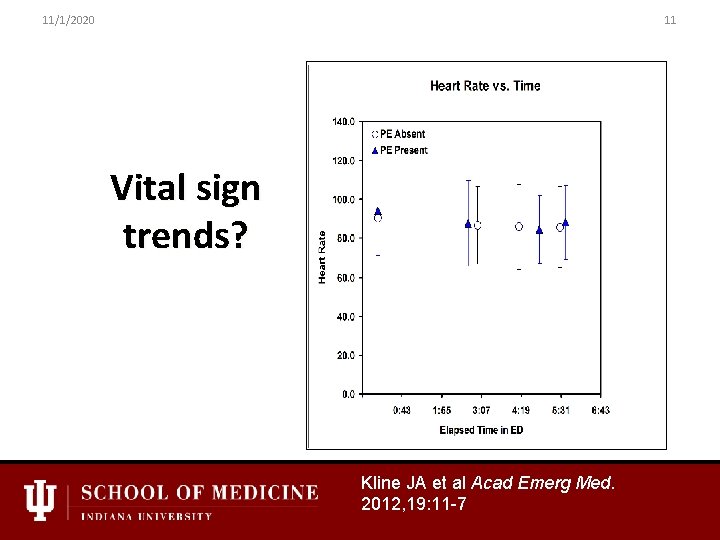
11/1/2020 11 Vital sign trends? Kline JA et al Acad Emerg Med. 2012, 19: 11 -7
Sick patients have blunted affect The median of all FACS values from disease+ patients 3. 4 (1 st-3 rd quartiles 1 -6), was significantly less than the median of 7 (3 -14) from disease- patients (P=0. 019) Kline JA, et al. Decreased facial expression variability in patients with serious cardiopulmonary disease in the emergency care setting. Emerg Med J 2014; 32: 3 -8
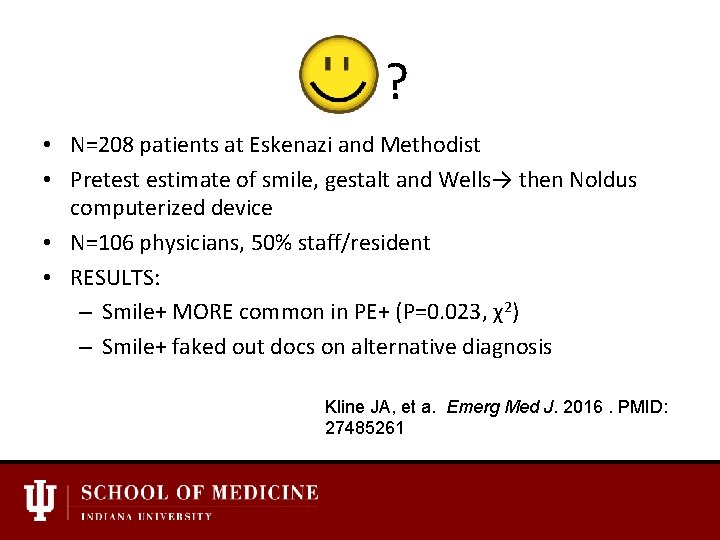
? • N=208 patients at Eskenazi and Methodist • Pretest estimate of smile, gestalt and Wells→ then Noldus computerized device • N=106 physicians, 50% staff/resident • RESULTS: – Smile+ MORE common in PE+ (P=0. 023, χ2) – Smile+ faked out docs on alternative diagnosis Kline JA, et a. Emerg Med J. 2016. PMID: 27485261
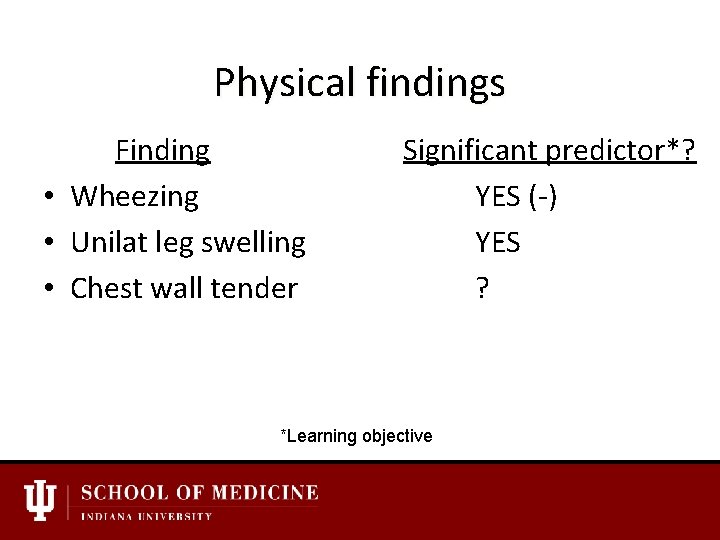
Physical findings Finding • Wheezing • Unilat leg swelling • Chest wall tender Significant predictor*? YES (-) YES ? *Learning objective
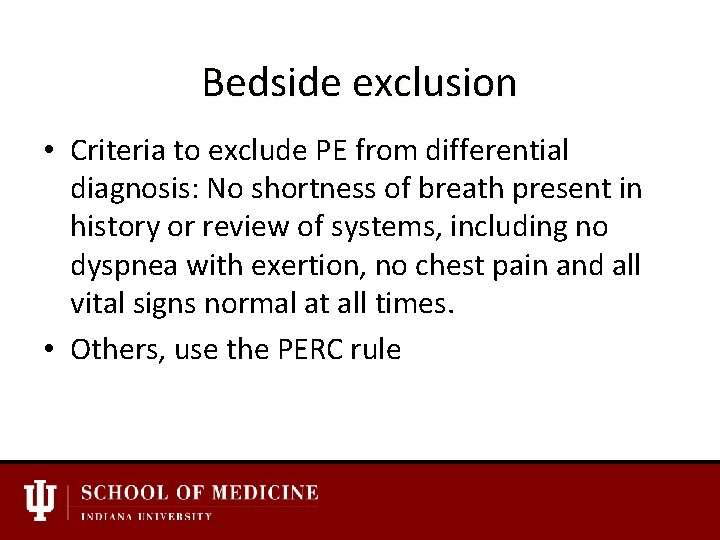
Bedside exclusion • Criteria to exclude PE from differential diagnosis: No shortness of breath present in history or review of systems, including no dyspnea with exertion, no chest pain and all vital signs normal at all times. • Others, use the PERC rule
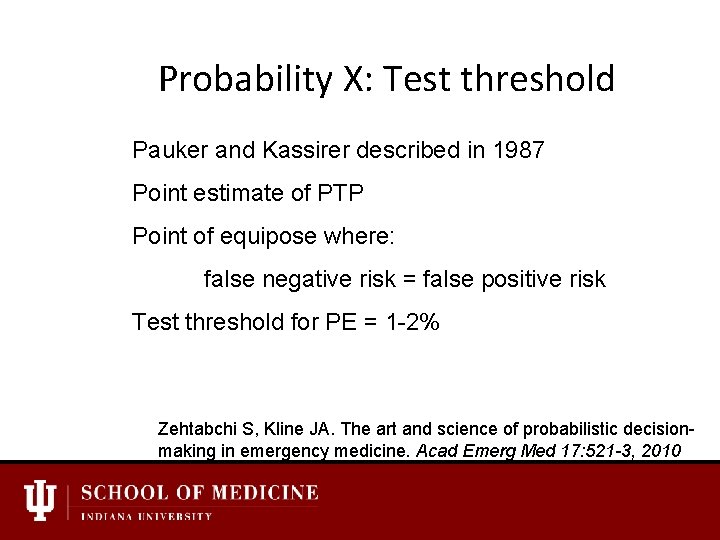
Probability X: Test threshold Pauker and Kassirer described in 1987 Point estimate of PTP Point of equipose where: false negative risk = false positive risk Test threshold for PE = 1 -2% Zehtabchi S, Kline JA. The art and science of probabilistic decisionmaking in emergency medicine. Acad Emerg Med 17: 521 -3, 2010
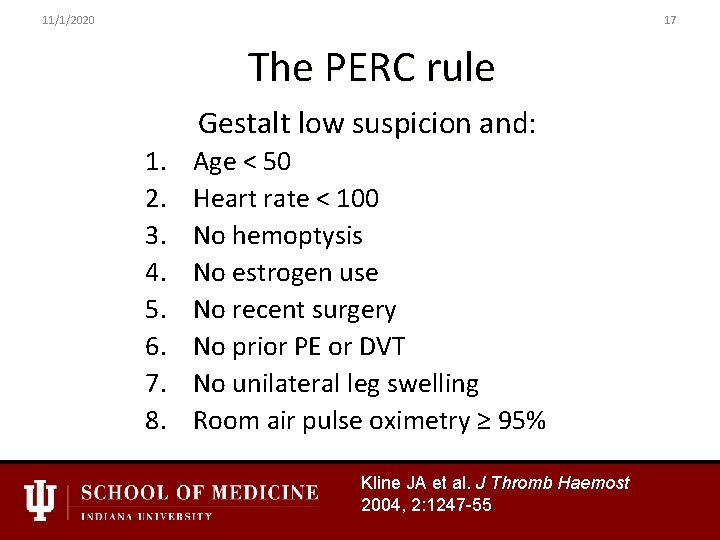
11/1/2020 17 The PERC rule Gestalt low suspicion and: 1. 2. 3. 4. 5. 6. 7. 8. Age < 50 Heart rate < 100 No hemoptysis No estrogen use No recent surgery No prior PE or DVT No unilateral leg swelling Room air pulse oximetry ≥ 95% Kline JA et al. J Thromb Haemost 2004, 2: 1247 -55
Single most important thing I have to say Do not try to memorize decision rules. You have better things to do. Look them up
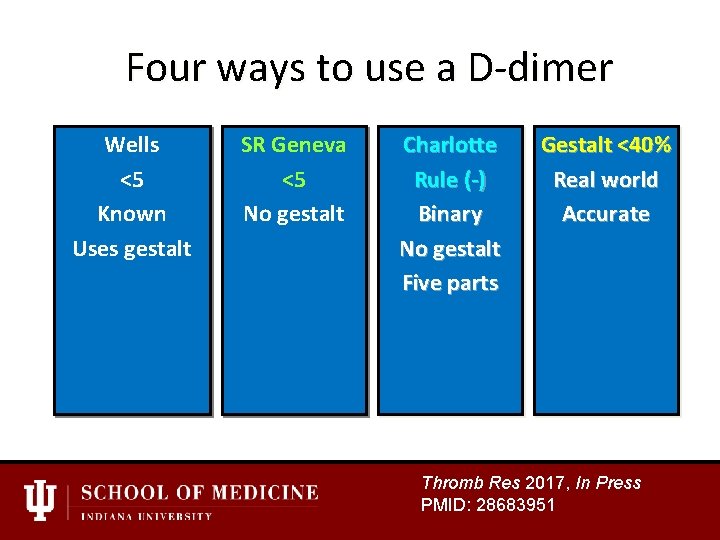
19 Four ways to use a D-dimer Wells <5 Known Uses gestalt SR Geneva <5 No gestalt Charlotte Rule (-) Binary No gestalt Five parts Gestalt <40% Real world Accurate Thromb Res 2017, In Press PMID: 28683951
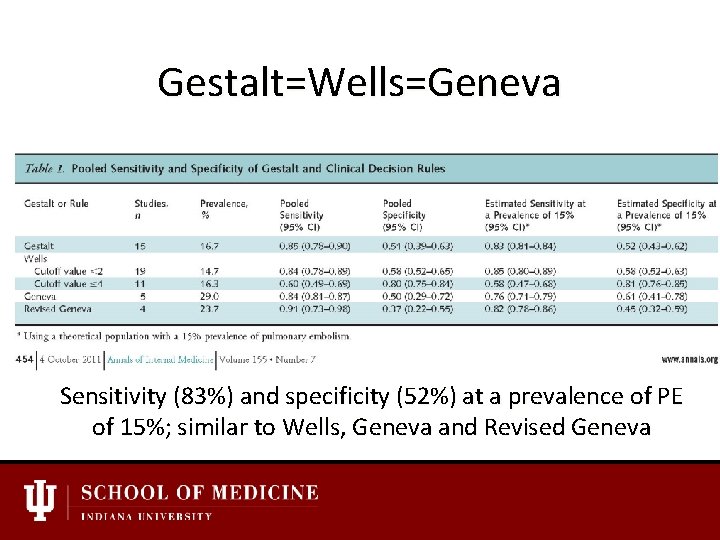
Gestalt=Wells=Geneva Sensitivity (83%) and specificity (52%) at a prevalence of PE of 15%; similar to Wells, Geneva and Revised Geneva
Adjusting the D-dimer • If standard cutoff is 500 ng/m. L, age*10 ng/m. L yields approximately the same LR(-) as standard cutoff and an acceptably low false negative rate – From Kaiser: N= 31, 094 patients with D-dimer for suspected PE, the false negative rate was 0. 06% (95% CI: 0. 03 -0. 11%) at standard cutoff and 0. 18% (0. 1 -0. 25%) using age-adjusted cutoff – (Sharp AL et al. Ann Emerg Med. 2016, 67: 249 -57)
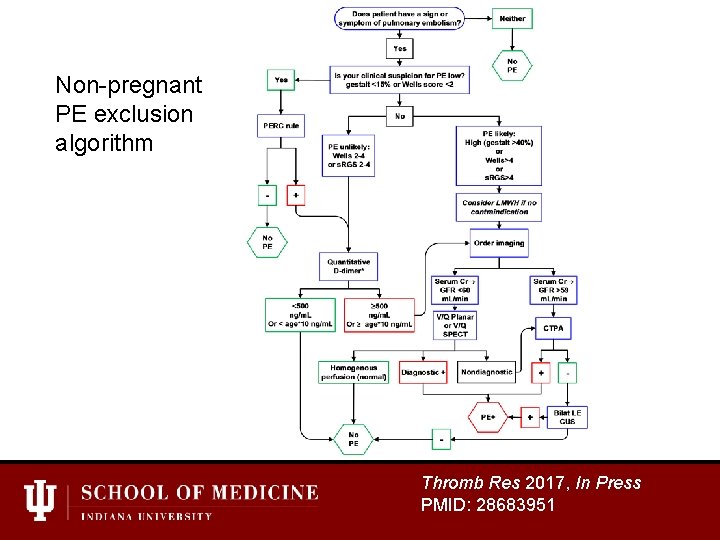
Non-pregnant PE exclusion algorithm Thromb Res 2017, In Press PMID: 28683951
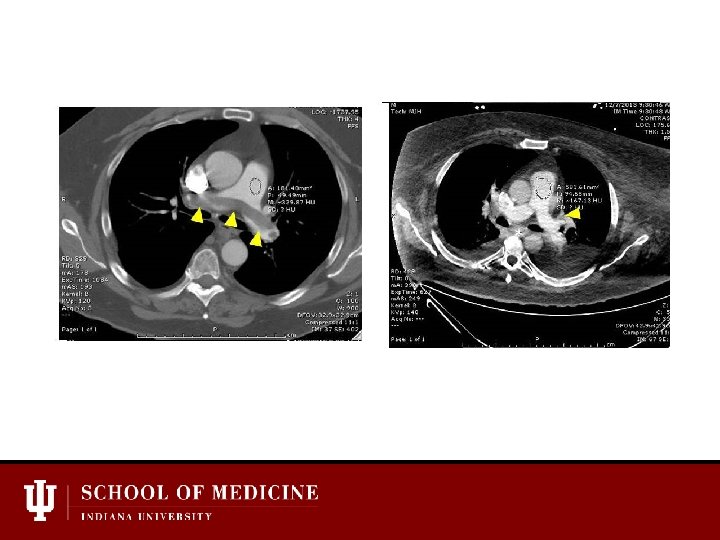
Issues with diagnosis • CTPA quality – Not all PEs created equal – Beware low quality scan • Subsegmental PE – If no DVT, it is reasonable and prudent to offer the otherwise low risk patient the option of no treatment
Treatment • Who can go home? – Hestia or PESI negative and low bleeding risk – Easiest done with apixaban or rivaroxaban • • Admit for anticoagulation Admit for catheter directed lysis Bolus lysis ECMO/surgery
Treatment • Who can go home? – Hestia or s. PESI negative* and low bleeding risk – Easiest done with apixaban or rivaroxaban • • Admit for anticoagulation Admit for catheter directed lysis Bolus lysis ECMO/surgery *Learning objective
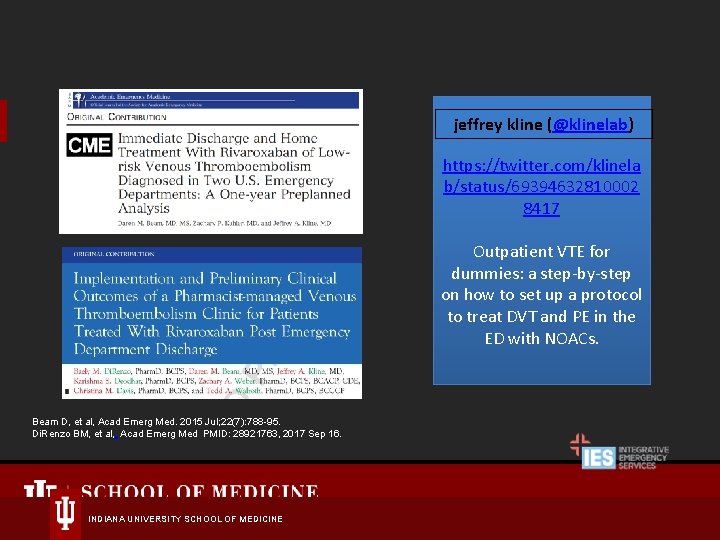
jeffrey kline (@klinelab) https: //twitter. com/klinela b/status/69394632810002 8417 Outpatient VTE for dummies: a step-by-step on how to set up a protocol to treat DVT and PE in the ED with NOACs. Beam D, et al, Acad Emerg Med. 2015 Jul; 22(7): 788 -95. Di. Renzo BM, et al, . Acad Emerg Med PMID: 28921763, 2017 Sep 16. INDIANA UNIVERSITY SCHOOL OF MEDICINE
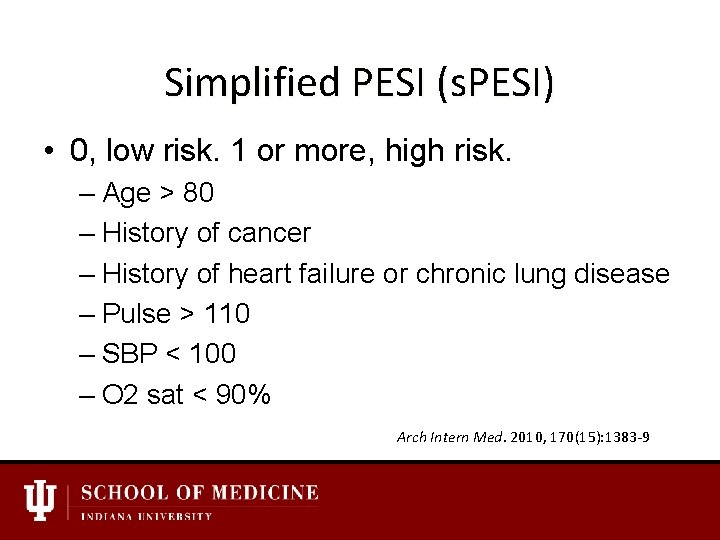
Simplified PESI (s. PESI) • 0, low risk. 1 or more, high risk. – Age > 80 – History of cancer – History of heart failure or chronic lung disease – Pulse > 110 – SBP < 100 – O 2 sat < 90% Arch Intern Med. 2010, 170(15): 1383 -9
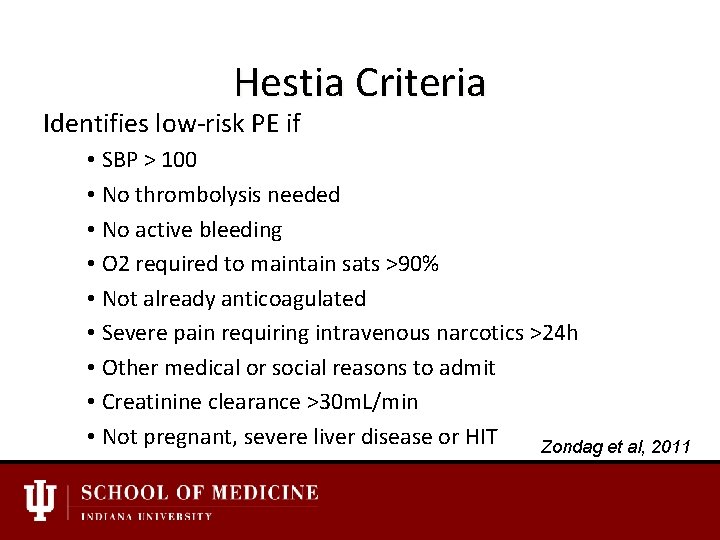
Hestia Criteria Identifies low-risk PE if • SBP > 100 • No thrombolysis needed • No active bleeding • O 2 required to maintain sats >90% • Not already anticoagulated • Severe pain requiring intravenous narcotics >24 h • Other medical or social reasons to admit • Creatinine clearance >30 m. L/min • Not pregnant, severe liver disease or HIT Zondag et al, 2011
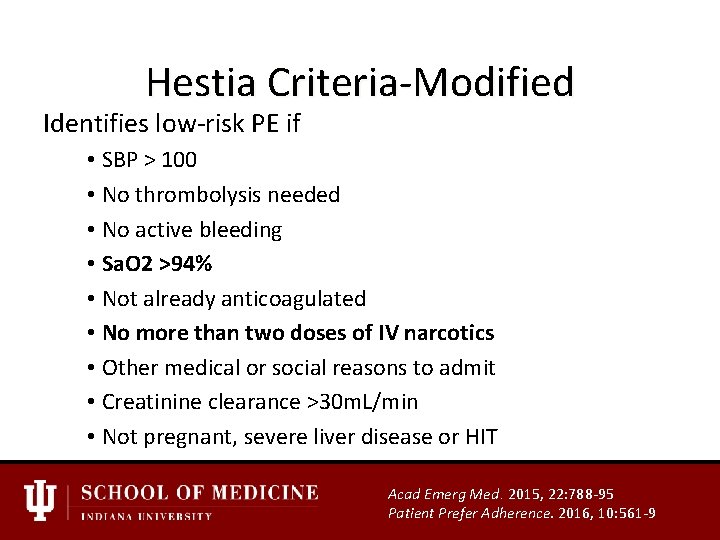
Hestia Criteria-Modified Identifies low-risk PE if • SBP > 100 • No thrombolysis needed • No active bleeding • Sa. O 2 >94% • Not already anticoagulated • No more than two doses of IV narcotics • Other medical or social reasons to admit • Creatinine clearance >30 m. L/min • Not pregnant, severe liver disease or HIT Acad Emerg Med. 2015, 22: 788 -95 Patient Prefer Adherence. 2016, 10: 561 -9
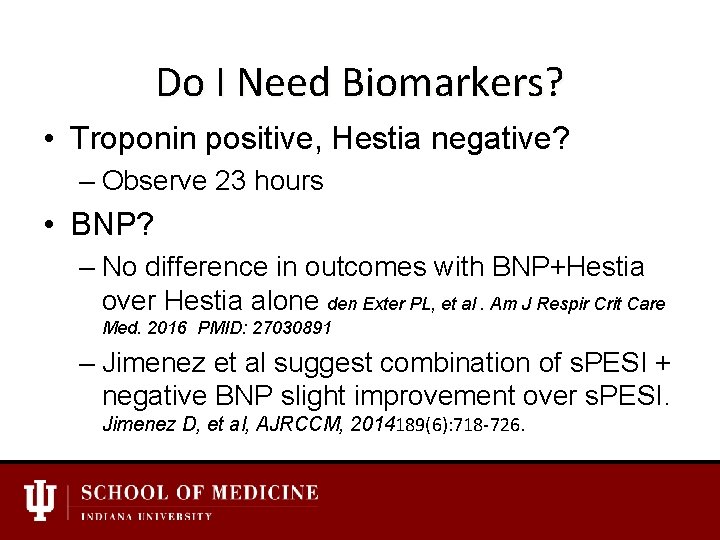
Do I Need Biomarkers? • Troponin positive, Hestia negative? – Observe 23 hours • BNP? – No difference in outcomes with BNP+Hestia over Hestia alone den Exter PL, et al. Am J Respir Crit Care Med. 2016 PMID: 27030891 – Jimenez et al suggest combination of s. PESI + negative BNP slight improvement over s. PESI. Jimenez D, et al, AJRCCM, 2014189(6): 718 -726.
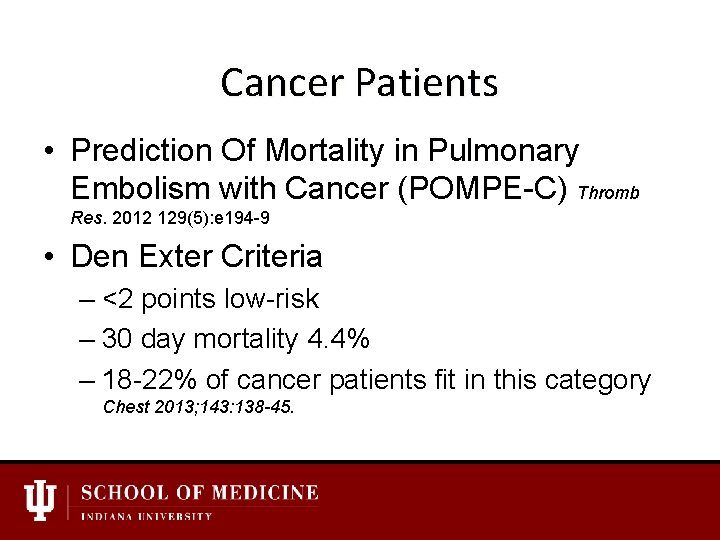
Cancer Patients • Prediction Of Mortality in Pulmonary Embolism with Cancer (POMPE-C) Thromb Res. 2012 129(5): e 194 -9 • Den Exter Criteria – <2 points low-risk – 30 day mortality 4. 4% – 18 -22% of cancer patients fit in this category Chest 2013; 143: 138 -45.
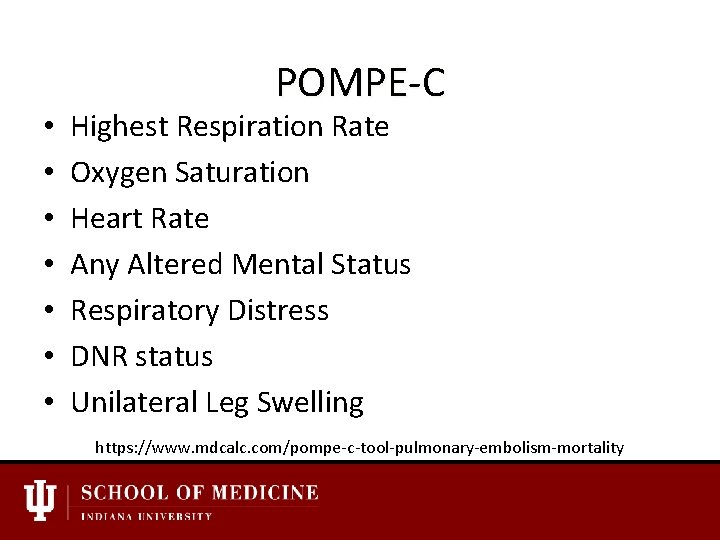
• • POMPE-C Highest Respiration Rate Oxygen Saturation Heart Rate Any Altered Mental Status Respiratory Distress DNR status Unilateral Leg Swelling https: //www. mdcalc. com/pompe-c-tool-pulmonary-embolism-mortality
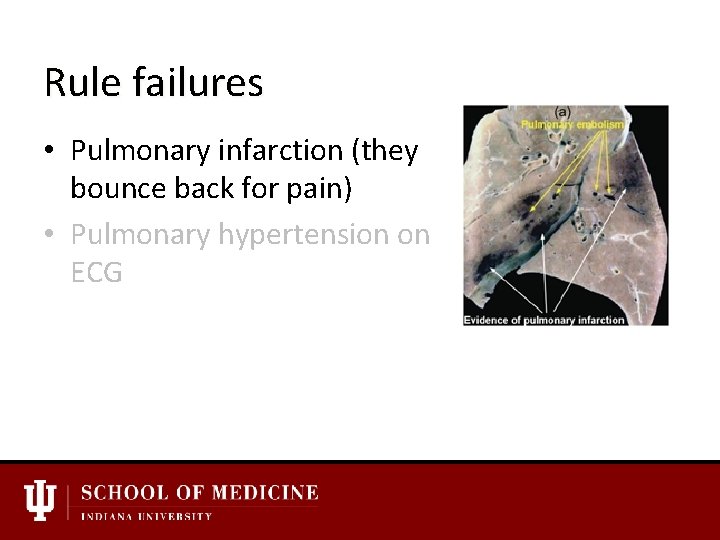
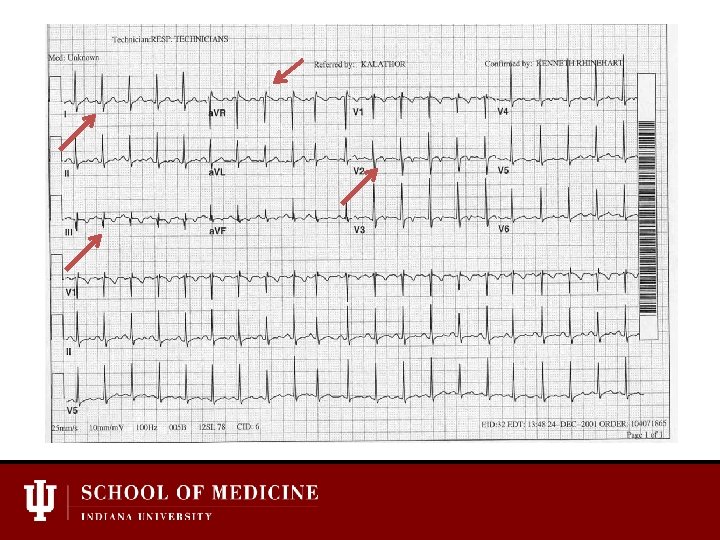
Rule failures • Pulmonary infarction (they bounce back for pain) • Pulmonary hypertension on ECG
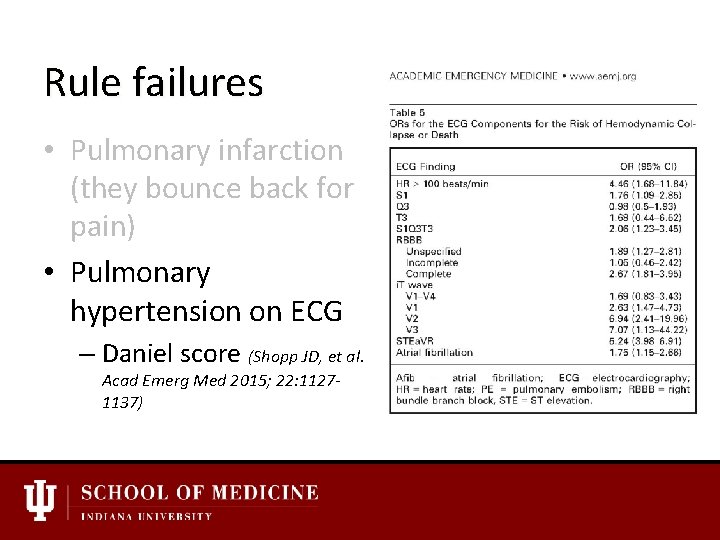
Rule failures • Pulmonary infarction (they bounce back for pain) • Pulmonary hypertension on ECG – Daniel score (Shopp JD, et al. Acad Emerg Med 2015; 22: 11271137)
Physician intuition of sick • Delirium (altered mental status) – Inattentiveness and distraction – Think of six emotions (happy, sad, surprise, fear, disgust, anger) – Facial affect that conveys the emotion of fear and disgust that you interpret as panic – But they can fluctuate
Q. Was there any change in his condition during the time that you were there? A. Off and on. I mean, like I said, the breathing would get heavier Q. Tell me what you recall being and deeper and, you know, he'd turn one side to one side. You said in that regard. A. He just referred to--you know, he could see him getting pale and sweating and -- you know, and just referred to not--something's definitely wrong, you know, I mean, then it would tone back down, you he just--breathing was off, he was know, and – dizzy, you know, he would get pale Q. Tell me what you mean by for a while and then you'd see a "tone back down. “ little color come back and see a A. I mean it is like he would go little panic in his face and-–it was back to a non-panic state and his just discomfort. breathing would settle… Q. Did you talk to him any further about how he was doing, how he was feeling? A. Sure, several times.
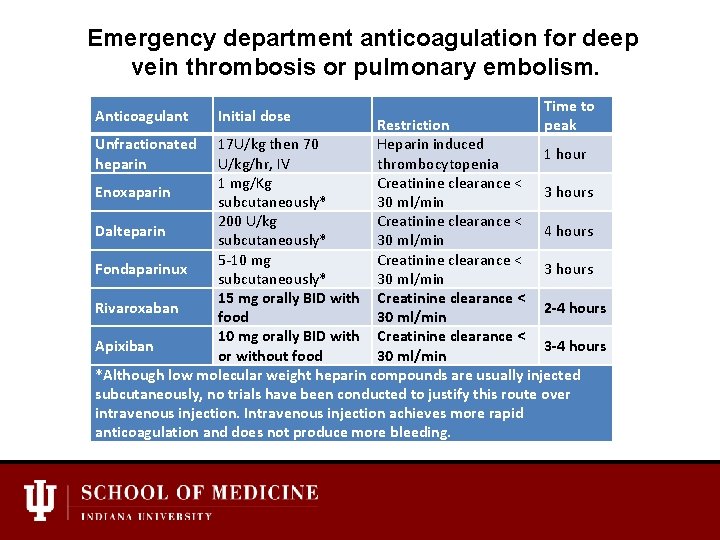
Emergency department anticoagulation for deep vein thrombosis or pulmonary embolism. Anticoagulant Initial dose Time to peak Restriction Unfractionated 17 U/kg then 70 Heparin induced 1 hour heparin U/kg/hr, IV thrombocytopenia 1 mg/Kg Creatinine clearance < Enoxaparin 3 hours subcutaneously* 30 ml/min 200 U/kg Creatinine clearance < Dalteparin 4 hours subcutaneously* 30 ml/min 5 -10 mg Creatinine clearance < Fondaparinux 3 hours subcutaneously* 30 ml/min 15 mg orally BID with Creatinine clearance < Rivaroxaban 2 -4 hours food 30 ml/min 10 mg orally BID with Creatinine clearance < Apixiban 3 -4 hours or without food 30 ml/min *Although low molecular weight heparin compounds are usually injected subcutaneously, no trials have been conducted to justify this route over intravenous injection. Intravenous injection achieves more rapid anticoagulation and does not produce more bleeding.
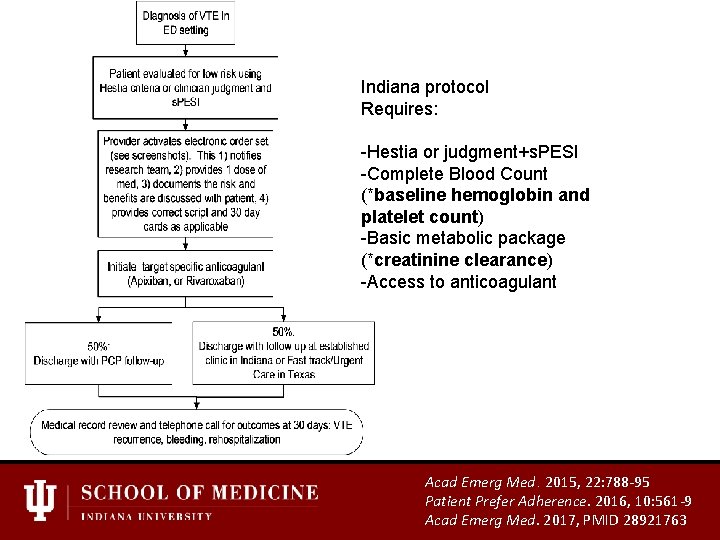
Indiana protocol Requires: -Hestia or judgment+s. PESI -Complete Blood Count (*baseline hemoglobin and platelet count) -Basic metabolic package (*creatinine clearance) -Access to anticoagulant Acad Emerg Med. 2015, 22: 788 -95 Patient Prefer Adherence. 2016, 10: 561 -9 Acad Emerg Med. 2017, PMID 28921763
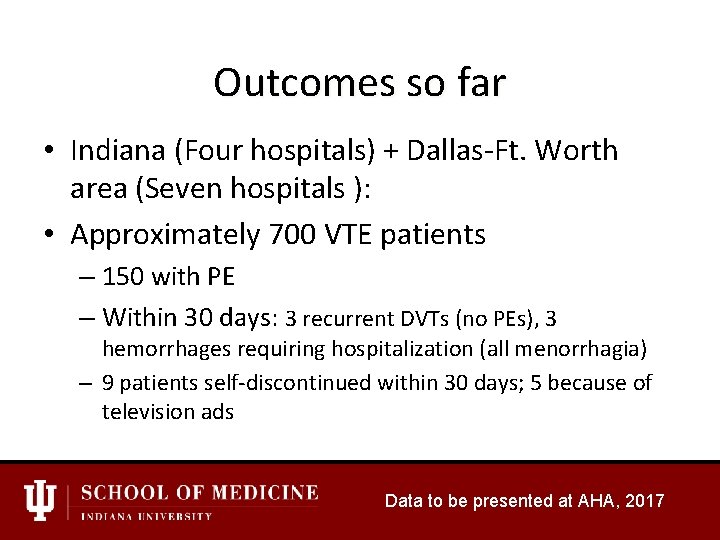
Outcomes so far • Indiana (Four hospitals) + Dallas-Ft. Worth area (Seven hospitals ): • Approximately 700 VTE patients – 150 with PE – Within 30 days: 3 recurrent DVTs (no PEs), 3 hemorrhages requiring hospitalization (all menorrhagia) – 9 patients self-discontinued within 30 days; 5 because of television ads Data to be presented at AHA, 2017
Summary • Unexplained dyspnea, pleuritic chest pain, a heart rate >100, a pulse ox <95% increase risk • Prior surgery, prior VTE and estrogen increase risk • Choose wisely--use the PERC rule and D-dimer to rule out PE • Age adjusted D-dimer is ready to use • Outpatient treatment for low risk VTE is within the bounds of standard care practice
Thank you to the National Blood Clot Alliance for hosting today’s webinar. Questions about this webinar series? Please contact Cynthia Sayers at CSayers@cdc. gov. CDC Webinar Archive: www. cdc. gov. ncbddd/blooddisorders/webinar. html
- Slides: 43