
Managing the Asymptomatic Type A and Type B
Managing the Asymptomatic Type A and Type B Dissection Robert M. Bersin, MD, MPH, FACC, FSCAI Medical Director, Endovascular Services Seattle Cardiology and Swedish Medical Center Seattle, Washington
Disclosure Information Managing the Asymptomatic Type A and Type B Dissection Robert M. Bersin MD, MPH, FACC, FSCAI The following relationships exist related to this presentation: Name of Company: Cook Inc. C, P Name of Company: Cordis Endovascular AB, C, EI, P, SB Name of Company: Medtronic Vascular P Name of Company: W. L. Gore C, P AB: Advisory Board C: Consulting Relationship EI: Equity Interest GS: Grant Support P: Proctor or Training Course Sponsorships SB: Speakers Bureau SE: Spouse Employee SO: Stock Options or Positions Off label use of products will be discussed in this presentation: Use of endografts for aortic dissection, ascending and arch aneurysms Seattle Cardiology
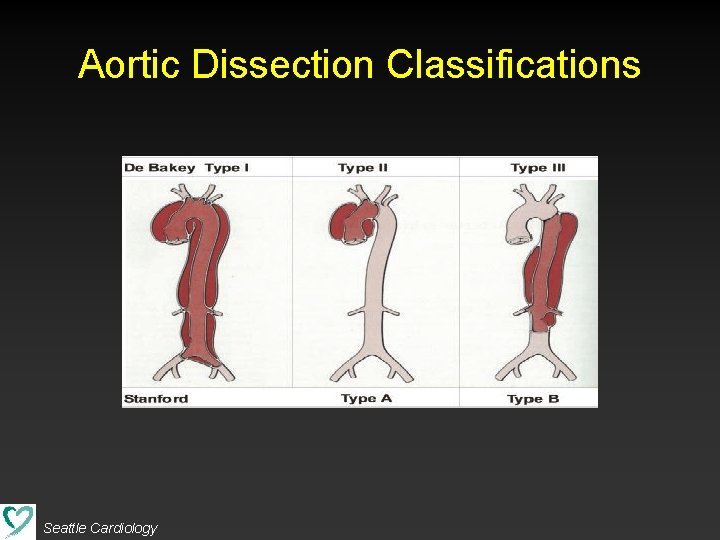
Aortic Dissection Classifications Seattle Cardiology
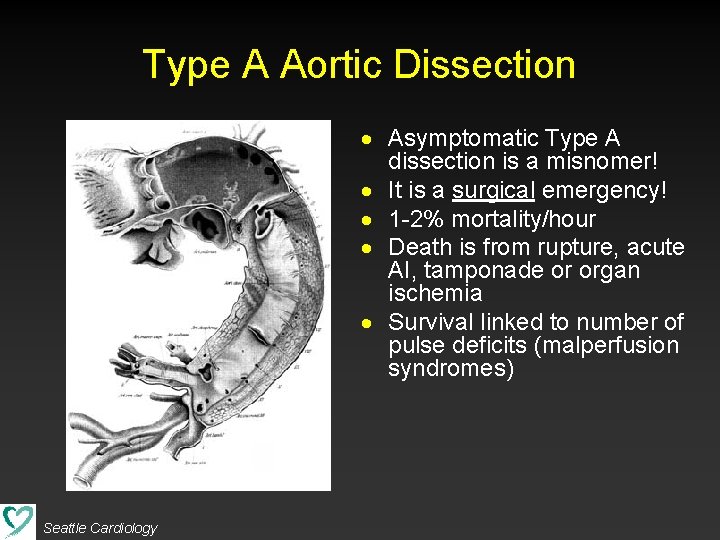
Type A Aortic Dissection Asymptomatic Type A dissection is a misnomer! It is a surgical emergency! 1 -2% mortality/hour Death is from rupture, acute AI, tamponade or organ ischemia Survival linked to number of pulse deficits (malperfusion syndromes) Seattle Cardiology
Type A Dissection-Class I Indications for Surgery • • • For patients with ascending thoracic aortic dissection, all aneurysmal aorta and the proximal extent of the dissection should be resected. If a De. Bakey Type II dissection is present, the entire dissected aorta should be replaced. (Level of Evidence: C) Separate valve and ascending aortic replacement are recommended in patients without significant aortic root dilatation, in elderly patients or in young patients with minimal dilatation in whom a biological valve is being implanted. (Level of Evidence: C) Patients with Marfan, Loeys-Dietz, and Ehlers-Danlos syndromes and other patients with dilatation of the aortic root and sinuses of Valsalva should undergo root replacement with a valve graft conduit or excision of the sinuses in combination with a valve sparing procedure if technically feasible (Level of Evidence: B) Seattle Cardiology
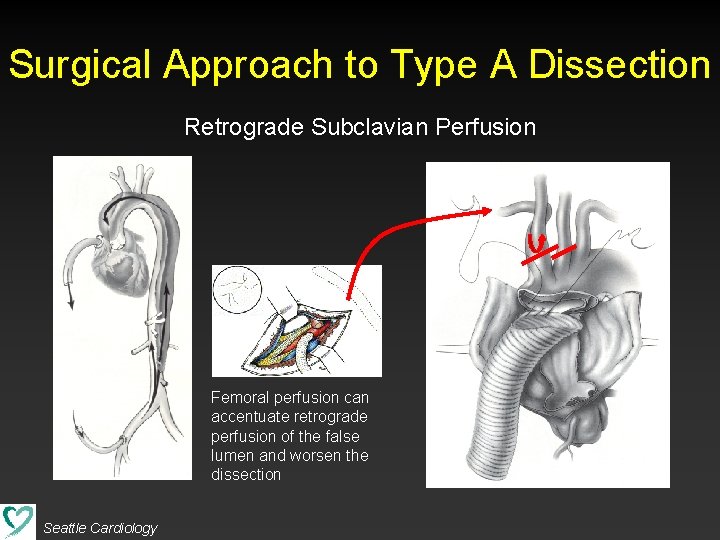
Surgical Approach to Type A Dissection Retrograde Subclavian Perfusion Femoral perfusion can accentuate retrograde perfusion of the false lumen and worsen the dissection Seattle Cardiology
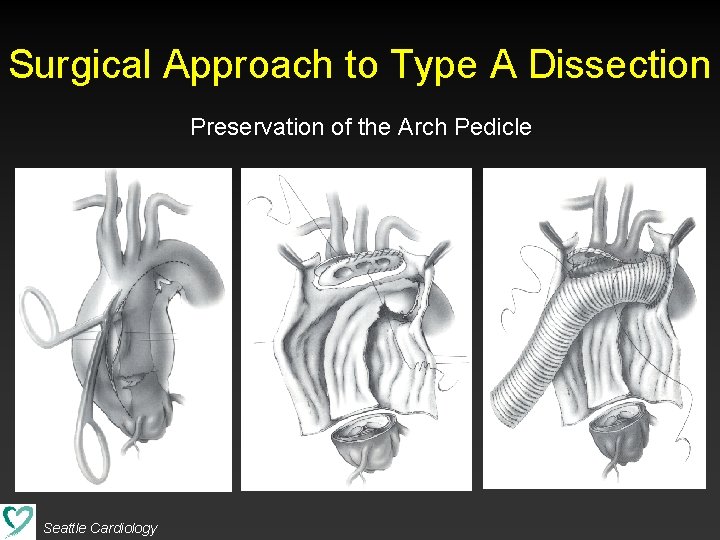
Surgical Approach to Type A Dissection Preservation of the Arch Pedicle Seattle Cardiology
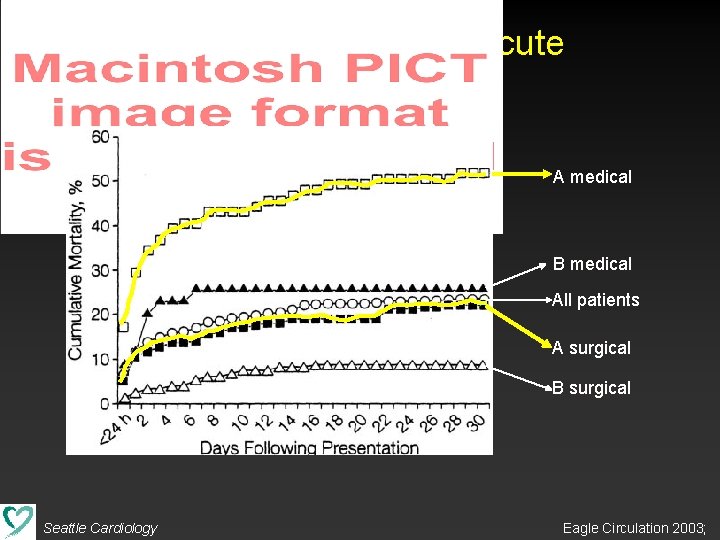
30 Day Mortality with Acute Aortic Dissection A medical B medical All patients A surgical B surgical Seattle Cardiology Eagle Circulation 2003;
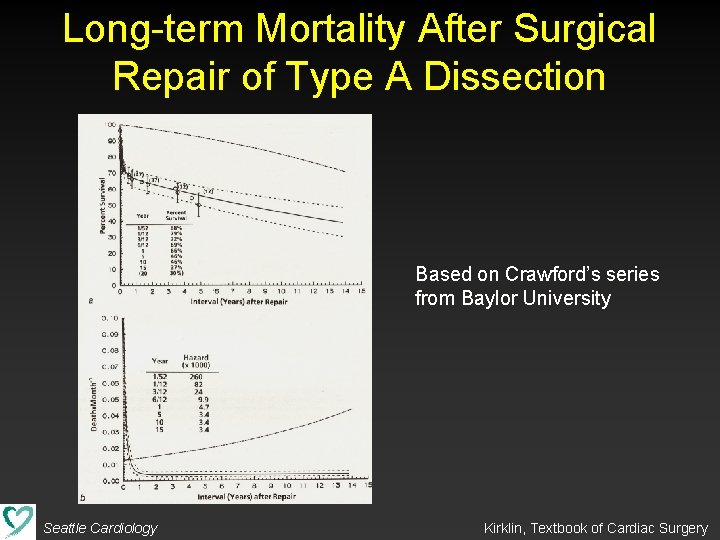
Long-term Mortality After Surgical Repair of Type A Dissection Based on Crawford’s series from Baylor University Seattle Cardiology Kirklin, Textbook of Cardiac Surgery
Late Complications of Surgical Repair of Type A Dissection Expansion of the false lumen Aortic insufficiency New dissection Cerebral or visceral malperfusion Aortic root expansion Complications of the original repair (e. g. , false aneurysm) Seattle Cardiology
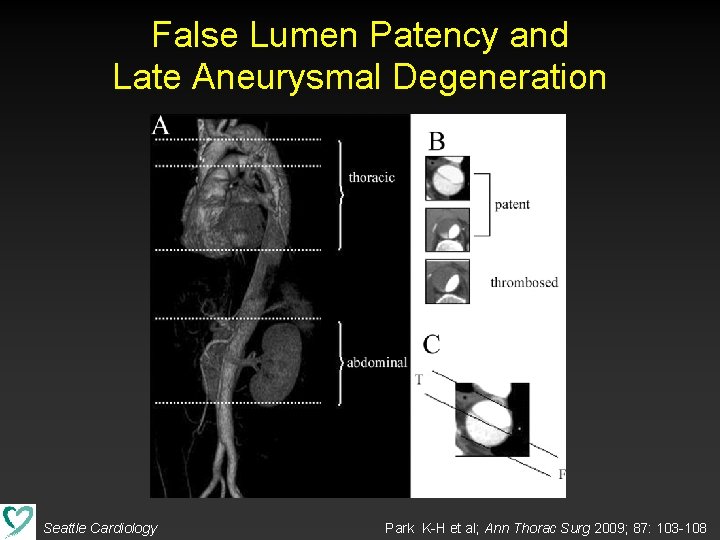
False Lumen Patency and Late Aneurysmal Degeneration Seattle Cardiology Park K-H et al; Ann Thorac Surg 2009; 87: 103 -108
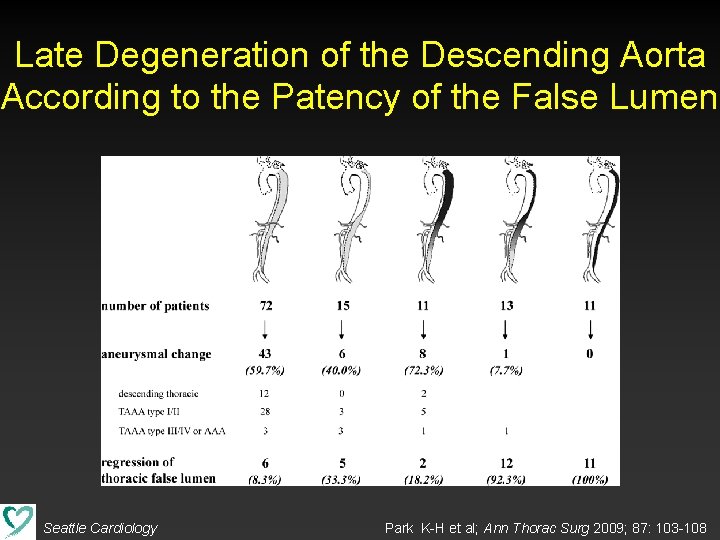
Late Degeneration of the Descending Aorta According to the Patency of the False Lumen Seattle Cardiology Park K-H et al; Ann Thorac Surg 2009; 87: 103 -108
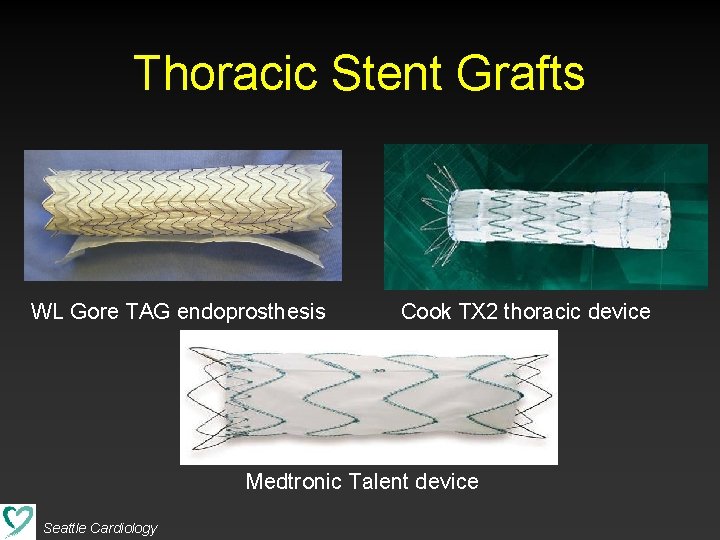
Thoracic Stent Grafts WL Gore TAG endoprosthesis Cook TX 2 thoracic device Medtronic Talent device Seattle Cardiology
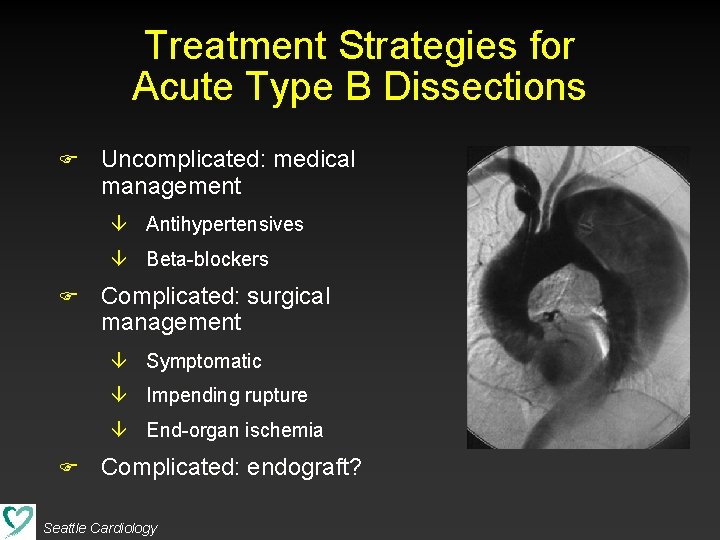
Treatment Strategies for Acute Type B Dissections F Uncomplicated: medical management â Antihypertensives â Beta-blockers F Complicated: surgical management â Symptomatic â Impending rupture â End-organ ischemia F Complicated: endograft? Seattle Cardiology
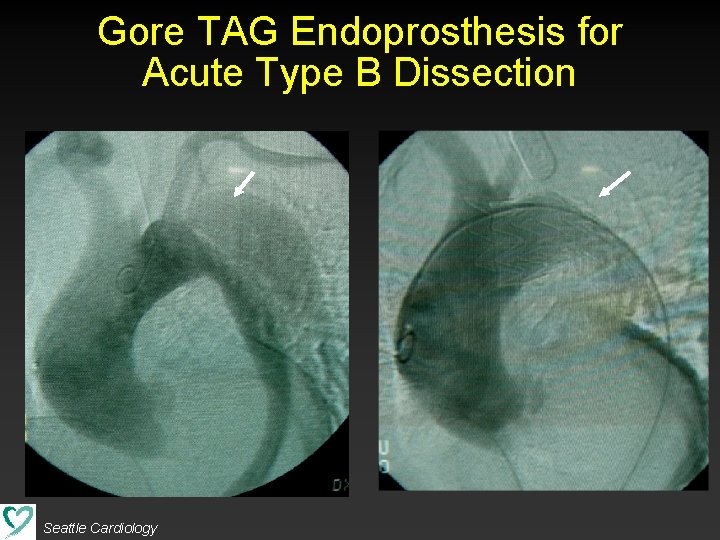
Gore TAG Endoprosthesis for Acute Type B Dissection Seattle Cardiology
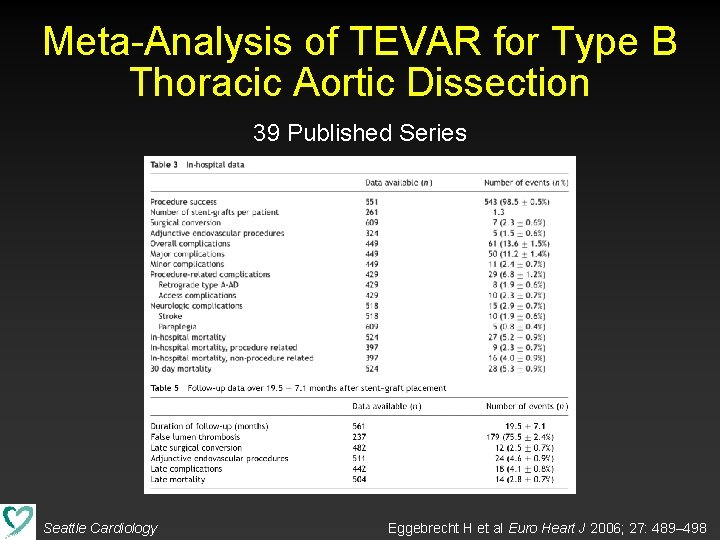
Meta-Analysis of TEVAR for Type B Thoracic Aortic Dissection 39 Published Series Seattle Cardiology Eggebrecht H et al Euro Heart J 2006; 27: 489– 498
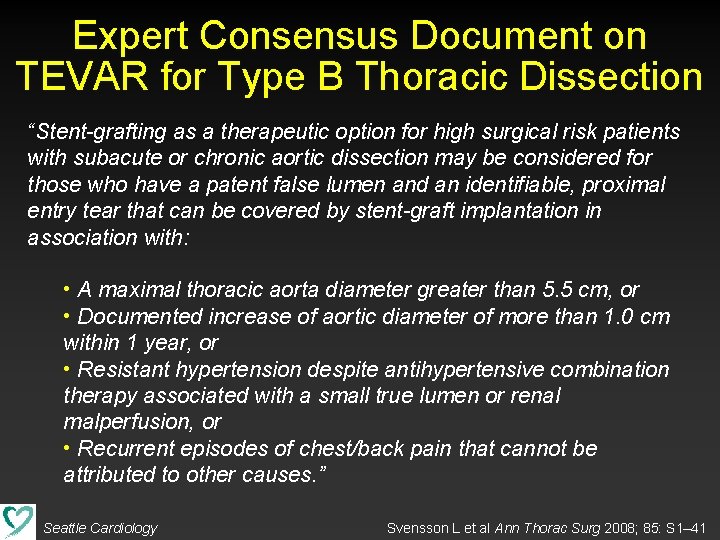
Expert Consensus Document on TEVAR for Type B Thoracic Dissection “Stent-grafting as a therapeutic option for high surgical risk patients with subacute or chronic aortic dissection may be considered for those who have a patent false lumen and an identifiable, proximal entry tear that can be covered by stent-graft implantation in association with: • A maximal thoracic aorta diameter greater than 5. 5 cm, or • Documented increase of aortic diameter of more than 1. 0 cm within 1 year, or • Resistant hypertension despite antihypertensive combination therapy associated with a small true lumen or renal malperfusion, or • Recurrent episodes of chest/back pain that cannot be attributed to other causes. ” Seattle Cardiology Svensson L et al Ann Thorac Surg 2008; 85: S 1– 41
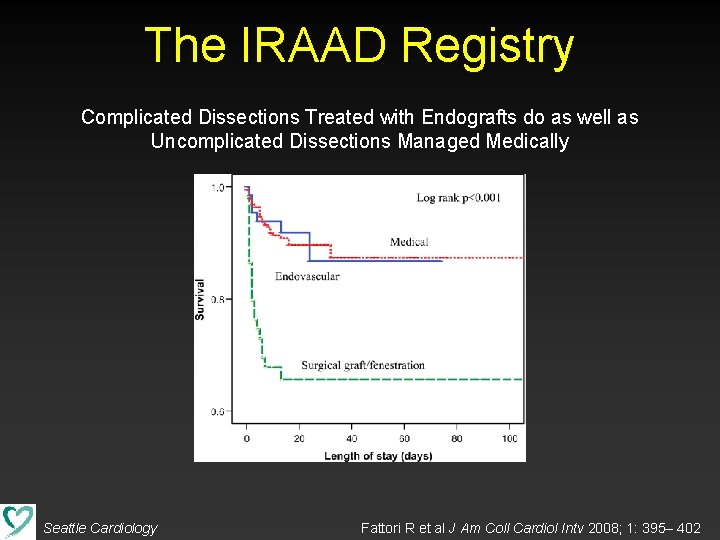
The IRAAD Registry Complicated Dissections Treated with Endografts do as well as Uncomplicated Dissections Managed Medically Seattle Cardiology Fattori R et al J Am Coll Cardiol Intv 2008; 1: 395– 402
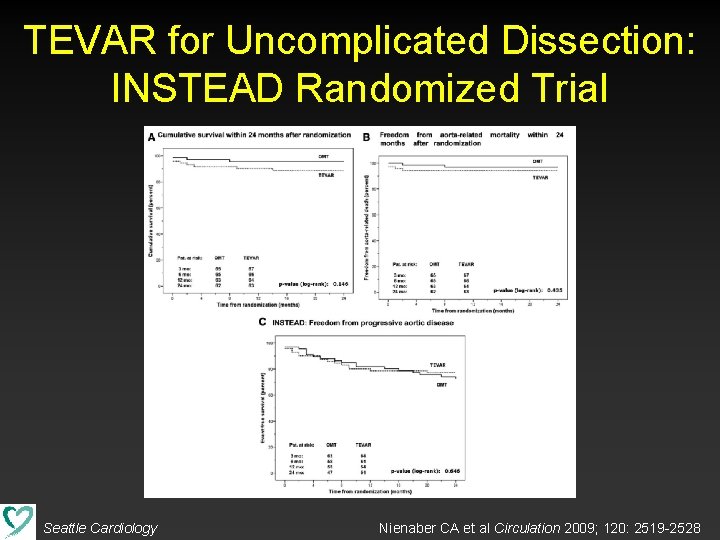
TEVAR for Uncomplicated Dissection: INSTEAD Randomized Trial Seattle Cardiology Nienaber CA et al Circulation 2009; 120: 2519 -2528
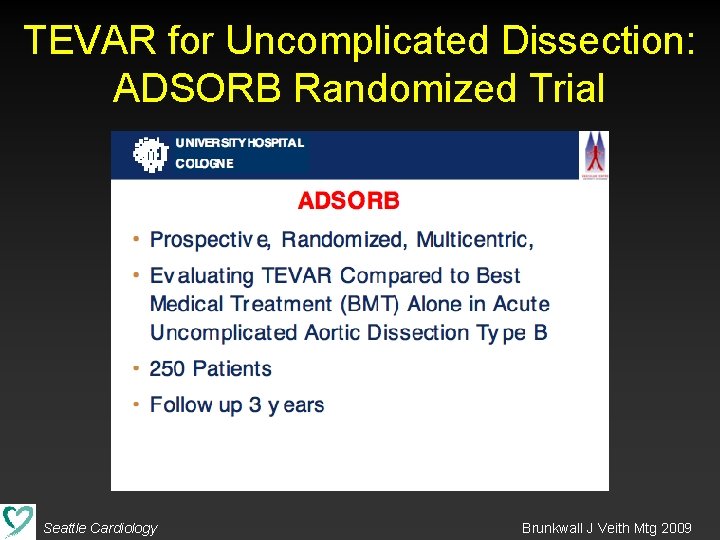
TEVAR for Uncomplicated Dissection: ADSORB Randomized Trial Seattle Cardiology Brunkwall J Veith Mtg 2009
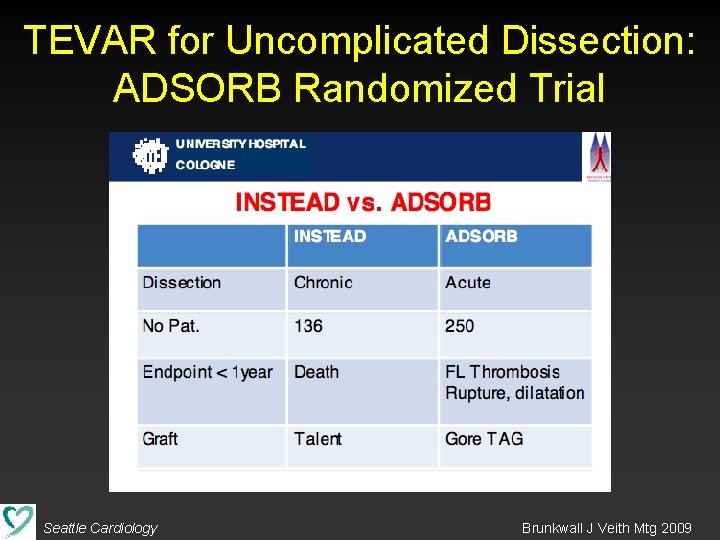
TEVAR for Uncomplicated Dissection: ADSORB Randomized Trial Seattle Cardiology Brunkwall J Veith Mtg 2009
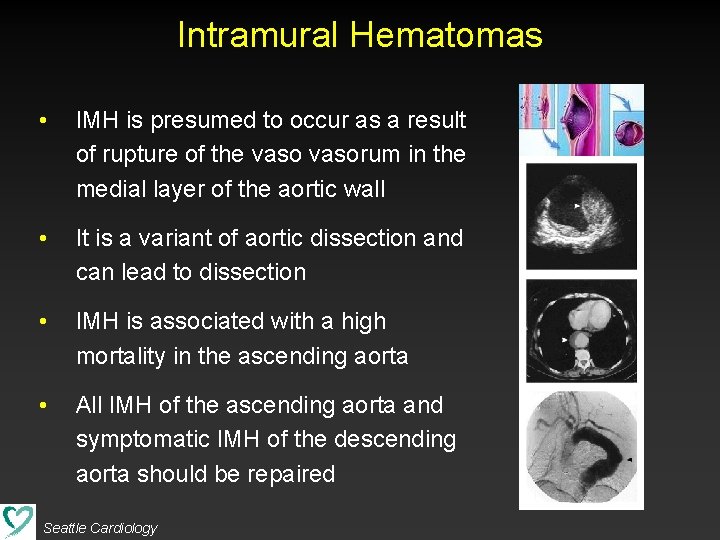
Intramural Hematomas • IMH is presumed to occur as a result of rupture of the vasorum in the medial layer of the aortic wall • It is a variant of aortic dissection and can lead to dissection • IMH is associated with a high mortality in the ascending aorta • All IMH of the ascending aorta and symptomatic IMH of the descending aorta should be repaired Seattle Cardiology
Guidelines on TEVAR for Descending Thoracic Aortic Diseases Seattle Cardiology ACC/AHA/AATS/ACR/ASA/SCAI/SIR/STS/SVM 2010 Guidelines For The Diagnosis And Management Of Patients With Thoracic Aortic Disease
Management of Asymptomatic Type A/B Dissections: Conclusions • Type A dissections and ascending IMH are surgical emergencies. There is presently no role for medical therapy or endografting. • Complicated Type B dissection is likely to be best managed with TEVAR when feasible, however… • The need for repeat procedures and/or surgical conversion to treat late false lumen patency and/or aneurysmal degeneration is 36% • There is presently no role for surgical or endovascular repair of asymptomatic/uncomplicated Type B dissection. • Asymptomatic IMH should be managed medically (Class III). Symptomatic descending IMH should be treated. TEVAR is an ideal therapy for this condition. Seattle Cardiology
- Slides: 24