
MANAGING STRESS CHAPTER 3 WHAT IS STRESS Stress


- Slides: 16
MANAGING STRESS CHAPTER 3
WHAT IS STRESS • Stress- the response of your body and mind to being challenged or threatened • Eustress- positive stress • Distress- negative stress
CAUSES OF STRESS • Major life changes • Catastrophes • An event that threatens lives and may destroy property • Everyday problems • Hassles, conflicts, pressure to succeed • Environmental problems • Noise, crowds, traffic, unsafe areas, pollution
MAJOR LIFE CHANGES- WHAT HAVE YOU EXPERIENCED IN THE PAST 5 YEARS 1. 2. 3. 4. 5. 6. Death of a parent 7. Breaking up with BF/GF Parents divorce 8. Parent loose job Remarriage of a parent 9. Learning you were adopted Newborn sibling 10. Not making the team Serious illness 11. Being recognized for an achievement Moving to new school 12. Failing a grade
STAGES OF STRESS • Alarm stage- fight or flight • Body releases adrenaline, RR increases, HR increases, sweating increases, muscles tense, blood pressure increases, pupils dilate • Resistance stage • Body adapts to continued presence of a stressor • May become tired, irritable, less able to handle any added stress • Exhaustion stage
SIGNS OF STRESS • Behavioral changes • Overeating, not eating, sleep problems, hurrying, withdrawing from relationships • Changes in thinking • Unable to concentrate, negative thinking, worrying, self criticis, critical of others • Physical changes • Muscle tension, headache, upset stomach, pounding heart, shortness of breath, sweating • Emotional changes
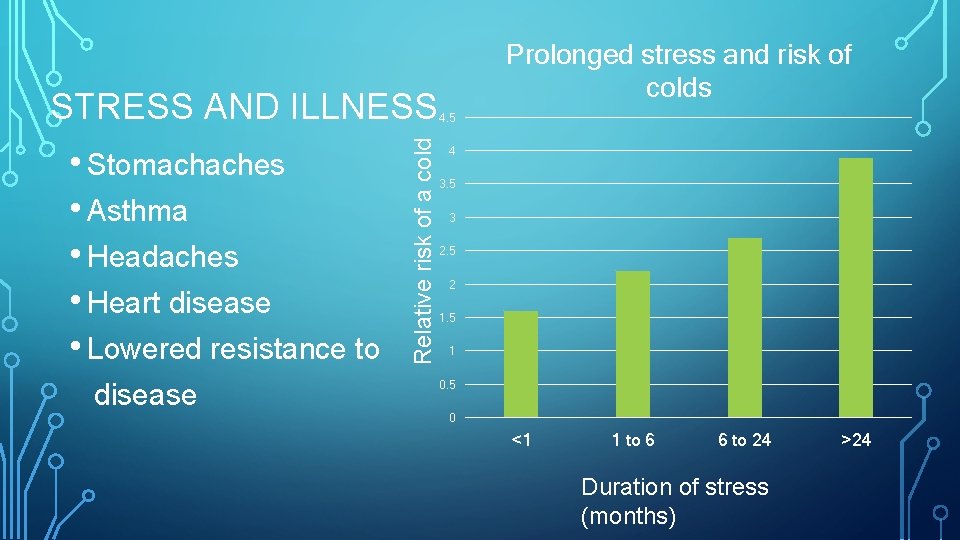
• Stomachaches • Asthma • Headaches • Heart disease • Lowered resistance to disease Relative risk of a cold STRESS AND ILLNESS Prolonged stress and risk of colds 4. 5 4 3. 5 3 2. 5 2 1. 5 1 0. 5 0 <1 1 to 6 6 to 24 Duration of stress (months) >24
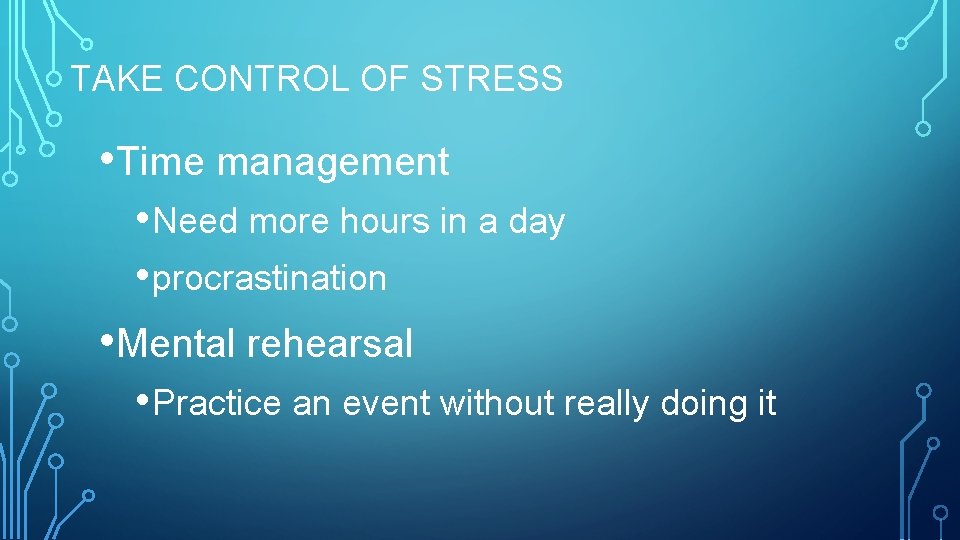
TAKE CONTROL OF STRESS • Time management • Need more hours in a day • procrastination • Mental rehearsal • Practice an event without really doing it
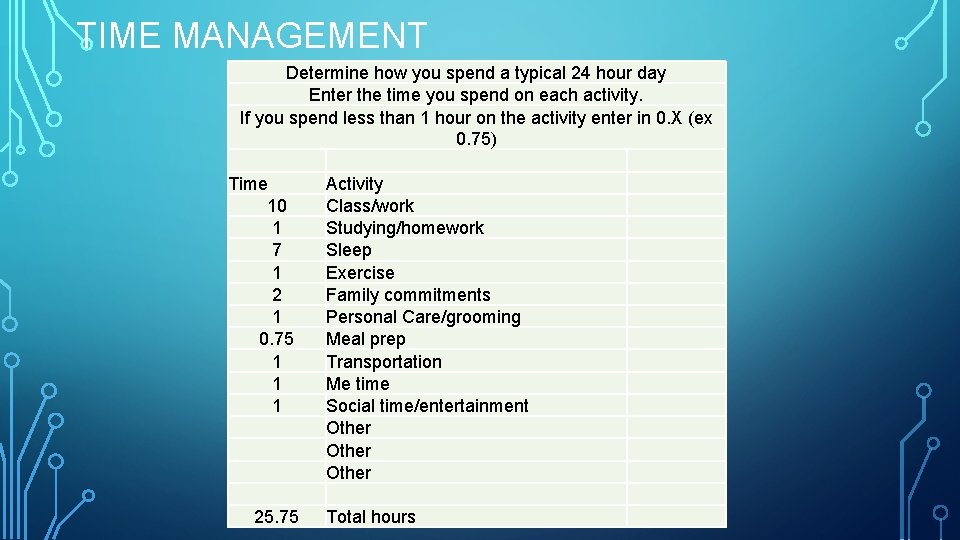
TIME MANAGEMENT Determine how you spend a typical 24 hour day Enter the time you spend on each activity. If you spend less than 1 hour on the activity enter in 0. X (ex 0. 75) Time 10 1 7 1 2 1 0. 75 1 1 1 25. 75 Activity Class/work Studying/homework Sleep Exercise Family commitments Personal Care/grooming Meal prep Transportation Me time Social time/entertainment Other Total hours
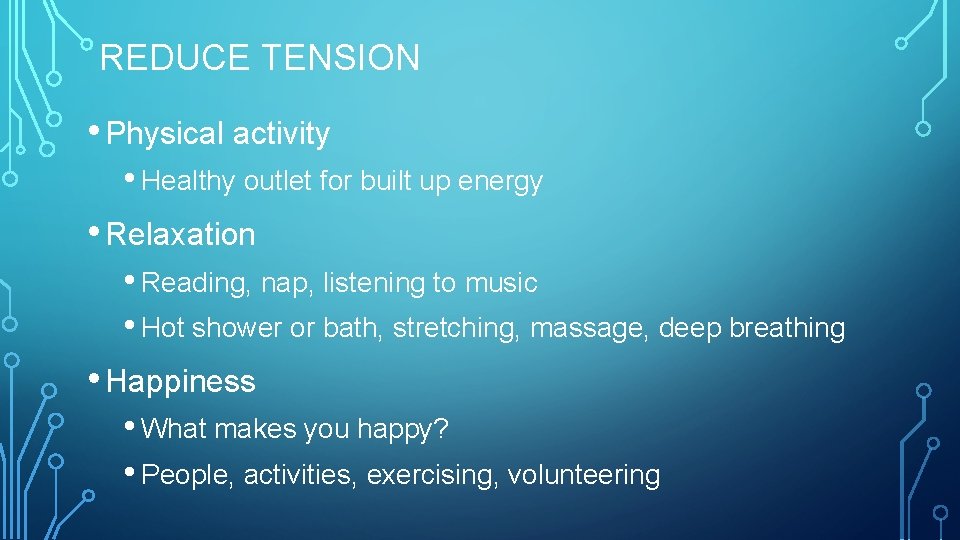
REDUCE TENSION • Physical activity • Healthy outlet for built up energy • Relaxation • Reading, nap, listening to music • Hot shower or bath, stretching, massage, deep breathing • Happiness • What makes you happy? • People, activities, exercising, volunteering
PROGRESSIVE RELAXATION- ACTIVITY • Sit quietly in your desk, Close your eyes • Tighten each muscle group in your body and hold for 10 seconds then relax • • • Wrinkle your forehead Close your eyes as tightly as you can Form a frown with your mouth Raise shoulders to your ears Flex your biceps Clench your fists Tighten your stomach muscles Tighten your hip and buttock muscles Squeeze your leg together Curl your toes
BUILD RESILIENCE • Take care of yourself • Build a support system • Take action • Help somebody • Confide in yourself • Go easy on yourself • Put things in perspective • Find a hassle free zone • Stick to your routines
CHANGE YOUR THINKING • Avoid negative thinking • Positive self talk • Humor • Effective tool for managing stress • Don’t use to cover up your true feelings • Avoid laughing at serious situations
REACH OUT FOR SUPPORT • Share your problems to help see them more clearly • A parent or adult relative • A teacher, coach or religious leader • A school counselor or nurse • A sibling or friend
PRACTICE THE SKILL • Text book • Page 68 -69