
Managing Mercury Contamination During Demolition and Renovation Michael
- Slides: 38
Managing Mercury Contamination During Demolition and Renovation Michael Austin austi 001@umn. edu 612 -626 -6436
Goal of presentation n n Explain how we fit mercury assessment into our overall environmental procedures plan Show we developed standards for mercury
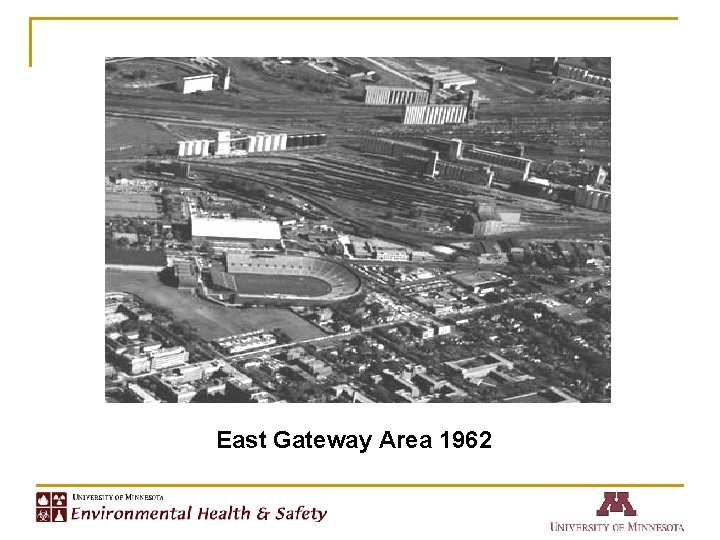
East Gateway Area 1962
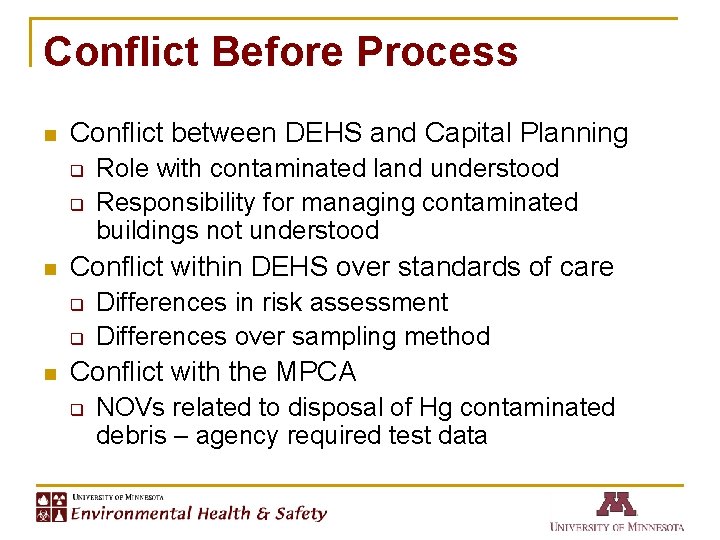
Conflict Before Process n Conflict between DEHS and Capital Planning q q n Conflict within DEHS over standards of care q q n Role with contaminated land understood Responsibility for managing contaminated buildings not understood Differences in risk assessment Differences over sampling method Conflict with the MPCA q NOVs related to disposal of Hg contaminated debris – agency required test data
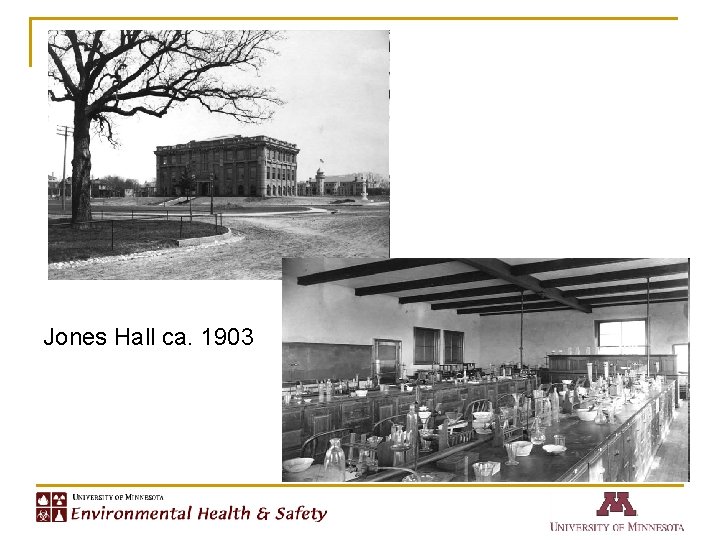
Jones Hall ca. 1903
Jones Hall (2004 – 2005) n n Mercury discovered on sub-floor after maple strips salvaged for reuse 500 sq. ft. recovered from Deconstruction Services: q n 3 of 90 bundles tested above background for mercury but below residential clearance level 2, 300 sq. ft. found in a customers barn. q Ambient readings were less than MDH residential standard 500 ng/m 3.
Metrics n n Milligram (mg) 1/1, 000 (thousands) Microgram (ug) 1/1, 000 (millions) Nanogram (ng) 1/1, 000, 000 (billions) To make comparisons easier we use nanograms / cubic meter as a reference for concentration in air
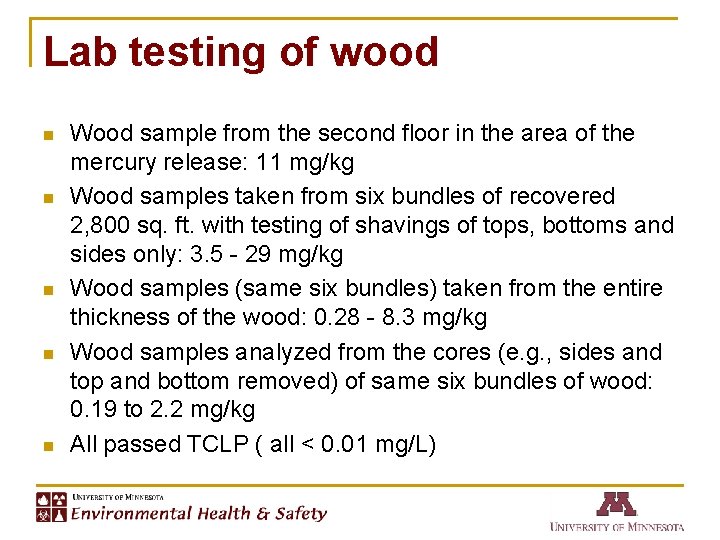
Lab testing of wood n n n Wood sample from the second floor in the area of the mercury release: 11 mg/kg Wood samples taken from six bundles of recovered 2, 800 sq. ft. with testing of shavings of tops, bottoms and sides only: 3. 5 - 29 mg/kg Wood samples (same six bundles) taken from the entire thickness of the wood: 0. 28 - 8. 3 mg/kg Wood samples analyzed from the cores (e. g. , sides and top and bottom removed) of same six bundles of wood: 0. 19 to 2. 2 mg/kg All passed TCLP ( all < 0. 01 mg/L)
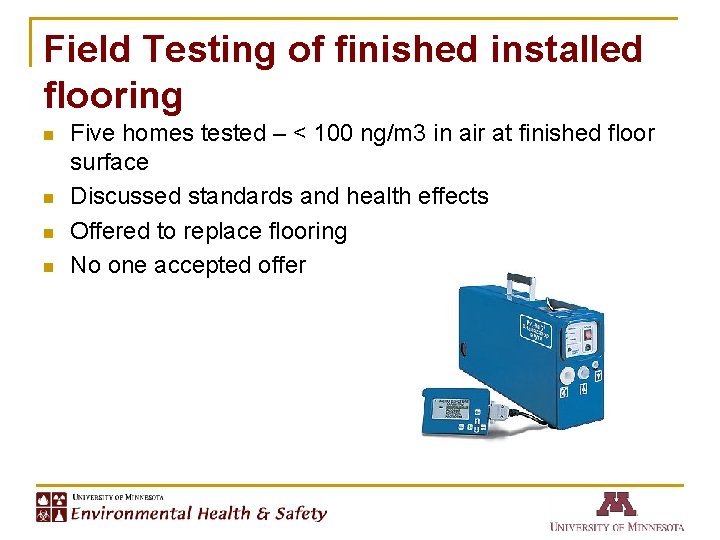
Field Testing of finished installed flooring n n Five homes tested – < 100 ng/m 3 in air at finished floor surface Discussed standards and health effects Offered to replace flooring No one accepted offer
Mercury Clean-up Guidelines Work Team n n n Members included the U of M Department of Environmental Health and Safety and faculty from two departments, and staff from the MPCA and the Minnesota Department of Health. The task force has reached consensus about procedures for assessing contamination and classifying debris. These procedures could serve as a model for other entities.
Goals n Minimize human exposure to mercury q Set health standard n n q n Prevent or minimize human exposure Informed consent Mercury clean up criteria Minimize release to the environment q q Prevent or minimize release to the environment SOPs to screen waste for mercury
Mercury containing devices are very common. n n n Devices include: fluorescent light bulbs, thermometers, light switches, pressure sensing devices and bubblers. These items have occasionally broken and caused low levels of contamination on floors and walls. A high percentage of demolition debris from old buildings is contaminated with trace amounts of mercury.
Why we care about mercury n Mercury and compounds are toxic q q q Damage to brain Damage to kidneys Neurological development of a fetus, infant or child can be impacted
How we are exposed n Ingestion of mercury q q q n Contaminated fish – mercury is bioaccumulated in fish Methyl mercury ingestion is the greatest source of mercury exposure Average intake is 50 ng/Kg/day Inhalation of vapor q q q Natural degassing of mercury from the earth Release of mercury by burning coal and wood Dental amalgams
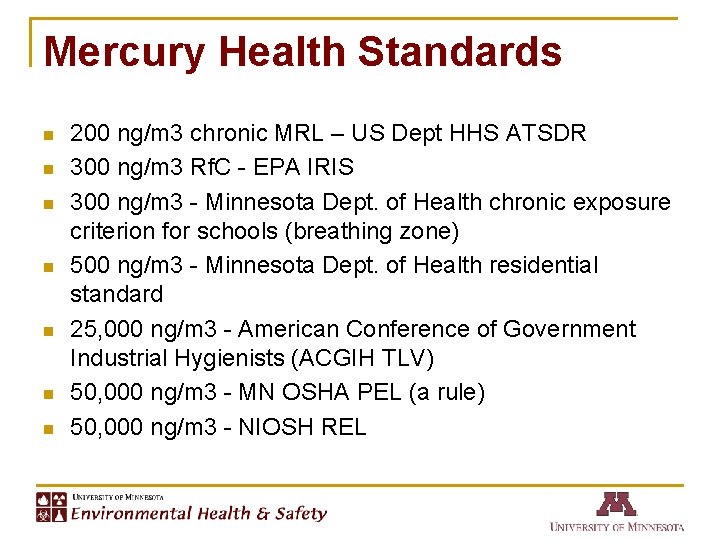
Mercury Health Standards n n n n 200 ng/m 3 chronic MRL – US Dept HHS ATSDR 300 ng/m 3 Rf. C - EPA IRIS 300 ng/m 3 - Minnesota Dept. of Health chronic exposure criterion for schools (breathing zone) 500 ng/m 3 - Minnesota Dept. of Health residential standard 25, 000 ng/m 3 - American Conference of Government Industrial Hygienists (ACGIH TLV) 50, 000 ng/m 3 - MN OSHA PEL (a rule) 50, 000 ng/m 3 - NIOSH REL
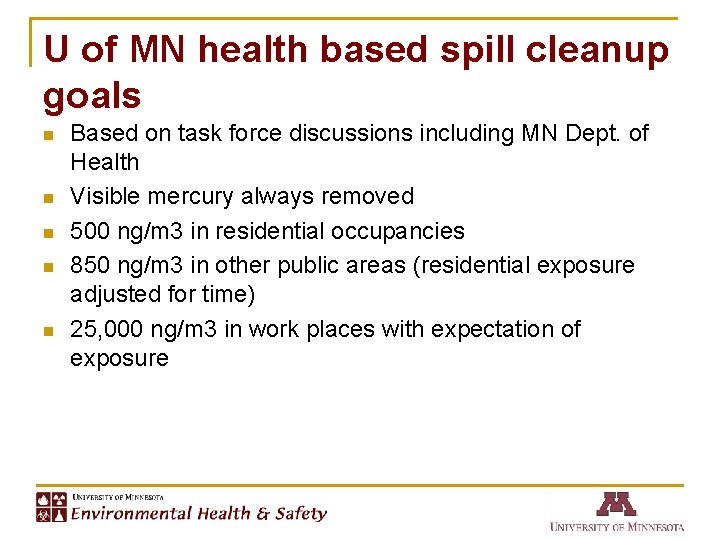
U of MN health based spill cleanup goals n n n Based on task force discussions including MN Dept. of Health Visible mercury always removed 500 ng/m 3 in residential occupancies 850 ng/m 3 in other public areas (residential exposure adjusted for time) 25, 000 ng/m 3 in work places with expectation of exposure
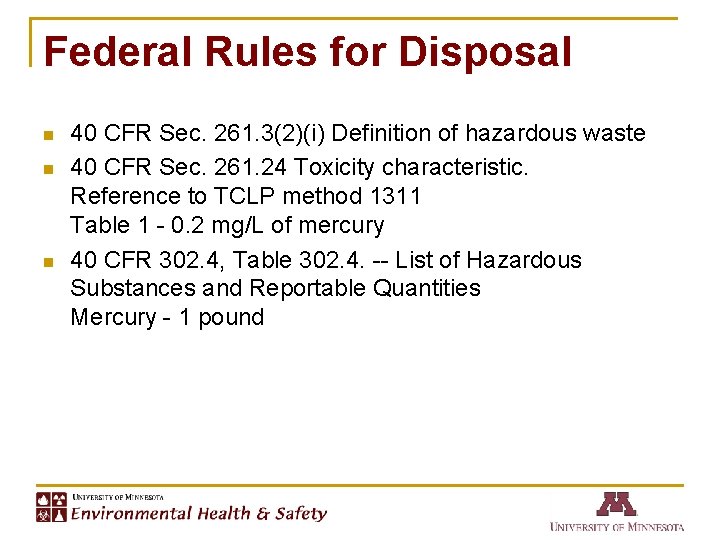
Federal Rules for Disposal n n n 40 CFR Sec. 261. 3(2)(i) Definition of hazardous waste 40 CFR Sec. 261. 24 Toxicity characteristic. Reference to TCLP method 1311 Table 1 - 0. 2 mg/L of mercury 40 CFR 302. 4, Table 302. 4. -- List of Hazardous Substances and Reportable Quantities Mercury - 1 pound
Federal test for contaminated debris q q The leaching test (TCLP) directly evaluates the potential for mercury to leach out of a land fill. Mercury binds tightly to concrete and other debris
Minnesota Statute n Minn. Stat. Sec. 115 A. 932 “A person may not place mercury or a thermostat, thermometer, electric switch, appliance, gauge, medical or scientific instrument, or electric relay or other electrical device from which the mercury has not been removed for reuse or recycling: (1) in solid waste; or …. ” See also Minn. Stat. Sec. 116. 92 Mercury emissions reduction
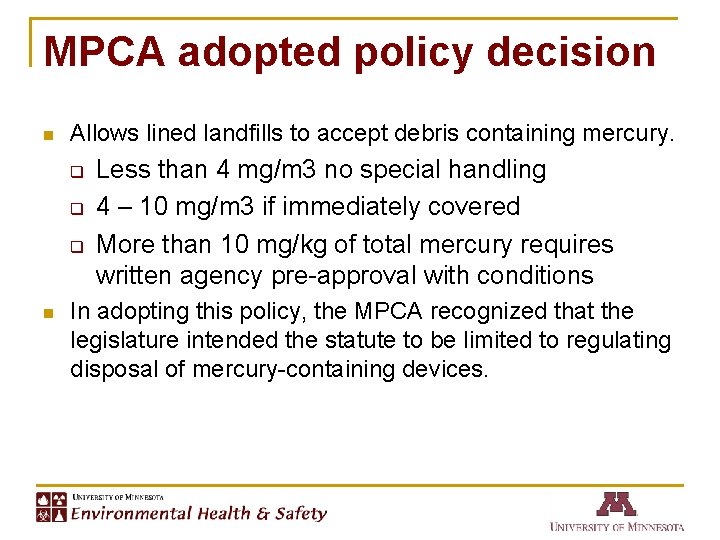
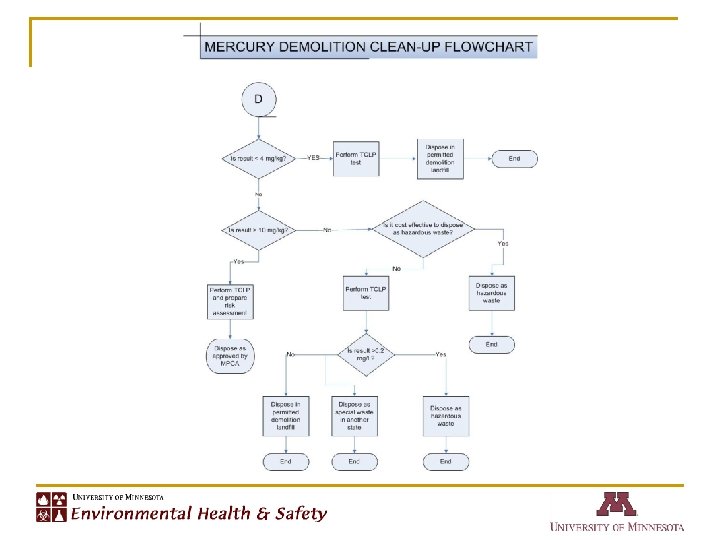
MPCA adopted policy decision n Allows lined landfills to accept debris containing mercury. q q q n Less than 4 mg/m 3 no special handling 4 – 10 mg/m 3 if immediately covered More than 10 mg/kg of total mercury requires written agency pre-approval with conditions In adopting this policy, the MPCA recognized that the legislature intended the statute to be limited to regulating disposal of mercury-containing devices.
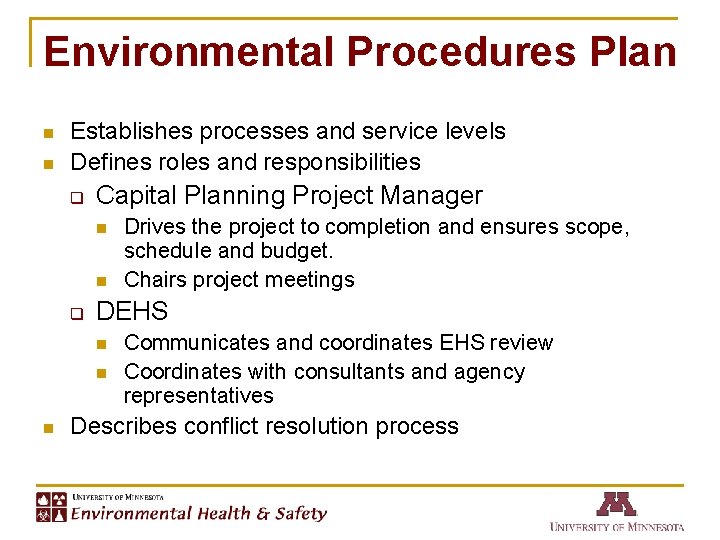
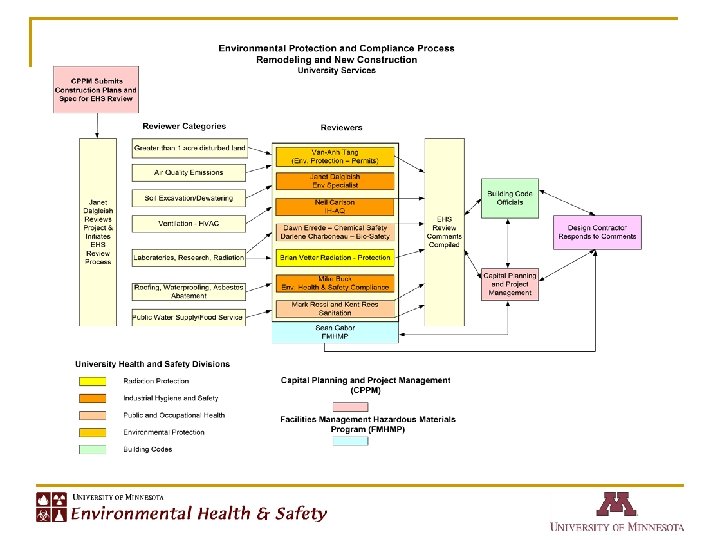
Environmental Procedures Plan n n Establishes processes and service levels Defines roles and responsibilities q Capital Planning Project Manager n n q DEHS n n n Drives the project to completion and ensures scope, schedule and budget. Chairs project meetings Communicates and coordinates EHS review Coordinates with consultants and agency representatives Describes conflict resolution process
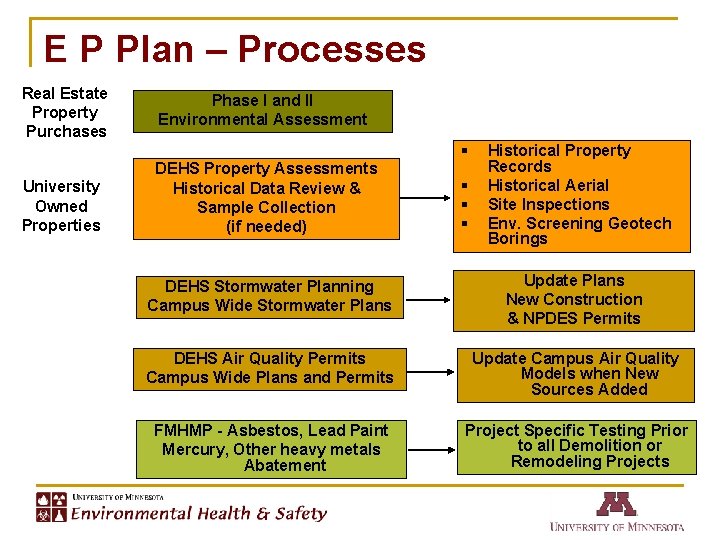
E P Plan – Processes Real Estate Property Purchases Phase I and II Environmental Assessment § University Owned Properties DEHS Property Assessments Historical Data Review & Sample Collection (if needed) § § § Historical Property Records Historical Aerial Site Inspections Env. Screening Geotech Borings DEHS Stormwater Planning Campus Wide Stormwater Plans Update Plans New Construction & NPDES Permits DEHS Air Quality Permits Campus Wide Plans and Permits Update Campus Air Quality Models when New Sources Added FMHMP - Asbestos, Lead Paint Mercury, Other heavy metals Abatement Project Specific Testing Prior to all Demolition or Remodeling Projects
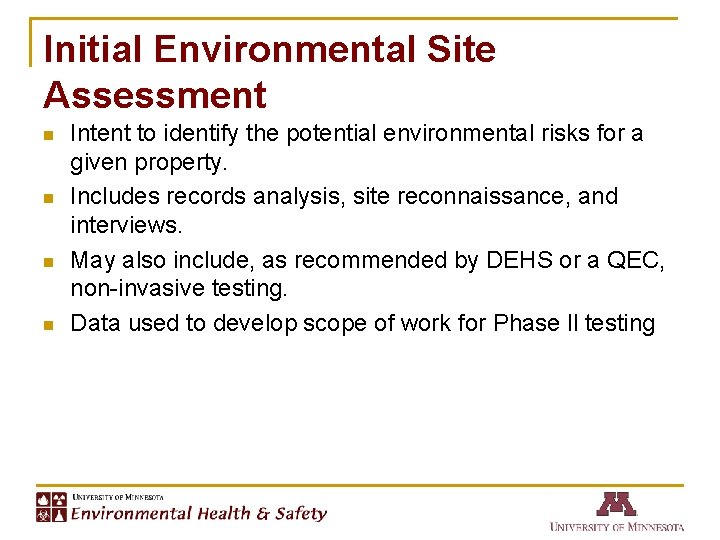
Initial Environmental Site Assessment n n Intent to identify the potential environmental risks for a given property. Includes records analysis, site reconnaissance, and interviews. May also include, as recommended by DEHS or a QEC, non-invasive testing. Data used to develop scope of work for Phase ll testing
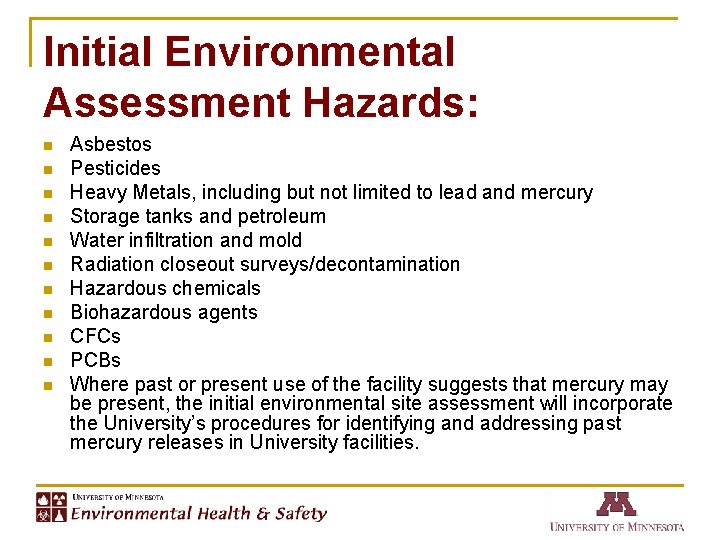
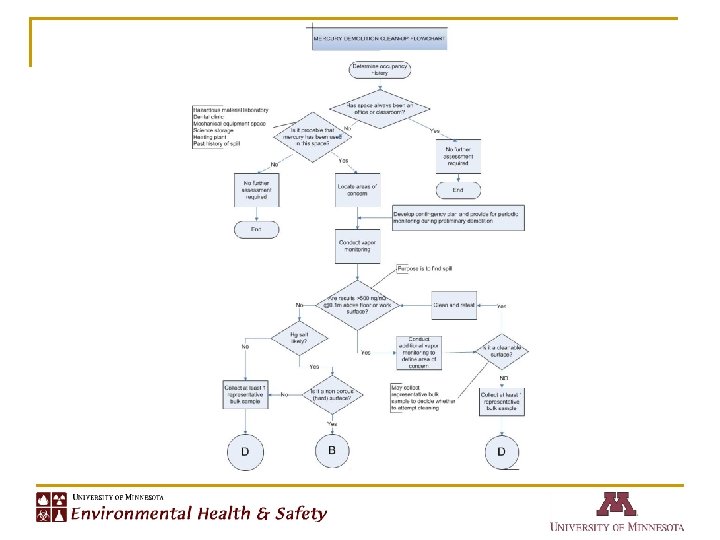
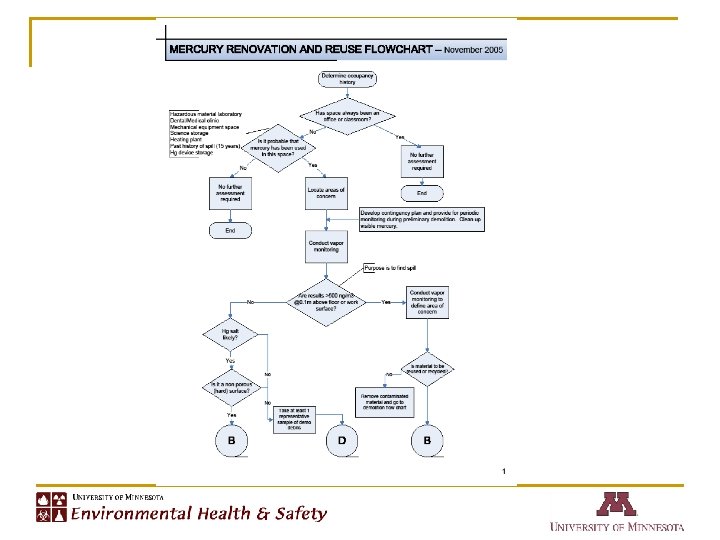
Initial Environmental Assessment Hazards: n n n Asbestos Pesticides Heavy Metals, including but not limited to lead and mercury Storage tanks and petroleum Water infiltration and mold Radiation closeout surveys/decontamination Hazardous chemicals Biohazardous agents CFCs PCBs Where past or present use of the facility suggests that mercury may be present, the initial environmental site assessment will incorporate the University’s procedures for identifying and addressing past mercury releases in University facilities.
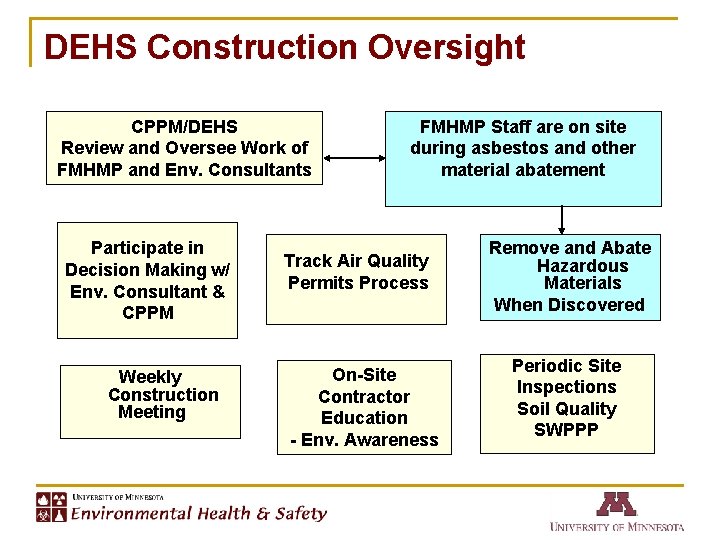
DEHS Construction Oversight CPPM/DEHS Review and Oversee Work of FMHMP and Env. Consultants Participate in Decision Making w/ Env. Consultant & CPPM Weekly Construction Meeting FMHMP Staff are on site during asbestos and other material abatement Track Air Quality Permits Process On-Site Contractor Education - Env. Awareness Remove and Abate Hazardous Materials When Discovered Periodic Site Inspections Soil Quality SWPPP
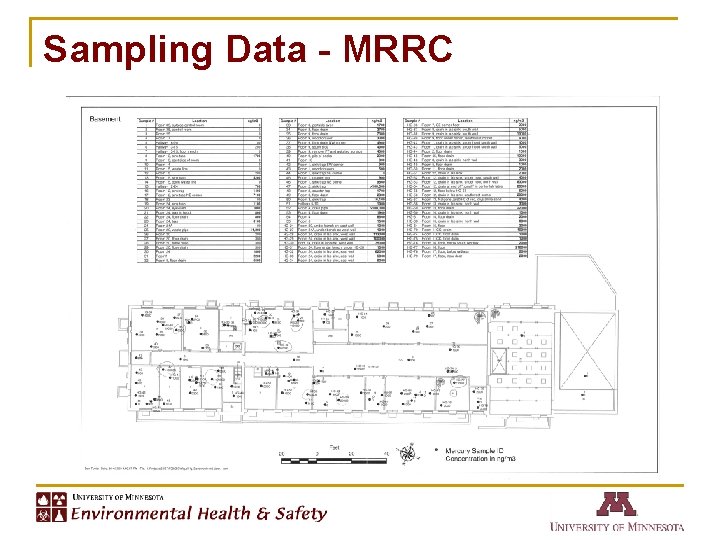
Sampling Data - MRRC
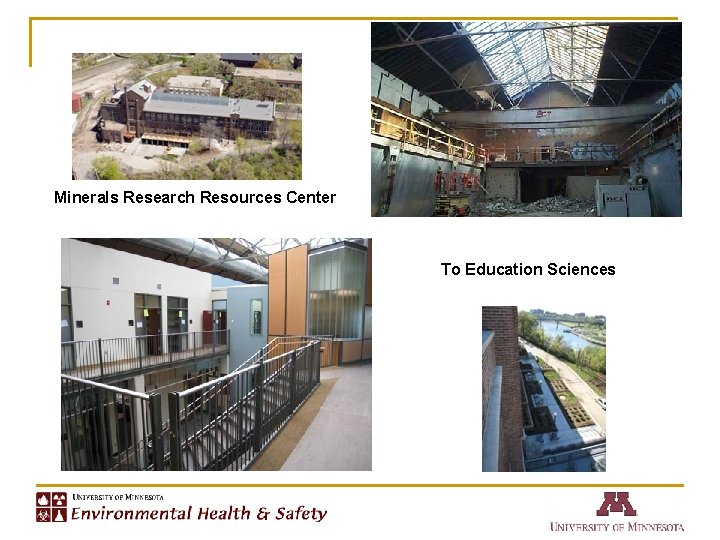
Minerals Research Resources Center To Education Sciences
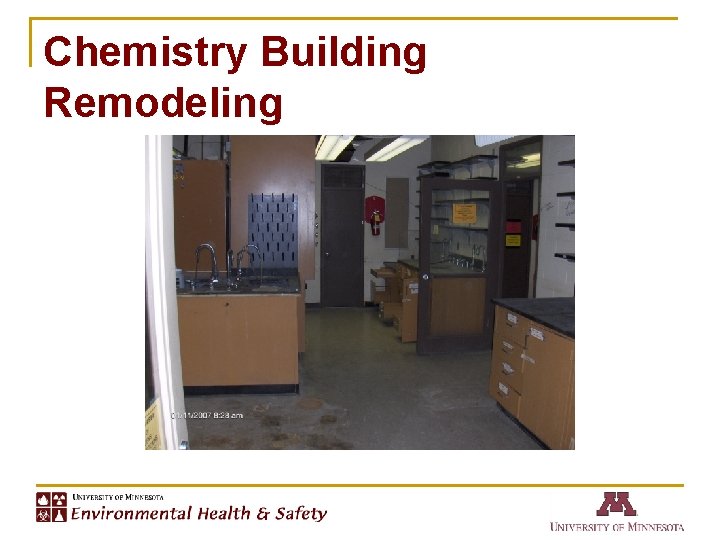
Chemistry Building Remodeling
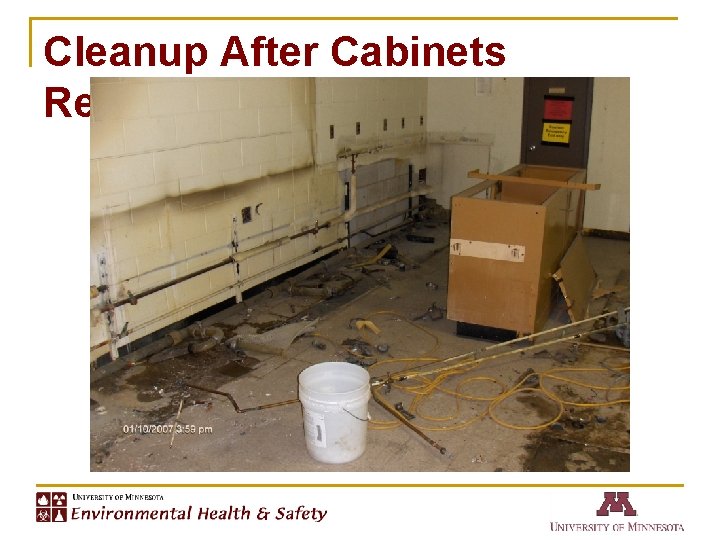
Cleanup After Cabinets Removed
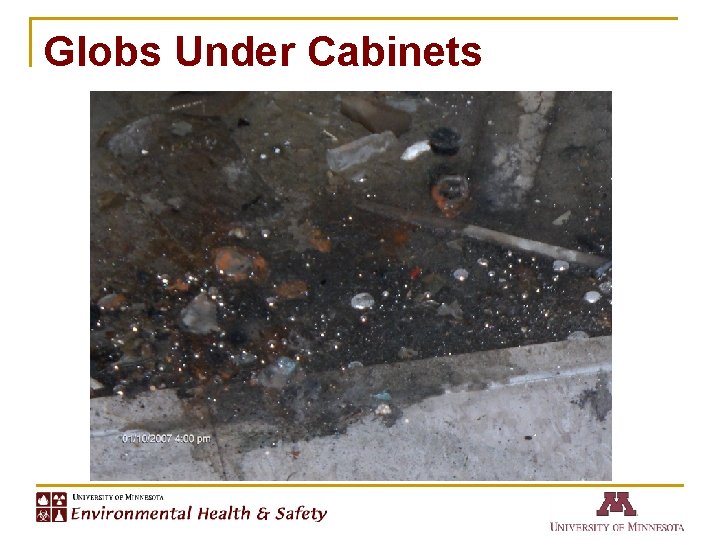
Globs Under Cabinets
Initial Environmental Site Assessment n n Records analysis, site reconnaissance, and interviews focusing on identifying hazards including mercury Development of appropriate response action plan Implementation Consultation with affected employees